
REVIEW · PORTUGAL TEMPLE TOURS
Batalha: A Local’s Guided Tour of the Batalha Monastery
Batalha Monastery tells two stories at once: the story of a dramatic Portuguese victory at Aljubarrota, and the story of a royal family using stone, prayer, and art to secure its power. This 1.5-hour guided visit gives those stories a clear shape as you move from the grand facade to the royal tombs and quiet Cloisters.
I like the focus on the Founder’s Chapel, where King João I and Queen Filipa de Lencastre are buried, and the way the tour links the monastery to Portugal’s alliance with England through the Treaty of Windsor. The main caution is simple: the entrance ticket is not included in the $47 price, so check the total cost before booking.
Key points to know before you go
- A battle turned into a monastery: Learn why the victory at Aljubarrota mattered to Portuguese independence and royal power.
- Three architectural styles in one visit: Look for Gothic structure, Manueline decoration, and Renaissance touches.
- The royal tombs are central: The Founder’s Chapel brings the political story close to home.
- Anna has earned warm praise: Her flexible, conversational style suits people who like to ask questions rather than hear a fixed speech.
- Meet at the mounted statue: Your guide waits in front of the Estátua Equestre do Condestável D. Nuno Álvares Pereira.
- Plan for extra admission cost: The guided service covers the tour, but not the monument ticket.
Why Batalha Monastery deserves your time
Batalha Monastery is not just a handsome church with elaborate stonework. It is a royal statement built around a military victory. The Battle of Aljubarrota helped secure Portugal’s independence, and the monastery gave that victory a permanent public shape.
That connection makes the visit more rewarding than a quick look at the facade. You are not simply admiring pointed arches and carved windows. You are seeing how a crown used architecture to explain its right to rule.
The monastery brings together Gothic, Manueline, and Renaissance elements. You can expect the Gothic structure to provide the main sense of height and order, while Manueline details add a more playful Portuguese touch. Renaissance influence adds another layer to the building’s long development.
A guide matters here because the details can otherwise blur together. Stone carving is easy to admire, but the story behind it is what gives the building weight. This tour is designed to connect the building’s artistic changes with faith, royal ambition, and Portugal’s relationship with England.
More Guided Tours in Portugal:
- Lisbon: Jerónimos Monastery E-Ticket and Audio Guide
★ 3.7 · 660 reviews - Belem and Jeronimos Monastery Guided Small Group Walking Tour
★ 5.0 · 410 reviews - “Porto: Fado Show with Guided Tour in a Historic Monastery”
★ 4.9 · 164 reviews
Meeting at the statue of Nuno Álvares Pereira
The tour begins at the equestrian statue of Constable Nuno Álvares Pereira. The guide waits in front of the statue, giving you a fixed and easy-to-identify meeting point.
Nuno Álvares Pereira is closely tied to the Battle of Aljubarrota, so the starting point is more than a random landmark. It puts the military story first, before you enter the monastery built in response to the battle.
Arrive with enough time to identify the statue and find your guide. The information provided does not give a required arrival time, so the safest plan is to be there a little early. The meeting point is especially useful if you are visiting Batalha independently and do not need a hotel pickup or a separate transport service.
The experience returns to this same statue after the monastery visit. That keeps the outing compact and makes it easy to fit into a larger day in Batalha.
The facade: Gothic scale and Manueline detail
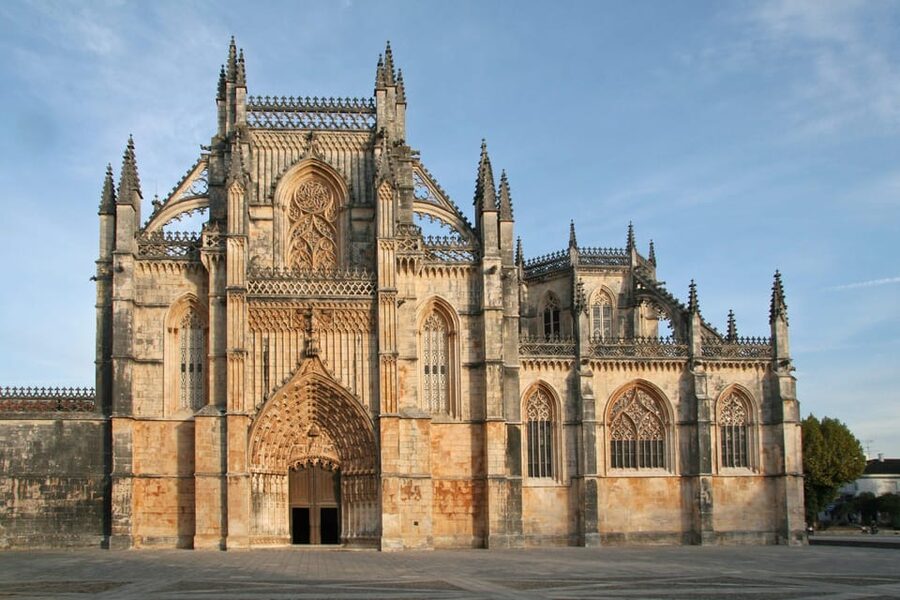
The first major stop is the outside of Batalha Monastery. Take a moment here before following the guide inside. The facade gives you the best first look at the building’s mixture of styles and its sheer ambition.
The Gothic design creates the monastery’s tall, solemn character. Look for the upward movement of the architecture, the layers of stone, and the feeling that the building is reaching beyond everyday life.
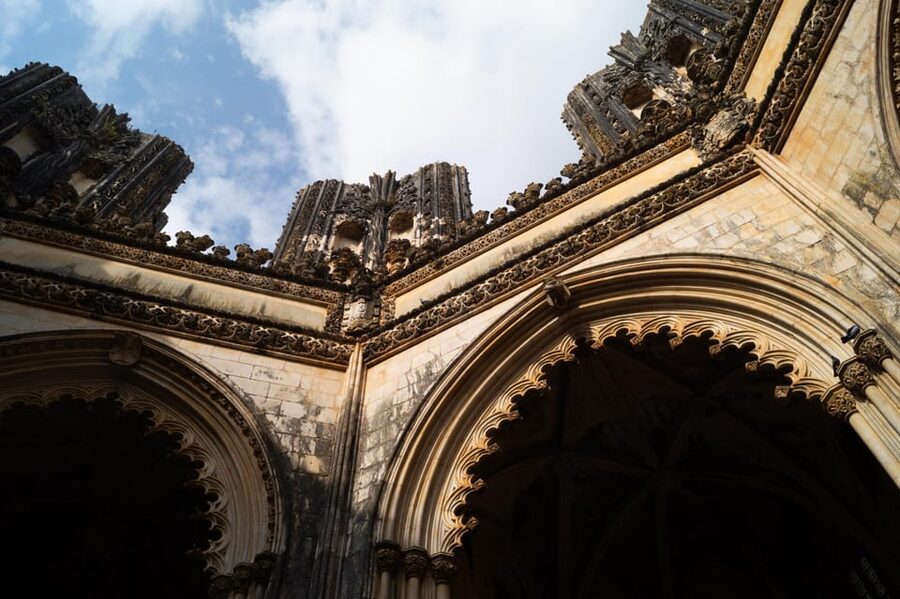
Manueline details bring a different mood. This Portuguese style is known for intricate decoration, and at Batalha it gives the exterior more visual texture. The guide can help you separate the main structural language from later decorative additions.
The tour also points to Renaissance influence. That is useful because the monastery was not created as one single, frozen project. Its appearance reflects changing ideas about art, faith, and royal presentation.
I like this opening because it gives you a visual checklist for the rest of the visit. Once you know to watch for Gothic structure, Manueline carving, and Renaissance touches, the interior becomes easier to read.
Inside the church and the Founder’s Chapel
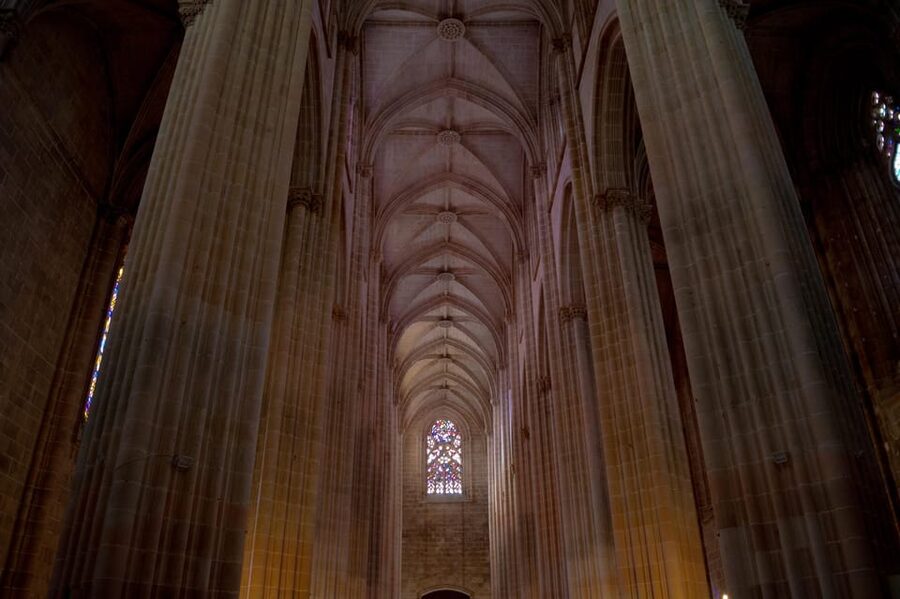
The interior shifts the mood from public display to royal memory. Here, the story becomes more personal because you see where King João I and Queen Filipa de Lencastre rest.
The Founder’s Chapel is one of the strongest parts of the tour. The tombs are not simply memorials to two rulers. They also express the importance of their dynasty and the alliances that supported it.
Queen Filipa de Lencastre connects the Portuguese royal family to England. The tour explains how the monastery relates to the Treaty of Windsor, a long-running alliance between Portugal and England. That link gives the tombs an international meaning, not just a family one.
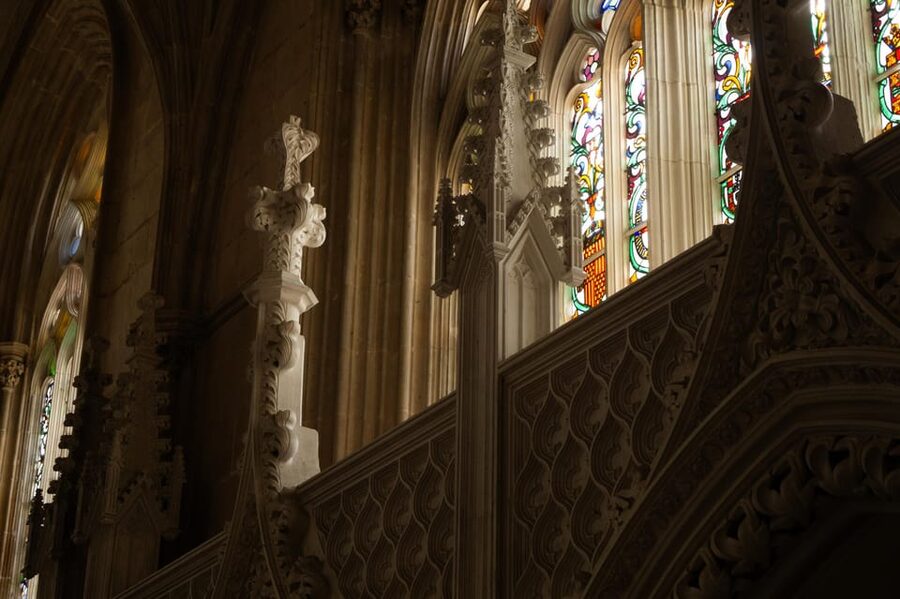
You will also have time to look at the stained glass and detailed stonework. The supplied information does not specify individual windows or carvings, so your guide’s explanation will be especially useful in deciding what deserves your attention.
This is a good part of the visit for questions. One German-speaking booking described Anna as able to explain Portugal’s history while making connections with other buildings and artistic styles. That suggests a conversation rather than a speech, which can help if you want to understand how Batalha fits into a wider visit to Portugal.
A few more temple visits around Portugal worth a look
- Lisbon: Jerónimos Monastery Entrance Ticket
★ 4.1 · 14,164 reviews - Lisbon: Belém Walking Tour with Jerónimos Monastery Ticket
★ 4.9 · 637 reviews - Lisbon: Belem Walking Tour with Jeronimos Monastery Ticket
★ 4.7 · 490 reviews - Lisbon: Belem, Jeronimos Monastery, and Coach Museum Tour
★ 4.8 · 478 reviews
The Battle of Aljubarrota and Portugal’s independence
The battle is the tour’s key historical thread. The monastery’s meaning depends on understanding why the victory mattered.
Your guide explains the battle’s role in protecting Portuguese independence and supporting the legitimacy of the Portuguese crown. In plain terms, the monastery helped turn a contested political moment into a confident national story.
That distinction matters. Royal buildings often serve practical religious purposes, but they can also make political arguments. Batalha did both. It was a place of worship and a public statement that the Portuguese monarchy had earned its position.
The tour also connects the battle to King João I and Queen Filipa de Lencastre. Their burial place inside the monastery reinforces the link between victory, dynasty, and divine favor.
I find this historical framing more useful than memorizing dates. You leave with a sense of why the building exists and why so much care went into its appearance. The stones are impressive, but the political message explains the scale.
The Cloisters: a quieter change of pace
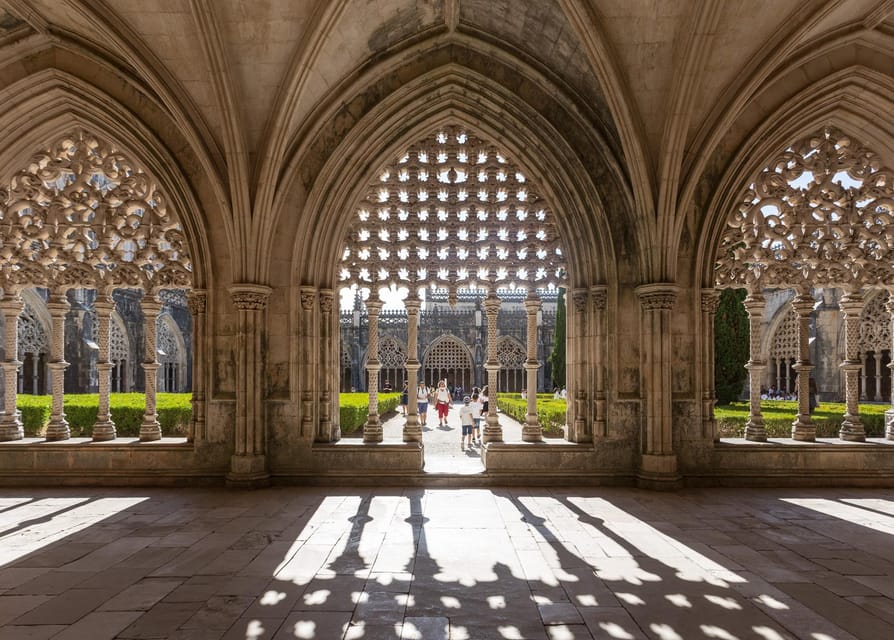
The Cloisters offer a calmer part of the visit. After the large facade and church interior, the enclosed walkways give you time to look closely at the craft.
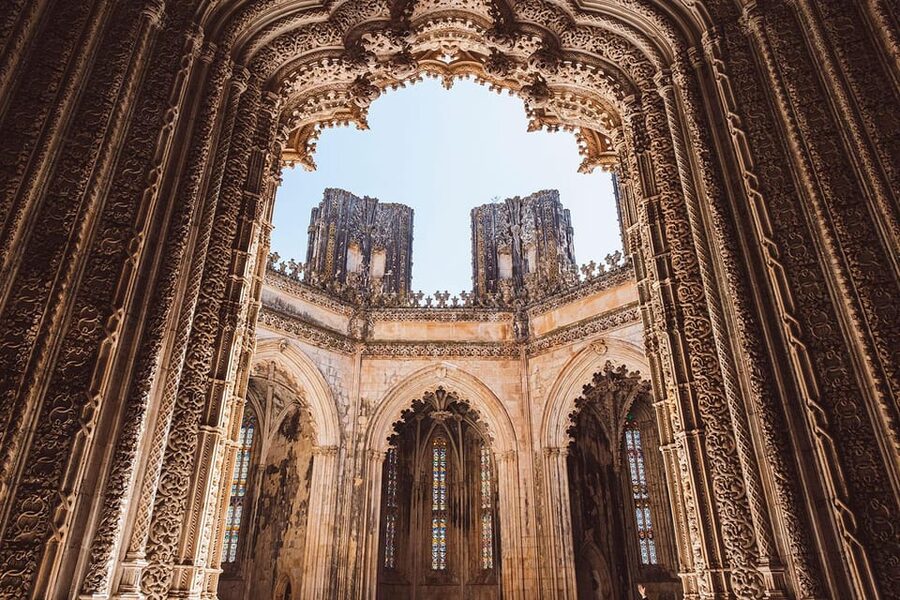
Cloisters were practical spaces for monastic life, but here they also show the artistic skill devoted to the monastery. Arches, carved details, and controlled light create a more intimate setting than the main church.
The guide uses this section to discuss faith, power, and artistic work. That combination is helpful because the Cloisters can otherwise seem like a scenic pause without much context.
Do not rush this part. The tour lasts 1.5 hours, so the pace needs to keep moving, but you should still have time to notice how the atmosphere changes. The exterior presents royal ambition. The chapel presents dynasty. The Cloisters bring you closer to the daily religious setting that supported the whole institution.
The visit ends after this guided exploration, with the group returning to the statue. If you enjoy architecture, you may want to stay near the guide during this section so you do not miss explanations about the carved stone and the monastery’s changing styles.
What the guide adds to the experience
The strongest praise has gone to the personal quality of the guiding. One booking described the guide as friendly and well informed. Several high ratings also point to a visit that felt interesting and educational.
Anna received particularly warm feedback for explaining the monastery and Portuguese history in a clear way. Her style was described as open to questions and comparisons with other buildings and artistic movements. That matters at Batalha, where a fixed lecture could easily become a list of names and dates.
A flexible guide can adjust the balance between architecture and history. If you care most about royal tombs, you can ask for more context there. If the carved stone catches your eye, you can ask how the styles differ.
There is also a useful caution. One Portuguese booking reported a late cancellation problem and felt that the guide did not provide enough references during the replacement arrangement. That complaint also raised confusion about the entrance ticket. The overall rating is 4.7 out of 5 from eight ratings, but you should still confirm the guide and ticket details before committing your day.
Is $47 a fair price?
At $47 per person, this is not the cheapest way to look around the monastery, especially because admission is extra. The value depends on how much context you want.
If you only want to enter, take photographs, and read the basic signs, a self-guided visit may cost less. You will need to make your own connections between the Battle of Aljubarrota, the royal tombs, the Treaty of Windsor, and the building’s several architectural styles.
The guided option earns its price when you want those connections explained as you go. A good guide can save you from looking at a beautiful building without knowing why it was built or what its symbols mean.
The small-group format is another plus. It allows more room for questions than a large coach tour, and a private group is available if you want a more personal visit. The exact private-group price is not provided, so check that before booking.
Because tickets are excluded, calculate the full cost rather than treating $47 as the final bill. One booking reported feeling misled after expecting admission to be part of the purchase. The clearest practical advice is to check the ticket wording and ask the provider if anything is unclear.
Who will enjoy this 1.5-hour tour?
I would choose this tour if you enjoy European history, royal architecture, or the way political events shape religious buildings. It suits you especially well if you want a local guide to explain the meaning behind the details.
It is also a good fit for visitors who prefer a compact experience. Ninety minutes is long enough to cover the key interior spaces without consuming the whole day.
You may like it if you ask questions as you go. Anna’s reported style was warm and open, not a rushed script, and that can make a real difference inside a complex monument.
This is less suitable if you need step-free access. The activity is listed as not suitable for wheelchair users, so check your own mobility needs before booking.
The tour is offered in Portuguese and English. If you are visiting with family or friends who want a private experience, private groups are available.
Practical details that affect your decision
The guide meets you at the statue and leads you inside the monastery. The route includes the church interior, the Founder’s Chapel, and the Cloisters, then returns to the original meeting point.
The tour takes 1.5 hours, with starting times based on availability. That makes it easy to place before or after another activity, but do not assume every time slot will be open on your chosen date.
You can cancel up to 24 hours in advance for a full refund, and the reserve now, pay later option keeps your plans flexible. Those terms are useful if your Portugal route is still changing.
The experience is operated by Open Roads Portugal. Language support is Portuguese and English, and a live guide leads the visit rather than an audio recording.
Should you book the Batalha Monastery tour?
Book it if you want Batalha Monastery to make historical sense, not just look beautiful. The combination of the Aljubarrota story, the Founder’s Chapel, the royal tombs, the Treaty of Windsor, and the Cloisters gives you a clear way to understand the monument.
I especially like the focus on the link between architecture and royal power. The guide’s warm, question-friendly approach, particularly with Anna, is another reason to consider it.
Skip it if you prefer exploring alone, want the lowest possible cost, or need wheelchair access. Also confirm that the entrance ticket is separate and verify the guide arrangements before you go.
For a short, focused visit with a strong history angle, this is a sensible choice. Just budget for admission on top of the $47 tour price.
FAQ
Where does the tour begin?
The meeting point is in front of the Estátua Equestre do Condestável D. Nuno Álvares Pereira.
Where does the tour finish?
The tour returns to the statue where it began.
How long does the experience last?
The guided visit lasts 1.5 hours.
Is the entrance ticket included?
No. Entrance tickets to the monument are not included in the tour price.
What language is the tour offered in?
The live tour is available in Portuguese and English.
Is this a private tour?
A small-group experience is offered, and a private group option is available.
What parts of the monastery are included?
The guided visit includes the interior of the monastery, the Founder’s Chapel, and the Cloisters.
Will the tour discuss the Battle of Aljubarrota?
Yes. The guide explains the battle and its significance for Portugal.
Does the tour explain the Treaty of Windsor?
Yes. The Treaty of Windsor and its connection to Portugal and England are included in the historical explanation.
Is the tour suitable for wheelchair users?
No. The activity is listed as not suitable for wheelchair users.
Can I cancel the booking?
Yes. You can cancel up to 24 hours in advance for a full refund.
Can I reserve now and pay later?
Yes. The reserve now, pay later option lets you book without paying immediately.
Just added around Portugal
- Belém: Jeronimos Monastery, Tickets and Guided tour★ 4.9 · 30 reviews
- Lisbon: Belem Walking Tour with Jeronimos Monastery Entry★ 4.9 · 163 reviews
- Lisbon: Belém Private Walking Tour & Jerónimos Monastery★ 4.5 · 83 reviews
- From Lisbon: Évora, Chapel of Bones, & Roman Temple Tour★ 5.0 · 8 reviews
- Fátima Private Tour: Shrine| Sacred Path |Shepherds House★ 5.0 · 81 reviews
- Lisbon: Belem Tour with Pastéis at Jerónimos Monastery★ 4.7 · 96 reviews
- Between Life & Death: Roman Temple, Cathedral & Bone Chapel★ 4.9 · 6 reviews
- Belém Walking Tour + Jerónimos Monastery Ticket★ 5.0 · 24 reviews
Portugal Temple Tours, compared.
Belém Walking Tour with Jerónimos Monastery Ticket
Read our review →Belem Walking Tour with Jeronimos Monastery Ticket
Read our review →
Belem, Jeronimos Monastery, and Coach Museum Tour
Read our review →
Belem and Jeronimos Monastery Guided Small Group Walking Tour
Read our review →
“Porto: Fado Show with Guided Tour in a Historic Monastery”
Read our review →
Belem Walking Tour with Jeronimos Monastery Entry
Read our review →Browse the lists this tour appears in