
REVIEW · PORTUGAL TEMPLE TOURS
Alcobaça: Entry to UNESCO Alcobaça Monastery
The great appeal here is the chance to walk through a UNESCO-listed Cistercian monastery that helped shape Portugal’s religious and political story. Its Gothic spaces are simple, huge, and striking, with medieval rooms preserved inside a complex that grew from the 12th through the 18th centuries. I like the access to the medieval rooms and the freedom to explore without being tied to a group. I also like the central location at Praça 25 de Abril, which makes it easy to continue around Alcobaça afterward.
The main catch is that this is an entry ticket, not a guided tour. A few visitors have misunderstood the purchase and expected a guide or a separate service, so read the inclusions carefully. Also avoid arriving near closing time: late entry can leave you rushing, and some rooms may already be preparing to close.
Key points to know before entering
- Founded in 1153: Alcobaça began as one of Portugal’s major Cistercian foundations.
- Construction began in 1178: The abbey’s position and scale reflect its role in Christian expansion and regional strategy.
- Medieval rooms included: Your ticket covers access to preserved rooms as well as the monastery entry.
- Self-guided visit: There is no guide included, so you set your own pace and bring your own context.
- $17 price: The cost is reasonable if you want independent access, but less attractive if you expect commentary or transport.
- Closed on major holidays: The monastery is closed on January 1, Easter Sunday, May 1, August 20, and December 25.
Why Alcobaça Monastery deserves your time
Alcobaça is not simply a pretty church with old stonework. It is one of the country’s most important Cistercian foundations, founded in 1153 at a time when Portugal was expanding its Christian territory.
That background gives the building extra weight. The monastery was not placed here by accident. Construction of the abbey began in 1178, and the complex carried cultural, religious, and ideological importance. Its location and scale helped express the reach of the Christian kingdom.
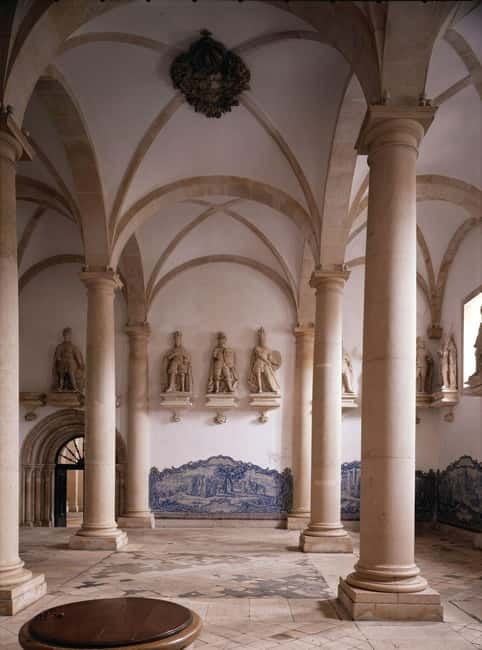
I like places where architecture explains history without needing a museum label at every step. At Alcobaça, the long Gothic forms, restrained decoration, and monastic rooms give you a strong sense of how a religious community was organized. You can read the building as both a house of prayer and a major institution with regional power.
The monastery is often described as a white Gothic jewel, though the real pleasure is less about a single spectacular detail and more about the way the whole complex works together. The church, cloisters, and medieval rooms form a rare surviving group, with later additions showing how the site changed over several centuries.
A few more temple visits around Portugal worth a look
- Lisbon: Jerónimos Monastery Entrance Ticket
★ 4.1 · 14,164 reviews - Lisbon: Jerónimos Monastery E-Ticket and Audio Guide
★ 3.7 · 660 reviews - Lisbon: Belém Walking Tour with Jerónimos Monastery Ticket
★ 4.9 · 637 reviews
Entering at Praça 25 de Abril
The meeting point is the main entrance of Mosteiro de Alcobaça at Praça 25 de Abril. That is useful for independent visitors because you do not have to search for a separate office, guide, or meeting spot elsewhere in town.
The ticket is designed to let you skip the ticket line, which matters most during busier periods. You should still check the available starting times before booking, since the activity is valid for one day rather than tied to a long, fixed tour program.
There is no transportation included. You make your own way to the monastery, and the central location works well if you are already exploring Alcobaça. After the visit, you can continue around town without having to return to a distant pickup point.
The activity is wheelchair accessible. Photography is allowed, but flash is not, so keep your camera or phone set accordingly.
The Gothic church and the feeling of space
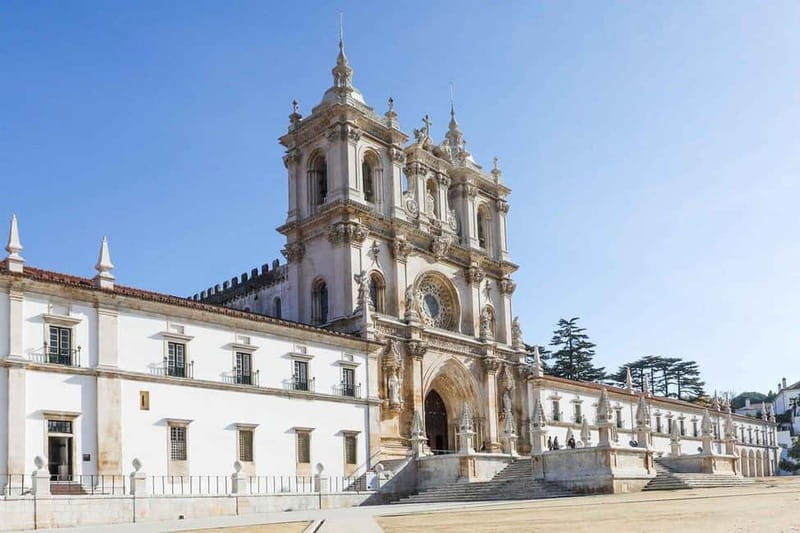
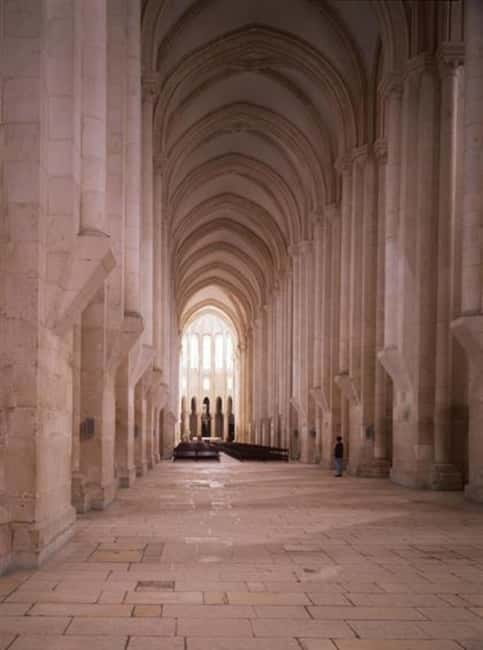
Begin with the monastery’s Gothic architecture. The design favors height, order, and clean lines rather than heavy decoration. That simplicity is part of the Cistercian character, and it creates a calm mood inside the building.
You will notice the contrast between the building’s enormous scale and its restrained visual language. The monastery feels powerful without relying on a clutter of ornament. Light, stone, and repeated architectural forms do much of the work.
I find this kind of setting rewarding because it asks you to slow down. You do not need a guide to appreciate the basic effect: the church feels built for collective worship, while the surrounding monastic areas reveal the practical side of religious life.
Take your time here rather than treating the church as a quick photo stop. The Gothic proportions are easier to understand when you look up, then step back and consider how the major spaces connect. Photography is permitted, but no flash means you need to work with the available light.
The experience is quietest when you arrive with plenty of time left in the opening period. A late visit may still get you inside, but the atmosphere changes when staff are preparing the building for closure.
Medieval rooms preserved inside the complex
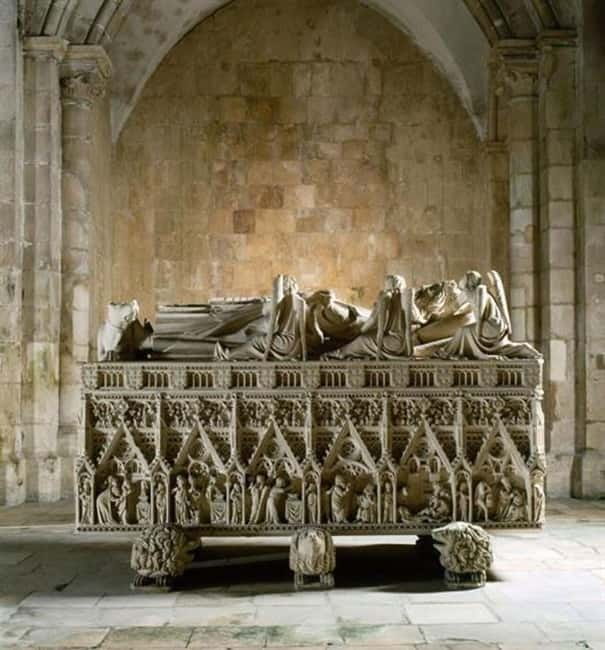
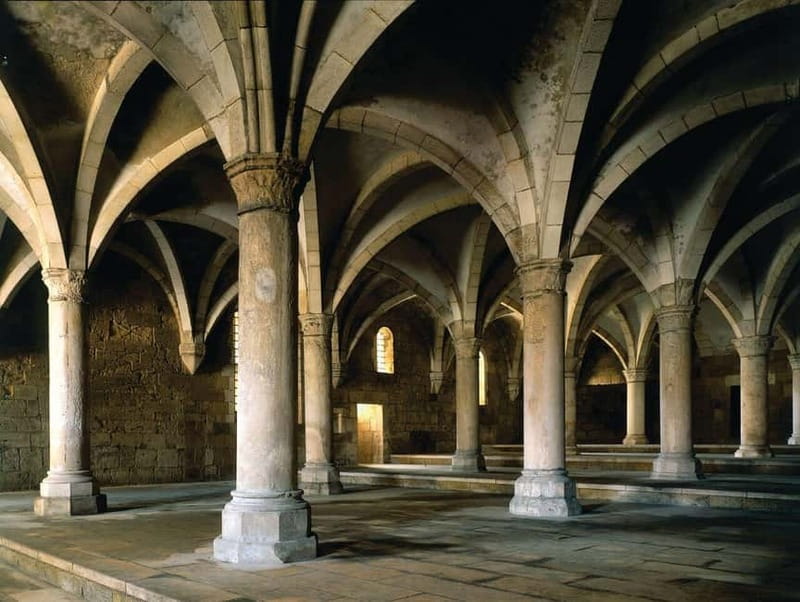
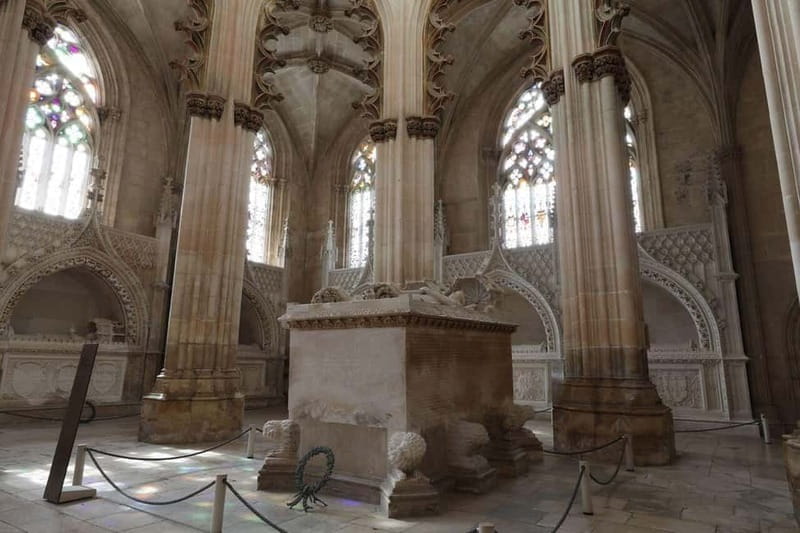
Access to the medieval rooms is one of the strongest reasons to choose this ticket. These spaces take you beyond the grand public face of the abbey and toward the daily structure of monastic life.
The rooms also help explain why Alcobaça is more than a single architectural monument. You are seeing parts of a working religious institution, preserved over centuries and altered as the monastery developed.
The information provided does not identify every room by name or describe a fixed path through them, so you should expect to explore the available areas at your own pace. That freedom is useful if you have a particular interest in medieval architecture, but it also means you will not receive a room-by-room explanation from a guide.
One practical warning matters here. A visitor who arrived during the final half hour before closing was hurried by security and could not see the dormitories because staff were already preparing to shut the area. The lesson is simple: do not treat the final entry time as the best time to arrive. Even if the door is still open, you may not receive the full visit.
Same country, a different morning at the gates:
- Lisbon: Belem Walking Tour with Jeronimos Monastery Ticket
★ 4.7 · 490 reviews - Lisbon: Belem, Jeronimos Monastery, and Coach Museum Tour
★ 4.8 · 478 reviews - Belem and Jeronimos Monastery Guided Small Group Walking Tour
★ 5.0 · 410 reviews - “Porto: Fado Show with Guided Tour in a Historic Monastery”
★ 4.9 · 164 reviews
How the monastery connects to Portugal’s expansion
The monastery’s story reaches beyond religious architecture. Its foundation and construction relate to Portugal’s Christian expansion, making the complex part of the country’s wider medieval political story.
The abbey’s strategic construction began in 1178. That does not mean you will receive a full history lecture with this ticket, but the setting gives you a chance to think about why a major monastery was established here and why it grew to such importance.
For me, that context makes the building more interesting than a collection of old rooms. The monastery represented faith, authority, organization, and the ability to hold territory. Its white exterior and prominent position gave it a strong public presence, while the interior showed the discipline of Cistercian life.
The complex also records the evolution of Portuguese architecture from the 12th to the 18th centuries. You are not looking at one untouched moment in time. Instead, you are seeing a long architectural story, with the original Gothic foundation joined by later work.
That mixture is one of Alcobaça’s best features. If you only want a perfectly uniform medieval building, the changes across the centuries may feel less tidy. If you like seeing how important places adapt, the combination gives you more to notice.
What the $17 ticket includes
At $17 per person, this is a straightforward paid admission rather than a full-day guided excursion. The ticket includes entry to Alcobaça Monastery and access to the medieval rooms.
It does not include a guided tour, meals, beverages, or transportation. That distinction is important because the price may seem low compared with a hosted day tour, but you are paying for access to the monument, not for a guide who explains each section.
I consider the value good for three types of visitors:
- You want to explore independently.
- You are interested in Gothic architecture and medieval religious buildings.
- You already have transport and do not need a bundled tour.
The value is weaker if you expect personal interpretation. Without a guide, you will need to bring your own reading or accept a quieter, more visual visit. That is not a flaw, but it changes what you are buying.
The high marks from several recent bookings suggest that the core experience can be very satisfying, with short comments describing it as very good, superb, or simply all good. At the same time, the low marks point to a clear communication problem: at least one person believed the purchase covered a travel guide rather than admission and still had to pay for entry. Read the product details carefully before you commit.
Timing matters more than the one-day validity
The activity is valid for one day, and you can check availability for starting times. The visit itself is not presented as a fixed guided program with a detailed schedule, so your main planning concern is opening time and how much time remains before closing.
Give yourself more than the final half hour. That lets you see the church and medieval rooms without pressure and gives you room to pause over the architecture.
The monastery is closed on:
- January 1
- Easter Sunday
- May 1
- August 20
- December 25
The December 25 closure deserves special attention because one booking was made for that date and found the monastery closed. Check the calendar before paying, especially during public holidays or a short visit to Portugal.
The activity is non-refundable. This makes date checking essential. If you are uncertain about your schedule, confirm the opening date and available time before booking rather than assuming the ticket can be changed later.
Who will enjoy this independent visit
I would recommend this experience to independent sightseers who like to set their own pace. You can linger in the Gothic areas, spend extra time in the medieval rooms, and leave when you have had enough, without following a group.
It also suits architecture students, history-minded visitors, and anyone building a day around Portugal’s major religious monuments. The monastery offers enough visual detail to reward slow observation, while its role in Christian expansion gives the visit a clear historical frame.
Families and mixed-interest groups may also find the flexible format useful. You do not have to keep everyone on the same schedule, and the central location makes it easy to continue exploring Alcobaça afterward.
I would be more cautious if you need a guide to explain medieval history in depth. The ticket does not include one. I would also avoid this format if your schedule only allows a rushed arrival close to closing, since the final rooms may not remain available for a full visit.
A practical plan for your visit
Before booking, check three things: the date, the available start time, and the fact that the purchase covers admission only.
On arrival, go to the main entrance at Praça 25 de Abril. Keep your visit unhurried, especially if the medieval rooms are a priority. Start with the major Gothic spaces, then spend time in the preserved rooms so you can see both the public and practical sides of the monastery.
Photography is allowed without flash. A phone or camera is fine, but avoid using flash in the interior.
If you want background information, arrange that separately because no guide is included. You can still appreciate the architecture without one, but the monastery’s role in Portugal’s Christian expansion becomes easier to understand if you know the basic dates: the foundation was established in 1153, and construction of the abbey began in 1178.
Plan to finish well before closing. A late admission may leave you with too little time, and staff may begin preparing sections for closure before the official closing hour.
Should you book Alcobaça Monastery entry?
Book it if you want direct access to one of Portugal’s major Cistercian sites, especially if Gothic architecture and medieval rooms appeal to you. At $17, it offers fair value for a self-guided visit, and the central entrance makes it easy to fit into a day in Alcobaça.
Do not book it expecting a guided tour, transportation, food, or a detailed personal explanation. Confirm the date carefully because the ticket is non-refundable, avoid the listed closure days, and arrive with plenty of time before closing.
For an independent visit with a strong architectural and historical setting, this is a solid choice. The best version of the experience comes from treating it as a substantial monument visit, not a quick final stop before dinner.
FAQ
Where is the Alcobaça Monastery meeting point?
The meeting point is the main entrance of Mosteiro de Alcobaça at Praça 25 de Abril.
How much does entry to Alcobaça Monastery cost?
The listed price is $17 per person.
How long is the activity valid?
The ticket is valid for one day. You should check availability for the starting times offered on your chosen date.
Does the ticket include access to the medieval rooms?
Yes. Access to the medieval rooms is included.
Is a guided tour included?
No. The activity includes entry and access to the medieval rooms, but no guided tour.
Are meals and beverages included?
No. Meals and beverages are not included.
Is the monastery wheelchair accessible?
Yes. The activity is listed as wheelchair accessible.
Can you take photographs inside?
Yes. Photography is allowed, but flash photography is not permitted.
When is Alcobaça Monastery closed?
It is closed on January 1, Easter Sunday, May 1, August 20, and December 25.
Just added around Portugal
- Belém: Jeronimos Monastery, Tickets and Guided tour★ 4.9 · 30 reviews
- Lisbon: Belem Walking Tour with Jeronimos Monastery Entry★ 4.9 · 163 reviews
- Lisbon: Belém Private Walking Tour & Jerónimos Monastery★ 4.5 · 83 reviews
- From Lisbon: Évora, Chapel of Bones, & Roman Temple Tour★ 5.0 · 8 reviews
- Fátima Private Tour: Shrine| Sacred Path |Shepherds House★ 5.0 · 81 reviews
- Lisbon: Belem Tour with Pastéis at Jerónimos Monastery★ 4.7 · 96 reviews
- Between Life & Death: Roman Temple, Cathedral & Bone Chapel★ 4.9 · 6 reviews
- Belém Walking Tour + Jerónimos Monastery Ticket★ 5.0 · 24 reviews
Portugal Temple Tours, compared.
Belém Walking Tour with Jerónimos Monastery Ticket
Read our review →Belem Walking Tour with Jeronimos Monastery Ticket
Read our review →
Belem, Jeronimos Monastery, and Coach Museum Tour
Read our review →
Belem and Jeronimos Monastery Guided Small Group Walking Tour
Read our review →
“Porto: Fado Show with Guided Tour in a Historic Monastery”
Read our review →
Belem Walking Tour with Jeronimos Monastery Entry
Read our review →Browse the lists this tour appears in