
REVIEW · PORTUGAL TEMPLE TOURS
Alcobaça: Discover the Monastery with a Local Guide Tour
The most moving part of this tour is the tombs of Pedro and Inês, carved in stone for a king and his murdered lover whose story still gives the monastery a pulse. You also see Portugal’s earliest great Gothic church, a vast, spare space shaped by the ideals of the Cistercian monks.
I like the way the tour connects prayer with practical work, from the silent cloister to the kitchen’s medieval water system. I also like that guides such as Ana and Wilson have a reputation for clear explanations, good answers, and a touch of humor. The main drawback is the short 1.5-hour length, especially if you want time to linger over every carving.
Key points to know before you go
- Pedro and Inês’s carved tombs: Follow one of Portugal’s most tragic royal love stories through two remarkable medieval monuments.
- A rare Gothic interior: See a three-aisle church dating from the 12th and 13th centuries, designed around Cistercian simplicity.
- Monks as farmers and engineers: Learn how the order turned its land into one of Portugal’s most productive agricultural areas.
- Practical monastic spaces: Visit the chapter room, cloister, kitchen, refectory, dormitory, and library.
- Strong guide-led experience: English and Portuguese tours are available, with Ana and Wilson singled out for precise, lively explanations.
- Good flexibility: The tour costs $47 per person, lasts 90 minutes, and allows cancellation up to 24 hours before the start.
Why Alcobaça Monastery deserves your time
Alcobaça is not simply a grand church with a few side rooms. It is a record of how religion, royal power, farming, architecture, and personal tragedy worked together in medieval Portugal.
The Monastery of Santa Maria de Alcobaça began with a royal promise. King Afonso Henriques donated the land to Bernard of Clairvaux in 1153 after the Portuguese Reconquest. That decision gave the Portuguese Crown a spiritual partner and helped strengthen its political claim over the country.
The Cistercian Order was known for strict religious discipline and a preference for simple worship. Yet the monks also managed a large estate. Their work changed the surrounding region, using farming methods and water management to make the land highly productive.
That contrast gives the tour its shape. You move from an enormous church built for prayer to a kitchen built for daily work. You see royal burial places beside austere monastic rooms. The result is a more complete picture of medieval life than you get from a church visit alone.
More Guided Tours in Portugal:
- Lisbon: Jerónimos Monastery E-Ticket and Audio Guide
★ 3.7 · 660 reviews - Belem and Jeronimos Monastery Guided Small Group Walking Tour
★ 5.0 · 410 reviews - “Porto: Fado Show with Guided Tour in a Historic Monastery”
★ 4.9 · 164 reviews
Starting at the church entrance
Your guide meets you in front of the monastery church. That is a useful meeting point because the enormous façade gives you an immediate sense of scale before the tour begins.
Take a moment to look up. The exterior reflects centuries of construction and changes, but the main impression is one of size and order. The building was made to express the reach of the Cistercian foundation and its close relationship with the Portuguese Crown.
A guide helps you read the façade instead of simply photographing it. You can ask why the monastery was built here, how the royal donation shaped its future, and how religious aims mixed with political needs.
The tour is offered in English or Portuguese. A private group option is also available, which may suit you if you want to ask many questions or prefer a more focused pace.
The three-aisle Gothic church
Inside, the church is the tour’s grandest space. Its three-aisle design is described as unique among churches from the 12th and 13th centuries, and its scale can feel surprising after the plainness associated with Cistercian worship.
The Cistercians valued restraint. Their churches were meant to support prayer without excessive distraction, so the space emphasizes height, light, proportion, and clean architectural lines rather than a crowded display of decoration.
That simplicity does not make the church dull. Quite the opposite. The long perspective through the aisles gives the building a quiet power, while the lack of visual clutter lets you notice the masonry and structure.
This is where a guide is particularly useful. Without context, you may see a large medieval church. With explanation, you can understand why its design reflects the order’s religious ideals and why the monastery is considered one of Portugal’s earliest Gothic masterpieces.
The church also introduces the relationship between the monks and the monarchy. Royal support helped establish the monastery, while the monastery gave the Crown spiritual legitimacy. That connection appears again in the royal burial areas.
Pedro and Inês, Portugal’s tragic royal couple
The tombs of Pedro and Inês are among the most memorable sights at Alcobaça. They are intricately carved and connected to a story of love, politics, murder, and royal revenge.
Pedro was a Portuguese prince who loved Inês de Castro. Their relationship created political problems, and Inês was killed. Pedro later became king and arranged for Inês to be recognized as his queen after her death.
The tombs preserve more than their remains. They preserve a royal message about love, legitimacy, and memory. The carvings invite close attention, so do not rush past them with only a quick photograph.
Your guide can explain the story’s political setting and point out details in the stonework. This is one of the places where a question-led tour is more useful than a general audio recording. The tale is dramatic, but the carved details and royal context make it more than a romantic legend.
The tombs also give the monastery an emotional center. Much of Alcobaça feels measured and disciplined. Pedro and Inês bring human passion into that ordered setting.
A few more temple visits around Portugal worth a look
- Lisbon: Jerónimos Monastery Entrance Ticket
★ 4.1 · 14,164 reviews - Lisbon: Belém Walking Tour with Jerónimos Monastery Ticket
★ 4.9 · 637 reviews - Lisbon: Belem Walking Tour with Jeronimos Monastery Ticket
★ 4.7 · 490 reviews - Lisbon: Belem, Jeronimos Monastery, and Coach Museum Tour
★ 4.8 · 478 reviews
The Royal Pantheon and the power of burial
The Royal Pantheon shows how closely Alcobaça was tied to Portugal’s ruling family. Kings and queens were buried here, turning the monastery into a place of national memory as well as religious practice.
Royal tombs were never only about private mourning. They helped present the monarchy as legitimate, Christian, and rooted in Portuguese history. At Alcobaça, the church and royal burial spaces make that connection visible.
I find this part especially useful if you are trying to understand Portugal beyond its picturesque towns and coastal scenery. The monastery shows how architecture could serve both faith and government.
The setting also adds contrast. The monks took vows of poverty, yet their monastery received royal favor and managed a large estate. That tension is not a flaw in the story. It is one of the most revealing parts of the visit.
The chapter room and the life of the monks
The chapter room shifts the focus from kings to the community that maintained the monastery. This was where monks gathered for readings, discussion, and the management of their religious life.
You learn about their vow of poverty, but also about the considerable responsibilities they carried. The monks oversaw land, agriculture, water, food, buildings, and the people connected with the estate.
That combination can surprise you. Monastic poverty did not mean the whole institution was small or unimportant. Alcobaça operated on a large scale, and the monks’ work helped shape the region around it.
A guide can make this section more approachable by tying daily routines to the rooms themselves. Instead of treating the monks as distant medieval figures, you begin to see how much organization was needed to keep a community and estate functioning.
The Cloister of Silence
The Cloister of Silence offers a calmer change of pace. Its name points to its purpose as a place for meditation and quiet movement away from the main church and working areas.
Cloisters are easy to hurry through. Try not to. The enclosed design creates a strong sense of separation from the outside world, and the repeated architectural forms help explain how monks used the space.
This is also a good stop for travelers who appreciate architecture more than long historical speeches. You can look at the proportions, the stonework, and the way the cloister connects different parts of the monastery.
The silence is part of the experience, even when other people are present. Keep your voice low and allow the room to work on you. Food and drinks are not permitted inside the monastery, which helps preserve the character of these spaces.
The medieval kitchen and its water system
The kitchen adds a practical and unexpected chapter. Here, the monastery’s medieval hydraulic engineering becomes part of the story.
The monks needed reliable systems for water, cooking, cleaning, and feeding a large community. The kitchen shows that religious devotion depended on very ordinary infrastructure.
This is one of the stops that makes Alcobaça feel less like a collection of grand rooms. You see how the institution functioned from day to day. The same community that prayed in the Gothic church also had to manage supplies, meals, water, and work.
If you enjoy old engineering, ask your guide to explain the water system carefully. The information supplied for the tour specifically highlights this feature, so it is more than a quick walk through a service room.
The refectory and the monks’ austere meals
The refectory was where spiritual and physical nourishment came together. Monks ate here under the rules of their order, following a restrained diet that reflected their vows.
The room helps put Cistercian ideals into daily terms. The church shows the order’s spiritual side, while the refectory shows how those principles affected eating, routine, and community life.
You should expect the story here to be less glamorous than the royal tombs, but it is valuable. Grand monuments can hide the repetitive labor that kept them alive. The refectory brings that ordinary discipline back into view.
The tour also includes access to the monks’ dormitory and library. These spaces help round out the visit, showing where the community slept, studied, and maintained its intellectual life.
What the guides add
The quality of this experience depends heavily on the person leading it. The strongest guide comments have focused on clear explanations, careful answers, and an ability to keep the subject lively.
Ana has been praised for being precise, friendly, and willing to answer questions beyond the main presentation. Wilson has been described as highly informed about the grounds, buildings, and history, while using humor to keep the tour moving.
Those details matter because Alcobaça contains a lot of information. A flat recital of dates would make the 90 minutes feel long. A guide who connects the rooms, people, and ideas can make the monastery easier to remember.
You should feel free to ask about the Cistercians, Bernard of Clairvaux, the Reconquest, farming methods, Pedro and Inês, or the royal burials. The strongest feature of a live tour is the chance to shape part of the conversation around your interests.
Is $47 a fair price?
At $47 per person, this is not the cheapest way to look at the monastery. You are paying for a 1.5-hour guided visit rather than simply entering and walking through at your own speed.
I think the price can make sense if you want historical context and access to areas such as the dormitory, kitchen, and library. The guide also ties together subjects that can otherwise feel separate: Gothic design, royal politics, monastic discipline, agriculture, and engineering.
The value is weaker if you prefer to spend a long time photographing architectural details or reading every display at your own pace. Ninety minutes gives you a structured overview, but it does not allow unlimited lingering.
A private group option may make the price more worthwhile for people who want a personal pace or have many questions. The exact group arrangements are not specified, so check the available option before booking.
Who should book this experience?
I would choose this tour if you are visiting Alcobaça for the first time, enjoy medieval architecture, or want more than a quick look at the church. It suits history enthusiasts, architecture fans, and anyone drawn to the Pedro and Inês story.
It also works well for a larger Portugal itinerary. The monastery gives you a clear example of how religion helped shape agriculture, government, royal identity, and settlement.
The tour may be less suitable for young children. It is not intended for children under six, and the subject matter requires some attention.
There is conflicting information about mobility. The activity details describe the tour as wheelchair accessible, but the restrictions also say it is not suitable for wheelchair users or people with mobility impairments. If this affects your plans, contact the provider before booking and ask for a precise route and access information.
Dress modestly because the monastery remains a religious site. Food and drinks are not allowed inside.
Should you book the Alcobaça monastery tour?
Book it if you want the monastery explained as a living institution rather than treated as a grand photo stop. The best reasons are the expert storytelling around Pedro and Inês, the link between the Cistercian Order and the Portuguese Crown, and access to working spaces such as the kitchen, dormitory, and library.
Skip it if you want complete independence or several hours for slow photography. The 90-minute schedule is focused and useful, but it has a firm limit.
For most first-time visitors who want context, $47 is a reasonable price for a local-led introduction. I would pay particular attention to the guide language and mobility details when booking, then arrive ready to look beyond the famous church. Alcobaça is at its best when you notice both the royal drama and the monks’ everyday work.
FAQ
Where does the tour begin?
The guide waits in front of the entrance to the church of the Monastery of Santa Maria de Alcobaça.
How long does the tour last?
The guided tour lasts 1.5 hours, or 90 minutes.
What language is the tour offered in?
The live tour is available in English and Portuguese.
What is included in the tour?
The experience includes a guided tour of the Monastery of Santa Maria de Alcobaça, with access to the monks’ dormitory, kitchen, and library.
Does the tour visit the tombs of Pedro and Inês?
Yes. The tour includes the intricately carved tombs of Pedro and Inês and explains their tragic love story.
Is the tour suitable for children?
Children under six are not permitted for this activity.
Is the monastery tour wheelchair accessible?
The activity information contains conflicting details. It describes the tour as wheelchair accessible but also says it is not suitable for wheelchair users or people with mobility impairments. Contact the provider to confirm access before booking.
Can I cancel the booking?
You can cancel up to 24 hours in advance for a full refund.
Can I reserve now and pay later?
Yes. You can reserve your place and pay later, keeping your plans flexible.
Just added around Portugal
- Belém: Jeronimos Monastery, Tickets and Guided tour★ 4.9 · 30 reviews
- Lisbon: Belem Walking Tour with Jeronimos Monastery Entry★ 4.9 · 163 reviews
- Lisbon: Belém Private Walking Tour & Jerónimos Monastery★ 4.5 · 83 reviews
- From Lisbon: Évora, Chapel of Bones, & Roman Temple Tour★ 5.0 · 8 reviews
- Fátima Private Tour: Shrine| Sacred Path |Shepherds House★ 5.0 · 81 reviews
- Lisbon: Belem Tour with Pastéis at Jerónimos Monastery★ 4.7 · 96 reviews
- Between Life & Death: Roman Temple, Cathedral & Bone Chapel★ 4.9 · 6 reviews
- Belém Walking Tour + Jerónimos Monastery Ticket★ 5.0 · 24 reviews
Portugal Temple Tours, compared.
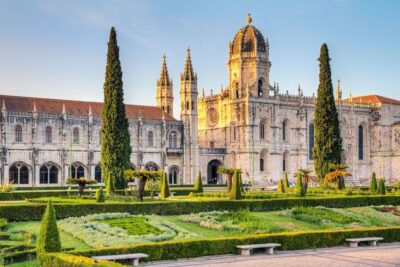
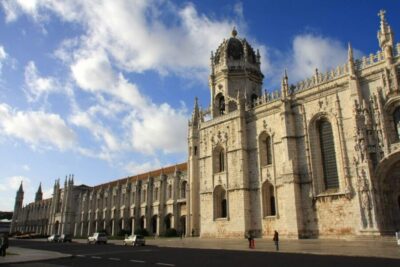
Belém Walking Tour with Jerónimos Monastery Ticket
Read our review →Belem Walking Tour with Jeronimos Monastery Ticket
Read our review →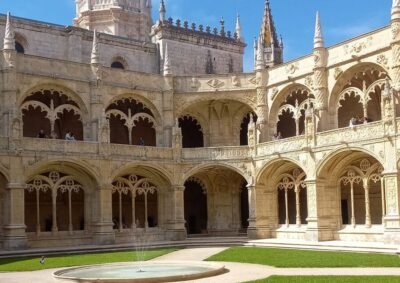
Belem, Jeronimos Monastery, and Coach Museum Tour
Read our review →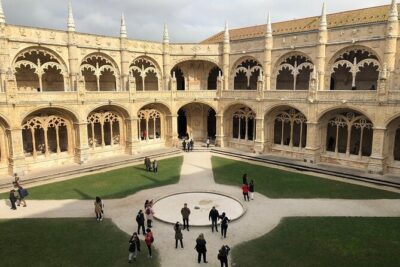
Belem and Jeronimos Monastery Guided Small Group Walking Tour
Read our review →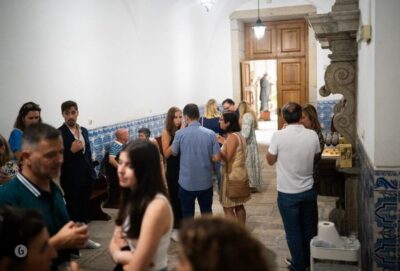
“Porto: Fado Show with Guided Tour in a Historic Monastery”
Read our review →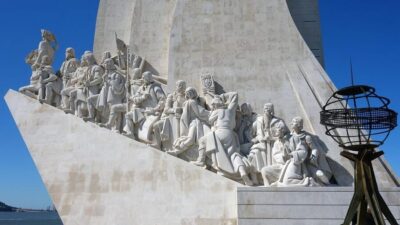
Belem Walking Tour with Jeronimos Monastery Entry
Read our review →Browse the lists this tour appears in