
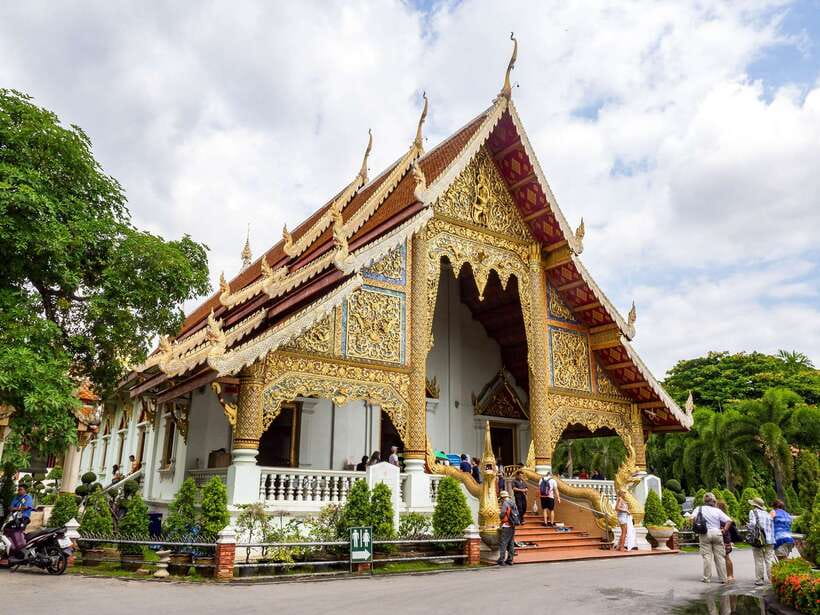
REVIEW · CHIANG MAI TEMPLE TOURS
Chiang Mai: 3 Hour Old City and Temples Guided Walking Tour
Chiang Mai’s best-known temples are close enough to visit on foot, but their stories are easy to miss when you wander alone. This three-hour guided walk links Wat Chedi Luang, Wat Phan Tao, and Wat Phra Singh, giving you the background, Buddhist context, and small details that turn beautiful buildings into meaningful places.
I like the route for two reasons. First, it gives you three very different temples in one morning or afternoon. Second, the guides often add personal touches, from Buddhist meditation advice to explanations of Thai beliefs and local customs. Guides such as Nana, TomTam, Nuttaya, Sunny, and Boon have earned especially warm praise for their humor, patience, and clear English.
The main drawback is simple: this is a walking tour in a hot city, with lots of shoes going on and off. The advertised price is excellent, but you still pay 120 THB in temple admission fees, and anyone with mobility, heart, respiratory, or pregnancy-related concerns should choose another way to see the Old City.
Key points at a glance
- Three major temples in three hours: Visit Wat Chedi Luang, Wat Phan Tao, and Wat Phra Singh in a logical Old City route.
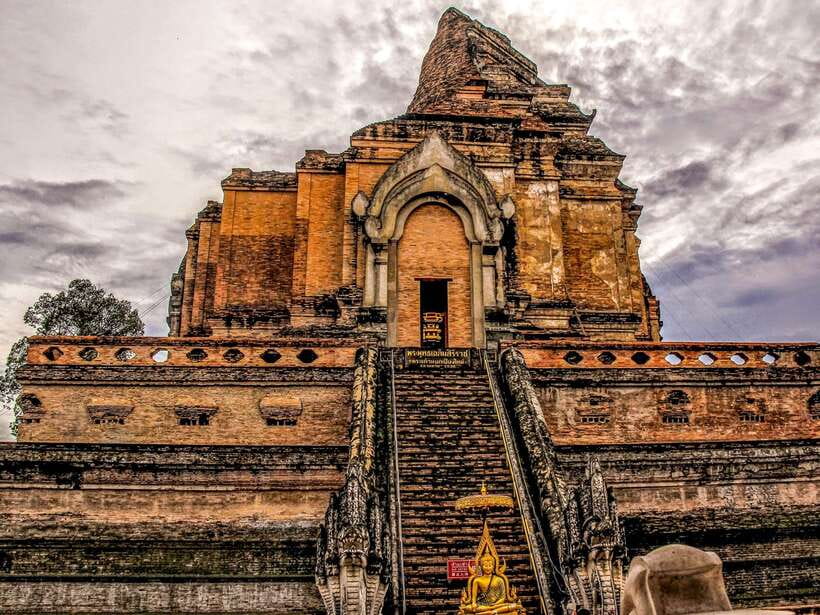
- The largest stupa in Chiang Mai: See the battered but impressive chedi at Wat Chedi Luang and learn about its Lanna design.
- A small temple with fine woodwork: Wat Phan Tao rewards close attention with its carved teak facade.
- Guides add the meaning: Expect explanations of Buddhism, Thai beliefs, meditation, languages, and local life, not just dates and names.
- Bring 120 THB for admission: Entry fees are separate from the $16 tour price.
- Dress and walk for the setting: Cover your shoulders, back, underarms, and knees, and wear shoes that slip off easily.
Why this short walk works in Chiang Mai
Chiang Mai’s Old City is compact, but its temples are not interchangeable. Wat Chedi Luang is large and weighty. Wat Phan Tao feels intimate and crafted by hand. Wat Phra Singh is polished, ornate, and ceremonial. Seeing all three in sequence gives you a useful visual lesson in northern Thai religious architecture.
I also like the scale. Three hours is long enough to learn something without consuming an entire day. You can fit the tour into a short Chiang Mai visit, use it near the start of your stay to get oriented, or schedule it before an evening meal and still have time for other plans.
The price is another strong point. At $16 per person, the tour costs less than many private sightseeing options. Add 50 THB for Wat Chedi Luang, 20 THB for Wat Phan Tao, and 50 THB for Wat Phra Singh, and the required admission comes to 120 THB. Food, drinks, and hotel transport are not included, so this is best viewed as an inexpensive guided introduction rather than an all-inclusive outing.
The exact feel depends on your guide. Nana has been praised for her humor and care, TomTam for taking time with questions, and Boon for adding a short meditation lesson. Sunny, Nuttaya, Nattiya Kanya, Katy, and others have also been singled out for clear explanations and friendly attention. The company assigns an English-speaking local guide, but the guide’s style will naturally vary from one departure to the next.
More Temple Walking Tours in Chiang Mai
- Chiang Mai: Historic Temples and City Guided Walking Tour
★ 4.7 · 650 reviews - Chiang Mai: Temple And City Walking Tour Part I
★ 4.7 · 244 reviews - Ex-monk city & temples walking tour: (3.5 hours / 1.7 km.)
★ 4.8 · 35 reviews
Wat Chedi Luang and Chiang Mai’s monumental center
Meet your guide at the entrance of Wat Chedi Luang. Look for the TripGuru sign and arrive 10 minutes early. There is no hotel pickup or drop-off, so you need to make your own way to the temple.
This is a good starting point because Wat Chedi Luang immediately gives you a sense of Chiang Mai’s age and scale. Construction began in the 14th century and continued into the 15th century. Its great stupa is the largest in Chiang Mai, although time and damage have left it far from its original form.
Your guide will lead you around the broad compound and point out Lanna-style details. This matters because the temple can otherwise become a quick photo stop: big chedi, ornate roof, next temple. With context, you can pay attention to proportions, decorative patterns, religious symbols, and how the site functioned as more than a single building.
Allow about an hour here. That sounds generous, but the compound has enough to examine, and the guide’s explanations are a major part of the value. You will also begin learning how Buddhist practice shapes everyday customs, including why certain areas require quiet behavior, modest clothing, or bare feet.
The site may feel busy and exposed, depending on the time of day. Bring water, sunscreen, and a hat. One useful detail from the experience is that even the cooler months can feel hot while walking, so do not treat February as automatically mild.
Wat Phan Tao, where the woodwork gets the spotlight
Compared with Wat Chedi Luang, Wat Phan Tao is modest in size. That is precisely why it works as the middle stop. After the large masonry and open space of the first temple, you get a closer look at a smaller building shaped by carved wood.
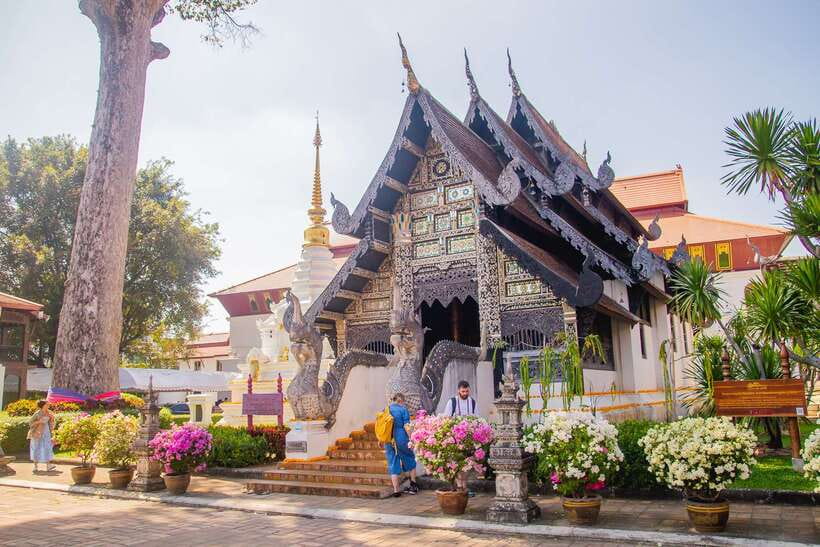
Wat Phan Tao is noted for its intricate teak facade. The building once served as a throne hall for King Mahotara Prateth before becoming a place of prayer. That change of use gives your guide a chance to explain how royal, civic, and religious spaces could overlap in northern Thailand.
This is the stop where I would slow down and inspect the details. Look at the wooden panels, carved patterns, roof lines, and the way the building feels more intimate than Wat Chedi Luang. A guide can help you notice the workmanship rather than simply label the temple as small.
The tour information allows roughly an hour for this part of the route, though the actual pace may depend on the group and the guide. One guide may focus on architecture, while another may spend more time on Buddhist beliefs or the former royal connection. You will probably remove your shoes here, as you do at several points during the tour, so sandals or slip-on shoes are far more convenient than lace-up hiking boots.
Wat Phra Singh and a lavish final stop
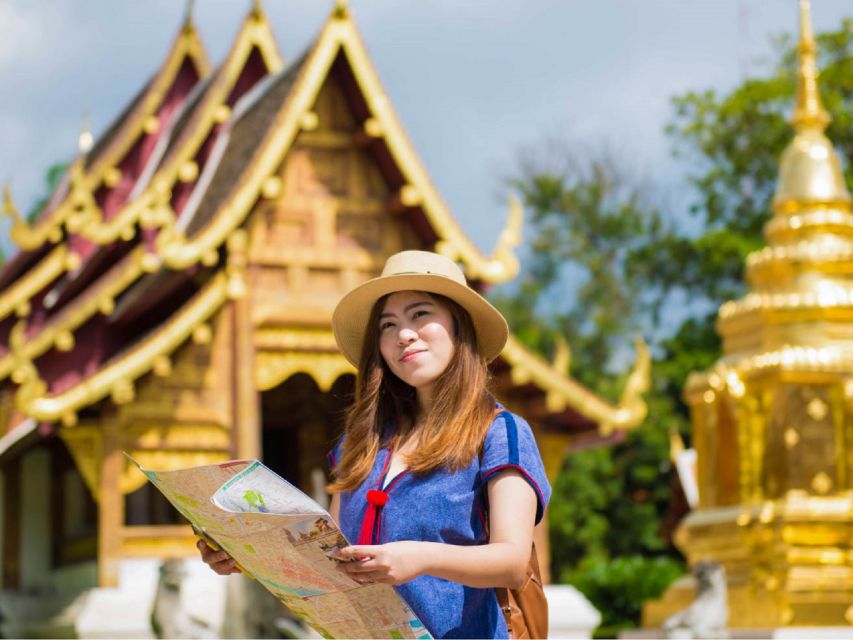
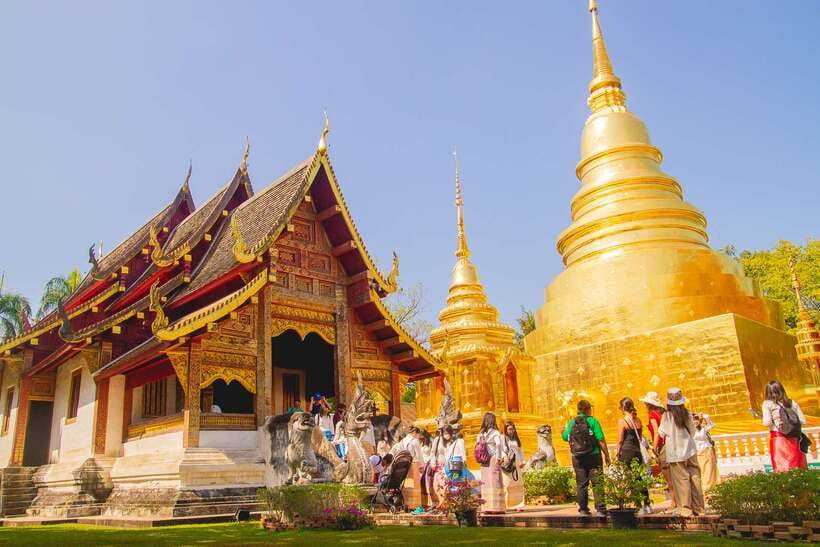
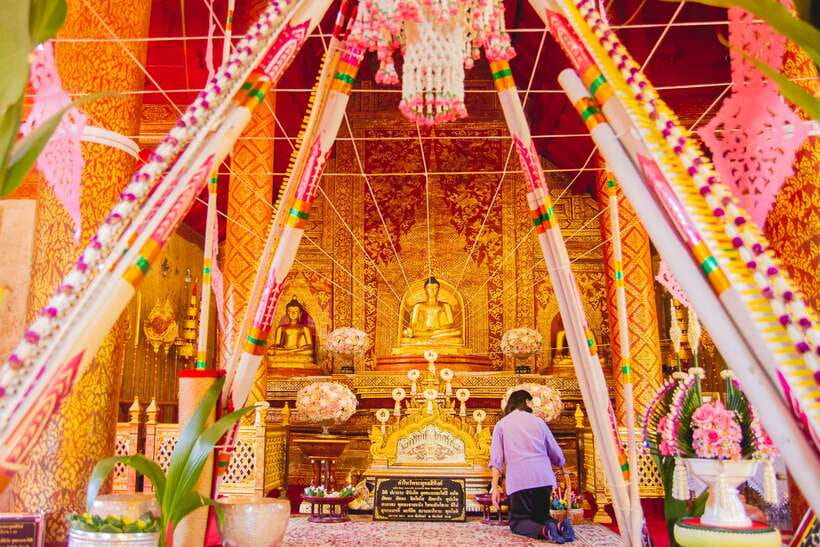
The walk ends at Wat Phra Singh Woramahawihan. This is the grand finale, and it looks the part. The 14th-century temple complex includes a mosaic-decorated sanctuary, gilded pagodas, ornate grounds, and the large Lion Buddha statue associated with the temple.
After the restrained woodwork of Wat Phan Tao, Wat Phra Singh feels more decorative and formal. It is a good place to put the morning’s lessons together. You can compare the different materials, styles, and moods of all three temples while the details are still fresh.
Plan for about an hour here. The grounds offer plenty to see, and the guide can explain the religious importance of the main images and buildings. This is also a strong photo stop, but remember that a temple is an active place of worship, not just a historic backdrop. Follow your guide’s instructions, keep your voice down in sanctuaries, and ask before photographing people engaged in prayer.
The tour finishes at Wat Phra Singh, rather than returning you to your hotel or the first temple. That is useful if you want to continue exploring the Old City from there. It also means you should avoid booking a tight onward appointment unless you know exactly how you will get to it.
More Temple Walking Tours in Thailand
- Chiang Mai Old City & Temples Guided Walking Tour – 3 Hrs
★ 4.5 · 34 reviews - Chiang Mai Old City & Temples 3 hour Twilight Walking Tour
★ 5.0 · 9 reviews - Bangkok: City Highlights Temple and Market Walking Tour
★ 4.5 · 3,990 reviews - Bangkok: Grand Palace and Wat Phra Kaew Guided Walking Tour
★ 4.4 · 2,417 reviews
What the guides add beyond temple facts
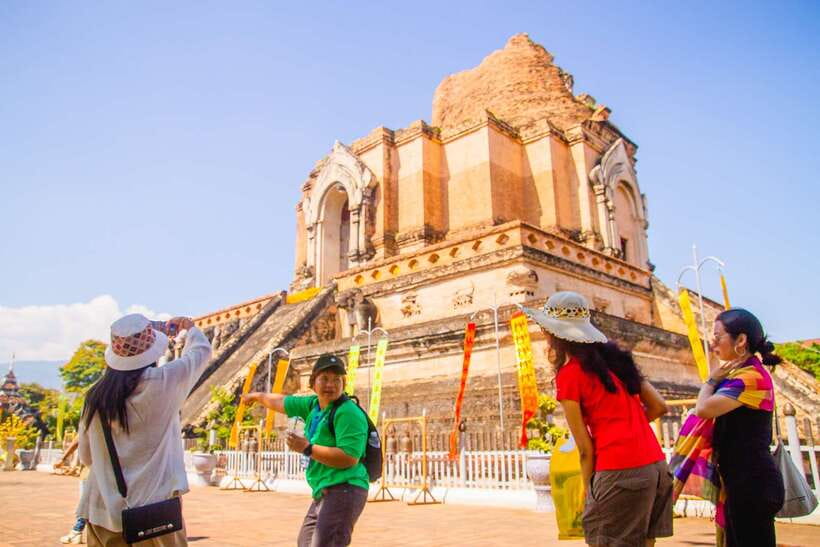
The strongest reason to book a guided walk is not the route. You can find these temples on a map. The advantage is having someone explain what you are looking at and answer questions as they come up.
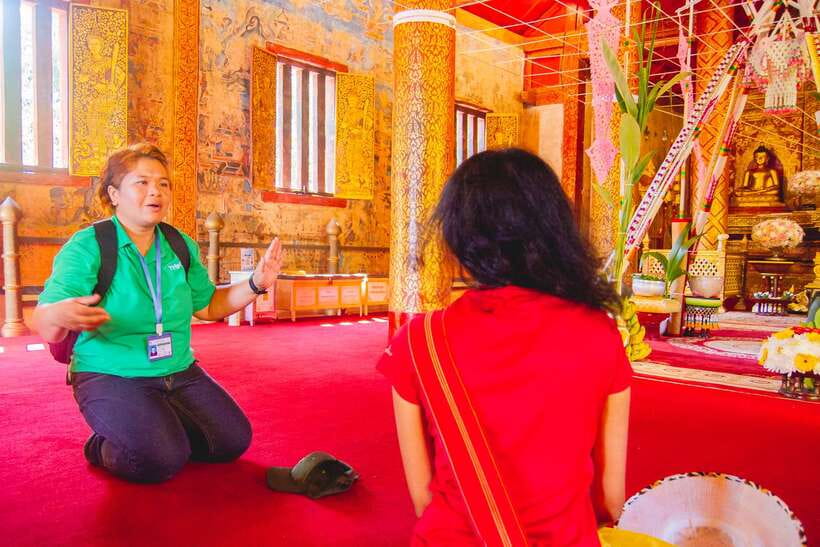
Expect discussion of Chiang Mai’s history, Lanna culture, Buddhism, Thai beliefs, and local customs. One guide taught visitors how to meditate at a temple. Another explained different languages. Several guides have been praised for relating Buddhist ideas to their own lives, including one guide who had grown up as a monk.
That personal element can make the tour feel less like a lecture. Nuttaya and Nuttata have been praised for their clear explanations of Chiang Mai and Buddhism. Nana has been described as both funny and deeply informed. TomTam has been appreciated for his patient answers and relaxed manner. These are useful qualities on a walking tour because you may have questions that a guidebook cannot handle, such as why a particular image is placed where it is or how a belief affects daily life.
English is the listed language. The feedback about the guides’ English is consistently positive, but accents and speaking styles differ. If you want a highly academic architectural tour, this may feel informal. If you want a friendly introduction that connects buildings to living culture, it should suit you well.
Heat, footwear, and temple manners
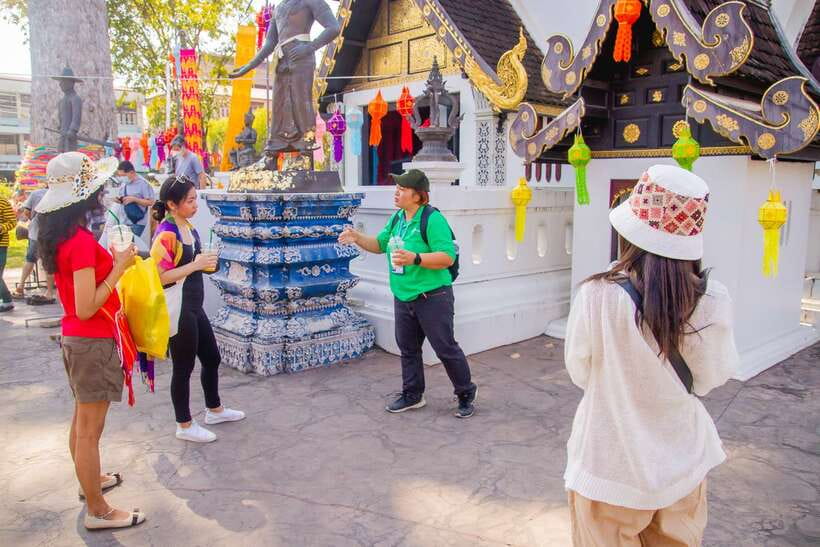
Treat this as a real walking tour, not a vehicle-based sightseeing trip. Comfortable shoes are essential, but the best shoes are also easy to remove. You will take them off repeatedly, and socks can make hot or rough surfaces more comfortable if you prefer not to walk barefoot.
Pack a small day bag with:
- Water
- Sunglasses and a hat
- Sunscreen
- Insect repellent
- Camera
- Cash for admission fees
- A scarf for extra coverage
Temple dress rules are important. Clothing that reveals the shoulders, underarms, back, or knees is not permitted at some sights. A scarf is useful, but it should not be your only plan if your outfit leaves much of your legs or upper body uncovered. Modest, loose clothing is the sensible choice.
The walking itself is described as requiring moderate fitness. You should be comfortable standing, walking between sites, removing shoes, and spending time outdoors. The tour is not suitable for people with mobility impairments, pregnant women, or people with heart or respiratory problems.
One participant with a spinal problem needed help getting back to the hotel, and the guide arranged a tuk-tuk. That shows a thoughtful response in an awkward situation, but you should not count on the tour being adapted for mobility needs. There is no hotel transfer included, and the route remains a walking route.
Timing, pace, and the three-hour promise
The experience is sold as three hours, with roughly one hour assigned to each temple. In practice, the length can vary. Some departures may move briskly, while others may run longer if the group asks many questions or the guide gives extra explanations.
One group found the tour ran closer to four to four and a half hours. Another person felt the time was a little long, while several others found the pace just right. This is not a contradiction so much as a reminder that guided walks breathe differently depending on the group.
If you have an appointment afterward, leave a cushion. If you enjoy questions and conversation, the extra time may be welcome. A short break may occur during the route, but food and drinks are not included, so carry your own water and snacks if needed.
Morning is likely to be the most comfortable choice if you have options, though the activity listing does not guarantee a particular starting time. Check the available departure times when booking.
Responsible tourism and practical booking value
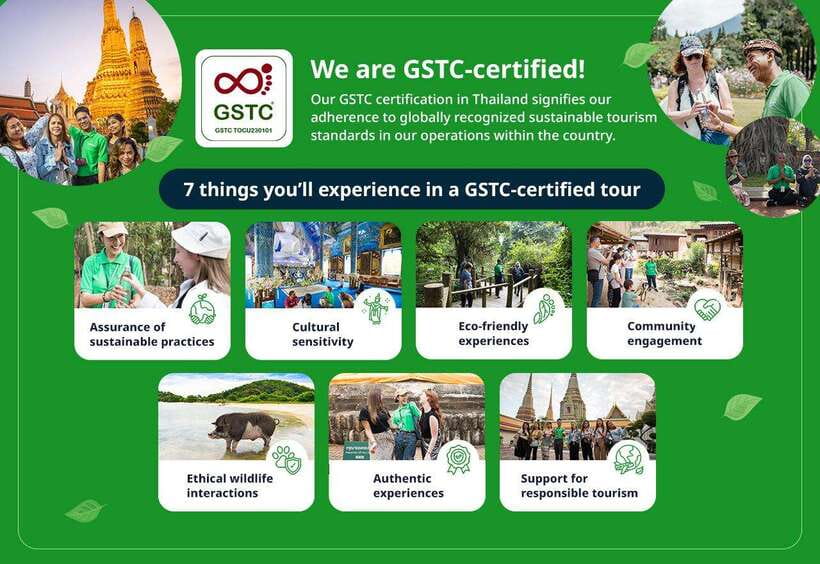
The tour is GSTC-certified and presents itself as a lower-impact way to explore, with carbon emissions offset for each tour. That does not erase the normal effects of tourism, but walking between nearby temples avoids adding a sightseeing vehicle to the route and keeps the experience focused on the Old City.
For $16, you are paying mainly for a local English-speaking guide. The entrance fees are modest, and the walking route needs no transport. If you already know the temples well, the value may be limited. If this is your first visit, the cultural explanation is likely worth more than the cost of the admission tickets themselves.
Free cancellation is available up to 24 hours before the activity for a full refund, and you can reserve now and pay later. Those terms help if your Chiang Mai schedule is still moving around, but the meeting point and starting time still deserve attention before you commit.
Who should book this Chiang Mai temple walk?
I would choose this tour if you want a useful first look at the Old City without giving up an entire day. It suits solo visitors, couples, and small groups who like asking questions and prefer local explanation over reading signs alone.
It is also a good choice for anyone curious about Buddhism but unsure how to approach a temple respectfully. Learning how to behave, where to remove shoes, and what different images or spaces mean can make the rest of your Chiang Mai sightseeing more comfortable.
I would skip it if you dislike walking in heat, have difficulty with stairs or standing, or want hotel transport. I would also skip it if you prefer to linger for a long time at one site. Three temples in three hours gives you breadth, not a slow architectural study.
Should you book it?
Yes, if you want an affordable, focused introduction to Chiang Mai’s central temples. The route is well chosen, the three sites offer real variety, and the best guides add Buddhism, local customs, meditation, humor, and personal insight to the buildings.
Book with sensible expectations. Pay the extra 120 THB in cash, dress modestly, wear slip-on shoes, carry water, and leave extra time after the scheduled finish. For a first visit, the tour offers a lot for $16. For a repeat visitor or anyone needing easy transport and accessible pacing, exploring independently may be the better call.
FAQ
How long does the Chiang Mai temple walking tour last?
The advertised duration is three hours. The route gives about one hour each to Wat Chedi Luang, Wat Phan Tao, and Wat Phra Singh, though the finish can vary with the group and guide.
Where does the tour start?
The meeting point is at the entrance of Wat Chedi Luang. Look for a guide holding a TripGuru sign and arrive 10 minutes before the scheduled time.
Where does the tour finish?
The tour finishes at Wat Phra Singh Woramahawihan. Hotel pickup and drop-off are not included.
What temples will I visit?
You will visit Wat Chedi Luang, Wat Phan Tao, and Wat Phra Singh. The route covers Chiang Mai’s large central stupa, a teak-built temple, and a highly decorated temple complex.
Are entrance fees included?
No. The listed fees are 50 THB for Wat Chedi Luang, 20 THB for Wat Phan Tao, and 50 THB for Wat Phra Singh. Bring 120 THB in cash for all three.
What language is the tour in?
The live tour guide speaks English.
What should I wear?
Wear clothing that covers your shoulders, underarms, back, and knees. Some sights enforce strict dress codes. Comfortable shoes are important, and shoes that are easy to remove will make the temple visits much easier.
Can I cancel the booking?
You can cancel up to 24 hours in advance for a full refund. The activity also offers a reserve-now, pay-later option.
More Three-Hour Trips in Chiang Mai
- No.1 Chiang Mai: 3-Hour Monk Trail Hike to Wat Doi Suthep & Palad
★ 5.0 · 11 reviews - 3-Hour Private Ephesus, Terrace Houses, Cruiser Only
★ 5.0 · 274 reviews - Kyoto: 3-Hour Fushimi Inari Shrine Hidden Hiking Tour
★ 4.9 · 270 reviews - Cusco: 3-Hour Horse Riding Tour to the Temple of the Moon
★ 5.0 · 105 reviews
Just added around Chiang Mai
- Chiang Mai Temples & City★ 5.0 · 10 reviews
- Full Day Chiang Rai 3 Temples White, Blue,Big Bhudha Temples★ 4.5 · 11 reviews
- Chiang Mai Old City & Temples 3 hour Twilight Walking Tour★ 5.0 · 9 reviews
- Chiang Mai Temples & Old City Hidden Gems Small Group Tour 2 Hrs★ 5.0 · 6 reviews
- Chiang Mai City and Temples Half-Day Tour★ 4.5 · 136 reviews
- Chiang Mai Best City Tour with Doi Suthep, Pha Lat & Chedi Luang★ 5.0 · 63 reviews
- Chiang Mai Old City & Temples Guided Walking Tour – 3 Hrs★ 4.5 · 34 reviews
- The Best Chiang Mai City Private Tour: Famous Temples & Viewpoint★ 4.5 · 7 reviews
Chiang Mai Temple Tours, compared.
Chiang Rai Temples, Karen Tribe and Hot Springs
Read our review →
Chiang Rai White Temple and Blue Temple Day Tour
Read our review →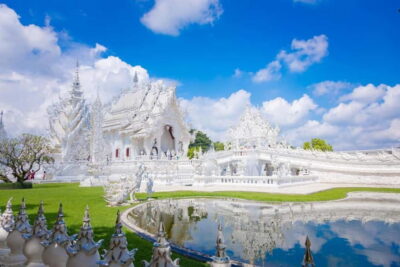
White, Red/Black & Blue Temples Tour with Lunch
Read our review →
Doi Suthep and Wat Umong Enchanting Evening Tour
Read our review →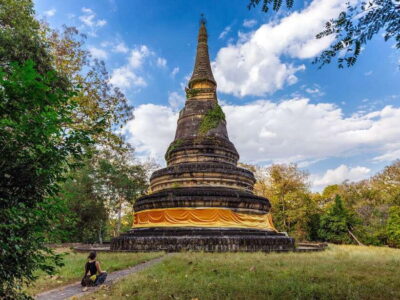
Doi Suthep, Wat Umong, and Pha Lat Sunrise Tour
Read our review →
Chiang Rai Temples: Private Tour from Chiang Mai
Read our review →
Browse the lists this tour appears in