
REVIEW · KATHMANDU TEMPLE TOURS
Bhaktapur Durbar Square and Boudhanath Stupa
Boudhanath’s giant white dome and Bhaktapur’s carved brick lanes give you two very different views of Nepal in one half-day. You’ll move from Tibetan Buddhist ritual to Newari art, food, and architecture, with a private car and guide keeping the day simple.
I like the strong cultural contrast and the chance to see working pottery, wood, and paper workshops rather than only polished monuments. I also like the guides’ personal touch. Prakriti and Bijay received especially warm praise for their kindness, local insight, photo help, and thoughtful extras such as Bhaktapur’s yogurt treat.
The main drawback is time. Five hours is enough for a good introduction, not a slow, exhaustive visit. You’ll also pay heritage-site admission and your own food costs on top of the $60 tour price.
Key points at a glance
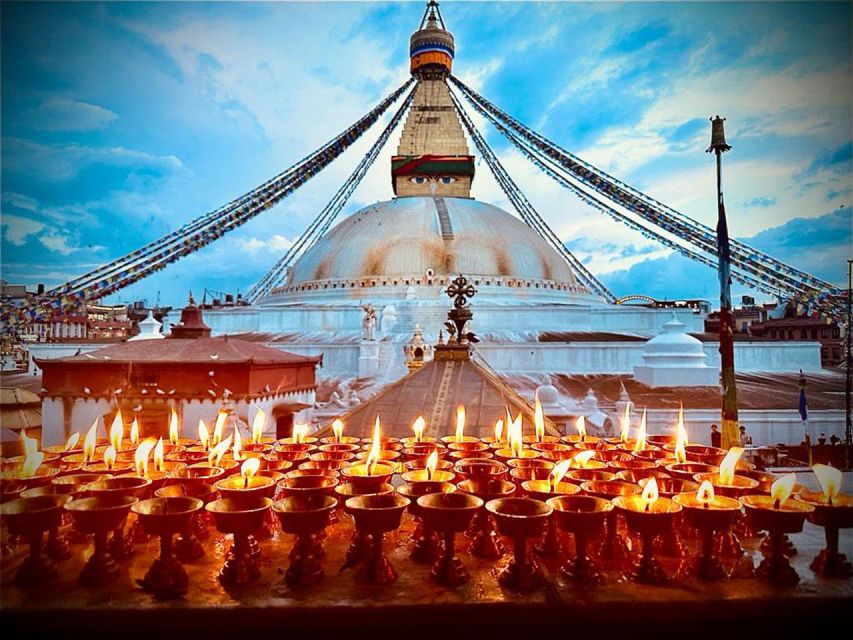
- Boudhanath first: Spend about 80 minutes walking around one of Kathmandu’s major Buddhist pilgrimage sites, watching people make the ritual circuit and turn prayer wheels.
- Bhaktapur’s old streets: Allow about 90 minutes for pagoda temples, palace squares, carved windows, local shops, and Newari workshops.
- Private transport: A car, driver, guide, and Kathmandu hotel pickup and drop-off are included.
- Local guides matter: Prakriti and Bijay were praised for clear explanations, friendly care, photo help, and a willingness to show everyday parts of the city.
- Extra costs are modest but real: Heritage tickets, meals, shopping, and personal purchases are not included in the $60 price.
- Good for a first visit: This suits you if you want two major sights, useful cultural context, and an easy half-day without joining a large group.
Two sides of Kathmandu in five hours
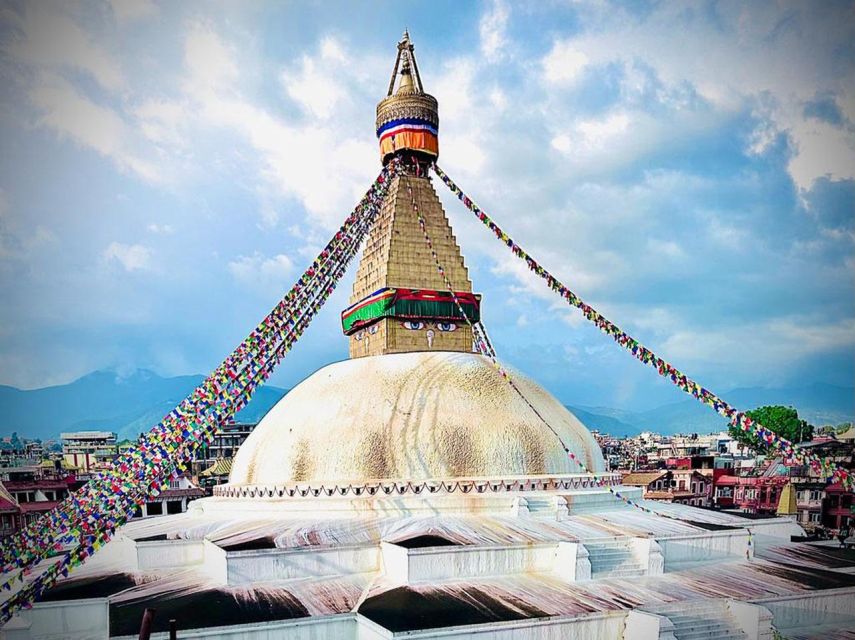
This tour links Boudhanath Stupa with Bhaktapur Durbar Square, two places that feel far apart even though they can be visited in the same outing. Boudha is a center of Tibetan Buddhist life, with monasteries, prayer flags, incense, and pilgrims circling the stupa. Bhaktapur is an old Newari city filled with brick courtyards, pagoda temples, palace buildings, and workshops.
That contrast gives the tour its purpose. You are not simply collecting two famous photo stops. You are seeing different communities, religious traditions, and forms of art within the Kathmandu area.
The outing lasts five hours and uses a private group with a free car, licensed English-speaking guide, and pickup in Kathmandu. That format is especially useful if you have limited time, have just arrived in Nepal, or prefer to ask questions without keeping pace with strangers.
The $60 price is fair if you value private transport and a guide. It is less attractive if you already have a car, know the sites well, and want only a quick look. Since admission tickets are extra, check your total budget before booking.
A few more temple visits around Kathmandu worth a look
- Kathmandu Spiritual Sites: Bodhnath & Pashupatinath Tour
★ 5.0 · 185 reviews - Kathmandu: Chandragiri Cable Car and Monkey Temple Tour
★ 4.8 · 139 reviews - From Kathmandu: 2 Stupas and Kopan Monastery Spiritual Tour
★ 4.8 · 115 reviews
Starting at Boudhanath Stupa
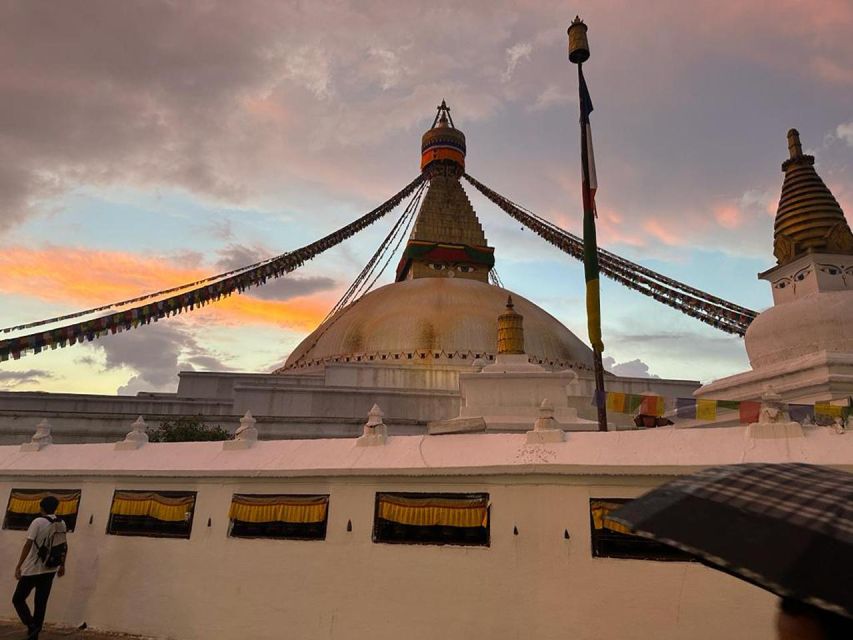
The Boudha visit lasts about 80 minutes and includes a guided walk, sightseeing, and time for photos. The stupa is the spiritual center of this part of Kathmandu, and the best part of the visit is watching how people use the space rather than simply looking at its architecture.
You may see pilgrims walking clockwise around the stupa, spinning prayer wheels, and repeating mantras. The steady movement gives the site a calm rhythm, even when the surrounding streets are active. Take your time with the details: prayer flags, monastery entrances, incense, and the painted eyes looking out over the area.
Your guide can help explain what you are seeing and how the ritual circuit fits into Tibetan Buddhist practice. That context matters. Without it, the stupa can look like a striking monument. With it, you begin to understand why people return to walk, pray, and pause here.
Boudha also gives you a direct look at the Tibetan community in Kathmandu. You can browse shops selling incense, Tibetan objects, and thangka paintings, though shopping is optional and personal purchases are not included.
I would use this first stop to settle into the day. Walk a circuit, take photographs from respectful distances, and avoid treating active worship as a performance. Your guide can point out suitable photo spots, a useful service since one guest specifically valued the guide’s help with pictures and group photos.
The visit is not designed as a long meditation session or a detailed monastery study. Eighty minutes goes quickly once you include walking and photographs. If Boudhanath is your main interest, you may wish the schedule allowed more time.
Entering Bhaktapur’s Newari old town
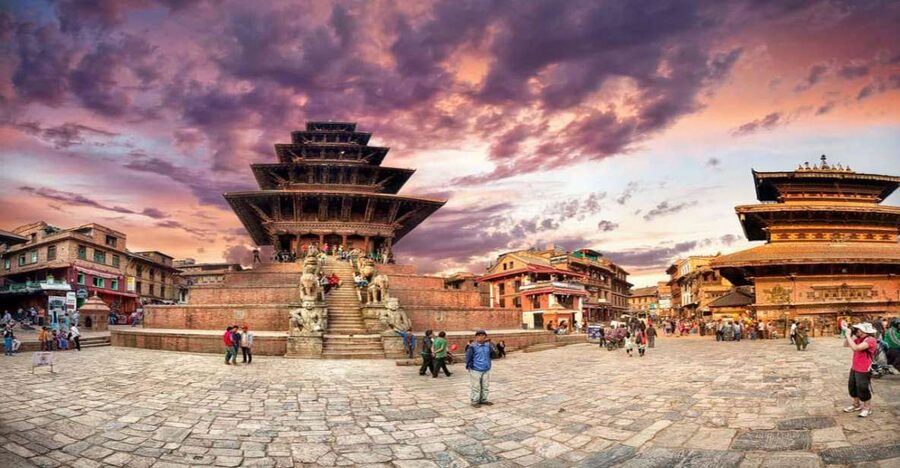
The second major stop is Bhaktapur Durbar Square, where you have roughly 90 minutes for a guided visit, free time, photographs, and shopping. The city is known for its well-preserved Newari architecture, including pagoda temples, palace buildings, brick lanes, and carved wooden windows.
The word durbar refers to a royal palace square, and Bhaktapur’s buildings reflect its former role under the Malla dynasty. Your guide can connect the temples and courtyards to the city’s work in art, architecture, and trade. Those explanations help you read the details instead of walking past them as decoration.
Look closely at the woodcarving. Windows and doors carry patterns that are easy to miss when you are busy navigating narrow streets. The tour also introduces traditional Newari life through local food and workshops, including pottery, woodworking, and paper making.
This is where the tour becomes more than a monument visit. You might see artisans at work and pass through streets used by local residents, not only visitors. One particularly memorable stop described by a guest was a private home filled with antiques. Access to such a place may depend on the guide and the day, so treat it as a possible bonus rather than a guaranteed feature.
You may also get to try a local yogurt treat in Bhaktapur. Bijay was praised for buying this for a guest and knowing good shops. That small gesture captures what a good guide adds: not just dates and architectural labels, but a taste of the place and help choosing where to pause.
Ninety minutes is enough to see the main square and get a useful introduction. It is not enough for every temple, side street, workshop, and shop. If you like architecture or want time for shopping, you may need to choose carefully. Ask your guide early which sights matter most to you.
Why the guide can make or break this tour
The two destinations are easy to photograph, but their meaning is not always obvious. A private guide gives you someone to explain religious practice, point out carving details, introduce local crafts, and adjust the pace.
Several guide names appear in the tour’s feedback. Prakriti was praised for kindness and a broad understanding of the area and Nepal. Bijay was remembered for being sincere, helpful, friendly, and personally invested in the day. He also helped with photographs, local shops, workshops, and food.
Those details suggest a tour style that can feel personal rather than scripted. Still, guide assignments can change. When you book, you should not assume that Prakriti or Bijay will lead your group. The listed service is an English-speaking licensed guide, and the individual guide may vary.
The private format is useful here. You can ask why a temple matters, stop for a picture, spend less time shopping, or request more time in a workshop. You are not locked into the rhythm of a large group.
A guide also helps with the practical side of Bhaktapur. The old streets can feel like a maze, and good photo locations are not always obvious. A guide who knows the area can reduce wasted time during this short visit.
Same country, a different morning at the gates:
- Lunch with Nuns – Monastery
★ 5.0 · 75 reviews - Monkey Temple – Swayambhunath Tour – Private/Small Group
★ 5.0 · 50 reviews - Kathmandu: Pashupatinath Temple Evening Aarati Tour
★ 5.0 · 36 reviews - Chandragiri Cable Car & Monkey Temple Tour- Private/Group
★ 5.0 · 32 reviews
Transport, timing, and the five-hour limit
Pickup and drop-off are included from Kathmandu, with the driver or guide expected to call and confirm the meeting point. You can return to your hotel or request a central Kathmandu location for continued exploration.
The private car is a meaningful part of the price. You do not need to arrange transport between the two sites, and you can keep your attention on the visit instead of negotiating each leg of the journey. Traffic can affect the day, so keep your schedule after the tour flexible rather than booking a tight appointment immediately afterward.
The stated five hours includes transport and visits, not five full hours walking inside the monuments. The planned sightseeing time is about 80 minutes at Boudhanath and 90 minutes at Bhaktapur, leaving the rest for driving and transitions.
That makes this a good afternoon option. One guest found it suited people arriving in Nepal in the morning and wanting an activity later the same day. It can also work well before or after other Kathmandu plans, provided you allow room for traffic.
The activity is listed as wheelchair accessible, but the old streets, temple areas, and narrow lanes may still require practical planning. Ask the provider about the exact route and vehicle arrangement if you use a wheelchair or have limited mobility.
What the $60 price really covers
At $60 per person, you are paying for a private five-hour outing rather than a ticket alone. The package includes:
- Hotel pickup and drop-off in Kathmandu
- Private car transport
- A professional licensed English-speaking guide
- Guided visits at Boudhanath and Bhaktapur
- Free booking and cancellation terms
Food, personal expenses, shopping, and heritage-site admission are extra. The tour includes skip-the-ticket-line service, but that does not mean entry itself is free.
The value is strongest for solo visitors, couples, families, or small groups who want a guide and vehicle without organizing the day themselves. If several people share the private arrangement, the cost per person becomes easier to justify.
The price also buys flexibility. You can request pickup at a designated location, return to a hotel or central area, and continue exploring after the visit. That matters in Kathmandu, where transport planning can take time and energy.
I would not book this expecting a full-day scholarly tour of either site. The price is for an efficient introduction with personal transport and local interpretation. If you want long shopping stops or extensive museum time, plan a separate visit.
Practical ways to enjoy the visit
Start by telling your guide what matters most. If you care about photography, say so early. If you prefer temples and architecture, ask for more explanation in Bhaktapur. If Tibetan Buddhist practice interests you, use the Boudhanath time for questions rather than rushing through the shops.
Keep some time for walking without a camera. At Boudha, watch the rhythm of the kora and prayer wheels. In Bhaktapur, look up at the carved windows and pay attention to the workshops tucked into the old streets.
Bring money for entry fees, food, and shopping. The tour does not cover those costs, and you may want a small purchase such as incense, a Tibetan object, or a thangka painting. Buy only what genuinely interests you, and ask about prices before committing.
Wear comfortable shoes. Both stops include walking, and Bhaktapur’s narrow historic lanes are part of the visit. Since the tour is only five hours, avoid spending too much time in one shop unless shopping is your main goal.
Give yourself a little breathing room after drop-off. The tour finishes in Kathmandu, but the exact return time can depend on traffic and the pace of your private group.
Who should book this half-day tour?
I recommend it most strongly for first-time visitors who want a clear introduction to two major cultural sites. It also suits you if you are staying in Kathmandu briefly, prefer private transport, or want a guide who can help with photographs and local context.
Families may appreciate the private format because the pace can be adjusted. Solo visitors gain the comfort of a confirmed pickup, a local guide, and a planned route. The wheelchair-accessible listing may help some visitors, though you should confirm the exact conditions before booking.
This is less suitable if you want a quiet, unstructured day or already have strong knowledge of Bhaktapur and Boudhanath. It may also feel rushed for visitors who want long meals, extended shopping, or detailed study of every temple.
The booking terms are flexible: you can cancel up to 24 hours ahead for a full refund and reserve now while paying later. That is useful if your Kathmandu plans are still changing.
Should you book it?
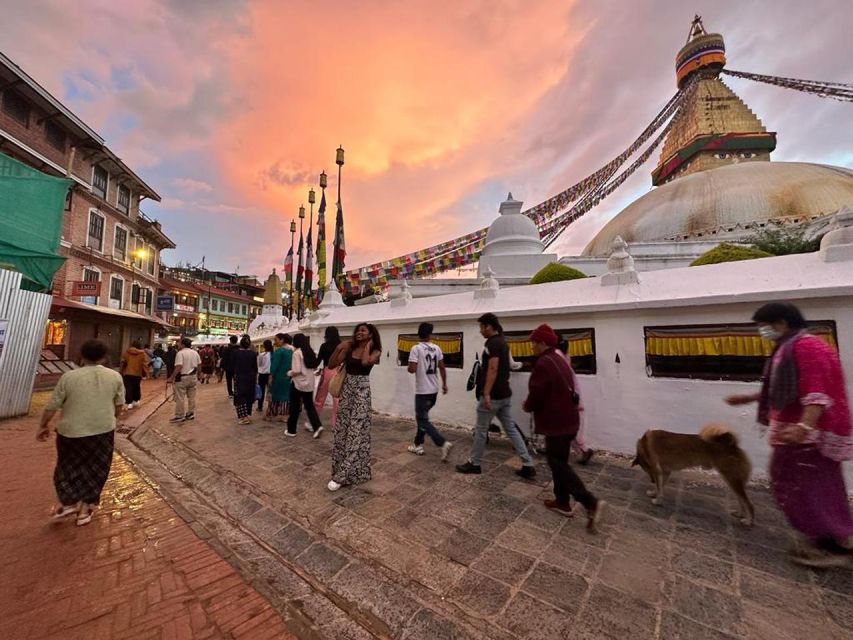
Book this tour if you want two major Kathmandu-area sights in one private half-day, with transport and an English-speaking guide handled for you. Its best qualities are the contrast between Tibetan Buddhist Boudha and Newari Bhaktapur, plus the personal help that guides such as Prakriti and Bijay have brought to the visit.
Skip it if you want a slow, independent exploration or dislike paying extra for site admission and food. For most first-time visitors, though, $60 is a reasonable price for a private car, a guide, and a well-planned introduction to two of Nepal’s most important cultural places.
FAQ
How long does the tour last?
The tour lasts five hours, including transportation, guided visits, and time at both destinations.
Where does pickup take place?
Pickup is available in Kathmandu. The driver or guide will call to confirm the designated pickup location.
Which sites does the tour visit?
The tour visits Boudhanath Stupa in Kathmandu and Bhaktapur Durbar Square.
How much time is planned at Boudhanath Stupa?
The planned visit at Boudhanath lasts about 80 minutes and includes sightseeing, a guided walk, photos, and time to explore.
How much time is planned at Bhaktapur Durbar Square?
The planned visit at Bhaktapur lasts about 90 minutes and includes a guided tour, free time, photos, sightseeing, and shopping.
Is transportation included?
Yes. A private car, hotel pickup, and drop-off are included.
Are entrance tickets included in the price?
No. Tickets to the heritage sites are not included. Food, shopping, and other personal expenses are also extra.
Is the tour private and wheelchair accessible?
Yes. The activity is listed as a private group and wheelchair accessible.
Can I cancel the booking?
Yes. You can cancel up to 24 hours in advance for a full refund. You can also reserve now and pay later.
Just added around Kathmandu
- Sacred Pashupatinath: Aarati,Cremation Rites & Boudha Stupa★ 5.0 · 18 reviews
- Kathmandu: Guided Walking Tour with Monkey Temple★ 5.0 · 18 reviews
- Kathmandu: Pashupatinath Temple Evening Aarati Tour★ 4.7 · 11 reviews
- Kathmandu: Pashupatinath Temple Aarti Night Tour★ 4.8 · 29 reviews
- Kathmandu: Pashupatinath Temple Evening Aarati Tour★ 5.0 · 36 reviews
- Kathmandu: Chandragiri Cable Car and Monkey Temple Tour★ 5.0 · 9 reviews
- Chandragiri Cable Car & Monkey Temple Tour- Private/Group★ 5.0 · 32 reviews
- Private Chandragiri Cable Car and The Monkey Temple Tour★ 5.0 · 30 reviews
Kathmandu Temple Tours, compared.
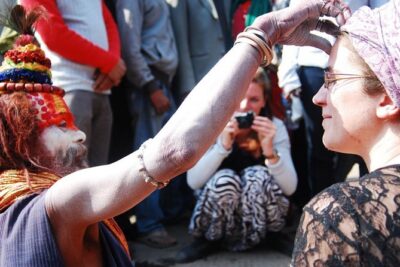
Kathmandu Spiritual Sites: Bodhnath & Pashupatinath Tour
Read our review →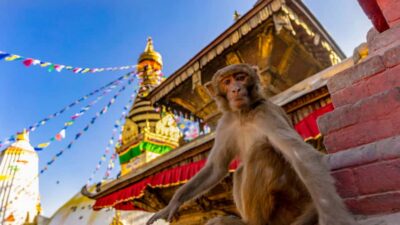
Monkey Temple – Swayambhunath Tour – Private/Small Group
Read our review →
Chandragiri Cable Car & Monkey Temple Tour- Private/Group
Read our review →
Private Chandragiri Cable Car and The Monkey Temple Tour
Read our review →Browse the lists this tour appears in