
REVIEW · MONKEY FOREST TEMPLE TOURS
Monkey Temple – Swayambhunath Tour – Private/Small Group
Swayambhunath is more than Kathmandu’s famous hilltop stupa with monkeys around the steps. This three-hour small-group walk links the temple with older neighborhood shrines, Buddhist legends, and the story of how Kathmandu Valley changed from a lake into a city. Your guide leads you from Thamel on foot, so the morning feels like a walk through Kathmandu, not a quick stop at one monument.
I like the small maximum of five people, which gives you room to ask about Hindu and Buddhist customs. I also like the route’s range: Harati Ajima, Manjushree Temple, Amideva Buddha Park, and World Peace Pond add meaning to the main visit. The drawback is physical: you climb the 365 stairs from Bhagwan Pau, and anyone with severe asthma or knee problems should choose a gentler outing.
Key points to know before booking
- A walk from Thamel, not just a temple visit: You see several neighborhood shrines before and after Swayambhunath.
- A maximum of five participants: The small group suits solo visitors who want to ask questions and keep a steady pace.
- Santosh is one of the named guides: He explains Hindu and Buddhist beliefs, local stories, and Kathmandu’s past and present.
- The main climb has 365 steps: You pause at Bhagwan Pau for water and a rest before going uphill.
- The temple fee is extra: Bring 200 Nepalese rupees in cash, about US$1.50, for Swayambhunath.
- The walk earns its views: Manjushree Temple and the stupa provide broad views across Kathmandu.
From Pumpernickel Bakery into old Kathmandu
The walk begins at Pumpernickel Bakery on Paryatan Marg in Thamel. That makes the meeting point easy to find if you are staying in or around Kathmandu’s main visitor district. From there, you walk for about 30 minutes toward Bhagwan Pau, the lower entrance to Swayambhunath Hill.
This opening stretch is part of the point. Instead of appearing at the temple gates by vehicle, you move through Kathmandu’s streets and neighborhoods with a guide who can explain what you are seeing. Santosh, one of the guides named for this experience, has been praised for making the past and present of Kathmandu understandable during this walk.
The route introduces you to the city through religious places rather than a string of standard sightseeing stops. You may find the first half-hour useful for getting your bearings, but it also means you should wear comfortable shoes and allow for street walking before the main climb begins.
More Private Temple Tours in Nepal
- Chandragiri Cable Car & Monkey Temple Tour- Private/Group
★ 5.0 · 32 reviews - Private Chandragiri Cable Car and The Monkey Temple Tour
★ 5.0 · 30 reviews - PashupatiNath and BoudhaNath – Private/Small Group
★ 5.0 · 18 reviews
Indrayani and Bijeshwori, two early sacred stops
The route includes Indrayani Temple, also known as Luti Ajima. Local tradition connects the shrine with the eight Matrikas established when Licchavi King Gunakamdev founded Kathmandu city in the 13th century. The story gives you an early example of how Kathmandu’s urban identity and religious life are closely linked.
Bijeshwori Temple is sacred to both Hindu and Buddhist followers. It also has an important place in Tibetan Buddhist pilgrimage. This shared religious role is valuable because it helps you see Kathmandu’s traditions as overlapping rather than neatly separated into Hindu and Buddhist compartments.
The stop descriptions do not assign fixed times to either temple, so the pace may depend on the guide and the group. That is useful if you want context and questions, but less suitable if you prefer a tightly timed sightseeing schedule. The tour’s strength is explanation, not a long private visit inside every shrine.
Bhagwan Pau and the 365-step climb
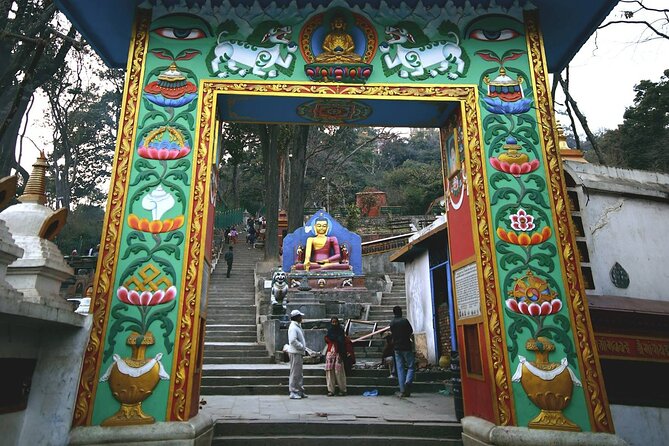
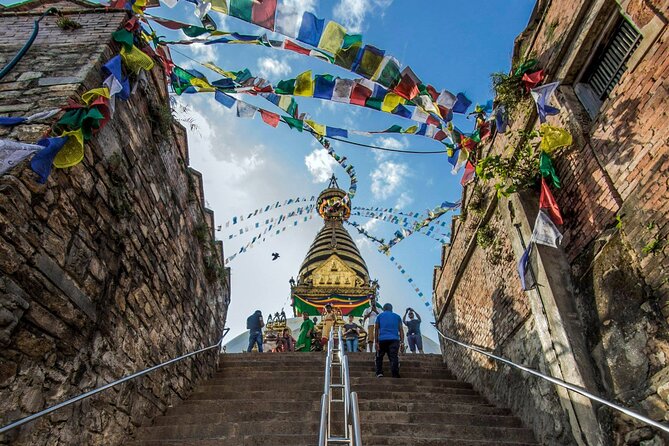
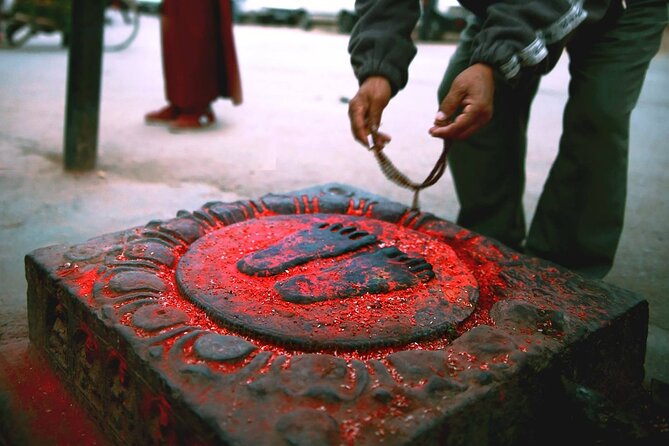
At the foot of the hill, you reach Swoyambhu Bhagwan Pau. The name refers to the feet of Lord Buddha, and this point marks the beginning of the main stairway. The climb has 365 steps, a detail worth taking seriously if your knees or breathing are a concern.
The planned stop lasts about 20 minutes, giving you time to rest, drink water, and prepare for the ascent. That pause matters. Kathmandu’s altitude, street walking, and uphill steps can feel more demanding than the three-hour duration suggests, even for people who normally enjoy city walks.
You are not expected to rush. The guide can explain the meaning of the approach as you go, and the climb itself helps separate the temple visit from ordinary sightseeing. Still, the tour requires a moderate level of physical fitness. Severe asthma and knee problems are specifically listed as reasons not to join.
Swayambhunath, the main reason to go
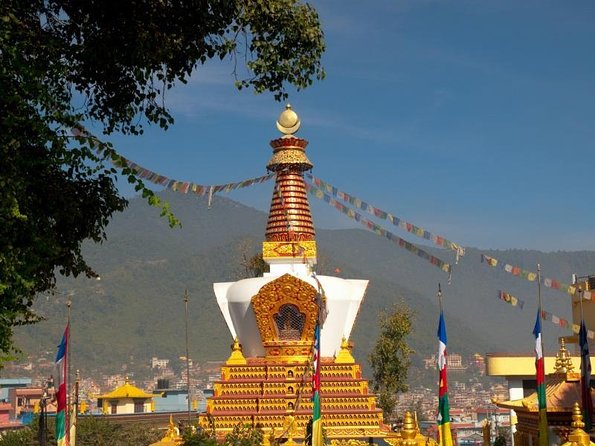
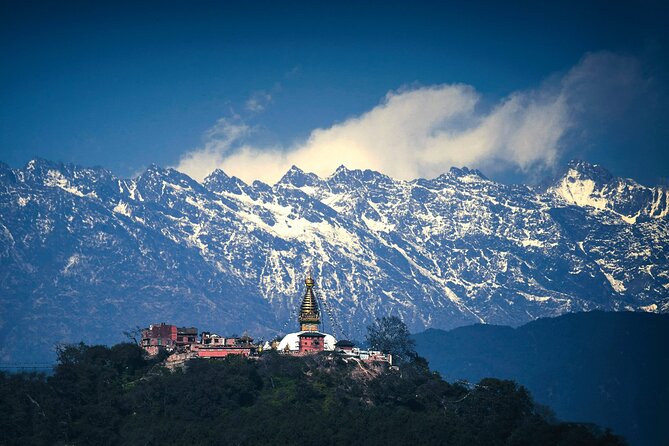
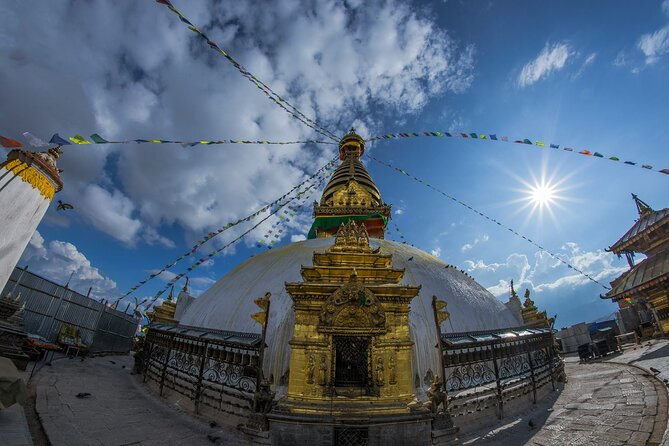
Swayambhunath is one of Nepal’s holiest Buddhist stupas, perched on a hill in central Kathmandu. The name means self-originated, and the tour focuses on the legends surrounding the stupa and the origin of Kathmandu Valley.
The main stop lasts about 40 minutes. That is enough for an introduction to the site, its stories, and its religious importance, but it is not an open-ended temple visit. If you want a long period for quiet observation, photographs, or independent exploration, you may need to continue on your own after the guided portion.
The guide’s role is especially useful when ceremonies are taking place. Religious activity can be fascinating, but without context it is easy to miss what you are seeing or to behave poorly around worshippers. A guide can explain the customs and help you approach the place with suitable respect.
The hilltop setting is another major reward. You get views over Kathmandu from a place that is both a working religious site and a major city landmark. The famous monkeys add an element of comedy, but remember that they are not the main attraction. Keep your attention on the stupa, shrines, worshippers, and views.
The entrance fee is not included. Swayambhunath charges 200 Nepalese rupees, about US$1.50, paid directly to the temple authorities in cash. Bring small local currency so this simple payment does not slow you down.
More Monkey Forest Temple Tours in Kathmandu:
- Kathmandu: Chandragiri Cable Car and Monkey Temple Tour
★ 4.8 · 139 reviews - Kathmandu: Guided Walking Tour with Monkey Temple
★ 5.0 · 18 reviews - Kathmandu: Chandragiri Cable Car and Monkey Temple Tour
★ 5.0 · 9 reviews - Ubud: Monkey Forest, Jungle Swing, Rice Terrace, and Water Temple
★ 5.0 · 7,160 reviews
Harati Ajima and the story of a changed demon
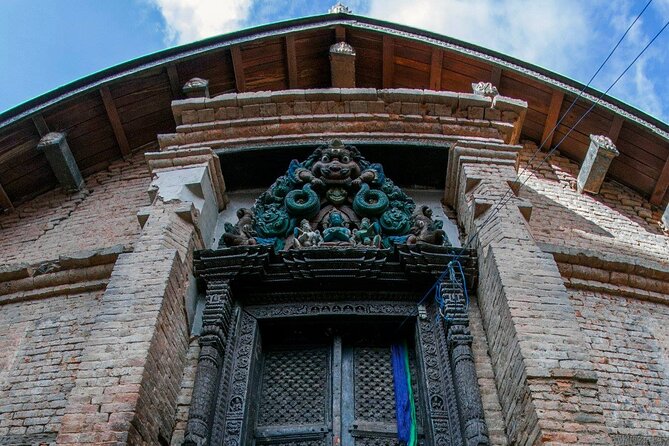
Harati Ajima Temple is a brief stop, listed for about five minutes. Its pagoda-style architecture is one reason to pause, but the story is the real draw.
Your guide explains how a demon named Harati became Mother Harati and why people across the valley worship her. This is the kind of short explanation that turns an unfamiliar shrine into a memorable place. You do not need a long lecture to understand the basic idea: local religious traditions can preserve stories of change, protection, and community belief.
The stop is short, so expect an introduction rather than detailed architectural study. That works well within a three-hour walk, especially since the tour already includes several sites.
World Peace Pond and Manjushree Temple
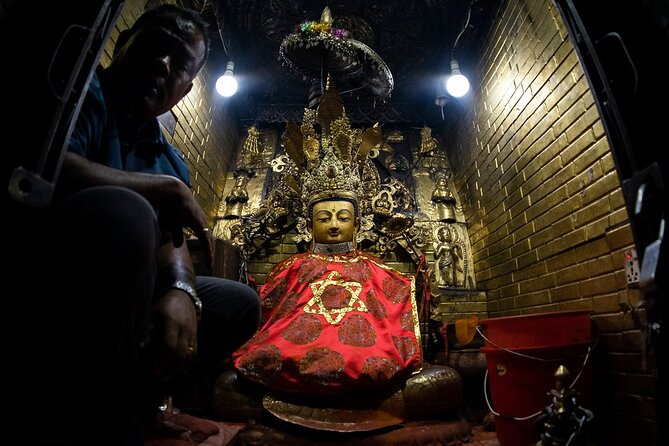
On the western side of Swayambhunath, World Peace Pond contains a brass Buddha standing on a lotus in the center. Words on the surrounding wall are written in English, which may make the symbolism easier to follow if you are new to Buddhist imagery.
Manjushree Temple is a small shrine on Swayambhu Hill. Here, the guide returns to one of the tour’s central themes: the belief that Kathmandu Valley was once a great lake and became a city through the actions of Maha Manjushree.
The stop lasts about 15 minutes and includes a panoramic view of the western side. I like this pairing because the pond offers a quiet visual pause, while Manjushree connects the physical setting to the valley’s founding legend. You get both a place to look and a story to remember.
Do not expect a large temple complex at Manjushree. Its value comes from its position, the legend attached to it, and the view. If you prefer grand buildings at every stop, this part may seem modest. If you enjoy local stories and smaller religious sites, it adds welcome variety.
Amideva Buddha Park’s giant figures
Amideva Buddha Park features three large statues: Amitabha Buddha in the center at 67 feet, with Chenrezig and Padmasambhava on either side, each 64 feet tall. The scale changes the rhythm of the tour after the smaller shrines and hilltop spaces.
The visit lasts about 20 minutes. You walk around the park while the guide shares the story of Siddhartha Buddha and explains the figures. The large statues are easy to appreciate at a glance, but the guide’s explanation gives the stop more purpose than a quick photograph.
This is also a practical point in the route. After climbing and visiting the main stupa, an open park can give you room to move at an easier pace. The tour still involves walking, but the experience is not a continuous uphill push.
Shova Bhagawati and the return to Thamel
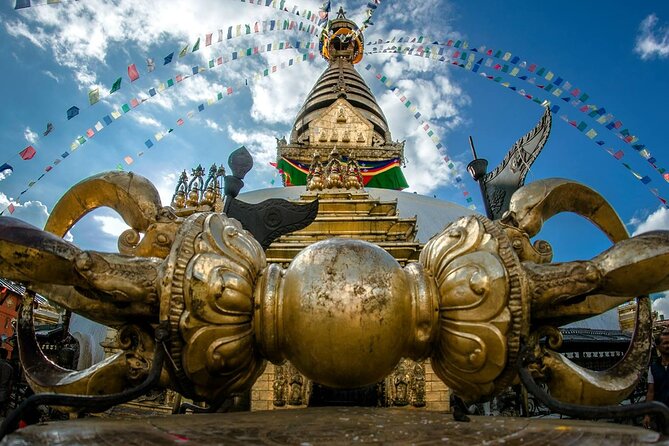
The route also includes Shova Bhagawati, a shrine dedicated to the goddess Bhagwati on the bank of the Bishnumati River. It is one of four major Bhagwati temples in Kathmandu.
This stop broadens the day beyond Swayambhunath’s Buddhist identity. By including a Hindu shrine and a river setting, the walk shows how different sacred places fit into the city’s daily life. The exact time at this stop is not specified, so treat it as part of the overall route rather than a guaranteed long visit.
From Bhagwan Pau, the group walks back toward Kathmandu Eco Hotel and the Pumpernickel Bakery meeting point in Thamel. The return takes about 30 minutes. If you would rather continue exploring Swayambhu independently, you can part from the group and make your own way back.
That option is handy if the hilltop has caught your interest and you want more time there. It also means you should understand the practical plan before setting out. The official activity ends back at the meeting point, but the guide allows some flexibility for people who want to remain in the area.
What the three-hour format really gives you
Three hours sounds short, but this is a full walking circuit. It includes the walk from Thamel, the approach to the hill, the stair climb, the main stupa, several temples, the Buddha park, and the return.
The stated times add up to more than a quick temple photo stop, yet the schedule remains approximate. Walking pace, questions, ceremonies, and pauses can affect the timing. You should not book it immediately before a flight, appointment, or other fixed plan.
The small group is one of the best practical features. With no more than five people, the guide can hear questions and adjust explanations more easily than on a large coach outing. This is particularly useful for religious subjects, where you may want to ask about the difference between Hindu and Buddhist practices without feeling lost in a crowd.
The tour is also a good fit for solo visitors. A solo woman who joined the walk described feeling safe and found the guide’s historical knowledge and explanations of both religions helpful. That does not replace normal city awareness, but a small organized group can make the first days in Kathmandu easier.
Is $15 a fair price?
At $15 per person, the tour is inexpensive for a guided three-hour city walk, especially with a maximum of five participants. The price pays for an English-speaking guide and a route that covers much more than the standard entry point at Swayambhunath.
Add the 200-rupee temple fee and carry cash for your own drinks. Coffee and tea are not included. The overall cost remains low, but the value depends on what you want from the visit.
If you only need transport to the stupa and time for photographs, you can arrange a simpler visit. If you want the legends explained, prefer walking through local neighborhoods, and want several smaller sacred sites included, the guide adds real value.
The youth price applies to students with a student card. If that applies to you, bring the card so the eligibility is clear.
Who should book this walk?
I would choose this tour if you want an introduction to Kathmandu that combines religion, local streets, and a famous monument. It suits solo visitors, couples, and small groups who like asking questions and walking at a moderate pace.
It is especially useful during a short stay. You see Swayambhunath while also learning about Kathmandu Valley’s origin stories, Licchavi-era traditions, Hindu shrines, Buddhist sites, and the city’s religious mix.
You should skip it if stairs are a serious problem, if you have severe asthma or knee trouble, or if you want a slow, private visit with lots of time at one monument. The 365-step climb is not a minor detail.
The walk has free cancellation up to 24 hours before the start time. Changes or cancellations made less than 24 hours ahead are not accepted for a refund. Confirmation arrives when you book, and mobile tickets are supported.
Should you book the Swayambhunath walk?
Book it if you want stories and context, not simply a taxi ride to the Monkey Temple. The best parts are the small group, the walk from Thamel, Santosh’s clear explanations, and the way the route connects Buddhist and Hindu places across the neighborhood.
Bring water, cash for the 200-rupee entrance fee, and shoes suited to 365 steps. Allow more than three hours if you plan to linger at Swayambhunath afterward. For a modest price, this gives you a thoughtful first look at Kathmandu’s sacred places, provided your legs are ready for the hill.
FAQ
Where does the Swayambhunath tour begin?
It begins at Pumpernickel Bakery on Paryatan Marg in Thamel, Kathmandu.
How long does the tour last?
The tour lasts approximately three hours.
How many people can join the tour?
The maximum group size is five participants.
Is the Swayambhunath entrance fee included?
No. The entrance fee is 200 Nepalese rupees, about US$1.50, paid in cash directly to the temple authorities.
What is included in the price?
An English-speaking guide is included. Coffee and tea are not included.
How physically demanding is the walk?
You need a moderate level of physical fitness. The route includes 365 stairs from Bhagwan Pau to the hilltop. People with severe asthma or knee problems are not advised to join.
Can I cancel for a full refund?
Yes, if you cancel at least 24 hours before the experience start time. Cancellations or changes made less than 24 hours ahead are not accepted for a refund.
More Private Temple Tours in Kathmandu
- Ubud: Waterfalls, Water Temple & Rice Terraces Private Tour
★ 5.0 · 5,484 reviews - Montserrat Monastery Small Group or Private Tour Hotel pick-up
★ 5.0 · 5,144 reviews - Full-Day Angkor Wat Sunrise Private Tour with Guide from Siem Reap
★ 5.0 · 2,920 reviews - Siem Reap: Angkor Wat Private Tuk-Tuk Tour
★ 4.9 · 2,222 reviews
Just added around Kathmandu
- Sacred Pashupatinath: Aarati,Cremation Rites & Boudha Stupa★ 5.0 · 18 reviews
- Kathmandu: Guided Walking Tour with Monkey Temple★ 5.0 · 18 reviews
- Kathmandu: Pashupatinath Temple Evening Aarati Tour★ 4.7 · 11 reviews
- Kathmandu: Pashupatinath Temple Aarti Night Tour★ 4.8 · 29 reviews
- Kathmandu: Pashupatinath Temple Evening Aarati Tour★ 5.0 · 36 reviews
- Kathmandu: Chandragiri Cable Car and Monkey Temple Tour★ 5.0 · 9 reviews
- Bhaktapur Durbar Square and Boudhanath Stupa★ 5.0 · 7 reviews
- PashupatiNath and BoudhaNath – Private/Small Group★ 5.0 · 18 reviews
Monkey Forest Temple Tours, compared.
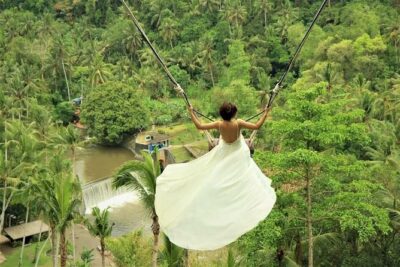
Monkey Forest, Jungle Swing, Rice Terrace, and Water Temple
Read our review →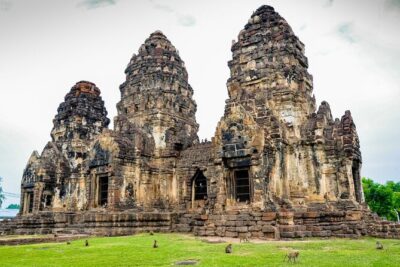
Lopburi Monkey Temple & Ayutthaya Old City Tour From Bangkok
Read our review →Monkey Forest, Water Temple, Rice Terrace, Waterfall
Read our review →
Ubud Tour with Monkey Forest Waterfalls Temples and More
Read our review →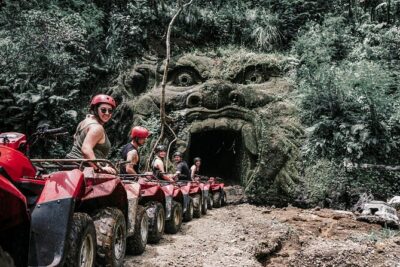
Gorilla Cave ATV Bali Ubud, Monkey Forest, Temple, and Lunch
Read our review →
Tanah Lot Tour with Ubud Monkey Forest, Rice Terraces, and Waterfalls
Read our review →
Saraswati Temple, Monkey Forest, Ubud Waterfalls
Read our review →
Sok River: Bamboo Raft Ride, Monkey Temple & View Point Tour
Read our review →Browse the lists this tour appears in