
REVIEW · PORTUGAL TEMPLE TOURS
Batalha Monastery Entrance Ticket
Batalha Monastery is the kind of place where the stonework does the talking. Built after Portugal’s 1385 victory over Castile at Aljubarrota, this royal monastery mixes soaring Portuguese Gothic design with later Manueline detail. The 32.5-meter central nave gives the church its grand first impression, while the colored medieval glass brings warmth to all that pale stone.
I like the freedom of a self-guided visit, since you can linger over a carved cloister or move quickly through rooms that interest you less. I also like that the ticket includes the booking fee and skip-the-ticket-line access. The main consideration is that this is an entry ticket, not a guided tour, so you will need to bring your own context and pace yourself through the large complex.
Key points at a glance
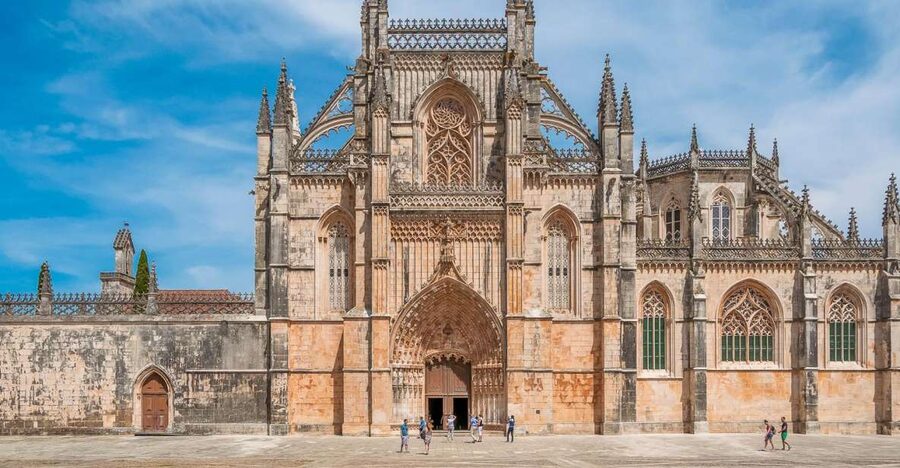
- A royal monastery from 1385: Built by King João I after the Portuguese victory at Aljubarrota.
- A 32.5-meter Gothic nave: Eight columns on each side support the impressive central church space.
- Early Portuguese stained glass: See colorful medieval windows in one of Portugal’s first buildings to use stained glass.
- The Imperfect Chapels: Visit one of the monastery’s most unusual architectural areas.
- A working architectural map of monastic life: The cloisters connect to the dormitory, dining room, and kitchen.
- Easy one-day access: Use the ticket for one day, with a printed voucher, skip-the-ticket-line entry, and wheelchair accessibility.
Why Batalha Monastery matters
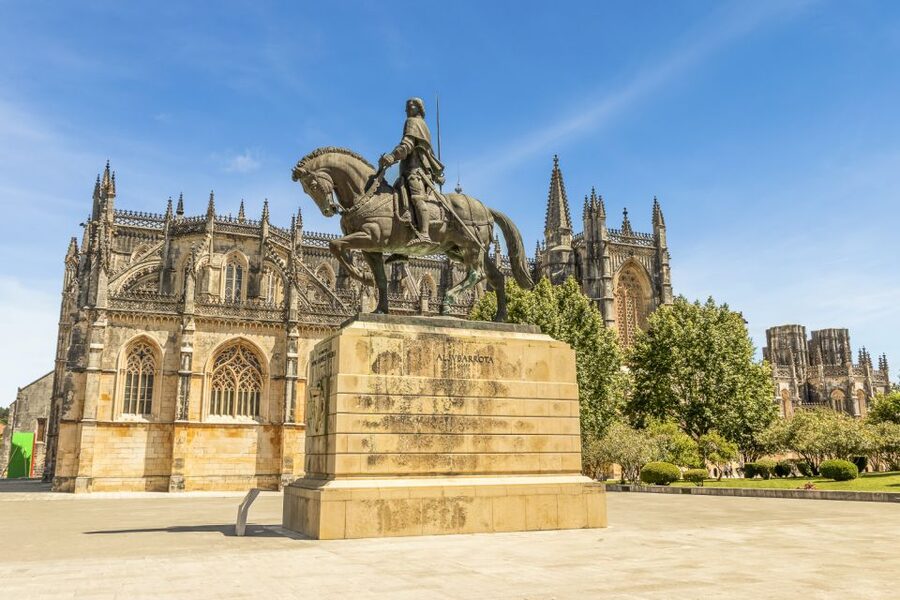
Batalha Monastery, officially the Monastery of Santa Maria da Vitória, was built after the Battle of Aljubarrota in 1385. Portugal’s victory over the Castilians secured the country’s independence, and King João I funded this vast Dominican monastery to mark the event.
That political story matters because the building was never meant to be just a quiet religious house. It also served as a royal pantheon, linking the monarchy, military victory, and religious devotion in one large stone complex. As you move through the church and cloisters, you are looking at a national monument as much as a monastery.
The site has been a UNESCO World Heritage Site since 1983. That designation reflects the importance of its Portuguese Gothic and Manueline architecture, but you do not need to be an architecture specialist to enjoy it. The scale is easy to grasp, and the best details appear at eye level and overhead.
More Entry Tickets in Portugal:
- Lisbon: Jerónimos Monastery Entrance Ticket
★ 4.1 · 14,164 reviews - Lisbon: Jerónimos Monastery E-Ticket and Audio Guide
★ 3.7 · 660 reviews - Lisbon: Belém Walking Tour with Jerónimos Monastery Ticket
★ 4.9 · 637 reviews
Entering the church and its 32.5-meter nave
Start with the church. Its central nave rises 32.5 meters and rests on eight columns on either side. The effect is tall, open, and carefully controlled, with the vertical lines pulling your eyes toward the roof.
I suggest pausing before you walk farther inside. Look up first, then study the columns, arches, and stone surfaces. This gives you a sense of the building’s proportions before smaller details begin competing for your attention.
The church shows the strength of Portuguese Gothic design. It is not simply a large room with decorative stone attached. The height, columns, and light work together to create a sense of order. You can see why Batalha is considered one of Portugal’s major examples of the style.
The church also holds the monastery’s medieval stained glass. Batalha was one of the first buildings in Portugal to use stained glass, making these windows especially important. The colored glass changes the mood of the interior, breaking up the gray-white stone with reds, blues, and other colors.
The ticket gives you access to the architecture, but not a personal guide to explain every figure or window. If you want a detailed interpretation, consider reading about the Battle of Aljubarrota and the royal family before you arrive. Even a little preparation will help the building make more sense.
The medieval stained-glass windows
The stained glass deserves more than a quick glance. It is easy to focus on the enormous nave and miss the smaller areas where colored light enters the church.
Look for the way the windows work with the columns and chapel spaces. The glass is not simply decoration. It helps create the atmosphere of the church and shows how medieval builders used color as part of a sacred interior.
This is one of the strongest reasons to avoid rushing through Batalha. A fast visit may give you the big view, but the windows reward a slower look. The same is true of the carved stone details throughout the complex.
The Royal Cloister and the shape of monastic life
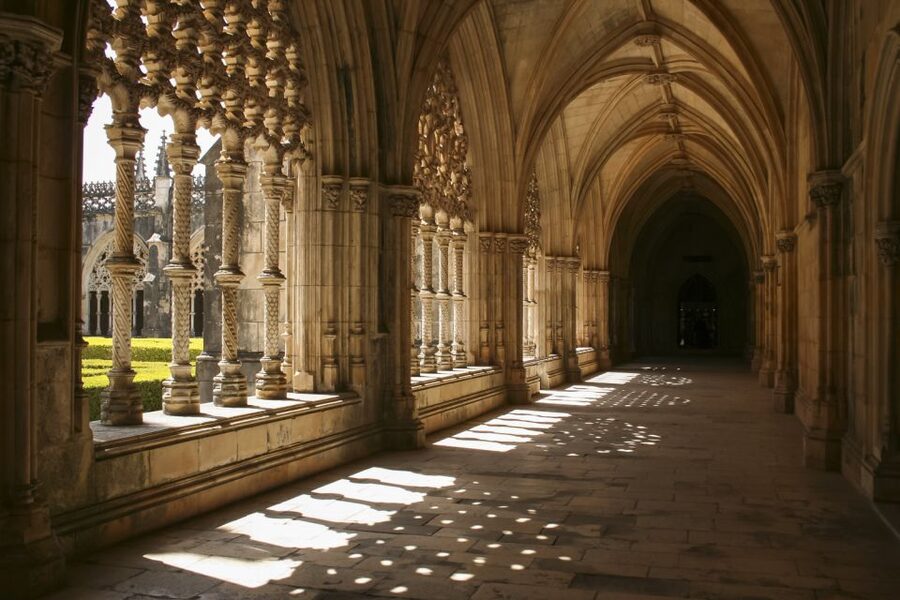
From the church, continue to the Royal Cloister. This is where the monastery begins to feel less like a grand memorial and more like a place designed for daily routines.
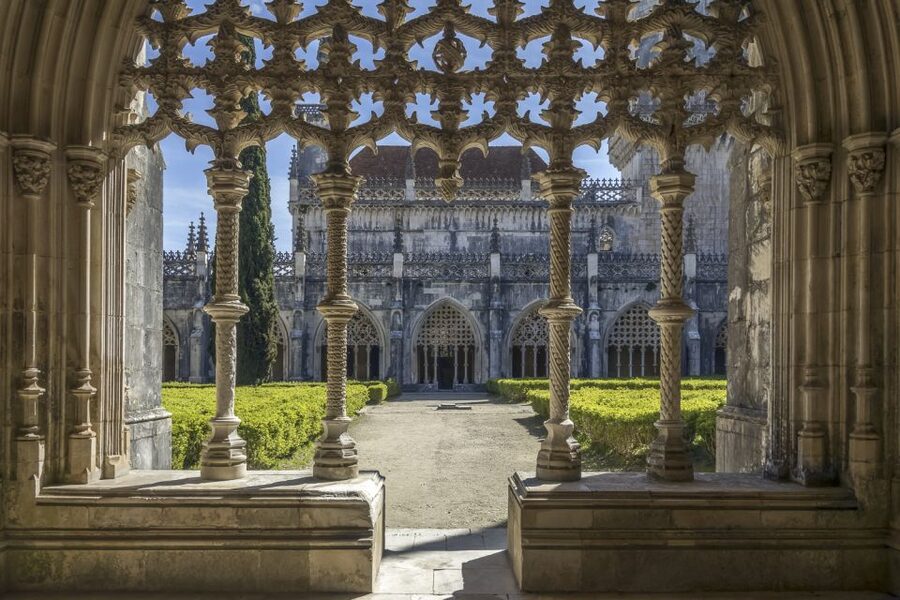
The cloisters are lined with carved details and provide access to important monastic rooms, including the dormitory, dining room, and kitchen. These connections help you picture how the Dominican community used the complex. The church was the ceremonial heart, but the cloister organized ordinary life around it.
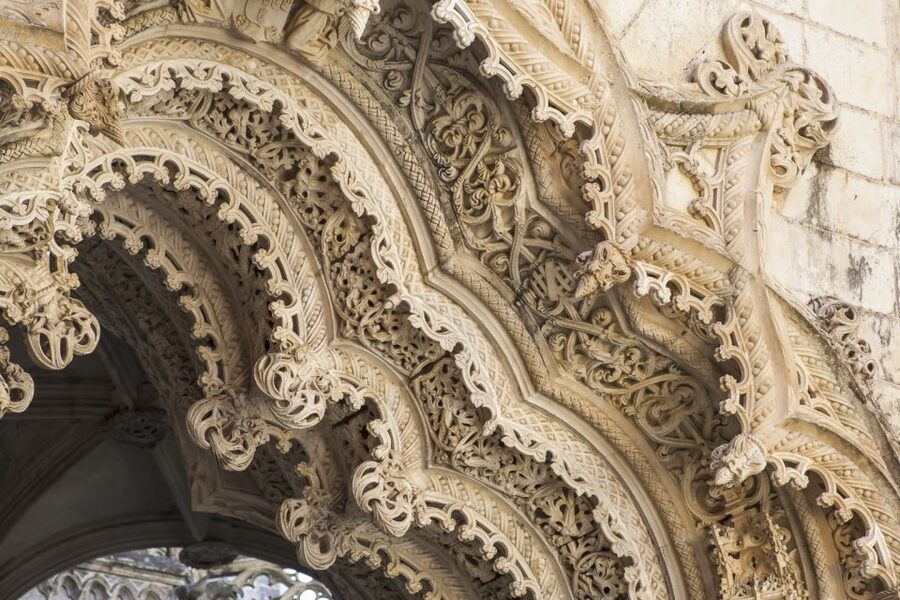
You will notice a different mood here. The church aims upward, while the cloister guides you around a contained, inward-looking space. Take time to inspect the carved stonework rather than treating the passageways as corridors between major sights.
The Royal Cloister is also a good place to slow down if the church feels visually crowded. Its repeated arches and carved surfaces create a calmer rhythm. You can enjoy the design without needing to identify every symbol.
A few more temple visits around Portugal worth a look
- Lisbon: Belem Walking Tour with Jeronimos Monastery Ticket
★ 4.7 · 490 reviews - Lisbon: Belem, Jeronimos Monastery, and Coach Museum Tour
★ 4.8 · 478 reviews - Belem and Jeronimos Monastery Guided Small Group Walking Tour
★ 5.0 · 410 reviews - “Porto: Fado Show with Guided Tour in a Historic Monastery”
★ 4.9 · 164 reviews
The domed Chapter Hall and monastery rooms
The domed Chapter Hall is another important stop. Its shape sets it apart from the long nave and cloister passages, giving you a change in scale and form.
The Chapter Hall was part of the monastery’s working life, while the church served a more public and ceremonial purpose. Moving between these areas helps you understand that Batalha was a complete institution, not just a royal church.
The route also gives access to the former dormitory, dining room, and kitchen. These rooms are valuable because they show the practical side of religious life. Grand architecture can make a monastery feel remote, but these spaces bring the building back to ordinary needs: sleeping, eating, meeting, and moving through the day.
Do not expect every room to deliver the same visual impact as the church. That is part of the point. The complex works best as a whole, with impressive ceremonial spaces balanced by quieter service areas.
The Imperfect Chapels
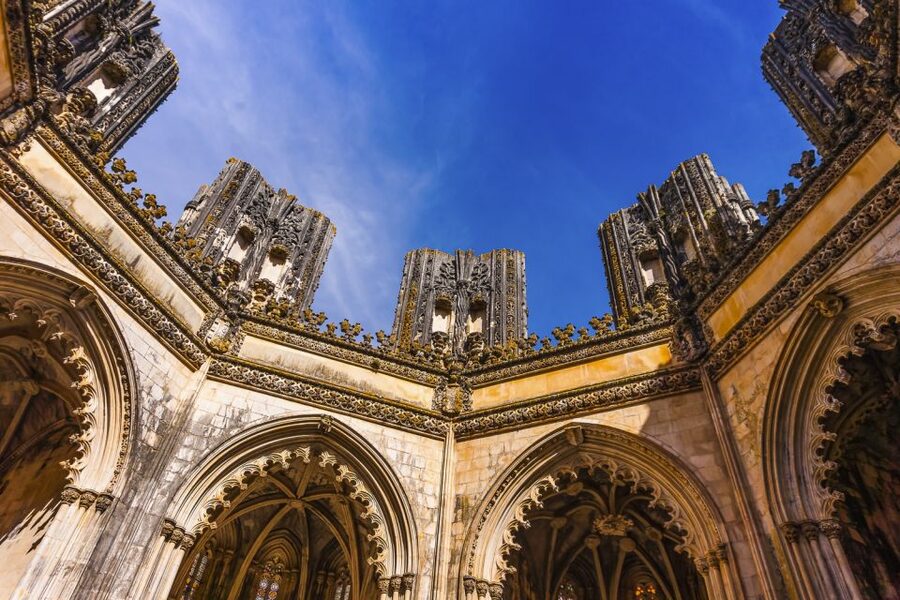
The Imperfect Chapels are one of the most distinctive parts of the visit. Their unfinished condition gives them a different character from the completed church and cloisters.
The name alone raises questions, but the important practical point is that these chapels show the monastery’s architecture in another state. You can see ambitious design alongside work that was not completed in the same way as the main structures.
Give this area time instead of treating it as a quick side stop. The contrast between finished and unfinished stonework adds another layer to the visit. It also keeps Batalha from feeling like a single polished monument. You are seeing a complex shaped by changing plans, periods, and building work.
The Imperfect Chapels are especially worthwhile for anyone interested in architectural detail. If your main goal is a fast look at the church, this section may require more patience than expected, but it is one of the places that makes the visit distinctive.
How the ticket works in practice
The ticket costs $17 per person and is valid for one day. That is fair value if you plan to examine the church, cloisters, chapels, and former monastic rooms rather than simply step inside for a quick photograph.
The price includes the booking fee, which keeps the cost straightforward. You also get skip-the-ticket-line entry, a useful benefit if there is a queue at the ticket office. You still need to begin at the Batalha Monastery ticket office at Mosteiro de Santa Maria da Vitória in Batalha.
Bring a printed voucher. That requirement is easy to overlook when most bookings are stored on a phone, so print it before arriving. The activity ends back at the meeting point because the visit takes place within the monastery complex.
There is no guide or fixed tour sequence described for this ticket. That is good news if you prefer independence, but less helpful if you want a lecture or a carefully explained route. Plan to read the signs, use your own guidebook, or prepare a little before you go.
Who will enjoy this visit most
I would recommend Batalha Monastery to anyone interested in Portuguese monarchy, Gothic architecture, medieval stained glass, or religious buildings. It also works well for visitors who like to set their own pace and stop for details without keeping up with a group.
Families may appreciate the freedom of a self-guided visit, though the scale and architectural detail can be more interesting to older children than very young ones. The wheelchair accessibility is an important practical advantage, although the supplied information does not describe specific routes or facilities inside.
The ticket is less suitable if you want transportation, a live historian, or a structured explanation of the Battle of Aljubarrota. None of those are part of the experience. You are buying admission to a major site, not a guided excursion.
The 4.3 rating from 140 reviews suggests a strong overall experience, while leaving room for normal differences in expectations. The people most likely to be satisfied are those who understand that Batalha is a large historic complex to explore independently.
Timing, flexibility, and cancellation
The ticket is valid for one day, with starting times shown when you check availability. That makes it easy to fit Batalha around the rest of your plans.
You can reserve now and pay later, which helps if your route through Portugal is still changing. Free cancellation is available up to 24 hours in advance for a full refund. These terms are useful for a day trip plan that depends on weather, transport, or other sightseeing arrangements.
Should you book the Batalha Monastery ticket?
Book it if you want a flexible, self-guided look at one of Portugal’s most important Gothic and Manueline buildings. The church, stained glass, Royal Cloister, Chapter Hall, and Imperfect Chapels offer enough variety to make the $17 admission worthwhile, especially if you give the complex time rather than rushing through.
Skip it only if you need a guide, transport, or a tightly organized tour. For independent visitors, this ticket keeps things simple: print the voucher, arrive at the monastery ticket office, and explore a major piece of Portuguese history at your own pace.
FAQ
How much does the Batalha Monastery entrance ticket cost?
The ticket costs $17 per person, and the booking fee is included.
How long is the ticket valid?
The ticket is valid for one day. Starting times are shown when you check availability.
Where do I start the visit?
Start at the Batalha Monastery ticket office at Mosteiro de Santa Maria da Vitória, Batalha, 2440-109 Batalha.
Do I need a printed voucher?
Yes. A printed voucher is required for this activity.
Does the ticket include skip-the-ticket-line access?
Yes. The activity includes skip-the-ticket-line entry.
Can I cancel the ticket for a refund?
Yes. You can cancel up to 24 hours in advance for a full refund.
Just added around Portugal
- Belém: Jeronimos Monastery, Tickets and Guided tour★ 4.9 · 30 reviews
- Lisbon: Belem Walking Tour with Jeronimos Monastery Entry★ 4.9 · 163 reviews
- Lisbon: Belém Private Walking Tour & Jerónimos Monastery★ 4.5 · 83 reviews
- From Lisbon: Évora, Chapel of Bones, & Roman Temple Tour★ 5.0 · 8 reviews
- Fátima Private Tour: Shrine| Sacred Path |Shepherds House★ 5.0 · 81 reviews
- Lisbon: Belem Tour with Pastéis at Jerónimos Monastery★ 4.7 · 96 reviews
- Between Life & Death: Roman Temple, Cathedral & Bone Chapel★ 4.9 · 6 reviews
- Belém Walking Tour + Jerónimos Monastery Ticket★ 5.0 · 24 reviews
Portugal Temple Tours, compared.
Belém Walking Tour with Jerónimos Monastery Ticket
Read our review →Belem Walking Tour with Jeronimos Monastery Ticket
Read our review →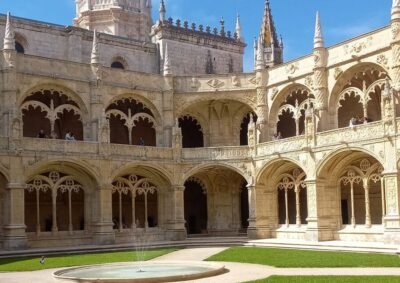
Belem, Jeronimos Monastery, and Coach Museum Tour
Read our review →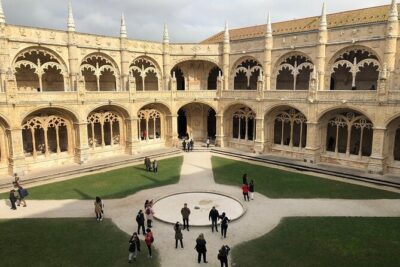
Belem and Jeronimos Monastery Guided Small Group Walking Tour
Read our review →
“Porto: Fado Show with Guided Tour in a Historic Monastery”
Read our review →
Belem Walking Tour with Jeronimos Monastery Entry
Read our review →Browse the lists this tour appears in