
REVIEW · KATHMANDU TEMPLE TOURS
PashupatiNath and BoudhaNath – Private/Small Group
Pashupatinath and Boudhanath show you two of Kathmandu’s most important religious worlds in a single morning or afternoon. You’ll move from Hindu temples and riverside cremation rites to Tibetan Buddhist prayer wheels, monasteries, and the great white stupa.
I like the small group limit of five, which gives the guide room to answer real questions. I also like the route itself: it explains religion through places people still use, not just through dates and labels. The main drawback is the extra entrance cost, which adds about $13 to the advertised $15 price.
The strongest guide praise centers on Santosh, who is described as warm, flexible, and able to explain religion, culture, archaeology, and food. The route ends at Boudhanath, and the 3-hour schedule can feel brisk if you want a long, quiet visit at every stop.
Key points to know before booking
- Two major faith sites in one outing: Compare Hindu practice at Pashupatinath with Vajrayana Buddhism at Boudhanath.
- A group of no more than five: Expect a more personal guide experience than on a large city tour.
- The cremation ghats are a central stop: You’ll discuss Hindu last rites and the sixteen Samskaras.
- Entrance fees are extra: Budget about $13 in cash for Pashupatinath and Boudhanath.
- The route ends at Boudhanath: You can continue exploring the stupa area on your own after the tour.
- Santosh is a strong guide request: His explanations and willingness to adjust the schedule receive especially warm praise.
Why this short Kathmandu tour works
Kathmandu can be hard to read at street level. A shrine may look like a simple building, a line of prayer flags may seem decorative, and a funeral ceremony may be easy to misunderstand.
This tour gives those details a setting. At Pashupatinath, you learn how Hindu belief shapes death and family life. At Boudhanath, you turn toward Buddhist ideas, ritual objects, and monastic practice.
I like the contrast. You are not visiting two similar monuments and checking them off. You are comparing two faiths that share the same city and have influenced local customs, art, food, and daily routines.
The experience lasts about three hours and is limited to five people. That size matters here. Religious sites can raise sensitive questions, and a small group lets you ask them without shouting over a busload of people.
The tour includes an English-speaking guide. The strongest guide choice appears to be Santosh, who is praised for clear explanations and for adapting the timing when someone wanted to see an aarati ceremony. He is also described as flexible when a participant was not feeling well.
One practical note: the $15 price is not the full cost. Entrance charges are listed separately at about NRP 1,000, or roughly $9, for Pashupatinath and NRP 400, or about $4, for Boudhanath. Bring cash and think of the actual outing as about $28 per person before any other personal spending.
More Private Temple Tours in Nepal
- Monkey Temple – Swayambhunath Tour – Private/Small Group
★ 5.0 · 50 reviews - Chandragiri Cable Car & Monkey Temple Tour- Private/Group
★ 5.0 · 32 reviews - Private Chandragiri Cable Car and The Monkey Temple Tour
★ 5.0 · 30 reviews
Pashupatinath and the meaning of Hindu rites
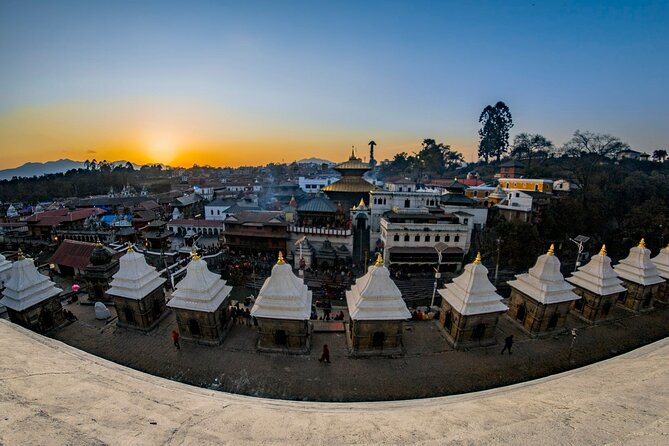
The tour begins at the Gaushala Bus Stop on Ring Road. From there, you head toward Pashupatinath, the oldest Hindu temple in the Kathmandu Valley and one of the most important Hindu pilgrimage sites in Nepal.
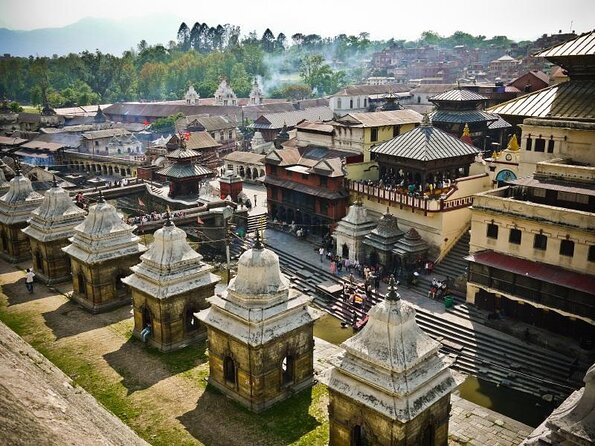
Only Hindus may enter the main temple. Your guide instead takes you toward Aryaghat, the riverside cremation area, while explaining what you can and cannot see. This is an important distinction because Pashupatinath is not simply a monument for outside observers. It remains an active place of worship and mourning.
The visit focuses on Hindu last rites. Your guide also explains the Shodasha Samskaras, the sixteen rites of passage connected with a Hindu life. This gives the cremation area a wider frame. You are not only hearing about death, but about the religious milestones that may mark a person’s life from birth onward.
I find this part valuable because it prevents a common mistake: treating the cremation ghats as a spectacle. The site can be visually striking, but the subject is personal and serious. Listen carefully, follow your guide’s advice, and keep your attention respectful.
Allow about 15 minutes at the Pashupatinath Temple area, followed by about 30 minutes at the crematoria. The schedule is enough for an introduction, but not for a long independent exploration of the complex.
The tour fee does not include the Pashupatinath entrance charge. The listed amount is NRP 1,000, around $9, paid in cash. Since access rules and sacred areas matter here, having a guide is more useful than simply arriving with a camera and a map.
Mrigasthali Deer Park and Shiva’s Kathmandu story
Next comes Mrigasthali Deer Park, with about 15 minutes to explore. The guide tells the story of Lord Shiva’s journey to this area and explains how the place received its name.
This is a short stop, but it changes the pace after the cremation grounds. You move into a quieter setting and hear how religious stories become attached to specific pieces of Kathmandu.
Do not expect a long nature walk. The itinerary gives you only a brief visit, so treat this as a storytelling stop rather than a major park excursion. The admission is included.
Gorakhnath and Guhyeshwari: linking Hindu traditions
The route continues to Gorakhnath Mandir Temple, where you have about 30 minutes. This is also a rest point before continuing toward Boudhanath.
Here, the guide explains the story of Guru Gorakhnath. The stop adds another layer to the Hindu side of the tour, showing that Pashupatinath is surrounded by a network of temples and traditions rather than being one isolated shrine.
You then pass through Guhyeshwari Shaktipeeth Temple. The guide tells the story of Satidevi and explains the idea of a Shaktipeeth, a sacred place linked with divine feminine power.
The scheduled time at Guhyeshwari is about 20 minutes, and admission is listed as free. The route then takes about 20 minutes to reach Boudhanath.
This middle section is one reason the tour feels like more than a two-site transfer. You are given a chain of stories that connects Shiva, Gorakhnath, Satidevi, and the wider religious setting around Pashupatinath.
At the same time, the schedule is tight. If temple legends are your main interest, you may wish for more time at each site. The guide’s ability to adjust the pace will matter, and Santosh receives particular praise for responding to personal interests and timing requests.
More Private Temple Tours in Kathmandu:
- Ubud: Waterfalls, Water Temple & Rice Terraces Private Tour
★ 5.0 · 5,484 reviews - Montserrat Monastery Small Group or Private Tour Hotel pick-up
★ 5.0 · 5,144 reviews - Full-Day Angkor Wat Sunrise Private Tour with Guide from Siem Reap
★ 5.0 · 2,920 reviews - Siem Reap: Angkor Wat Private Tuk-Tuk Tour
★ 4.9 · 2,222 reviews
Boudhanath Stupa and the basics of Buddhism
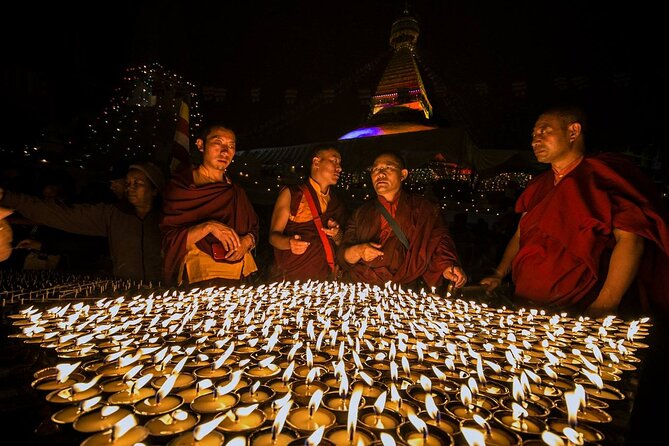
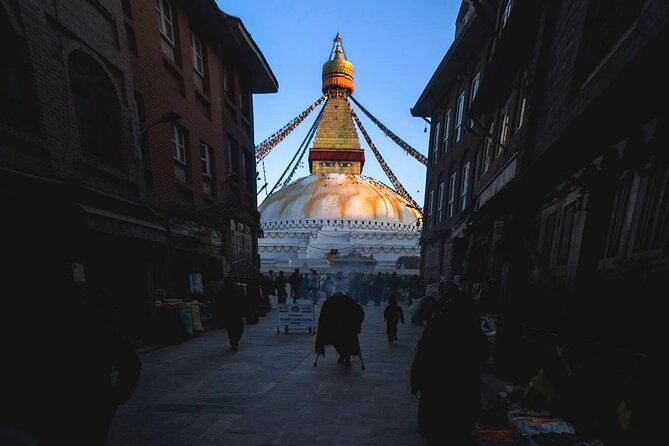
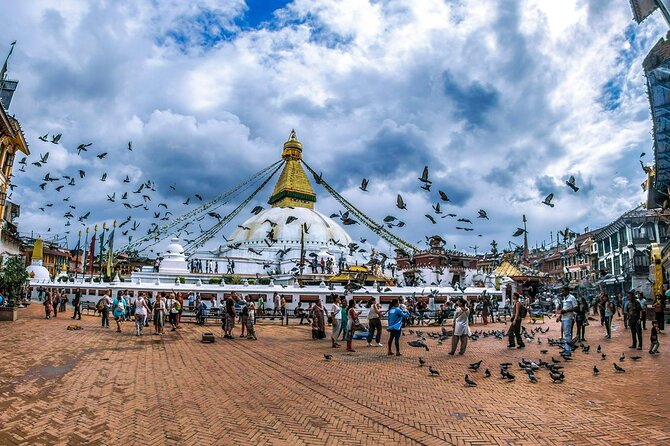
Boudhanath is the second-largest stupa of its kind in the world and a major center of Tibetan Buddhism, specifically Vajrayana Buddhism. The white dome, eyes, prayer flags, and surrounding religious activity create a clear change from Pashupatinath.
The tour allows about 45 minutes at the stupa. Your guide introduces the basics of Buddhist belief, including prayer flags, the five elements, the Four Noble Truths, and the Eightfold Path.
This is the part where a guide can save you from seeing Boudhanath as a photogenic circle of shops and cafés. The symbols have meaning, and the layout of the stupa reflects Buddhist ideas about practice, attention, and spiritual progress.
You will also hear about the prayers and objects used around the stupa. The aim is not to turn you into a Buddhist scholar in 45 minutes. It is to give you enough context to understand what you are seeing and to move through the site with more awareness.
The Boudhanath entrance fee is separate, listed as NRP 400, or about $4. It must be paid in cash. Add this to the Pashupatinath fee when working out the real price of the tour.
Boudhanath is also where the tour ends. That is useful because you are free to stay in the area after the guided portion. You can continue looking around the stupa or make your own way back to your accommodation.
Guru Lhakhang and the Buddhist monastery setting
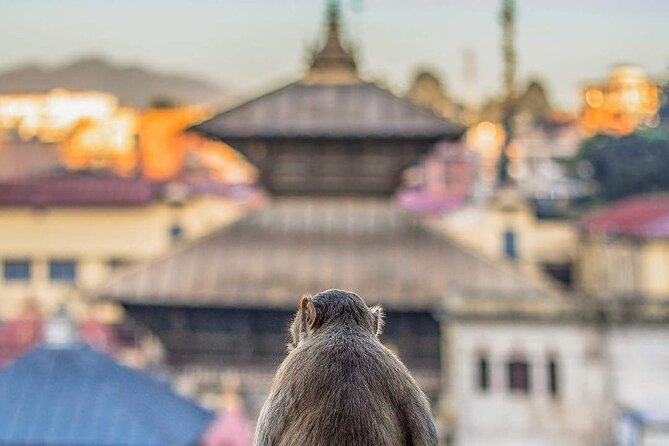
After the main stupa visit, the group spends about 10 minutes at Guru Lhakhang Monastery. This gives you a look at a typical Buddhist monastery and introduces Guru Padmasambhava.
The guide also discusses Dharma Chakra Pariwartana, the turning of the Wheel of Dharma. In plain terms, this helps connect the physical monastery and its symbols with the spread and teaching of Buddhist ideas.
Ten minutes is enough for a quick introduction, not an extended monastic visit. If you want a slow look at every detail, keep that in mind when deciding how much independent time to leave after the tour.
Admission is included at this stop. The compact visit works well as a bridge between the large public stupa and the more focused world of monastic practice.
Thangka painting, mandalas, and healing bowls
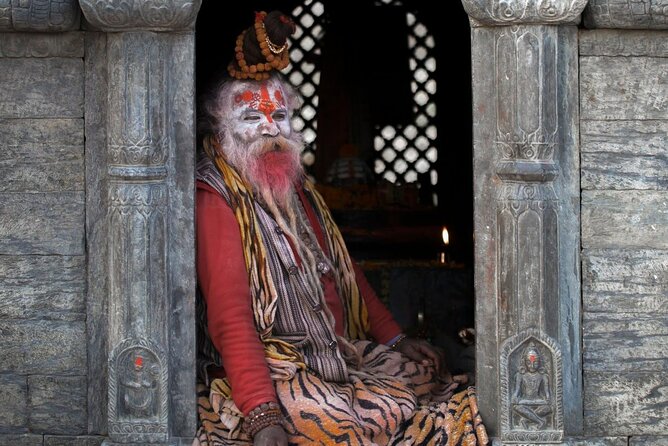
The final planned stop is the Boudha Stupa Thangka Center, with about 15 minutes. You learn about Thangka painting, the mandala, and the basic use of healing bowls.
Thangka art is a useful addition because it shows Buddhism through craft as well as architecture. The guide explains the careful visual ideas behind the paintings and how mandalas function as more than attractive designs.
The short visit may also include an introduction to the sounds and uses of healing bowls. Again, this is an overview. You are not signing up for a painting class or a long workshop.
Admission is included, and the tour ends at the Boudhanath Gate. You can continue around the stupa afterward, which helps compensate for the limited time at some of the smaller stops.
What the guide adds to the experience
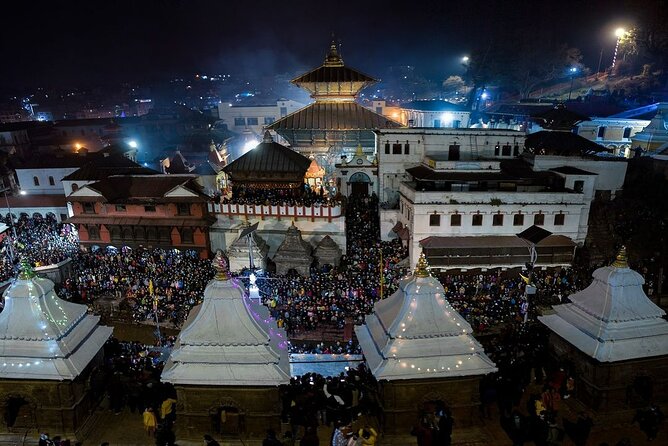
The guide is the main reason to choose this tour instead of visiting both sites alone. Several people praise Santosh’s ability to explain religion and culture in a way that welcomes questions.
That matters at Pashupatinath, where funeral customs and temple rules can be difficult to interpret from signs. It matters at Boudhanath, where Buddhist symbols may look familiar but carry specific meanings.
Santosh is also praised for answering many questions, explaining local food and culture, and adjusting the timing for an aarati ceremony. If that kind of flexibility is important to you, request him when booking, though guide assignment should be confirmed directly with the provider.
Shreya is also associated with strongly praised Kathmandu guiding, especially for patience, local culture, history, and adapting a visit to a person’s interests. The supplied details do not clearly establish that she is assigned to this specific three-hour route, so I would not book on the assumption that she will lead it.
The guide’s academic background is another plus when available. One guide is described as having studied culture, history, and archaeology. That combination suits this route, since you need more than religious facts. You need someone who can connect buildings, ceremonies, stories, and present-day life.
Price, timing, and practical tradeoffs
At $15 per person, the guiding portion is inexpensive for a private or small-group experience. The group cap of five makes the price especially attractive if you value conversation and personal attention.
Once you add the listed entrance fees, the cost rises to about $28 per person. That is still fair for a three-hour guided route across two major religious areas, but you should not mistake the advertised price for the complete outlay.
The tour is booked, on average, 18 days ahead. If your dates are fixed, reserve before arriving rather than waiting until the last minute.
It begins at Gaushala Bus Stop, P84V+VR2, Ring Road, Kathmandu 44600. It ends at Buddha Stupa, at the Boudhanath Gate. You are not returned to the starting point, so plan the rest of your day from Boudhanath.
The route is near public transportation, and most people can take part. Service animals are allowed. The practical details say little about the physical effort, so ask the provider directly if you have a specific mobility concern.
Free cancellation is available up to 24 hours before the start time. Inside that window, the amount paid is not refunded, and changes are not accepted.
Who should choose this tour
I would choose this experience if you want a clear introduction to Hinduism and Buddhism without committing to a full-day Kathmandu program. It suits first-time visitors who want context before exploring the city on their own.
It is also a good fit for people who enjoy asking questions. The small group means you can ask about rituals, religious symbols, food, local customs, or the differences between Hindu and Buddhist practice.
The tour is less suitable if you want a slow photographic visit, a long meditation period, or extensive time inside each complex. Several stops last only 10 to 20 minutes, and the full route covers a lot in three hours.
It may also feel demanding if you prefer to avoid discussions of death. The cremation area is not an optional side note. It is one of the main teaching points at Pashupatinath.
Should you book Pashupatinath and Boudhanath?
Book it if you want two major Kathmandu religious sites explained by a guide rather than viewed as disconnected monuments. The route is compact, the group is capped at five, and the contrast between Hindu rites and Tibetan Buddhism gives you a useful base for the rest of your time in Nepal.
Request Santosh if possible, especially if you want a guide who can handle detailed questions and adjust timing. Bring cash for the approximately $13 in entrance fees, allow for the one-way finish at Boudhanath, and keep your expectations realistic about the short stop lengths.
Skip it if you already have strong knowledge of both traditions or want a leisurely, self-directed visit. For most first-time visitors, though, this is a practical way to make sense of two complicated and important places in one focused outing.
FAQ
How long does the Pashupatinath and Boudhanath tour last?
The tour lasts approximately three hours.
How many people can join the tour?
The group has a maximum of five travelers.
Is an English-speaking guide included?
Yes. An English-speaking guide is included in the tour price.
Are entrance fees included?
No. The listed entrance fees are about NRP 1,000 for Pashupatinath and NRP 400 for Boudhanath. Both are paid in cash at the entrance.
What is the total listed tour price?
The tour price is $15 per person, with approximately $13 per person in additional entrance fees.
Where does the tour begin?
It begins at Gaushala Bus Stop, P84V+VR2, Ring Road, Kathmandu 44600, Nepal.
Where does the tour end?
The tour ends at the Boudhanath Gate, also listed as Buddha Stupa in Kathmandu. You are free to continue exploring Boudhanath afterward.
Can I see the main Pashupatinath Temple?
Only Hindus are allowed inside the main temple. The route instead passes toward Aryaghat, the cremation area, where the guide explains Hindu last rites and the sixteen Samskaras.
Can I cancel for a full refund?
Yes, if you cancel at least 24 hours before the experience start time. Cancellations or changes made within 24 hours are not refunded or accepted.
Just added around Kathmandu
- Sacred Pashupatinath: Aarati,Cremation Rites & Boudha Stupa★ 5.0 · 18 reviews
- Kathmandu: Guided Walking Tour with Monkey Temple★ 5.0 · 18 reviews
- Kathmandu: Pashupatinath Temple Evening Aarati Tour★ 4.7 · 11 reviews
- Kathmandu: Pashupatinath Temple Aarti Night Tour★ 4.8 · 29 reviews
- Kathmandu: Pashupatinath Temple Evening Aarati Tour★ 5.0 · 36 reviews
- Kathmandu: Chandragiri Cable Car and Monkey Temple Tour★ 5.0 · 9 reviews
- Bhaktapur Durbar Square and Boudhanath Stupa★ 5.0 · 7 reviews
- Private Chandragiri Cable Car and The Monkey Temple Tour★ 5.0 · 30 reviews
Kathmandu Temple Tours, compared.
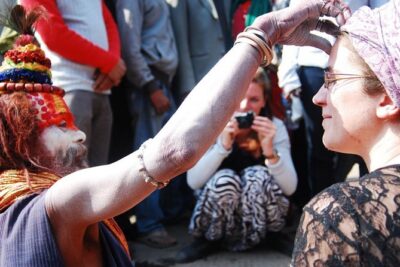
Kathmandu Spiritual Sites: Bodhnath & Pashupatinath Tour
Read our review →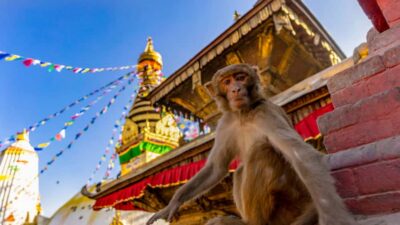
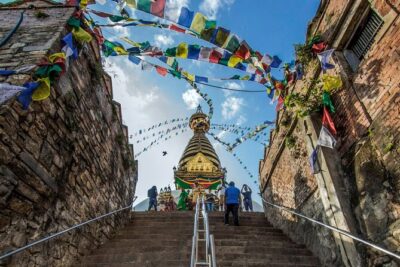
Monkey Temple – Swayambhunath Tour – Private/Small Group
Read our review →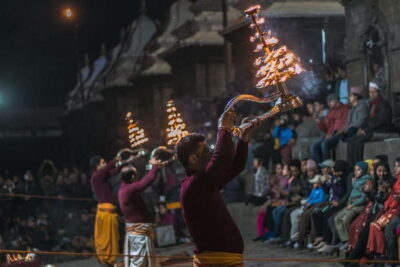
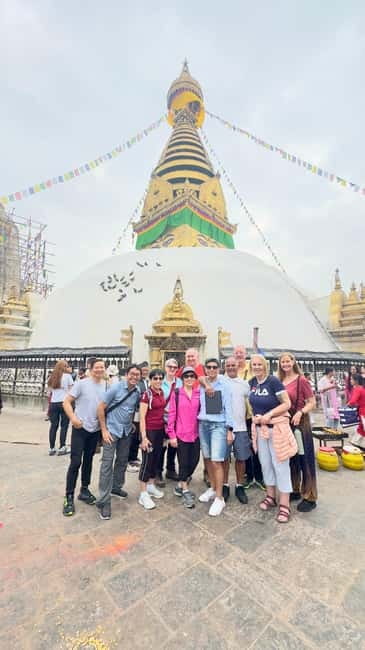
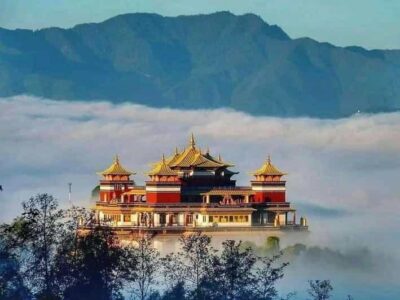
Chandragiri Cable Car & Monkey Temple Tour- Private/Group
Read our review →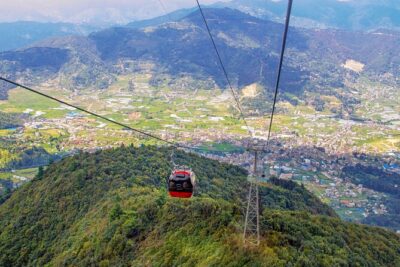
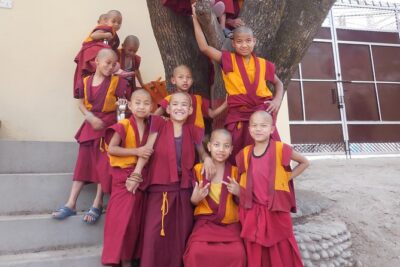
Private Chandragiri Cable Car and The Monkey Temple Tour
Read our review →Browse the lists this tour appears in