
REVIEW · NIKKO & KAMAKURA DAY TRIPS
From Tokyo: Kamakura & Enoshima 1-Day Bus Tour
Kamakura and Enoshima give you a very different Japan from central Tokyo: samurai-era shrines, a giant bronze Buddha, temple gardens, seaside streets, and broad ocean views. This full-day bus tour fits the main sights into one outing without asking you to solve the local transport puzzle yourself.
I like the strong mix of culture and free time, especially the chance to explore Komachi Street and Enoshima at your own pace. I also like that Hase-dera and Kōtoku-in entrance fees are included, while guides such as Omar, Yuki, and Mitsuko have been praised for warmth, clear directions, and useful local tips.
The tradeoff is the length and structure of the day. Traffic can turn the return to Tokyo into a slow ride, and the schedule may feel tight at some stops, particularly if you want to see every corner of Enoshima.
At a glance: what this day actually gives you
- A full southern Tokyo escape: Expect about 9 to 10 hours from pickup to return, with roundtrip air-conditioned bus transportation.
- Four main sightseeing areas: Tsurugaoka Hachimangu and Komachi Street, Kōtoku-in, Hase-dera, and Enoshima.
- Useful inclusions: Entrance fees to Hase-dera and Kōtoku-in are covered, but lunch is not.
- A guide-led overview: English and Chinese commentary may be provided on the same bus, depending on the group.
- A flexible final stop: Enoshima gives you shrines, shops, seafood, gardens, and ocean views, but also stairs.
- A strict meeting policy: Arrive at least 10 minutes early. The bus leaves on time and does not wait for late arrivals.
Why Kamakura and Enoshima work so well together
Kamakura was the home of Japan’s first military government, so its appeal is more than pretty temples. You are visiting a place tied to the rise of the samurai, with Shinto shrines, Buddhist temples, and old shopping streets packed into a compact coastal area.
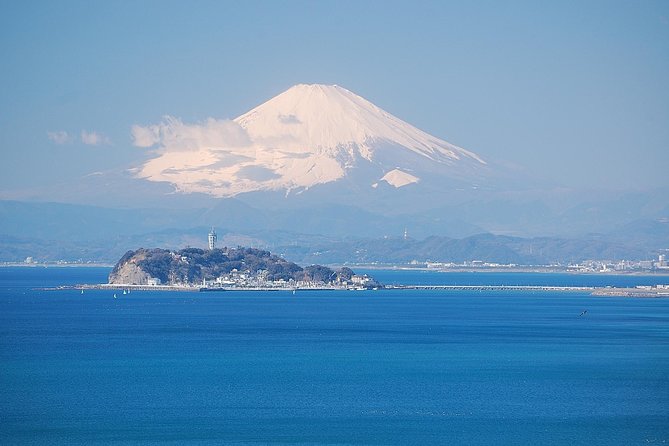
Enoshima changes the mood. After the formal shrine grounds and temple courtyards, you get a small island with sea air, narrow lanes, food shops, shrine buildings, and lookout points. On a clear day, you may see Mount Fuji in the distance.
I like this pairing because it prevents the day from becoming a string of similar temple visits. The route moves from grand shrine to shopping street, then to Buddhist art, and finally to the coast. You get a useful first look at the area, even if you will not see every important site in Kamakura.
The bus is the main reason to book this rather than arrange the same day independently. Kamakura is easy enough to reach by train, but moving between Tsurugaoka Hachimangu, the Great Buddha, Hase-dera, and Enoshima takes planning. Here, you can sit back between stops and let the guide handle the timing.
More Nikko and Kamakura Day Trips in Kamakura:
- Tokyo: Kamakura & Enoshima Day Trip including Temple Tickets
★ 4.5 · 1,375 reviews - Kamakura Historical Walking Tour with the Great Buddha
★ 5.0 · 129 reviews - Kamakura Private Tour: Temples, Nature, and the Great Buddha
★ 5.0 · 121 reviews
Tsurugaoka Hachimangu and Komachi Street
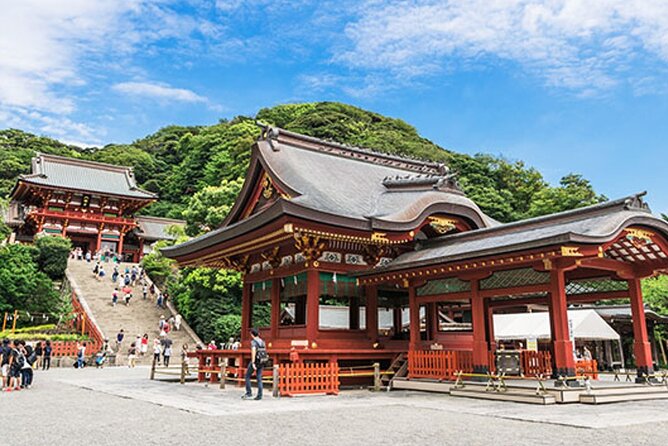
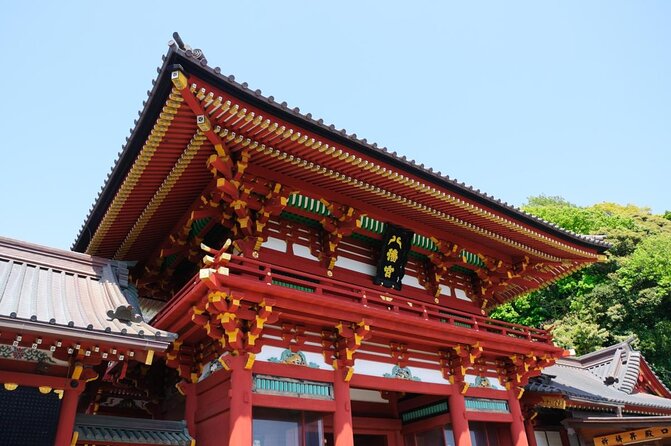
The day begins at Tsurugaoka Hachimangu, Kamakura’s main shrine and its spiritual center. You enter through a large torii gate and walk into a broad complex with ponds, koi, shrine buildings, and long ceremonial approaches.
Allow yourself time to notice the layout rather than rushing straight to the main pavilion. The ponds and open grounds give this stop a calmer feel than the shopping street outside. The shrine is also a useful place to hear about Kamakura’s samurai past, since the site is closely tied to the city’s warrior government.
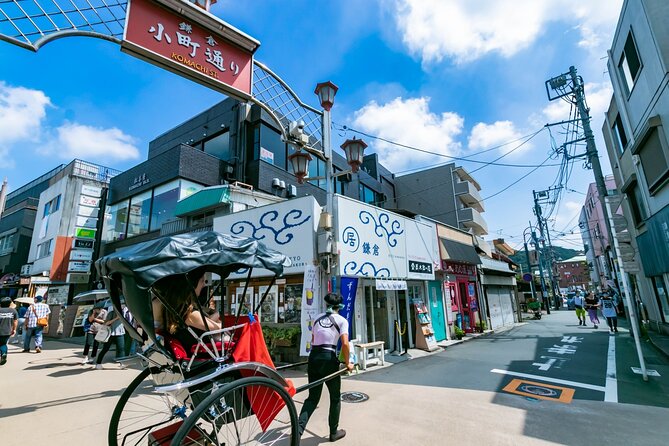
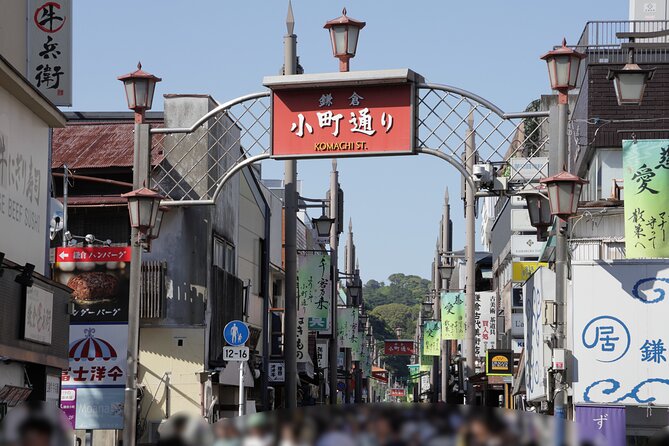
The scheduled visit lasts about two hours and includes time around Komachi Street. This is one of the best practical features of the itinerary. Komachi Street runs toward the shrine and offers snacks, handmade goods, souvenirs, and small restaurants.
Lunch is not included, so this area may be your first chance to buy food. The catch is that the exact timing can shift if traffic or road conditions alter the route. On one outing, the order was changed after a traffic accident, leaving lunch in Enoshima unusually early, when many places were not yet open. It is sensible to carry a small snack and avoid assuming that every restaurant will be serving at the precise time you expect.
Some people may find two hours generous here, especially if they are more interested in the Great Buddha and Enoshima. I see the extra time as useful for shopping, food, and a slower look at the shrine, but you should not expect a private guided walk through every part of the grounds.
Kōtoku-in and the Great Buddha
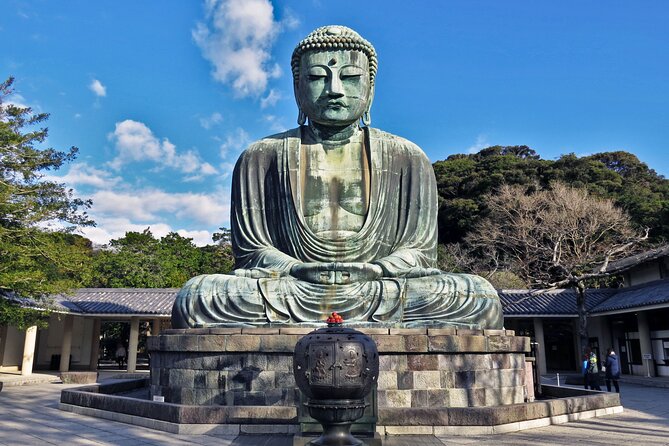
Kōtoku-in is home to Kamakura’s famous Great Buddha, a bronze Amida Buddha that has sat outdoors for centuries. The statue is the visual centerpiece of the visit and one of the few sights on the route that feels instantly recognizable even if you know little about Japanese religious art.
The stop lasts about 30 minutes, with admission included. That is enough to see the statue, take photographs, and look around the grounds. It is not much time for lingering, and the site can be crowded.
You may also be able to enter the interior of the Buddha for a small additional fee, though this is not included in the tour details. One person had trouble finding the necessary 50 yen and received help from the guide. That small detail tells you something useful: carry a few coins, even when the major admissions are already covered.
If you want a special stamp or inscription from the temple, plan carefully. Queues can make this stop feel shorter than expected. The attraction works best when you accept that it is a focused visit, not an hour-long temple exploration.
Hase-dera gives you more time to look around
Hase-dera is the more spacious and varied temple stop. It is known for its eleven-headed Kannon statue, the Buddhist goddess of mercy, and for its carefully arranged grounds.
The visit lasts about 50 minutes. That is a better amount of time for wandering, though you still need to watch the clock. The temple’s hillside setting means stairs and uneven walking are part of the experience. You may find gardens, religious buildings, and viewpoints as you move through the grounds.
This is one of the places where the tour’s pace matters. Some people find the timing comfortable, while others want longer to explore. If you stop often for photographs, read every sign, or spend time at the main statue, you will need to keep moving.
I would wear shoes with good grip and avoid carrying a large bag. The tour allows one piece of luggage per person, but stored bags cannot be reached between stops. Keep valuables, medication, and anything you may need during the day with you.
More Day Trips in Kamakura:
- Athens: Cape Sounion & Poseidon Temple Sunset Half-Day Trip
★ 4.8 · 8,241 reviews - Athens: Meteora Monasteries Day Trip with Caves and Lunch
★ 4.7 · 4,670 reviews - From Aswan: Abu Simbel Temple Day Trip with Hotel Pickup
★ 4.4 · 2,807 reviews - From Malta: Gozo Day Trip Including Ggantija Temples
★ 4.2 · 2,399 reviews
Enoshima: sea views, shrines, and a lot of stairs
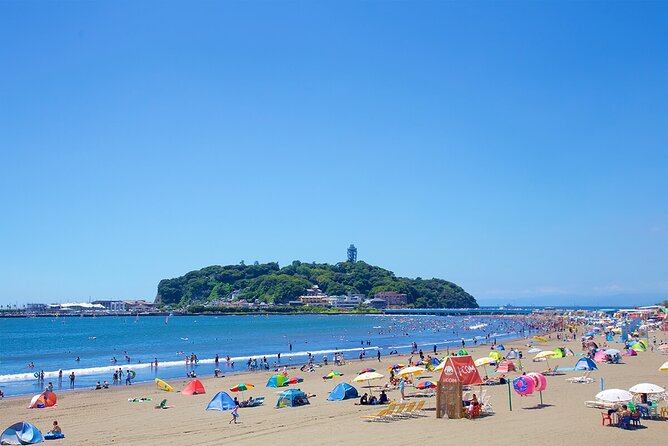
Enoshima gets about two hours, making it the most open-ended part of the day. The island is reached by a narrow shopping street lined with restaurants and souvenir shops. This is where you can buy seafood, snacks, and local gifts, or simply walk toward the shrine complex.
Enoshima’s shrines are dedicated to Benzaiten, a goddess associated with music, wealth, and wisdom. The complex includes three shrines: Hetsu-no-miya, Nakatsu-no-miya, and Okutsu-no-miya. Their locations on the island give the visit a different rhythm from Tsurugaoka Hachimangu, with lanes, slopes, and changing views.
The Samuel Cocking Garden and its observation lighthouse are another possible highlight. The lighthouse rises 59.8 meters, reaching 119.6 meters above sea level, and offers wide views across the coast. On a clear day, Mount Fuji may appear beyond the water.
Here is the important warning: Enoshima is not flat. Stairs are a major part of the island experience, especially if you continue toward the gardens, lighthouse, or caves. Paid escalators can save some effort, but they do not remove all of the uphill and downhill walking. One itinerary experience involved hundreds of stairs, hurried sightseeing, rain, and a stressful search for the bus afterward.
You should treat the two hours as a choice, not a command to see everything. You can focus on food and the main shrine area, pay for the escalators if available, or continue farther for the garden, lighthouse, and caves. Trying to do all of it may leave you watching the clock instead of enjoying the island.
Pay close attention to the return instructions. The bus may not be parked beside the most obvious shopping area, and dusk or rain can make the meeting point harder to find. I would take a photo of the bus location, note the exact return time, and begin walking back earlier than you think necessary.
Guides can shape the whole experience
The guide is important here because the day includes several short visits and a fair amount of free time. A good guide explains the historical setting, points out food and shopping areas, and makes it clear where to return and when.
Omar has been praised for humor, strong historical explanations, and a professional manner. Yuki has been noted for clear English, practical help, and careful attention to the group. Mitsuko has been described as warm and helpful, while guides such as Chen, Koji, and Mits have also received positive comments for friendly service.
That said, the quality of commentary may vary. English and Chinese may be provided together on one bus, depending on the group, and one experience found the explanations hard to follow. Another person felt the guide handled logistics but gave too little history.
My advice is to use the guide’s information as a helpful introduction, not as a full scholarly tour. Stay close during the main explanations, then use your free time to follow your own interests. If cultural context is your top priority, ask questions early and directly.
The bus, group size, and road traffic
The advertised maximum is 90 people, but group size can feel smaller in practice. One person who usually avoids bus tours found the group manageable, while others described clean buses and modern vehicles with USB charging. Another experience involved an older bus and uncomfortable seats over the wheel.
In other words, vehicle quality may vary. You are booking transportation and coordination, not a premium coach guarantee. The air conditioning is useful in warm weather, and the bus gives you a place to rest between sights, but you should not expect the ride to feel luxurious every time.
Traffic is the main uncertainty. The return drive toward Tokyo can be long, especially later in the day. The operator may change the order of stops because of accidents, road conditions, weather, or other delays. The tour still departs in poor weather unless the operator tells you otherwise, so bring protection from rain and wear shoes suitable for wet stairs.
The drop-off information is especially important. The stated return point is near Shinjuku Station’s West Exit, at or near the Shinjuku Post Office area. Shinjuku is the only listed drop-off point, and the bus does not return to Ikebukuro.
Is $66.05 a fair price?
At $66.05 per person, the value comes from convenience rather than luxury. You receive roundtrip transportation from Tokyo, a guide, air conditioning, and entrance fees to Hase-dera and Kōtoku-in. You also cover four major sightseeing areas in one day.
If you arranged the day yourself, you might gain more control over meal times and time spent at each temple. You would also need to manage local trains, walking routes, admission payments, and the return journey. For a first visit to the area, the bus price is reasonable if you value simplicity.
Lunch is extra, and shopping and any optional Enoshima attractions are also your responsibility. Bring cash for small purchases and possible minor fees. The tour is not the best fit if you want a slow, deeply focused visit to one or two temples.
Who should book this tour?
I would choose this for a first Tokyo visit when I want to see Kamakura and Enoshima without spending a day planning train connections. It also suits families and small groups who appreciate a fixed route, an on-board guide, and free time at the main stops.
It works well for anyone who wants a broad introduction to coastal Japan: shrine rituals, Buddhist art, shopping streets, island food, and sea views all appear in one day.
I would think twice if you dislike strict departure times, stairs, or long bus rides. It is also less suitable if you need a fully accessible route, since the itinerary includes hills, steps, and uneven walking. Anyone prone to late arrival should be especially cautious: the bus leaves on time, and refunds are generally not available for arriving late or going to the wrong meeting point.
The meeting instructions deserve a final check before departure. The information describes two central Tokyo pickup options, but the detailed meeting information specifies the Shinjuku Post Office and says the bus and guide are assigned to the selected location. Confirm your exact pickup point in advance, arrive 10 minutes early, and look for the guide holding a pale blue flag.
Should you book the Kamakura and Enoshima day tour?
Book it if you want to see the major sights in one efficient day and prefer a guide and bus over independent planning. The price is fair for the transportation, admissions, and coverage, and the switch from historic Kamakura to seaside Enoshima keeps the day varied.
Skip it if you want long, quiet temple visits, flexible meals, or complete control over your schedule. The best way to enjoy this tour is to accept its limits: follow the timing, carry a snack, keep coins handy, wear comfortable shoes, and leave extra energy for Enoshima’s stairs.
FAQ
How long does the Kamakura and Enoshima tour last?
The experience lasts approximately 9 to 10 hours, including transportation between Tokyo, Kamakura, Enoshima, and the return point in Shinjuku.
What sights are included?
The route includes Tsurugaoka Hachimangu Shrine, Komachi Street, Kōtoku-in and the Great Buddha, Hase-dera Temple, and Enoshima Island. Enoshima also includes access to its shrine area, shopping street, and possible views from the island’s higher points.
Are entrance fees included?
Entrance fees to Hase-dera and Kōtoku-in are included. The tour does not include lunch or optional purchases and activities on Enoshima.
Is lunch included?
No. Lunch is not included, so you should budget for food in Kamakura, Komachi Street, or Enoshima.
Where does the tour finish?
The tour has one listed drop-off point near Shinjuku Station’s West Exit. It does not return to Ikebukuro.
What happens if I arrive late?
The bus departs on time and cannot wait. You should arrive at least 10 minutes before departure at the correct assigned meeting point. Late arrivals and arrivals at the wrong location may not receive a refund.
Just added around Kamakura
- Kanagawa: Kimono Rental in Kamakura Provided by RikaWafuku★ 4.8 · 8 reviews
- Kamakura: Great Buddha, Hase Temple, & Komachi Street Tour★ 5.0 · 11 reviews
- Kamakura: Walking Tour through the City of Samurai★ 4.9 · 12 reviews
- Kamakura: Private History and Heritage Tour by Rickshaw★ 4.9 · 7 reviews
- Kamakura Private Custom Tour with Local Guide★ 5.0 · 7 reviews
- Kamakura Half Day Tour with a Local Expert Guide★ 4.4 · 23 reviews
- Kamakura: Half day Walking tour & Japanese sweets★ 5.0 · 11 reviews
- Kamakura: Daibutsu Hiking Trail Tour with Local Guide★ 5.0 · 10 reviews
Nikko & Kamakura Day Trips, compared.
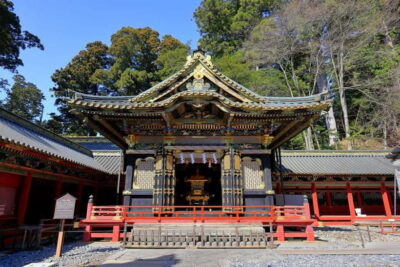
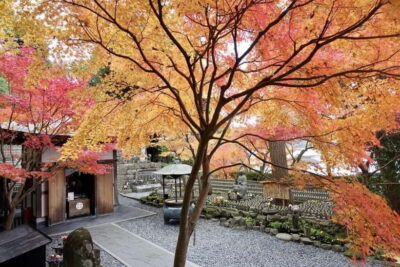
Kamakura & Enoshima Day Trip including Temple Tickets
Read our review →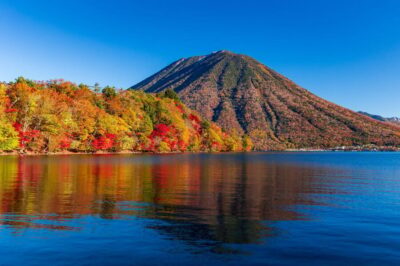
Nikko Toshogu Shrine and Kegon Waterfall Tour
Read our review →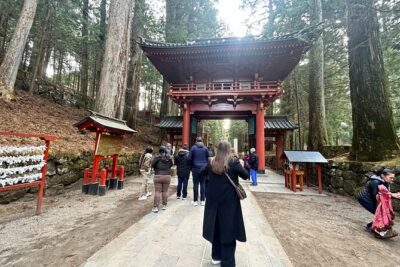
Nikko, Kegon Waterfall & Chuzenji Lake from Tokyo
Read our review →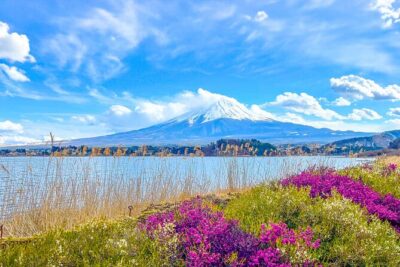
Mount Fuji, Kamakura, Big Buddha, & Lake Ashi Day Trip
Read our review →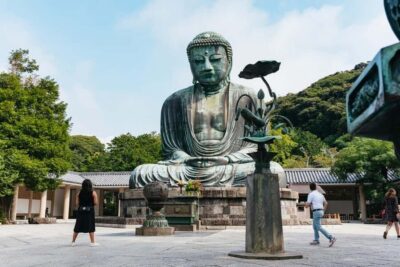
Mt. Fuji, Kamakura, Big Buddha, & Lake Ashi Day Trip
Read our review →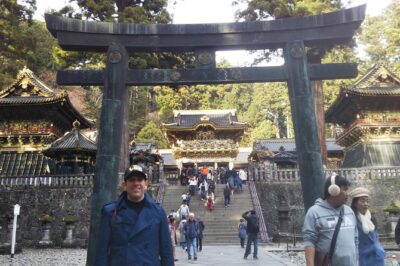
Nikko Full-Day Private Tour with Government-Licensed Guide
Read our review →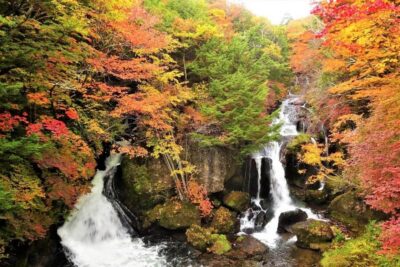
Browse the lists this tour appears in