
REVIEW · SOUTH INDIAN TEMPLE TOURS
Mahabalipuram & Kanchipuram by tourism ministry approved company
The remarkable feature here is the chance to see two major Pallava centers in one long day. Kanchipuram gives you active temple spaces and grand stone architecture, while Mahabalipuram brings you carved reliefs, monolithic shrines, and the Shore Temple beside the sea.
I like the private car and guide, which let you keep a comfortable pace and ask questions as the day unfolds. I also like the included South Indian lunch, especially since guides such as Nivi have helped guests choose milder dishes and understand what they are eating. The tradeoff is simple: 12 hours is a long day, and there is plenty of driving between Chennai, Kanchipuram, and Mahabalipuram.
Key points
- Two Pallava centers in one day: Compare Kanchipuram’s temple tradition with Mahabalipuram’s sculpted monuments.
- Private transport and guide: Your group travels in its own vehicle, with hotel pickup and drop-off included.
- A full spread of Mahabalipuram highlights: See Pancha Rathas, Arjuna’s Penance, Krishna’s Butter Ball, and Shore Temple.
- Lunch is included: A useful touch on a long touring day, with food preferences discussed at the meal stop.
- Useful for a short Chennai stay: This packs several important South Indian sites into one outing.
- Plan for temple dress rules: Cover your knees and shoulders, and leave shorts and sleeveless tops behind.
Two Pallava cities, one demanding day
This is not a quick outing to one monument. It is a full-day history and architecture trip, starting at about 7:30 am and lasting roughly 12 hours.
You travel first to Kanchipuram, the medieval Pallava capital, then continue to Mahabalipuram, the old port town associated with the same dynasty. That order gives the day a useful shape. You begin with working temples and the setting of a former royal center, then finish among the open-air stone monuments of the coast.
The private format matters here. Only your group takes part, so you can ask for a slower explanation at a carving, pause for photographs, or move on when you have had enough. The guide and driver are separate roles, and past guides have included Kannan, Nivi, Jainath, Hareesh, Preethi, and Vijay. The exact guide is not fixed, but the experience depends heavily on having someone who can explain Hindu imagery, Pallava architecture, and local customs in clear terms.
You should still set realistic expectations. The listed sightseeing time adds up to several hours, but the day also includes road travel, lunch, and transfers. Roads and traffic can make the schedule feel full. If you prefer a relaxed visit to one site, this is too packed. If you have only a short stay in Chennai, it is an efficient way to reach two important destinations.
More South Indian Temple Tours in Chennai:
- Mahabalipuram tour by Tourism Ministry approved company
★ 5.0 · 405 reviews - Mahabalipuram Private tour from Chennai by car with guide and lunch by Wonder
★ 5.0 · 137 reviews - Mahabalipuram walking tour by tourism ministry approved company
★ 5.0 · 102 reviews
Ekambareswarar Temple and the scale of Kanchipuram
The first listed stop is Ekambareswarar Temple, with about 45 minutes set aside and admission included. The tour presents its architectural roots in the Pallava period, around 600 AD, and uses the temple to introduce the stonework and design language that shaped this part of South India.
The main value of a guided visit is not just seeing a large temple. It is learning how to look at it. Your guide can point out the arrangement of halls, pillars, gateways, and sculpted figures, then explain how religious use and royal patronage shaped the building.
Forty-five minutes gives you a useful introduction, but not an exhaustive examination of a major temple complex. Keep your expectations in check. You will see the principal areas included by the day’s route, rather than study every corner at leisure.
Because this is a place of worship, dress properly from the start. Knees and shoulders must be covered for both men and women. Shorts and sleeveless tops can lead to refused entry, so long trousers or a longer skirt and a covered shirt are the sensible choice.
Kailasanathar Temple and early Pallava design
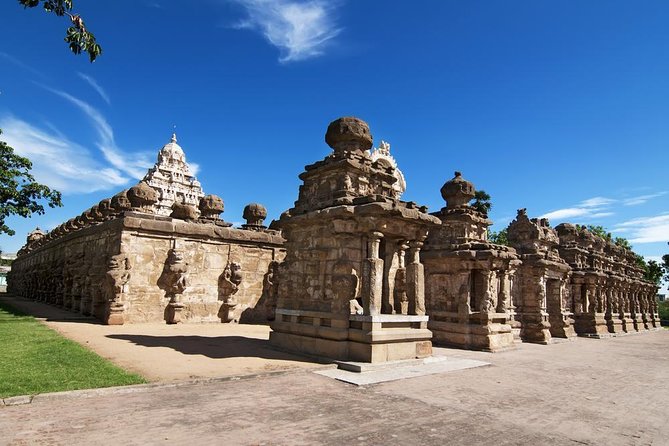
Kailasanathar Temple is the second Kanchipuram stop, again with about 45 minutes planned. It is presented as a major Pallava-era temple and helps you compare the dynasty’s architectural ideas with what you saw at Ekambareswarar.
This stop is especially useful if you want a clearer sense of early South Indian temple design. Rather than treating each shrine as an isolated photo stop, ask your guide to compare the carvings, proportions, and layouts between the two Kanchipuram temples.
The route gives you enough time to walk through and take photographs without turning the visit into a rushed dash. Still, the schedule is tight. If a ceremony, crowd, or restricted area changes the pace, you may need to accept a shorter look at another feature later.
Kanchipuram is also associated with silk weaving, and the experience includes time with a local saree weaver. This adds a human element to a day otherwise centered on stone. You can see how the town’s living craft tradition fits alongside its old religious buildings. The stop may appeal to you more if you are interested in textiles and everyday work, not just monumental architecture.
Lunch, local food, and a useful midday pause
Lunch is included, which makes a real difference on a 12-hour outing. You do not have to spend part of the day searching for a restaurant or negotiating a meal in an unfamiliar area.
The food is South Indian, and the meal has been a strong part of the experience for many people. One guide, Nivi, took care to make sure a solo visitor received food that was not too spicy. Another guide, Hareesh, connected the meal with local culture and religion. These details matter because food is easier to enjoy when someone explains what is on the plate and helps you communicate your preferences.
Drinks are not included, so carry water or budget for beverages. Guides have sometimes provided drinks during the day, but that should not be treated as part of the published inclusions.
Lunch also gives your feet and attention a break. By this point, you will have been looking at large temples and detailed carvings in warm conditions. Use the pause to reset before the Mahabalipuram monuments, where much of the sightseeing takes place outdoors.
Same country, a different morning at the gates:
- Full-Day Private Tour to the Kanchipuram Temples from Chennai
★ 5.0 · 73 reviews - From Chennai: Private Kanchipuram and Mahabalipuram Day Tour
★ 4.6 · 55 reviews - Mahabalipuram and Kanchipuram Day trip from Chennai by Private car with Guide
★ 5.0 · 34 reviews - Private Day Trip to Mahabalipuram from Chennai with Expert Guide
★ 5.0 · 29 reviews
Pancha Rathas, a stone-carved experiment
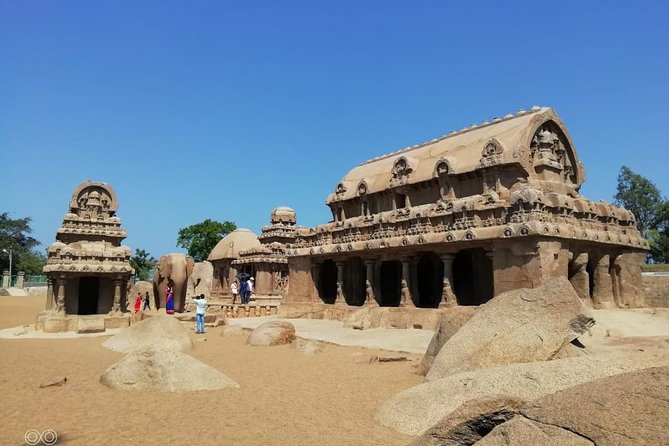
Mahabalipuram begins with Pancha Rathas, with about 45 minutes planned. These are not wooden chariots or moving vehicles. They are monolithic stone shrines, each carved from a single large block, and are among the clearest examples of the Pallava interest in testing architectural forms in stone.
Your guide can help you see the differences between the structures rather than treating them as one group of similar monuments. Look at the varied shapes, roof designs, and decorative details. The site is a good place to ask how craftsmen turned solid rock into buildings that appear assembled.
Mahabalipuram was an old trading town and port, with links reaching back to Roman-period trade. That context helps explain why the town became such an important Pallava center. Its monuments were not built in an isolated village. They were part of a port connected to wider movement of goods, people, and ideas.
The 45-minute visit is enough for a guided overview and photographs. You may want more time if architecture is your main interest. The stone surfaces can also be exposed to sun, so a hat, water, and sensible footwear are useful.
Arjuna’s Penance, a whole story on one wall
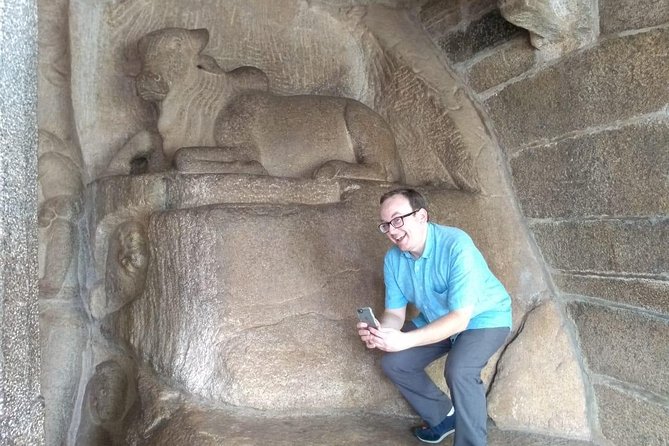
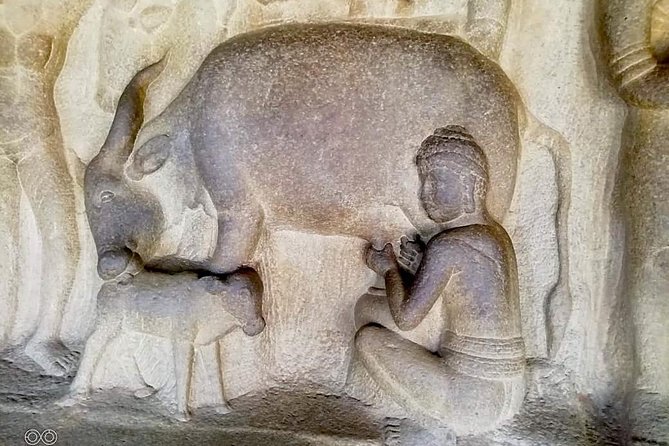
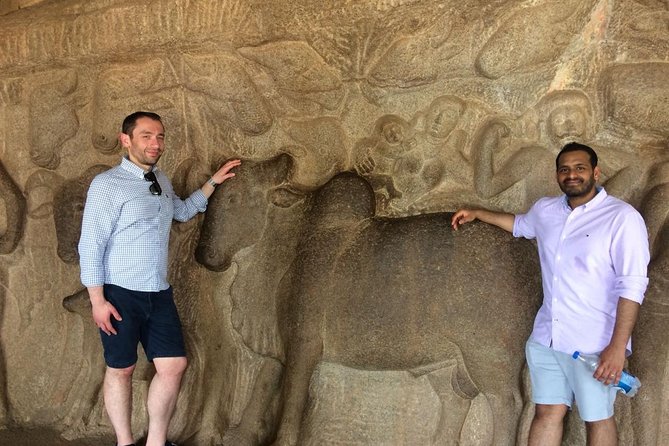
Arjuna’s Penance is one of the most rewarding stops for anyone who enjoys visual storytelling. The tour allows about 30 minutes at this huge bas relief, measuring roughly 100 feet by 45 feet.
The carving brings an episode associated with the Mahabharata into a broad stone surface filled with figures and movement. Your guide can explain the main interpretation and draw your attention to animals, divine figures, human figures, and the way the composition uses the natural split in the rock.
This is a place where a few minutes of explanation can change what you see. Without context, it may look like a busy wall of carvings. With guidance, individual details begin to relate to the larger scene.
Thirty minutes is a sensible amount of time for the standard route, though serious photography or close study could take longer. If you want a strong photograph, ask your guide where the main composition reads most clearly. Guides such as Nivi have helped people find good picture points at other stops, and a private tour makes that sort of request easy.
Krishna’s Butter Ball and a quick dose of oddity
Krishna’s Butter Ball is the lightest stop on the route. The 5-meter-wide boulder rests on a slope in a way that looks impossible, earning its playful name and its reputation for defying gravity.
You have about 30 minutes here. That is more than enough for photographs, a walk around the rock, and a short explanation of its place in local sightseeing. It is also a welcome change after the concentration required at the temples and reliefs.
Do not expect a major historical visit. This is a curious natural feature within the monument zone, not a temple interior or carved narrative. Its value is visual and entertaining. It breaks up the architectural sequence and gives you a memorable image from the day.
Shore Temple beside the sea
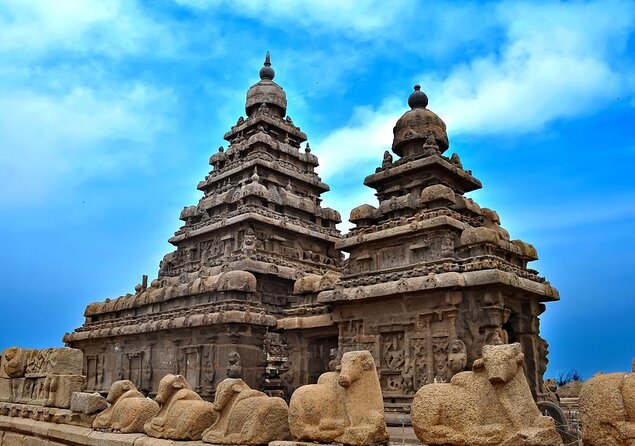
The Shore Temple is the final listed stop, with about 45 minutes planned. It is the monument that gives Mahabalipuram its strongest coastal identity, and it is tied to the old description of the town as the city of seven pagodas. The Shore Temple is the surviving example from that group of seafront temples.
Here, location is part of the experience. The temple’s position beside the water makes it feel different from the inland shrines at Kanchipuram and the rock-cut monuments elsewhere in Mahabalipuram. Your guide can explain the temple’s Pallava setting and help you notice its structure, carvings, and weathered surfaces.
The site is exposed, so the time of day and weather can shape your visit. Strong sun makes the stone details harder to study, while rain can limit photographs and outdoor walking. One previous departure continued through heavy rain, and the company later supplied photographs to show how the site appears in better conditions. That is a useful reminder to keep expectations flexible during monsoon weather.
The Shore Temple is a fitting last major stop because it brings together the themes of the day: royal ambition, religious architecture, stone carving, and Mahabalipuram’s connection to the sea.
What the private format really adds
At $135 per person, this is not the cheapest way to see Mahabalipuram. The price includes a private vehicle, hotel pickup and drop-off, a local guide, lunch, GST, and admission to the listed sites. The value improves when two or more people share the booking, since the format avoids a large coach group while keeping the cost tied to each person.
The private setup is most useful for questions and pacing. You can ask for more detail about Hindu symbols, request a food adjustment, or spend a little longer at a favorite monument. You also avoid having to follow strangers through every stop.
The driver matters as well. A clean vehicle with strong air conditioning was specifically appreciated during the long day, and careful driving made the road portions more comfortable. That is not a minor point in South India’s heat. You will spend a fair amount of time in the car, so a reliable vehicle and an attentive driver make the day easier.
The main limit is that privacy does not remove distance. Kanchipuram and Mahabalipuram are separate destinations, and the schedule cannot give every temple the time of a specialist archaeological tour.
Who should book this Chennai day trip?
I would recommend it if you want a guided introduction to Pallava architecture and have only one free day from Chennai. It suits first-time visitors who want the major sites explained rather than simply photographed.
It is also a good match for solo visitors. The private format offers personal attention, and guides have helped solo guests with food choices, photography, cultural questions, and onward travel arrangements.
Families and mixed-interest groups can benefit from the variety. The temples appeal to architecture fans, the saree weaving stop adds a local craft angle, Krishna’s Butter Ball gives younger visitors something playful, and the coastal setting at Shore Temple breaks up the day.
I would hesitate if you dislike long road days, need a slow pace, or want to spend hours at one site. The route is full, and the four main Mahabalipuram stops alone could occupy a much longer visit if examined in detail.
Practical details before you go
Hotel pickup and drop-off are included, with a start time of about 7:30 am. Confirmation is provided when you book, and the activity is offered as a private tour for your group only.
Wear clothing that covers your knees and shoulders from the beginning. This rule applies to both men and women at places of worship and selected museums. Comfortable shoes, water, sun protection, and a little cash for drinks are sensible additions.
Free cancellation is available up to 24 hours before the start time for a full refund. Cancellations or changes made within 24 hours are not accepted for a refund, based on local cut-off times.
Should you book it?
Book this tour if you want the major Kanchipuram and Mahabalipuram sights in one carefully arranged day, with a guide to explain what you are seeing and a private car to handle the route. The included lunch, admissions, hotel transfers, and air-conditioned vehicle make the $135 price easier to justify, especially for a small group.
Skip it if you want a leisurely archaeological study or dislike spending much of a day on the road. For most people with limited time in Chennai, though, this is a strong cultural outing. Ask questions, dress correctly, keep your pace flexible, and let the guide connect the temples, carvings, textiles, food, and coastal setting into one clear picture of South India.
FAQ
How long does the tour last?
The tour lasts approximately 12 hours, beginning at about 7:30 am.
Is hotel pickup and drop-off included?
Yes. Hotel pickup and drop-off are included in the tour price.
Is this a private tour?
Yes. Only your group participates in the activity.
What is included in the price?
The price includes GST, lunch, hotel pickup and drop-off, a local guide, and admission tickets for the listed stops.
Are drinks included?
No. Drinks are not included.
What should I wear to the temples?
Your knees and shoulders must be covered. Shorts and sleeveless tops are not allowed, and both men and women must follow the dress code.
Can I cancel for a full refund?
Yes, if you cancel at least 24 hours before the experience start time. Cancellations or changes made less than 24 hours before the start time are not refundable.
Just added around Chennai
- South India Tour- Temple Architecture and Backwaters★ 5.0 · 7 reviews
- Chennai City Highlights – Government Museum & Temple Discovery★ 4.0 · 7 reviews
- Private Day Trip to Mahabalipuram from Chennai with Expert Guide★ 5.0 · 29 reviews
- Full-Day Private Tour to the Kanchipuram Temples from Chennai★ 5.0 · 73 reviews
- Chennai & Mahabalipuram day trip with private car, Lunch & Guide★ 5.0 · 10 reviews
- Mahabalipuram and Kanchipuram Day trip from Chennai by Private car with Guide★ 5.0 · 34 reviews
- Explore Mahabalipuram & Kanchipuram: A Day Trip from Chennai!★ 5.0 · 9 reviews
- Mahabalipuram walking tour by certified travel company★ 5.0 · 10 reviews
South Indian Temple Tours, compared.
Mahabalipuram tour by Tourism Ministry approved company
Read our review →
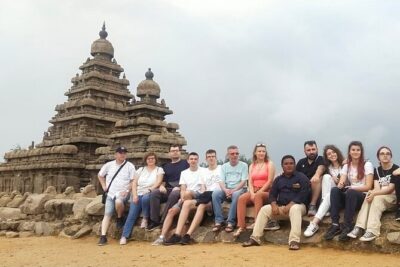
Mahabalipuram Private tour from Chennai by car with guide and lunch by Wonder
Read our review →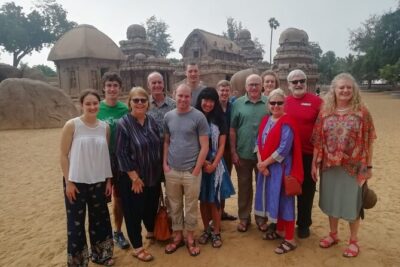
Mahabalipuram walking tour by tourism ministry approved company
Read our review →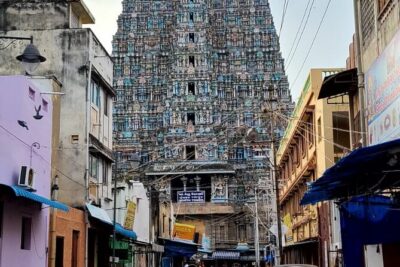
Madurai Walks : City Highlights Temple and Market Tour
Read our review →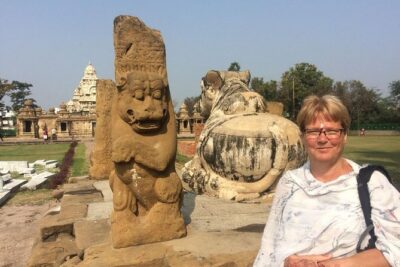
Full-Day Private Tour to the Kanchipuram Temples from Chennai
Read our review →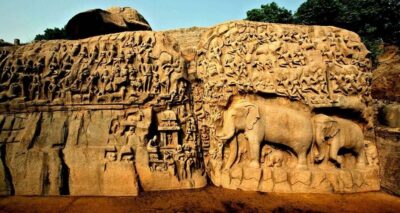
Mahabalipuram: Private Guided tour from Chennai with lunch
Read our review →Browse the lists this tour appears in