
REVIEW · GUIDED
Todaiji Temple, Kasuga Shrine and Nara Park Guided Full Tour
Nara’s best sights come together on foot in this small-group tour of only eight people. You’ll feed Sika deer in Nara Park, see Todaiji’s huge Great Buddha, walk through the lantern-lined forest of Kasuga Taisha, and finish with Ukimido and Kofukuji.
I like the way the tour combines major landmarks with quieter corners, especially Nigatsu-do’s views and Ukimido Pavilion. I also like the guide’s personal angle: Artur has lived in Japan for years and explains daily customs as well as temple history. The drawback is the walking. Stairs are part of the route, and this is not suitable if you have mobility limits.
Key points to know before booking
- Artur brings a personal view of Japan: Expect site history mixed with explanations of everyday customs and local life.
- Six major stops fit into 5.5 hours: Todaiji, Nigatsu-do, Kasuga Taisha, Ukimido, Kofukuji, and Nara Park all make the route.
- The deer are part of the setting, not a separate attraction: You’ll see them moving freely through the park and can feed them.
- Two admission tickets are included: Todaiji and Kasuga Taisha entry fees are covered in the $116 price.
- This is a proper walking tour: Comfortable shoes matter, and the route includes lots of stairs.
- Lunch is separate: Bring cash for food and any deer crackers, souvenirs, or other purchases.
Why this Nara route works so well
Nara can look easy on a map. The main sights sit close together, and the deer make the park feel relaxed. Yet the temples and shrines are spread across a large park, and each one has its own meaning, layout, and customs. A guide helps you connect the pieces instead of simply ticking off buildings.
This tour begins at Exit 2 by the fountain at Kintetsu Nara Station and returns there at the end. That makes the meeting point simple, especially if you are arriving by train and do not want to hunt for a hotel lobby or an obscure street corner.
The group limit of eight is useful here. Nara’s lanes and temple grounds can be crowded, particularly around the most famous sights. A small group gives you a better chance to hear Artur without standing in a tight cluster around him. The guide can also spend more time answering questions than on a large coach outing.
At $116 per person, this is not the cheapest way to see Nara. You are paying for a 5.5-hour guided walk, two entry tickets, a small group, and a guide who adds cultural context. Lunch is not included, and you will need to pay for food and souvenirs yourself. I see the price as fair if you want interpretation and a well-shaped route, but less attractive if you are happy to walk independently with a guidebook.
More Guided Tours in Japan:
- Kyoto: Nijo Castle, Kiyomizu & Fushimi Inari Guided Tour
★ 4.7 · 700 reviews - Kyoto: Full-Day English Guided Tour of Kyoto’s Highlights
★ 4.5 · 656 reviews - Nikko Full-Day Private Tour with Government-Licensed Guide
★ 5.0 · 259 reviews
Nara Park and its free-roaming Sika deer
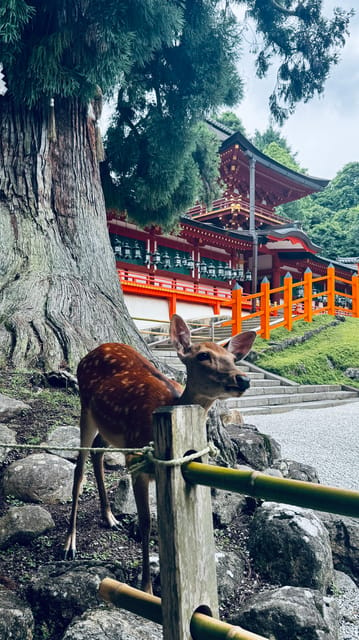
The tour starts with Nara Park, where Sika deer move freely among the trees, paths, and historic buildings. This is not a fenced animal park. The deer are part of Nara’s daily scene, which gives the opening part of the tour an unusually informal feel.
You can feed them and take photographs. That sounds simple, but it is also where a guide is useful. You will be dealing with animals that know people often carry food, so it helps to pay attention and keep the experience calm. Bring cash if you want to buy food or make small purchases in the park.
The park is especially appealing during cherry blossom season, when the trees add another layer of color to the old temples. The tour description does not promise a particular season or weather, so you should treat blossoms as a possible bonus rather than a guarantee.
I like beginning here because it gives you a quick sense of Nara before you enter the formal religious sites. You first see the city as a lived-in public space, then move into temple and shrine grounds where quiet behavior and careful observation matter more.
Todaiji and the Great Buddha
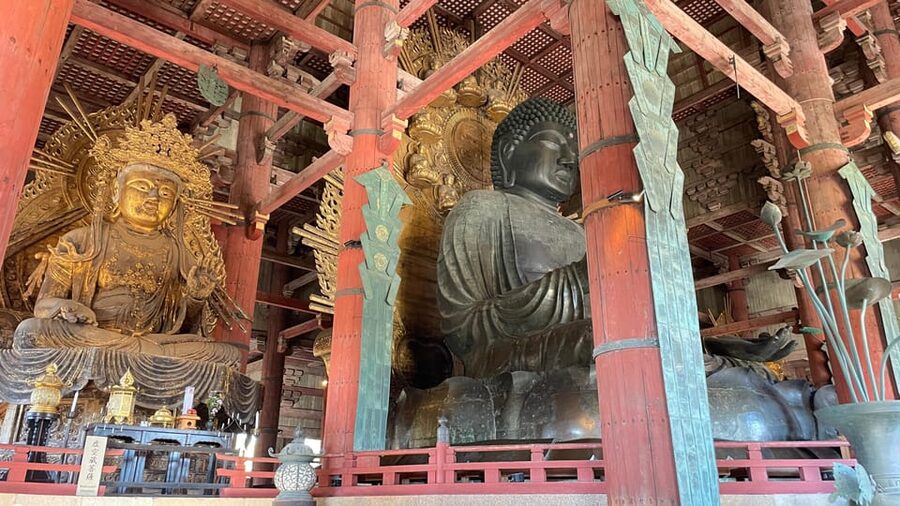
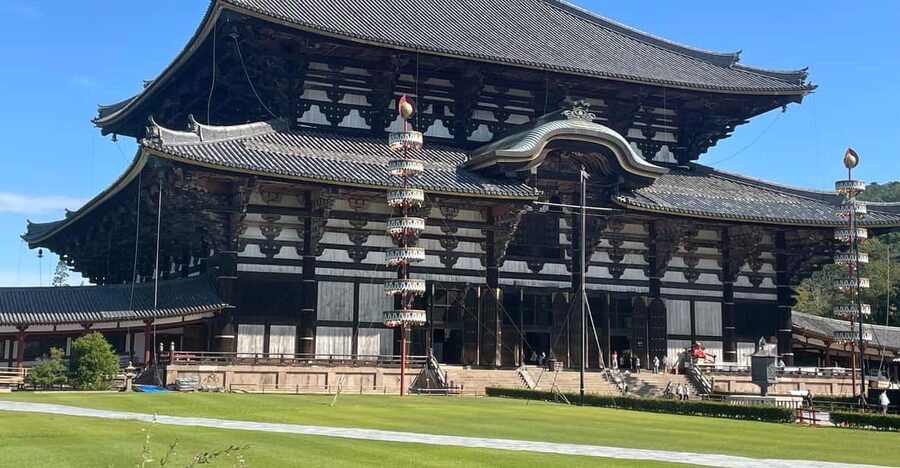
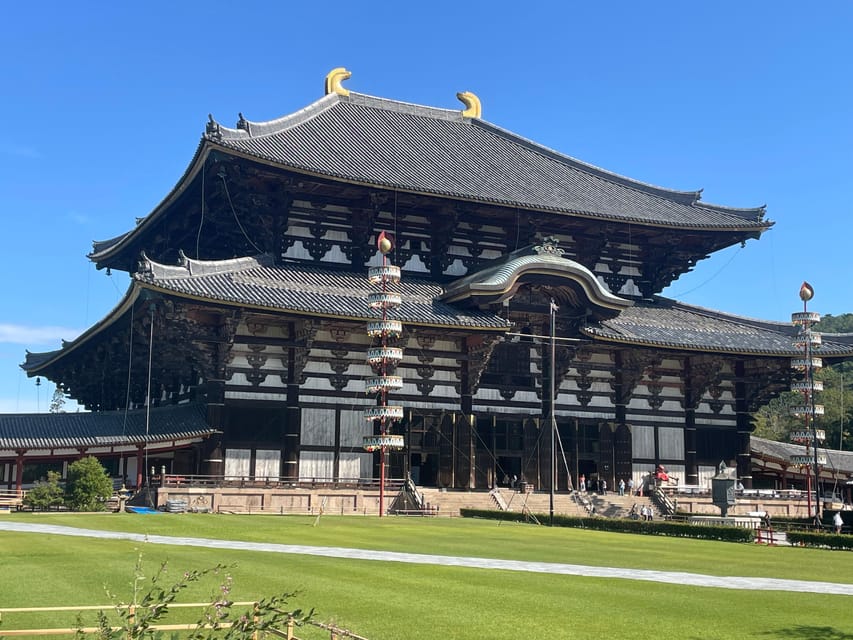
Todaiji is the main architectural and religious highlight. Inside Japan’s largest wooden structure, you will see the Great Buddha, known as the Daibutsu, a monumental image created in the eighth century.
The scale is the point. Even if you have seen large Buddhist statues elsewhere in Japan, Todaiji’s combination of statue, hall, and timber construction gives the visit real force. Artur’s job here is not only to identify what you are looking at, but to explain why the temple matters within Nara’s long religious story.
Your Todaiji admission ticket is included. That is a useful saving and removes one small decision at the entrance. The grounds can be busy, so stay close enough to hear the guide and allow extra patience when moving through the hall.
The temple is also a place where a guide can help you notice details you might otherwise pass. The information provided does not specify every stop inside the building, so expect interpretation rather than a fixed promise of particular objects or ceremonies. You should also remember that this is an active religious site, not only a museum.
Nigatsu-do for a different view of Nara
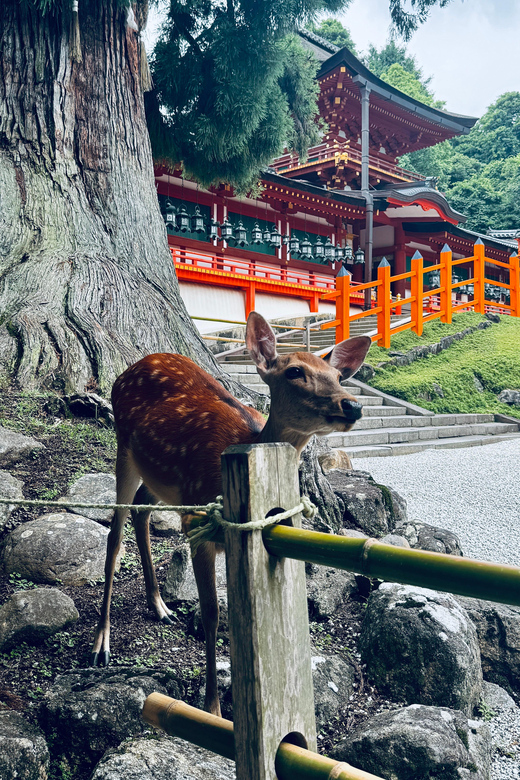
Nearby Nigatsu-do offers a change of pace. Its position above the surrounding area gives you broad views across Nara, making it one of the route’s best pauses for photographs and orientation.
Getting there involves stairs. That matters because the tour is not a flat stroll through the park. The climb is part of the experience, but you should take it seriously if stairs are difficult for you or if you prefer a slow, low-effort day.
I like this stop because it breaks up the interior focus of Todaiji. After spending time looking at a huge Buddha and a vast wooden hall, you step outside and look across Nara from above. It gives you a better sense of how the temples, trees, and city fit together.
A few more temple visits around Japan worth a look
- Kyoto: Tea Ceremony Ju-An at Jotokuji Temple
★ 4.9 · 3,207 reviews - Tokyo: Asakusa Walking Tour with Sensoji Temple Visit
★ 4.8 · 1,583 reviews - Nikko: Kegon Falls, Lake Chuzenji & Toshogu Temple
★ 4.6 · 1,577 reviews - Tokyo: Kamakura & Enoshima Day Trip including Temple Tickets
★ 4.5 · 1,375 reviews
Walking past Mt. Wakakusa to Kasuga Taisha
The route continues past Mt. Wakakusa toward Kasuga Taisha, one of Nara’s most atmospheric shrines. The shrine is known for vermilion-lacquered buildings and thousands of hanging lanterns.
Kasuga Taisha feels different from Todaiji. Todaiji impresses through mass and scale. Kasuga works through color, repeated lanterns, forest paths, and a more enclosed mood. The shrine’s setting makes the walk itself part of the visit.
The tour includes the Kasuga Taisha admission ticket. That is important because some areas of Japanese temple and shrine complexes require separate payment, and the included entry makes the $116 price easier to assess.
Artur’s cultural explanations should be especially useful here. The route description highlights his ability to connect famous places with daily customs in Japan, not simply recite dates. That wider viewpoint can help you understand how a shrine functions as a religious and cultural place.
Do not expect a completely effortless walk. The path includes stairs, and the full route is done on foot. Wear shoes with good support rather than something chosen only for photographs.
Ukimido Pavilion and the quieter side of the park
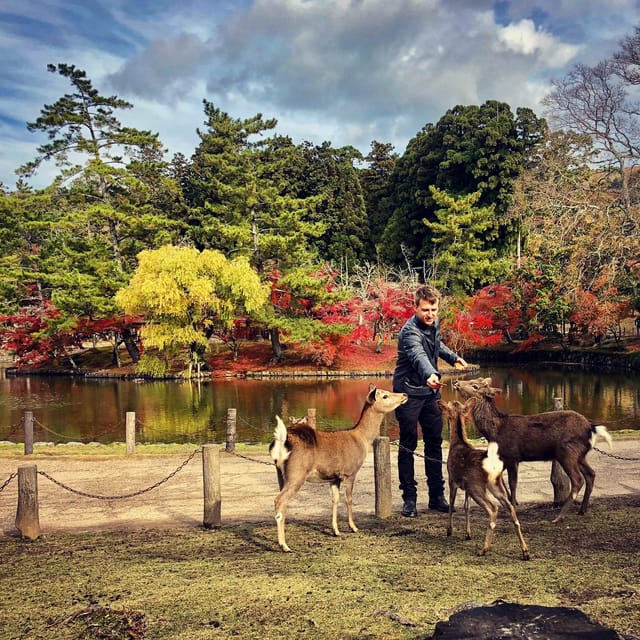
Ukimido Pavilion sits above Sagi Pond, giving the tour a calm architectural pause after the shrine visit. The hall appears to float over the water, and the setting invites you to slow down and look rather than rush toward the next major landmark.
This stop may appeal most if you enjoy atmosphere as much as famous buildings. The Great Buddha is the dramatic centerpiece, but Ukimido offers a smaller, more reflective moment. You can take in the pond, the structure, and the surrounding park without needing a long explanation to appreciate the scene.
The tour’s order gives you a useful rhythm: deer and open parkland, a massive temple, a viewpoint, a forest shrine, then water and quiet. That variety helps the 5.5 hours feel like a real introduction to Nara rather than a string of similar buildings.
Kofukuji and its famous pagoda
Kofukuji is the final major temple stop before lunch and the return to Kintetsu Nara Station. The temple dates to the seventh century and is known for its pagoda and wider complex.
The pagoda gives you an instantly recognizable Nara view, while the grounds offer another chance to compare Buddhist temple design with what you saw at Todaiji. The tour description also points to treasures within the complex, though it does not specify which displays you will enter or see on the day.
This is where a guide’s broad knowledge can help. Artur has been praised for adding personal stories and explaining the area from the point of view of someone who has lived in Japan for several years. That can make Kofukuji feel connected to present-day Nara rather than frozen in the past.
Because this is the last sightseeing section, you may be ready for food by then. The tour includes lunch time at a local restaurant, but lunch itself is not included. Keep cash with you and ask the guide for help choosing if you want advice on local food.
What Artur adds to the day
The strongest reason to choose this tour is the guide. Artur is repeatedly described as a guide who offers more than basic site facts. His explanations include Japanese culture, local customs, personal stories, and observations from living in Japan for years.
That distinction matters. A self-guided visit can show you the Great Buddha and the lanterns, but it may not explain how to behave at a shrine, why certain spaces feel different, or how the sites connect to everyday life. You can ask questions as you go, which is often the best way to turn a beautiful stop into a memorable one.
The available guide languages are English, Russian, and Lithuanian. The information also says the tour can accommodate multiple languages at the same time, so confirm the language arrangement when you book if you need a particular level of support.
Walking, stairs, timing, and what to bring

The stated duration is 5.5 hours. That is long enough to cover the major sights but short enough to fit into a larger Nara day. You should not expect a slow, unstructured wander. The group has several places to reach, and the route involves continuous walking.
Bring:
- Comfortable walking shoes
- A camera
- Cash for lunch, food, and souvenirs
Baby strollers are not allowed. The tour is not suitable for people with mobility impairments because the route includes many stairs and is completed entirely on foot.
The meeting point is at Exit 2 of Kintetsu Nara Station, next to the fountain. The tour ends back at that same meeting point, which is convenient for continuing your day by train or returning to your hotel.
Free cancellation is available up to 24 hours before departure for a full refund. You can also reserve now and pay later, which helps if your Nara plans depend on weather or a changing Japan itinerary. Check the available start times before booking, since the schedule can affect how the tour fits with other plans.
Who should book this Nara walking tour?
I would choose this tour if you want the major Nara sights explained in one organized half-day, especially if this is your first visit. It suits people who enjoy walking, ask questions, and want cultural background rather than a quick photo stop at each building.
It is also a good match if you value a small group. Eight people is large enough to keep the cost below a private tour but small enough for a more personal exchange with Artur.
I would hesitate if you want a leisurely day with long breaks, need step-free access, or prefer to decide your own pace at every temple. Lunch is extra, and the $116 fee is aimed at visitors who want a guide and included admission rather than the lowest possible cost.
Should you book the Todaiji and Nara Park tour?
Book it if you want to see Nara’s essential sights while gaining a broader understanding of Japanese customs and local life. The combination of Artur’s personal perspective, a maximum of eight participants, two included tickets, and a well-planned route gives the tour real value.
Skip it if you are comfortable navigating alone, want to spend hours at only one temple, or cannot manage a walking route with many stairs. For the right visitor, this is a focused and thoughtful way to meet Nara’s deer, temples, shrine lanterns, and quieter park views in a single morning or afternoon.
FAQ
Where does the tour begin?
It begins at Exit 2 of Kintetsu Nara Station, next to the fountain.
Where does the tour end?
The activity ends back at the meeting point at Kintetsu Nara Station.
How long does the tour last?
The tour lasts 5.5 hours. Check availability for the starting times offered on your date.
Which languages are available?
Live guiding is available in English, Russian, and Lithuanian. The tour can accommodate multiple languages at the same time.
Is lunch included?
No. Lunch is not included, so bring cash for the local restaurant and any other purchases.
Are entrance tickets included?
Admission to Todaiji and Kasuga Taisha is included.
How many people are in the group?
The tour is limited to eight participants.
Is the tour suitable for people with mobility impairments?
No. The route is entirely on foot and includes lots of stairs, so it is not suitable for people with mobility impairments.
What should I bring?
Bring comfortable shoes, a camera, and cash. Baby strollers are not allowed.
Just added around Japan
- From Asakusa: Old Tokyo, Temples, Gardens and Pop Culture★ 5.0 · 47 reviews
- Private guided tour: Mt. Aso volcano, grasslands, Aso Shrine★ 5.0 · 19 reviews
- Goshuin Collecting tour at Asakusa Local Temples & Shrines, Tokyo★ 5.0 · 8 reviews
- Tokyo:Nikko UNESCO World Heritage Sites Private 1-Day Tour★ 3.8 · 6 reviews
- Tokyo Yokohama Night View Tour With Kamakura And Enoshima★ 3.5 · 14 reviews
- Tokyo to Nikko: Exclusive Private Day Trip★ 4.8 · 6 reviews
- Tokyo: Snow Monkey Park and Zenkoji Temple Private Day Tour★ 4.7 · 127 reviews
- Tokyo War History Tour: Yasukuni Shrine & War Museum★ 4.5 · 6 reviews
Guided, compared.
Angkor Wat Sunrise or Sunset Tour with Guide from Siem Reap
Read our review →
Cape Sounio & Poseidon Temple Trip with Audio Guide
Read our review →
Angkor Wat Sunrise tour with Small – Group and Guide tours
Read our review →
Grand Palace, Wat Pho, and Wat Arun Guided Tour
Read our review →
Angkor Wat Highlights and Sunrise Guided Tour from Siem Reap
Read our review →
Full-Day Angkor Wat Sunrise Private Tour with Guide from Siem Reap
Read our review →Browse the lists this tour appears in