
REVIEW · GUIDED
Nara: Todai-ji y parque de Nara (Spanish Guide)
Nara’s great surprise is how quickly a city walk turns into a meeting with Japan’s ancient past. This five-hour route brings you from Todai-ji’s immense Great Buddha through forested temple grounds, quiet ponds, stone lanterns, and the famous deer of Nara Park.
I like two things especially: the tour puts the major sights into a sensible walking route, and the Spanish guide gives you context as you go instead of leaving you to decode each temple alone. Guides Alex, Diego, and Federico have all been singled out for making the visit clear and enjoyable.
The tradeoff is simple: this is an active walking tour. The route is done entirely on foot, and it is not suitable for people with mobility impairments. Comfortable shoes are essential, and baby strollers are not allowed.
Key points to know before you go
- Todai-ji is the main event: The entrance ticket is included, and you get a guided visit to the temple housing one of the world’s largest Buddhist statues.
- The route covers Nara’s essential sights: You visit Nigatsu-do, Tamukeyama Hachimangu, Kasuga Taisha, Nara Park, Ukimido, and Kofuku-ji.
- Spanish guidance adds useful context: Alex, Diego, and Federico are named guides associated with especially strong tour experiences.
- You walk for five hours: Expect a steady route through temple grounds, paths, park areas, and city streets.
- The deer are part of the setting: You’ll see them throughout Nara Park and around several stops, where they are regarded in Japanese culture as divine messengers.
- The $85 price is about structure and access: It makes the most sense if you want Todai-ji admission, a Spanish-speaking guide, and a full route without planning each stop yourself.
Starting at Kintetsu-Nara Station
The meeting point is exit 5 of Kintetsu-Nara Station, a practical place to begin because the route returns there at the end. Starting at a railway station also keeps the first meeting straightforward, especially if you are visiting Nara as part of a larger Kansai trip.
From here, you walk toward the temple and park area. The route is not a hop-on, hop-off outing, and there is no vehicle transfer between stops. That matters because the pleasure of Nara comes partly from the gradual change from city streets to broad parkland, wooded temple approaches, and old religious compounds.
You should arrive ready to walk from the start. The supplied timing gives about one hour at Todai-ji, thirty minutes at each of the other main stops, and short breaks at Nigatsu-do and Ukimido. In practice, the five-hour duration includes walking between places and time to pause for views, photographs, and deer.
More Guided Tours in Japan:
- Kyoto: Nijo Castle, Kiyomizu & Fushimi Inari Guided Tour
★ 4.7 · 700 reviews - Kyoto: Full-Day English Guided Tour of Kyoto’s Highlights
★ 4.5 · 656 reviews - Nikko Full-Day Private Tour with Government-Licensed Guide
★ 5.0 · 259 reviews
Todai-ji and the Great Buddha
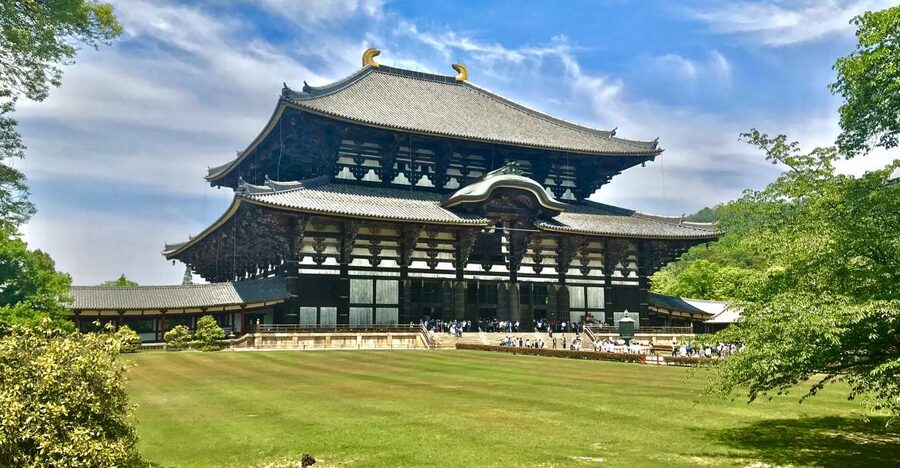
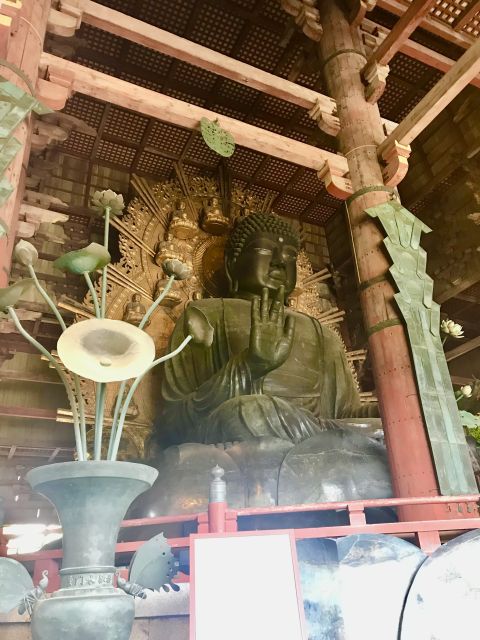
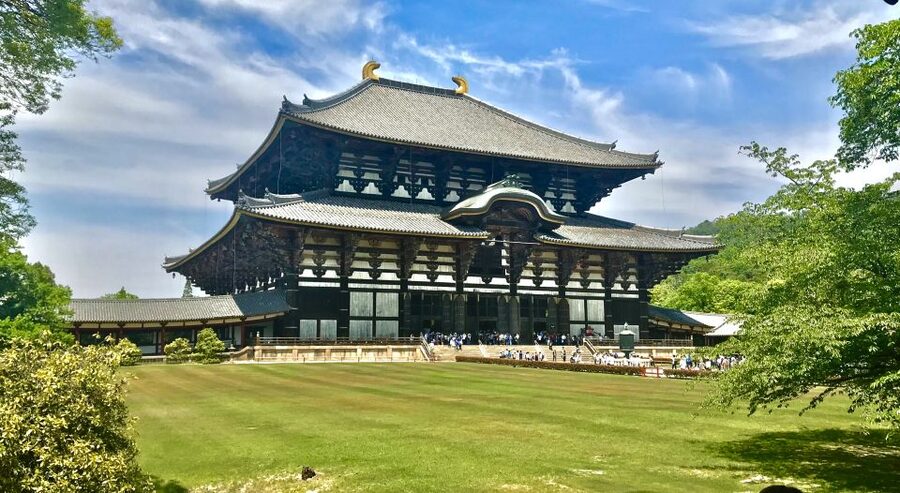
Todai-ji is the emotional center of the morning. The temple houses the Great Buddha, an enormous religious statue that gives the visit its scale and drama. Even if you have seen large temples elsewhere in Japan, the size of the hall and statue makes this stop hard to treat as just another sightseeing point.
Your guide leads the visit and explains what you are seeing as you move through the complex. The included Todai-ji entrance ticket is important here. You do not need to arrange admission separately, and the main temple visit is built into the price rather than treated as an optional extra.
Allow yourself time to look beyond the statue. The attraction is also the building itself, the sense of proportion, and the way the surrounding grounds prepare you for the main hall. The itinerary gives this stop one hour, the longest single visit of the tour, which is appropriate.
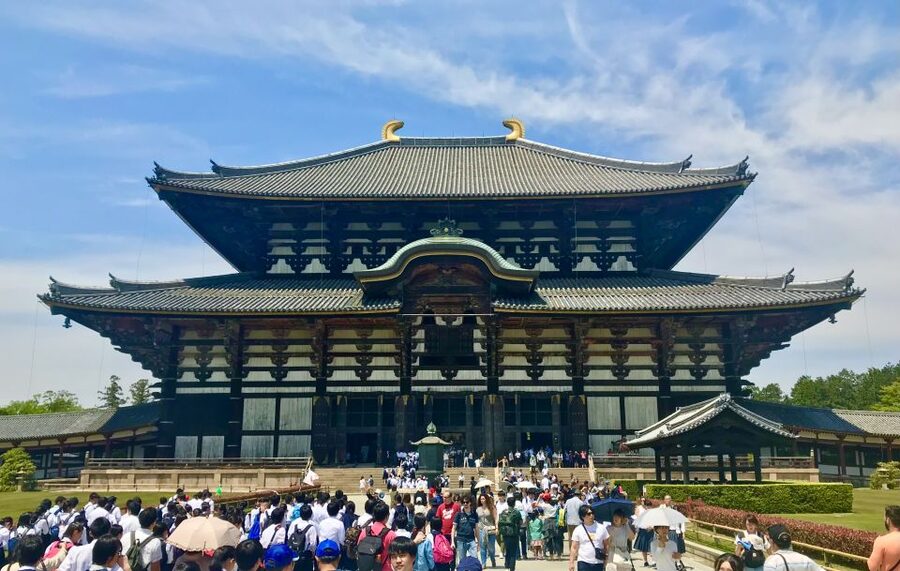
Todai-ji can feel crowded at popular times, and the presence of deer means you are sharing the approach with animals as well as people. That is part of the Nara experience, but it also means you should stay attentive while walking and keep your belongings under control.
Nigatsu-do for a higher view of Nara
Nigatsu-do, also called February Hall, gives the tour a change of pace. Instead of focusing only on temple interiors and large structures, you get an open view over Nara from a higher position.
The visit lasts about thirty minutes and includes time for sightseeing, photographs, and a short break. I like this pause because it gives your eyes a rest after the grandeur of Todai-ji. It also helps you understand the relationship between Nara’s temple grounds, wooded slopes, and built-up areas.
Spring is a particularly appealing time here because cherry blossoms may frame the view. The flowers are seasonal, of course, so you should not book this tour solely for blossoms. The viewpoint remains worthwhile outside spring because it gives you a different angle on the city.
There are paths and walking involved between Todai-ji and Nigatsu-do. If you have knee, balance, or stamina concerns, this is one of the sections to consider carefully before booking. The tour is designed for people comfortable with a sustained walk.
Tamukeyama Hachimangu and the wooded route
Tamukeyama Hachimangu is a shorter stop, but it helps connect the better-known attractions. You receive a guided visit and pass through the area while continuing toward Kasuga Taisha.
The setting feels quieter than the main hall at Todai-ji. Deer viewing continues along the route, so you do not have to wait for the official Nara Park stop to encounter them. This is one reason a walking tour works well here: the spaces between famous buildings are part of the visit rather than dead time.
The half-hour allocation suggests a focused look rather than a long independent exploration. Your guide can point out the significance of the shrine and the surrounding area, while keeping the group moving toward the next major sight.
A few more temple visits around Japan worth a look
- Kyoto: Tea Ceremony Ju-An at Jotokuji Temple
★ 4.9 · 3,207 reviews - Tokyo: Asakusa Walking Tour with Sensoji Temple Visit
★ 4.8 · 1,583 reviews - Nikko: Kegon Falls, Lake Chuzenji & Toshogu Temple
★ 4.6 · 1,577 reviews - Tokyo: Kamakura & Enoshima Day Trip including Temple Tickets
★ 4.5 · 1,375 reviews
Kasuga Taisha and its stone lanterns
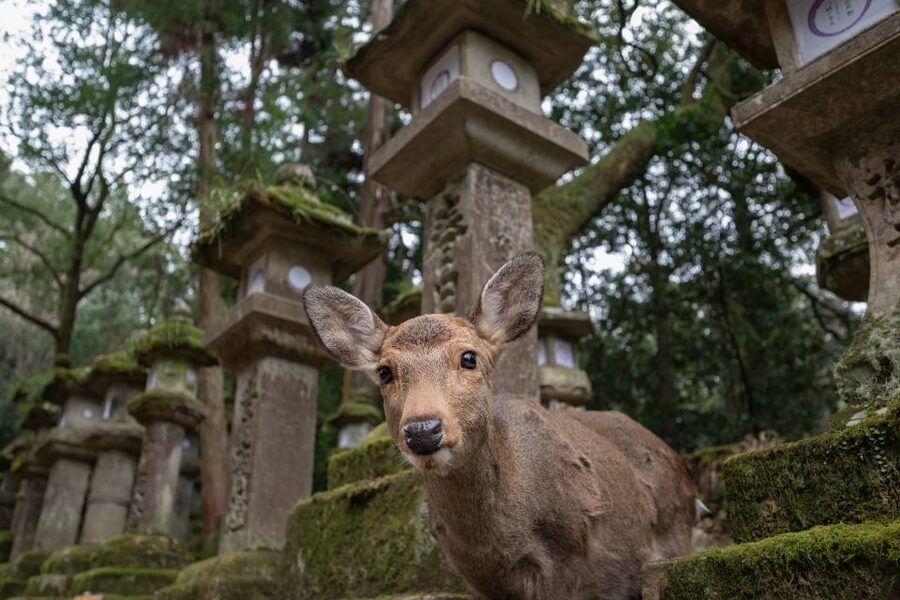
Kasuga Taisha is known for its many stone lanterns and its forest setting. The combination gives this stop a more mysterious mood than the open spaces around Todai-ji. You move through a place shaped by religious tradition, trees, shadow, and repeated details in stone.
The shrine visit lasts around thirty minutes and includes guided sightseeing. That is enough time to appreciate the approach and the lanterns, though not enough for a slow, unplanned exploration of every corner. If you want to linger at individual lanterns or photograph every detail, you may feel the schedule is brisk.
The guide is particularly useful here because the visual details can blur together when you do not know what to look for. A Spanish explanation lets you connect the setting with Japanese religious culture instead of simply photographing a long line of lanterns.
Kasuga Taisha is also one of the places where the route feels most distinct from an ordinary city excursion. You are not just moving between monuments. You are walking through a wooded religious site where the surroundings are central to the experience.
Nara Park and the famous deer
Nara Park is woven through much of the route rather than saved for one isolated attraction. The deer appear around the park and near the temples, making wildlife viewing a recurring part of the walk.
In Japanese culture, the deer are regarded as divine messengers. That belief gives their presence a meaning beyond simple novelty, although you will still find them entertaining to watch. They may be close to the paths, so you get the chance to observe them at short range while following the guide.
The park portion is listed as about thirty minutes, but deer sightings can happen before and after that formal stop. Keep your attention on the animals without forgetting that you are in a public park with other walkers and temple visitors.
I would not describe this as a wildlife excursion in the usual sense. The deer are part of Nara’s cultural setting, and the tour combines them with temples, shrines, and views. That mix is the real appeal. If you want a quiet nature walk with no people, this is not the right expectation.
Ukimido beside the tranquil pond
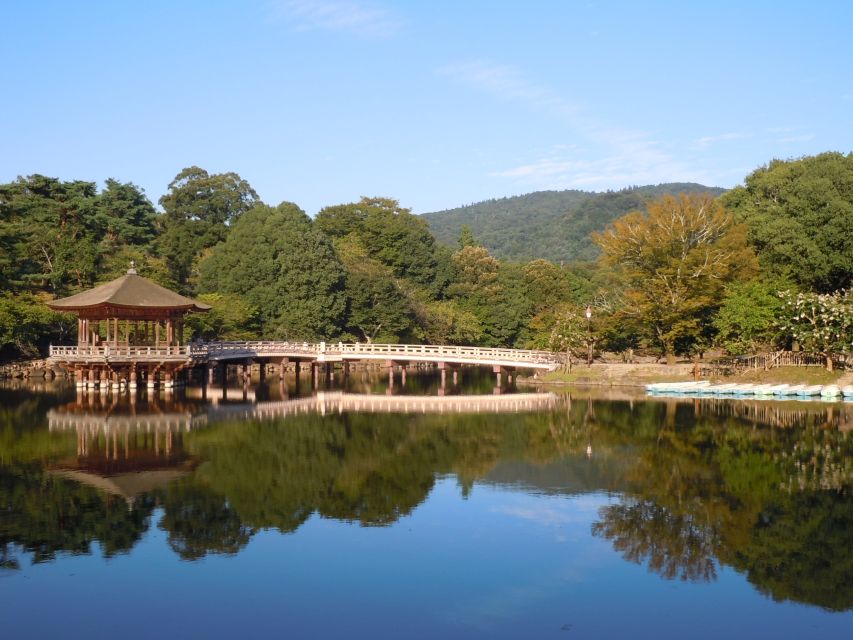
Ukimido is a small pavilion set in the middle of a pond in Nara Deer Park. After the larger temple halls and shrine approaches, it offers a calmer visual pause.
This is another thirty-minute stop, with a break and time for photographs. The pavilion, water, and surrounding scenery make it one of the easiest places on the route for a quiet moment. You can pause here, take in the view, and let the pace of the morning settle before the final temple.
Ukimido may appeal most to people who enjoy composition and atmosphere rather than grand architecture. It is smaller than Todai-ji and less imposing than Kofuku-ji’s pagoda, but that is precisely why it works in the sequence.
The stop is also a reminder that Nara is not only about famous buildings. The pond and pavilion give the route some variety and prevent the day from becoming a succession of similar temple visits.
Kofuku-ji and the five-story pagoda
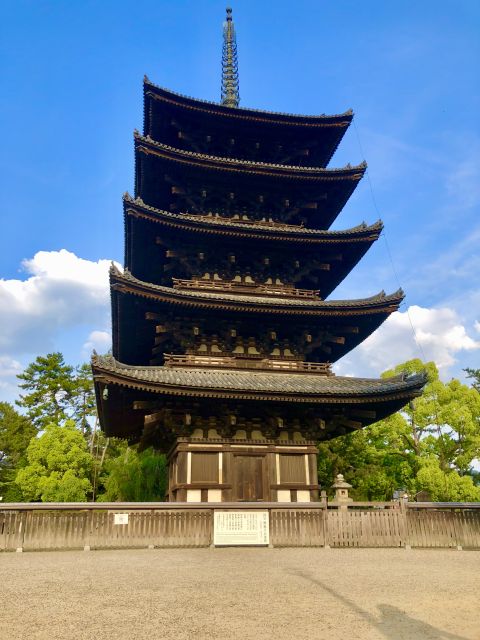
Kofuku-ji brings the tour back toward the station and closes the route with one of Nara’s most recognizable structures, its five-story pagoda. The stop includes guided sightseeing, walking, and a photo opportunity.
The pagoda provides a strong final image because it is easy to read at a glance: tall, elegant, and closely tied to Nara’s old religious center. You also see gardens and older structures within the temple area, giving the final section a sense of time and continuity.
The allocated thirty minutes keeps this visit focused. You will get an introduction to the temple and time for photographs, but this is not an extended free period for detailed independent study. If Kofuku-ji is high on your personal list, you may want to return later for a slower visit.
From here, the route returns to Kintetsu-Nara Station. Ending where you started is useful, especially if you have train plans afterward or want to continue independently from the station area.
What the Spanish guide adds
A Spanish-speaking guide changes the experience most at places where the visual details need explanation. Todai-ji is impressive on its own, but the visit becomes more useful when you understand why the Great Buddha matters and how the temple fits into Nara’s religious story.
The same applies to Kasuga Taisha, Tamukeyama Hachimangu, and the deer. Without context, you may see lanterns, forest, shrines, and animals as separate attractions. A guide helps connect them.
The named guides associated with this tour include Alex, Diego, and Federico. Alex has been especially noted for his work, while Diego is associated with a smooth introduction to Nara and Federico with strong interest in Japanese history. Guide assignments can change, so you should not book on the assumption that one particular person will lead your date.
The tour has received a perfect 5 rating from 16 reviews, with comments repeatedly pointing to the completeness of the route and the quality of the guiding. That is useful evidence for someone choosing between a self-guided day and a planned introduction to Nara, though it does not remove the need to consider the walking demands.
Is $85 a fair price?
At $85 per person, this is not the cheapest way to see Nara. You can walk around many public areas independently and create a temple route without paying for a guide. The question is what you value.
The price includes:
- A Spanish-speaking live guide
- Todai-ji admission
- Guided visits to Todai-ji, Nigatsu-do, Tamukeyama, Kasuga Taisha, Nara Park, Ukimido, and Kofuku-ji
- A five-hour walking route that begins and ends at Kintetsu-Nara Station
I think the price is reasonable for visitors who want a full introduction in Spanish and prefer not to organize the order of stops themselves. It is less compelling if you already know Nara well, speak Japanese or English comfortably, and mainly want unhurried time at one or two temples.
The strongest value is the combination of structure and coverage. You see the major sights in one half-day, with Todai-ji admission included, and avoid spending your own time working out directions between temple grounds and park paths.
Walking, clothing, and practical limits
Wear comfortable shoes and comfortable clothing. This is not a suggestion to ignore. The route is entirely on foot, and the five-hour duration includes movement between sites as well as guided stops.
The tour is not suitable for people with mobility impairments. Baby strollers are also not allowed. Those limits may be inconvenient for some families and visitors, but they reflect the nature of the route through temple grounds and park paths.
You can cancel up to 24 hours before the activity for a full refund, and you can reserve now while paying later. Those terms are useful if your schedule in Kansai is still changing, but the main practical decision remains your ability to walk comfortably for several hours.
Who should book this Nara tour?
I would recommend it to first-time visitors who want the essential Nara sights explained in Spanish. It also suits people making a day trip who want to use their limited time efficiently and see more than Todai-ji alone.
It is a good fit if you enjoy moving between major sights, taking photographs, watching deer, and hearing historical and cultural explanations along the way. The route has enough variety to keep the morning from feeling repetitive.
I would think twice if you want a slow temple day, need frequent transport, or have limited walking ability. You may also prefer an independent visit if you want to spend most of your time at Todai-ji, Kasuga Taisha, or Kofuku-ji rather than follow a fixed sequence.
Should you book it?
Book this tour if you want Nara’s major sights in one organized Spanish-language walk, with Todai-ji admission included and a guide to explain the temples, shrine, deer, and views. The perfect rating from 16 reviews and the repeated praise for guides such as Alex, Diego, and Federico support its appeal.
Skip it if five hours on foot sounds tiring or if you prefer setting your own pace. For the right visitor, $85 buys more than entry to one temple. It buys a clear route through the parts of Nara that are easiest to miss when you are planning as you go.
FAQ
Where does the tour start?
The tour starts at Kintetsu-Nara Station, exit 5.
Where does the tour finish?
The route returns to Kintetsu-Nara Station.
How long does the tour last?
The tour lasts five hours.
What language is the tour in?
The live tour guide speaks Spanish.
Is the Todai-ji entrance ticket included?
Yes. The Todai-ji entrance ticket is included.
Which places are visited?
The route includes Todai-ji, Nigatsu-do, Tamukeyama Hachimangu, Kasuga Taisha, Nara Park, Ukimido, and Kofuku-ji.
Is the tour done on foot?
Yes. The entire route is completed on foot.
What should I bring?
Bring comfortable shoes and comfortable clothing.
Can I cancel for a full refund?
Yes. You can cancel up to 24 hours in advance for a full refund.
Just added around Japan
- From Asakusa: Old Tokyo, Temples, Gardens and Pop Culture★ 5.0 · 47 reviews
- Private guided tour: Mt. Aso volcano, grasslands, Aso Shrine★ 5.0 · 19 reviews
- Goshuin Collecting tour at Asakusa Local Temples & Shrines, Tokyo★ 5.0 · 8 reviews
- Tokyo:Nikko UNESCO World Heritage Sites Private 1-Day Tour★ 3.8 · 6 reviews
- Tokyo Yokohama Night View Tour With Kamakura And Enoshima★ 3.5 · 14 reviews
- Tokyo: Snow Monkey Park and Zenkoji Temple Private Day Tour★ 4.7 · 127 reviews
- Tokyo War History Tour: Yasukuni Shrine & War Museum★ 4.5 · 6 reviews
- Tokyo to Nikko: Exclusive Private Day Trip★ 4.8 · 6 reviews
Guided, compared.
Angkor Wat Sunrise or Sunset Tour with Guide from Siem Reap
Read our review →

Cape Sounio & Poseidon Temple Trip with Audio Guide
Read our review →
Angkor Wat Sunrise tour with Small – Group and Guide tours
Read our review →
Grand Palace, Wat Pho, and Wat Arun Guided Tour
Read our review →
Angkor Wat Highlights and Sunrise Guided Tour from Siem Reap
Read our review →
Full-Day Angkor Wat Sunrise Private Tour with Guide from Siem Reap
Read our review →Browse the lists this tour appears in