
REVIEW · ITALY TEMPLE TOURS
Monreale: Guided tour of Cathedral, Monastery and Mosaics
Monreale’s cathedral hits you with gold before you have time to adjust your eyes. The great Christ Pantocrator mosaic fills the apse, while Norman, Romanesque, and Arabic design meet under one roof. I like that a licensed guide helps sort out this unusual mix, and I like that the tour adds the quiet Benedictine cloister and a view across the Conca d’Oro.
The main drawback is the short one-hour duration. Tickets to the cathedral and cloister are not included, and you must make your own way to Monreale, about 5 kilometers from Palermo. Guide Margherita has earned specific praise for explaining the Normans’ place in Palermo’s story, so ask for her if she is available.
Key points
- Gold mosaics: See the cathedral’s Christ Pantocrator, the grand image that dominates the apse.
- Three artistic traditions: Learn how northern European, Romanesque, and Arabic influences meet in the building.
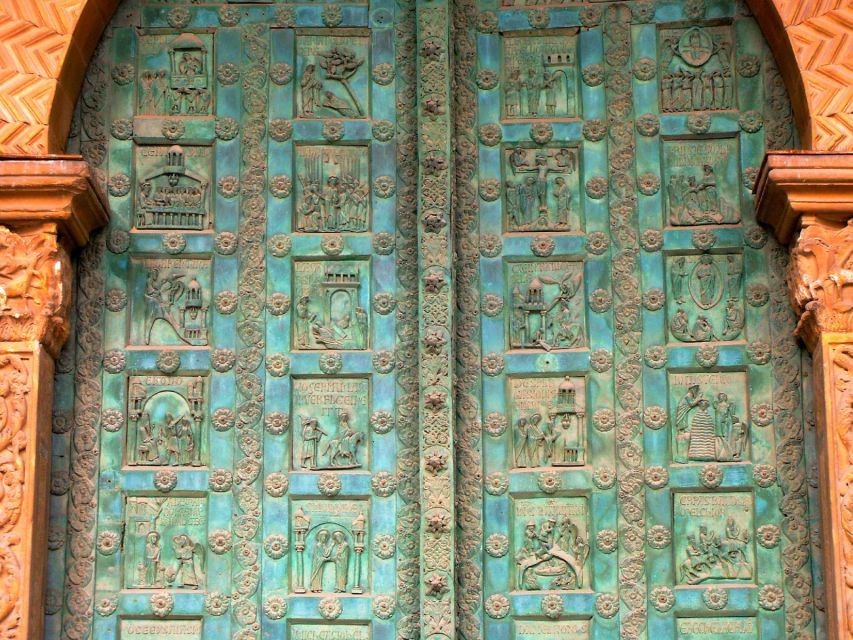
- Two historic bronze doors: Look for work by Bonanno da Pisa and Barisano di Trani.
- Benedictine cloister: Visit the 12th-century monastery beside the cathedral.
- Conca d’Oro view: Look across Palermo’s golden basin of orange and citrus groves.
- Private group format: Your group can be as large as 25, with a guide in English, Italian, French, or Spanish.
Why Monreale’s Cathedral Deserves Your Time
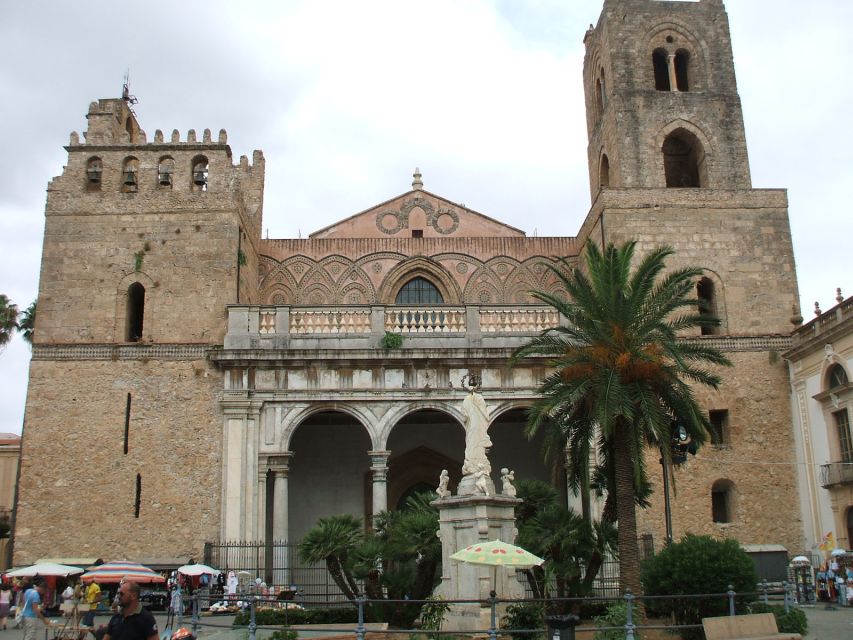
Monreale sits only about 5 kilometers from Palermo, but its hilltop setting gives the visit a different feel. The town lies at about 310 meters above sea level on Mount Caputo, overlooking the Conca d’Oro, the broad basin associated with Palermo’s citrus groves.
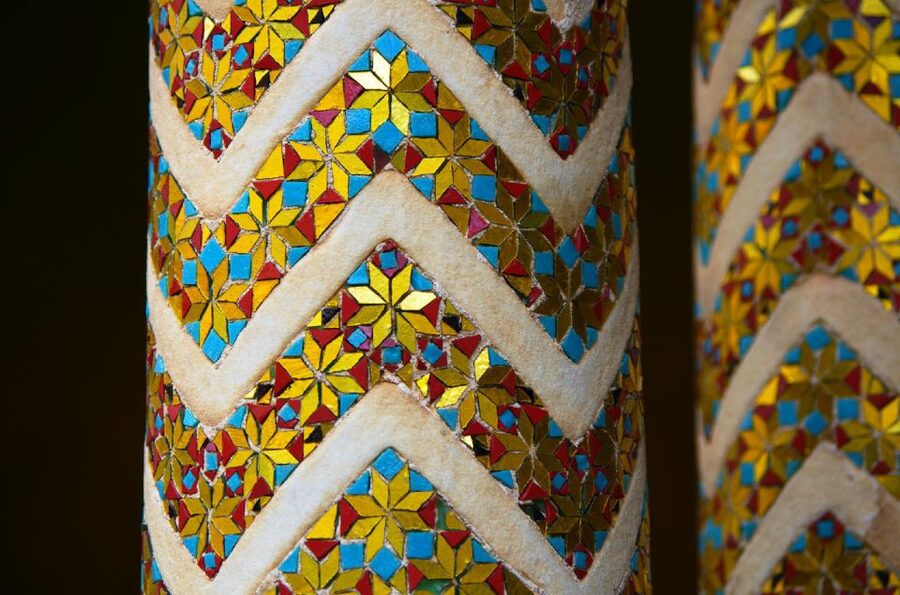
The cathedral is the reason to come. Built in the 12th century, it is one of Sicily’s great Norman monuments. Yet calling it simply Norman misses the point. Its design joins northern European architecture with Romanesque forms and Arabic decoration. Sicily was a meeting point for cultures, and this church makes that fact visible in stone, bronze, and colored glass mosaic.
I would put Monreale high on your Palermo list if you care about art, medieval history, or buildings that tell a complicated cultural story. The visit is short, but the cathedral gives you plenty to look at. Your guide’s job is to prevent the experience from becoming a quick glance at a wall of gold followed by a hurried exit.
More Guided Tours in Italy:
- Pantheon Elite Guided Tour – Rome’s Iconic Ancient Temple
★ 5.0 · 1,447 reviews - Rome’s Iconic Temple: Pantheon Audio Guided Tour with Fast Access
★ 4.0 · 1,188 reviews - Benedictine Monastery of Catania – English Guided Tour
★ 4.8 · 434 reviews
Starting at Piazza Guglielmo II
The meeting point is Piazza Guglielmo II, at the entrance to Monreale Cathedral. This is useful because you do not need to search for a tour office or wait for transport from Palermo. You arrive in Monreale on your own and meet the guide at the monument itself.
That convenience also points to an important planning detail: hotel pickup and drop-off are not included. The tour is not a Palermo sightseeing transfer. It is a guided visit once you have reached Monreale.
Allow enough time to arrive before the scheduled start. The activity lasts one hour, and the meeting point is specific. If you arrive late, you may lose part of a compact tour. Starting times vary, so check the available slot when booking.
The group is private, with up to 25 people. That gives you more control than a large shared outing, though a group of 25 will not feel intimate inside a busy church. If you are booking for a family or a larger party, the flat group price can make more sense than paying separately for many individual places.
The Cathedral’s Norman, Romanesque, and Arabic Mix
Your guide begins with the cathedral, the symbol of Monreale and a UNESCO World Heritage monument since 2012. The building is a useful lesson in how Sicily developed under different rulers and artistic traditions.
Look closely at the outside before heading indoors. The cathedral has two important bronze doors. One set was made by Bonanno da Pisa, while the other was made by Barisano di Trani. Barisano also worked on the cathedral doors at Ravello and Trani, so the details here connect Monreale with other major religious buildings in southern Italy.
The exterior is not just a warm-up for the mosaics. Its decoration shows how much attention went into the entrance itself. Ask your guide to point out the differences between the two doors and explain how their makers fit into medieval Italian art.
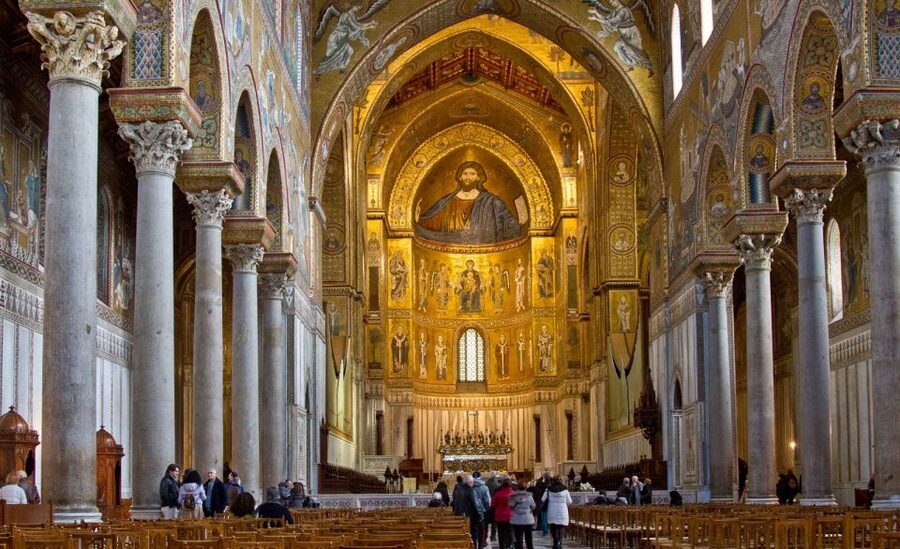
Inside, the scale changes the experience. The cathedral is illuminated by gold mosaics, and the decoration draws your eye toward the apse. The effect is not subtle. Light catches the gold surface and makes the interior feel much larger than its one-hour tour slot might suggest.
This is where a guide earns the fee. Without context, you may see a magnificent golden church but miss why the combination of artistic styles matters. With explanation, the building becomes easier to read. You can connect the architecture to Sicily’s position between Europe and the Mediterranean rather than treating each feature as an isolated ornament.
The Christ Pantocrator Mosaic
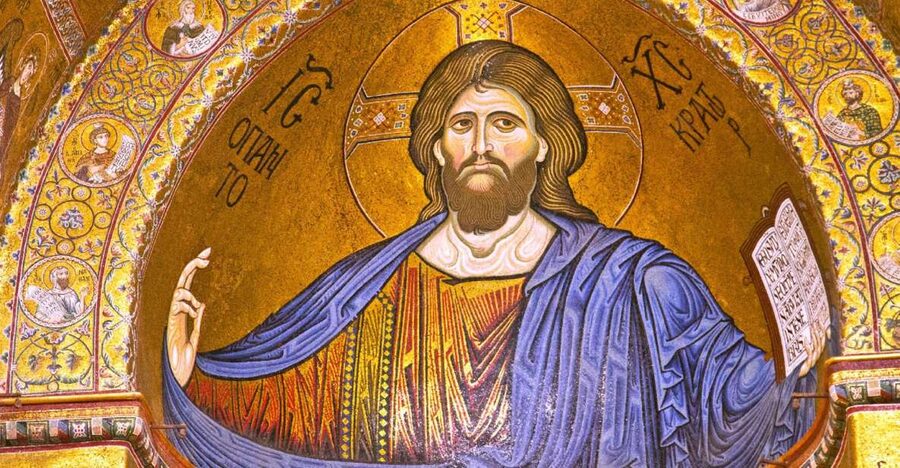
The high point of the cathedral is the Christ Pantocrator in the apsidal basin. This image of Christ dominates the interior and is described as the highest expression of the cathedral’s figurative art.
Give yourself time to look up. The mosaic’s impact depends partly on scale and placement, not just on the individual pieces. Gold surrounds the central figure, while the rest of the church leads your eye toward the apse.
A one-hour visit means you should not expect a slow, specialist study of every panel. The guide will likely focus on the major images and the overall design. If you want detailed art analysis, ask questions early and make clear what interests you most.
I find this part especially valuable for first-time visitors to Sicily because Monreale is not simply an attractive church. The mosaics reflect the meeting of religious imagery, imperial ambition, and local artistic traditions. Your guide can help turn that visual shock into a story you can remember.
Guide Margherita has been singled out for explaining the historical role of the Normans in Palermo’s past. That is a useful emphasis. The Norman period can be confusing when you move between Palermo, Monreale, Cefalù, and other Sicilian sites, and a clear explanation helps connect the monuments.
The tour is offered in English, Italian, French, and Spanish. If you have a choice, select the language in which you can comfortably ask questions. The value of a guided visit depends heavily on the quality of the explanations, not only on getting through the entrance.
A few more temple visits around Italy worth a look
- Agrigento: Valley of the Temples Skip-the-Line Sunset Tour
★ 4.5 · 1,512 reviews - Palermo: Agrigento and the Valley of the Temples Day Tour
★ 4.2 · 1,240 reviews - Agrigento: Valley of the Temples Ticket & App Audioguide
★ 4.3 · 1,160 reviews - Colosseum Special Access Tour, with Ancient Temples & Tombs
★ 4.8 · 747 reviews
The 12th-Century Benedictine Monastery and Cloister
After the cathedral, the tour continues to the ancient Benedictine monastery and cloister beside it. This is a change of mood. The cathedral is grand and visually loud; the cloister gives you a more measured look at the religious complex.
The monastery dates to the 12th century and helps explain how the cathedral functioned as part of a larger institution. You are not seeing a decorative church in isolation. The Benedictine community, its spaces, and the cathedral belonged to the same medieval foundation.
The cloister is worth including even if your main reason for coming is the gold mosaic. It gives you a chance to focus on repeated architectural details and the calmer rhythm of a monastic setting. The supplied tour information does not specify every feature you will see in the cloister, so your guide’s explanation will shape this part of the visit.
The cloister ticket is not included in the tour price. The cathedral ticket is also extra. Keep this in mind when comparing the advertised group price with the total cost of your outing. The tour fee pays for the licensed guide, not admission to the sites.
That separation can be useful for people who already hold eligible admission arrangements, but most visitors should budget for both cathedral and cloister entry. Check current admission costs before you commit to the total day’s spending.
The View Across the Conca d’Oro
The final part of the visit includes a viewpoint over the Conca d’Oro, the golden basin of orange and citrus groves. From Monreale’s hill above Palermo, the view helps explain why the town was placed here.
This is a short but worthwhile contrast to the cathedral interior. After looking at small mosaic pieces and carved doors, you get a broad view across the area around Palermo. The setting also gives the monument a sense of place. Monreale is not just a church dropped into a town map; it sits above the basin that shaped the area’s identity and agriculture.
The information provided does not promise a long viewpoint stop, so do not treat this as a separate scenic excursion. It is part of the guided tour and should be understood as a concluding look rather than a full afternoon at a panoramic terrace.
Still, I like the structure. Cathedral, monastery, cloister, then view is a sensible order. You start with the most famous art, move into the religious complex, and finish by seeing the setting that surrounds it.
Is the $344.39 Group Price Good Value?
The listed price is $344.39 per group of up to 25 people. That is a high total for a one-hour activity if you are visiting alone or as a couple. It becomes easier to justify when divided among a larger private party.
At the maximum group size, the guide cost works out to about $13.78 per person before admission tickets. For a family reunion, school group, or party of friends, that can be reasonable, especially if you want your own guide and a set language.
For two people, the same price is much harder to defend. You are paying for private service, not a long itinerary. The value rests on the quality of the guide and on how much you want explanation inside the cathedral. If you mainly want to enter, look at the mosaics, and move on, buying admission independently may cost less.
The tour includes a licensed guide, but not food, drinks, transportation, or site tickets. Those exclusions are normal enough, yet they matter here because the advertised activity is short and the total day cost can grow once you add the journey from Palermo and admissions.
The private format is the strongest reason to consider it. You can book for up to 25 people, choose from four languages, and return to the same meeting point at the end. The activity does not scatter you across several Palermo sights, so it works best as a focused Monreale visit.
Who Will Get the Most From This Tour?
I would recommend it most strongly to visitors who want an explanation of the cathedral rather than a quick photo stop. The artistic mix is unusual, and a good guide can clarify what you are seeing without forcing you to read a long guidebook in the doorway.
It also suits larger groups. If 10 or more people share the price, the private arrangement becomes more appealing. Families may appreciate having a guide who can keep the visit moving and explain the building in a chosen language.
Art and architecture fans should enjoy the concentration of major features: bronze doors, gold mosaics, the Christ Pantocrator, a medieval Benedictine cloister, and a hilltop view. History-focused visitors will also benefit from the explanation of the Normans and their place in Palermo’s past.
I would hesitate if you have only a few hours in Palermo and still need to arrange transport, meals, and several city sights. The tour itself lasts one hour, but Monreale is not in central Palermo, and the activity does not include getting there.
The same caution applies to anyone expecting a full-day archaeological or cultural program. This is a compact guided visit, not a broad tour of Sicily. Its strength is focus.
Practical Details Before You Book
Meet at Piazza Guglielmo II, at the entrance to Monreale Cathedral. The tour ends at the same meeting point, so you are responsible for arranging what comes next.
The guide speaks English, Italian, French, or Spanish. It is a private group experience, with capacity for up to 25 people.
The cathedral and cloister tickets cost extra, and no food or drink is provided. Plan the visit around those facts rather than assuming the listed price covers every part of the outing.
You can cancel up to 24 hours in advance for a full refund. You can also reserve now and pay later, which helps if your Palermo schedule is still changing.
The overall rating is 4.3 from 29 reviews, a solid result rather than a perfect one. The strongest specific praise goes to Margherita’s clear explanation of the Normans and Palermo’s past. That detail matters because the tour’s value depends less on movement and more on how well the guide interprets what you are looking at.
Should You Book the Monreale Tour?
Book this tour if you are already planning to visit Monreale and want a private guide to make sense of the cathedral’s Norman, Romanesque, and Arabic details. The golden mosaics and Christ Pantocrator are reason enough to come, while the cloister and Conca d’Oro view round out the visit.
Think twice if you are traveling as a couple on a tight budget. At $344.39 before admissions and transport, one hour is expensive unless private guiding is important to you.
For a larger group, the calculation changes. Sharing the fee can make the tour practical, especially if you want English, Italian, French, or Spanish explanations and a direct focus on the cathedral. If Margherita is available, her emphasis on the Normans and Palermo’s story is a useful match for this site.
FAQ
Where does the Monreale tour start?
The tour starts at Piazza Guglielmo II, at the entrance to Monreale Cathedral.
Where does the tour end?
The activity ends back at the meeting point.
How long does the guided tour last?
The tour lasts one hour. Available starting times depend on the date you select.
Are cathedral and cloister tickets included?
No. Admission tickets for the cathedral and cloister are not included in the tour price.
Is transportation from Palermo included?
No. Hotel pickup and drop-off are not included. You must make your own way to the meeting point in Monreale.
Which languages are available?
The live guide can conduct the tour in English, Italian, French, or Spanish.
Just added around Italy
- Villa Romana Del Casale in Piazza Armerina and Valley Of Temples in Agrigento★ 4.5 · 38 reviews
- Agrigento and Piazza Armerina: Valley of the Temples and Villa Romana del Casale★ 4.5 · 121 reviews
- Private Tour to the Villa Romana del Casale and the Valley of the Temples★ 4.5 · 19 reviews
- Cooking Class in a former Artist Monastery in the Heart of Monopoli★ 5.0 · 18 reviews
- Agrigento Valley of the Temples Archaeological Area★ 4.0 · 33 reviews
- Private transportation to the Valley of the Temples + Agrigento★ 5.0 · 8 reviews
- Agrigento: Valley of the Temples Entry Ticket & Audio Guide★ 3.0 · 40 reviews
- Rome underground hidden temples, ruins, and secret basilicas★ 3.7 · 21 reviews
Italy Temple Tours, compared.
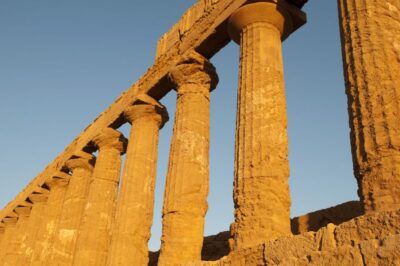
Agrigento: Valley of the Temples Skip-the-Line Sunset Tour
Read our review →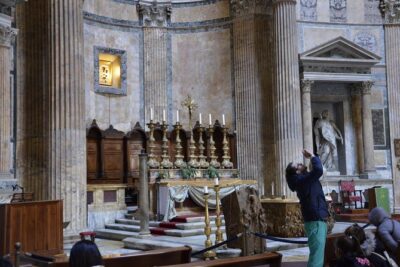
Pantheon Elite Guided Tour – Rome’s Iconic Ancient Temple
Read our review →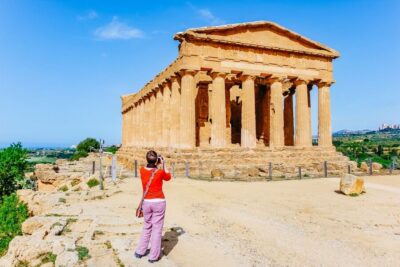
Palermo: Agrigento and the Valley of the Temples Day Tour
Read our review →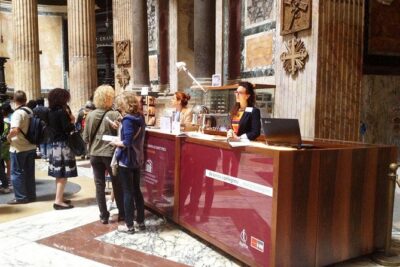
Rome’s Iconic Temple: Pantheon Audio Guided Tour with Fast Access
Read our review →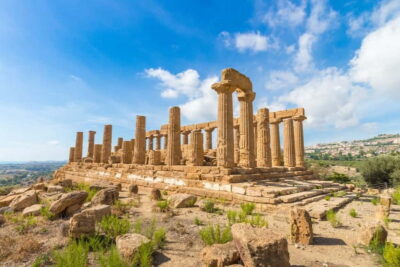
Agrigento: Valley of the Temples Ticket & App Audioguide
Read our review →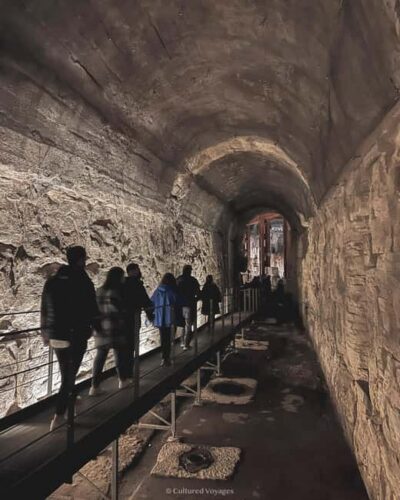
Colosseum Special Access Tour, with Ancient Temples & Tombs
Read our review →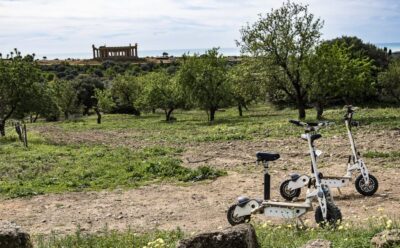
Agrigento: Valley of the Temples E-Scooter Tour
Read our review →
Palermo: Valley of the Temples and Scala dei Turchi Day Trip
Read our review →Browse the lists this tour appears in