
REVIEW · NEPAL TEMPLE TOURS
Lumbini Full day tour with Guide
Lumbini is not just another ancient site to tick off in Nepal. It is the birthplace of Siddhartha Gautama, and the Maya Devi Temple marks the spot where he was born. I like that this private tour gives you a guide to explain the sacred marker, the nearby pond, and the meaning behind the calm garden instead of leaving you to guess what you are seeing. I also like the chance to compare Buddhist monasteries built by different countries.
The guide, usually named Suhail, has been praised for patient answers, flexible timing, and access to places some visitors might otherwise miss. The main catch is cost: the $38 price does not include entrance fees, meals, or a tuk-tuk, and one booking lasted only four hours instead of the advertised eight.
Key points
- Maya Devi Temple marks Buddha’s birthplace: See the sacred marker stone and the pond linked with Queen Maya Devi.
- Private guiding keeps the day flexible: Suhail has adjusted starting times and answered questions at a comfortable pace.
- International monasteries add variety: Visit buildings shaped by Buddhist communities from several countries.
- The large site may need local transport: A tuk-tuk can make the day easier, but it costs extra.
- Museum and village visits add context: Archaeological displays and nearby communities help connect the religious site with daily life.
- Plan for extra fees: Entrance charges, food, drinks, and anything beyond hotel pickup are not included.
Why Lumbini deserves a full day
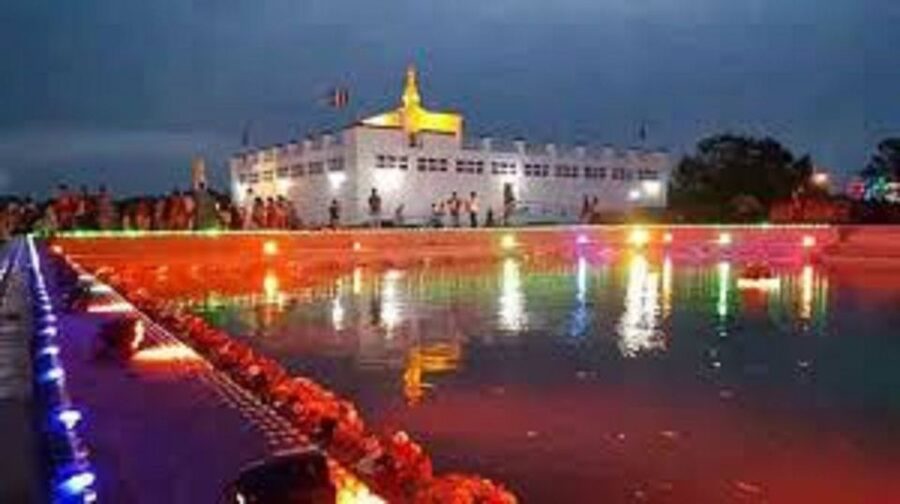
Lumbini sits in Nepal’s western Terai, close to the Indian border. For Buddhists, this is one of the most important pilgrimage places in the world. For other visitors, it offers something different from Nepal’s mountain towns and crowded heritage squares: broad gardens, quiet paths, monasteries, shrines, and a strong sense of place.
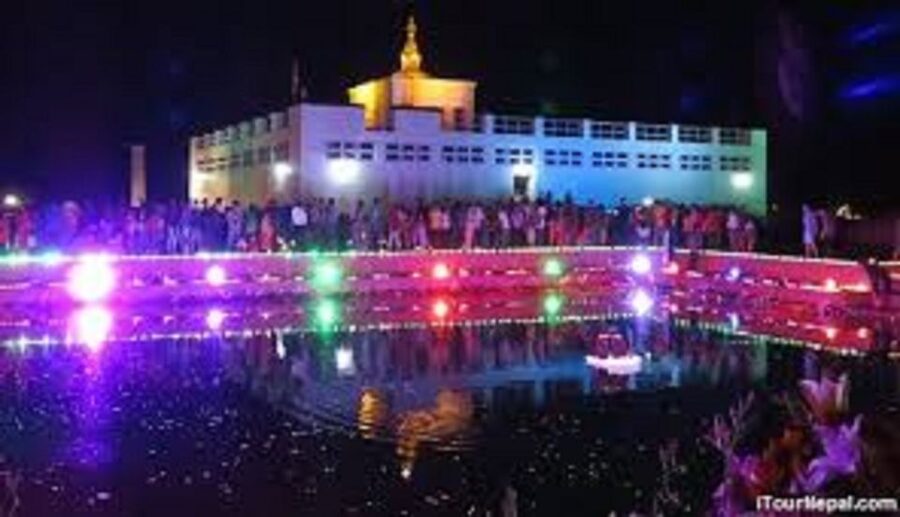
The central area is known as the Lumbini Development Zone. It contains the Sacred Garden and the Maya Devi Temple, along with monasteries and religious buildings supported by Buddhist communities from many countries. The site is a UNESCO World Heritage property, but its importance is not limited to the official designation. The real value is being able to connect a major world religion with one precise physical location.
I would not treat this as a quick photo stop. The meaning of Lumbini is easy to miss if you rush from one building to the next. A guide can explain why the Maya Devi Temple matters, how the archaeological remains fit into the story, and why the different monasteries look so unlike one another.
More Full-Day Trips in Nepal:
- Siem Reap: Full-Day Angkor Wat Guided Tour with Sunset
★ 4.9 · 3,803 reviews - Full-Day Angkor Wat Sunrise Private Tour with Guide from Siem Reap
★ 5.0 · 2,920 reviews - Siem Reap: Angkor Wat Sunrise and Full-Day Sightseeing Tour
★ 4.9 · 2,828 reviews
Starting with hotel pickup in Lumbini
Pickup is included from hotels within the Lumbini temple area, specifically within a 3-kilometer radius of the Maya Devi Temple. That is useful if you are staying nearby and do not want to arrange your own way to the entrance. The experience is private, so you are not tied to a large group or a fixed pace set by strangers.
The advertised duration is eight hours. That gives enough time for the central garden, monasteries, the museum, and possibly nearby villages without treating each stop as a hurried glance. Still, set expectations clearly before you begin. One booking finished after about four hours because the guide felt there was little else to see, so ask at pickup how the full day will be used.
The tour is described as a hiking tour, but the site is large. You may spend time walking between buildings, and some people choose a tuk-tuk to cover more ground. Tuk-tuk hire is not included, so factor it into the final price if you prefer less walking or want to visit more of the complex.
Wear comfortable shoes. The grounds are spread out, and a day of moving between gardens, temples, and monasteries is more pleasant with practical footwear than with anything chosen only for photographs.
The Maya Devi Temple and sacred birthplace
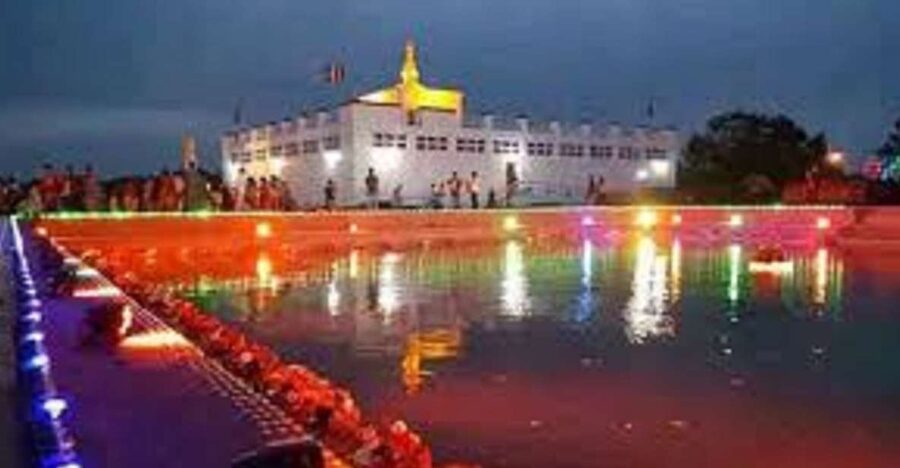
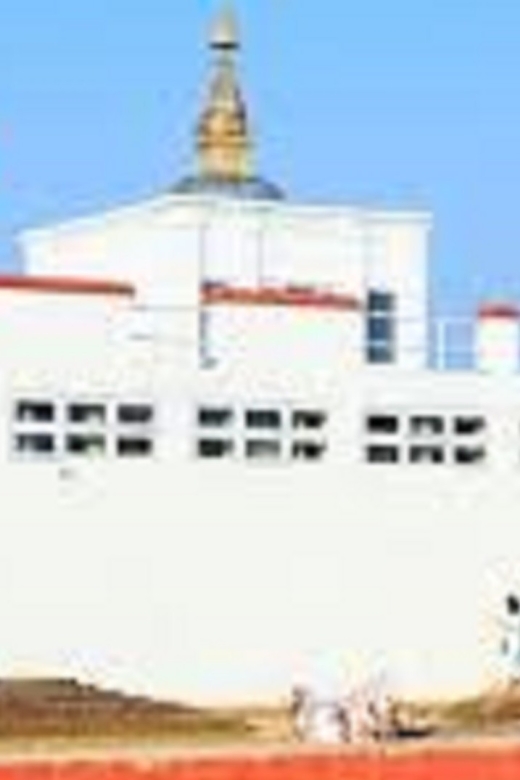
The Maya Devi Temple is the emotional center of the day. It is dedicated to Queen Maya Devi, Buddha’s mother, and marks the place where she is believed to have given birth to Siddhartha Gautama.
Inside, the key object is the sacred marker stone identifying the birthplace. Nearby is a pond associated with Queen Maya Devi, who is believed to have bathed there before giving birth. Your guide can give these details a human scale. Instead of seeing only old stone and religious visitors, you begin to understand why this particular patch of ground matters to millions of Buddhists.
Expect a respectful atmosphere. This is a pilgrimage site, not simply an archaeological attraction. Keep your voice low, follow local instructions, and allow space for people who have come to pray or meditate. The calm setting is part of the experience, so you do not need to fill every moment with conversation or photographs.
The temple itself may be the part of the visit that rewards patience most. If you are interested in Buddhism or sacred places, this is where the private guide earns much of the fee. Suhail has been praised for explaining the site clearly and answering questions without rushing.
Walking through the Sacred Garden
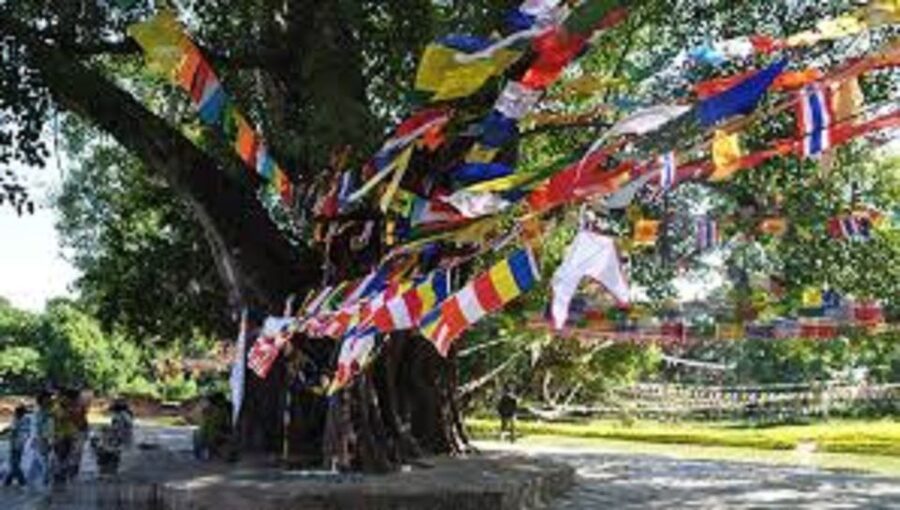
The Sacred Garden surrounds the temple and provides a quieter setting for reflection. Trees, open green areas, pathways, and religious structures make the central zone feel very different from a typical city attraction.
I like this part of the tour because it gives the birthplace room to breathe. You can pause, think about the scale of Buddhist pilgrimage, and notice how the religious meaning is carried by both the buildings and the setting. A guide should not talk nonstop here. The best rhythm is a clear explanation at each important point, followed by time to look around on your own.
The garden can also make the eight-hour plan feel less demanding. You are not confined to one indoor exhibit or pushed through a string of monuments. At the same time, anyone expecting a packed schedule of major sights may find the peaceful pace slow. Lumbini works best when you value quiet observation over constant activity.
More Guided Tours in Nepal:
- Kathmandu: Guided Walking Tour with Monkey Temple
★ 5.0 · 18 reviews - Angkor Wat Sunrise or Sunset Tour with Guide from Siem Reap
★ 5.0 · 12,109 reviews - From Bangkok: Ayutthaya Temples Guided Tour with Lunch
★ 4.7 · 10,535 reviews - Athens: Cape Sounio & Poseidon Temple Trip with Audio Guide
★ 4.4 · 4,521 reviews
Comparing the international monasteries
Around the central garden, monasteries, temples, and shrines reflect Buddhist traditions from different countries. Their designs, decoration, and religious details vary, giving you a chance to see how Buddhism has developed across national and cultural lines.
This is one of the most useful reasons to hire a guide. From the outside, a monastery can look like one more building in a large complex. With context, you can pay attention to the design, artwork, and religious character of each place. The buildings show that Buddhism is not expressed in one single architectural style.
Access can vary. Some places may be open, while others may be closed or require an additional payment. One booking specifically noted that admission to Nava Maitri Maha Viharaya was not included. Confirm which monasteries are part of your plan and which entrance fees you will need to pay.
Suhail has also been credited with helping visitors reach private or less accessible parts of Lumbini. That does not guarantee entry everywhere, but it suggests that a personal connection with the local area can make the visit more flexible than going alone.
Adding the Lumbini Museum
The Lumbini Museum offers a change of pace from temple visits and open gardens. It contains artifacts and archaeological findings connected with Buddha’s life and the development of Buddhism in the region.
I would make time for it if you want more than a spiritual visit. The museum can help explain how Lumbini became an important pilgrimage center and how scholars and archaeologists have studied the site. It also gives you a place to connect the physical remains with the wider story.
The supplied details do not confirm that the museum entrance fee is included, so carry cash and ask your guide about the current charge. Entrance fees are generally excluded from the tour price. That arrangement keeps the advertised cost lower, but it means the $38 is not the full amount you will spend.
Nearby villages and local life
If the schedule allows, the tour can continue beyond the main development zone into nearby villages. This is where the day can feel less formal. You may see local ways of life, try traditional Nepali food, and have cultural exchanges with residents.
Keep this part grounded. The village visit is not a staged show described in detail, and the exact stops may depend on time, weather, and your interests. Ask the guide what is practical on the day rather than assuming it is a fixed part of every tour.
Food is not included, but local dishes are available for purchase. Carry cash, since the tour instructions specifically recommend it. A bottle of water is provided for each person, which is helpful in the Terai heat, but you should still plan sensibly for a long day outside.
What the $38 price really buys
At $38 per person, the tour is reasonably priced for a private eight-hour experience with hotel pickup, an English-speaking guide, and a bottle of water. Its strongest value is not the transport. It is the explanation and flexibility.
A self-guided visit may cost less, especially if you are comfortable reading signs and arranging your own transport. But Lumbini covers a wide area, and the significance of the birthplace, monasteries, and archaeological remains is not always obvious. A good guide helps you spend your limited time on the parts that interest you most.
The price becomes less attractive once extras are added. Entrance fees are excluded. Food and drinks are excluded. A tuk-tuk for the large complex costs extra, too. If you want to keep spending down, walk where practical and ask in advance which sites have admission charges.
The private format is valuable for couples, families, and solo visitors who want to ask questions freely. It also suits people interested in Buddhism, archaeology, or cultural history. If you only want a short look at the Maya Devi Temple, an eight-hour private tour may offer more time than you need.
The guide’s role in the experience
The guide is the main reason to choose this tour over a simple visit. Suhail has been described as friendly, patient, flexible with starting times, and generous with explanations. One person also received help finding a monastery for a later stay, which shows how local knowledge can extend beyond the formal sightseeing plan.
Another booking praised the guide for opening access to private parts of Lumbini. Treat that as a possibility, not a promise. The exact access available on your day may depend on opening times, permissions, and the people responsible for each site.
One detail needs clarification: the guide’s name appears as Suhail in most information, while one account spells it Sahil. If a named guide matters to you, confirm who will lead your tour when you book.
The guide can also help manage the day’s pace. You might prefer a quiet hour in the Sacred Garden, extra time at the museum, or a faster look at several monasteries. Tell the guide early. A private tour should feel adjusted to your interests, not like a standard group schedule.
Practical points before you book
Bring your passport or another form of identification, cash, and comfortable shoes. Large bags and luggage are not allowed, so leave bulky items at your hotel.
The tour operates rain or shine. That matters in an area where weather can change the comfort of a long outdoor day. Bring suitable protection for the conditions, although the listed requirements do not specify particular clothing or equipment.
Live guiding is offered in English, Nepali, and Hindi. The advertised English service suits international visitors, while Nepali and Hindi may help regional visitors communicate more comfortably.
Pregnant women are listed as unsuitable for this activity. The reason is not explained, so anyone with concerns should ask the provider before booking.
Cancellation is free up to 24 hours before the start, and you can reserve without paying immediately. Those terms are useful if your Nepal plans are still shifting, but they do not change the need to check the pickup radius and extra fees.
Who should choose this Lumbini tour?
I would choose this tour if you want the birthplace explained properly, prefer a private guide, and have a full day available. It is especially suitable if you are interested in Buddhist traditions, archaeology, international religious architecture, or quiet places for reflection.
It is also a good choice for solo visitors who want help navigating the large complex. Suhail’s flexibility and local connections may add value beyond a basic sightseeing walk.
I would think twice if you want a tightly timed eight-hour program with every admission charge included. The duration may vary, and extra costs can add up if you use a tuk-tuk or enter several monasteries. Ask for a clear plan before setting out.
Should you book it?
Book it if the meaning of Lumbini matters to you and you want context at the Maya Devi Temple, not just a photograph outside it. The private format, calm pace, language options, and strong feedback about Suhail make it a sensible way to visit the site.
Before paying, confirm the expected duration, which monasteries are open, the entrance fees, and whether you want a tuk-tuk. With those details settled, $38 offers good value for a personal introduction to one of Nepal’s most important religious sites.
FAQ
Where does the tour pick me up?
Pickup and drop-off are included for hotels within the Lumbini temple area, up to 3 kilometers from the Maya Devi Temple.
How long does the tour last?
The advertised duration is 8 hours. One booking lasted about 4 hours, so confirm the day’s plan and timing with the guide at the start.
Is the tour private?
Yes. The activity is arranged for a private group rather than a shared group.
Which languages are available?
Live guiding is available in English, Nepali, and Hindi.
Are entrance fees included?
No. Entrance fees are not included. Food, drinks, and any tuk-tuk hire are also extra.
What should I bring?
Bring a passport or ID card, cash, and comfortable shoes. Large bags and luggage are not allowed.
Just added around Nepal
- Sacred Pashupatinath: Aarati,Cremation Rites & Boudha Stupa★ 5.0 · 18 reviews
- Pokhara in 5 Hours: Lake, Museum, Cave, Falls & Pagoda Hill★ 5.0 · 10 reviews
- From Lakeside: Pokhara Private Day Tour with Pagoda Hills★ 4.3 · 17 reviews
- Pokhara: Golden Hour at Peace Pagoda – Himalayan Sunset Tour★ 4.5 · 16 reviews
- Kathmandu: Guided Walking Tour with Monkey Temple★ 5.0 · 18 reviews
- Kathmandu: Pashupatinath Temple Evening Aarati Tour★ 4.7 · 11 reviews
- Kathmandu: Pashupatinath Temple Aarti Night Tour★ 4.8 · 29 reviews
- Kathmandu: Pashupatinath Temple Evening Aarati Tour★ 5.0 · 36 reviews
Nepal Temple Tours, compared.
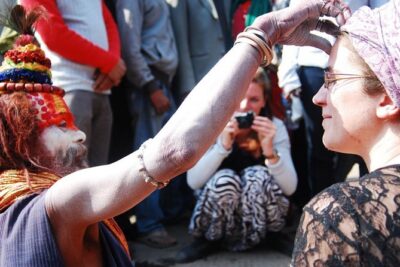
Kathmandu Spiritual Sites: Bodhnath & Pashupatinath Tour
Read our review →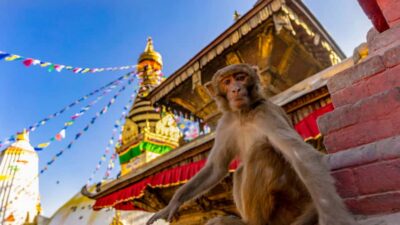
Monkey Temple – Swayambhunath Tour – Private/Small Group
Read our review →
Chandragiri Cable Car & Monkey Temple Tour- Private/Group
Read our review →
Private Chandragiri Cable Car and The Monkey Temple Tour
Read our review →Browse the lists this tour appears in