
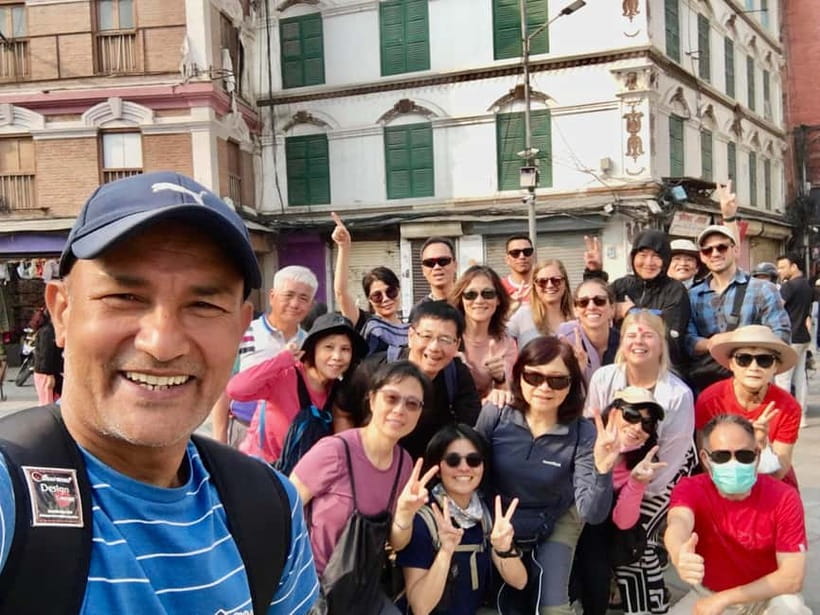
REVIEW · MONKEY FOREST TEMPLE TOURS
Kathmandu: Guided Walking Tour with Monkey Temple
Kathmandu reveals itself best at walking pace, and this route takes you from a quiet garden to old temples, market streets, Newari homes, ritual places, and the Monkey Temple. I like the mix of major sights and ordinary city life, especially the chance to see people carrying out religious practices rather than only posing beside monuments. Guides such as Shiva are praised for answering questions and pointing out places you could easily miss alone.
I also like the clear value: $15 covers a local English-speaking guide for a long, active introduction to central Kathmandu. The trade-off is serious walking, including a 45-minute uphill stretch and 365 steps back down from the hill, so this is not a good fit for young children, wheelchair users, or anyone with limited mobility.
Key points at a glance
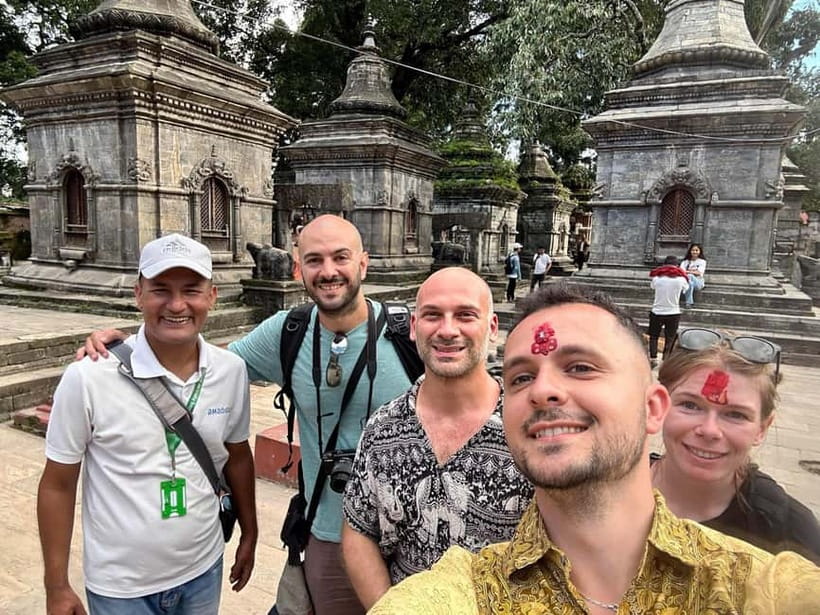
- A walking route with real variety: Begin at the Garden of Dreams, pass through local areas, visit Kathmandu Durbar Square, and finish at the Monkey Temple.
- A useful local guide: English-speaking guides explain Kathmandu’s culture, religion, temples, and daily rituals. Shiva is specifically named by several guests as calm, friendly, and generous with his time.
- A close look at Newari life: The route includes a Newari residential area, local temples, old stupas, and a cremation place.
- A demanding final climb: Reach the 77-meter conical hill by walking for about 45 minutes, then descend 365 steps.
- Good value at $15: You receive professional guiding without hotel transport, meals, entrance extras, or personal costs included.
- Best for active sightseers: Wear proper shoes, carry water, dress modestly, and expect changing weather.
Why this Kathmandu walk works so well
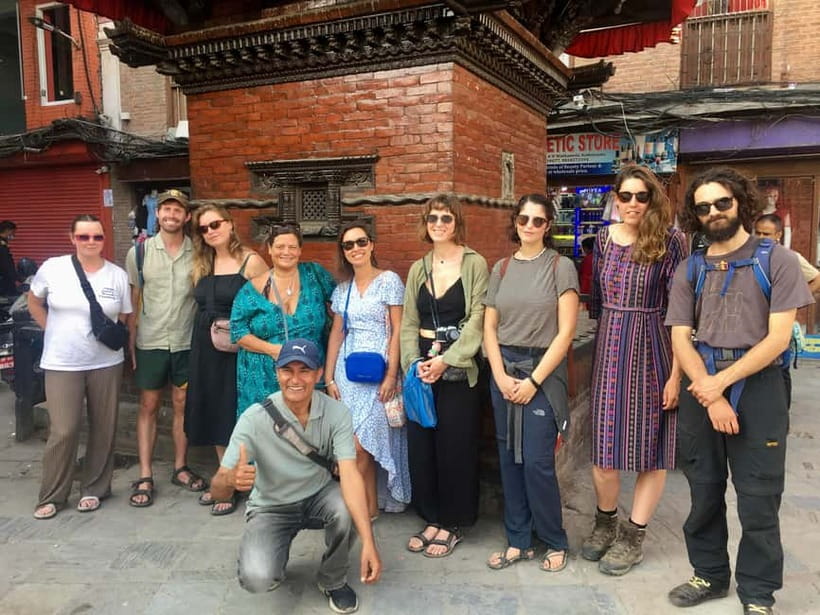
Kathmandu can feel confusing at first. Roads, shrines, courtyards, shops, and residential lanes often press together in a way that makes a self-guided walk hard to organize. This tour gives you a simple thread to follow, starting at the Garden of Dreams and ending back at the same meeting point after the Monkey Temple.
I like the route because it does not treat Kathmandu as a string of isolated monuments. You move through the city as people use it. Along the way, you may see age-old stupas, local temples, ritual activity, residential courtyards, and the daily flow of the market. The guide helps explain what you are seeing and why it matters.
The price is modest for a guided half-day-style city walk, although no official total duration is given. The route covers a lot of ground, and the 45-minute approach to the hill adds a real physical element. You are paying mainly for interpretation and local orientation, not transport or a packaged meal.
More Monkey Forest Temple Tours in Kathmandu:
- Kathmandu: Chandragiri Cable Car and Monkey Temple Tour
★ 4.8 · 139 reviews - Monkey Temple – Swayambhunath Tour – Private/Small Group
★ 5.0 · 50 reviews - Chandragiri Cable Car & Monkey Temple Tour- Private/Group
★ 5.0 · 32 reviews
Starting at the Garden of Dreams
Meet your guide at the front gate of the Garden of Dreams. Look for a placard marked Himkala Adventure. Hotel pickup is not included, so you need to arrange your own way to the gate and arrive ready to start on foot.
The garden is a sensible opening point. It gives you a calmer beginning before the route moves into local streets and the busier parts of central Kathmandu. I would use the meeting time to check your water, adjust your shoes, and apply sunscreen. Once you leave the gate, you should not expect a long comfort stop built into the route.
The Garden of Dreams is also useful for setting the tone. Kathmandu is not only about grand squares and famous stupas. Quiet pockets can sit close to crowded streets, and this first stop helps you notice that contrast.
Local stupas, temples, and ritual life
From the garden, the walk continues toward local areas where you can see older stupas, temples, and people performing religious activities. The value here is less about ticking off a famous sight and more about learning how sacred places fit into daily routines.
Your guide can add the context that is difficult to get from a quick photograph. You may see people visiting a shrine, carrying out a ritual, or moving through a space that serves both religious and neighborhood purposes. Be respectful and keep your camera ready, but do not assume every ritual moment is a photo opportunity.
This part of the route is one reason I would choose a guided walk instead of simply following a map. A map can show you where a temple is. It cannot always tell you what kind of place it is, how people use it, or how to behave there.
Dress modestly for the religious sites. Avoid smoking during the activity, and follow your guide’s lead around ceremonies and worshippers. The experience is at its best when you observe quietly rather than treating the city like an open-air stage.
Kathmandu’s market and the city’s old center
The next major part of the walk leads into Kathmandu’s market area. The supplied information calls it bustling, and you should expect a busy urban setting rather than a polished shopping street. Market traffic, pedestrians, shops, and religious sites can all appear within a short stretch.
This is a good place to watch how Kathmandu functions. You are not only seeing objects for sale. You are seeing people moving through the center of town, shopping, working, and passing between sacred and commercial spaces. Keep your belongings secure and stay aware of your footing.
The route then reaches Kathmandu Durbar Square, one of the city’s key heritage areas. Here, the buildings and open spaces give the guide a strong setting for explaining Kathmandu’s past, local people, religious traditions, and the role of the old royal center.
The square is an important stop, but do not expect the entire visit to feel quiet or museum-like. Kathmandu is a living city, and the square is part of that city. Your guide’s explanations are especially useful here because the meaning of a shrine or courtyard may not be obvious at first glance.
More Temple Walking Tours in Kathmandu:
- Bangkok: City Highlights Temple and Market Walking Tour
★ 4.5 · 3,990 reviews - Bangkok: Grand Palace and Wat Phra Kaew Guided Walking Tour
★ 4.4 · 2,417 reviews - Bangkok: Wat Pho and Wat Arun Guided Walking Tour
★ 4.6 · 1,720 reviews - Tokyo: Asakusa Walking Tour with Sensoji Temple Visit
★ 4.8 · 1,583 reviews
Newari homes and a cremation place
After the square, the tour follows a Newari residential area. This is a useful change of pace. Instead of focusing only on major monuments, you get a look at a neighborhood shaped by local architecture, community life, and older religious traditions.
The route also includes a local temple and a cremation place. That may be confronting for some people, but it is part of the tour’s honest look at Kathmandu. The stop should be approached with care, silence, and respect. Follow your guide’s instructions about photographs and where to stand.
I appreciate that this section is included because it broadens the picture of the city. Kathmandu is not just an ancient backdrop for sightseeing. It is a place where homes, worship, work, death, and public life share the same urban space.
At the same time, this is not a soft, purely scenic walk. Some people will prefer a route built around gardens and monuments. If you want a more polished introduction with fewer sensitive places, this may feel more direct than expected.
The 45-minute walk toward the Monkey Temple
The route then turns toward the conical hill known as the Monkey Temple. The hill rises 77 meters above Kathmandu, and the approach takes about 45 minutes on foot.
This section is important when judging the tour. You are not simply being dropped at a viewpoint. You walk there through the city, which makes the arrival feel like part of the route rather than a separate excursion. The guide can continue explaining the area, local beliefs, and the places you pass along the way.
Still, plan for effort. The day includes a considerable amount of walking, and the hill portion may be tiring in hot weather. Comfortable shoes are essential. A hat, sunscreen, and water are specifically recommended, and I would take all three seriously.
The tour is not suitable for people with mobility impairments or wheelchair users. It is also not suitable for children under five. Even if you are generally fit, allow yourself a steady pace. This is a sightseeing walk, not a race.
Reaching Swayambhunath, the Monkey Temple
The Monkey Temple is a UNESCO World Heritage Site and the route’s main finish. Its position on the hill gives the stop a strong sense of arrival after the long approach.
You will have time to see the stupa and the surrounding area. The name comes from the monkeys found around the site, so stay alert and avoid treating them as tame animals. The supplied details do not promise a formal feeding activity, and you should not plan on one.
The stupa and nearby religious spaces offer more chances to observe ritual activity. You may see people visiting, praying, or moving around the complex as part of their own religious practice. Take your time, but keep in mind that the group still has to return to the starting point.
The hilltop visit also provides a different view of Kathmandu from the street-level sections earlier in the walk. The tour information does not promise a specific panorama or viewpoint, so I would not book it solely for photography. The stronger reason to visit is the combination of the stupa, the hill setting, and the cultural context provided by the guide.
The 365-step descent back to Thamel
After visiting the stupa and surrounding area, the group returns toward Thamel by descending 365 steps. That number is worth remembering before you book. Going down can be harder on knees than going up is on lungs, especially after several hours on foot.
The steps are also part of the experience. They give you a clear physical sense of the hill and bring you back into the city without adding a vehicle transfer. The activity ends at the original meeting point, so you should not expect hotel drop-off.
The information mentions local bus and tuk-tuk journeys in connection with one guide’s tours, but this specific experience is described as a walking tour and does not include transport. Do not count on a ride if you are tired at the end. Arrange your plans with enough flexibility for a full walking outing.
The guides and the personal side of the tour
The tour is in English and includes a professional guide. Shiva is the guide most clearly associated with the positive feedback provided for this experience. He is described as calm, friendly, patient, and willing to answer questions about culture and religion.
That matters in Kathmandu. A guide who simply walks you from one address to another adds little. A guide who explains why a place matters, answers your questions, and notices less obvious heritage sites can make the same streets much easier to understand.
The feedback is consistently strong, with a perfect 5 rating from 18 reviews. The praise centers on personal attention, cultural explanations, punctuality, and access to places that are easy to miss alone. I would treat that as a good sign, while remembering that the exact guide and group dynamic can affect the feel of any outing.
You should ask questions. This is the kind of tour where curiosity pays off. Ask about the Newari area, the rituals you see, the temples along the route, and the meaning of the religious spaces at the Monkey Temple.
What the $15 price includes
At $15 per person, the tour offers a useful amount of guiding for a low cost. You get a professional English-speaking guide and a route that links several major and local parts of Kathmandu.
The price does not include hotel pickup or drop-off, meals, drinks, or personal expenses. You should budget for your own water and any snacks you want before or after the walk. Entrance costs are not listed among the inclusions, so check the current booking details if admission fees are important to your budget.
The value is strongest if you want orientation and cultural explanation rather than a luxury sightseeing package. You are paying to have someone connect the city’s pieces for you. If you prefer private transport, frequent seating, or a short route, this will feel less appealing.
The flexible booking terms also help if your Nepal plans are still shifting. You can reserve and pay later, and cancellation is available up to 24 hours ahead for a full refund. Those policies are useful, but the main decision is still physical: can you comfortably handle the distance and stairs?
Who should book this Kathmandu walk?
I would recommend it to an active first-time visitor who wants to understand Kathmandu through both famous sights and local neighborhoods. It suits someone who enjoys asking questions, walking through ordinary streets, and seeing religious life in context.
It is also a good choice if you are staying around Thamel and want a structured way to reach the Monkey Temple without arranging separate transport. The return to the original meeting point keeps the route simple.
You should think twice if you dislike long walks, stairs, heat, busy streets, or sensitive cultural sites. Families with children under five cannot use the activity, and wheelchair users or people with mobility impairments should choose another option.
Pack light. Wear shoes with good grip, carry water, use sunscreen, and bring a hat and camera. Modest clothing will help you feel more comfortable at religious places, and a respectful attitude is as important as your equipment.
Should you book it?
Book this tour if you want an affordable, active introduction to Kathmandu that goes beyond the main postcard sights. The Garden of Dreams, market, Durbar Square, Newari neighborhood, ritual sites, and Monkey Temple create a well-rounded route, while guides such as Shiva add the explanations that make the walk worthwhile.
Skip it if you need a short, easy outing or guaranteed transport. The 45-minute approach to the hill and the 365-step descent are not minor details. For walkers who can handle them, though, $15 buys a useful first look at Kathmandu as a living city, not just a collection of monuments.
FAQ
Where does the tour start?
The tour starts at the front gate of the Garden of Dreams. The guide will hold a placard marked Himkala Adventure.
Where does the tour finish?
The activity finishes back at the original meeting point.
Is hotel pickup included?
No. Hotel pickup and drop-off are not included, so you need to reach the Garden of Dreams meeting point yourself.
What language is the tour offered in?
The tour is offered in English.
How much walking is involved?
The tour involves a significant amount of walking. The approach to the Monkey Temple takes about 45 minutes, followed by a descent of 365 steps.
Is the tour suitable for wheelchair users?
No. The activity is not suitable for wheelchair users or people with mobility impairments.
Can children under five join?
No. The tour is not suitable for children under five.
What should you bring?
Bring comfortable shoes, a hat, a camera, sunscreen, and water. Modest clothing is recommended for religious sites.
Are meals and drinks included?
No. Meals, drinks, and personal expenses are not included.
Can you cancel for a full refund?
Yes. You can cancel up to 24 hours in advance for a full refund.
Just added around Kathmandu
- Sacred Pashupatinath: Aarati,Cremation Rites & Boudha Stupa★ 5.0 · 18 reviews
- Kathmandu: Pashupatinath Temple Evening Aarati Tour★ 4.7 · 11 reviews
- Kathmandu: Pashupatinath Temple Aarti Night Tour★ 4.8 · 29 reviews
- Kathmandu: Pashupatinath Temple Evening Aarati Tour★ 5.0 · 36 reviews
- Kathmandu: Chandragiri Cable Car and Monkey Temple Tour★ 5.0 · 9 reviews
- Bhaktapur Durbar Square and Boudhanath Stupa★ 5.0 · 7 reviews
- Chandragiri Cable Car & Monkey Temple Tour- Private/Group★ 5.0 · 32 reviews
- Private Chandragiri Cable Car and The Monkey Temple Tour★ 5.0 · 30 reviews
Monkey Forest Temple Tours, compared.
Monkey Forest, Jungle Swing, Rice Terrace, and Water Temple
Read our review →
Lopburi Monkey Temple & Ayutthaya Old City Tour From Bangkok
Read our review →Monkey Forest, Water Temple, Rice Terrace, Waterfall
Read our review →
Ubud Tour with Monkey Forest Waterfalls Temples and More
Read our review →
Gorilla Cave ATV Bali Ubud, Monkey Forest, Temple, and Lunch
Read our review →
Tanah Lot Tour with Ubud Monkey Forest, Rice Terraces, and Waterfalls
Read our review →
Saraswati Temple, Monkey Forest, Ubud Waterfalls
Read our review →
Sok River: Bamboo Raft Ride, Monkey Temple & View Point Tour
Read our review →Browse the lists this tour appears in