
REVIEW · GUIDED
Itsukushima Shrine: Guided Tour with a Local
Itsukushima Shrine is built to appear as if it floats on the sea, a design tied to the sacred status of Miyajima itself. This 90-minute private tour helps you see more than a famous red shrine: you learn why the buildings were placed over the water and how the site honors the goddesses of the sea.
I like the small private format, which gives you room to ask questions and move at a sensible pace. I also like the clear route from the Taira no Kiyomori statue through the shrine, Senjokaku Pavilion, and the five-story pagoda. The main consideration is mobility: the tour is not suitable for wheelchair users, and comfortable shoes are important.
Key points to know before you book
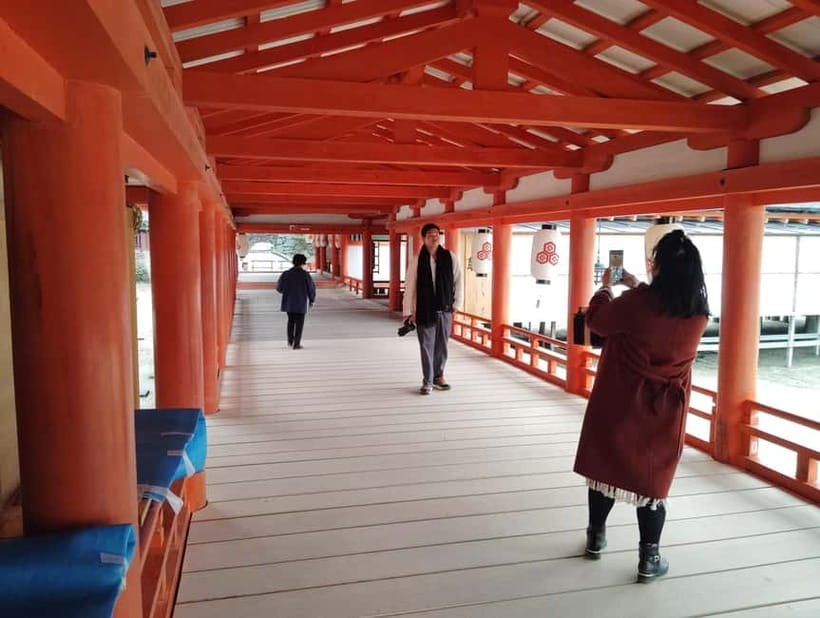
- The floating design has a religious purpose: Itsukushima Shrine was built over the sea to protect the sacred island behind it.
- You visit three major Miyajima sights: The route includes Itsukushima Shrine, Senjokaku Pavilion, and Itsukushima Jinja Gojunoto, the five-story pagoda.
- You get a private guide for 90 minutes: English and Japanese tours are available, with guides such as Gordon and Jochy leading some departures.
- The tour adds meaning to the architecture: You learn about the sea goddesses, construction methods, and World Heritage status.
- The pace can suit mixed-age groups: Guide Gordon has been praised for adding rest breaks during hot weather.
- The meeting point is easy to identify: Look for the Taira no Kiyomori statue and a yellow DeepExperience sign.
Why Itsukushima Shrine is best understood with a guide
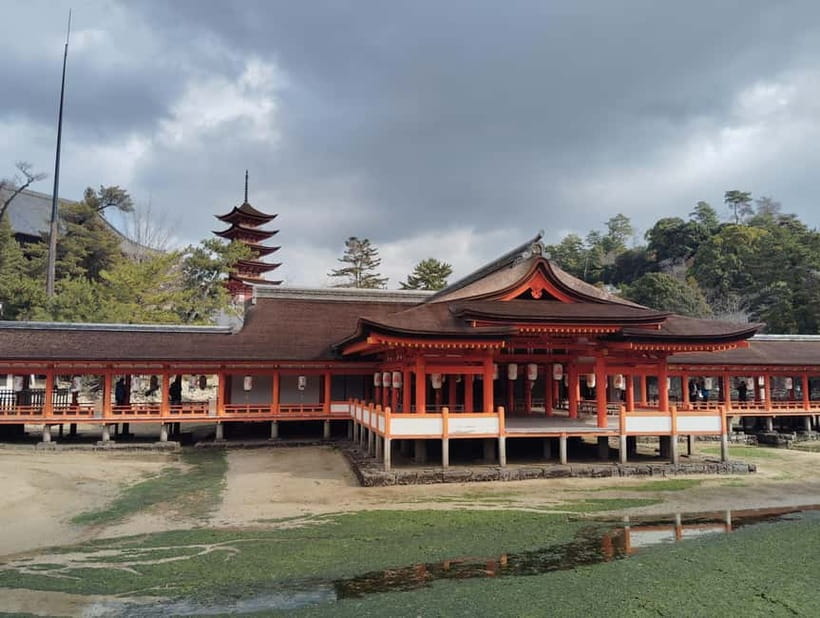
At first glance, Itsukushima Shrine is a striking collection of vermilion buildings, walkways, roofs, and open water. A guide helps connect those pieces. Without context, you may notice that the shrine sits above the sea but miss the religious reason for its unusual position.
The shrine is dedicated to the goddesses of the sea. The island itself has a sacred connection with the gods, so the shrine was designed to honor that setting rather than treat the shore as ordinary building ground. Its floating appearance is not simply an attractive feature for photographs. It reflects the idea that the island behind the shrine should remain protected from damage and direct intrusion.
I find this kind of explanation especially useful at a site where the architecture carries so much meaning. You can admire the color and symmetry on your own, but a guide points out how the buildings relate to the water, the island, and the beliefs connected with Miyajima.
The tour also explains the architectural innovations that helped the shrine earn World Heritage status. That matters because the UNESCO designation is not just a label for an old and attractive place. It recognizes the importance of the shrine’s design, setting, and cultural traditions.
More Guided Tours in Japan:
- Kyoto: Nijo Castle, Kiyomizu & Fushimi Inari Guided Tour
★ 4.7 · 700 reviews - Kyoto: Full-Day English Guided Tour of Kyoto’s Highlights
★ 4.5 · 656 reviews - Nikko Full-Day Private Tour with Government-Licensed Guide
★ 5.0 · 259 reviews
Meeting at the Taira no Kiyomori statue
Your tour begins in front of the Taira no Kiyomori statue on Miyajima. Your guide waits with a yellow sign marked DeepExperience, so you have a clear visual cue at the meeting point.
This is a practical starting place because you do not need to search inside a hotel or guess which shrine entrance the guide means. Still, allow enough time to reach Miyajima and locate the statue before the scheduled start. The meeting point information does not include transport from Hiroshima, although one Japanese participant had a guide meet them at Hiroshima Station and provide explanations during a long train delay. That appears to have been a special arrangement, so you should confirm any pickup request before booking rather than assume it is included.
The guide may be Gordon or Jochy, among the guides associated with this experience. The available languages are English and Japanese. If you want the tour in a particular language, check the selected departure carefully.
Inside Itsukushima Shrine for about 50 minutes
The longest part of the experience is the guided visit to Itsukushima Shrine, lasting about 50 minutes. This gives you enough time to walk through the main shrine area while hearing the story behind its construction.
The most important point is the relationship between the buildings and the sea. Itsukushima Shrine was designed to float above the water, creating a boundary between the sacred island and the sea around it. The arrangement also gives the shrine a distinct visual character that changes with the tide and weather. The tour information does not promise a particular tide level, so do not book it expecting one exact view of the water.
Your guide explains the shrine’s connection to the goddesses of the sea and the island’s place in Japanese religious tradition. That makes the visit more than a quick stop for photographs. You begin to understand why the shrine was built in such an unusual way and why its setting matters as much as its individual buildings.
The guide also discusses construction details and architectural choices. One Japanese participant particularly valued the small facts about how the shrine was built. These details can help you notice features you might otherwise pass without a second look.
The private format is useful here. If you are curious about the floating layout, the sea goddesses, or the shrine’s World Heritage status, you can ask directly. A larger group tour often has to keep moving, while a private tour can respond to your interests within the fixed 90-minute schedule.
There are a few practical limits. Flash photography is not allowed, and smoking is prohibited. Bring a camera if you want to record the visit, but use it without flash and give the religious setting proper attention.
Senjokaku Pavilion and its unfinished character
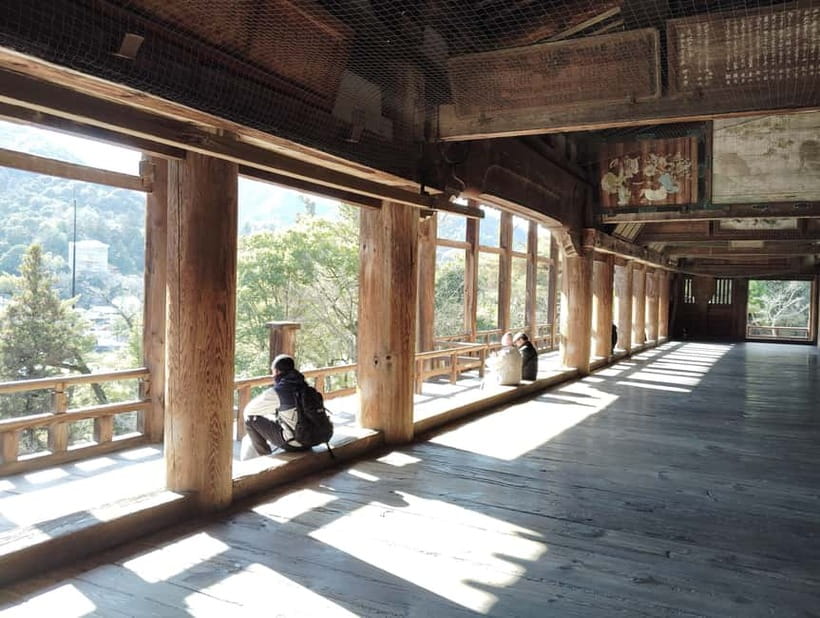
After the main shrine, the route continues to Senjokaku Pavilion for about 20 minutes. This gives the tour a useful change of focus. Instead of staying only with the shrine’s water-based architecture, you see another important structure connected with the history of Miyajima.
The pavilion is included as a guided sightseeing stop, so you can ask how it relates to the shrine complex and the island’s religious setting. The supplied details do not specify a full explanation of every feature, so your guide’s presentation may shape how much time is spent on architecture, history, or views.
Twenty minutes is enough for a focused visit but not a long independent exploration. I see that as a benefit if you want the major highlights without spending half a day at one complex. It may feel brief if Senjokaku Pavilion is your main interest, but the tour is designed to place the pavilion within a wider story about Itsukushima.
Wear shoes that you can walk in comfortably. The tour is only 90 minutes, but it includes several stops and sightseeing on foot. Sunscreen is also sensible, especially in hot or bright weather.
A few more temple visits around Japan worth a look
- Kyoto: Tea Ceremony Ju-An at Jotokuji Temple
★ 4.9 · 3,207 reviews - Tokyo: Asakusa Walking Tour with Sensoji Temple Visit
★ 4.8 · 1,583 reviews - Nikko: Kegon Falls, Lake Chuzenji & Toshogu Temple
★ 4.6 · 1,577 reviews - Tokyo: Kamakura & Enoshima Day Trip including Temple Tickets
★ 4.5 · 1,375 reviews
The five-story pagoda at the finish
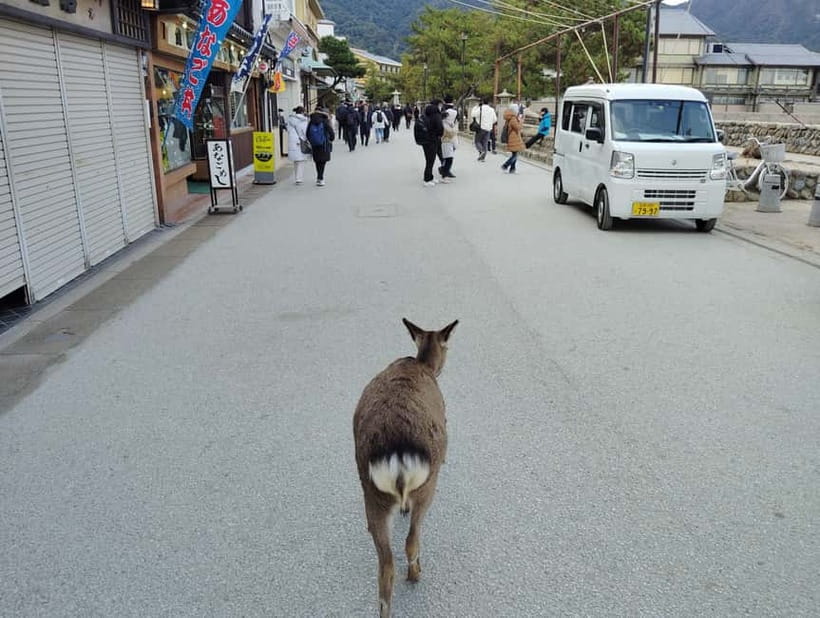
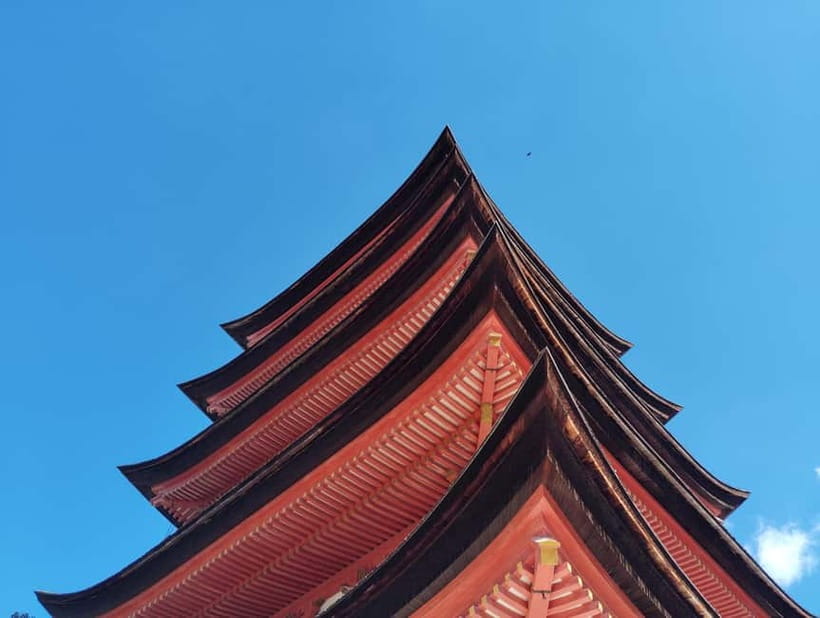
The final stop is Itsukushima Jinja Gojunoto, the five-story pagoda, with about five minutes set aside for guided sightseeing. The tour finishes at the pagoda rather than returning you to the original meeting point.
That ending matters for planning. Before you start, make sure you know where the pagoda is and how you want to continue afterward. You may want to explore more of Miyajima, take photographs, or make your way to another appointment. Since the activity finishes at Itsukushima Gojunoto, do not assume the guide will escort you back to the Taira no Kiyomori statue.
Five minutes is a short stop, so think of it as a final orientation and viewing point rather than a full pagoda visit. The guide can explain its role and point out details, while the main historical discussion remains centered on Itsukushima Shrine.
The route works well because each stop adds a different piece. The shrine explains the sea-based religious design, Senjokaku adds another architectural and cultural site, and the pagoda provides a compact closing landmark.
What the private format adds
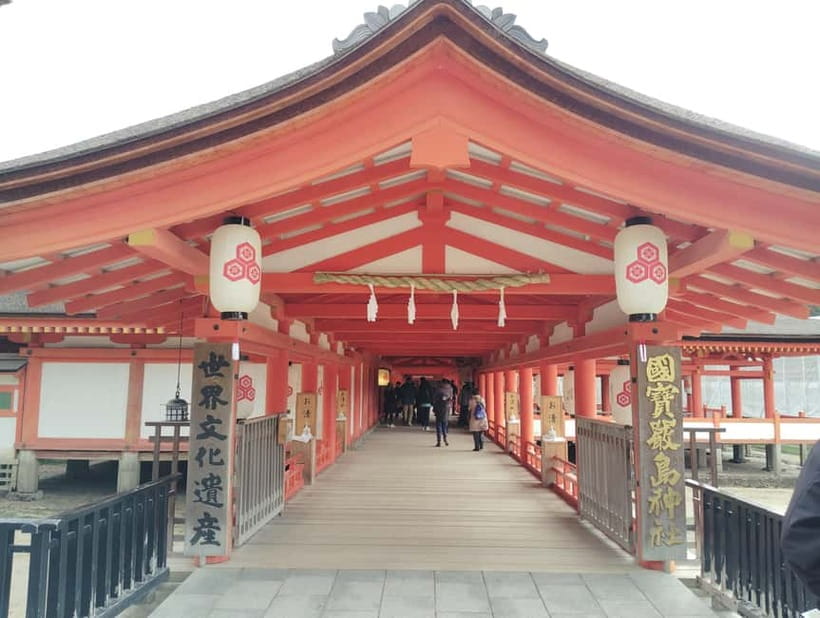
This is a private group experience, not a large shared walk. That is the feature most likely to affect the value of the $59 price.
If you are traveling with family or friends, the cost buys more than admission. You receive a live guide for 90 minutes, a planned route, shrine entry, and explanations in English or Japanese. You can ask questions without worrying about holding up a busload of strangers.
The private format also helps with different walking speeds. Guide Gordon was specifically praised for taking breaks so older members of a group could rest during hot weather. That does not guarantee a custom pace for every departure, but it shows the tour can be handled with some flexibility.
Guide Jochy was described as enthusiastic, patient, and willing to answer questions. Gordon has been singled out for clear English and for explaining the history and culture behind the shrine, the torii gate, and Miyajima. Guides naturally differ, but these details suggest the strongest part of the experience is the human explanation rather than simply being led from one building to the next.
You should still be realistic about the format. Ninety minutes passes quickly, and the tour cannot cover every part of Miyajima. If you want a slow photography session, a long visit to the shrine grounds, or time to explore independently, plan additional time after the tour.
Is $59 good value?
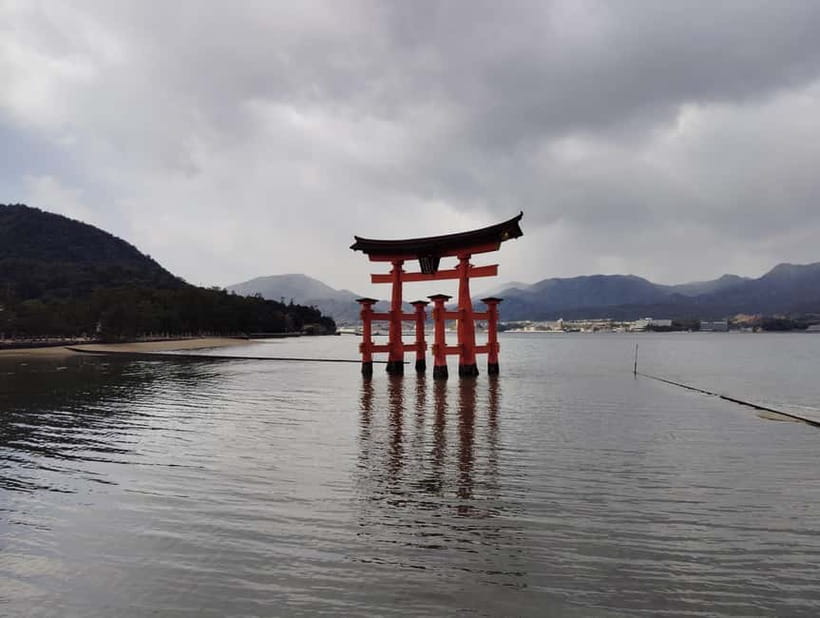
At $59 per person, this is not the cheapest way to walk around Miyajima. You are paying for a private guide, shrine admission, and focused interpretation rather than transportation or a full-day island program.
I think the price is reasonable if you care about the meaning behind the buildings. Itsukushima Shrine can look simple at first: red structures, water, roofs, and a famous setting. The guide gives you the religious and architectural framework needed to understand why the site is important.
The value is strongest for first-time visitors, families, and anyone who prefers asking questions instead of reading signs. It is also useful if your schedule is tight and you want a short, organized introduction to the main shrine area.
The value is weaker if you already know Miyajima well or mainly want independent time. You will still need to arrange your own transport to the meeting point, and the tour does not include a wider island visit, meals, or other attractions.
Free cancellation up to 24 hours before the start lowers the risk of booking. The reserve-now, pay-later option also helps if your Miyajima plans depend on the rest of your Japan schedule.
Who will get the most from this tour?
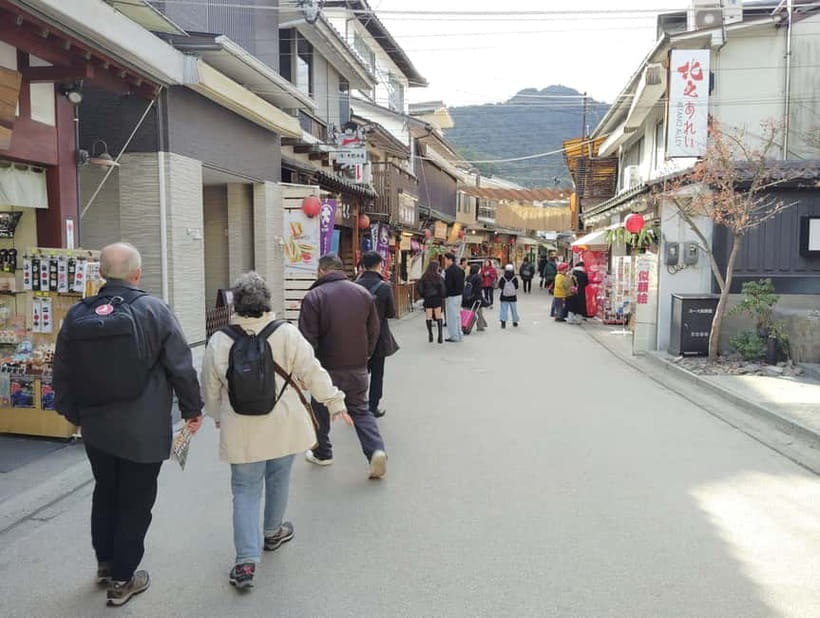
I would choose this tour if you want the following:
- A short introduction to Miyajima with a real person explaining the site
- A private setting for family or friends
- English or Japanese guidance
- Help understanding the shrine’s religious purpose and unusual construction
- A route that includes the shrine, Senjokaku Pavilion, and the five-story pagoda
- A manageable visit with the possibility of rest breaks
It is a good match for older family members if they can walk without a wheelchair, especially during warm weather. Bring water and sunscreen, and tell the guide early if your group needs a slower pace.
I would not choose it if you use a wheelchair, since the activity is not suitable for wheelchair users. I would also skip it if you want a broad Miyajima tour that includes many other parts of the island. This experience is tightly focused on the shrine complex and nearby landmarks.
Simple preparation for a smoother visit
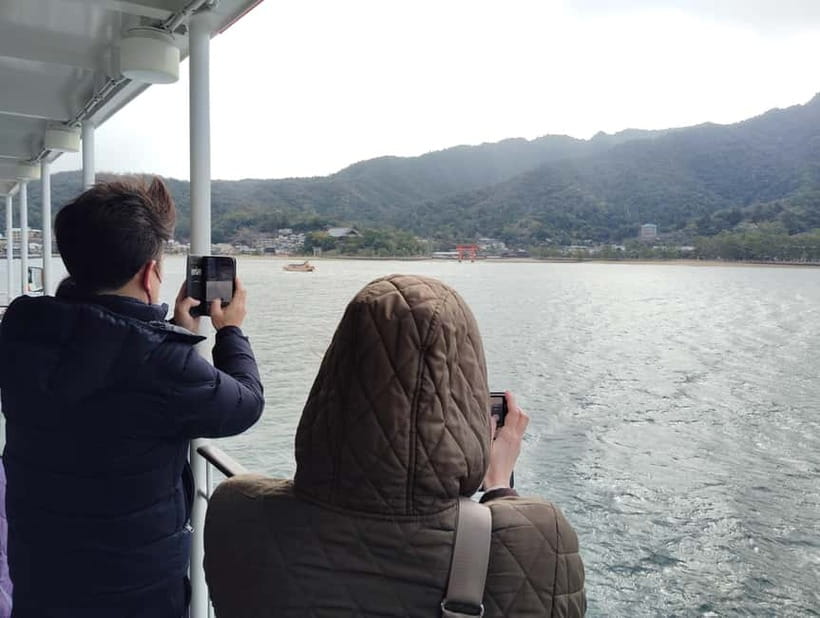
Wear comfortable shoes. The tour includes several stops and walking between them, and formal or uncomfortable footwear will only distract you from the explanations.
Bring a camera, but remember that flash photography is not allowed. Sunscreen is listed as an important item, and it is especially sensible when the route takes place around open areas near the sea.
Arrive at the Taira no Kiyomori statue with enough time to identify the guide and the yellow DeepExperience sign. The tour finishes at the five-story pagoda, so consider what you want to do next before you begin.
A private guide can answer questions, but you will get more from the tour if you arrive with one or two things you want to understand. Ask about the floating design, the sea goddesses, the island’s sacred status, or the architectural choices behind the World Heritage designation.
Should you book this Itsukushima Shrine tour?
Book it if you want the famous shrine to make sense, not just look beautiful. The strongest reasons are the private guide, the focused 90-minute route, the explanation of the sea-goddess tradition, and the chance to understand why the shrine was built above the water.
The $59 price is fair for a private, guided introduction that includes admission, though it is not a bargain sightseeing walk. I would especially recommend it for first-time visitors, families, and anyone who values patient answers and a sensible pace.
Skip it if you need wheelchair access, want a full-day Miyajima program, or prefer to explore every site alone. For everyone else, this is a practical way to give Itsukushima Shrine the attention it deserves before continuing on to the rest of Miyajima.
FAQ
How long does the Itsukushima Shrine tour last?
The tour lasts 90 minutes.
What language is the tour available in?
Live guiding is available in English and Japanese.
Where does the tour meet?
Meet in front of the Taira no Kiyomori statue on Miyajima. The guide will hold a yellow sign marked DeepExperience.
What sights are included?
The route includes Itsukushima Shrine, Senjokaku Pavilion, and Itsukushima Jinja Gojunoto, the five-story pagoda.
Is admission to Itsukushima Shrine included?
Yes. Admission to Itsukushima Shrine is included.
Is the tour suitable for wheelchair users?
No. The activity is not suitable for wheelchair users.
Can I cancel for a full refund?
Yes. You can cancel up to 24 hours in advance for a full refund.
Just added around Japan
- From Asakusa: Old Tokyo, Temples, Gardens and Pop Culture★ 5.0 · 47 reviews
- Private guided tour: Mt. Aso volcano, grasslands, Aso Shrine★ 5.0 · 19 reviews
- Goshuin Collecting tour at Asakusa Local Temples & Shrines, Tokyo★ 5.0 · 8 reviews
- Tokyo:Nikko UNESCO World Heritage Sites Private 1-Day Tour★ 3.8 · 6 reviews
- Tokyo Yokohama Night View Tour With Kamakura And Enoshima★ 3.5 · 14 reviews
- Tokyo: Snow Monkey Park and Zenkoji Temple Private Day Tour★ 4.7 · 127 reviews
- Tokyo War History Tour: Yasukuni Shrine & War Museum★ 4.5 · 6 reviews
- Tokyo to Nikko: Exclusive Private Day Trip★ 4.8 · 6 reviews
Guided, compared.
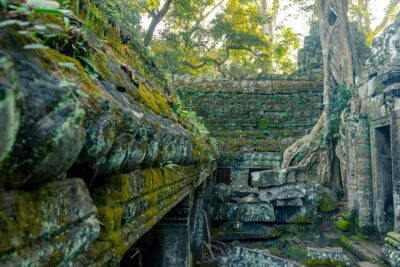
Angkor Wat Sunrise or Sunset Tour with Guide from Siem Reap
Read our review →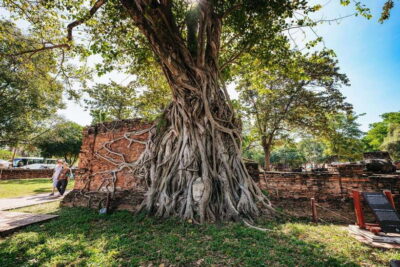
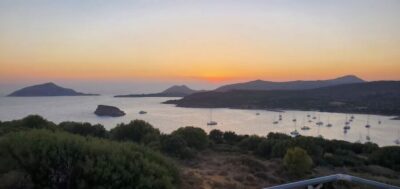
Cape Sounio & Poseidon Temple Trip with Audio Guide
Read our review →
Angkor Wat Sunrise tour with Small – Group and Guide tours
Read our review →
Grand Palace, Wat Pho, and Wat Arun Guided Tour
Read our review →
Angkor Wat Highlights and Sunrise Guided Tour from Siem Reap
Read our review →
Full-Day Angkor Wat Sunrise Private Tour with Guide from Siem Reap
Read our review →Browse the lists this tour appears in