REVIEW · ANGKOR WAT TOURS
Siem Reap: 2-Days Angkor Wat with Sunrise Small-Group Tour
Angkor Wat at sunrise is the headline, but the real strength of this two-day temple plan is its range. You see the famous stone faces of Bayon, tree-covered Ta Prohm, delicate Banteay Srei, a stepped pyramid, a temple on an island, and large atmospheric ruins beyond the main circuit. Guides such as Pal, Bun, Sak, and Chhay explain what you are looking at instead of leaving you to guess.
I like the small-group format, which gives you a better chance to hear the guide and find a good sunrise position. I also like the simple comforts: air conditioning, bottled water, and a cold towel after long walks. The catch is the pace. Day 1 runs roughly 7:45am to 4:00pm or 5:00pm, and Day 2 begins around 4:20am, so you need stamina, good shoes, and a tolerance for early alarms.
What makes this Angkor tour worth considering
- Sunrise at Angkor Wat: Reach the world’s largest religious monument before dawn, then explore its galleries, chambers, and upper terraces.
- A wide mix of temples: See Banteay Srei, Pre Rup, Neak Pean, Preah Khan, Ta Prohm, Angkor Thom, and Bayon across two well-planned days.
- Guides who add real context: Pal, Bun, Sak, and other English-speaking guides explain temple design, Hindu and Buddhist ideas, inscriptions, and modern Cambodian life.
- Cooling support between stops: The air-conditioned vehicle, cold water, and fresh towels matter after walking through exposed courtyards.
- Free time for your own photographs: Your guide introduces each site, points out key details, then gives you time to look around independently.
- Low tour price, separate temple pass: The tour costs $16 per person, but you must add the official 2 or 3-day Angkor pass at $62, plus meals and drinks.
Two days that cover the main Angkor sights
Angkor is too large for a quick look at one temple. A one-day visit can cover the headline sites, but it often leaves you choosing between the outer temples and the central ruins. This tour splits the work sensibly: the first day reaches Banteay Srei and the Grand Circuit, while the second focuses on sunrise, Ta Prohm, Angkor Thom, and Bayon.
That arrangement also helps with visual variety. You are not looking at the same style of ruin all day. Pre Rup is a pyramid, Neak Pean uses water and an island setting, Ta Prohm is shaped by tree roots and shadow, and Bayon is famous for its carved faces. For a first visit, that contrast makes the ancient city easier to understand.
The precise order can be swapped if you request it. That may help if your schedule, weather, or energy levels make one arrangement more useful than the other.
More Temple Sunrise Tours in Cambodia
- Angkor Wat Sunrise or Sunset Tour with Guide from Siem Reap
★ 5.0 · 12,109 reviews - Siem Reap: Angkor Wat: Small-Group Sunrise or Sunset Tour
★ 5.0 · 9,444 reviews - Siem Reap: Angkor Wat 2-Day Tour with Sunrise and Sunset
★ 4.9 · 4,429 reviews
Day 1: Pre Rup, Banteay Srei, Neak Pean, and Preah Khan
Pickup takes place from your Siem Reap hotel between about 7:45am and 8:00am. The vehicle is air-conditioned, and the drive between sites gives your feet a break. That matters because the day includes long walks, uneven ground, and some steps.
Pre Rup’s stepped pyramid
The first stop is Pre Rup, a late 10th-century Hindu temple built in a strong stepped-pyramid style. Its high terraces and brick-and-stone structure give it a different look from the later temples in the central Angkor area.
This is a good place to begin because the design is easy to read. Your guide can point out the rising levels, the religious purpose of the temple, and the way Angkorian builders used height to create a sense of approach toward the sacred center. You will climb steps here, so shoes with a firm sole are more useful than sandals with little grip.
Banteay Srei’s fine carvings
Banteay Srei is smaller than Angkor Wat, but its sandstone carving is remarkably detailed. Reliefs cover the walls with a delicacy that can be harder to appreciate at the larger monuments, where scale tends to dominate.
This stop is one of the strongest reasons to choose the 2-day plan. Banteay Srei lies outside Angkor Thom, so it is easy to miss if you only visit the central temples. The extra drive is worthwhile if you care about sculpture and close-up details.
Expect more exposure to the sun here. Bring a hat, sunscreen, sunglasses, and water, even though more cold water is supplied during the day.
More Temple Sunrise Tours in Siem Reap
- Angkor Wat Sunrise tour with Small – Group and Guide tours
★ 5.0 · 3,655 reviews - Angkor Wat Highlights and Sunrise Guided Tour from Siem Reap
★ 5.0 · 3,213 reviews - Full-Day Angkor Wat Sunrise Private Tour with Guide from Siem Reap
★ 5.0 · 2,920 reviews - Angkor Wat Sunrise & 3 Main Temples with Breakfast – Small Group
★ 5.0 · 2,857 reviews
Lunch and the value of a planned break
Lunch is not included, so you pay for your own meal and drinks. The pause is still important. A full day of temples can blur together if you rush from one gate to the next without time to sit, eat, and cool down.
The guide can keep the day moving while still allowing personal exploration. That balance comes up repeatedly with this tour: you get an explanation at each site, then time to take pictures or walk at your own speed.
Neak Pean on a man-made island
Neak Pean is a Buddhist temple reached on a man-made island. Its setting makes it unlike the pyramid temples and enclosed galleries visited earlier.
The approach itself helps create the difference. Instead of moving straight into a large stone complex, you see a temple associated with water and a carefully arranged island setting. It is a shorter, more atmospheric visit, and a useful change of pace late in the day.
Preah Khan’s long, moody corridors
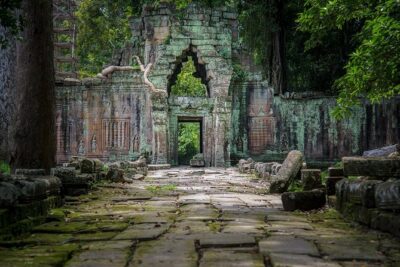
Preah Khan is a large temple complex with an atmospheric sense of scale. You can expect long passages, carved stone, open sections, and quieter corners that reward a slower look.
This is the sort of place where a guide earns the $16 tour fee. Without context, Preah Khan can feel like a maze of walls and fallen blocks. With someone pointing out the layout and important carvings, the ruins become easier to read. Guides named Pal, Bun, Chhay, and Sak are frequently assigned to this experience, though the specific guide depends on the date and group.
Day 1 ends with hotel drop-off around 4:00pm to 5:00pm. It is a long day, but you do get the evening to eat, rest, and prepare for the next morning.
Day 2: Angkor Wat before dawn
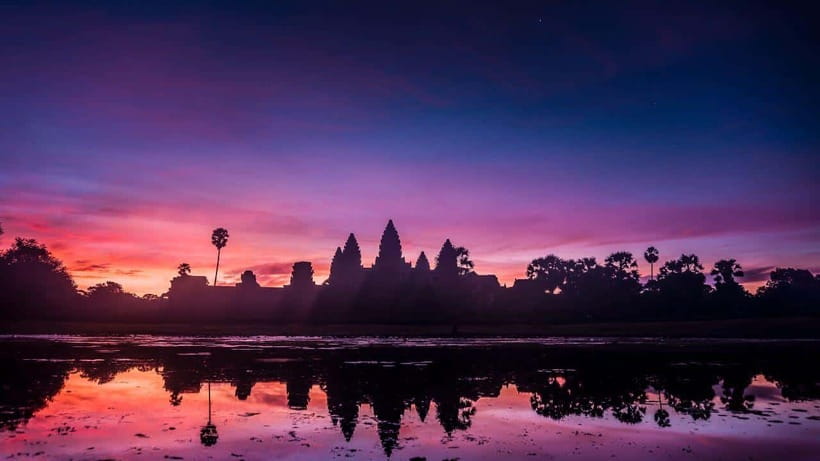
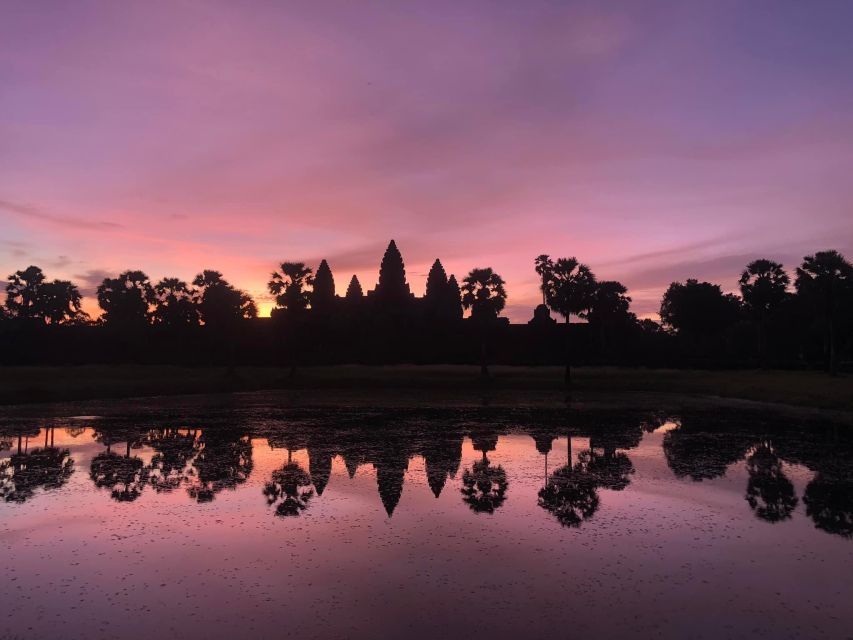
Pickup begins between about 4:20am and 4:35am. That is early even by temple standards, but it is necessary if you want to reach the Angkor Wat viewing area before sunrise and find a useful position.
Sunrise depends on the weather. Clouds can soften the colors or block the sun altogether, so no guide can promise a perfect sky. The value of the early start is that you are in place for the possibility, not that the result is guaranteed.
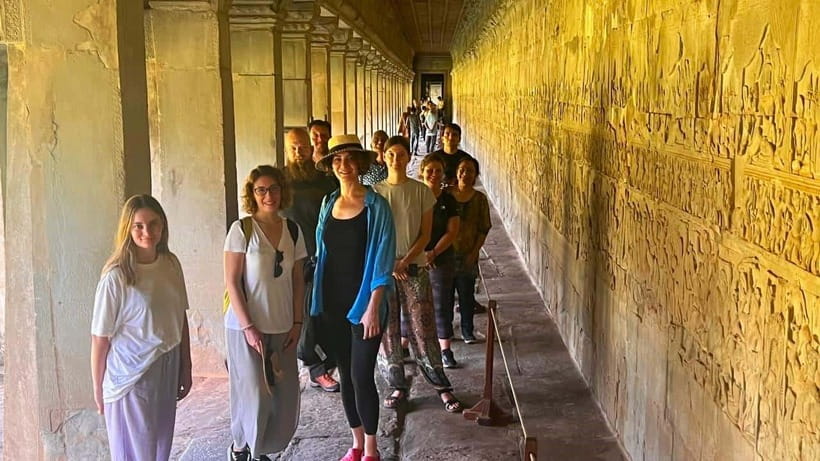
After sunrise, you enter Angkor Wat itself. The complex is much more than the familiar reflection view from across the water. Your guide leads you through corridors, central chambers, and upper terraces, explaining the structure and pointing out details that are easy to pass without notice.
Wear clothing that is comfortable but respectful of the temple setting. You will walk and climb, and the upper areas can feel exposed. A sun hat, sunscreen, insect repellent, and comfortable shoes are all listed as useful items for the day.
Angkor Wat beyond the postcard view
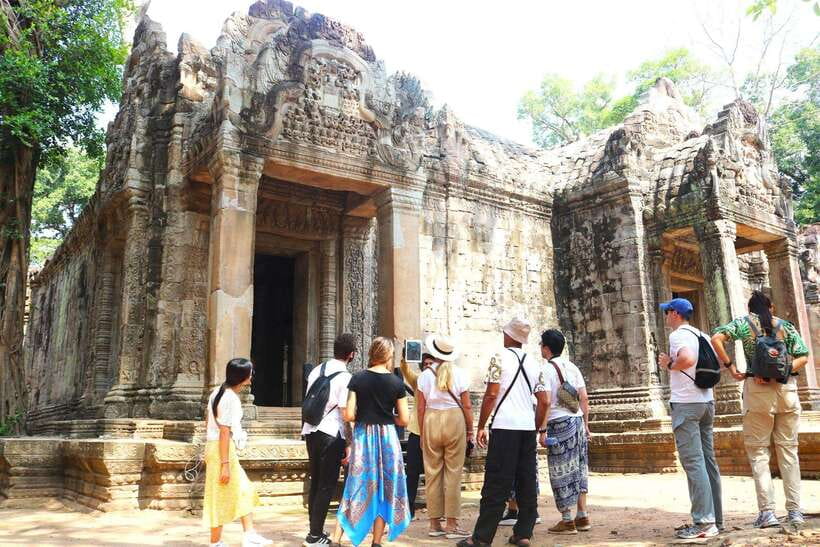
The sunrise is memorable, but do not let it become the whole point of the morning. Angkor Wat rewards attention after the sky brightens, when you can see the galleries, reliefs, towers, and changing textures of the stone.
The guide’s role is especially useful here. Sak, Pal, Bun, and other guides have been praised for choosing photo positions, explaining the meaning of the temple, and answering questions about both ancient Cambodia and present-day life. You also get time to explore without the guide speaking continuously, which keeps the visit from feeling like a lecture.
Breakfast is taken just outside Angkor Wat and is not included. Bring cash for food and extra drinks, or confirm your plans with the guide. After breakfast, you have a chance to rest before the next major walk.
Ta Prohm and the power of decay
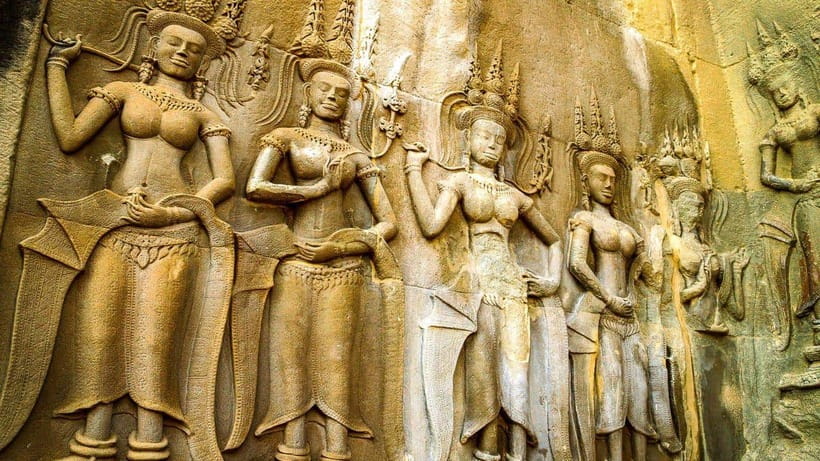
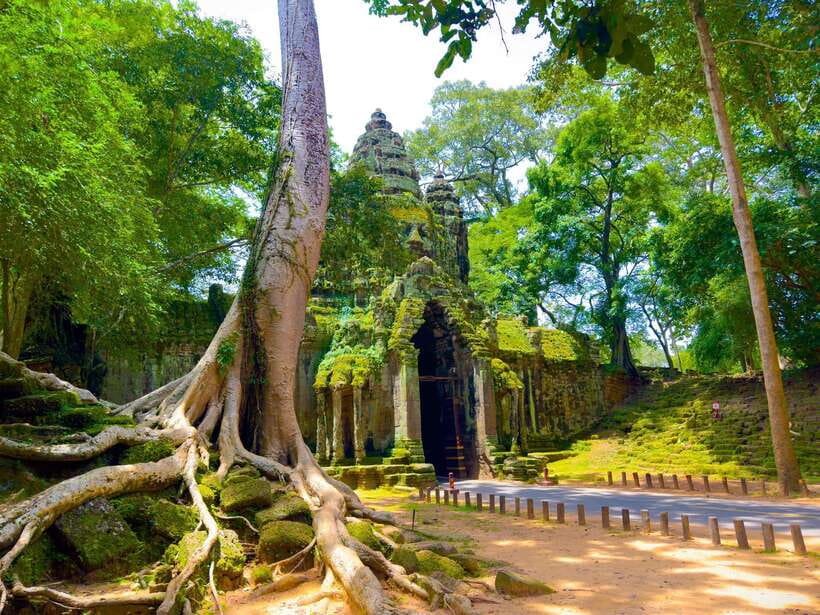
Ta Prohm is the temple most closely associated with trees growing across ancient stone. Roots, collapsed walls, narrow passages, and shaded courtyards give it a different mood from Angkor Wat’s ordered scale.
The trees are not simply decoration. They show how the site looked after centuries of exposure and neglect, before modern conservation work stabilized key sections. You will see why Ta Prohm is so popular, but also why it can be difficult to move quickly through its smaller passages.
Take care on uneven surfaces and do not expect every route to be easy. The tour is not suitable for wheelchair users, and children under eight are not accepted. Families with older children can manage it if everyone is comfortable with heat, stairs, and a long morning on foot.
Entering Angkor Thom through the eastern gate
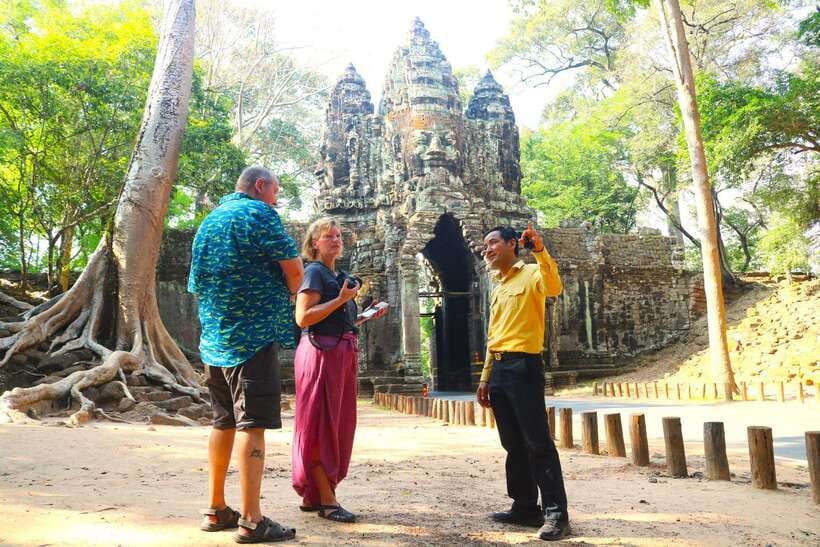
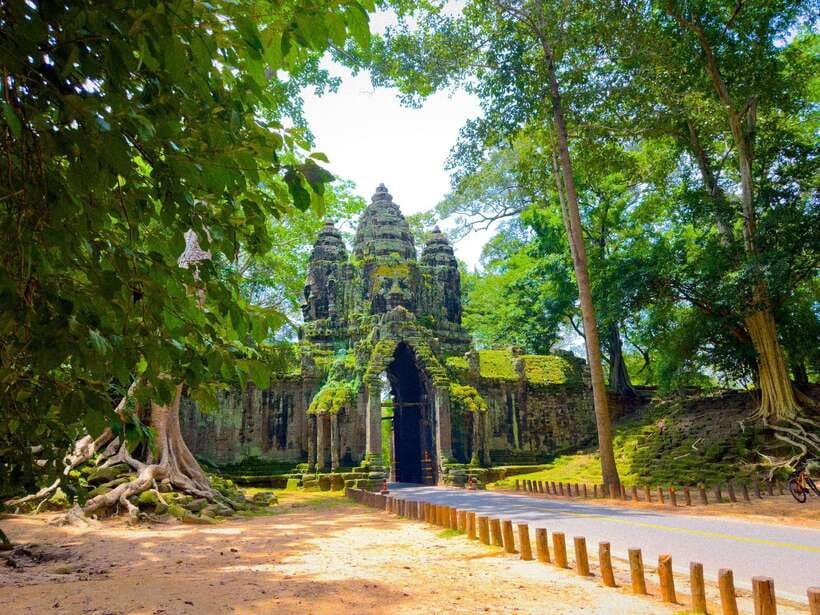
The route continues to the Eastern Gate of Angkor Thom. The entrance is flanked by rows of stone gods and demons, creating a ceremonial approach to the fortified city.
This is a useful moment to pause and look at the arrangement rather than rushing through the gate. The paired figures and broad causeway communicate that Angkor Thom was planned as a powerful royal city, not just a collection of isolated shrines.
You then continue into Angkor Thom, where the scale changes again. Wide roads and large stone structures make the city feel more like an urban center than a single temple.
Bayon’s carved faces
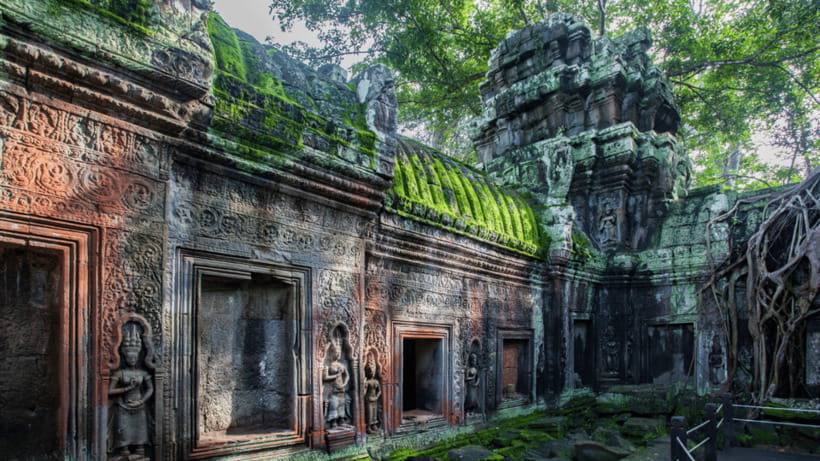
Bayon is the emotional high point for many people. Its towers carry large carved faces that look out across the temple from different angles. The expressions are calm, but the crowded arrangement of towers can feel almost theatrical.
This is another stop where a good guide makes a clear difference. Your guide can explain what the faces represent, how the temple relates to the ruler who commissioned it, and where to stand for photographs. Guides including Sak, Pal, and Bun are often praised for being patient, adding humor, and leaving enough time for independent exploration.
Bayon is visually busy, so it helps to stop and study one tower at a time. Do not try to photograph everything. Look at the faces, the narrow passages, and the contrast between the outer galleries and inner towers.
The Elephants and Leper King terraces
The final part of the route passes the Terrace of the Elephants and the Terrace of the Leper King. These are not long temple visits, but they add important pieces to the picture of Angkor Thom as a ceremonial capital.
The Elephant Terrace is known for its carved elephant forms and long platform. The Terrace of the Leper King has detailed relief work and a more enclosed feel. Your guide can point out features that you might miss while walking past on the way to a larger temple.
The second day ends around 12:30pm to 1:30pm. That early finish is welcome after a 4:30am pickup. You still have part of the afternoon for lunch, rest, or another activity in Siem Reap.
Guides, transport, and the small comforts
The tour uses an English-speaking guide and an air-conditioned vehicle. Group size varies, but examples include five people on one day and 11 on another, so you should not assume the group will be tiny. Even 11 people is manageable for a temple visit, but staying near the guide matters.
Guide quality is central to this experience. Pal, Bun, Sak, Sokpee, Chhay, and other guides have been praised for clear explanations, humor, photo help, and knowledge of Cambodian culture. One useful feature is the combination of guided explanation and quiet free time. You get structure without having every minute controlled.
The drivers also play an important part. Names such as Naro, Mao, Vichet, Seyha, Dara, Keak, and Black appear among the assigned drivers. The repeated practical detail is cold water and a fresh towel waiting after temple walks. In Cambodia’s heat, that is not a fancy extra. It can be the difference between feeling tired and feeling overwhelmed.
The real cost and what you receive
The advertised tour price is $16 per person, which is unusually low for two full days of transport, a guide, hotel pickup and drop-off, bottled water, and cooling towels. But the official temple pass is extra: $62 per person for a 2 or 3-day pass. Meals and additional drinks also come from your budget.
That makes the core cost at least $78 per person before food. Even so, the value remains strong if you want a guide and organized transport. Hiring separate transport for two days, arranging a guide, and working out the temple order yourself can cost more in time and money.
The bargain price does not mean the days are light. You are paying for access to a well-planned route, not a relaxed resort outing. Add the cost of the pass when comparing this with a private tuk-tuk, car, or one-day tour.
Who should book this experience
I would choose this tour if you have two days in Siem Reap and want the main Angkor sights explained in English. It suits solo visitors who want a ready-made plan, couples who prefer not to negotiate transport at every stop, and families with older children who can handle heat and walking.
It is also useful if you want more than Angkor Wat itself. Banteay Srei, Neak Pean, Preah Khan, and Pre Rup give you a fuller sense of the site’s variety.
I would hesitate if you dislike pre-dawn starts, long temple days, group schedules, or outdoor walking. You should also choose another option if you need wheelchair access or are traveling with a child under eight.
Cancellation is flexible up to 24 hours before departure, with a full refund, and you can reserve now and pay later. Pickup and drop-off are included, but the exact pickup time is provided the day before.
My verdict: a strong two-day introduction to Angkor
Book this tour if you want the major temples, a few less obvious stops, and useful historical context without arranging every detail yourself. The biggest strengths are the sensible route, capable guides such as Pal, Bun, and Sak, and the practical care from drivers who keep water and cold towels ready.
Skip it if you want complete solitude or a slow photographic study of each monument. For most first-time visitors with two days, though, this is a well-priced and sensible way to meet Angkor on its own terms: early, hot, grand, and occasionally wonderfully overgrown.
FAQ
Is the Angkor temple pass included?
No. The 2 or 3-day temple pass costs $62 per person and must be purchased separately.
What time does the first day start and finish?
Pickup on Day 1 is between 7:45am and 8:00am. Hotel drop-off is expected between 4:00pm and 5:00pm.
What time does the sunrise day start and finish?
Pickup on Day 2 is between 4:20am and 4:35am. Drop-off is expected between 12:30pm and 1:30pm.
Can the two tour days be swapped?
Yes. The two days can be swapped at your request.
Are meals included?
No. Food and additional drinks are not included. Breakfast after the sunrise visit and lunch on the first day are at your own cost.
Is the tour suitable for young children or wheelchair users?
The tour is not suitable for children under eight or wheelchair users. Expect considerable walking, uneven ground, stairs, and early starts.
More Two-Day Trips in Siem Reap
- 2 Days Exclusive Temple Highlights with Sunset and Sunrise Tour
★ 5.0 · 1,157 reviews - Siem Reap: Angkor Sunrise 1- or 2-Day Guided Temples Tour
★ 4.9 · 1,132 reviews - 2 Days Guided Historical Tour in Angkor
★ 5.0 · 855 reviews - 2-Day Angkor Wat With Small, Big Circuit and Banteay Srei Tour
★ 5.0 · 545 reviews
More Angkor Wat Tours in Siem Reap
- Siem Reap: Full-Day Angkor Wat Guided Tour with Sunset
★ 4.9 · 3,803 reviews - Angkor Wat Sunset Small Group Tour with Lunch Included
★ 5.0 · 3,059 reviews - Siem Reap: Angkor Wat Sunrise and Full-Day Sightseeing Tour
★ 4.9 · 2,828 reviews - Angkor 2-Day Sunset & Sunrise Small-Group Tour
★ 5.0 · 2,567 reviews
Just added around Siem Reap
- Ticket for Angkor Balloon Ride.★ 3.7 · 46 reviews
- Sunrise at Angkor Wat Temple: 3-Hour Private Tour★ 4.7 · 30 reviews
- Small-Group Full Day Angkor wat Guide tour with Sun set★ 5.0 · 136 reviews
- Siem Reap: Private 4-Day Angkor Wat and Phnom Kulen Tour★ 5.0 · 9 reviews
- Angkor Wat: Sunrise 2.5 Days Temples & Tonle Sap-Small Group★ 5.0 · 10 reviews
- Siem Reap : Private Tuk-Tuk Tour of the Magnificent Temples.★ 4.9 · 14 reviews
- Siem Reap: Ultimate Angkor Wat Offbeat Experience by Jeep★ 4.9 · 8 reviews
- Siem Reap: Personalized Angkor Wat Sunrise/Set by TukTuk/Car★ 4.9 · 41 reviews
Angkor Wat Tours, compared.
Angkor Wat Sunrise or Sunset Tour with Guide from Siem Reap
Read our review →
Angkor Wat: Small-Group Sunrise or Sunset Tour
Read our review →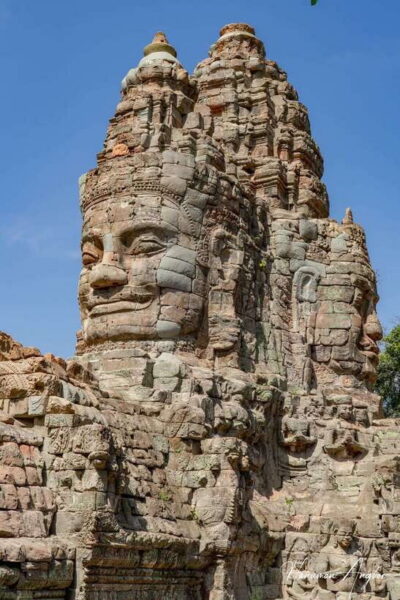
Angkor Wat 2-Day Tour with Sunrise and Sunset
Read our review →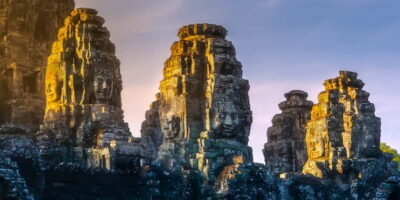
Angkor Wat Sunrise tour with Small – Group and Guide tours
Read our review →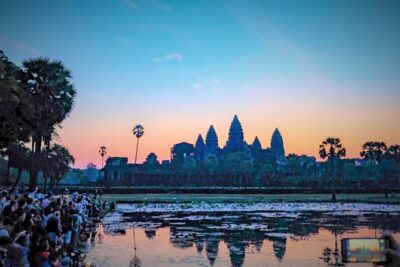
Angkor Wat Highlights and Sunrise Guided Tour from Siem Reap
Read our review →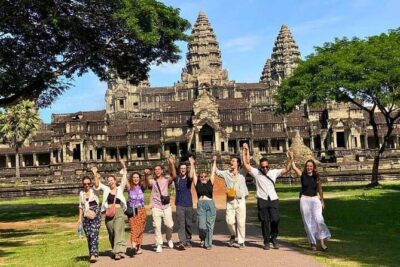
Angkor Wat Sunset Small Group Tour with Lunch Included
Read our review →