REVIEW · SIEM REAP TEMPLE TOURS
2 Days Exclusive Temple Highlights with Sunset and Sunrise Tour
Angkor Wat at sunrise is the big draw, but the smart part of this two-day plan is the way it spreads the temples out. You get time for Banteay Srei’s fine carvings, Ta Prohm’s tree-covered ruins, and the broad royal city of Angkor Thom without trying to cram the whole site into one punishing day.
I like the mix of famous places and quieter stops, especially Neak Pean and Ta Nei. I also like the practical care: air-conditioning, bottled water, cold towels, hotel pickup when selected, and guides such as Pal, Chhay, Sokpee, and Saruon who explain both the temples and Cambodian life. The main drawback is that the temple pass costs an extra $62, and meals are not included.
Key points to know before booking
- Sunrise at Angkor Wat comes on day two: You leave before dawn and enter from the eastern side, so bring a torch or use your phone light.
- The route covers the major sights: Angkor Wat, Ta Prohm, Angkor Thom, Bayon, Preah Khan, Banteay Srei, Pre Rup, Neak Pean, and Ta Nei.
- The $49 price is not the full cost: Add the required $62 temple pass, plus your meals and drinks.
- The guide makes a real difference: Pal, Chhay, Sokpee, Saruon, and other guides are praised for clear explanations, good timing, and help with photographs.
- Sunset depends on the selected option: The small-group option includes sunset at Bakheng Mountain, while the private option includes a rice-field setting at Baitang Siem Reap.
- Dress for temple rules: Both men and women must cover shoulders and knees, and a scarf alone is not accepted for uncovered shoulders.
Why this two-day route works
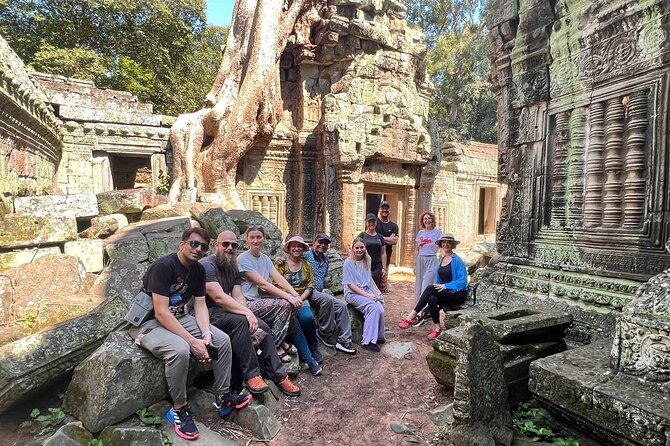
Angkor is not one temple. It is a vast collection of religious monuments, reservoirs, gates, terraces, and ruined city spaces spread around Siem Reap. Trying to see the best parts in one day usually means too much time in a vehicle and too little time looking at the stone.
This tour gives the main sights room to breathe. Day one reaches the farther temples and ends with sunset. Day two starts early with Angkor Wat, then moves through Ta Prohm, Ta Nei, and Angkor Thom. You still cover a lot, but the schedule gives you time to walk, listen, take photographs, and explore on your own.
The published price is $49 per person, which looks attractive for two days of transport and guiding. The important catch is the $62 temple pass, payable separately. That brings the basic cost to $111 per person before food. For an organized two-day visit with hotel transfers, an English-speaking guide, an air-conditioned vehicle, water, and cold towels, that can be fair value, but you should compare the full cost rather than the headline price.
The experience is offered in a small-group format, with a private upgrade available. The supplied details also describe private air-conditioned transport, so check the exact option you select. Group size affects the feel of the day, the sunset location, and how much flexibility you have.
More Temple Sunrise Tours in Cambodia
- Angkor Wat Sunrise or Sunset Tour with Guide from Siem Reap
★ 5.0 · 12,109 reviews - Siem Reap: Angkor Wat: Small-Group Sunrise or Sunset Tour
★ 5.0 · 9,444 reviews - Siem Reap: Angkor Wat 2-Day Tour with Sunrise and Sunset
★ 4.9 · 4,429 reviews
Day one begins with Pre Rup and Banteay Srei
Pre Rup is a strong opening stop. Built as a Hindu state temple under King Rajendravarman, it dates to 961 or early 962. Its brick, laterite, and sandstone construction gives it a different character from the larger sandstone monuments you see later.
You have about an hour here. The temple is built as a temple mountain, so the climb and stepped form help you understand the old Khmer idea of sacred space rising toward the heavens. It is also a useful first lesson in how Angkor’s religious buildings were designed, not simply a quick photo stop.
The next visit is Banteay Srei, often called the Lady Temple. This smaller sandstone temple is famous for its remarkably fine carvings. The relief work is more delicate than what you see at many larger Angkor sites, and two hours gives your guide time to point out details that are easy to miss.
Banteay Srei sits away from the central cluster, so the drive takes time. That is the tradeoff. You give up some central temple time to see one of the most finely carved monuments in Cambodia. I think it is worth it, especially for a first visit, because it looks and feels different from Angkor Wat and the major royal temples.
Your guide matters most here. A good guide such as Chhay or Pal Saruon can explain who built the temple, how it was used, and why its decoration is so carefully executed. You will also have time to look around independently rather than being led from one photograph point to the next.
Neak Pean offers a quieter change of pace
Neak Pean is an artificial island temple reached across a long walkway. Its setting is different from the grand towers and enclosed galleries of Angkor Wat. The water and island design give the stop a calmer feel, and the Buddhist connection adds another layer to the religious story of Angkor.
The visit lasts about an hour. That is enough to see the central structure and understand its unusual layout without making the stop feel overlong. If you have spent the morning climbing and walking at Pre Rup and Banteay Srei, this change of rhythm is welcome.
Neak Pean is also a reminder that Angkor was not built around one style or one ruler. The temples reflect different periods, religious traditions, and ideas about sacred water. Your guide can connect the site to the wider network of reservoirs and waterways that shaped the old Khmer capital.
Preah Khan brings the atmosphere
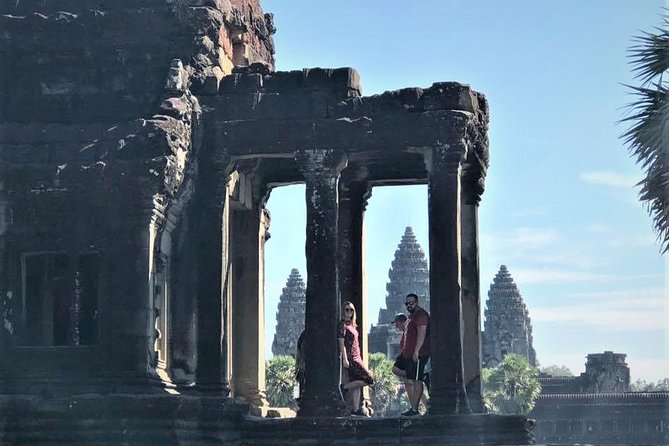
Preah Khan is one of the most atmospheric stops on the first day. It is a large, partly ruined temple complex where tree roots, worn stone, narrow passages, and open courtyards create a strong sense of age.
Plan on about two hours here. That sounds generous, but Preah Khan rewards slow walking. You can study carvings, pass through long galleries, and notice how the forest has taken hold of parts of the structure. It is not as instantly famous as Angkor Wat or Ta Prohm, but it can feel more spacious and less focused on one iconic photograph.
The site also helps balance the itinerary. Banteay Srei is about fine detail, Neak Pean about water and design, and Preah Khan about scale and decay. You are not simply visiting several copies of the same temple.
Wear proper shoes. The ground around Angkor can be uneven, and you will spend much of both days walking on stone, dirt, or rough paths. Comfortable footwear is one of the simplest ways to make the schedule easier.
More Temple Sunrise Tours in Siem Reap
- Angkor Wat Sunrise tour with Small – Group and Guide tours
★ 5.0 · 3,655 reviews - Angkor Wat Highlights and Sunrise Guided Tour from Siem Reap
★ 5.0 · 3,213 reviews - Full-Day Angkor Wat Sunrise Private Tour with Guide from Siem Reap
★ 5.0 · 2,920 reviews - Angkor Wat Sunrise & 3 Main Temples with Breakfast – Small Group
★ 5.0 · 2,857 reviews
Sunset comes in two different forms
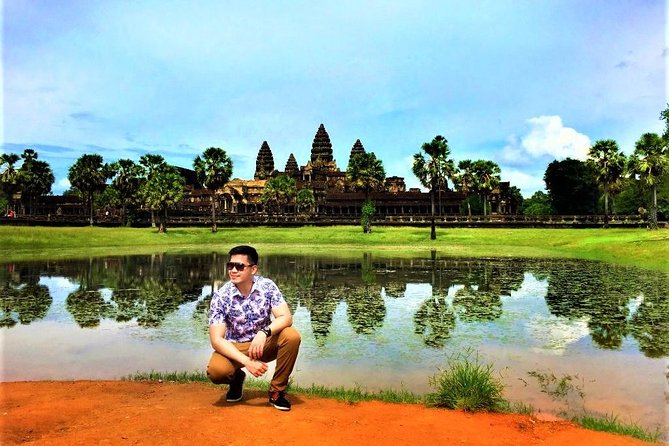
The sunset plan depends on the option you book. The small-group version includes sunset at Bakheng Mountain. The private option includes time at Baitang Siem Reap, a peaceful rice-field setting where you can have a cold drink and a light local snack.
These are not interchangeable experiences. Bakheng gives you the classic temple-area sunset setting, while the rice fields offer a simpler countryside pause. If the end-of-day setting matters to you, read the selected option carefully before paying.
The schedule allows about two hours for this final stop. That gives you time to slow down after a full day of temples. You should still expect the day to feel active, not leisurely. One person described the overall pace as high energy, which is fair. You see a lot in two days.
A guide who manages time well can make the difference here. Pal has been praised for reaching good sunrise and sunset positions while still allowing independent exploring. That balance is useful because you want help with timing, but you do not want every minute filled with commentary.
Day two starts before dawn at Angkor Wat
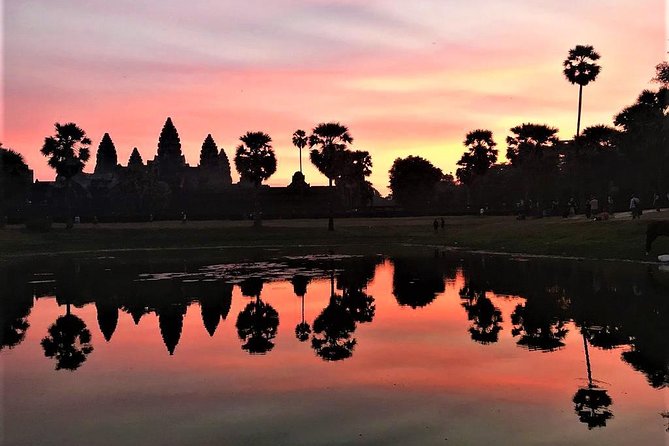
The sunrise morning is the emotional center of the experience. Departure is before dawn, and you enter Angkor Wat in darkness from the less-used eastern side. Bring a torch. A phone light may help, but a small flashlight is more practical.
The early start is not for everyone. You will be tired, and there is no way around that. Still, Angkor Wat at first light is the reason many people accept the alarm. The towers gradually become visible, and the temple takes on a different mood from the bright, busy daytime version.
You have about three hours at Angkor Wat. That is enough time for the sunrise setting, the outer areas, and a guided look at the temple’s architecture and reliefs. You should also get some free time for your own photographs and quiet observation.
Sunrise conditions cannot be guaranteed. Clouds, haze, and crowds are part of the morning. The value of the early departure is not only the color in the sky. You also get the chance to approach the monument before the heat becomes intense and to see its courtyards and galleries at a slower hour.
Several guides are praised for taking photographs, including Pal, Sokha, and other members of the team. That can be handy at sunrise, when you may be carrying a phone, water, and a torch while trying to frame the towers.
Ta Prohm delivers the jungle setting
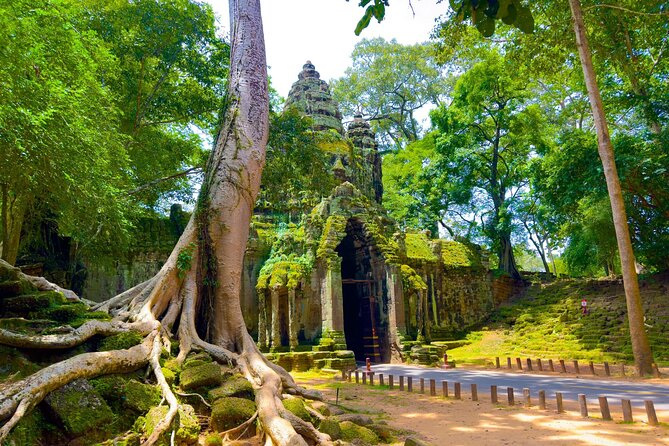
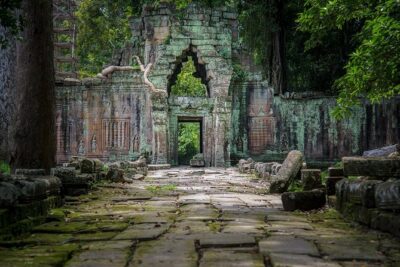
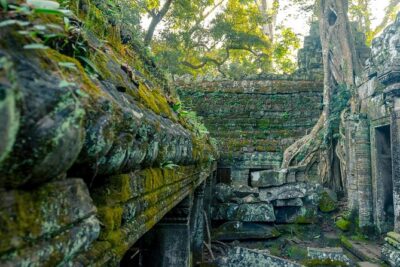
After Angkor Wat, the route continues to Ta Prohm, the temple associated with the film Tomb Raider. Its appeal does not depend only on cinema. The mix of stone galleries, trees, roots, and broken walls gives the site a very different mood from Angkor Wat’s ordered symmetry.
You have about two hours here. That is useful because Ta Prohm can feel crowded around its best-known tree and doorway. A longer visit allows you to move beyond the obvious photograph and see other sections of the complex.
The temple was once home to 2,740 monks, a detail that helps you picture it as a living religious institution rather than a silent ruin. Ask your guide about how the temple functioned, not only when it was built. Guides such as Sokpee and Chhay are praised for explaining the religious purpose of each site as well as its construction.
Ta Prohm requires careful footing. Roots, stones, and uneven surfaces are part of the experience. Take your time, especially if the morning has already included a long walk through Angkor Wat.
Ta Nei is the quieter temple stop
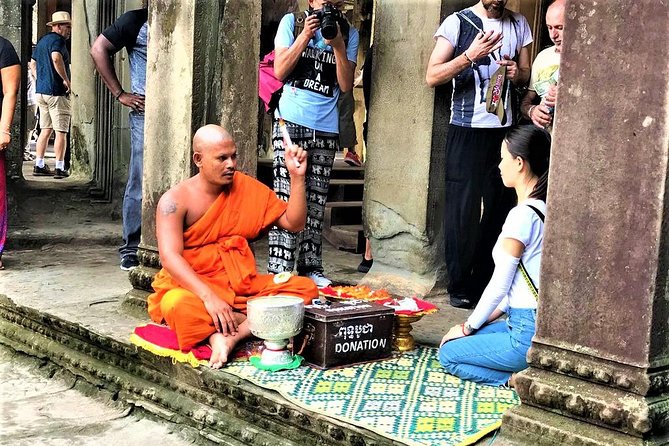
Ta Nei is a late 12th-century stone temple in the Angkor area. The visit lasts about an hour and gives you a break from the biggest monuments.
It is a good stop for travelers who want to see more than the standard circuit. The smaller scale makes it easier to think about how many religious buildings once filled this region. You do not need hours here, but the pause adds variety to the day.
Do not expect Ta Nei to provide the visual punch of Angkor Wat or Ta Prohm. Its value is in the contrast. After two famous sites, a smaller temple helps reset your attention before the large royal city of Angkor Thom.
Angkor Thom explains the scale of the old capital
Angkor Thom was the Khmer Empire’s capital, and the size of the site changes your sense of what Angkor was. You are not simply visiting a temple complex. You are entering the remains of a planned royal city with monumental gates, terraces, and major religious buildings.
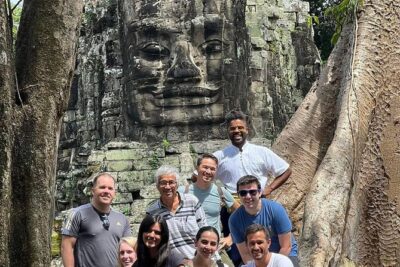
The itinerary includes about an hour and a half for Angkor Thom, with time to see Bayon. Bayon is known for its enormous carved faces, which appear on the towers and look in different directions across the site. The faces are the main attraction, but the surrounding galleries and reliefs deserve attention too.
Your guide can help you read the scenes rather than treating the temple as a collection of stone faces. The explanations about rulers, religious ideas, and daily life give the place more meaning. This is where the guide’s skill has the greatest effect on your visit.
The schedule also passes by the Terrace of the Elephants and the Terrace of the Leper King. These are brief viewing stops rather than long visits. You get a look at the royal ceremonial area and its carved walls, but do not expect the same amount of walking time as at Bayon or Ta Prohm.
The South Gate closes the route
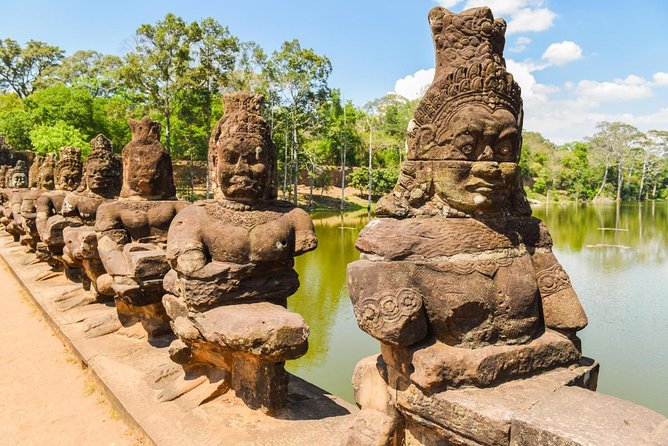
Angkor Thom South Gate receives about 30 minutes. Its approach includes the famous bridge lined with figures, making it a strong final look at the old capital’s monumental design.
A short visit works here because the gate is easy to appreciate from the approach. You can take photographs, hear the story behind the entrance, and understand how the city was separated from the surrounding area.
The order also makes practical sense. After the large central sites, the South Gate gives you a clear ending rather than adding another long temple visit when you are already tired. One traveler was able to catch a 3:30 bus to Phnom Penh after finishing the second day, though you should confirm your own timing with the operator before booking onward transport.
Guides, drivers, and the small comforts
The strongest part of this experience is the human service. Guides including Nang, Pal, Chhay, Sokha, Sokpee, Saruon Pal, Vantha, Bun, and Vongsetha are praised for temple explanations, patience, cultural context, time management, and help with photographs.
That variety means your guide is assigned rather than guaranteed by name. Still, the pattern is clear: the guide is expected to do more than recite dates. The best moments come when you can ask about Cambodian customs, daily life, religion, and the meaning of the carvings.
Drivers also receive repeated praise. Names such as So, Vichet, Seyha, Mao, Ro, Keal, and Benly appear in the service details, with particular attention to careful driving, punctual pickup, and regular water and towel service.
The air-conditioned vehicle matters in Siem Reap’s heat. So do the bottled water and cool towels. You will still sweat and walk a lot, but getting back into a cool vehicle between sites makes the two-day schedule more manageable.
Hotel pickup and drop-off are included when that option is selected. Confirm this at booking, since the available options affect both transport and sunset arrangements.
Food, dress, and daily costs
Food and drinks are not included. The tour may stop at breakfast and lunch places, but you pay for your own meals. One practical note is that some included stops may cost more than similar restaurants in town, with quality that may not always match the price.
You can treat those stops as part of the day’s convenience rather than as a food tour. If you care strongly about meals, ask about the planned restaurants or bring a snack. The supplied service includes water, which is particularly useful during long temple walks.
The temple pass is the largest extra cost. A two to three-day pass costs $62 per person and is paid directly at the site. Add that to the $49 tour price before considering the total. The pass is required for the temples in this itinerary.
Dress rules are strict. Your shoulders and knees must be covered, for both men and women. A scarf used only to cover bare shoulders is not accepted, so wear a proper shirt with sleeves and clothing that covers the knees from the start.
Who will get the most from this tour
I would choose this experience if you are visiting Angkor for the first time and want the major sights arranged for you. The route is broad enough to show different periods, styles, and settings, yet it does not try to force every temple in the region into two days.
It also suits you if you want sunrise at Angkor Wat but do not want to arrange transport, timing, and temple order yourself. The pre-dawn departure is easier when a guide and driver handle the route.
Families can benefit from the organized transport and regular breaks, though children need to be accompanied by an adult. The early morning and long walks may be tiring for young children.
You may prefer a private upgrade if you want more control over stops, pace, photographs, and meal breaks. A small group is the better value if you enjoy meeting other people and are comfortable following a set schedule.
I would not choose it if you want slow, solitary visits at only two or three temples. This is a full program. Even with time to explore, you will be walking, listening, riding, and changing sites for much of both days.
Should you book the two-day Angkor tour?
Yes, if you want a well-organized first look at Angkor with sunrise at Angkor Wat, sunset included, and a guide who can explain more than the basic dates. The route has a good mix: fine carving at Banteay Srei, ruins at Preah Khan, jungle at Ta Prohm, smaller temples at Neak Pean and Ta Nei, and the royal scale of Angkor Thom.
Before booking, budget the full $111 for the tour and temple pass, plus meals. Choose carefully between small-group and private options because the sunset setting differs. Pack a torch, proper temple clothing, comfortable shoes, sun protection, and patience for the early start.
The high published rating of 5 out of 5 from 1,157 ratings and a 99 percent recommendation fit the experience’s strongest points: capable guides, careful drivers, cold water, cold towels, good timing, and a route that gives first-time visitors a solid foundation.
FAQ
Is the $62 temple pass included in the $49 tour price?
No. The temple pass costs $62 per person and must be paid directly at the site. The $49 tour price does not include it.
Does the tour include hotel pickup and drop-off?
Hotel transfers are included when you select the relevant option. Check the option details when booking.
Is this a private tour or a small-group tour?
The experience has a small-group format and a private upgrade. The exact vehicle and sunset setting depend on the option you select.
What happens during the Angkor Wat sunrise visit?
You leave before dawn and enter Angkor Wat from the eastern side in darkness. Bring a torch or another light. The visit lasts about three hours.
What should I wear to the temples?
Your shoulders and knees must be covered. This rule applies to both men and women, and a scarf alone is not accepted as shoulder coverage.
Are food and drinks included?
No. Food and drinks are available at your own cost. Bottled water and cool towels are included.
Can children join the tour?
Yes. Children must be accompanied by an adult. Comfortable walking shoes are recommended for everyone.
More Temple Sunset Tours in Siem Reap
- Full-Day Guided Sunset Tour of Angkor Wat
★ 5.0 · 1,507 reviews - Siem Reap: Full Day Angkor Wat Temple Experience with Sunset
★ 4.9 · 1,490 reviews - Angkor Wat full Day ‘Small Group with sunset & Tour Guide
★ 5.0 · 1,369 reviews - Siem Reap: 2-Day Temple Highlights Sunrise and Sunset Option
★ 4.9 · 445 reviews
More Temple Sunset Tours in Cambodia
- Siem Reap: Full-Day Angkor Wat Guided Tour with Sunset
★ 4.9 · 3,803 reviews - Angkor Wat Sunset Small Group Tour with Lunch Included
★ 5.0 · 3,059 reviews - Angkor 2-Day Sunset & Sunrise Small-Group Tour
★ 5.0 · 2,567 reviews - Siem Reap: Angkor Wat Sunrise or Sunset Guided Tour
★ 4.9 · 2,123 reviews
Just added around Siem Reap
- Ticket for Angkor Balloon Ride.★ 3.7 · 46 reviews
- Sunrise at Angkor Wat Temple: 3-Hour Private Tour★ 4.7 · 30 reviews
- Small-Group Full Day Angkor wat Guide tour with Sun set★ 5.0 · 136 reviews
- Siem Reap: Private 4-Day Angkor Wat and Phnom Kulen Tour★ 5.0 · 9 reviews
- Angkor Wat: Sunrise 2.5 Days Temples & Tonle Sap-Small Group★ 5.0 · 10 reviews
- Siem Reap : Private Tuk-Tuk Tour of the Magnificent Temples.★ 4.9 · 14 reviews
- Siem Reap: Ultimate Angkor Wat Offbeat Experience by Jeep★ 4.9 · 8 reviews
- Siem Reap: Personalized Angkor Wat Sunrise/Set by TukTuk/Car★ 4.9 · 41 reviews
Siem Reap Temple Tours, compared.
Angkor Wat Sunrise or Sunset Tour with Guide from Siem Reap
Read our review →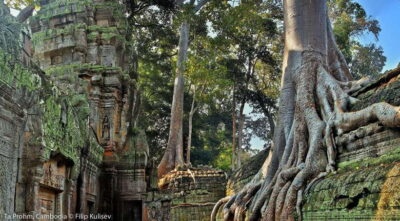
Angkor Wat: Small-Group Sunrise or Sunset Tour
Read our review →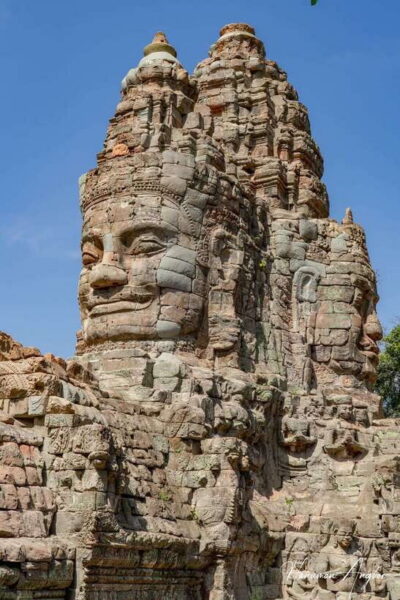
Angkor Wat 2-Day Tour with Sunrise and Sunset
Read our review →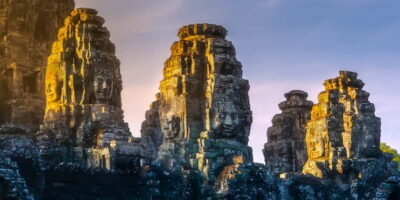
Angkor Wat Sunrise tour with Small – Group and Guide tours
Read our review →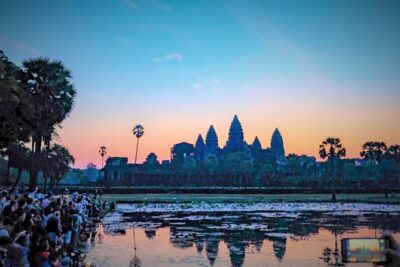
Angkor Wat Highlights and Sunrise Guided Tour from Siem Reap
Read our review →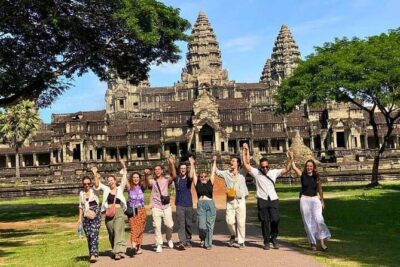
Angkor Wat Sunset Small Group Tour with Lunch Included
Read our review →