
REVIEW · SPAIN TEMPLE TOURS
Granada: Monastery of San Jerónimo Entry Ticket
Granada’s Monastery of San Jerónimo offers a quieter, more focused stop than the city’s headline sights. You move from the street into the Compass, then through a Gothic cloister, old monastic rooms, and a church filled with Renaissance and Mannerist work. I especially like the striking facade by Diego de Siloé and the peaceful Processional Cloister.
I also like that the ticket lets you set your own pace and includes an audio guide app, so you can spend extra time in the church and sacristy. The main catch is value: the advertised price is $11, but recent booking experiences indicate that buying online can cost about 30 percent more than purchasing at the monastery, with one visitor finding the local price 3 euros lower and no wait. Check the price before paying.
Key points to know
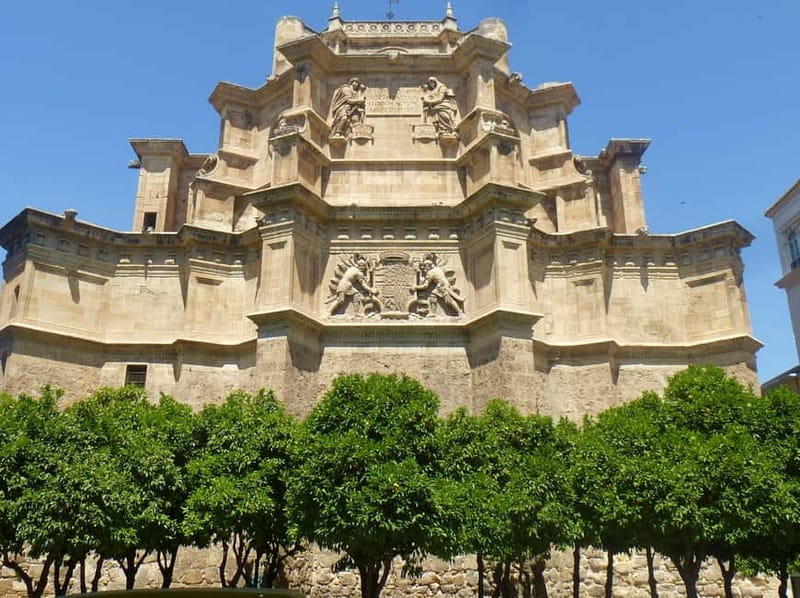
- Siloé’s church facade: The entrance court gives you a close look at the work of Diego de Siloé, Martín Díaz de Navarrete, and Pedro de Orea.
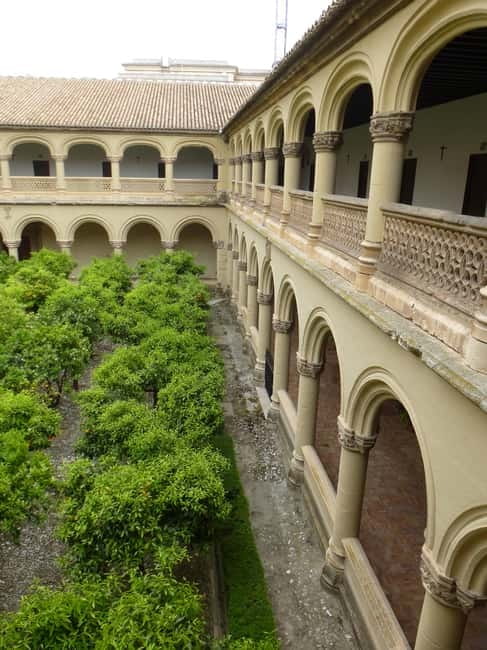
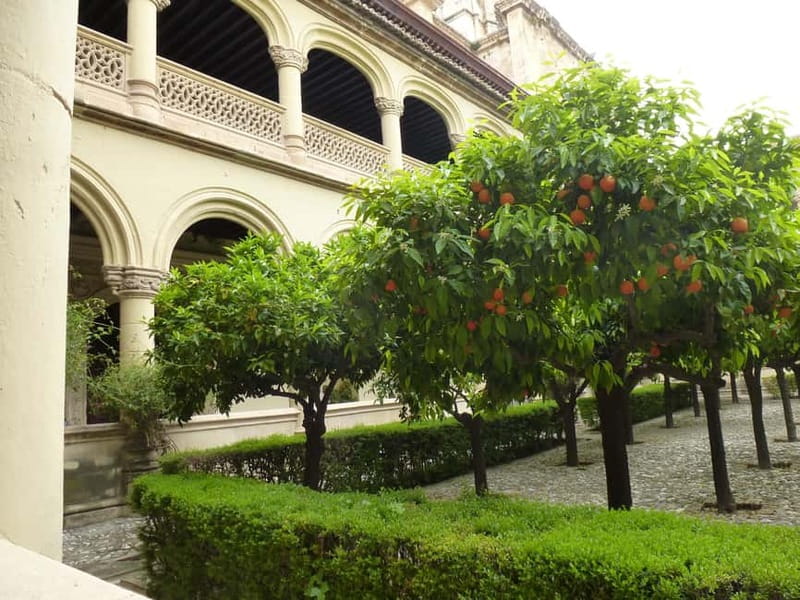
- Gothic Processional Cloister: This was the monks’ main living and working area, and it is the calm center of the visit.
- The church is the high point: Its Main Chapel was built as the burial place of the Great Captain and his wife, the Duchess of Sessa.
- Several rooms are included: You can see the refectory, profundis room, two chapter rooms, sacristy, and Compass.
- The Empress Cloister is closed: You can see it from the Processional Cloister, but you cannot enter the cloistered area.
- Bring a practical plan: The ticket is non-refundable, the site is not suitable for wheelchair users, and food, drinks, smoking, pets, and cellphones are not allowed.
Why San Jerónimo deserves a place in your Granada plans
Granada is famous for the Alhambra, but the city’s Christian monuments tell a different part of its story. San Jerónimo was founded by Ferdinand and Isabella, the Catholic Monarchs, in 1492, the same year Granada fell to their forces. The first monastery site was in the nearby town of Santa Fe, but the monks soon found it unsuitable and moved the project to Granada.
Construction began in its present location in 1503. The Hieronymite monks took up residence in 1521 and remained until the disentailment of Mendizábal in 1835. The building later served as a barracks, then returned to religious use after restoration in the 20th century.
That background matters because the monastery is not just a collection of attractive rooms. It reflects the shift from late medieval Granada to the confident Christian kingdom that followed the conquest. You see that change in the building itself: a Gothic cloister sits beside a Renaissance church, while the decoration grows more elaborate as you move toward the Main Chapel.
The visit is best for you if you enjoy architecture, religious art, and places where the setting is as important as the individual objects. If you want a large museum with a long list of labeled exhibits, this may feel limited. One rating of the experience called it of little interest, and that criticism makes sense for anyone with no interest in church interiors or monastic history.
More Entry Tickets in Spain:
- Montserrat Museum and Monastery Entry Ticket
★ 4.5 · 1,740 reviews - Skip the Line: Tablao Flamenco Pura Esencia Ticket
★ 5.0 · 735 reviews - Mallorca: Carthusian Monastery Valldemossa Entrance Ticket
★ 4.2 · 93 reviews
From the Compass to Siloé’s detailed facade
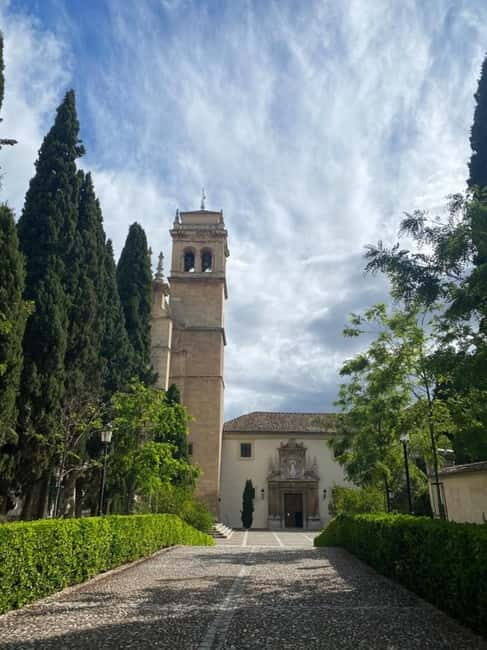
The visit begins in the Compass, the open area that links the city to the monastery. It has a useful symbolic role. You leave Granada’s street life behind and approach the quieter world of the monastery.
This is also where you see the church facade. Diego de Siloé is the best-known name linked to it, though Martín Díaz de Navarrete and Pedro de Orea also contributed. Take a moment here before moving inside. The facade is not simply a doorway. It prepares you for the church’s scale and decoration, and it gives you the clearest view of the monastery’s public face.
The Compass is a good place to use the audio guide app and get your bearings. Since the visit is self-guided, you do not have a guide setting the pace or pointing out details. That gives you freedom, but it also means you should pause and listen rather than rush straight toward the cloister.
A practical note: the rules list cellphones among the prohibited items, while the ticket includes an audio guide app on your smartphone. That is a real point to clarify before arrival. The supplied information does not explain how the app is used under the cellphone rule, so check the current instructions before relying on your phone for the visit.
The Processional Cloister, the monastery’s quiet center
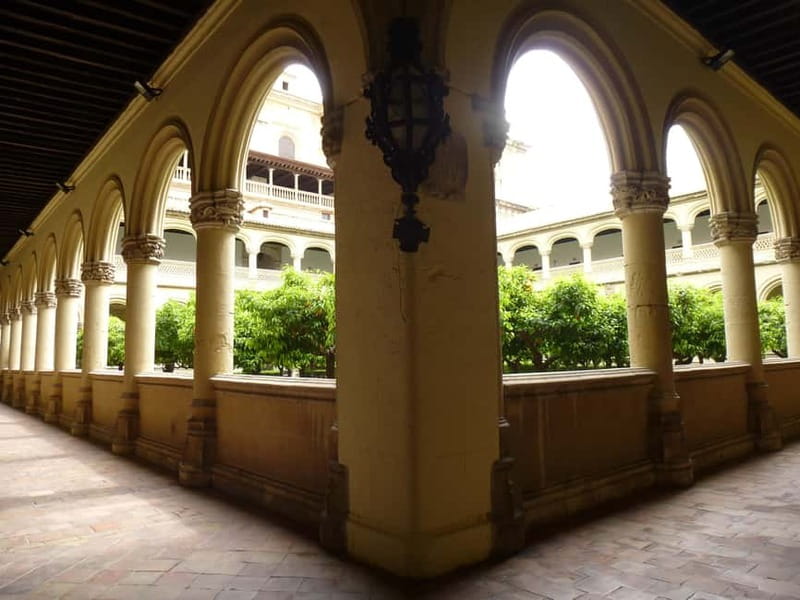
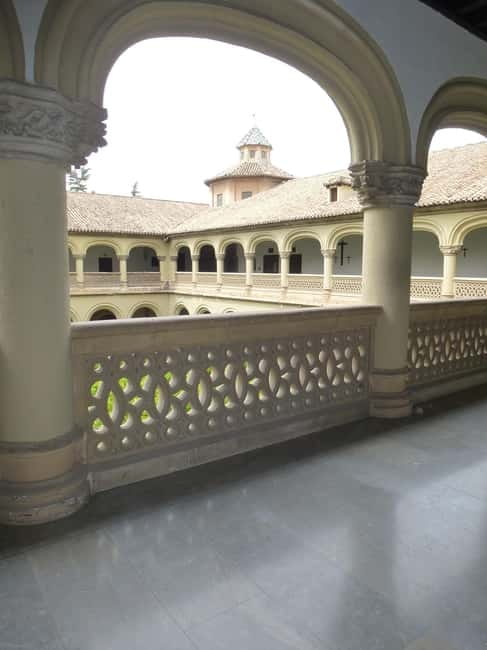
The Processional Cloister is the heart of the experience. Built in Gothic style, it was where the monks carried out much of their daily life. Its arcades and enclosed feel create a sharp contrast with the city outside.
I like this part of the visit because it gives you space to look. You can study the structure, notice how the rooms connect around it, and understand the monastery as a working religious community rather than a grand church with a few extra chambers.
The cloister also offers a view toward the Empress Cloister. You cannot enter that area because it remains cloistered and is occupied by Hieronymite mothers. You can, however, see it from the Processional Cloister.
The name Empress Cloister comes from Isabel of Portugal, wife of Charles I of Spain and Charles V of Germany. During her stay in Granada in 1526, she lived there for much of the time. This detail gives the enclosed space a royal connection, but do not expect access. The restricted area is an important limit of the ticket.
The monastery is again occupied by a community of Hieronymite mothers. They moved there in 1977 from the nearby Monastery of Santa Paula, which has since become a hotel. That active religious use helps explain why certain parts of San Jerónimo remain closed and why the visit has a quieter, more restrained tone than a fully converted museum.
The refectory, profundis room, and chapter rooms
From the cloister, the route continues through rooms linked to the monks’ daily routine. These include the refectory, the profundis room, and two chapter rooms.
The refectory was the communal dining room. Even without a large display of objects, a room like this helps you picture the practical side of monastic life: meals, order, silence, and a schedule shaped by worship. Look at the proportions and the way the room relates to the cloister rather than treating it as a quick passage.
The profundis room has a more solemn purpose. Its name comes from the Latin opening of Psalm 130, associated with prayer for the dead. The available information does not give a detailed list of objects in this room, so it is best approached as part of the monastery’s religious routine rather than as a major art gallery.
The two chapter rooms add another layer. These were spaces for the community to meet and deal with monastery affairs. Their presence reminds you that the monks did not spend their days only in prayer. A monastery needed rooms for meals, meetings, worship, storage, and movement between them.
This is where the audio guide can help most. The rooms may not announce their importance through a famous painting or dramatic view. A short explanation can give them meaning. If you prefer to look quietly, you can also move at your own speed and spend less time in rooms that interest you less.
A few more temple visits around Spain worth a look
- Montserrat Monastery Half Day Experience from Barcelona
★ 5.0 · 6,014 reviews - Montserrat Monastery Small Group or Private Tour Hotel pick-up
★ 5.0 · 5,144 reviews - Escorial Monastery and the Valley of the Fallen Tour from Madrid
★ 5.0 · 2,494 reviews - Montserrat Small Group: Monastery, Black Madonna & Natural Park
★ 5.0 · 1,690 reviews
The sacristy and the Child Jesus of the Battles
The sacristy provides one of the more specific points of interest on the route. It contains the Child Jesus of the Battles, an image said to have accompanied the Great Captain during his military campaigns.
The Great Captain was Gonzalo Fernández de Córdoba, one of the leading military figures connected with the Christian conquest of Granada and later campaigns. The object links the monastery’s religious identity to the political and military world that shaped the city after 1492.
This is a small but useful detail to watch for. The monastery can seem dominated by architecture, especially the church and cloister, but individual works such as this image add personal and historical focus. Listen to the audio explanation here if available, then take a moment to consider why a devotional image would have been carried into battle.
The sacristy also helps prepare you for the church. In a traditional monastery layout, it is a working room connected to worship rather than a grand public space. That practical role makes the transition into the Church of the Immaculate Conception feel natural.
The church and the Main Chapel
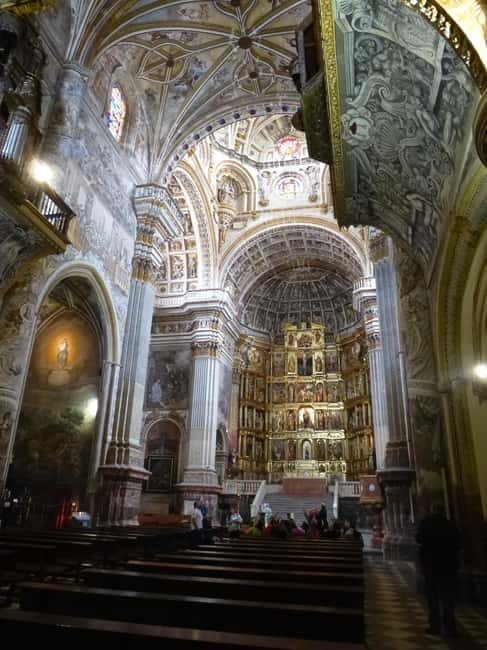
The Church of the Monastery is the visit’s strongest point. It is dedicated to the Immaculate Conception and contains the most ambitious art and architecture on the route.
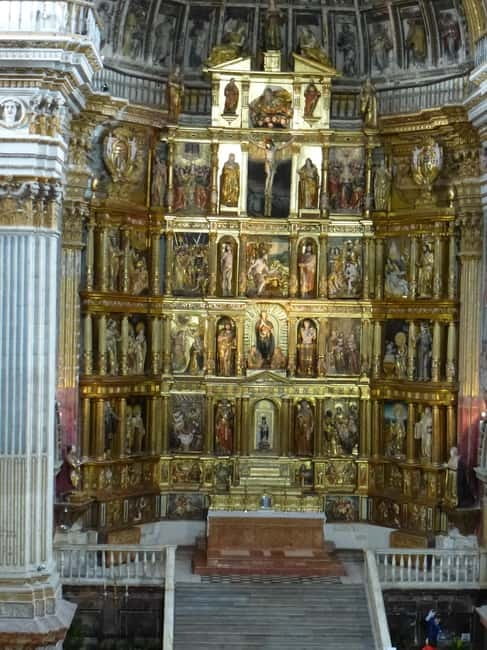
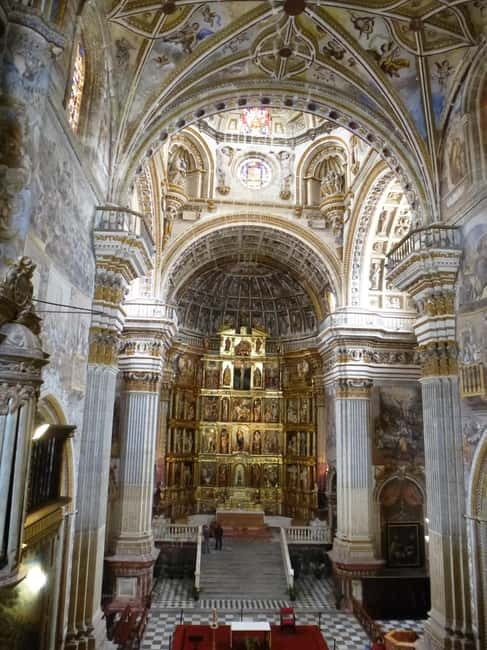
The Main Chapel was built by María de Manrique, Duchess of Sessa, as the burial place of her husband, the Great Captain. Diego de Siloé constructed it along lines first proposed by Jacobo Florentino. The result is a Renaissance space with a clear memorial purpose, not just a decorative church interior.
Give yourself time here. The chapel has more to offer than a quick photograph. Look at the relationship between the structure, the tomb-related purpose, and the altarpiece. The design turns the church into a public statement about faith, status, memory, and power.
The Mannerist altarpiece brings together the work of several artists, including Juan de Aragón, Lázaro de Velasco, Pedro de Orea, Pedro de Raxis, Bernabé de Gaviria, Vázquez el Mozo, and Rojas. You do not need to remember all the names to appreciate it. What matters is the sense of a major project built by several skilled hands.
The church is also where the visitor experience becomes less predictable. Some people find it breathtaking, especially because of the decoration and the scale of the interior. Others find the monastery less compelling overall. If you already plan to see several richly decorated churches in Granada, San Jerónimo may feel like an optional extra. If you want to understand the city’s post-conquest architecture, it is a worthwhile addition.
Is the $11 ticket good value?
At $11 per person, the ticket can be fair value if you want a self-guided cultural stop and plan to examine the church, cloister, and rooms carefully. You are paying for access to several parts of a historic monastery, not just a single chapel.
The value drops if you rush through. The visit has no guided tour, and the included audio guide app is the main interpretive aid. You need to take responsibility for the pace and attention. If you spend only a short time inside, the ticket may feel expensive for what you saw.
There is also a clear price warning. Recent booking experiences indicate that buying through the online channel can add about 30 percent to the cost. One person paid 20 euros and could not get the turnstile to open, while another found the ticket on site 3 euros cheaper with no wait. These are not reasons to reject the monastery, but they are good reasons to compare the direct price before booking.
The ticket is non-refundable. That makes price checking even more important. If you book ahead, make sure the date and entry details are correct, and keep the access information available.
The stated duration is one day, with availability depending on the starting times shown when you check. This does not mean you need a full day inside. It means the ticket is valid for the listed day, giving you room to fit the monastery into a wider Granada plan.
Who will enjoy this visit most?
I would recommend San Jerónimo to you if you like:
- Renaissance and Mannerist church art
- Gothic cloisters and historic religious buildings
- Self-guided sightseeing
- Quiet places with a strong sense of former daily life
- The story of Granada after the Catholic Monarchs’ conquest
It is less suitable if you want a live guide, a fast list of famous sights, or full wheelchair access. The experience is not suitable for wheelchair users, and there is no guided tour included.
Families can make good use of the audio guide if children are interested in churches, royal figures, or military history. Otherwise, the rooms may feel too still and specialized. The same applies to anyone who prefers grand views or lively streets. San Jerónimo is about close looking and context, not spectacle at every turn.
You also need to follow the house rules. Smoking, food, drinks, pets, and cellphones are not allowed, though assistance dogs are permitted. Because the audio guide is supplied through a smartphone app, confirm the current procedure before you arrive.
My practical verdict on San Jerónimo
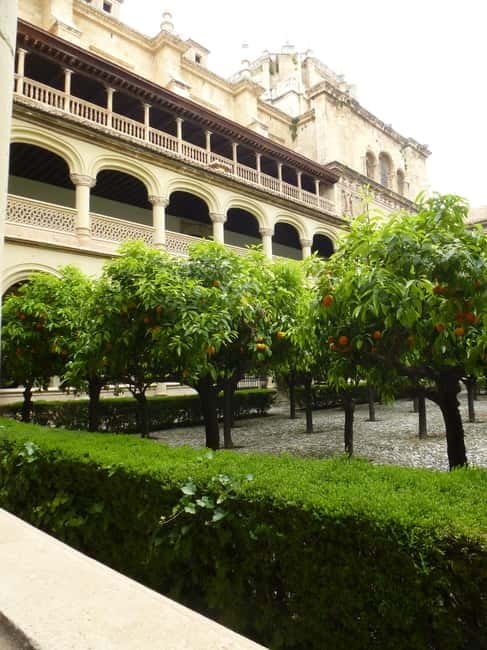
The church and Processional Cloister are the reasons to come. The facade gives you an immediate architectural highlight, while the cloister slows the visit down and shows how the monastery was organized. The Main Chapel then supplies the strongest artistic payoff, with Siloé’s work, the Great Captain’s memorial connection, and the large Mannerist altarpiece.
The smaller rooms are worthwhile when you want the full picture, but they may not hold your attention for long. The closed Empress Cloister is another limitation. You can see it, but the ticket does not give you access.
Book this experience if you value a quiet, self-guided monument and are willing to spend time with the church and cloister. Before paying, compare the online price with the direct price, since the booking premium may be significant. If you need wheelchair access, a live guide, or a broad museum collection, choose another Granada sight instead.
FAQ
What does the Monastery of San Jerónimo ticket include?
The ticket includes entry to the Compass, Processional Cloister, refectory, profundis room, two chapter rooms, sacristy, and the Church of the Immaculate Conception. It also includes an audio guide app on your smartphone and the booking fee.
Is a guided tour included?
No. The ticket is for independent exploration and includes an audio guide app rather than a live guided tour.
Can I enter the Empress Cloister?
No. The Empress Cloister is a cloistered area and is not open to visitors. You can see it from the Processional Cloister.
How long is the ticket valid?
The ticket is valid for one day. You need to check availability for the starting times offered when you book.
Is the ticket refundable?
No. This activity is non-refundable.
Is the monastery accessible to wheelchair users?
No. The experience is listed as unsuitable for wheelchair users.
What is not allowed inside?
Smoking, food, drinks, pets, and cellphones are not allowed. Assistance dogs are permitted.
Just added around Spain
- Montserrat Monastery Horse Riding & Walk – Small Group (Max 8)★ 5.0 · 45 reviews
- Montserrat Nature Walk, Monastery and Museum from Barcelona★ 5.0 · 58 reviews
- Montserrat & beyond private from Barcelona with different options★ 5.0 · 32 reviews
- Montserrat Tour with Cogwheel Train, Monastery & Black Madonna★ 4.0 · 10 reviews
- Full-Day Trip Barcelona to Montserrat Monastery & Cava Winery★ 5.0 · 158 reviews
- Transfer to Montserrat Monastery from Barcelona★ 4.5 · 94 reviews
- Montserrat Land of Shrines – One Day Small Group Hiking Tour from Barcelona★ 5.0 · 38 reviews
- Montserrat Horseback Riding & Monastery – Small Group (Max 8)★ 5.0 · 45 reviews
Spain Temple Tours, compared.
Montserrat Monastery Half Day Experience from Barcelona
Read our review →
Montserrat Monastery Small Group or Private Tour Hotel pick-up
Read our review →
Escorial Monastery and the Valley of the Fallen Tour from Madrid
Read our review →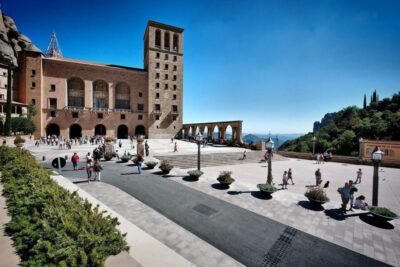

Montserrat Small Group: Monastery, Black Madonna & Natural Park
Read our review →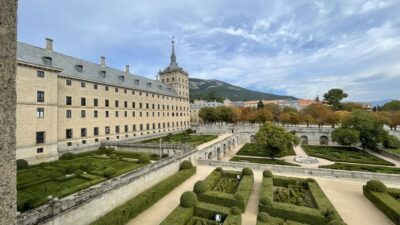
Escorial Monastery and the Valley of the Fallen
Read our review →
Flamenco Show at Tablao Sala Temple with Drink
Read our review →
From Seville: Italica Roman City & Medieval Monastery Tour
Read our review →Browse the lists this tour appears in