
REVIEW · MALAYSIA TEMPLE TOURS
From Kuala Lumpur: Batu Caves Cultural Temple Tour
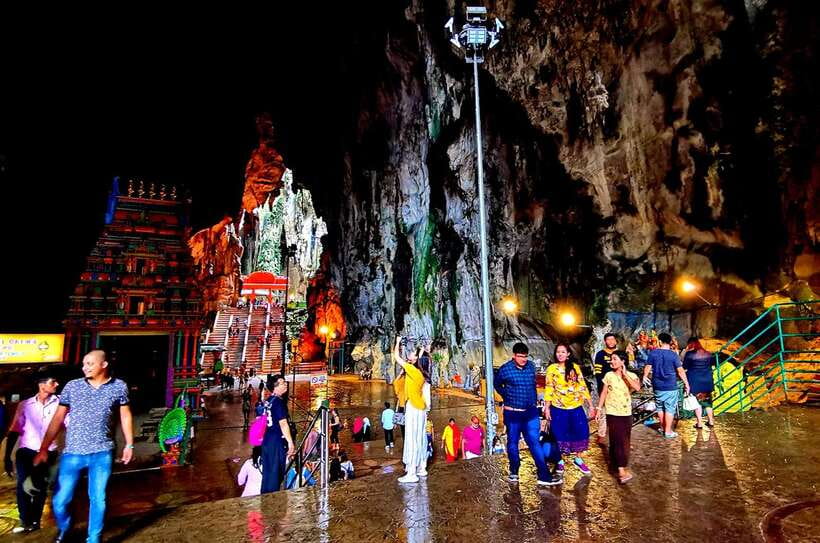
Batu Caves is the star here: you climb 272 steps past shrines, monkeys, and the huge gold statue of Lord Murugan before entering Cathedral Cave. I like that the tour then crosses Kuala Lumpur’s religious map, from Hindu Batu Caves to Chinese Thean Hou Temple and the Islamic National Mosque. I also like the private car, which makes seven stops possible in only four hours.
The trade-off is time. You see a lot, but you do not linger long at each place. The National Mosque is closed on Fridays, and the tour is not wheelchair accessible. If you want a slow, detailed temple study, book separate visits. If you have one free morning or afternoon, this is a useful first look at KL.
Key points to know before booking
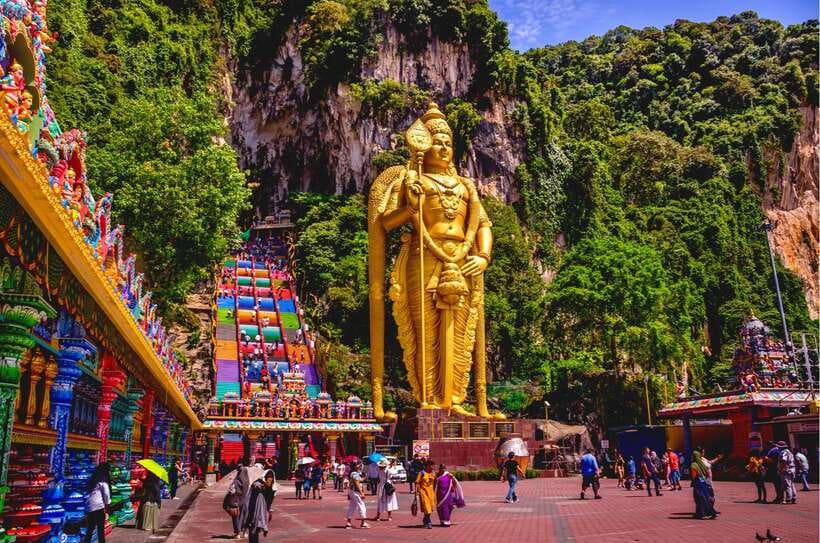
- Batu Caves sets the pace: The 272-step climb is manageable for many people, but heat and humidity make comfortable shoes and modest clothing important.
- Seven stops fit into four hours: The route includes Batu Caves, Little India, Thean Hou Temple, Chinatown, the National Mosque, Central Market, and hotel return.
- Your driver-guide shapes the experience: Ayyanar, Sathia, Kumaran, Jennifer, and several other guides are praised for friendly explanations and careful driving.
- Private transport saves time: Hotel pickup and drop-off in Kuala Lumpur or Petaling Jaya remove the need to connect these scattered sights yourself.
- The price is strong for a private half-day: At $34 per person, the value improves with two or more people sharing the vehicle.
- Plan around local customs: Women need long clothing with covered shoulders. Men can wear a simple shirt with knee-length shorts or trousers.
Why this four-hour route works for a first day in Kuala Lumpur
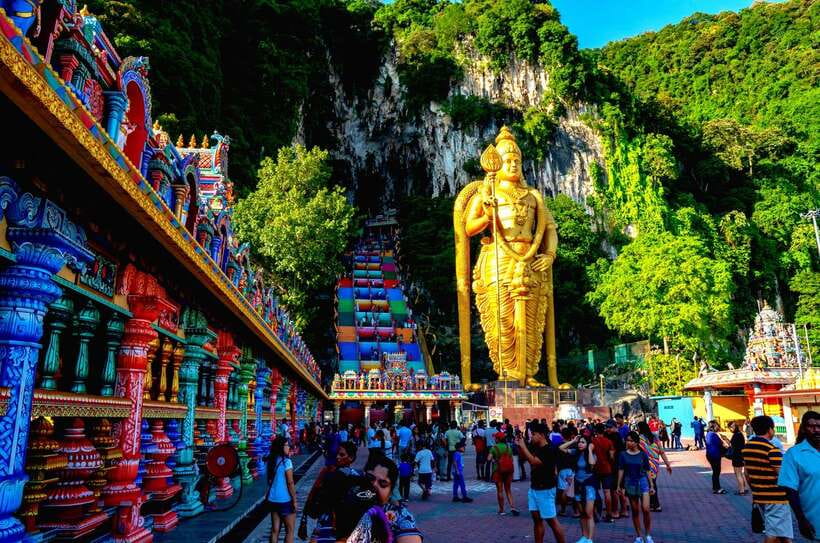
I like this tour because it shows you several sides of Kuala Lumpur instead of keeping you in one sightseeing pocket. You move from a Hindu shrine in a limestone cave to a Chinese temple on Robson Heights, then to the National Mosque and the mixed food stalls of Chinatown.
That range matters. Kuala Lumpur is not a city you understand from one viewpoint or one monument. Its identity comes from Malay, Chinese, Indian, Hindu, Buddhist, and Islamic traditions living close together. The drive through Brickfields and Little India helps you see that mix before you even reach the first main stop.
The private group format is another practical advantage. You are picked up at your hotel in Kuala Lumpur or Petaling Jaya, then driven between locations in an air-conditioned vehicle. Several guides, including Ayyanar, Kumaran, Ashok, and Jennifer, are praised for arriving on time, keeping the car clean, and explaining where to meet after each stop.
Still, keep your expectations clear. This is mainly a driver-guide service. Your guide gives commentary during the drives and helps you understand the sites, but you may explore some attractions on your own for a set period rather than receive a long guided walk inside every building. Many people prefer that freedom, but it is worth knowing before you book.
A few more temple visits around the world worth a look
- Lisbon: Jerónimos Monastery Entrance Ticket
★ 4.1 · 14,164 reviews - Angkor Wat Sunrise or Sunset Tour with Guide from Siem Reap
★ 5.0 · 12,109 reviews - Teotihuacan, Guadalupe Shrine & Tlatelolco Day Tour with Lunch
★ 5.0 · 11,603 reviews
Climbing the 272 steps at Batu Caves
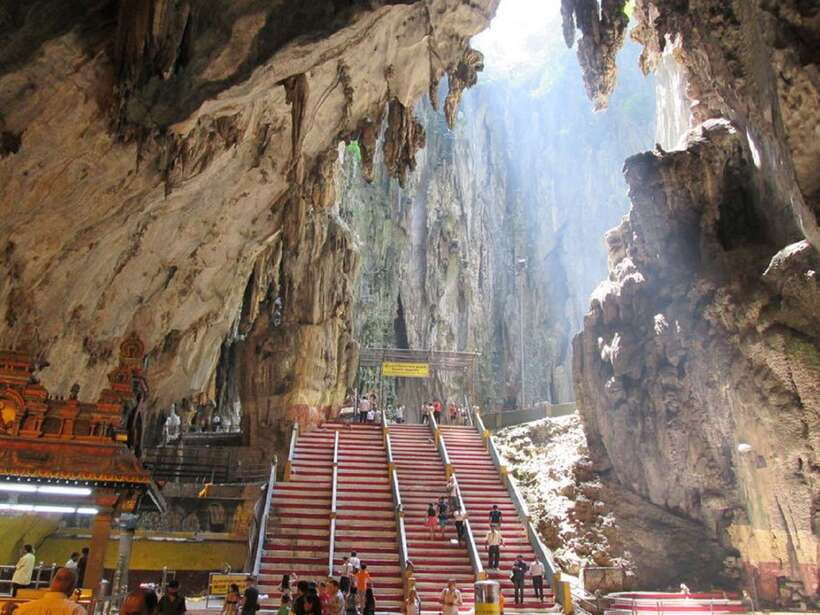
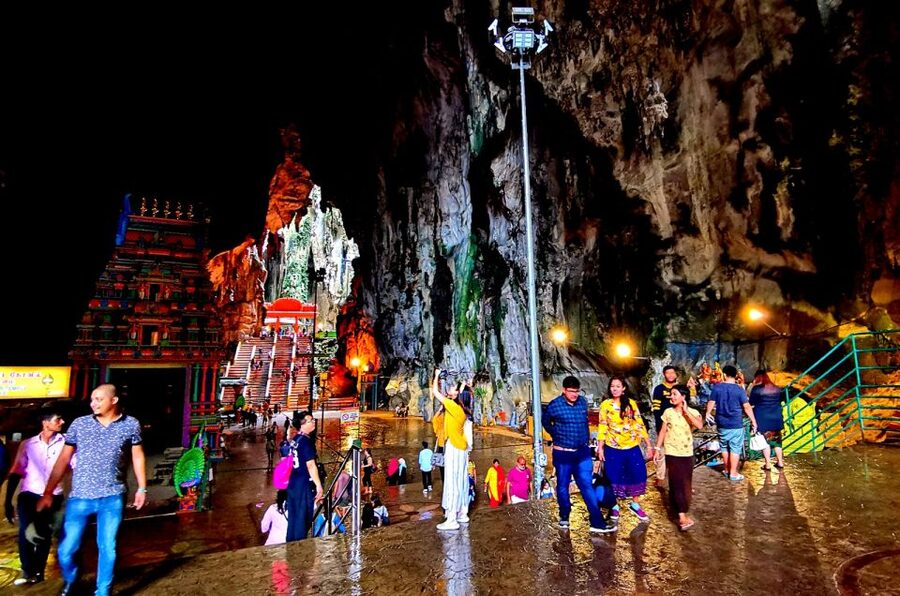
The tour usually begins with the biggest visual hit: Batu Caves, about a 30-minute drive from central Kuala Lumpur. The approach is memorable, with the tall gold statue of Lord Murugan watching over the staircase and the limestone cliffs rising behind the temple complex.
You have about an hour here. The central task is the climb up the 272 steps to the cave temples. The stairs are open, exposed in places, and busy at popular times. Early morning can feel more comfortable, and part of the staircase may be shaded depending on the sun.
At the top, Cathedral Cave is the main destination. It is the largest cave in the complex and contains Hindu shrines and religious images. Your guide can explain the Hindu roots of the site and the role of Lord Murugan, giving the climb more meaning than a quick photo stop.
The climb is not an athletic expedition, but it is not effortless either. You will want walking shoes with a firm sole, water, and a little patience. The tropical heat adds work, and the staircase has no shortcut for visitors who want to reach the main cave.
Monkeys are often part of the Batu Caves scene. They can be entertaining, but you should keep food and loose belongings secure. The area can also look untidy in places, and some concrete structures show wear. That roughness is part of the honest picture. Batu Caves is visually powerful and religiously important, but it is not a polished theme-park attraction.
Dress with respect. Women need long dresses or trousers and covered shoulders. Men can wear a simple T-shirt with knee-length shorts or trousers. If you arrive without suitable clothing, access to religious areas may be limited.
A drive through Brickfields and Little India
Little India and Brickfields are listed as a pass-by section, so do not expect a long walking visit here. The value is in seeing the streets from the car and hearing how Indian communities have shaped this part of Kuala Lumpur.
Brickfields is known for colorful streets, Indian shops, restaurants, and signs. Your guide may point out details that would be easy to miss while you are focused on traffic and directions. This is also a useful transition from Batu Caves into the central city.
The food references attached to the route are worth noting. Indian curry, noodles, tea, and banana-leaf meals are common parts of Kuala Lumpur’s food culture, though food is not included in the tour. If you want to eat, you pay separately, and the short schedule means you should ask your guide how much time is available.
Thean Hou Temple on Robson Heights
Thean Hou Temple is one of the most rewarding stops after Batu Caves. This six-tiered temple sits on Robson Heights and was built by Kuala Lumpur’s Hainanese community. It was completed in 1987 and formally opened in 1989.
The temple is dedicated to Tian Hou, known as the Heavenly Mother. Its upper position gives you a change of mood from the enclosed cave. You get open views, colorful decorative details, and a large religious complex that feels carefully arranged for worship as well as sightseeing.
The planned visit is about 30 minutes. That is enough to look around, take photographs, and listen to an explanation of the temple’s background. It is not enough for a long study of every shrine or symbol, so use your time well.
I especially like this stop because it adds cultural balance. Batu Caves is dramatic and imposing. Thean Hou Temple is more ornamental and open, showing a different tradition without turning the tour into a string of similar religious buildings.
As with Batu Caves, remember that this is an active place of worship. Keep your voice low in prayer areas and follow any signs about where visitors may enter. Your guide can help you understand the layout and local customs.
Same country, a different morning at the gates:
- From Bangkok: Ayutthaya Temples Guided Tour with Lunch
★ 4.7 · 10,535 reviews - Siem Reap: Angkor Wat: Small-Group Sunrise or Sunset Tour
★ 5.0 · 9,444 reviews - Athens: Cape Sounion & Poseidon Temple Sunset Half-Day Trip
★ 4.8 · 8,241 reviews - Ubud: Monkey Forest, Jungle Swing, Rice Terrace, and Water Temple
★ 5.0 · 7,160 reviews
Chinatown, food stalls, and bargaining time
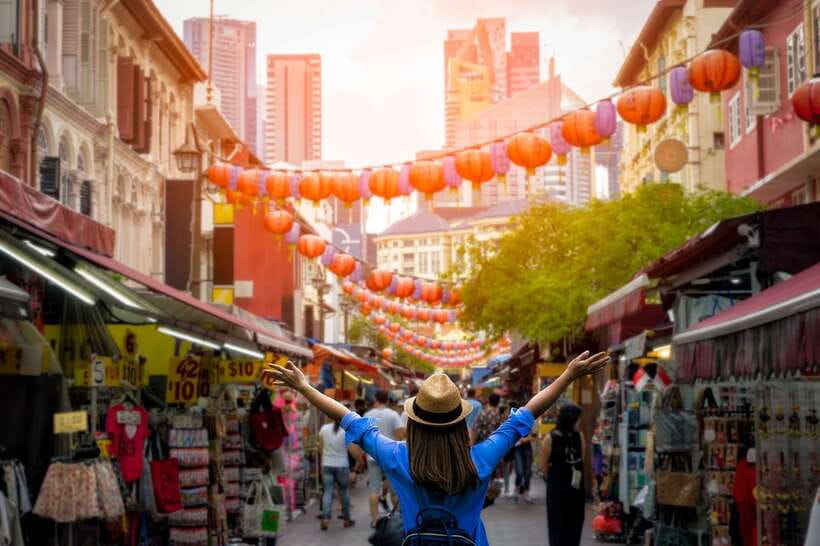
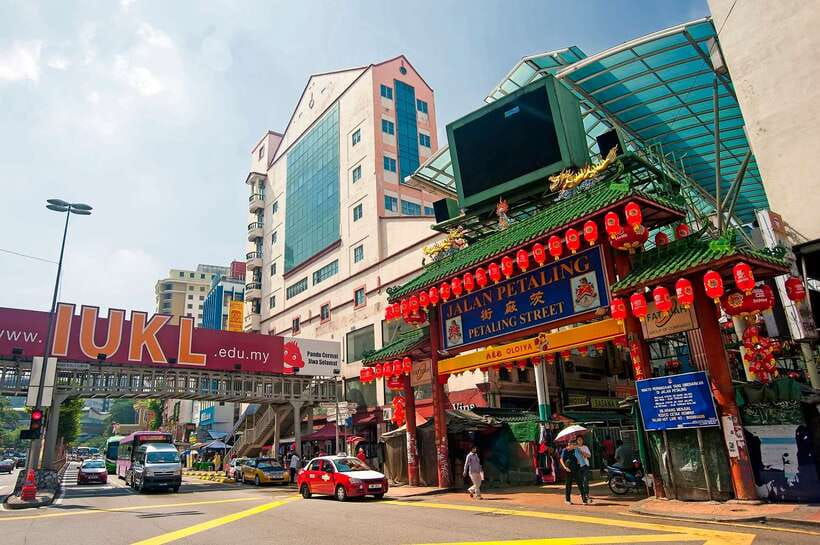
Chinatown brings the tour back to street life. The stop lasts about 30 minutes and combines sightseeing with shopping. You will find restaurants and food stalls run by Chinese, Indian, Malay, and Bangladeshi traders, so this is not a single-cuisine district.
The food selection described for the area includes curry noodles, Hokkien mee, ikan bakar, and asam laksa. I would not plan a full meal here unless you confirm the timing first. Four hours is a tight schedule, and the listed price does not include food or drinks.
Instead, think of Chinatown as a quick taste of Kuala Lumpur’s commercial energy. You can browse souvenirs, compare prices, and practice your bargaining skills. Keep the tone friendly. The point is to negotiate a fair price, not to turn a small purchase into a contest.
The short stop can feel rushed if you enjoy markets. That is one of the clearest limits of the tour. You see the district and get a chance to shop, but you will not cover every lane or sample everything on offer.
The National Mosque and Malaysia’s modern identity
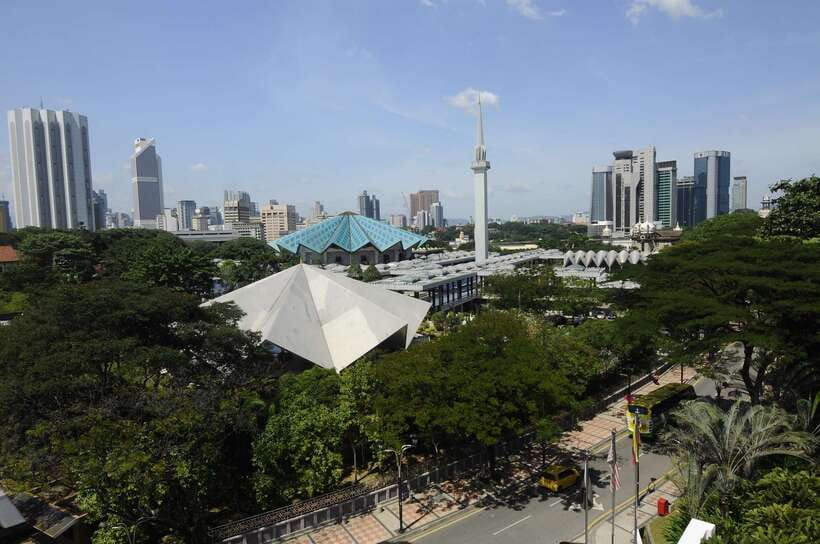
The National Mosque of Malaysia, or Masjid Negara, is set within 13 acres of gardens. Its design dates from the late 1950s, soon after independence, and it was intended to express the hopes of a new nation.
That context makes the mosque more than a photo stop. Your guide can explain how the building’s bold modern design connects with Malaysia’s post-independence identity. The gardens also provide a calmer setting after the traffic and market noise.
The scheduled visit is around 30 minutes. You can admire the exterior, learn about its history, and take in the grounds, but do not expect a long architectural tour. The mosque is closed on Friday, so check the day before booking.
Some people find this stop less ornate than major mosques they have seen elsewhere. That is a fair expectation to set. The appeal here is its national purpose and modern design, not lavish decoration.
Dress carefully. Covered shoulders and appropriate leg coverage are essential at religious sites. The tour information gives specific clothing guidance for women, while men can wear a simple shirt with knee-length shorts or trousers.
Central Market adds a practical final stop
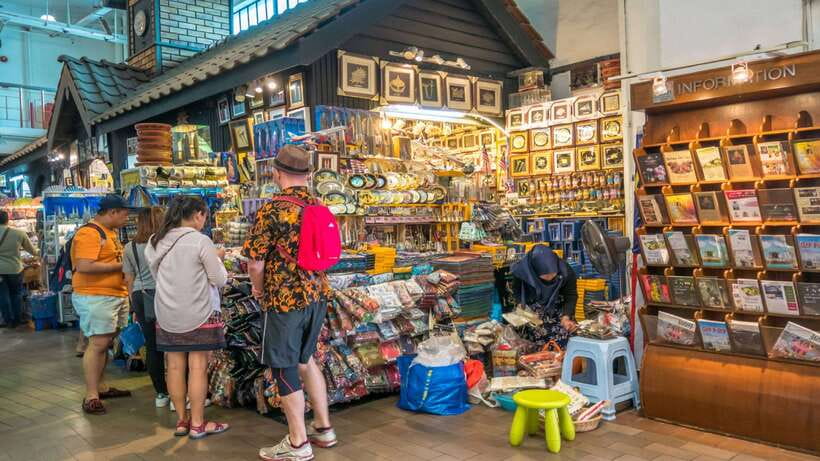
Central Market is included as another 30-minute visit. It gives you a chance to browse Malaysian crafts, souvenirs, and local products in a more organized shopping setting than Chinatown.
I see this as a useful final stop because you can buy something without having to search the whole city later. It also gives the tour a lighter finish after several religious sites. You may prefer Central Market to Chinatown if you want gifts and browsing rather than food stalls and street bargaining.
The drawback is the same as before: half an hour passes quickly. Decide what you want to look for before you arrive. If you stop at every display, you may leave without buying anything.
The route sometimes includes an additional batik stop, based on the way some tours have been operated. Batik is a valuable part of Malaysian craft culture, but treat it as a possible variation rather than a guaranteed part of the advertised route.
What the driver-guide adds
The guide can make or break a compact sightseeing route. The strongest part of this experience is the repeated attention to clear pickup, safe driving, clean vehicles, and useful explanations between stops.
Ayyanar is frequently praised for arriving early, giving cultural background, and helping people understand where to go at each attraction. Kumaran is noted for a clean, comfortable car and clear explanations. Sathia, Jennifer, Ashok, and several other guides are also described as friendly, patient, and well informed about Kuala Lumpur and Malaysian customs.
Do not assume every guide will provide the exact same style. Some guides may walk with you and point out details. Others may drop you near the entrance, explain the meeting time, and let you explore independently. That freedom suits people who dislike being herded, but it may disappoint you if you want a formal lecture at every site.
Communication is handled through WhatsApp, so update your number and keep the app ready before pickup. This matters most if your hotel lobby is large or your group is waiting in a busy arrival area.
Is $34 good value for four hours?
At $34 per person, the tour offers strong value if you want private transport and plan to see several parts of KL in one half-day. Hotel pickup, air-conditioning, an English-speaking driver-guide, and hotel drop-off are included.
The value is best for a couple, family, or small private group. You avoid arranging taxis between Batu Caves, Robson Heights, the mosque, Chinatown, and Central Market. You also avoid spending time figuring out the order of stops.
Food and drinks are extra. Pickup from Port Klang or Kuala Lumpur International Airport also costs an additional $50, so this is not the same bargain if you are arriving by cruise ship or plane and need a special transfer.
The tour offers free cancellation up to 24 hours before departure and allows you to reserve now and pay later. If the supplier cancels because of unforeseen circumstances, the payment is refunded within three to four working days.
Who should book this cultural tour?
I would choose this tour if you have one or two days in Kuala Lumpur and want a broad introduction without handling transport yourself. It suits first-time visitors, families who want a private car, and anyone interested in seeing several faiths and neighborhoods in one outing.
It also works well on a first day. The route gives you practical bearings around the city, and the driver can offer suggestions for later meals or sightseeing. Several people have found the relaxed car travel especially useful during rain or hot weather.
I would not choose it if you dislike short stops, need wheelchair access, or want extended time at Batu Caves. I would also skip it if your main goal is a serious food tour, since eating is optional and the schedule is built around sightseeing.
Should you book it?
Book this tour if you want maximum coverage in four hours, comfortable transport, and a guide who can explain Malaysia’s cultural mix as you move around town. Batu Caves and Thean Hou Temple are the strongest visual stops, while Chinatown and Central Market add shopping and street life.
Before you reserve, check the day of the week, wear suitable clothing, and accept that seven stops require discipline. If you can live with a brisk pace, $34 is a sensible price for a private introduction to Kuala Lumpur. If you want to linger, book Batu Caves and the temples separately and give each place more time.
FAQ
How long does the Batu Caves Cultural Temple Tour last?
The tour lasts four hours, including hotel pickup, sightseeing, travel between stops, and hotel drop-off.
What is included in the tour price?
The price includes hotel pickup and drop-off in Kuala Lumpur or Petaling Jaya, transport in an air-conditioned vehicle, and an English-speaking driver-guide.
Is food included?
No. Food and drinks are not included. Chinatown has restaurants and food stalls where you can buy local dishes separately.
Is the National Mosque open every day?
The National Mosque is closed on Friday. Check the tour date before booking if this stop is important to you.
What should I wear for the temple and mosque visits?
Women need to wear long dresses or trousers with covered shoulders. Men can wear a simple T-shirt with knee-length shorts or trousers. Comfortable sneakers are recommended for the 272-step climb at Batu Caves.
Is the tour suitable for wheelchair users?
No. The tour is not wheelchair accessible and is not suitable for wheelchair users.
Just added around the world
- Chiang Mai Temples & City★ 5.0 · 10 reviews
- Full Day Chiang Rai 3 Temples White, Blue,Big Bhudha Temples★ 4.5 · 11 reviews
- Chiang Mai Old City & Temples 3 hour Twilight Walking Tour★ 5.0 · 9 reviews
- Chiang Mai Temples & Old City Hidden Gems Small Group Tour 2 Hrs★ 5.0 · 6 reviews
- Chiang Mai City and Temples Half-Day Tour★ 4.5 · 136 reviews
- Chiang Mai Old City & Temples Guided Walking Tour – 3 Hrs★ 4.5 · 34 reviews
- Chiang Mai Iconic Temples and City Tour★ 4.5 · 17 reviews
- The Best Chiang Mai City Private Tour: Famous Temples & Viewpoint★ 4.5 · 7 reviews
Malaysia Temple Tours, compared.
Penang: Kek Lok Si Temple and Penang Hill Guided Tour
Read our review →
Private Half-Day Temples and Cultural Tour in Kuala Lumpur
Read our review →
Penang City & Temple Tour With Penang Hill(Fast Lane)
Read our review →
Kuala Lumpur: Batu Caves, Thean Hou Temple & National Mosque
Read our review →
Private Penang City Tour with Kek Lok Si Temple
Read our review →Browse the lists this tour appears in