
REVIEW · SPAIN TEMPLE TOURS
From Seville: Italica Roman City & Medieval Monastery Tour
Italica gives you something Seville itself cannot: a Roman city you can walk through, with broad ancient streets, remarkable mosaics, and an amphitheater built for 25,000 people. The nearby San Isidoro del Campo monastery adds a completely different chapter, from imperial Rome to medieval Spain, in one half-day outing.
I like the strong mix of archaeology and storytelling, especially when guides such as Carlos, Miguel, Jesus, or Alberto bring the ruins to life. I also like the easy transport from Seville and the fact that the monastery is included rather than treated as an afterthought. The main drawback is time: fifteen minutes of free time at Italica may feel short if you want extra photographs or a slower look at the amphitheater.
Key points to know before booking
- Trajan and Hadrian’s birthplace: Italica was founded in 206 BC and later became the birthplace of two Roman emperors.
- A huge amphitheater: Walk through the arena, underground passages, and former animal holding area used before combat.
- A Game of Thrones location: The amphitheater served as the Dragonpit in season seven.
- Two very different historic sites: Roman mosaics and streets are followed by San Isidoro del Campo’s Mudejar, Gothic, and Baroque architecture.
- Comfortable half-day format: The outing lasts about four hours, with roughly 20 minutes each way between Seville and Italica.
- Shared or private choices: Shared departures use one of three Seville meeting points, while private tours can include hotel pickup within the service area.
Why Italica is worth leaving Seville for
Seville has Roman traces, but Italica lets you see the scale of Roman urban life in a way that scattered city remains cannot. Founded by General Publius Cornelius Scipio in 206 BC, the settlement later grew into an important Roman city. Trajan and Hadrian were born here, a fact that gives the site unusual importance in Roman history.
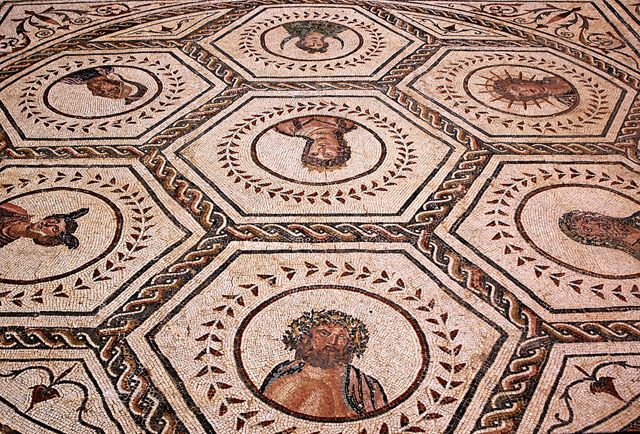
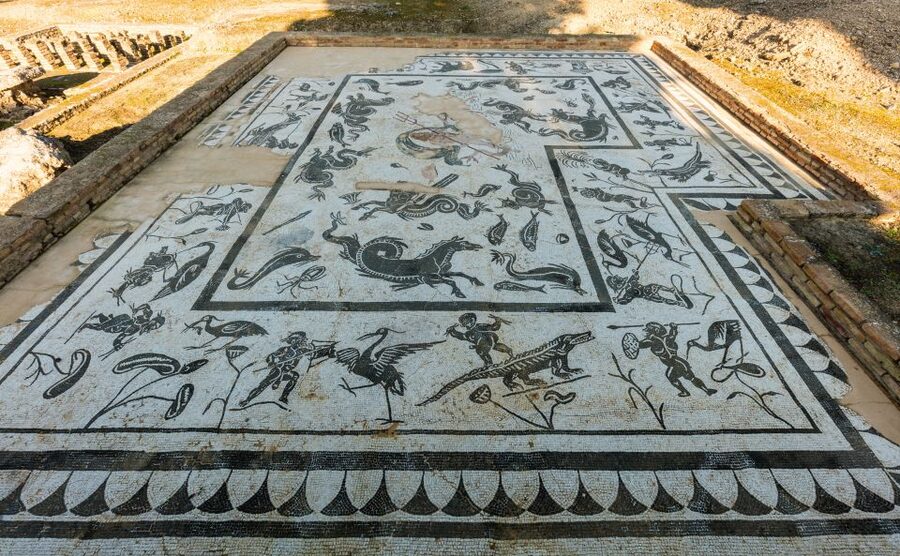
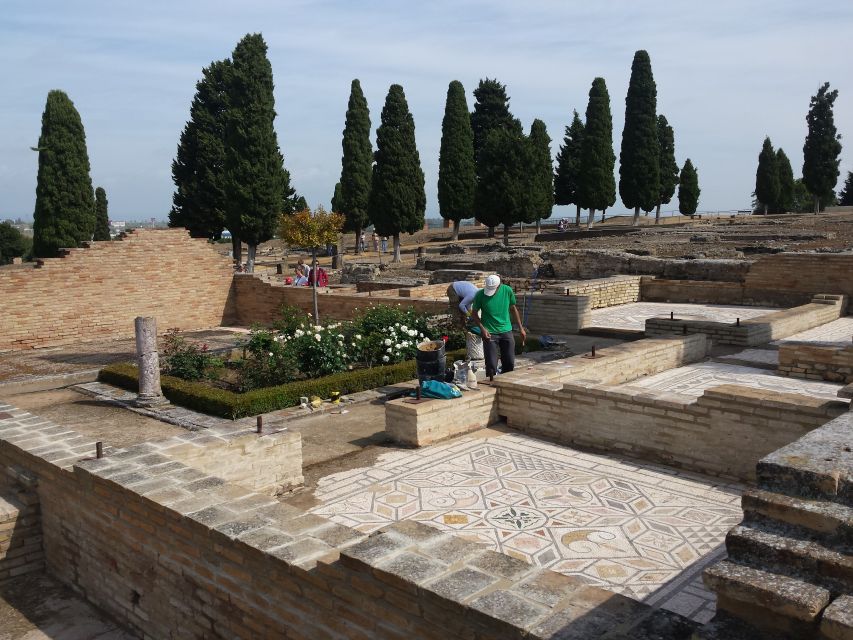
The most striking feature is the sense of space. You walk along ancient streets rather than simply viewing isolated walls behind glass. The surviving mosaics are a major reward. Their patterns and fine detail help you picture the homes that once lined these roads, even though much of the city remains unexcavated.
This is where a guide earns the admission price. Without context, Italica can look like a broad field of stone, brick, and foundations. With a good guide, the street plan, homes, public buildings, and decoration begin to connect. Carlos Leone is especially well suited to visitors who enjoy archaeology, having an archaeology background according to the tour information. Miguel, Jesus, Alberto, and several other guides are also repeatedly praised for clear explanations, humor, and an ability to answer questions.
I would not treat Italica as a quick photo stop. The mosaics reward a close look, and the amphitheater deserves time to absorb its scale. If you are interested in classical civilization, Roman engineering, or the way archaeological sites are interpreted, this is one of the most worthwhile short trips from Seville.
A few more temple visits around Spain worth a look
- Montserrat Monastery Half Day Experience from Barcelona
★ 5.0 · 6,014 reviews - Montserrat Monastery Small Group or Private Tour Hotel pick-up
★ 5.0 · 5,144 reviews - Escorial Monastery and the Valley of the Fallen Tour from Madrid
★ 5.0 · 2,494 reviews
The 20-minute ride from Seville
The journey to Italica takes about 20 minutes by bus or coach. That short transfer is one of the tour’s practical strengths. You avoid arranging a separate bus trip, working out admission, or trying to fit the monastery into your day by trial and error.
The shared tour may begin at one of three meeting points in Seville, depending on the option you select. The private version can pick you up at your hotel or apartment if the address falls within the service area. If it does not, the operator provides the nearest accessible pickup point.
The coach has been described as comfortable, and one bus used on the tour had USB charging ports. The drive is short enough that you do not lose much sightseeing time. Traffic leaving Seville can delay the departure, so I would avoid booking a tight lunch reservation, train, or timed attraction immediately after the tour.
Some departures use a larger coach carrying several groups. Once you reach Italica, the groups split by language. This can make the initial ride feel less intimate, but it also allows the operator to serve English, French, Italian, and Spanish speakers on the same departure.
Walking into the Roman city
The guided visit to Italica lasts about 105 minutes. Expect to walk outdoors across an archaeological site, so comfortable shoes matter. The ruins are open and exposed, and the amount of shade may be limited, though the supplied information does not specify exact shade or weather arrangements.
The city’s layout is the first lesson. Ancient streets and building remains show that Italica was not simply an isolated arena. It was a functioning Roman settlement with homes, public spaces, and decorative details that point to the lives of its residents.
The mosaics are the visual highlight. Their preservation is impressive, and the patterns make the Roman past feel more immediate than a line of bare foundations would. Bring your camera, but do not let it distract you from the guide’s explanation. Several sections are best understood when you know what you are looking at and how the pieces fit into the city.
The site has a small exhibition and toilets, but facilities are limited. The condition of the toilets has been criticized, so plan around that rather than expecting museum-level amenities. Food is not included, and there is no scheduled meal stop. If you tend to get hungry early, eat before departure and carry anything permitted for the outing.
The amphitheater and the Dragonpit
The amphitheater is the emotional high point for many people. It once held about 25,000 spectators, a huge audience for a city outside modern Seville. The arena gives you a clear sense of Roman public entertainment, with the underground passages showing where performers and gladiators moved before appearing before the crowd.
You can also see the den where lions were held before combat. That detail is memorable because it connects the impressive architecture with the harsh events that took place there. The site is not only about columns and mosaics. It also shows how power, spectacle, and public life worked in the Roman world.
Game of Thrones fans will recognize the amphitheater as the Dragonpit, the setting for a major summit in season seven. The television connection is fun, but it should not be the main reason to visit. The real value is the ancient structure itself, and the filming location simply gives some visitors an easy visual reference.
The schedule includes guided time and a short period to look around independently. That final free period may be only about 15 minutes, and it is not always enough to return to the amphitheater, take photographs from different levels, and use the toilet without feeling rushed. If you want extensive personal exploration, a private tour may suit you better, though the supplied details do not state how much extra time a private option provides.
Same country, a different morning at the gates:
- Montserrat Museum and Monastery Entry Ticket
★ 4.5 · 1,740 reviews - Montserrat Small Group: Monastery, Black Madonna & Natural Park
★ 5.0 · 1,690 reviews - From Madrid: Escorial Monastery and the Valley of the Fallen
★ 4.7 · 1,434 reviews - Madrid: Flamenco Show at Tablao Sala Temple with Drink
★ 4.8 · 1,206 reviews
San Isidoro del Campo, a medieval change of mood
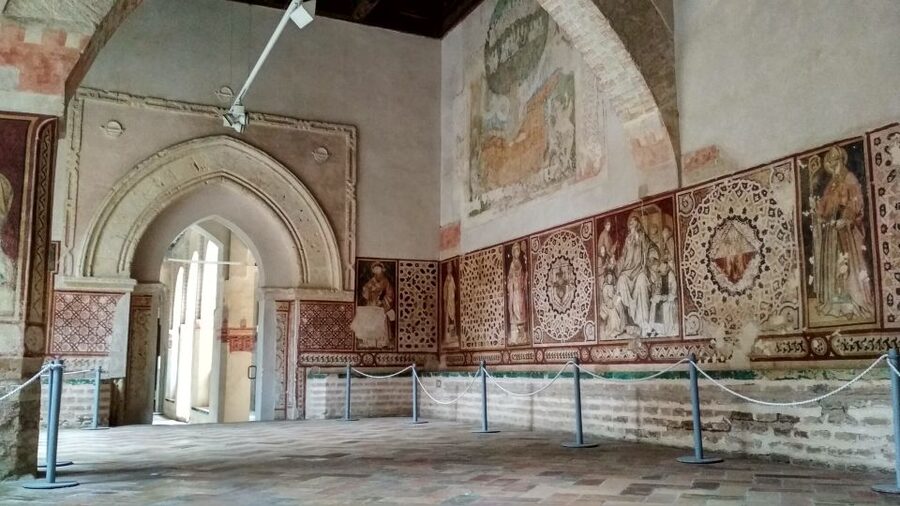
After Italica, the coach takes about 10 minutes to reach the Monastery of San Isidoro del Campo. The guided visit lasts around 40 minutes. This stop changes the subject, mood, and architecture, which is exactly why it works so well beside the Roman ruins.
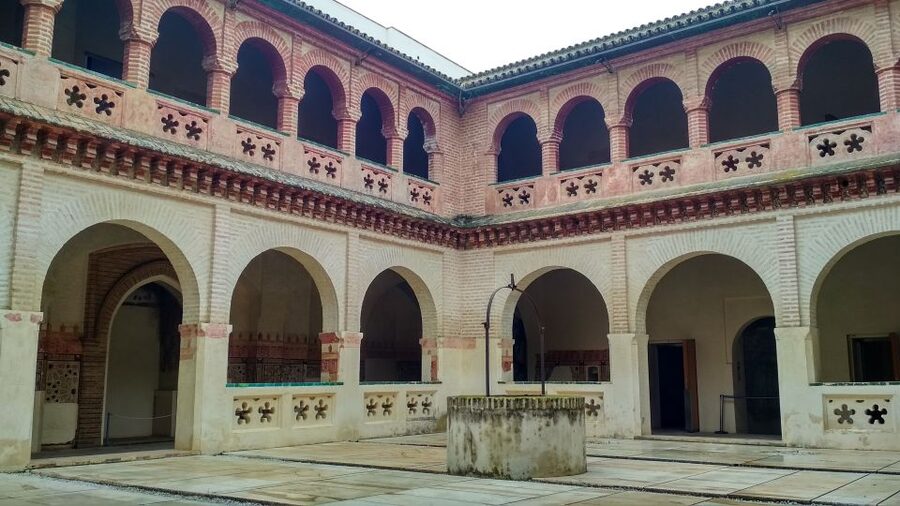
The monastery began as a medieval religious complex and has the appearance of a fortified building. Inside, you can encounter Mudejar, Gothic, and Baroque elements. The mixture reflects the long life of the site rather than one single period of construction.
I particularly like this pairing because it stops the day from becoming a narrow Roman-history lesson. Italica shows imperial urban life, while San Isidoro del Campo offers a look at later religious Spain. The contrast helps you see how the same area accumulated layers of history instead of existing in one frozen period.
The monastery may surprise you if you booked mainly for Italica. It is smaller and less immediately grand than the amphitheater, but the architectural details reward careful looking. One guide described it as a highlight, and that makes sense for visitors who enjoy interiors, religious art, or photography.
Some parts of the monastery are open while other areas may be unavailable because of funding problems. You should therefore expect a focused visit rather than access to every corner of a fully operating historic complex. The 40-minute stop is enough for an introduction, but not for an unhurried architectural study.
Why the guide matters here
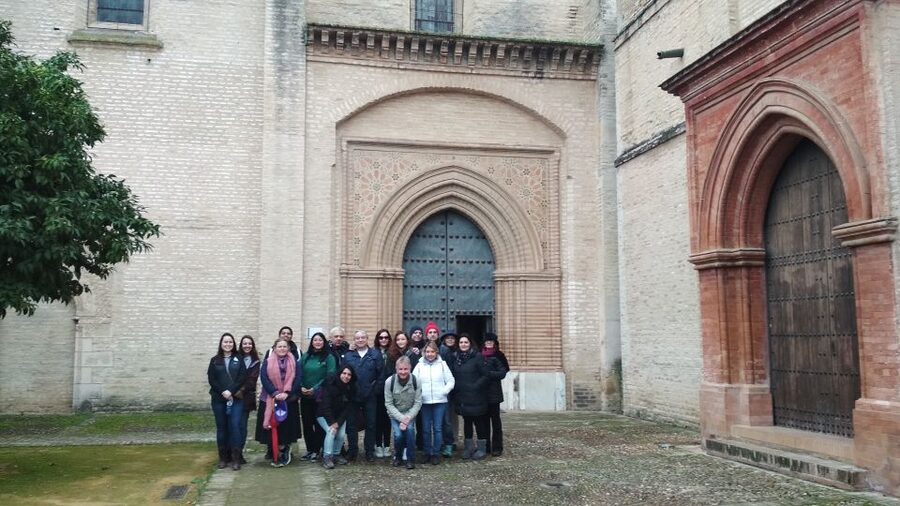
A guided visit is not essential for seeing the stones, but it is highly useful for understanding them. The strongest guides on this experience do more than repeat dates. They explain how the sites connect, answer questions, add local context, and adjust their pace to the group.
Carlos Leone is praised for placing both Italica and the monastery in a wider historical setting. Jesus is described as funny and engaging, while Miguel is often singled out for his clear explanations and lively delivery. Alberto is a strong choice for visitors who enjoy art history and archaeology, and Rebecca, José Luis, Nieve, Katherine, and Joanna have also led well-received departures.
Guide quality can vary because several people operate the tours, but the overall pattern is encouraging. A guide may switch between languages when needed, and the minimum requirement of four participants speaking the same language is used to guarantee a language departure. If that number is not reached, you may be offered another language, another date, or a full refund.
I would book the guided option rather than trying to visit Italica without one. The site’s scale and partial excavation make explanation especially useful. If you prefer to wander at your own speed, remember that the standard shared schedule is structured and includes two guided stops.
Shared or private tour?
The shared tour is the sensible choice for most visitors. It keeps the price at the stated $46 per person, includes transportation, entry tickets, and a local guide, and covers both sites without requiring you to plan the connections yourself.
It is also a good fit if you want a social outing and do not mind meeting at a designated Seville point. The group may be split into language sections at Italica, and the coach can carry several groups. That arrangement is efficient, but it is not the same as a quiet, personal archaeological visit.
The private tour is better for families, couples, or small groups with specific needs. Hotel pickup is available depending on your Seville address, and the private format allows a more personal exchange with the guide. The supplied information does not specify the private price or promise a longer schedule, so check those details before booking.
The best value depends on what you want from the day. For straightforward transport and a strong introduction to both sites, the shared tour offers a lot for four hours. For more individual attention, easier pickup, or a group that wants to ask many questions, private service may justify a higher cost if the quoted rate works for you.
Timing, food, and comfort tips
Although the advertised duration is four hours, allow extra space around it. Traffic can delay the start, and one departure ran longer while the tour operator added time rather than cutting the visits short. That is good customer service, but it can affect afternoon plans.
There is no food or drink included. Since the outing takes place over a meal period for some start times, eat beforehand and carry water. The trip is not designed around a café stop, and extra time for snacks at Italica is not guaranteed.
Wear shoes suitable for walking on historic surfaces. The archaeological site includes open paths and uneven ground, and the schedule moves between the city, amphitheater, coach, and monastery. If you use a walking aid, tell the operator or guide in advance. One guide was praised for making sure a visitor using a walking aid could keep up, but individual conditions and group pace can differ.
The experience is available in English, French, Italian, and Spanish. Confirm the language when you book, especially if fewer than four people in your language are expected. A meeting point can vary by option, so check the exact location rather than relying only on a navigation app. One visitor found that sat-nav directed them slightly away from the correct meeting place.
Who will enjoy this four-hour outing?
I recommend it most strongly to first-time visitors to Seville who want a substantial historical side trip without giving up a full day. The 20-minute transfer keeps the outing efficient, while the two sites provide enough variety to make the trip feel worthwhile.
It is a good match for:
- Roman-history fans who want more than a museum display
- Architecture lovers who enjoy comparing Roman, Mudejar, Gothic, and Baroque styles
- Game of Thrones fans who also want a serious archaeological site
- Families with older children and teenagers who respond well to stories and visual remains
- Visitors who prefer a guide to explain complicated ruins
- Anyone who wants transportation and admission handled in one booking
It may be less suitable if you want long stretches of independent exploration, a relaxed meal during the outing, or a full day at Italica. Photographers should know that the free time can feel short, especially if you want to revisit the amphitheater from several angles.
Is the $46 price good value?
At $46 per person, the shared tour includes the parts that can make a day trip awkward to arrange: transport from Seville, entry tickets, and a live guide. You also see two different historic sites rather than paying for a short transfer to Italica alone.
The price is strongest for visitors who value interpretation. The ruins are impressive, but the guide’s explanations turn them from scattered remains into a city with purpose and scale. The monastery adds another forty-minute guided visit, making the package feel fuller than a single-site excursion.
The tradeoff is a fixed schedule and limited free time. You are paying for structure, transport, and interpretation, not a day of wandering alone. For most people visiting Seville for a short stay, that is a fair exchange.
Should you book the Italica and monastery tour?
Book it if you want an easy, well-organized half-day that combines Roman archaeology with later Spanish architecture. The amphitheater, mosaics, and underground passages are the main draw, while San Isidoro del Campo gives the outing a useful second act.
Choose the shared option for the best straightforward value. Choose private service if pickup and personal attention matter more than price. Either way, eat before you leave, allow extra time after the scheduled return, and arrive at the exact meeting point with comfortable shoes.
I would book this tour for anyone with four free hours in Seville who wants to see beyond the city center. I would skip it only if your priority is a slow, self-guided day with generous time for every photograph.
FAQ
How long does the Italica and monastery tour take?
The stated duration is four hours. The plan includes about 20 minutes by coach from Seville to Italica, 105 minutes at Italica, 10 minutes to the monastery, 40 minutes at San Isidoro del Campo, and about 20 minutes back to Seville. Allow extra time in case of traffic or a delayed departure.
What is included in the tour price?
The tour includes entry tickets, transportation from Seville, and a local guide. Food and drinks are not included.
Which languages are available?
The live tour guide may lead the experience in English, French, Italian, or Spanish. At least four participants speaking the same language are required to guarantee that language. If that number is not reached, you may be offered another language, another date, or a full refund.
Where does the tour meet in Seville?
The shared tour offers three possible meeting points in Seville, depending on the option booked. The private tour can offer hotel or apartment pickup if the accommodation is within the pickup area. Otherwise, the operator provides the nearest accessible pickup point.
Is this a shared or private experience?
You can choose between a shared small-group option and a private tour. The private option offers a more personal format and may include accommodation pickup, subject to location.
Can I cancel the booking?
You can cancel up to 24 hours before the activity for a full refund. A reserve-now-and-pay-later option is also available.
Just added around Spain
- Montserrat Monastery Horse Riding & Walk – Small Group (Max 8)★ 5.0 · 45 reviews
- Montserrat Nature Walk, Monastery and Museum from Barcelona★ 5.0 · 58 reviews
- Montserrat & beyond private from Barcelona with different options★ 5.0 · 32 reviews
- Transfer to Montserrat Monastery from Barcelona★ 4.5 · 94 reviews
- Montserrat Tour with Cogwheel Train, Monastery & Black Madonna★ 4.0 · 10 reviews
- Full-Day Trip Barcelona to Montserrat Monastery & Cava Winery★ 5.0 · 158 reviews
- Montserrat Land of Shrines – One Day Small Group Hiking Tour from Barcelona★ 5.0 · 38 reviews
- Montserrat Horseback Riding & Monastery – Small Group (Max 8)★ 5.0 · 45 reviews
Spain Temple Tours, compared.
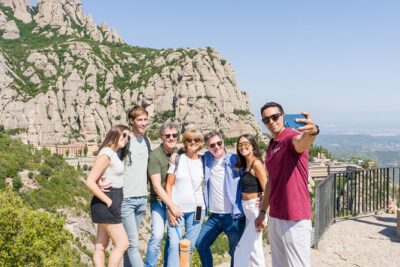
Montserrat Monastery Half Day Experience from Barcelona
Read our review →
Montserrat Monastery Small Group or Private Tour Hotel pick-up
Read our review →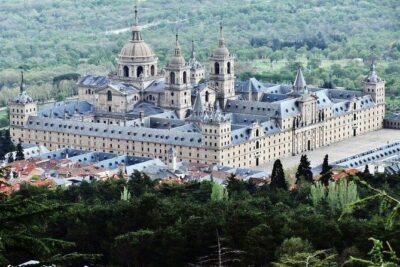
Escorial Monastery and the Valley of the Fallen Tour from Madrid
Read our review →
Montserrat Small Group: Monastery, Black Madonna & Natural Park
Read our review →
Escorial Monastery and the Valley of the Fallen
Read our review →
Flamenco Show at Tablao Sala Temple with Drink
Read our review →
Escorial Monastery and the Valley of the Fallen from Madrid
Read our review →Browse the lists this tour appears in