
REVIEW · MADRID TEMPLE TOURS
Escorial Monastery and the Valley of the Fallen from Madrid
The most striking part of this half-day outing is the contrast between El Escorial’s royal grandeur and the stark mountain monument called the Valley of the Fallen. In one morning, you move from Habsburg tombs, painted ceilings, and a famous library to a huge underground basilica cut into granite.
I like the easy coach ride from central Madrid, and I like having a guide explain rooms that can otherwise feel like a long procession of grand doors. The main caution is important: the regular tour is bilingual, and the Valley of the Fallen is not included on every operating day. Check the exact option and date before paying.
Key points to know before booking
- El Escorial is the main event: You visit the Habsburg Palace, basilica, Pantheon of Kings, Chapter House, library, and other important rooms.
- The Valley of the Fallen is not guaranteed every day: The site may not be visited on Tuesdays and Thursdays, even though it appears in the tour title.
- Expect Spanish and English together: The guide gives commentary in both languages, so English explanations may be shorter or harder to follow.
- The pace is brisk: The tour lasts about five and a half hours, with roughly two and a half hours at El Escorial and one hour at the Valley when included.
- There are many stairs: This is not a good choice if stairs and extended walking are difficult for you.
- The price buys convenience: At about $79.30 per person, transport and admissions are covered, but the experience is less flexible than visiting independently.
Why El Escorial matters
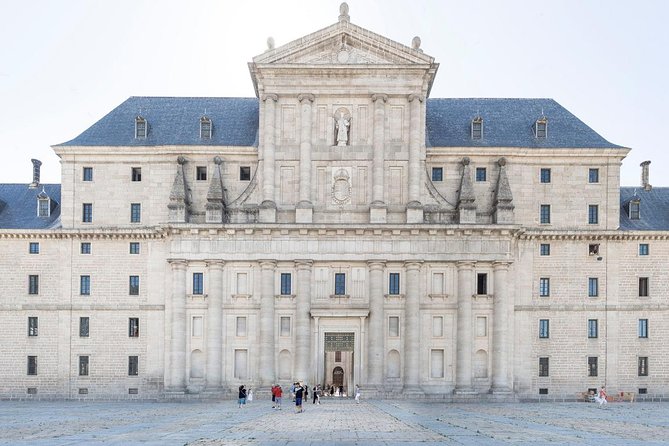
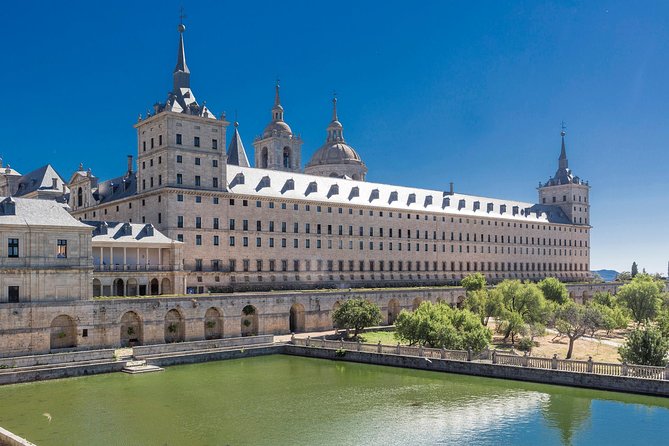
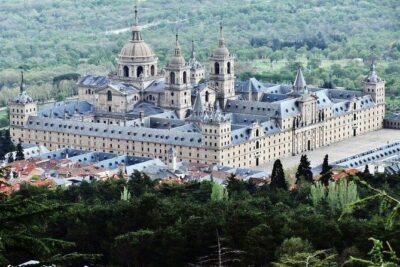
El Escorial is not simply a monastery outside Madrid. It is a royal residence, burial place, church, library, art-filled monument, and political statement rolled into one severe Renaissance complex.
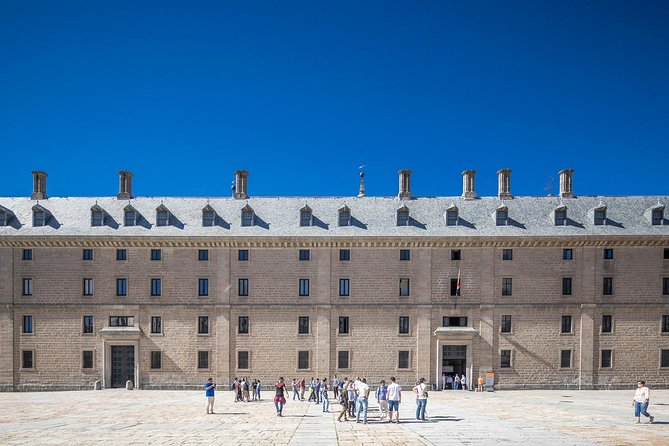
Philip II ordered the building in the 16th century, when Spain was at the height of its power. The result feels deliberate and controlled. Symmetry matters here. So does scale. The plain stone exterior gives little warning of the decoration waiting inside.
I find the building most interesting when I remember that it was designed to express both royal authority and religious duty. Spain’s monarchs did not want a light country retreat. They wanted a place that linked the crown, the Catholic Church, military success, and the memory of the Habsburg family.
The coach leaves from the Julià Travel office at Calle de San Nicolás 15, near central Madrid, at 8:30 a.m. You should arrive 15 minutes early. From there, the air-conditioned bus travels about 45 kilometers northwest through the countryside to San Lorenzo de El Escorial.
The road trip is practical rather than scenic in a dramatic way, but it gives your guide a chance to explain what you are about to see. Several people have found the bus comfortable and the operation punctual. The return ends at Plaza de Oriente, not necessarily at your starting point, so plan your afternoon from there.
A few more temple visits around Spain worth a look
- Montserrat Monastery Half Day Experience from Barcelona
★ 5.0 · 6,014 reviews - Montserrat Monastery Small Group or Private Tour Hotel pick-up
★ 5.0 · 5,144 reviews - Escorial Monastery and the Valley of the Fallen Tour from Madrid
★ 5.0 · 2,494 reviews
Inside the Royal Monastery of El Escorial
The visit lasts about two and a half hours, including the guided walk and admission. That sounds generous until you see the size of the complex and the number of rooms packed into the route.
You may begin with the Habsburg Palace, where the royal connection becomes clear. This is not a soft, decorative palace in the style of some European courts. El Escorial has a more restrained character, with an emphasis on order, ceremony, faith, and dynastic memory.
The Pantheon of Kings is one of the most memorable stops. Marble tombs hold Spanish monarchs, including Charles V, also known as Charles I of Spain, and Isabella of Portugal. The setting is solemn rather than theatrical. It helps to pause and consider that this was designed as a permanent royal resting place, not simply another palace room.
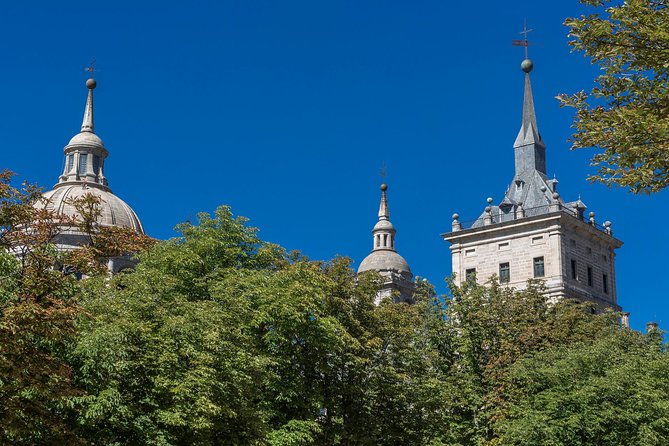
The basilica brings a different mood. Its Baroque dome and religious art give the complex its spiritual center. You can see religious relics and the grand interior, although access to particular areas can change. On some Sundays, the basilica may not be available in the usual way because of services, so Sunday morning is not the safest choice if the church interior is your top priority.
The library is another highlight. Its frescoes and long interior show how learning supported royal power. This was not just a place for decoration. Books, religious study, architecture, and government all belonged to the same intellectual world.
The Architects Room adds a more unusual touch. Instead of looking only at finished beauty, you see building equipment and objects connected with the construction process. I like this stop because it reminds you that El Escorial was a huge working project, not a monument that appeared fully formed.
The Weapons Room offers a change of pace, with arms and military objects tied to the period. Together, these rooms create a fuller picture of Spain’s 16th-century rulers. You are not just looking at paintings and tombs. You are seeing the machinery of monarchy, religion, scholarship, and war.
The guided pace can shape the visit
A guide is useful at El Escorial because the complex can be hard to read on your own. Names, dynasties, religious references, and royal titles come quickly. Guides such as Jorge, Susana, and María have been singled out for clear explanations, good organization, and a willingness to answer questions.
The quality of the spoken English can vary. The tour is operated in both Spanish and English, not as an English-only experience. If your group includes many Spanish speakers, the guide may spend more time in Spanish, leaving English speakers with shorter explanations.
Accents are another practical concern. Some guides have been easy to understand, while others have spoken English with a heavy accent or moved too quickly. I would not book this tour if every historical detail must be delivered in polished English. You can still get a useful overview, but you may need to rely on the room plaques and your own reading at times.
The radio-guide system helps, especially when the group spreads through large rooms. Still, keep close to the guide. Several people have found the pace fast, and older visitors have had trouble keeping up on stairs and long corridors. The maximum group size is 30 people per guide, so this is a group visit, not a quiet private tour.
The Valley of the Fallen, when included
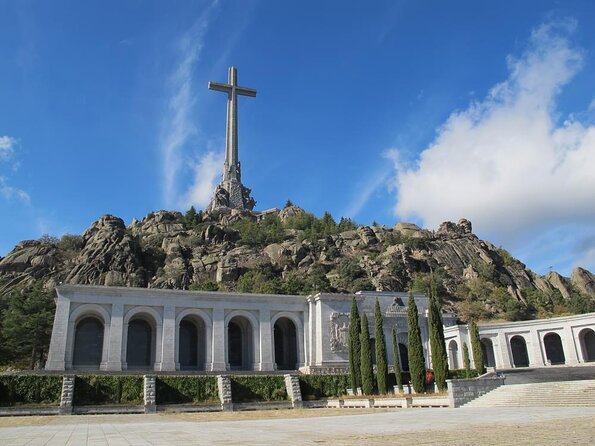
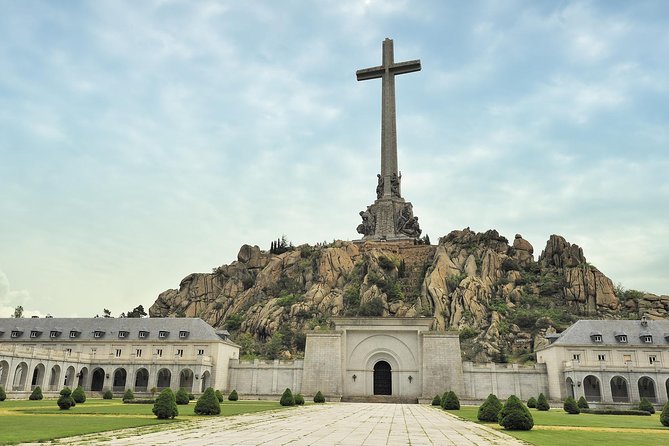
The Valley of the Fallen lies about 9 kilometers from El Escorial in the Sierra de Guadarrama. You first notice the enormous granite cross above the site. It can be seen from a great distance and gives the monument its unmistakable profile.
The site was built as a memorial to those who died in the Spanish Civil War. Its political meaning is complicated, and the monument has been a subject of debate in Spain. That context matters. This is not simply a pretty church in the mountains. The scale, setting, and purpose all carry weight.
The basilica is carved into the mountainside. Inside, the underground church has a vaulted crypt with sculpted angels. The arches provide views over the surrounding countryside, and the stone interior feels cool, spare, and imposing.
Expect about an hour at the Valley of the Fallen when the full option operates. In practice, the basilica visit can be much shorter if a religious service is about to begin or if the group arrives late. Some visits have lasted only about 25 to 30 minutes, which is enough to see the main interior but not enough for a leisurely look.
Your guide gives the explanation outside the basilica. Under the site’s regulations, guides cannot provide commentary inside. Once you enter, the visit is on your own. This arrangement is worth knowing in advance because you may expect a continuous guided tour and instead receive the historical background before entering.
The Valley is also the most important booking trap. The tour title can suggest that both sites are always included, but the Valley is not visited on certain days, including Tuesdays and Thursdays according to the supplied operating information. On those dates, you may see the monument from a distance but not enter the basilica.
Check the exact booking option, date, and confirmation before you commit. If the Valley is a must-see and you have only one day left in Madrid, do not assume that the title guarantees admission.
Same country, a different morning at the gates:
- Montserrat Museum and Monastery Entry Ticket
★ 4.5 · 1,740 reviews - Montserrat Small Group: Monastery, Black Madonna & Natural Park
★ 5.0 · 1,690 reviews - From Madrid: Escorial Monastery and the Valley of the Fallen
★ 4.7 · 1,434 reviews - Madrid: Flamenco Show at Tablao Sala Temple with Drink
★ 4.8 · 1,206 reviews
Is $79.30 a fair price?
At about $79.30 per person, the cost includes the air-conditioned coach, local guide, radio system, entrance to El Escorial, and admission to the Valley of the Fallen when that option is operating. Lunch is not included.
The price is reasonable if you value a direct ride from Madrid and want both places handled in one morning. El Escorial is far enough outside the city that public transport requires more planning, and the Valley of the Fallen adds another connection. The tour removes that transport puzzle.
The value drops if you receive only the El Escorial portion and expected both sites. It also drops if you want time for quiet study. The schedule is built to give you an overview, not a slow museum visit. You may have little or no free time for a gift shop, a relaxed meal, or a second look at a painting.
There are no meal arrangements, so eat before departure or carry something suitable if permitted. The tour starts early and returns around early afternoon, though exact timing can shift. The listed duration is approximately five hours and 30 minutes, not a guarantee of a precise return time.
Walking, stairs, weather, and what to bring
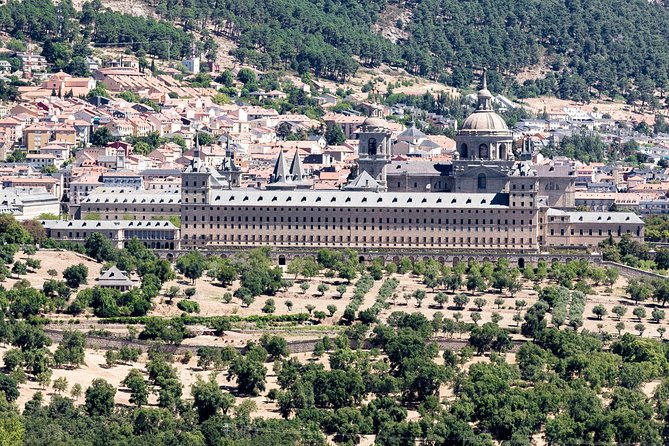
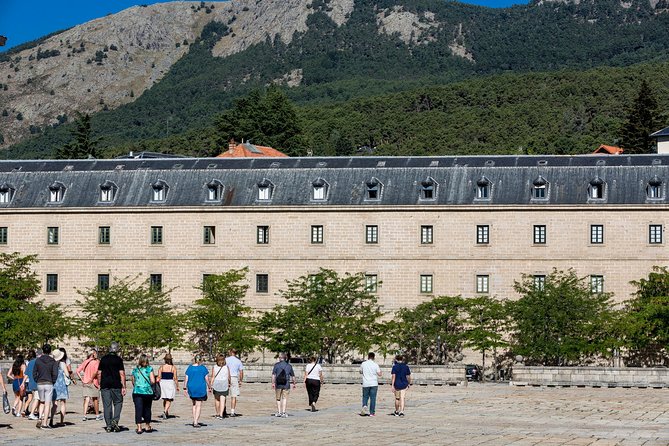
This is a walking tour once you arrive. El Escorial includes many corridors, rooms, and stairs. The Valley also requires walking around and into a large monument.
The experience is not recommended for people with walking difficulties or reduced mobility. Full accessibility cannot be guaranteed because of the historic architecture and the number of stairs. Even fit visitors should wear comfortable shoes and clothing suited to the weather.
Cold, foggy weather can limit outdoor views, especially around the Valley of the Fallen. On a hot day, water becomes more important, and there may not be a convenient place to buy it during the visit. Bring water with you and dress in layers.
The monuments can also feel crowded. Two guided groups may occupy the same room, making it hard to stop in front of a painting or ceiling fresco. Stay within radio range, listen for the meeting instructions, and avoid wandering off for a closer look unless the guide has given you free time.
Who will enjoy this half-day tour?
I would choose this outing if you want to see major Spanish monuments beyond Madrid without arranging transport yourself. It works especially well for a first visit when you want a broad introduction to the royal, religious, and political history around the capital.
It suits you if:
- You prefer a planned coach trip to several transport connections.
- You want a guide to explain the royal tombs and major rooms.
- You can manage stairs and a brisk walking pace.
- You are comfortable with bilingual commentary.
- You want both destinations but have limited time.
I would look for another arrangement if you need a slow, detailed art visit, an English-only guide, wheelchair-friendly access, or a guaranteed Valley of the Fallen visit on a Tuesday or Thursday.
Independent visitors may enjoy more freedom at El Escorial, but they must handle transport, tickets, timing, and the separate trip to the Valley. This tour trades flexibility for convenience. That is a fair exchange if you understand the limits before booking.
Booking details that matter
The meeting point is the Julià Travel office at Calle de San Nicolás 15 in central Madrid. The regular start time is 8:30 a.m., and check-in is requested 15 minutes ahead.
Hotel pickup and drop-off are available only if you select the private tour option. For a pickup request, you must provide your hotel or apartment details in advance. The supplied instructions say to send that information no later than 48 hours before departure, or the booking may be canceled with the stated cancellation charges.
The regular tour is offered with commentary in English and Spanish. The maximum is 30 people per guide. The itinerary can change because of monument rules, services, access restrictions, or other circumstances outside the operator’s control.
Cancellation is free if you cancel at least 24 hours before the scheduled start. Within 24 hours, changes and refunds are not accepted.
Should you book the El Escorial and Valley of the Fallen tour?
Book it if you want an efficient introduction to two powerful sites and you are willing to accept a brisk, bilingual group visit. El Escorial alone is worth serious attention, and the Valley adds a striking, sobering contrast when it is open on your selected date.
Before paying, confirm three things: that the Valley is included on your date, that you understand the Spanish and English format, and that you can manage the stairs. If those conditions work for you, the coach, admissions, and compact schedule make the $79.30 cost sensible.
If you want unhurried time, polished English commentary, or a guaranteed visit to both monuments, choose carefully. The sites deserve more time than this schedule always allows, but for a practical half-day from Madrid, it can be a useful and memorable trip.
FAQ
Where does the tour begin?
The regular tour begins at the Julià Travel office at Calle de San Nicolás 15 in central Madrid. Check-in is requested 15 minutes before the 8:30 a.m. start.
Where does the tour end?
The regular tour ends at Plaza de Oriente in central Madrid. The listed end point is near the underground parking at Plaza de Oriente, Level -2.
Is the Valley of the Fallen included every day?
No. The Valley is not visited on certain days, including Tuesdays and Thursdays according to the supplied tour information. Check the exact option and operating date before booking.
Is the tour in English?
The tour is operated bilingually in English and Spanish. It is not an English-only regular tour, and the amount and clarity of English commentary can vary by guide.
How much walking is involved?
The tour includes walking inside the monuments, along with a large number of stairs at El Escorial. Full accessibility cannot be guaranteed, and the experience is not recommended for people with walking difficulties or reduced mobility.
What does the price include?
The price includes the air-conditioned vehicle, local guide, radio-guide system, admission to El Escorial, and admission to the Valley of the Fallen and its basilica when that option is operating. Lunch is not included.
Just added around Spain
- Montserrat Monastery Horse Riding & Walk – Small Group (Max 8)★ 5.0 · 45 reviews
- Montserrat Nature Walk, Monastery and Museum from Barcelona★ 5.0 · 58 reviews
- Montserrat & beyond private from Barcelona with different options★ 5.0 · 32 reviews
- Transfer to Montserrat Monastery from Barcelona★ 4.5 · 94 reviews
- Montserrat Tour with Cogwheel Train, Monastery & Black Madonna★ 4.0 · 10 reviews
- Full-Day Trip Barcelona to Montserrat Monastery & Cava Winery★ 5.0 · 158 reviews
- Montserrat Land of Shrines – One Day Small Group Hiking Tour from Barcelona★ 5.0 · 38 reviews
- Montserrat Horseback Riding & Monastery – Small Group (Max 8)★ 5.0 · 45 reviews
Madrid Temple Tours, compared.
Escorial Monastery and the Valley of the Fallen Tour from Madrid
Read our review →
Flamenco Show at Tablao Sala Temple with Drink
Read our review →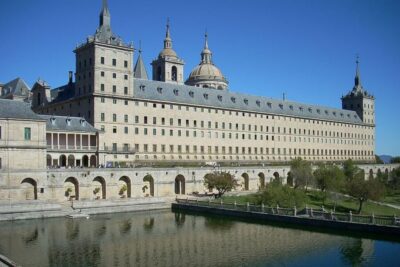
Madrid Must-see with Atardeder at the Debod Temple
Read our review →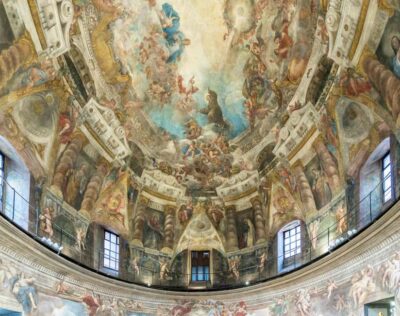
Combined admission to San Antonio de los Alemanes and the Monastery of San Plácido
Read our review →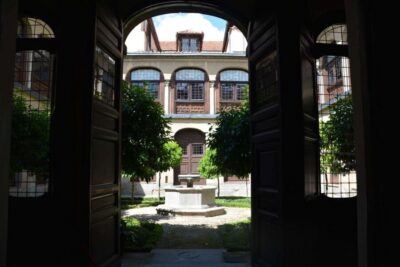
Royal Monastery of the Barefoot nuns: Guided Tour + Tickets
Read our review →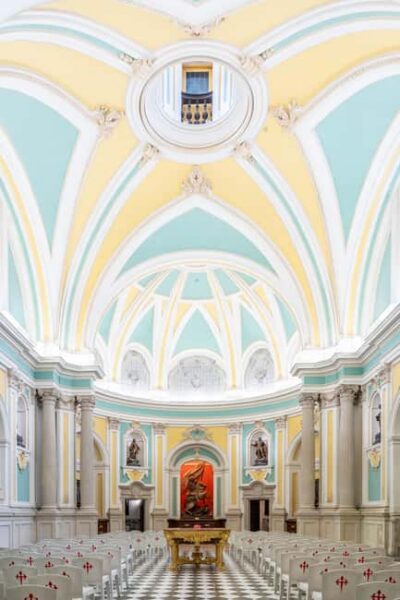
Entrance to the Monastery of Las Comendadoras de Santiago
Read our review →Browse the lists this tour appears in