
REVIEW · TEMPLE SUNSET TOURS
Chiang Mai: Evening Chanting & Meditation
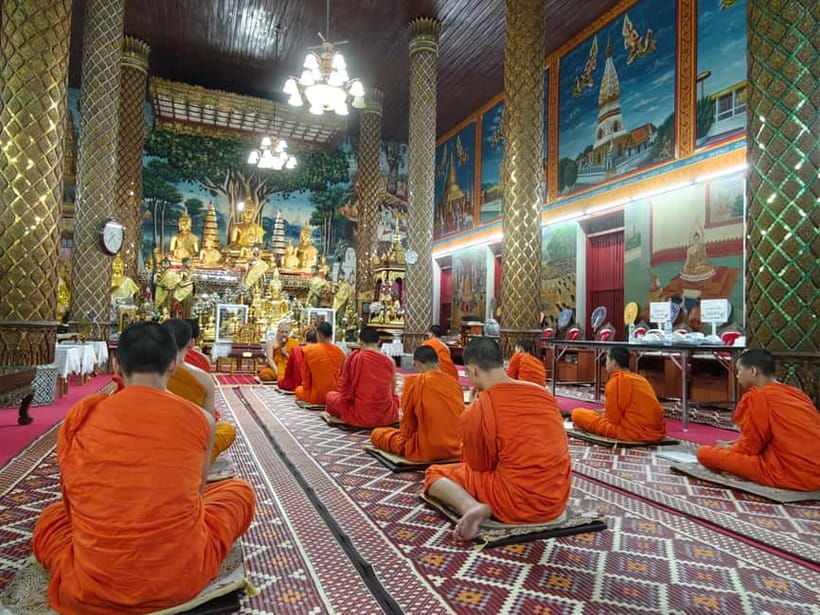
The most meaningful part of this Chiang Mai evening is that you do not simply watch a temple ceremony from the edge. You sit with the monastic community, listen to the chanting, practice meditation, and take part in Metta, a Buddhist practice of wishing well-being for loved ones, the departed, and all living beings.
I like the 40 to 50 minutes of chanting, which gives the evening a steady, unhurried rhythm. I also like the chance to speak with guides such as Son, a former monk of 13 years, who can explain both Buddhist ideas and the daily life behind the ritual.
The main thing to consider is that this is a quiet spiritual session, not a sightseeing tour packed with stops. You will need to sit still, dress modestly, keep your phone silent, and accept that the chanting is not presented in English. One review specifically wished for an English version of the chant.
Key points to know before booking
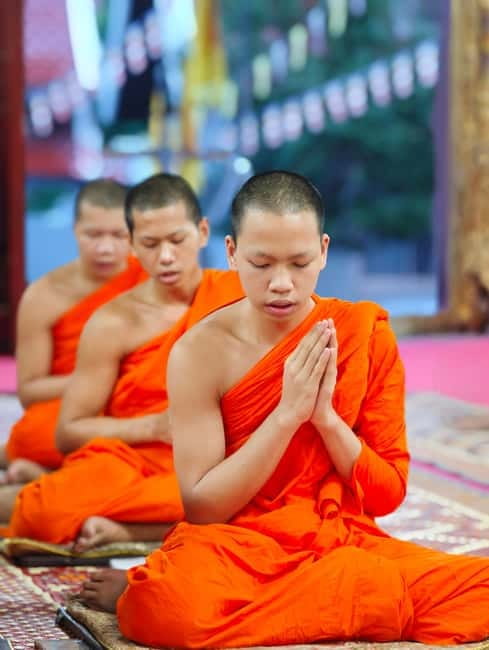
- Chant beside the monks: The central ritual lasts about 40 to 50 minutes and is meant to be felt as much as heard.
- Learn Metta in practice: You will direct wishes of kindness toward loved ones, people who have died, and all beings.
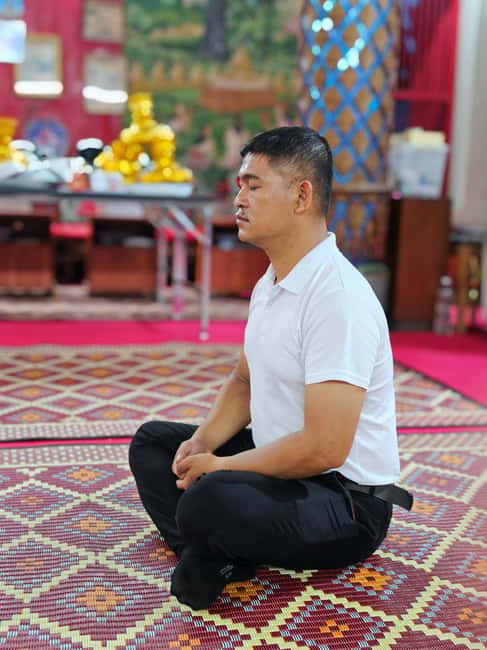
- A short guided meditation: The silent meditation lasts about 15 minutes, making it approachable even if you are new to the practice.
- Former monk guides add context: Son, Earth, Big, and Paponsonkl are named in the feedback, with Son receiving especially warm praise.
- Plan for a temple setting: Wear modest clothing, arrive 15 minutes early, and do not use flash photography or smoke.
- Check the meeting point: The activity information names Wat Lok Moli for meeting the guide, while the itinerary also refers to A Chef’s Tour Chiang Mai Food Tours and Wat Chai Sri Phoom. Confirm the exact location before setting out.
What this Chiang Mai evening is really about
This experience offers a close look at Buddhist practice rather than a quick temple visit. The focus is not on photographing an impressive building or collecting facts about architecture. You are there for the rhythm of prayer, the quiet that follows, and the chance to ask thoughtful questions.
The setting is Wat Chai Sri Phoom in Chiang Mai Province, although the meeting instructions also name Wat Lok Moli. That difference matters. I would not assume that the listed meeting place and the chanting location are the same. Check the latest instructions from Journey D Travel before leaving your hotel.
The evening lasts three hours, though the stated guided portion is two hours. Some sessions may run longer when the conversation with the monks continues. One account describes about two and a half hours of discussion after the formal meditation, so keep your schedule loose if you want time for questions.
At $20 per person, I consider this a fair price for a small, focused cultural activity. You are paying for a guide, an explanation of Buddhist practice, a meditation session, and access to a setting that can be difficult to understand on your own. The value is strongest if you are curious about Buddhism or want a slower evening after Chiang Mai’s food markets and street activity.
More Temple Sunset Tours in Thailand
- Bangkok by Night: Temples, Markets and Food Tuk-Tuk Tour
★ 5.0 · 3,752 reviews - Bangkok: Markets, Temples and Food Night Tour by Tuk Tuk
★ 4.9 · 2,371 reviews - Chiang Mai: Doi Suthep and Wat Umong Enchanting Evening Tour
★ 4.6 · 1,811 reviews
Meeting the guide and settling into the temple
You are asked to arrive at least 15 minutes early. That is good advice. A temple is not the place to rush in, adjust your clothes, and start checking messages as the chanting begins.
The meeting instructions say the guide waits in front of Wat Lok Moli. The activity may sometimes use another meeting point, and A Chef’s Tour Chiang Mai Food Tours appears in the start and end details. Treat the location as something to confirm, not something to guess.
Once you meet the guide, you have time to settle your mind before the formal session. The provided description points to a quiet meeting space within the temple grounds, where you can breathe, notice the evening air, and leave the pace of the day behind.
Guides have included Son, Earth, Big, and Paponsonkl. Son receives the clearest praise in the available feedback. He is described as a former monk with 13 years in monastic life, and his explanations cover Buddhist philosophy, meditation, Thai culture, and everyday life. Earth is praised for making the practice easy to follow, while Big is noted for patience and understanding.
That variety matters because the guide is your bridge into the ceremony. The chanting may feel unfamiliar at first. A good explanation helps you understand when to listen, when to join, and how to behave without turning the ritual into a performance for outsiders.
Hearing the evening chanting with the monks
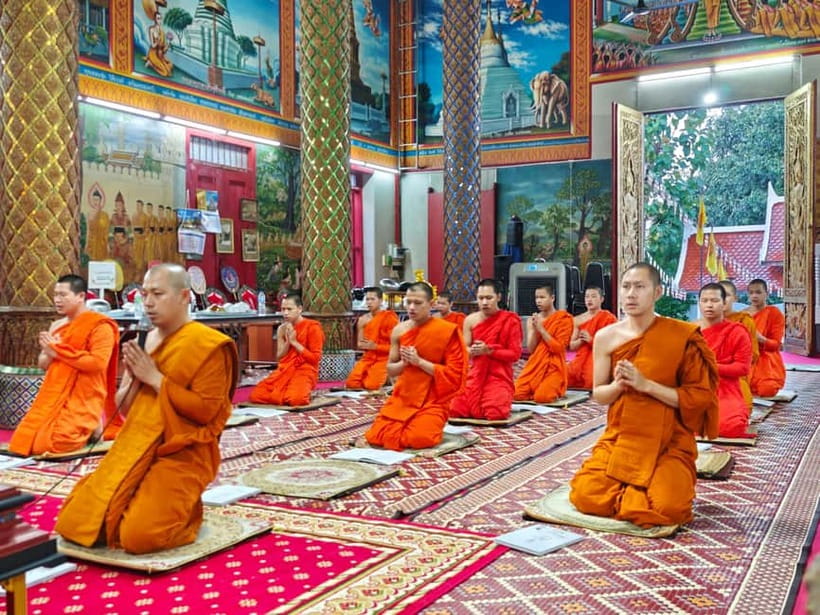
The chanting is the heart of the activity. It generally lasts 40 to 50 minutes, long enough for the sound to change from something you are listening to into something you are simply sitting with.
You may join the monks in the ritual rather than only observe. The repeated words and steady pace create a physical feeling in the room. The description of the experience emphasizes the vibrations of the voices, and that is a useful way to think about it. You do not need to understand every word for the sound to have an effect.
Still, you should not expect an English-language presentation. The chants are sacred texts, and one person specifically noted that an English version would have helped. Your guide explains the meaning and purpose, but the ritual itself remains in its traditional form.
I see that as both a strength and a limitation. You get a more genuine sense of Buddhist practice when the chanting is not changed into a performance designed for tourists. At the same time, visitors who want a fully translated ceremony may find parts of the session hard to follow.
Keep your phone silent and avoid flash photography. Smoking is not allowed. These rules are simple, but they are important here because the value of the experience depends on quiet and respect.
Dress modestly. Comfortable clothes are recommended, but comfort should not mean beachwear or anything revealing. You are entering an active religious setting, not just a historic building.
The 15-minute meditation
After the chanting, the group moves into a 15-minute silent meditation with guidance. This is short enough for beginners and long enough to give you a real pause.
The guide helps you settle your attention and quiet some of the mental noise that tends to follow a day of sightseeing. You are not expected to arrive with meditation experience. The session is presented as an introduction to Buddhist practice, not as an advanced retreat.
I like the proportion here. A longer meditation could be difficult for someone unfamiliar with sitting quietly, especially after a full day in Chiang Mai. Fifteen minutes gives you a clear taste without turning the evening into a test of endurance.
People with back problems should think carefully before booking. The activity is not suitable for people with back problems, children under 10, or wheelchair users. The information does not specify the exact seating arrangement, so you should ask the provider if you need details about posture or support.
The strongest accounts describe the meditation as calming and grounding. I would keep expectations sensible. A temple setting and gentle guidance can help you focus, but no activity can promise a lasting personal transformation. The benefit comes from giving yourself permission to be still for a while.
Same country, a different morning at the gates:
- From Bangkok: Ayutthaya Temples Guided Tour with Lunch
★ 4.7 · 10,535 reviews - Chiang Mai: Chiang Rai Temples, Karen Tribe and Hot Springs
★ 4.7 · 5,401 reviews - Bangkok: City Highlights Temple and Market Walking Tour
★ 4.5 · 3,990 reviews - Bangkok: Grand Palace, Wat Pho, and Wat Arun Guided Tour
★ 4.8 · 3,632 reviews
Metta, the practice of wishing others well
The Metta portion gives the evening a clear emotional center. You are guided to extend heartfelt wishes of well-being to people close to you, those who have died, and all beings.
This is more specific than simply being told to think positive. Metta asks you to direct goodwill outward, gradually widening the circle of concern. The activity presents it as a practice of compassion and connection, and the guide helps put that idea into accessible terms.
For you, this may be the most personal part of the evening. You can bring loved ones to mind, remember someone who has passed away, or simply sit with the idea of wishing peace to people beyond your own circle.
The session does not appear to require a particular religious belief. You can take part as a Buddhist, a curious visitor, or someone interested in learning how compassion is practiced in daily life. Respectful participation matters more than adopting a new belief on the spot.
Talking with monks after the formal practice
The conversation after the chanting and meditation is one of the best reasons to choose this activity. Senior monks and lay practitioners may share their thoughts, and you have the chance to ask questions about Buddhist philosophy, monastic life, and meditation.
This is where a former monk guide can make a real difference. Son explains the ideas behind the practice using examples from ordinary life, rather than leaving you with abstract terms. Accounts of the evening describe discussions about the Buddha, the lives of monks, Thai culture, and the relationship between philosophy and daily decisions.
The time available for questions can vary. The formal details describe a three-hour activity and a two-hour guided tour, but some evenings continue well beyond the scheduled practice because the conversation keeps going. If you have an early dinner reservation or another fixed plan, leave a buffer.
You should also be prepared for a conversation rather than a lecture. Bring questions, but do not assume every answer will be a neat travel fact. The setting invites discussion about suffering, kindness, discipline, mindfulness, and the simpler choices of everyday life.
A short blessing may also be offered at the end. It is described as part of at least one session, but I would not treat it as guaranteed for every departure. The same applies to the exact monks present on a given evening.
What the guides add to the experience
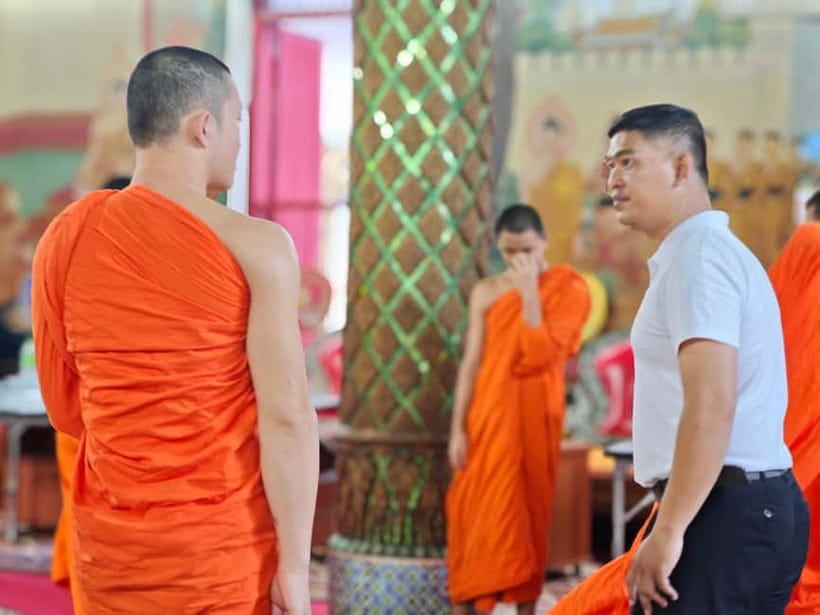
The guides are the strongest recurring feature in the available feedback. Son is mentioned repeatedly and is described as warm, clear, and easy to talk with. His years as a monk give him firsthand insight into monastic life, while his current role lets him explain the practice to people encountering it for the first time.
That combination is useful. A guide who only knows textbook definitions may struggle to explain how Buddhist principles work in ordinary life. A former monk can speak about the discipline and routine behind the robes, the chants, and the meditation.
Other named guides include Earth, Big, and Paponsonkl. The activity is offered in English and Thai. If you have a preference for a particular guide, the supplied details do not say that you can request one, so do not count on it.
The guide also helps with cultural manners. You can ask about when to sit, how to behave during the chant, and what parts of the practice are appropriate for you to join. That support makes the evening less awkward and helps keep the focus on the temple community rather than on your uncertainty.
Practical details that affect your decision
Transportation to and from Wat Chai Sri Phoom is not included. You need to arrange your own way to the meeting point. Because the instructions name Wat Lok Moli and also refer to A Chef’s Tour Chiang Mai Food Tours, confirm the exact location and allow extra time to get there.
Meals and drinks are not included. Bring water, especially if you have spent the day walking around Chiang Mai. There is no meal built into the evening, so eat beforehand if you know you will be hungry.
The activity is not suitable for children under 10. It is also not suitable for wheelchair users or people with back problems. The supplied information does not give details about accessible seating, so anyone with mobility concerns should contact the provider before paying.
You can cancel up to 24 hours in advance for a full refund, and the reserve-now, pay-later option keeps your plans flexible. Starting times vary, so check availability for the date you want.
The rating is 4.5 from 69 reviews, with a large number of very positive responses. The praise centers on the guides, the calm setting, the chance to speak with monks, and the clarity of the Buddhist explanations. The main limitation raised is the lack of an English translation during the chant itself.
Who will get the most from this evening
I would choose this activity if you want to understand what happens inside a working Buddhist temple rather than simply visit one for photographs. It suits curious adults, solo visitors, couples, and anyone already interested in meditation or Buddhist philosophy.
It also works well as a counterpoint to Chiang Mai’s food tours and night markets. After a busy day, three hours of quiet chanting, meditation, and conversation can reset your pace.
You should probably skip it if you want constant movement, detailed architectural commentary, or an entertainment-focused evening. It is not a temple show. The quiet is the point.
You should also skip it if sitting still is uncomfortable or if you need wheelchair access. The activity asks for patience and respectful behavior, and the most rewarding parts may come from listening rather than doing.
Should you book Chiang Mai Evening Chanting and Meditation?
I recommend booking it if you want a respectful introduction to Buddhist practice and value direct conversation more than sightseeing checklists. The $20 price is reasonable for the guide, meditation, chanting session, and access to questions with people connected to the temple community.
Book with two practical conditions in mind: confirm the exact meeting point, and dress for a religious setting. If you want an English translation of every chant, this may not satisfy you. If you can accept the original ritual, listen carefully, and ask questions afterward, the evening offers a thoughtful and unusually personal side of Chiang Mai.
FAQ
How long does the Chiang Mai chanting and meditation activity last?
The activity is listed as three hours. The guided portion is described as two hours, and some sessions may continue longer when the discussion with the monks carries on.
How much does the activity cost?
The listed price is $20 per person.
Where do I meet the guide?
The meeting instructions say the guide waits in front of Wat Lok Moli. Other details refer to A Chef’s Tour Chiang Mai Food Tours and Wat Chai Sri Phoom, and the location may change, so confirm the exact meeting point before going.
Is transportation included?
No. Transportation to and from Wat Chai Sri Phoom is not included.
What languages are available?
The activity is offered with a live guide in English and Thai.
What should I wear and bring?
Wear modest, comfortable clothing and bring water. Arrive at least 15 minutes early, silence your mobile device, and do not use flash photography.
Can I cancel the booking?
Yes. You can cancel up to 24 hours in advance for a full refund. A reserve-now, pay-later option is also available.
Just added around Thailand
- Chiang Mai Temples & City★ 5.0 · 10 reviews
- Full Day Chiang Rai 3 Temples White, Blue,Big Bhudha Temples★ 4.5 · 11 reviews
- Chiang Mai Old City & Temples 3 hour Twilight Walking Tour★ 5.0 · 9 reviews
- Chiang Mai Temples & Old City Hidden Gems Small Group Tour 2 Hrs★ 5.0 · 6 reviews
- Chiang Mai City and Temples Half-Day Tour★ 4.5 · 136 reviews
- Chiang Mai Best City Tour with Doi Suthep, Pha Lat & Chedi Luang★ 5.0 · 63 reviews
- Chiang Mai Old City & Temples Guided Walking Tour – 3 Hrs★ 4.5 · 34 reviews
- The Best Chiang Mai City Private Tour: Famous Temples & Viewpoint★ 4.5 · 7 reviews
Temple Sunset Tours, compared.
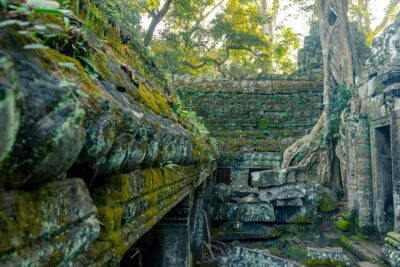
Angkor Wat Sunrise or Sunset Tour with Guide from Siem Reap
Read our review →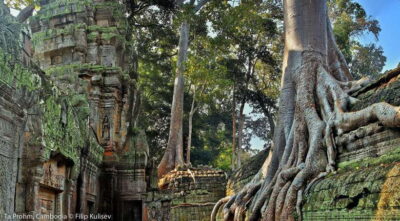
Angkor Wat: Small-Group Sunrise or Sunset Tour
Read our review →
Cape Sounion & Poseidon Temple Sunset Half-Day Trip
Read our review →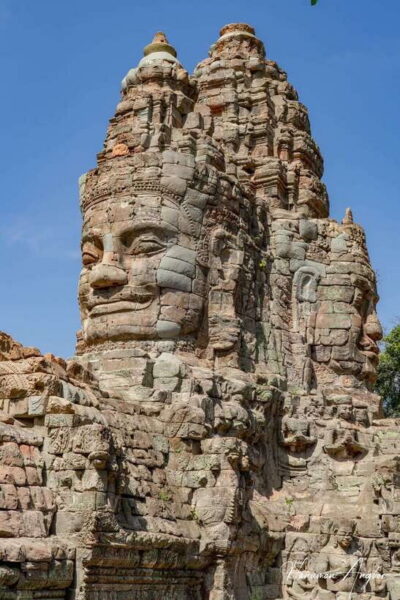
Angkor Wat 2-Day Tour with Sunrise and Sunset
Read our review →

Bangkok by Night: Temples, Markets and Food Tuk-Tuk Tour
Read our review →
Uluwatu Sunset, Kecak Dance, and Dinner Jimbaran Beach
Read our review →
Angkor Wat Sunset Small Group Tour with Lunch Included
Read our review →Browse the lists this tour appears in