
REVIEW · TOKYO TEMPLE TOURS
Tokyo Zen Meditation at Private Temple with Monk
Tokyo’s best temple experiences often happen away from the big-name sights. At Kinryu-ji, a private temple in Asakusa with more than 400 years of history, you sit with a monk, learn the basics of Zen meditation, and talk openly about Buddhist practice. The session is designed for English speakers, so you do not need prior knowledge of Zen or Japanese.
I like the direct access to the monk and the chance to ask real questions rather than simply watch a demonstration. I also like the mix of seated meditation, calligraphy, prayer, and matcha, which gives the 90 minutes a good rhythm.
The main consideration is that this is a small cultural activity, not a long temple tour or a silent retreat. The meeting point details deserve extra care, since one participant reported being sent toward the wrong Family Mart. Confirm the exact location before you go.
Key points to know before booking
- Private access to Kinryu-ji Temple: Visit a 400-year-old temple that is not open to the general public.
- A monk leads the core session: Learn zazen, practice seated meditation, and ask questions in an informal discussion.
- More than meditation: The experience can include calligraphy or sutra copying, prayer, matcha tea, and Japanese sweets.
- English support throughout: Guides such as Tamami and Kazu help explain Zen, customs, and the monk’s answers.
- Useful Tokyo location: The temple is in Asakusa and close to public transportation.
- Short and manageable timing: The activity lasts about 90 minutes and accepts up to 15 people.
Entering a Private Temple in Asakusa
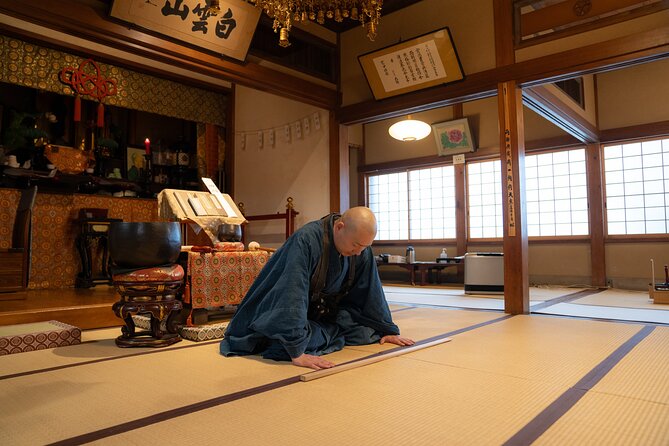
Kinryu-ji offers something you cannot get from a quick stop at a famous sightseeing temple: access. This temple is not open to the general public, yet this experience allows you to enter, look around, take photographs, and spend time with a monk.
That private setting matters. You are not being hurried through a large complex with a crowd around you. The focus stays on conversation and participation. You learn about Japanese culture and Zen before trying the practices yourself, which makes the visit friendly even if meditation is completely new to you.
The temple’s age also gives the session a sense of place. You are not practicing Zen in a generic classroom. You are sitting inside a working religious setting in Asakusa, a district known for its temples and old-town character.
The experience begins at the listed meeting point in Taito City. It is near public transportation, but I would check the exact address carefully before leaving. The supplied meeting details include a building address, and one participant reported that an initial location pointed to the wrong Family Mart. Arrive early and contact Travel Japan Together Tokyo if anything looks unclear.
More Private Temple Tours in Japan
- Tokyo: Zen Meditation at a Private Temple with a Monk
★ 5.0 · 510 reviews - From Tokyo: Nikko World Heritage Site Private Full-Day Trip
★ 4.9 · 243 reviews - From Tokyo: Private Tour Snow Monkey Park & Zenko-ji Temple
★ 4.7 · 184 reviews
What the Monk Teaches About Zazen
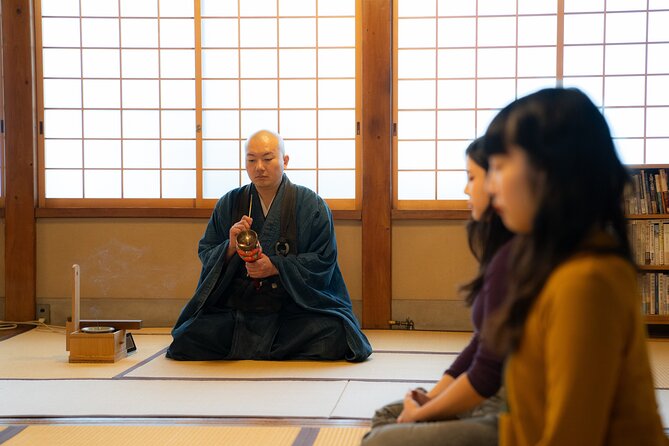
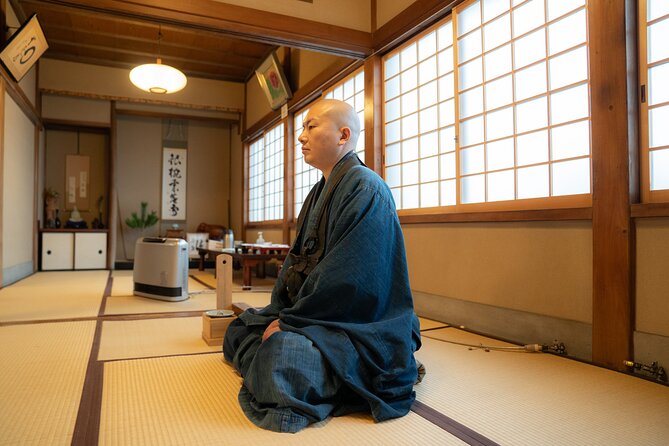
The main lesson is zazen, the seated meditation practice associated with Zen Buddhism. The monk explains the principles and techniques before you try them, including proper breathing and the basic approach to sitting quietly.
This introduction is important for first-time meditators. You are not expected to arrive knowing how to sit, breathe, or focus. The guide helps interpret the monk’s explanation in English, making the session accessible if you do not speak Japanese.
You can expect the meditation to be practical rather than abstract. The monk teaches the method, then gives you time to practice. Some people find this peaceful; others may find seated meditation harder than expected. A 90-minute cultural activity leaves enough time for practice without turning into a demanding retreat.
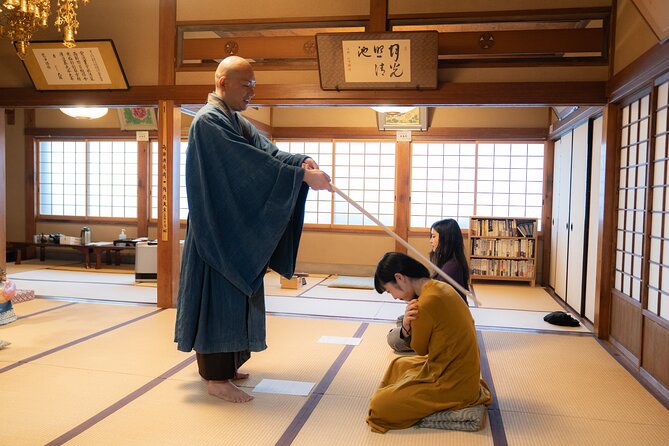
One unusual part may be the use of a kyosaku, a traditional Zen practice involving a monk striking a participant with a wooden staff. One participant described being struck by the monk and appreciated the photograph afterward. If this is offered during your session, ask the guide or monk to explain it first so you understand its purpose and can decide if you wish to take part.
The monk is also available for questions. The conversation can cover Zen, Buddhism, meditation, temple customs, or other subjects. That open question period is one of the strongest reasons to choose this experience over a standard temple visit.
Calligraphy Turns Stillness Into Practice
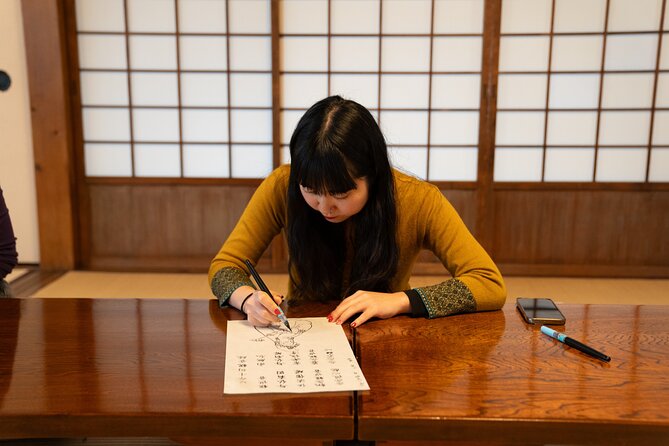
Several versions of the session include calligraphy or copying Buddhist sutras. This gives you something active to do after sitting meditation.
Writing slowly can help you notice the same things meditation brings forward: breathing, posture, patience, and attention. You do not need artistic skill for this part to have value. The point is the act of careful writing, not producing a perfect souvenir.
The activity may involve sutra tracing rather than free-form calligraphy. That distinction matters if you are hoping to study Japanese writing in depth. This is a cultural introduction, not a formal calligraphy class, but it adds a hands-on element that many people find calming.
Calligraphy also makes the experience work well for mixed groups. One person may come for Buddhist teaching, another for photography, and another simply to try a traditional art. Everyone has a way to participate.
Matcha, Sweets, and an Informal Conversation
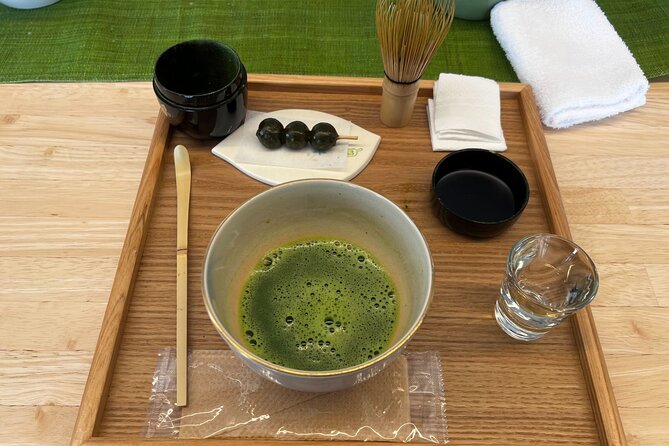
The session ends with a matcha tea ceremony and snacks, including Japanese sweets. This is a short cultural experience rather than a full tea-school lesson, but it gives you a chance to see the care and etiquette connected with serving matcha.
The tea is also a natural bridge into conversation. After meditation and calligraphy, you can sit with the monk and ask questions in a more relaxed setting. The guide translates and explains as needed, so the discussion is not limited to prepared facts.
I like this structure because it avoids making the visit feel like a lecture. You begin with an explanation, try meditation, take part in calligraphy or sutra copying, and then talk over tea. Each section feels different, yet all relate to attention, ritual, and Buddhist practice.
Do not book this expecting a long tea ceremony with an extensive menu. Matcha and snacks are included, but the main value is the conversation and the chance to see how tea fits into the setting.
More Private Temple Tours in Tokyo
- Tokyo: Nikko World Heritage Private Day Trip Hotel Pick-up
★ 4.8 · 145 reviews - Tokyo: Snow Monkey Park and Zenkoji Temple Private Day Tour
★ 4.7 · 127 reviews - Tokyo: Nikko Private Day Tour with English Speaking Driver
★ 4.8 · 97 reviews - Nikko Full Day Private Tour with English Speaking Driver
★ 5.0 · 79 reviews
Guides Tamami, Kazu, and English Support
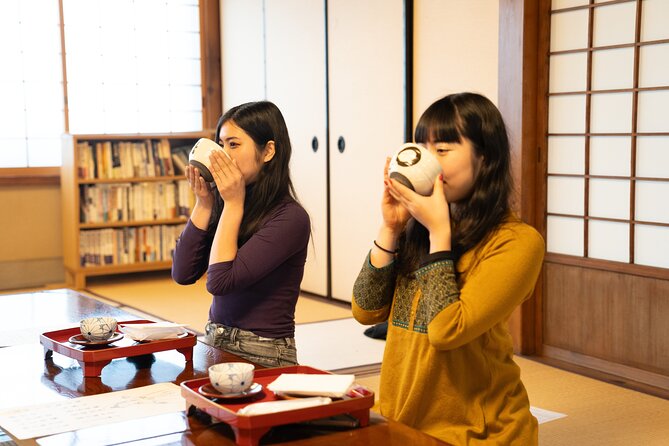
English support is central to the experience. Guides including Tamami and Kazu have been praised for making the monk’s explanations easy to follow and for helping the group feel comfortable.
Tamami is described as warm, upbeat, and efficient, with a talent for taking photographs during the visit. Kazu is described as a helpful host who explains the temple and supports the conversation with the monk. The guide may vary by departure, so you should not assume a particular person will lead your session.
The guide’s role is more than translation. A good guide explains Japanese customs, gives context for Zen Buddhism, and helps you understand what to do at each stage. This is especially useful during prayer, meditation posture, and tea service, where a small bit of instruction prevents confusion.
The group can include up to 15 people. That is not a completely private session for one booking, but it is still much smaller than a major Tokyo attraction. A group of this size allows questions and participation, though the amount of personal conversation will depend on the day’s attendance.
Prayer, Photographs, and Cultural Etiquette
The session may include a formal prayer or an explanation of how to pray at the temple. This is a valuable detail because Japanese Buddhist customs are easy to misunderstand if you only see them from outside.
Your guide should explain what is appropriate before you take part. Listen closely, follow the monk’s instructions, and treat the temple as a religious place rather than a photo set.
Photographs are allowed within the temple, including photographs with the monk. Guides may take pictures for you, which is useful if you are visiting as a couple or family and want everyone in the frame. Still, keep the camera secondary to the experience. Ask before photographing the monk or any specific ritual, even if the general photo opportunity is included.
The setting is likely to appeal to anyone who wants a visual memory of Japan beyond the usual shrine gate photograph. The strongest pictures will come from the temple interior, the tea setting, calligraphy, or a respectful portrait with the monk.
Is $56.16 Good Value for 90 Minutes?
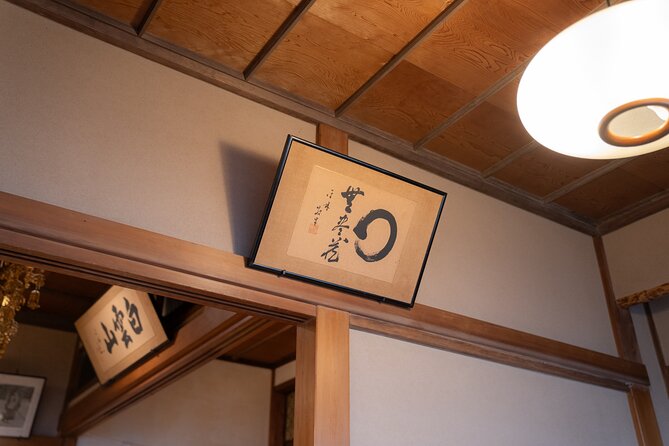
At $56.16 per person, this costs more than simply entering a public temple. That comparison is not quite fair, because your payment covers access to a temple not open to the public, an English-speaking guide, instruction from a monk, meditation, tea, snacks, and photographs.
The value is strongest if you want personal contact and cultural explanation. A temple entrance ticket gives you a place to look around. This experience gives you a structured way to understand what happens inside a Buddhist temple and why the practices matter.
The price may feel less worthwhile if you only want quiet meditation. You could meditate on your own in many places, and this session includes several activities beyond silent sitting. It is best understood as a compact cultural experience with a spiritual focus.
For families, couples, and first-time visitors to Japan, the combination is sensible. You get a clear introduction without spending half a day. You also avoid the cost and planning involved in arranging private access to a temple independently.
Who Will Enjoy This Experience Most?
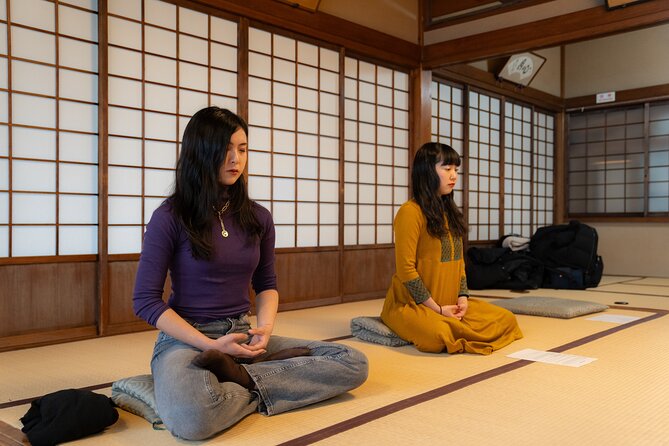
I would recommend it to you if you are curious about Zen but do not know where to begin. The English-speaking guide removes much of the uncertainty, and the monk’s open discussion makes the subject feel approachable.
It suits people who enjoy cultural activities with participation. You are not simply listening. You sit, write, drink matcha, ask questions, and possibly pray or take part in a traditional staff practice.
It is also a good choice for families. The meditation itself may require quiet attention, but calligraphy, tea, photos, and questions give younger or less spiritual participants other points of interest. One family described the monk as welcoming and open to questions.
Couples may appreciate the photographs and the calm setting. This is a more thoughtful shared activity than another crowded observation deck, though it is not designed as a romantic tea date.
I would hesitate to recommend it if you want a long, silent retreat or advanced Buddhist instruction. The experience is introductory, social, and carefully timed. It also may not suit you if you dislike participating in religious customs, although you can ask questions about what is expected before taking part.
Timing, Group Size, and Practical Details
The experience lasts about one hour and 30 minutes, and it begins and ends at the meeting point. There is no private transportation included, so you will need to reach the starting location yourself.
The location is near public transportation, which makes it practical to combine with other Asakusa plans. Leave enough time to find the correct building and meeting point. Do not rely on a last-minute map search if you have received unclear directions.
Confirmation is provided at booking. The activity accepts a maximum of 15 participants, and most people can participate. The listing does not give a detailed dress code or a specific physical requirement, so follow the guide’s instructions and choose comfortable clothing suitable for seated meditation.
Free cancellation is available if you cancel at least 24 hours before the start time. Changes or cancellations made less than 24 hours in advance are not accepted for a refund. The cut-off follows Tokyo local time.
Should You Book the Tokyo Zen Meditation Experience?
Book it if you want personal contact with a monk, a private temple setting, and a short introduction to Zen that includes more than meditation. The strongest parts are the direct questions, English interpretation, calligraphy, matcha, and the chance to see prayer and temple customs from the inside.
The $56.16 price is reasonable for the access and guidance, especially if you value cultural context rather than just sightseeing. Confirm the meeting point carefully, and remember that the session is an introduction, not an advanced retreat.
For a calm, thoughtful break from Tokyo’s busy sightseeing schedule, this is a worthwhile choice. If you prefer a large public temple, independent exploration, or a full tea ceremony, spend your money elsewhere. If you want to sit with a monk and ask what Zen practice means in daily life, this experience makes that possible in a compact 90 minutes.
FAQ
Where does the Zen meditation experience take place?
It takes place at Kinryu-ji Temple in Asakusa, Tokyo. The temple has a history spanning more than 400 years and is not open to the general public.
How long does the experience last?
The activity lasts approximately one hour and 30 minutes.
Is the experience available in English?
Yes. An English-speaking guide supports the experience and helps explain the monk’s instruction and answers.
What activities are included?
The experience includes Zen meditation, instruction in zazen, a matcha tea experience, snacks, entrance to the temple, photographs with the monk, and an English-speaking guide. Calligraphy, sutra copying, and prayer are also described as parts of the experience in the available details.
Can I ask the monk questions?
Yes. The session includes free conversation with the monk, and you can ask questions about Zen, Buddhism, meditation, customs, or other subjects.
Can I take photographs?
Yes. Photographs inside the temple and with the monk are allowed as part of the experience.
Is transportation included?
No. Private transportation is not included. You must make your own way to the meeting point, which is near public transportation.
How many people can join?
The activity has a maximum group size of 15 people.
Can I cancel for a refund?
Yes. You can receive a full refund if you cancel at least 24 hours before the experience starts. Cancellations or changes made less than 24 hours before the start time are not accepted for a refund.
Just added around Tokyo
- Tokyo:Nikko UNESCO World Heritage Sites Private 1-Day Tour★ 3.8 · 6 reviews
- Tokyo: Snow Monkey Park and Zenkoji Temple Private Day Tour★ 4.7 · 127 reviews
- Tokyo War History Tour: Yasukuni Shrine & War Museum★ 4.5 · 6 reviews
- Tokyo: Sensoji Temple & Street Food: Private Tour with guide★ 4.6 · 8 reviews
- Tokyo: Shibuya Sky, Harajuku & Meiji Shrine Highlights Tour★ 4.5 · 9 reviews
- Tokyo: Nikko Private Sightseeing Day Trip with Driver★ 5.0 · 10 reviews
- Tokyo → Nikko:Private Customizable Day Trip (English Driver)★ 4.9 · 26 reviews
- Tokyo’s Kitchen: Tsukiji Market Food & Culture Walk★ 4.7 · 74 reviews
Tokyo Temple Tours, compared.
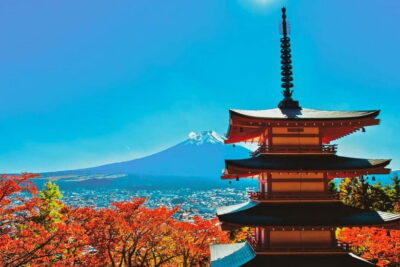
Mt.Fuji,Kawaguchiko Oishi Park,Arakurayama Sengen Park
Read our review →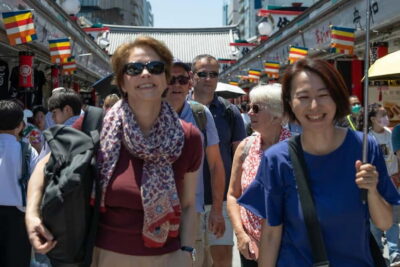
Asakusa Walking Tour with Sensoji Temple Visit
Read our review →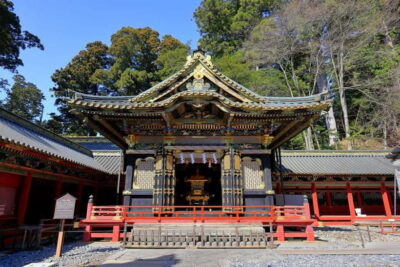
Nikko Toshogu Shrine and Kegon Waterfall Tour
Read our review →
Tokyo Panoramic 1 Day: Meiji Shrine, Asakusa, Odaiba and SKYTREE®
Read our review →
Mt. Fuji, Kamakura, Big Buddha, & Lake Ashi Day Trip
Read our review →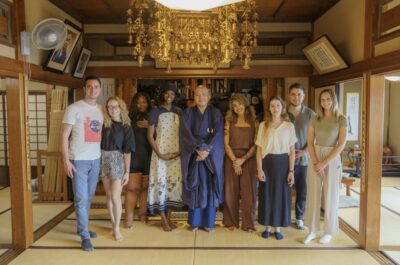
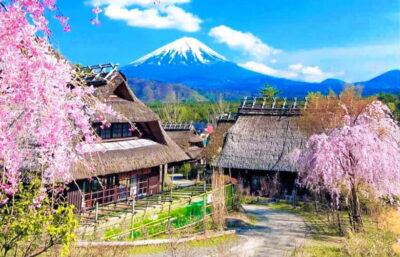
Mt. Fuji Heritage Tour: Traditional Villages, Lakes & Shrine
Read our review →Browse the lists this tour appears in