
REVIEW · METEORA MONASTERY TOURS
Meteora Monasteries Half-Day Small Group Tour with Transport
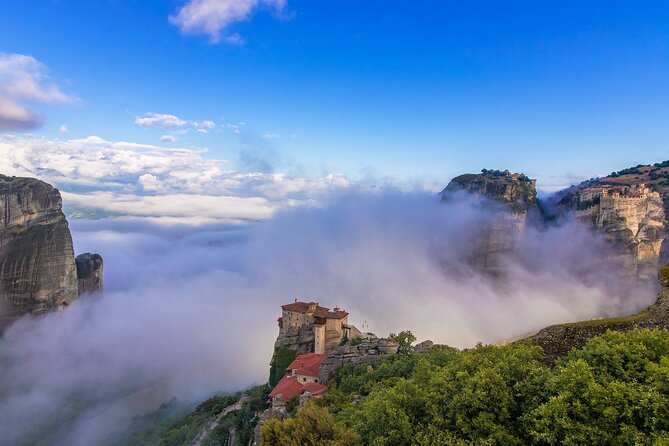
Meteora is the kind of place that makes you stop talking. Monasteries cling to tall stone pillars, with narrow roads curling through the rocks below. This four-hour morning tour gives you a practical way to reach three monasteries, hear the local story, and pause at the best viewpoints without arranging transport yourself.
I like the small maximum group of 18, which keeps the minibus manageable, and I like the local guides. Apostolis, Vasilis, Vaggelis, Lidia, and Jim are praised for clear English, humor, and a real connection to the area. The main drawback is that the guide does not enter the monasteries with you, and the tour can feel more like transport than a full guided visit if your guide gives only brief commentary.
Key points to know before booking
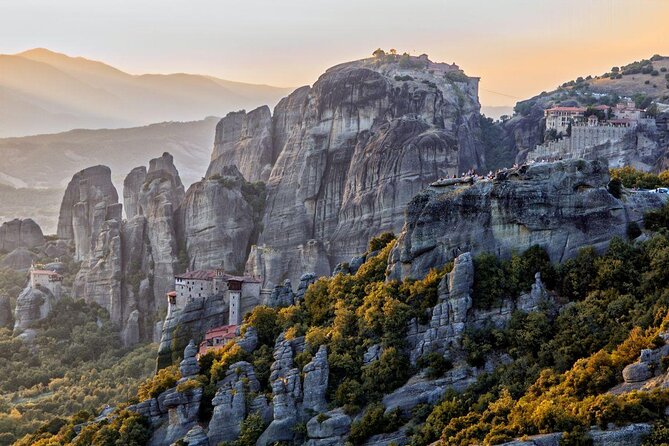
- Three monastery interiors: The standard visit includes Great Meteoron, Varlaam, and Roussanou, with the other monasteries viewed from outside and from photo stops.
- Morning pickup at 9 a.m.: Hotel and Airbnb pickup is available in Kalambaka and Kastraki, with drop-off after the tour.
- Expect stairs: Great Meteoron, Varlaam, and Roussanou require walking and steps. Saint Stephen’s is the easiest monastery to reach, but it is normally viewed from outside on this tour.
- Bring cash: Entrance fees are not included, and some monasteries do not accept cards.
- English guide with audio options: Commentary is in English, while a free smart audio guide is available in several other languages.
- Dress carefully: Men need trousers and long sleeves. Women need a long skirt. Wraps and trousers are provided if needed.
Why this half-day Meteora tour works well
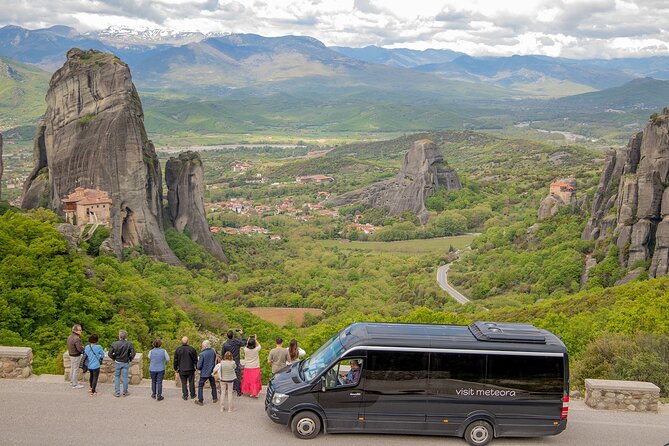
Meteora can be awkward to explore without a car. The monasteries sit on separate rock towers, and the road between them is narrow and winding. This tour solves the basic problem with hotel pickup, a driver who knows the roads, and a guide who explains what you are seeing along the way.
The value is not just the vehicle. Your time is used for three monastery visits, several panoramic photo stops, and an introduction to the wider Meteora area. The tour usually begins at 9 a.m. and finishes around 1 p.m., leaving your afternoon free for lunch, a second look at Kalambaka, or a longer walk.
At $36.30 per person, the price is appealing for a short tour that includes transport, bottled water, WiFi on board, and an English-speaking local guide. You still need to pay the monastery entrance fees, so budget for those separately. This arrangement keeps the headline price low, but it also means you should read the inclusions carefully before booking.
The experience is best for you if you want a strong first look at Meteora rather than a slow, specialist study of church art. If you want detailed commentary inside every chapel, a private guide or a longer cultural tour may suit you better.
More Meteora Monastery Tours in Greece:
- Athens: Meteora Monasteries Day Trip with Caves and Lunch
★ 4.7 · 4,670 reviews - Athens to Meteora: Monasteries, Caves & Seaside Stopovers
★ 4.7 · 2,958 reviews - Athens: Meteora Monasteries, Caves & Coastal Stopovers with Lunch
★ 4.5 · 1,432 reviews
What the monasteries mean before you arrive
Meteora once had 24 monasteries spread across the rock summits. Six remain active or open for visitors today. The monasteries became important centers of Orthodox worship during the Byzantine era, preserving religious paintings, manuscripts, and handcrafts.
The setting helped protect the monks and their faith, but it also made daily life hard. These buildings were raised above the valley on steep stone towers, far from ordinary roads. Even now, reaching some entrances requires a serious climb.
The area also has protected natural value. Meteora and the Antichassia region form a Natura 2000 ecological zone, intended to protect rare birds and flowers. Keep your eyes on the rock faces and open slopes during the drive. The views are not only about buildings. The stone formations and the living world around them are part of the visit.
Your guide should help connect the monasteries to this setting. The strongest guides, including Apostolis and Vasilis, are praised for explaining the area before you go inside and for pointing out details to look for. That preparation matters because the interiors can be quiet and compact, with painted walls and religious objects that are easy to miss without context.
Roussanou: an accessible first taste of monastic Meteora
Roussanou is often one of the first monastery stops on this route. It sits on a lower rock than several of its neighbors, making it more approachable than the highest monasteries.
The monastery took its name from the first likely hermit who settled there. Its main church dates from the end of the 16th century and was decorated about 30 years later. After suffering serious damage during World War II, Roussanou became a convent in 1988.
You get about 45 minutes here. That is enough time to climb in, look around, and take in the views without feeling rushed, though it is not enough for a slow art-history lesson. The monastery entrance fee is not included. The supplied fee information lists €5 for Roussanou per booking, so bring cash and confirm the current amount at the entrance.
Roussanou is a useful first visit because it shows how the monasteries fit the rocks. The lower elevation makes the approach less daunting, but you should still wear shoes with a firm sole. The rock paths and steps are not a place for flimsy sandals.
Varlaam and the art of the highest rocks
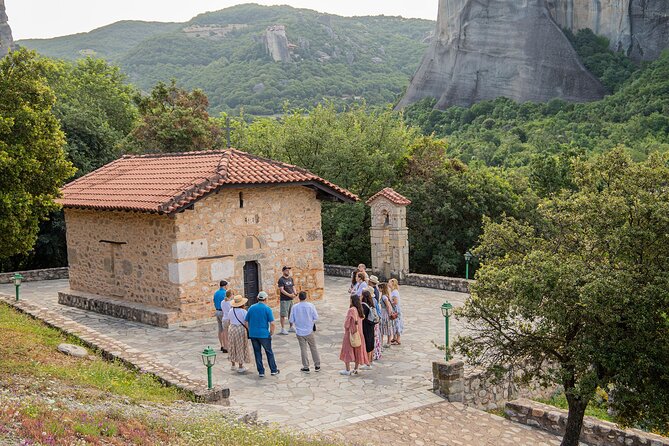
Varlaam is the second-largest monastery and sits opposite Great Meteoron. It was founded in the mid-14th century by the hermit Hosios Varlaam, though the present central church was built later by two brothers from Ioannina, Theophanes and Nectarios Apsarades.
The church was built in 1541 and 1542 and painted in 1548. The wall paintings are associated with the noted artist Frago Catelano of Thebes. Even if you do not know Byzantine art, the guide’s explanation helps you notice the scale and purpose of the decoration.
You have roughly 45 minutes at Varlaam. That makes this a focused visit: climb, enter, see the church and museum areas that are open, and return to the vehicle. The route is scenic, but it requires steps, so do not judge the difficulty by the short driving distance between stops.
Varlaam’s fee is separate from the tour price, with the supplied information listing €5 per booking. The guide and driver generally remain outside while you visit the interior. This is an important distinction. You receive explanations before entering, but you should not expect a personal lecture beside each fresco.
More Half-Day Trips in Greece:
- Athens: Cape Sounion & Poseidon Temple Sunset Half-Day Trip
★ 4.8 · 8,241 reviews - Cape Sounion and Temple of Poseidon Half-Day Small-Group Tour from Athens
★ 4.5 · 3,205 reviews - From Athens: Temple of Poseidon & Cape Sounion Half-Day Tour
★ 4.3 · 1,082 reviews - Meteora: Half-Day Meteora Monasteries Small Group Tour
★ 4.7 · 232 reviews
Great Meteoron, the largest monastery
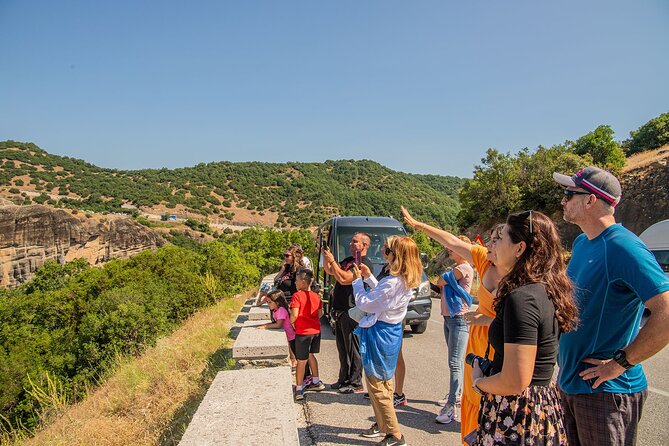
Great Meteoron is the largest and oldest of the monasteries. Its name refers to the idea of being suspended in the air, a fitting description for a monastery built on top of a massive rock tower.
Saint Athanasios the Meteorite founded the monastery and organized it as a communal monastic settlement. That change is considered a major point in the development of organized monastic life at Meteora.
You spend about an hour here, the longest stop on the route. The extra time makes sense. Great Meteoron has more to see, and the climb and buildings take longer to explore. You may encounter steps, narrow passages, religious art, old objects, and museum displays containing manuscripts and other material linked to Orthodox worship.
The entrance fee is listed as €5 per person. Bring cash, since some monasteries do not accept credit cards. The extra charge is a mild annoyance, especially at a tour price that initially looks all-inclusive, but it is not unusual for monastery admission to be kept separate.
Great Meteoron is the stop where good preparation pays off. Before you enter, listen closely to the guide’s overview. Once inside, you can connect the rooms, paintings, and cliff-top setting to the story you have just heard.
Agia Triada and Saint Stephen from the road
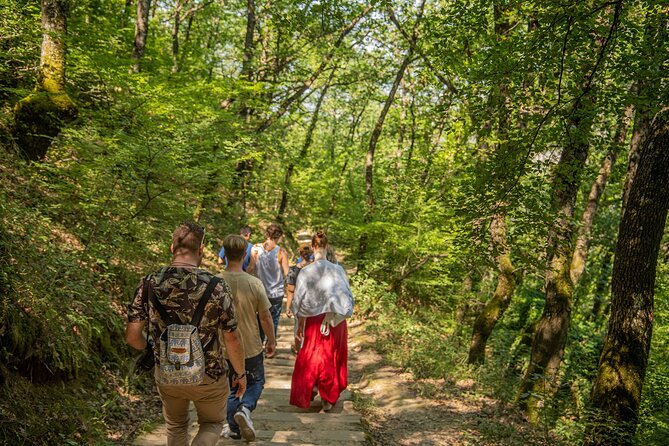
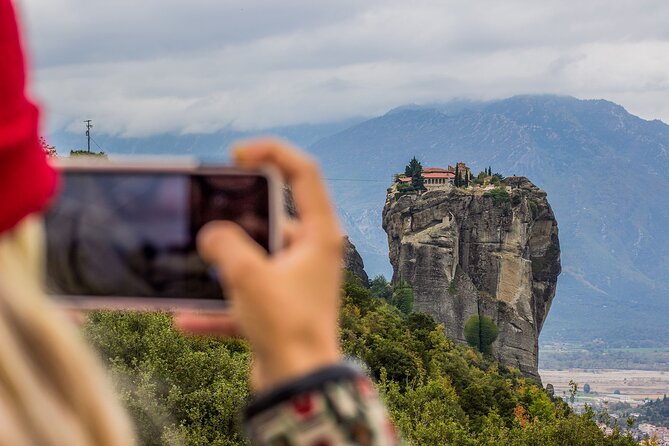
The tour also takes you past the other major monasteries, giving you exterior views and photo opportunities. Agia Triada, or Holy Trinity, is one of the most dramatic. It sits on a steep rock near Saint Stephen’s Nunnery and is reached by a path followed by about 140 steps.
That climb makes Agia Triada a difficult choice for a short group tour, especially when the plan already includes three monastery interiors. Even from outside, though, the position is striking. The rock seems to rise directly from the valley, and the monastery’s location gives you a strong sense of the effort required to reach it.
Saint Stephen’s is the most accessible monastery in the group. Instead of a long staircase, you cross a small bridge to the entrance. Its monastic life reaches back to the early 12th century, and the present church was rebuilt in 1545 by Hosios Philotheos.
Saint Stephen’s would be the best option for someone who cannot manage many steps, but on this tour it is normally seen from outside rather than visited inside. Tell the company about mobility concerns before booking. One particularly useful feature of this operator is that the team has accommodated mobility needs in individual cases, but the itinerary still includes several stair-heavy stops.
The best part may be the road between monasteries
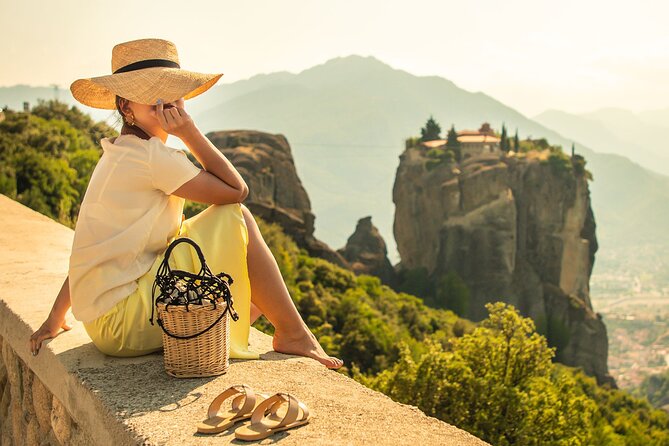
The time in the minibus is not dead time. The roads link the monastery towers with open viewpoints where you can see the entire group of rocks at once. Guides explain which monastery is which, point out the routes, and give you a sense of how isolated the old settlements were.
Photo stops are a major part of the experience. Guides and drivers have helped solo visitors take pictures, and drivers such as Dinos have been praised for choosing good drop-off and pickup points. You should still be ready to move promptly when the group is called back to the vehicle.
The minibus includes bottled water and free WiFi. Those are small comforts, but they matter on a warm morning when you are climbing steps and moving in and out of the sun. The driver also handles the steep roads, which lets you focus on the rock towers instead of navigating them.
A group of up to 18 is not intimate, but it is far less cumbersome than a large coach. The main compromise is that the guide may stand in the center of a full vehicle while talking. If you want constant one-to-one attention, book a private option instead.
Dress rules, stairs, and other practical details
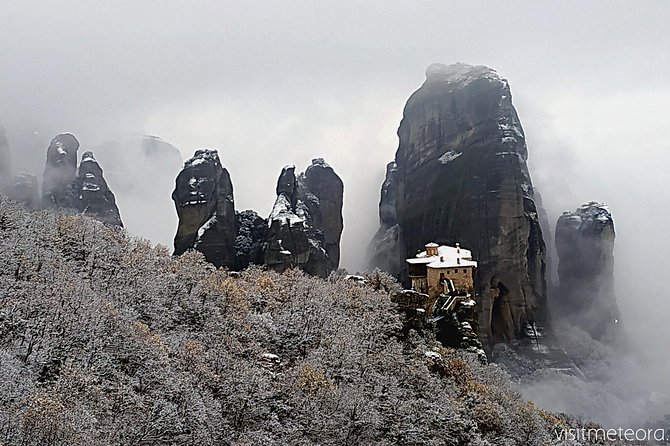
Meteora’s monasteries are working religious sites, not just historic attractions. The dress code is strict. Men need trousers and long sleeves. Women need a long skirt. If your clothing is not suitable, trousers and skirts are provided at the monasteries, but I would dress correctly from the start so you can avoid the fuss.
Comfortable shoes are essential. You may not climb hundreds of steps at every stop, but the route includes uneven approaches, stairs, and walking between the vehicle and entrances. The guides can help with practical questions, but this is not a fully step-free activity.
The tour provides pickup and drop-off from hotels and Airbnbs in Kalambaka and Kastraki. That is a real advantage because you do not need to find a meeting point before breakfast. Confirm the pickup details when you book, and keep your phone available in case the operator needs to reach you.
The tour is offered in English. Free smart audio guides are available in Spanish, French, German, Italian, Portuguese, Polish, Chinese, Japanese, Korean, and other listed languages. The live commentary remains English, so choose this tour for the transport and sights first if you do not follow spoken English easily.
Free cancellation is available up to 24 hours before the start time for a full refund. Changes or cancellations made inside that window are not accepted, so keep the cutoff in mind when building your schedule.
Who will get the most from this tour
I would choose this tour for a first visit to Meteora, especially if you are staying in Kalambaka or Kastraki for only a short time. It covers the major sights efficiently and removes the stress of driving steep roads or figuring out monastery access.
It also suits solo visitors. The guide and driver may help with photographs, and the group setting gives you company without the cost of a private tour. Couples and families who want to see three interiors in one morning should also find the pace useful.
I would be more cautious if you have serious mobility limits. Saint Stephen’s is easy to reach, but the three interior visits on the usual route involve steps. Ask the operator about your needs before paying rather than assuming the vehicle makes the whole experience accessible.
This is also not the best pick for a specialist in Orthodox art. Since the guide generally does not enter the monasteries, the interior explanations are limited to the information given before each visit and what you can read or hear inside. A private guide would give you more time for frescoes, manuscripts, architecture, and questions.
Is the $36.30 price good value?
Yes, for a short orientation tour, the price is strong. You receive round-trip transport, a local English-speaking guide, bottled water, WiFi, three monastery visits, and photo stops. Hiring a car and managing the route yourself would take more planning, and you would lose the benefit of local commentary.
The extra monastery fees keep the final cost above the advertised amount. The listed charges are €5 for Great Meteoron, €5 for Roussanou per booking, and €5 for Varlaam per booking. Carry cash because card payment is not guaranteed.
The tour is less good value if you mainly want a guide inside the buildings. You are paying for efficient access, transport, outside explanations, and the chance to explore independently inside. That is a fair setup for many people, but it should be clear before you book.
Should you book it?
Book this Meteora tour if you want the best sights in four hours, prefer a morning start, and value easy transport over a slow, highly detailed art tour. The strongest parts are the dramatic viewpoints, three monastery interiors, local guides such as Apostolis and Vasilis, and the careful driving on steep roads.
Think twice if you dislike stairs, need a fully guided interior visit, or want to set your own pace. For most first-time visitors staying in Kalambaka or Kastraki, though, this is a practical and well-priced way to meet Meteora properly, with enough time left in the day to explore on your own.
FAQ
How long does the Meteora tour last?
The tour lasts about four hours. It starts at 9 a.m. and typically finishes around 1 p.m.
Where does pickup take place?
Pickup and drop-off are available from hotels and Airbnbs in Kalambaka and Kastraki village.
How many monasteries do I visit inside?
The tour includes visits inside three monasteries, usually Roussanou, Varlaam, and Great Meteoron. The other monasteries are viewed from the outside and during photo stops.
Are monastery entrance fees included?
No. Great Meteoron is listed at €5 per person, while Roussanou and Varlaam are listed at €5 per booking. Bring cash because some monasteries do not accept credit cards.
What language is the tour conducted in?
The live tour is conducted in English. Free audio guides are available in Spanish, French, German, Italian, Portuguese, Polish, Chinese, Japanese, Korean, and other listed languages.
What should I wear for the monasteries?
Men must wear trousers and long sleeves. Women must wear a long skirt. Comfortable walking shoes are also recommended, and skirts or trousers may be provided if your clothing does not meet the dress code.
Just added around Greece
- Monastery, Elafonissi and Winery Tour from Chania★ 5.0 · 8 reviews
- Chania Private Tour: Monastery, Scenic Gorge & Mountain Views★ 5.0 · 12 reviews
- Shore Explore Chania: City Charm, Beach, Monastery & Winetasting★ 5.0 · 13 reviews
- Rethymno: Arkadi Monastery, Margarites Village & Melidoni Cave.★ 4.5 · 12 reviews
- Chania Old Town, Public Market and Chrisopigi Monastery Tour★ 4.5 · 6 reviews
- Private Half-day Tour: Antisamos beach Swim, Melissani Lake, Agrilia Monastery★ 5.0 · 8 reviews
- Meteora Monasteries & Caves Unesco Wonder in Greece Day Trip★ 5.0 · 15 reviews
- Mercedes Private Tour to Classical Athens and Temple of Poseidon★ 5.0 · 13 reviews
Meteora Monastery Tours, compared.
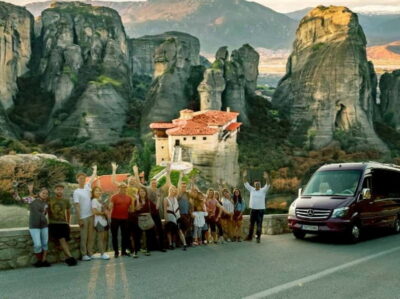
Meteora Monasteries Day Trip with Caves and Lunch
Read our review →
Athens to Meteora: Monasteries, Caves & Seaside Stopovers
Read our review →
Meteora Monasteries, Caves & Coastal Stopovers with Lunch
Read our review →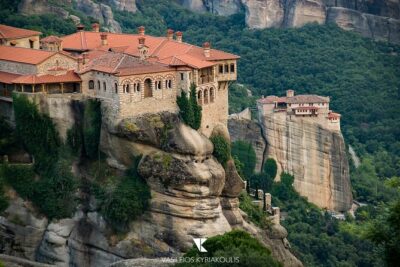
Meteora Monasteries & Caves DayTrip from Athens with Greek Lunch
Read our review →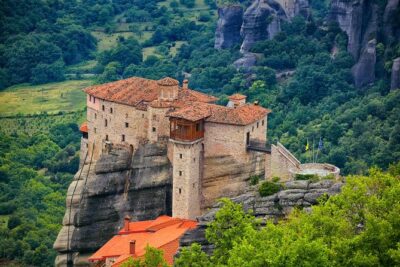
Meteora Monasteries, Hermit Caves Tour with Pickup
Read our review →
Meteora Sunset with Monastery & Hermit Caves Tour in Small Group
Read our review →
Meteora Monasteries, Hermit Caves & Seaside Escapes
Read our review →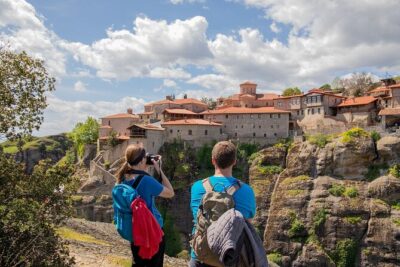
Meteora Small Group Hiking tour with Transfer and Monastery Visit
Read our review →Browse the lists this tour appears in