
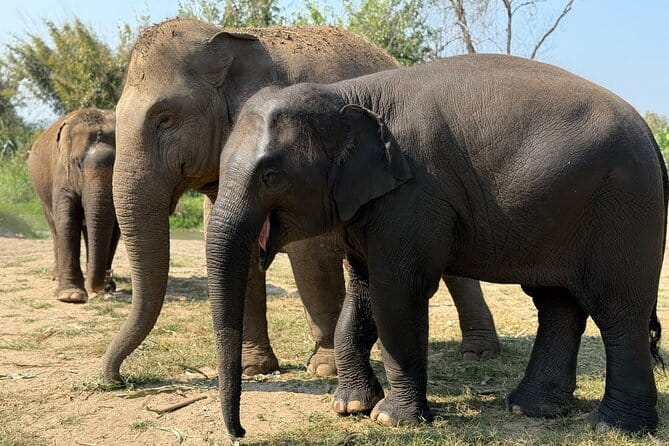
REVIEW · CHIANG MAI TEMPLE TOURS
Elephant Sanctuary, Wat Ban Den & Sticky Waterfall
The day’s best surprise is the three-part mix: a calm meeting with rescued elephants, a striking northern Thai temple, and a waterfall you can climb with your bare feet. Each stop feels quite different, so the long drive from Chiang Mai has a clear payoff.
I like the close look at elephants living in a natural mountain setting, and I like the chance to see Wat Ban Den, a temple many visitors skip. The waterfall is another strong point, especially if you enjoy getting wet rather than simply taking photographs.
The main consideration is time. At about nine and a half hours, this is a full day, and the waterfall climb may not suit anyone who dislikes wet rocks, steep footing, or physical activity. The advertised group limit is nine, though some bookings use a private car for up to four people, so confirm the vehicle arrangement when you book.
Key points to know before booking
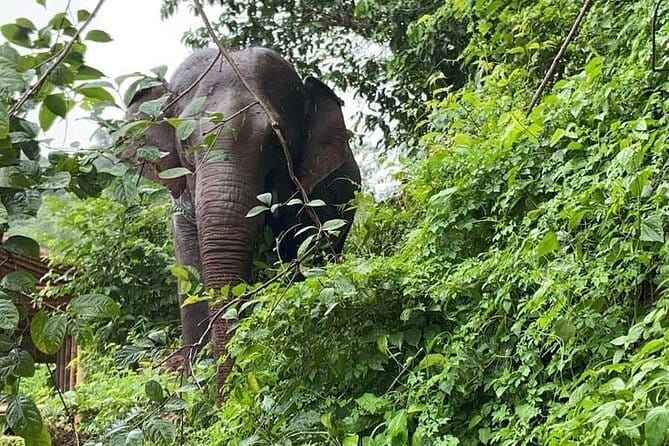
- Rescued elephants come first: Spend about three hours at Pang Maidaeng, learning about elephants formerly used in the logging industry and seeing their daily routines.
- Wat Ban Den is the visual highlight: Blue rooftops, golden pagodas, carved wood, and Buddha images give this northern temple a very different feel from Chiang Mai’s city temples.
- Bua Tong is made for getting involved: The limestone surface lets you walk up the falling water instead of only viewing it from the side.
- Guide quality matters here: Limmy is repeatedly named for his patience, English, and care, while Pai and Pie are also associated with highly praised outings.
- Small-group transport keeps the day manageable: The stated maximum is nine people, and some departures use a private car for up to four.
- The price covers a full day out: At $58.66 per person, the value is strongest if you want transport, guiding, three major stops, and a full day beyond central Chiang Mai.
Why this Chiang Mai day works so well
Many Chiang Mai excursions ask you to choose between wildlife, temples, or nature. This one puts all three in a single day. You begin with a thoughtful animal encounter, shift to architecture and religious art, then finish with a refreshing physical activity.
That variety helps the day feel less repetitive. The temple gives you time to slow down, while the waterfall adds movement and a little harmless adventure. I also like the order of the stops: the elephants receive the most time and attention, the temple offers a quieter middle section, and the falls provide an active finish.
You should expect a long day outside the city rather than a quick sightseeing loop. The total duration is about nine hours and 30 minutes, so wear comfortable clothes and shoes that can handle water. The exact pickup time is not supplied, but hotel pickup is offered, which removes one of the day’s biggest practical hassles.
More Temple and Waterfall Tours in Chiang Mai
- Chiang Mai: Doi Suthep Temple and Waterfall by Songtaew Trio
★ 4.7 · 429 reviews - Chiang Mai: Elephants, Sticky Waterfalls, Market and Temple
★ 4.9 · 227 reviews - Visit Dantewada(Angel Land), Blue Temple, and Sticky Waterfall
★ 5.0 · 120 reviews
Meeting rescued elephants at Pang Maidaeng
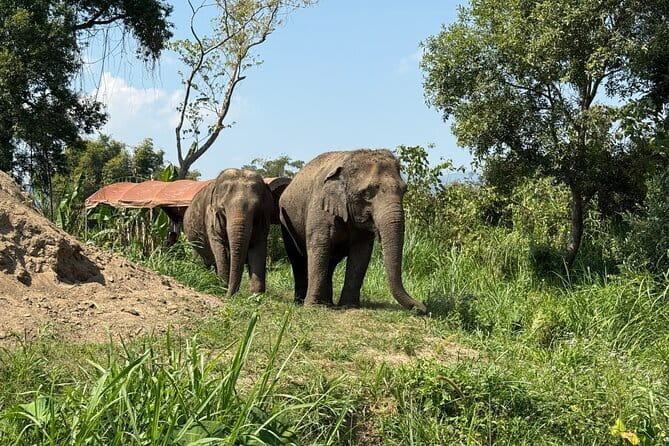
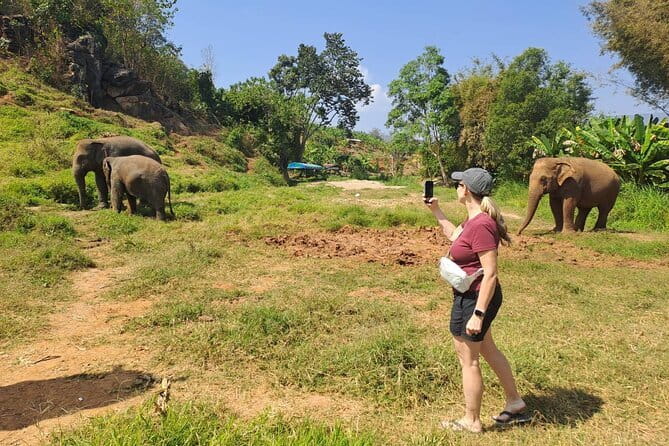
The first stop lasts about three hours, making it the heart of the outing. Pang Maidaeng is described as a scenic sanctuary in the mountains where rescued elephants, including animals formerly used in the logging industry, live in a more natural setting.
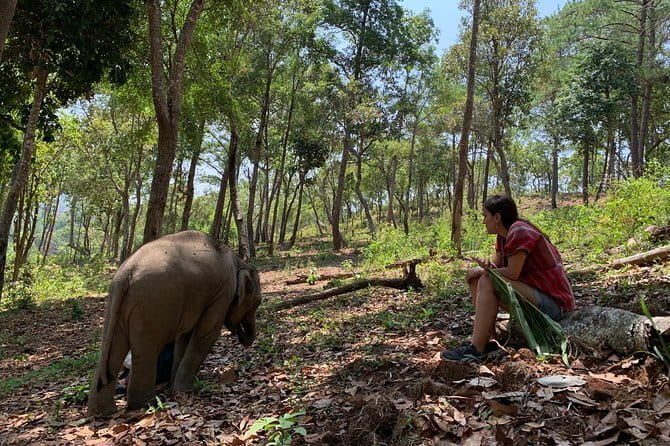
The focus is observation and respectful contact. You can stand close to the elephants, watch their behavior, and learn about their daily lives. Feeding is also part of the experience, and this is one of the moments that makes the encounter feel personal without turning the animals into performers.
That distinction matters. The animals are presented as living on their own terms, not doing tricks or carrying people for entertainment. The supplied information describes the setting as ethical, and direct contact is possible, but you should still pay attention to the guide’s instructions. Elephants are large, intelligent animals, and giving them space is part of treating them well.
I would allow yourself to be patient here. The most worthwhile moments may be quiet ones: an elephant investigating its surroundings, eating, or simply moving through the mountain setting. You are not promised a staged show, so the value comes from watching natural behavior rather than chasing a dramatic photograph.
The sanctuary portion receives the strongest praise, with especially warm comments about the care and guidance provided by Limmy. Pai is also mentioned as part of a particularly well-liked guiding team. If the elephant encounter is your main reason for booking, ask in advance which guide is assigned and what contact with the animals involves that day.
Three hours is generous compared with a brief stop at an elephant park. It gives you time to understand the setting, enjoy feeding, and avoid the rushed feeling that can come from trying to photograph everything in ten minutes. The tradeoff is that the sanctuary takes up a large part of a very long day.
Wat Ban Den and its blue-roofed Lanna design
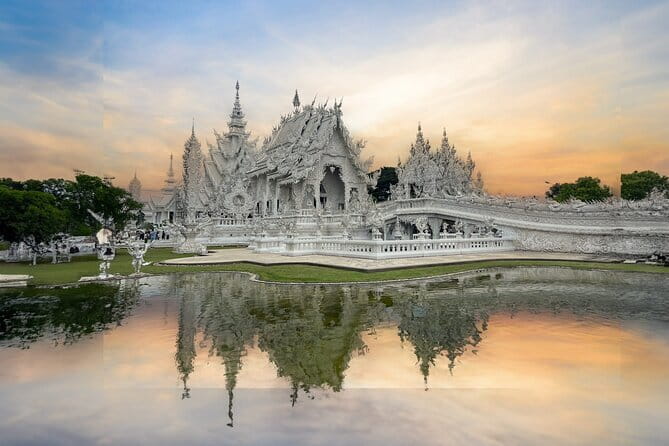
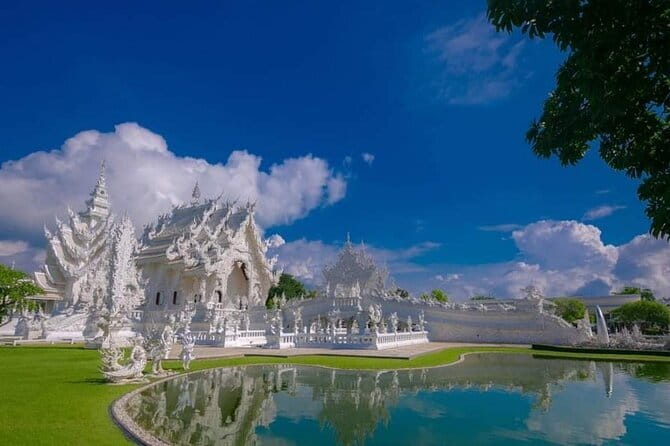
After the elephants, the tour moves to Wat Ban Den for about one hour. This is not a small roadside shrine. The complex is known for its tall blue roofs, golden pagodas, wooden carvings, and carefully arranged courtyards.
The color scheme gives the temple an immediate visual identity. In northern Thailand, Lanna design often uses layered roofs, detailed woodwork, and ornate religious decoration. Wat Ban Den brings those elements together on a grand scale, with Buddha images and multiple buildings inviting a slow walk rather than a single quick look.
I like this stop because it adds cultural weight to a day that could otherwise become only an animal and nature outing. You get a chance to see how local religious architecture uses color, shape, and craftsmanship to create a sense of ceremony.
One hour is enough to see the main areas and take in the design, but it is not enough for a long, unhurried study of every building. If temples are your main interest, you may wish this stop lasted longer. If you prefer a varied day, the short visit works well because it keeps the schedule moving toward the waterfall.
Dress and behavior should be respectful at the temple. The supplied details do not specify a formal dress code, so do not assume that every outfit will be suitable for a religious site. Modest clothing and quiet conduct are sensible choices.
The temple is also a good place to let your guide add context. Limmy is praised for explaining the places on the route without forcing a constant stream of commentary. That balance matters. You can learn about the architecture, then have a little time to look around on your own.
Climbing Bua Tong, Chiang Mai’s Sticky Waterfall
The last major stop is Bua Tong Waterfall, also called Nam Phu Chet Si or Sticky Waterfall. You spend about two hours here, and the unusual part is the limestone itself. Its texture provides grip, allowing you to climb up sections of the flowing water without slipping in the way you might on ordinary rocks.
This is not just a viewpoint. You can get into the water, move upward along the cascade, and cool off in the pools. The surrounding jungle adds shade and a natural setting, but the main appeal is the unusual footing beneath your feet.
The waterfall earns its name from the feel of the limestone. It does not mean you can ignore safety. Water still moves over the rock, and footing can vary. Follow any instructions from the guide, take your time, and avoid treating the climb like a race.
You should bring or wear something suitable for getting wet. The tour information does not list equipment, changing facilities, or specific footwear, so do not assume these are supplied. The safest practical approach is to plan for water from the start and ask the operator what you should bring.
Two hours gives you enough time to try the climb, enjoy the pools, and take a break. The stop is especially good for people who prefer an active finale. It may be less appealing if you want to remain dry or if uneven, wet surfaces are difficult for you.
The falls also give the day a welcome change of pace. After watching elephants and walking through temple courtyards, you are doing something physical and playful. That contrast is one reason this tour feels more memorable than a standard temple circuit.
More Temple and Waterfall Tours in Thailand
- Doi Suthep Temple and Bau Thong Waterfalls Private Tour
★ 5.0 · 114 reviews - Chiang Mai: Sticky Waterfall scenic loop unseen lake &temple
★ 4.9 · 94 reviews - Chiang Mai: Doi Suthep Temple & Sticky Waterfall Trip
★ 4.6 · 91 reviews - From Chiang Mai: Temples, Sticky Waterfall, and Orchid Farm
★ 4.8 · 52 reviews
Guides, vehicles, and the size of the group
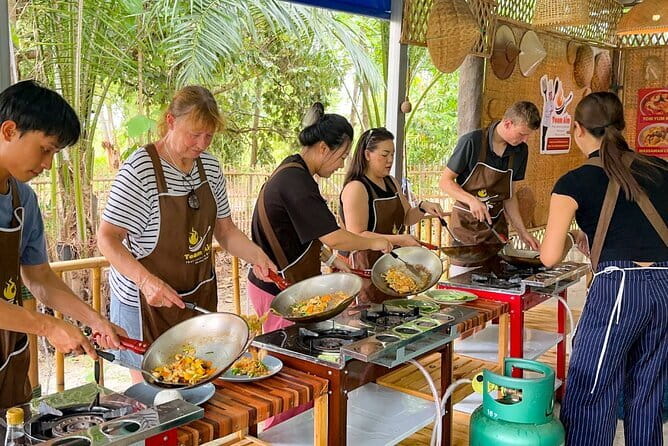
The provider is Limmy Private Tour Chiang Mai, offering taxi, SUV, and van services. Limmy is named repeatedly in the supplied comments, with praise for patience, strong English, local information, and personal care from hotel pickup onward.
Pai and Pie are also named as guides. Pie is described as patient and well informed, while Limmy and Pai are praised for clear English and hospitality. Because several guides may operate the experience, confirm the assigned guide if that matters to you.
The stated maximum is nine people. That is small enough to make conversation and timing easier than on a large coach, but the actual vehicle may depend on the booking. One account describes a private car carrying up to four people, with fewer stops and a faster-feeling ride than a shared shuttle or van.
This difference is worth checking before paying. A private car for up to four offers more control and a quieter ride. A group of up to nine may still be perfectly comfortable, but the pace and seating arrangement will depend on the vehicle used that day.
The flexibility of the guides is another useful feature. The schedule can be adjusted around how busy each place is, according to the supplied details. That does not mean the day can be completely reshaped, since the three stops and approximate times are set, but it may help avoid arriving at a site at its busiest moment.
Is $58.66 a fair price?
At $58.66 per person, this is not the cheapest way to see one Chiang Mai attraction. It is a fairer comparison to a full-day private or small-group outing, since the price combines transport, guiding, hotel pickup, three stops, and roughly nine and a half hours on the road and at the sites.
The value is strongest for you if you want a ready-made day outside the city. Arranging an elephant sanctuary, a distant temple, and Bua Tong on your own would require transport planning and careful timing. The guide also gives you local context and handles the route.
The value is weaker if you only want the waterfall or only care about temples. You are paying for the combination. The sanctuary receives about three hours, Wat Ban Den one hour, and Bua Tong two hours, with the remaining time used for transport and the day’s transitions.
The small-group format helps justify the cost. A private car for up to four people can make the price especially reasonable when split among companions. For solo bookers, the benefit is less about saving money and more about getting a structured day with pickup and guidance.
Who should book this experience?
I would suggest it to you if you want three very different sides of Chiang Mai in one outing. It suits people who care about animal welfare, enjoy ornate religious buildings, and are happy to finish the day wet and active.
It also fits families and mixed-age groups better than a day built around only a strenuous hike. The supplied information says most people can participate and that older adults can take part. Still, the waterfall climb itself requires care, so participation in the full activity may depend on your comfort with wet, uneven surfaces.
You should think twice if you dislike long days, have no interest in elephants, or want an unhurried temple visit. Wat Ban Den receives only about an hour, and the route is designed for variety rather than deep study of one site.
Free cancellation is available up to 24 hours before the start time for a full refund. Changes made within 24 hours are not accepted, and poor weather can lead to a different date or full refund. The tour also needs a minimum number of participants, so a cancellation for that reason brings the same choice of another date, another experience, or a refund.
My call on the Chiang Mai combination tour
I would book this if I wanted an efficient full day beyond Chiang Mai with a strong animal encounter and a little adventure at the end. The elephant sanctuary is the main reason to go, while Wat Ban Den and Bua Tong make the day broader and more enjoyable.
Before booking, confirm the vehicle, assigned guide, pickup details, and what to bring for the waterfall. If you want a private car, ask specifically about the up-to-four-person arrangement rather than assuming every departure uses one.
For a first visit to Chiang Mai, this is a good choice when you want variety and practical transport in one package. It is less suitable for someone seeking a slow temple day or a quiet nature walk. For most active visitors, the mix of elephants, Lanna architecture, and climbable limestone makes the $58.66 price reasonable.
FAQ
How long does the experience last?
The tour lasts approximately nine hours and 30 minutes.
Is hotel pickup offered?
Yes. Pickup is offered as part of the experience.
How many people can join the tour?
The stated maximum is nine travelers. One supplied account describes a private car that can fit up to four people, so confirm the vehicle type for your booking.
Which elephant sanctuary does the tour visit?
The first stop is Pang Maidaeng.
How long do you spend with the elephants?
The Pang Maidaeng visit lasts about three hours.
What can you do at the elephant sanctuary?
You can learn about rescued elephants, observe their daily lives in a scenic natural setting, and feed them.
How long is the visit to Wat Ban Den?
The Wat Ban Den stop lasts about one hour.
What is special about Wat Ban Den?
The temple complex features blue rooftops, golden pagodas, intricate wooden carvings, courtyards, and Buddha statues in a Lanna architectural setting.
Can you climb Bua Tong Waterfall?
Yes. The waterfall’s limestone surface provides grip, allowing you to climb sections of the flowing water.
What is the cancellation policy?
You can cancel up to 24 hours before the experience starts for a full refund. Cancellations or changes made less than 24 hours before the start time are not accepted, and poor weather or an unmet minimum number of participants can lead to a new date or a full refund.
Just added around Chiang Mai
- Doi Suthep and Hmong Hilltribe Half Day Tour in Chiang Mai★ 3.5 · 8 reviews
- Wat Doi Suthep Temple and White Meo Hilltribe Village Half-Day Tour from Chiang Mai★ 4.0 · 27 reviews
- Visit Chiang Rai Temples and Lalitta Cafe from Chiang Mai★ 4.5 · 23 reviews
- Chiang Mai – Doi Suthep Temple and Street Food Tour★ 5.0 · 17 reviews
- Private tour] Perfect day! Sticky waterfall + ChiangDao Cave + Wat BandenTemple★ 4.5 · 6 reviews
- Private tour Chiang Dao cave ,Temples,Sticky waterfall★ 5.0 · 14 reviews
- Private Tour to Doi Inthanon including Twins Pagodas and Hiking★ 5.0 · 22 reviews
- Best Places in Chiang Rai White, Blue, Big Buddha, Tea Plantation★ 4.0 · 70 reviews
Chiang Mai Temple Tours, compared.
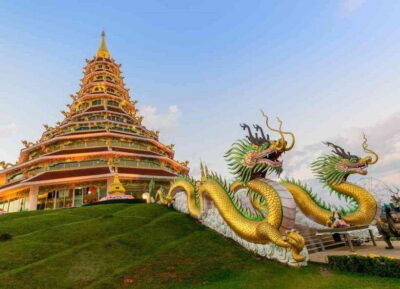
Chiang Rai Temples, Karen Tribe and Hot Springs
Read our review →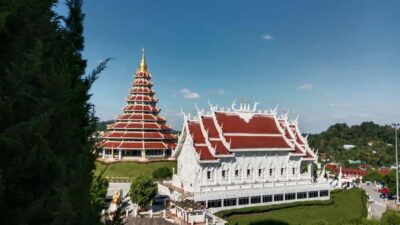
Chiang Rai White Temple and Blue Temple Day Tour
Read our review →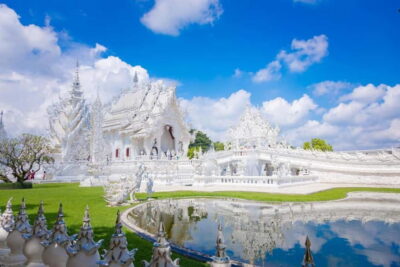
White, Red/Black & Blue Temples Tour with Lunch
Read our review →
Doi Suthep and Wat Umong Enchanting Evening Tour
Read our review →
3 Hour Old City and Temples Guided Walking Tour
Read our review →
Doi Suthep, Wat Umong, and Pha Lat Sunrise Tour
Read our review →
Chiang Rai Temples: Private Tour from Chiang Mai
Read our review →
Browse the lists this tour appears in