
REVIEW · PRIVATE CAR WITH DRIVER
Bhubaneswar city tour & Konark Sun Temple in private car with guide
Konark Sun Temple is the star here: a 13th-century stone chariot built for the sun god, with carved wheels, horses, and stories cut into its walls. But the day works because Dhauli Hills adds Ashoka’s personal turning point, while Bhubaneswar’s temples and Jain caves fill in the larger picture of Odisha.
I like the private car and flexible pace. You are not tied to a large group while moving between sites, and the guide can spend more time on what interests you. I also like that lunch, hotel pickup, drop-off, the car, and listed admission fees are included in the $140 price.
The main caution is the long day. Konark lies outside Bhubaneswar, and the nine-hour schedule combines driving with several historic stops. One guide received criticism for weak English communication, so if clear spoken English matters greatly to you, confirm that detail before booking.
Key points to know before booking
- Konark is the day’s major sight: Allow your full one-hour visit to study the chariot form and detailed stone carving.
- Dhauli links scenery with a moral turning point: The hill is tied to Emperor Ashoka’s battle in 260 BC and his later embrace of Buddhism.
- Two ancient cave sites are covered: Khandagiri and Udayagiri were retreats for Jain ascetics in the second century BC.
- Rajarani Temple provides a quieter Bhubaneswar finish: Its reddish and yellow sandstone and erotic carvings reward a slower look.
- Private transport saves effort: Pickup and drop-off are available from any hotel in Bhubaneswar.
- The price includes more than a driver: Lunch, a professional guide, the car, taxes, fees, and listed admission costs are covered.
Why this private Bhubaneswar day works
Bhubaneswar can feel like several cities layered together. You have an old temple center, Buddhist sites, ancient Jain caves, and the grand coastal monument at Konark. Seeing all of that in one day is demanding, but it gives you a useful outline of Odisha’s religious and artistic past.
This is a private tour, so only your group takes part. That matters more than it might at first appear. You can ask questions without holding up a busload of people, pause at a carving, or move on when your attention begins to fade. One account of the outing noted that the pace followed the customer rather than the guide, which is exactly the advantage you want from a private arrangement.
The tour begins at 8:00 a.m. with pickup at your Bhubaneswar hotel. A full day is listed at about nine hours, including transport, sightseeing, and lunch. Since the schedule includes Dhauli, Konark, two cave sites, and Rajarani Temple, you should expect a busy day rather than a slow temple walk.
More Private Temple Tours in India
- Private Guided Spiritual Walk in Banganga Hindu Temples
★ 5.0 · 271 reviews - Old Delhi Temples and Spiritual Sites Private 6-Hour Tour
★ 4.8 · 204 reviews - Private Delhi Temples and Spiritual Sites 6 Hours Tour
★ 5.0 · 171 reviews
Dhauli Hills and the story of Ashoka
The first stop is Dhauli Giri Hills, about 45 minutes. The site is associated with the Kalinga War, fought in 260 BC. Emperor Ashoka won, but the slaughter reportedly changed his outlook and led him toward Buddhism.
That story gives the hill more weight than a simple viewpoint. You are looking at a place connected to a ruler’s change from conquest toward a message of peace. The tour uses this early stop to introduce the historical world behind the monuments you see later.
Dhauli is also useful because it sets up the Buddhist side of Odisha. Bhubaneswar is often presented mainly through its Hindu temples, but this stop reminds you that several major religious traditions shaped the region.
The visit is scheduled for 45 minutes, with admission included. That is enough for an introduction and a look around, but not a long, unhurried study of every feature. If the Ashoka story interests you, listen closely to the guide here and ask for context before moving on.
The Peace Pagoda at Dhauli
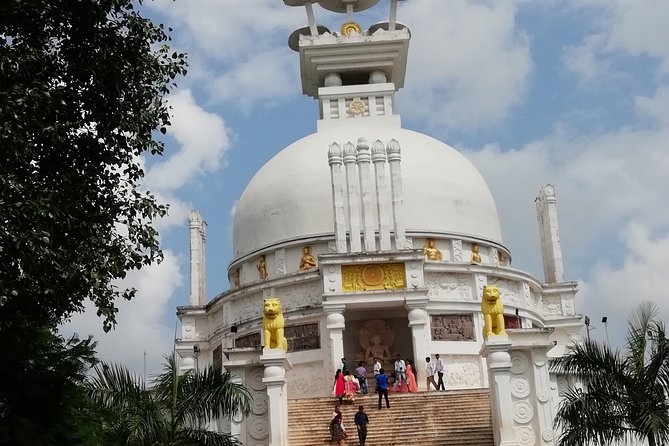
Another 45 minutes is reserved for the Dhauli Peace Pagoda, also called the Shanti Stupa. The current structure was built in 1972 through cooperation between the Japan Buddha Sangh and the Kalinga Nippon Buddha Sangh.
The pagoda is a modern building, not an ancient monument, and that contrast is part of its value. You see a 20th-century expression of Buddhist peace at a place tied to an ancient battlefield. It makes the stop less about age and more about how later generations chose to remember the past.
You may find this portion of the morning calmer than the temple visits. The stop also offers a clear break before the drive toward Konark. Keep in mind that the schedule gives equal time to Dhauli Hill and the Peace Pagoda, so the guide may treat them as two connected but separate experiences.
Konark Sun Temple and its stone chariot
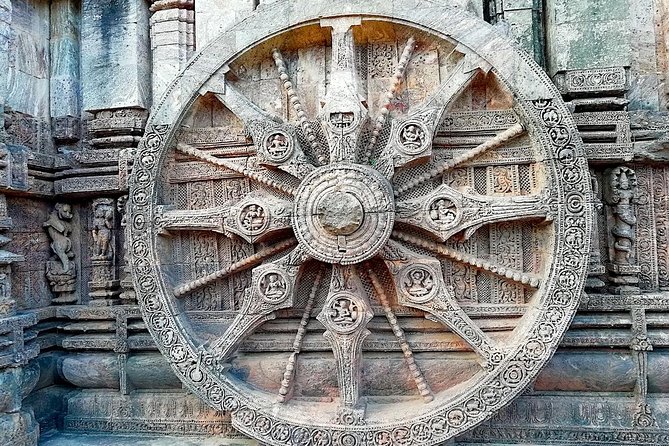
Konark is the centerpiece of the day. The temple was built in the 13th century by King Narasimhadeva and designed as a colossal chariot for the sun god. Its seven horses and great stone wheels are the main visual idea, but the smaller carvings are what make the place worth careful attention.
You will want to look beyond the wide shape of the monument. The stonework includes detailed scenes and erotic carvings, along with the wheels and horses that define the temple’s design. The scale can impress you from a distance, while the carved surfaces reward you when you get close.
The scheduled visit is one hour. That is enough to see the principal forms and hear the main explanation, but it can feel short if you like architecture or photography. One account called Konark unmissable for anyone passionate about India, and I can understand why. This is not merely a stop on the way to somewhere else. It is the reason many people choose this particular day tour.
A guide is especially useful at Konark because the structure can look like a mass of stone until someone explains the chariot plan and points out the details. A guide named Surya received particular praise for explaining regional history and speaking slowly in English, which could help if you do not use English every day. Guide assignments can vary, so treat that as a useful example rather than a guarantee.
The visit also has a practical limit: the temple grounds are only one part of the day, and the tour still has to return to Bhubaneswar. If you want a long, scholarly examination of Konark, a dedicated visit may suit you better. If you want the major ideas, the finest carvings, and a strong introduction, the one-hour stop is sensible.
Same country, a different morning at the gates:
- Mahabalipuram tour by Tourism Ministry approved company
★ 5.0 · 405 reviews - New Delhi: Akshardham Temple Tour with Water and Light Show
★ 4.8 · 313 reviews - Old Delhi Food-Spice Market-Temples Tour Soon Featured on NETFLIX
★ 5.0 · 304 reviews - Mahabalipuram & Kanchipuram by tourism ministry approved company
★ 5.0 · 264 reviews
Khandagiri and Udayagiri Caves
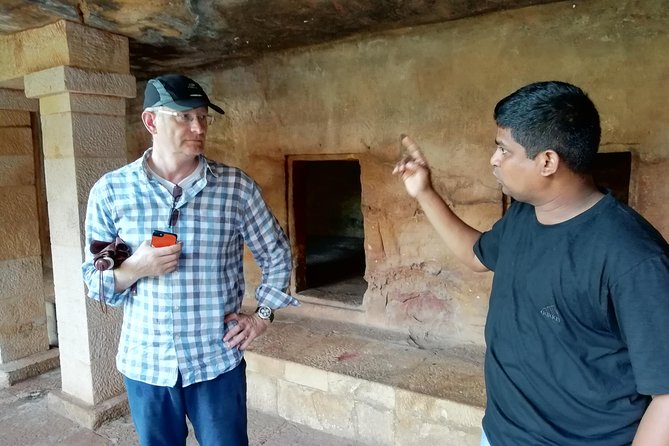
Back near Bhubaneswar, the tour turns to Khandagiri and Udayagiri. These caves were made in the second century BC during the reign of King Kharavela of the Kalinga Kingdom. They served as dwelling retreats, or cells, for Jain ascetics.
Do not picture a single cave chamber with a quick photo stop. This is a historic complex of carved spaces, and the meaning comes from seeing how religious life used the rock. The caves offer a very different experience from Konark’s grand temple design. Here, the interest is in austerity, carved surfaces, and the remains of places intended for retreat.
The stop lasts about one hour and includes both Khandagiri and Udayagiri. The supplied details also note an 18th-century feature at the top, though they do not specify it further. Ask your guide to identify it on site rather than assuming every structure belongs to the ancient period.
The cave stop may be more physically demanding than the main temple visits because you are exploring an elevated historic site. The schedule does not state a precise accessibility arrangement, so ask ahead if steps or uneven ground are a concern for you. Most people can take part, but the exact ease of the visit will depend on your comfort with the site.
This is also a place where a good guide can make a large difference. Without context, carved cells can seem plain after the spectacle of Konark. With an explanation of Jain ascetic life and King Kharavela’s period, the caves become a valuable counterpoint to Odisha’s later Hindu and Buddhist monuments.
Rajarani Temple and Bhubaneswar’s carved sandstone
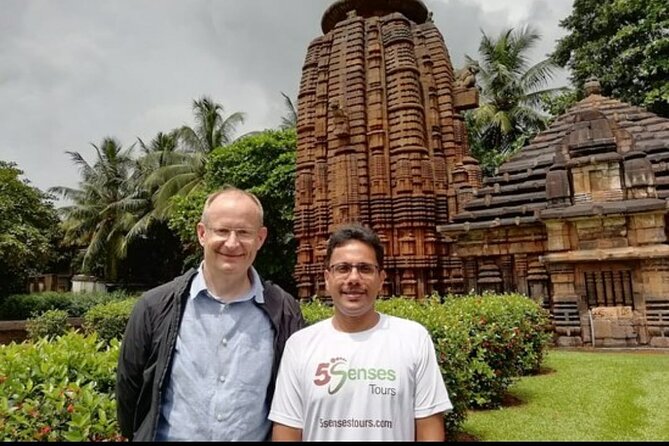
The final listed stop is Rajarani Temple, with about one hour set aside. The temple dates to the 11th century and was built from reddish and yellow sandstone. That stone was called Rajarani in the local dialect, giving the temple its name.
The temple is known for its sculpted figures, including erotic carvings. These details are not an odd extra attached to the monument. They form part of the broader visual language of Indian temple art, where religious, human, divine, and sensual imagery can share the same walls.
Rajarani is a good closing stop because it brings you back into Bhubaneswar after the longer trip to Konark. It is smaller in concept than the Sun Temple, but that can make the carvings easier to appreciate. You can focus on the material, the figures, and the way the temple fits into the city’s architectural story.
The hour should give you enough time for a guided explanation and personal viewing. If Rajarani is your favorite site, tell the guide early that you would like time for close inspection. The private format makes that request more realistic than it would be on a fixed group outing.
What the car, guide, and lunch add to the day
The practical strength of this experience is the package. You get pickup and return to any hotel in Bhubaneswar, a private car, a professional guide, lunch, and taxes, fees, and listed admission charges. Drinks are not included, so plan to pay for those separately.
A private car is particularly useful because this is not one compact walking route. Dhauli, Konark, the caves, and Rajarani are separate stops, and the day depends on road travel between them. Having one driver handle the route lets you concentrate on the sites instead of arranging each transfer yourself.
The guide is just as important as the car. This day contains several layers of history: Ashoka and the Kalinga War, Buddhist remembrance, Jain asceticism, medieval temple building, and the sculptural program at Konark and Rajarani. A guide who explains clearly can turn a string of monuments into a connected story.
English communication may vary. One account praised the guide’s historical explanations and slow English, while another found the guide’s communication difficult. That is the only notable weakness in the available feedback, and it is worth considering if detailed interpretation is central to your decision.
Lunch is included, but the provided details do not identify the restaurant, menu, or dietary arrangements. If you have food restrictions, ask the provider before the day begins. The same goes for drinks, since they are excluded.
Is $140 per person a fair price?
At $140 per person, this is not the cheapest way to see Bhubaneswar and Konark. It can still be good value if you are traveling as a small private group and would otherwise need to arrange a car, driver, guide, lunch, and entry costs separately.
The value comes from the full-day structure. You are not paying only for admission to one monument. You are covering transport from your hotel, a guide, lunch, a private vehicle, and a carefully connected set of sites. The price becomes easier to justify when you value convenience and want historical explanation rather than only transportation.
If you are a solo visitor on a tight budget, $140 may feel high. If you are splitting the cost with companions, the private format becomes more attractive. Group discounts are offered, though no exact discount amount is provided, so ask for the current price before booking.
The strongest reason to pay for this arrangement is time. Konark can be awkward to combine with several Bhubaneswar sights without a car. This tour handles the movement in one day and removes much of the planning burden.
Who will get the most from this tour?
I would recommend this day to someone visiting Bhubaneswar for a short stay who wants the major monuments without arranging separate transport. It suits first-time visitors, architecture fans, history-minded visitors, and anyone who prefers a private pace.
It is also a good fit if you want several traditions represented in one outing. Dhauli brings in Buddhism and Ashoka, the caves introduce Jain heritage, and the two temples show the power of Odisha’s Hindu architecture and sculpture.
You may want a different plan if you dislike full days in a car or prefer to spend half a day at one monument. Konark receives only about an hour in the schedule, and the whole route has to fit inside roughly nine hours. The tour gives breadth, not an exhaustive study of each site.
The activity is described as suitable for most people, but detailed accessibility information is not provided. If walking, steps, or uneven surfaces are a concern, ask before booking, especially about the cave complex.
Booking decision
Book this tour if you want one well-organized private day that joins Bhubaneswar’s temples and caves with the essential Konark visit. The included car, hotel pickup, lunch, guide, and listed admission fees make the $140 easier to assess, especially for two or more people sharing the experience.
Choose it with realistic expectations. This is a full sightseeing circuit, not a leisurely single-site visit, and guide communication can affect how much history you take in. Ask about the guide’s English and your preferred pace before confirming. If those points suit you, the combination of Konark, Dhauli, the Jain caves, and Rajarani gives you a strong first look at Odisha.
FAQ
What time does the tour start?
The tour starts at 8:00 a.m.
How long does the experience last?
The full tour lasts approximately nine hours.
Is hotel pickup included?
Yes. Pickup and drop-off are included from any hotel in Bhubaneswar.
Is this a private tour?
Yes. Only your group takes part in the activity.
Is lunch included?
Yes. Lunch is included, but drinks are not.
Are admission fees included?
The listed itinerary stops show admission tickets included, and taxes, fees, and handling charges are included in the tour.
Which places are visited?
The route includes Dhauli Giri Hills, the Dhauli Peace Pagoda, Konark Sun Temple, Khandagiri and Udayagiri Caves, and Rajarani Temple.
Can I cancel for a full refund?
You can cancel at least 24 hours before the experience start time for a full refund. Cancellations or changes made less than 24 hours before the start are not accepted for a refund.
More Private Cars with a Driver in India
- Mahabalipuram and Kanchipuram Day trip from Chennai by Private car with Guide
★ 5.0 · 34 reviews - Ajanta Ellora Tour Package in Air Condition Vehicle with Driver
★ 5.0 · 17 reviews - Chennai & Mahabalipuram day trip with private car, Lunch & Guide
★ 5.0 · 10 reviews - Hue: Custom Tour with Dragon Boat, Private Car & Motorbike
★ 5.0 · 199 reviews
Just added around India
- South India Tour- Temple Architecture and Backwaters★ 5.0 · 7 reviews
- Chennai City Highlights – Government Museum & Temple Discovery★ 4.0 · 7 reviews
- Private Day Trip to Mahabalipuram from Chennai with Expert Guide★ 5.0 · 29 reviews
- Full-Day Private Tour to the Kanchipuram Temples from Chennai★ 5.0 · 73 reviews
- Chennai & Mahabalipuram day trip with private car, Lunch & Guide★ 5.0 · 10 reviews
- Explore Mahabalipuram & Kanchipuram: A Day Trip from Chennai!★ 5.0 · 9 reviews
- Mahabalipuram and Kanchipuram Day trip from Chennai by Private car with Guide★ 5.0 · 34 reviews
- Mahabalipuram walking tour by certified travel company★ 5.0 · 10 reviews
Private Car with Driver, compared.
Custom Tour with Dragon Boat, Private Car & Motorbike
Read our review →
Nikko Private Car Tour – English Driver, Flexible Schedule
Read our review →
Immersive Arashiyama & Fushimi Inari by Private Car
Read our review →
Mahabalipuram and Kanchipuram Day trip from Chennai by Private car with Guide
Read our review →
Half-Day Taman Ayun UNESCO and Tanah Lot Temple with private Car
Read our review →
Ajanta Ellora Tour Package in Air Condition Vehicle with Driver
Read our review →
Browse the lists this tour appears in