
REVIEW · TOKYO TEMPLE TOURS
Tokyo War History Tour: Yasukuni Shrine & War Museum
Yasukuni Shrine is not simply another Tokyo shrine. It is a place of prayer, mourning, national memory, and political argument, all packed into one quiet set of grounds. This private tour helps you understand why the site matters, then takes you into the Yushukan War Museum, where Japan’s wars are presented through a distinctly Japanese lens.
I like the private format, since you can ask direct questions about difficult subjects without trying to keep up with a large group. I also like the pairing of Yasukuni and Chidorigafuchi, when you choose the longer option: one is a religious memorial, the other a secular state cemetery.
The main consideration is the museum’s point of view. The Yushukan presents Japan’s military past in its own way, and some displays may feel selective or sensitive. A guide such as Tatsuo can help supply context, but you should arrive ready to think critically rather than accept every display as a complete account.
Key points to know before you book
- Yasukuni was founded in 1869: Its purpose is to commemorate people who died in Japan’s conflicts from the Meiji Restoration through the Asia-Pacific War.
- The Yushukan takes about 110 minutes: This is not a quick museum stop, so allow time to read, look closely, and discuss what you see.
- The extended route adds Chidorigafuchi: The comparison shows how religious enshrinement differs from secular government commemoration.
- You get a private English-speaking guide: The group is limited to your party, with room for questions and a flexible conversation.
- The tour covers sensitive subjects: Expect discussion of imperial ideology, military expansion, sacrifice, war memory, and Japan’s modern identity.
- The price is $87 per person: That includes the guide and Yushukan admission, but not food, drinks, or transport to the meeting point.
Why Yasukuni Shrine matters in modern Tokyo
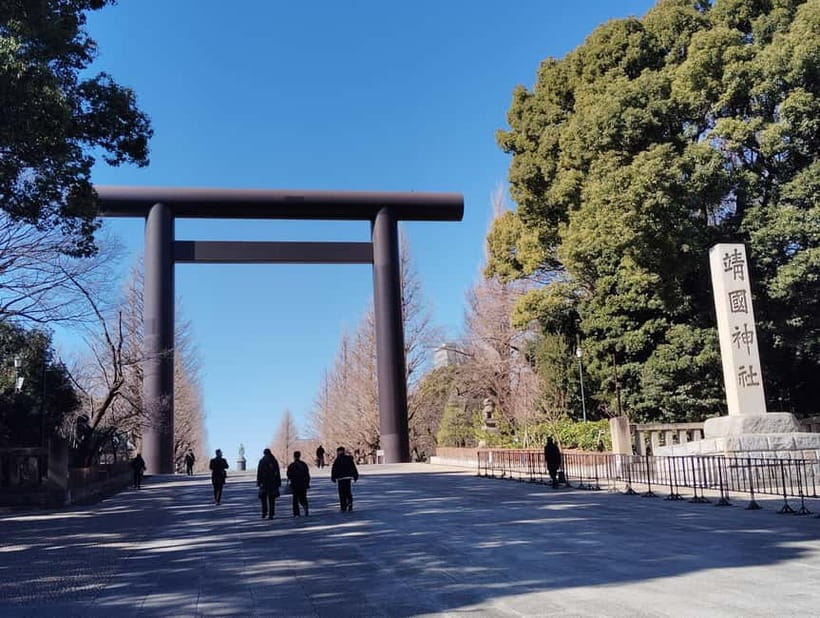
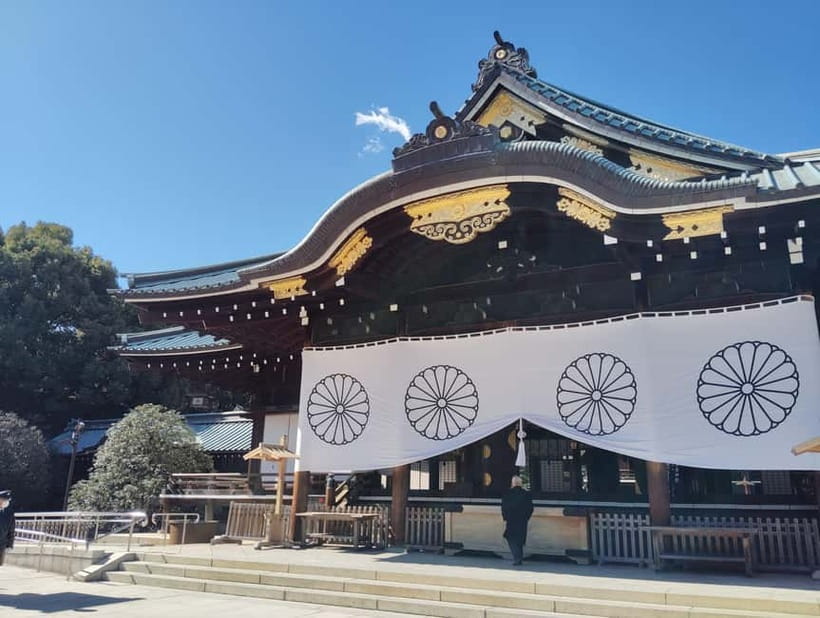
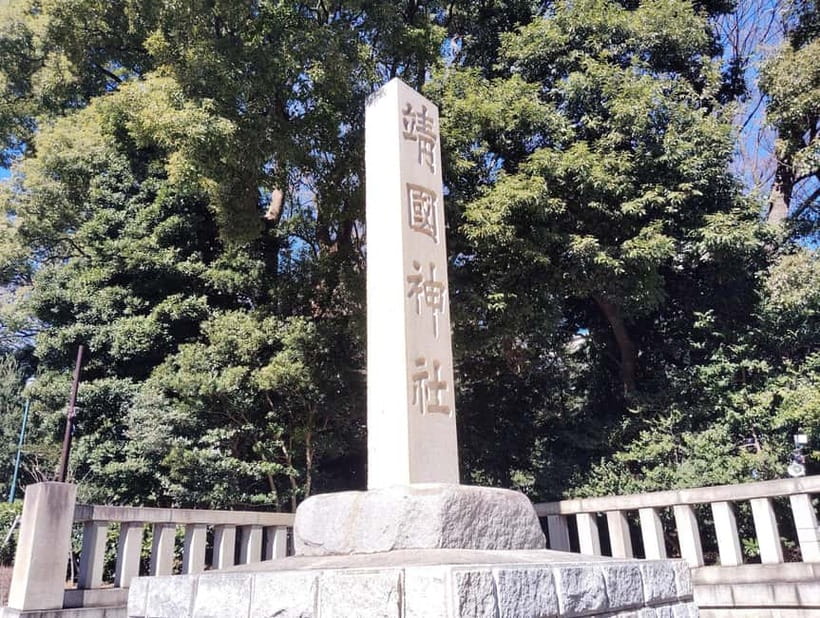
The first torii gives this tour a suitably serious beginning. From there, you walk into a shrine founded in 1869, during the period when Japan was building a modern nation-state after centuries of feudal rule.
Yasukuni is unusual because it is dedicated to the spirits of people who died in war, rather than to a traditional Shinto deity. That makes the grounds important for two very different reasons. Japanese families may come to mourn relatives, while historians and political observers study the shrine as a symbol of state power, nationalism, and public memory.
Your guide explains how the shrine developed alongside Japan’s modernization. You hear about the Meiji Restoration, the changing role of the samurai, imperial ideology, and the growth of Japan’s military institutions. The walk is not just a lesson in dates. It shows how religious ritual and national identity became closely linked.
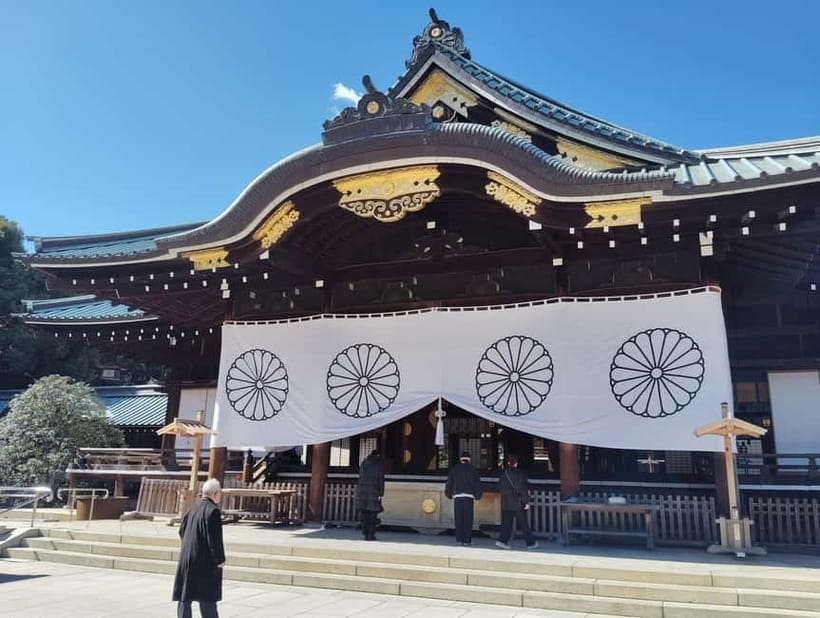
You will also take part in basic shrine etiquette. That gives the visit a practical side. Instead of looking at the torii, approach, and worship area as scenery, you learn how the rituals connect the living with the dead. This is one of the tour’s most useful features, since the ceremonies make more sense once you understand what the site is meant to do.
Yasukuni can be peaceful in a physical sense, but the subject matter is not simple. The shrine remains a focus of international debate because of how Japan remembers people connected to its wars. Your guide’s job is to explain those tensions without turning the visit into a political argument.
I would pay close attention to the contrast between the calm grounds and the difficult questions they raise. That contrast is the point. You are seeing a functioning religious site, not just a monument frozen in the past.
More Museum Visits in Tokyo:
- Tokyo: Mt. Fuji, Owakudani, Hakone Shrine, & Open-Air Museum
★ 4.7 · 25 reviews - Montserrat Museum and Monastery Entry Ticket
★ 4.5 · 1,740 reviews - Lisbon: Belem, Jeronimos Monastery, and Coach Museum Tour
★ 4.8 · 478 reviews
What you get from a private guide
A private tour changes the pace. You can stop to ask why a ritual matters, how Japan’s military developed, or why a particular part of the shrine remains controversial. In a large group, those questions can be hard to fit in. Here, they are central to the experience.
The guide speaks English and leads your party alone. That suits anyone who prefers conversation to a fixed lecture. It also helps if members of your group have different levels of interest. One person may want military detail, while another is more interested in religion, politics, or Japanese culture.
Tatsuo is one guide associated with this experience. The available comments about his guiding point to clear explanations and a broad account of Japanese history, from early periods through the present. You may not have Tatsuo on your date, but the format gives you the same basic advantage: direct time with a licensed English-speaking guide.
The strongest part of the tour is likely to be the questions you bring with you. Ask how Japan’s modernization changed the role of the warrior class. Ask how ritual remembrance differs from a national cemetery. Ask how the museum’s interpretation compares with accounts you have read elsewhere. This is a better use of the time than simply collecting photographs.
Inside the Yushukan War Museum
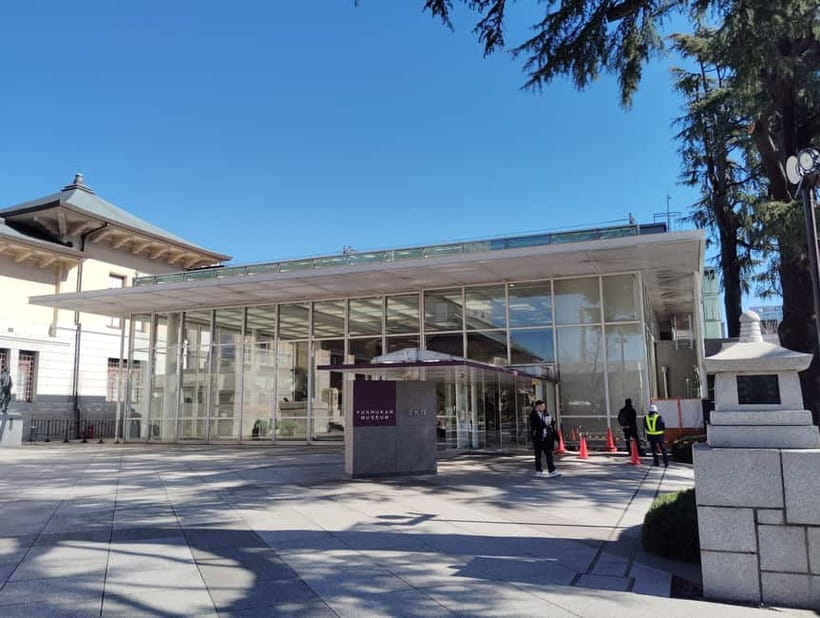
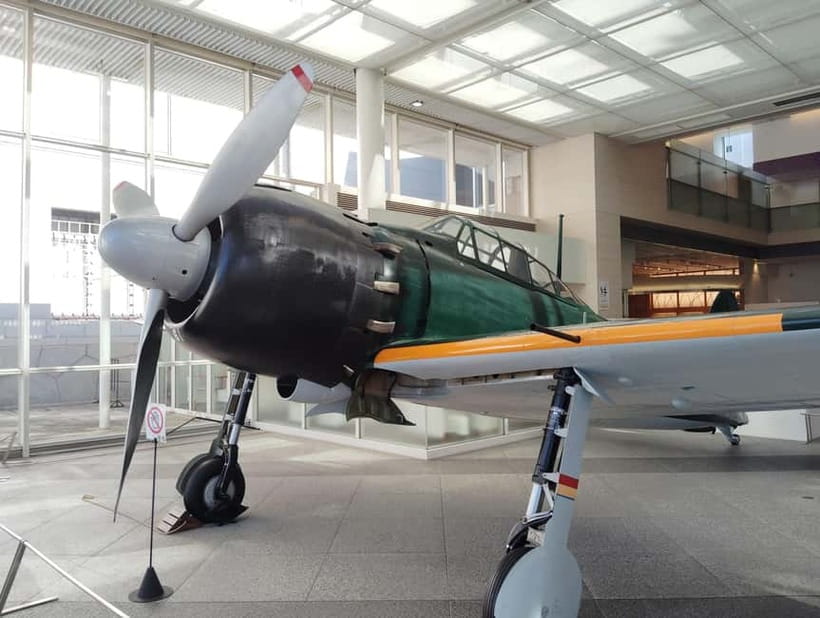
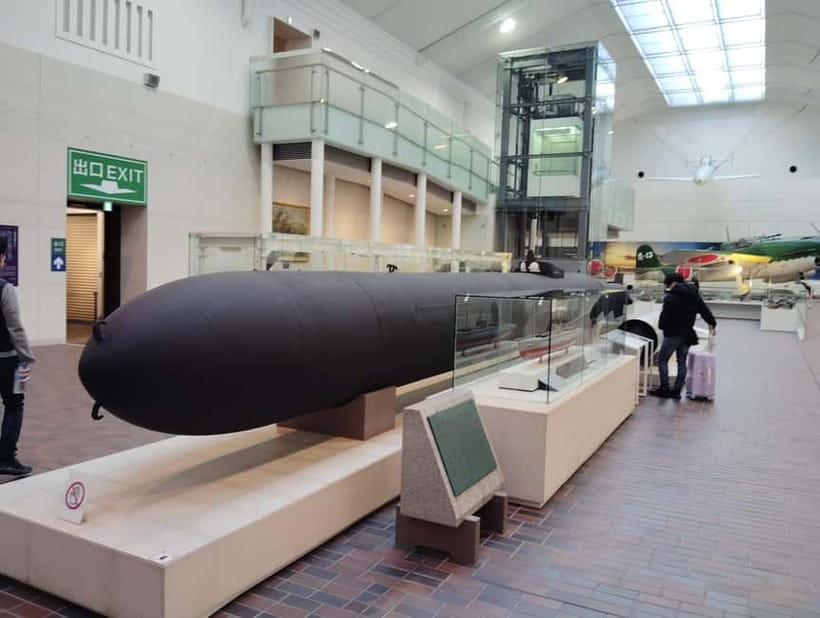
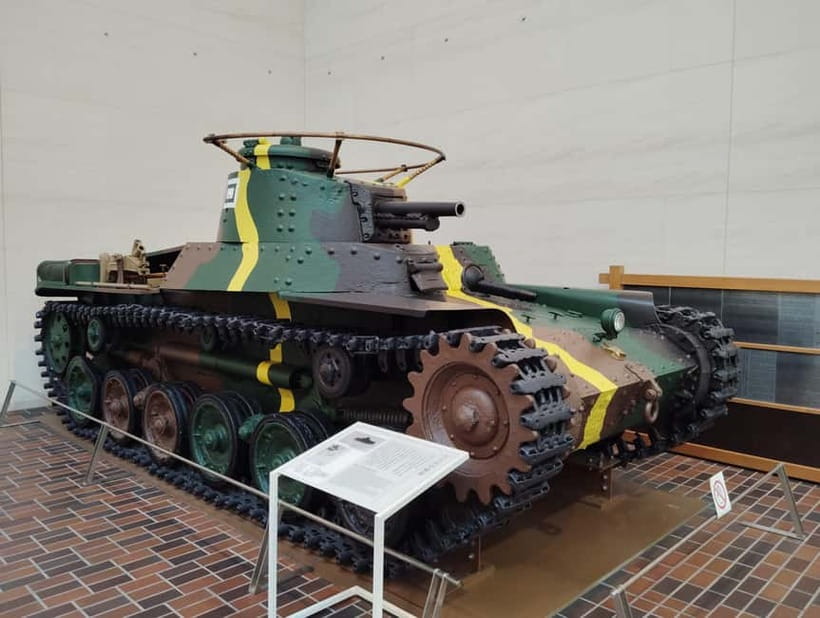
The Yushukan is the main time commitment, with about 110 minutes devoted to its galleries. It traces Japan’s military history from the late Tokugawa period through World War II and the Pacific War.
The museum includes artifacts, photographs, and documents. Those materials give the tour a visual and physical side that the shrine walk cannot provide. You may see equipment and records that make the period feel less abstract, while the guide explains how each display fits into the larger story.
The museum also uses terminology that may differ from what you know. The Pacific War is presented within a Japanese framework, including the name Greater East Asia War. That language is not a small detail. It shows how words shape the way a country explains its own actions and motives.
I would not treat the Yushukan as a neutral, all-sided account of the period. Its narrative reflects a particular interpretation of Japan’s wars, sacrifice, and national purpose. That does not make the visit pointless. It makes the visit more valuable when you understand what you are seeing and what may receive less attention.
Your guide provides context and encourages you to consider more than one perspective. The tour is designed to explain the museum’s approach rather than simply repeat it. For anyone interested in memory studies, international relations, or the way nations tell their own stories, this is the heart of the experience.
Photography is restricted in some museum areas, and flash photography is not allowed. Bring a camera if you like, but be prepared to put it away when instructed. The museum also requires a fair amount of standing and walking, so comfortable shoes matter.
Plan your attention as carefully as your time. One hundred and ten minutes can pass quickly if you read every panel, examine every object, and stop for discussion. It can also feel long if military history is not your main interest. The private guide helps, but this is not a quick highlights visit.
The extended walk to Chidorigafuchi
The longer option continues to Chidorigafuchi National Cemetery, a secular memorial administered by the Japanese state. It was established in 1959 to honor unidentified Japanese war dead whose remains were repatriated from overseas battlefields.
This stop gives the tour a second language of remembrance. Yasukuni enshrines spirits through Shinto practice. Chidorigafuchi commemorates unidentified dead through a government-run memorial. The difference is both religious and political, and seeing the two places close together makes the contrast easier to grasp.
You are not simply adding another monument to the route. You are comparing two answers to the same question: how should a country remember people who died in war? One approach links the dead to ritual and national identity. The other offers a secular state memorial for people whose names and identities may not be known.
The cemetery adds about an hour to the longer version, bringing the total experience to roughly 210 minutes. The shorter format lasts about 150 minutes. If you have a tight Tokyo schedule, the shorter route covers the shrine and museum. If this subject is a main reason for booking, I would choose the extended option.
The longer walk also changes the rhythm of the experience. After the museum’s displays and arguments, the cemetery offers a quieter place to consider the human cost behind the history. The two sites work best together, even though the tour can still be worthwhile without the cemetery.
More History Tours in Tokyo:
- Mt. Fuji Heritage Tour: Traditional Villages, Lakes & Shrine
★ 4.5 · 509 reviews - From Tokyo: Nikko World Heritage Site Private Full-Day Trip
★ 4.9 · 243 reviews - Tokyo: Nikko World Heritage Private Day Trip Hotel Pick-up
★ 4.8 · 145 reviews - From Tokyo: Private Nikko World Heritage Sights One Day Trip
★ 4.7 · 52 reviews
How the timing and walking affect the day
The listed duration ranges from 150 to 210 minutes because the route depends on the option you choose. The basic experience focuses on Yasukuni Shrine and the Yushukan Museum. The extended version adds Chidorigafuchi.
The visit begins at the first torii, also called the large torii. Drop-off may be at Chidorigafuchi National Cemetery for the extended option or near the Yushukan for the shorter one. You arrange your own way to the starting point, and transport to and from the meeting point is not included.
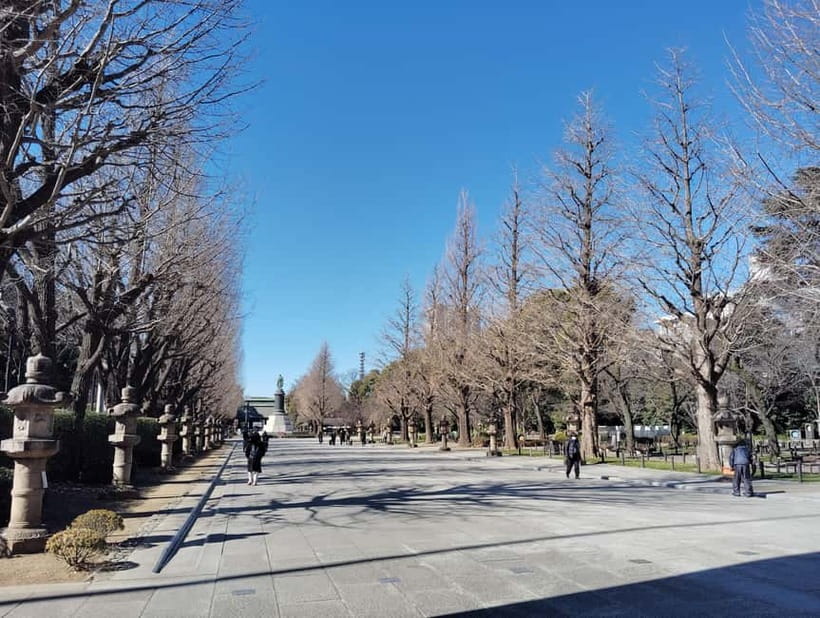
The route involves moderate walking, including outdoor paths and time inside the museum. Wear comfortable shoes, carry water, and consider a hat and sunscreen. A camera is allowed in places where photography is permitted, but flash photography is not allowed and some museum areas restrict cameras.
This is not a food-focused outing. Meals and drinks are not included, so plan them separately. The experience is best placed in a part of your day when you can stay mentally engaged for several hours rather than rush straight to another appointment.
The private-group setup is especially useful for a subject like this. You can pause when a point needs explaining, but you should still expect the guide to keep the tour moving. The museum is substantial, and the extended cemetery visit adds more walking.
Is $87 a fair price?
At $87 per person, this tour costs more than a casual visit to a shrine or museum on your own. The price includes a private licensed English-speaking guide and admission to the Yushukan, but not transport, food, or drinks.
The value depends on what you want from the visit. If you only want to see the torii and browse the museum quickly, paying for a private guide may not make sense. You can spend less by visiting independently, though you would lose the structured explanation and the chance to ask detailed questions throughout.
For a serious student of modern Japan, the price is easier to justify. You receive a guided explanation of a controversial site, a museum visit lasting about 110 minutes, and, with the extended option, a comparison with a secular national cemetery. The private format also matters because the subject benefits from conversation rather than a short audio-style presentation.
I see the best value for couples, families, researchers, and small private groups who want historical context in English. If you are already familiar with Japan’s wartime history and enjoy examining how museums frame the past, the tour offers more than standard sightseeing.
The free cancellation policy allows cancellation up to 24 hours before the tour for a full refund, and you can reserve now and pay later. Those terms help if your Tokyo schedule is still changing, though the main value remains the guide and the depth of the discussion.
Who will appreciate this experience most
I would recommend this tour to anyone with a serious interest in modern Japanese history, military history, religion, national identity, or memory studies. It also suits students of international relations and visitors who want to understand a difficult Tokyo site without reducing it to a simple political slogan.
You do not need to be an expert. A basic interest in how Japan changed from a feudal society into a modern state is enough to give the tour meaning. The guide supplies the framework, and you can ask questions at the level that suits you.
This is less suitable if you want a light cultural outing or a photo-only stop. War, imperial expansion, mourning, and national responsibility are serious subjects. Some displays may be uncomfortable, and the museum’s presentation may not match the account you know from school or other museums.
Bring patience as well as comfortable shoes. The best experience comes when you allow the shrine, museum, and cemetery to speak in different ways rather than expecting one simple verdict.
Should you book the Yasukuni and Yushukan tour?
Book it if you want to understand why Yasukuni remains important and contested, and if you value a guide who can explain the museum’s perspective without asking you to accept it uncritically. The extended option is the stronger choice because Chidorigafuchi gives you a clear comparison between religious and secular remembrance.
Skip it if you are looking for a relaxed shrine visit, a short cultural stop, or a museum with a fully neutral presentation. This tour asks for attention and a willingness to discuss sensitive subjects.
For the right reader, $87 buys useful context rather than just entry. You leave with a better sense of how Japan remembers war, how language shapes history, and why these sites still matter in present-day Tokyo.
FAQ
How long does the tour last?
The tour lasts between 150 and 210 minutes, depending on the option booked. The longer version includes Chidorigafuchi National Cemetery.
What places are included?
The tour includes Yasukuni Shrine and the Yushukan War Museum. The extended option also includes Chidorigafuchi National Cemetery.
Is the tour private?
Yes. Only your group participates in the tour.
Is the guide English-speaking?
Yes. The experience includes a licensed live English-speaking guide.
Is the Yushukan admission fee included?
Yes. Admission to the Yushukan War Museum is included in the tour price.
Does the tour include transportation?
No. Transportation to and from the meeting point is not included.
Can I take photographs inside the museum?
Photography may be restricted in certain areas, and flash photography is not allowed. Follow the museum’s instructions during the visit.
What should I bring?
Bring comfortable shoes, water, a hat, sunscreen, and a camera if you wish to take photographs where permitted.
Just added around Tokyo
- Tokyo:Nikko UNESCO World Heritage Sites Private 1-Day Tour★ 3.8 · 6 reviews
- Tokyo: Snow Monkey Park and Zenkoji Temple Private Day Tour★ 4.7 · 127 reviews
- Tokyo: Sensoji Temple & Street Food: Private Tour with guide★ 4.6 · 8 reviews
- Tokyo: Shibuya Sky, Harajuku & Meiji Shrine Highlights Tour★ 4.5 · 9 reviews
- Tokyo: Nikko Private Sightseeing Day Trip with Driver★ 5.0 · 10 reviews
- Tokyo → Nikko:Private Customizable Day Trip (English Driver)★ 4.9 · 26 reviews
- Tokyo’s Kitchen: Tsukiji Market Food & Culture Walk★ 4.7 · 74 reviews
- Tokyo: Private Nikko Sightseeing Tour In Luxury Land Cruiser★ 4.1 · 8 reviews
Tokyo Temple Tours, compared.
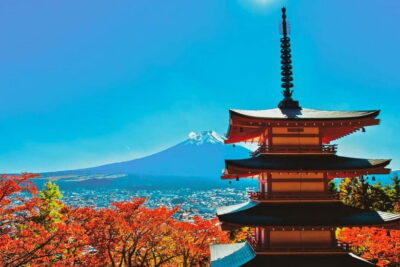
Mt.Fuji,Kawaguchiko Oishi Park,Arakurayama Sengen Park
Read our review →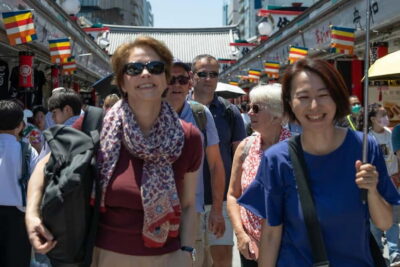
Asakusa Walking Tour with Sensoji Temple Visit
Read our review →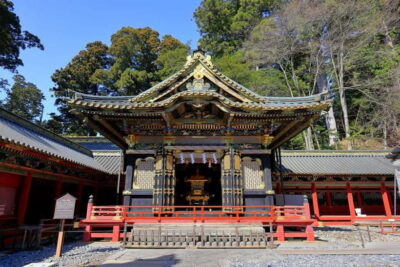
Nikko Toshogu Shrine and Kegon Waterfall Tour
Read our review →
Tokyo Panoramic 1 Day: Meiji Shrine, Asakusa, Odaiba and SKYTREE®
Read our review →
Mt. Fuji, Kamakura, Big Buddha, & Lake Ashi Day Trip
Read our review →
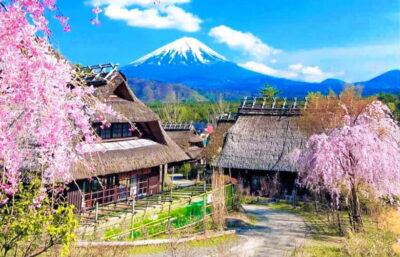
Mt. Fuji Heritage Tour: Traditional Villages, Lakes & Shrine
Read our review →Browse the lists this tour appears in