
REVIEW · KARNAK & VALLEY OF THE KINGS TOURS
Luxor Day Tour Visit Dendara And Abydos Temples
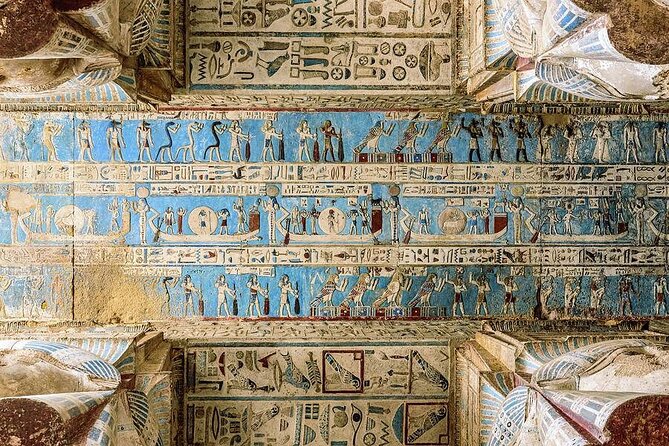
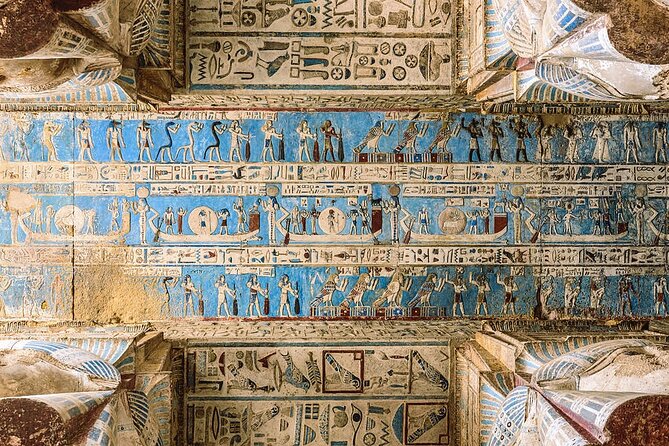
Dendera and Abydos give you something Luxor’s famous temples often cannot: intact ceilings, strong color, and quiet viewing space. Dendera’s Temple of Hathor is especially rewarding, with detailed reliefs, a famous astronomical ceiling, crypts, and rooftop views. Abydos brings a different mood, with Seti I’s finely carved temple and its links to Osiris, the ancient god of the underworld.
I like the private car and flexible guiding, since you can spend more time on the rooms and carvings that interest you. I also like that the $80 price includes lunch, entrance fees, bottled water, hotel pickup, and a private Egyptologist guide. The tradeoff is the long road from Luxor, plus a ten-hour day that can feel tiring in hot weather.
Key points at a glance
- Dendera’s color and ceiling: The Temple of Hathor is unusually well preserved, with painted reliefs, intact roof sections, crypts, and an astronomical ceiling.
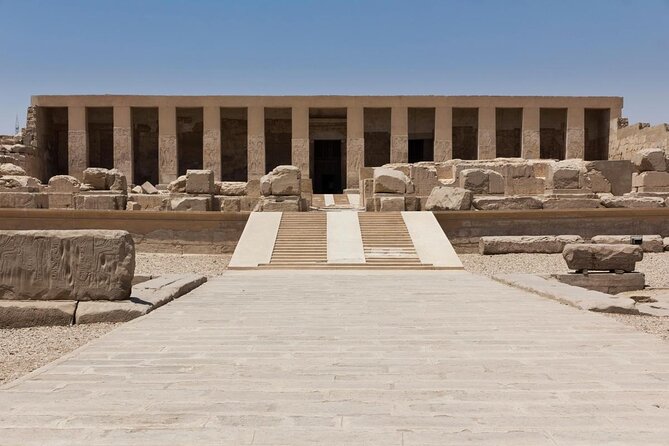
- Abydos and Seti I: Explore one of Egypt’s finest royal temples, linked to Osiris and known for elegant carvings and the famous king list.
- Private touring: You travel in a private air-conditioned vehicle with a guide and driver assigned to your group.
- Guides make the difference: Michael, Bahgat, Peter, Sahra, Tayeh, Ashraf, and others have received especially strong praise for clear explanations and personal attention.
- Good value at $80: Transportation, guiding, admission, lunch, and water are included, so the price covers the main costs of the day.
- A long but worthwhile outing: The temples are about 135 kilometers from Luxor, so allow a full day and expect several hours on the road.
Why Dendera and Abydos deserve a full day from Luxor
Most first-time visits to Luxor focus on Karnak, Luxor Temple, the Valley of the Kings, and the west bank. Those sites deserve their place, but Dendera and Abydos show another side of ancient Egypt.
Dendera is north of Luxor and Abydos is farther north still. The drive takes you away from the main sightseeing circuit and into ordinary Egyptian towns and countryside. That extra road time is the cost of seeing temples that are less crowded and often better preserved than the major sites near Luxor.
I would set aside the entire day for this trip. The advertised duration is ten hours, with about three hours planned at each temple. Exact timing can shift according to traffic, the order of the visits, and how much time you want for photographs.
The itinerary information gives Dendera first and Abydos second, while the detailed description describes Abydos before Dendera. Your actual order may vary. The important point is that both sites are included, and your guide can help manage the day around opening times, heat, and your interests.
More Karnak and Valley of the Kings Tours in Luxor:
- Luxor: Valley of the Kings and Hatshepsut Temple Day Tour
★ 4.4 · 1,404 reviews - Luxor: Valley of Kings, Hatchepsut Temple ,Karnak & Luxor-DayTour
★ 5.0 · 735 reviews - Full Day Tour of Luxor West Bank Temples and Tombs (Private)
★ 5.0 · 722 reviews
Leaving Luxor in a private air-conditioned car
Pickup is provided from a Luxor hotel or Nile cruise. You then travel in a private, modern air-conditioned vehicle with a driver and licensed English-speaking Egyptologist guide. Arabic, English, and German guiding are available.
The private setup matters on a long road day. You are not tied to the pace of a large bus group, and you can ask for more explanation at a particular relief or request a little extra time for photos. Several guides have also adjusted the day after discussing what their clients wanted to see.
The drive is one of the less glamorous parts of the experience. It can be long, and one review described it as uncomfortable despite the decent road and comfortable car. Driving standards in Egypt can also feel fast to visitors. One guest specifically praised the driver’s care while admitting that the speed made a companion uneasy.
I would tell your guide at the start if you prefer a slower pace on the road. Bring sunglasses, a hat, and water even though a bottle is included. Summer heat can be severe. One visit took place in 47-degree Celsius conditions, and the regular cold-water stops were appreciated.
Dendera Temple and the painted world of Hathor
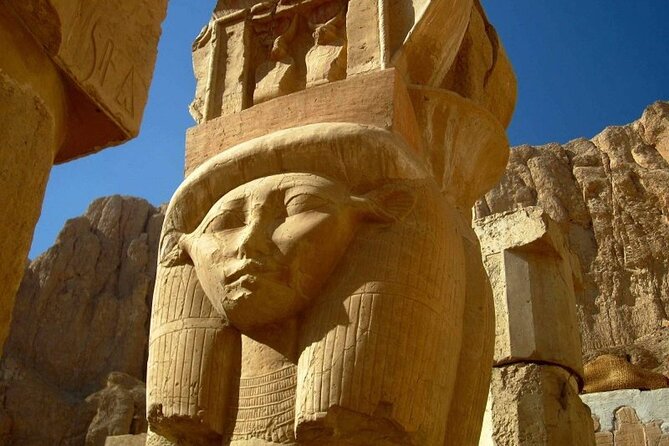
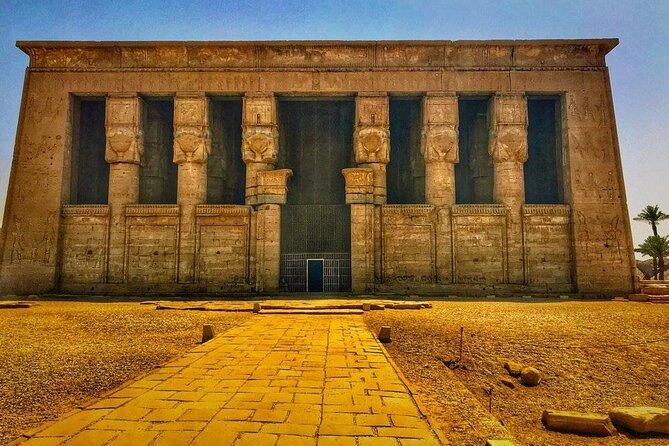
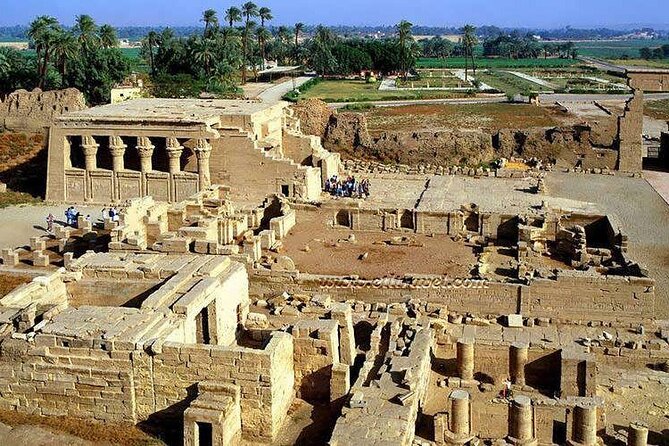
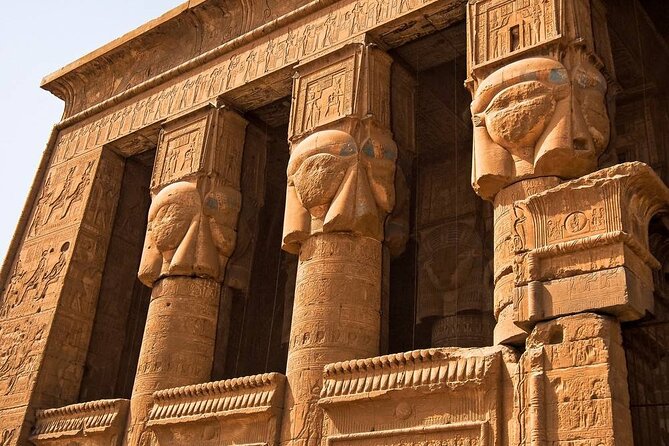
Dendera’s Temple of Hathor is the visual star of the day for many people. Hathor was associated with love, joy, music, motherhood, and the sky. Her temple complex is famous because so much of its structure and decoration remains in place.
As you enter, look carefully at the reliefs rather than rushing toward the main hall. Your guide can explain the gods, royal figures, ritual scenes, and hieroglyphs carved into the walls. The color is not equally strong everywhere, but sections of painted decoration remain remarkably clear.
The roof is one of Dendera’s most famous features. The astronomical ceiling presents the night sky in a way that has made the temple popular with both history lovers and photographers. You may also visit the upper levels and rooftop, depending on access and the plan agreed with your guide.
The crypts are another reason to give Dendera real time. Some are narrow and less immediately grand than the main hall, but they reward slow exploration. One particularly enthusiastic account described seeing two crypts, learning how to read hieroglyphs, and spending extra time with the guide inside the temple.
Plan on about three hours here, although the practical amount of time can be shorter or longer depending on the day. A visitor who mainly wants the headline features can see a great deal in roughly ninety minutes. If you enjoy photography, architectural detail, or Egyptian religion, I would want the full allowance.
Dendera also tends to feel calmer than the major Luxor temples. That does not mean you will have the entire complex to yourself, but the quieter setting gives you a better chance to look up, study the walls, and take photographs without being hurried.
Abydos and the temple of Seti I
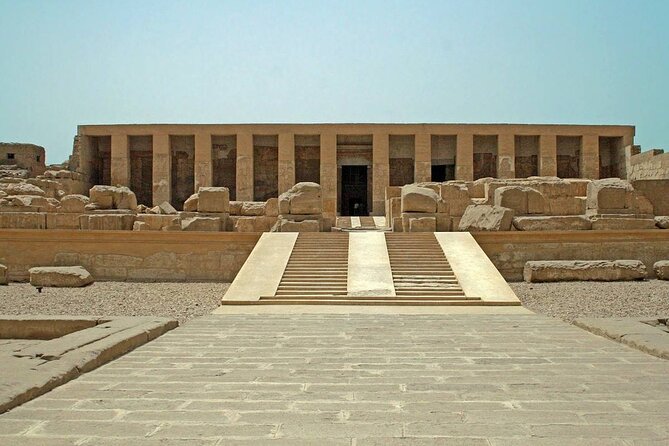
Abydos has a different character from Dendera. Its main attraction is the Temple of Seti I, also called the Great Temple of Abydos. The temple was begun by Seti I and completed by his son, Ramesses II.
Abydos was linked to Osiris, the ancient Egyptian god of the underworld. Egyptians believed Osiris was buried there, and the site became an important religious destination. Your guide can explain how that belief shaped the temple’s layout and decoration.
Inside, the carved figures and royal scenes are the main reward. The work associated with Seti I is especially refined, with graceful figures and careful detail. The temple is also known for the king list, a series of royal names that helps place Egyptian rulers in order. Your guide can point out names that were deliberately left out, including Hatshepsut and Akhenaten.
The seven chapels dedicated to different gods are another important feature. The internal spaces let you compare the style and purpose of the temple’s rooms instead of viewing it as one large monument. I would ask your guide to explain the differences between Seti I’s decoration and the work completed under Ramesses II.
Behind the main temple is the Osireion, a mysterious structure associated with Osiris. It is not simply another decorated room, and its design gives the site a more solemn feel. Abydos also contains ancient graffiti, including Phoenician and Aramaic writing, which adds a later layer to the monument’s story.
The site is far enough from Luxor that some people question the effort. I think the journey makes sense if you have already seen the central Luxor sights or if ancient Egyptian religion and royal art are high on your list. If you want only the easiest sightseeing day, the road may be too much.
A few more temple visits around Luxor worth a look
- Luxor Day Tour: Valley of Kings & Queens & Hatchepsut Temples
★ 5.0 · 1,496 reviews - Luxor: Karnak Temple and Luxor Temple Tour with Lunch
★ 4.4 · 658 reviews - Luxor: Abu Simbel Temple Private Guided Day Trip with Lunch
★ 4.6 · 546 reviews - Private Half Day West Bank Tour to Valley of the Kings Queen Hatshepsut Temple and Colossi of Memnon
★ 5.0 · 268 reviews
How the guide shapes the day
The quality of the guide is a major part of this experience. The temples contain more detail than you can absorb from a quick walk, and the right explanation helps you see why a relief matters.
Michael, often introduced as Dr. Michael, has been praised for his energy, humor, historical knowledge, and willingness to shape the day around personal interests. He has helped visitors read hieroglyphs, explained mythology in detail, and allowed plenty of time for photographs.
Bahgat has also received repeated praise for clear explanations, friendliness, and a client-first approach. Peter has been described as accommodating and especially good at explaining the sites in detail. Sahra has been praised for patient guiding and for creating a comfortable, trustworthy atmosphere.
Other named guides include Tayeh, Ashraf, Omar, Hamid, Ibrahim, and Hassan. Their styles may differ, but the common strength is the value of having a real Egyptologist with you instead of simply being dropped at the gate.
You can request a particular guide, but availability is not guaranteed. I would ask when booking and confirm again before pickup. A guide who explains the myths, royal politics, and temple design will add far more value than one who only points out the obvious.
Lunch, local food, and the day’s flexible edges
Lunch is included, usually at a local restaurant. The food has been described as simple Egyptian cooking, with falafel and sweet potato mentioned as enjoyable roadside or local stops. Drinks may cost extra, so carry some Egyptian pounds or confirm the arrangement before ordering.
One useful detail is that meal timing may not be early. A visitor returned to Luxor around 6 pm and had eaten falafel between the sites because lunch came later. If you get hungry easily, bring a small snack even though lunch is included.
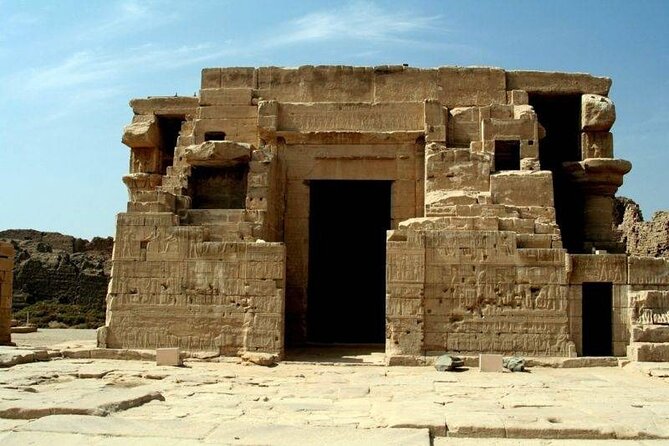
The private format can also create flexibility. Some guides have adjusted the plan to add another Luxor temple or replace Abydos with Medinet Habu when time was tight. That flexibility is useful, but it means the exact day may not match the printed sequence.
If you specifically want both Dendera and Abydos, say so clearly at pickup. The advertised tour is built around those two temples, and you should not assume an alternate suggestion will automatically include both.
Avoiding unwanted shopping stops is another practical point. One visitor disliked a so-called museum that was actually a shop and felt pressured to buy alabaster. This is not listed as an included part of the tour, so tell your guide politely that you do not want commercial stops if you prefer to stay focused on the archaeological sites.
Is $80 per person good value?
At $80 per person, this is a strong package if you want a private day rather than arranging each part yourself. The price includes private air-conditioned transportation, hotel or cruise pickup and return, a licensed guide, entrance fees, lunch, and bottled water.
The value comes from the distance as much as the admission tickets. Getting to Dendera and Abydos requires a vehicle, fuel, a driver, and several hours of road time. Having a guide who can explain the temples turns the journey into an educational day rather than a simple transfer.
A private group also makes the price easier to justify for two or more people. You are paying for the vehicle and guide service while keeping the day within your own group. Solo visitors may feel the cost more sharply, but the included services still remove many separate expenses.
Tips are not included. Keep some cash for the guide and driver if you feel they provided good service. Drinks at lunch and personal purchases are also outside the listed price.
The tour has a 4.6 rating from 151 reviews, with strong praise for the guides, food, comfortable transport, and the temples themselves. The main cautions are the long drive, fast driving for some passengers, extreme heat, and the possibility of a shopping stop if you do not set expectations.
Who should book this day trip?
I would recommend it to anyone who has at least one spare day in Luxor and wants more than the standard temple route. It suits people who care about Egyptian religion, royal art, intact reliefs, photography, and seeing everyday life beyond the main tourist center.
It is especially good for repeat visitors. If you have already seen Karnak, Luxor Temple, the Valley of the Kings, and the west bank, Dendera and Abydos add two very different chapters.
Families and older visitors should think about the ten-hour length and the amount of walking. The private car allows breaks, but the day remains long. In hot months, start as early as possible. An early 6 am departure was recommended by one visitor because it allowed quieter time at Dendera and reduced exposure to the worst afternoon heat.
This is less suitable if you dislike long drives or want a slow, unstructured day in Luxor. It is also not the right choice if you only have a few hours between a cruise arrival and departure.
Should you book it?
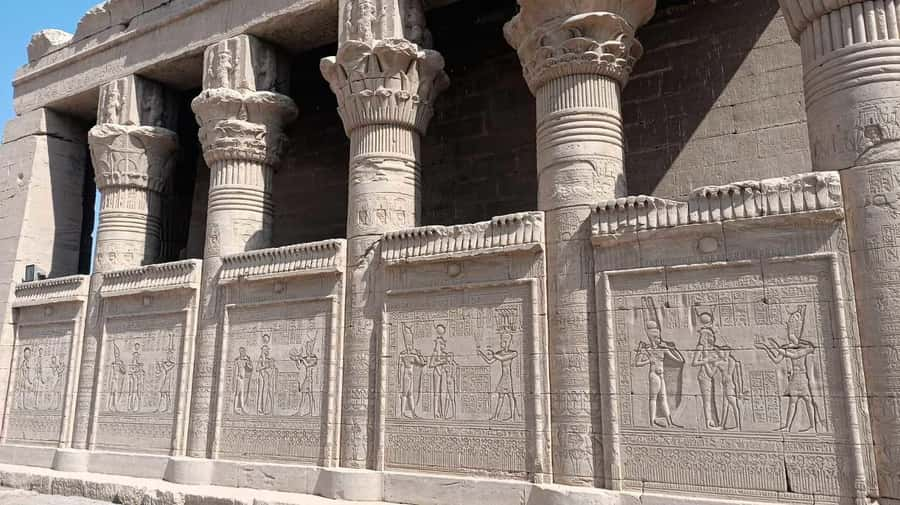
Book this tour if you want to see two of Egypt’s finest lesser-visited temples and value a guide who can explain what you are looking at. Dendera is the strongest reason to go, especially for its color, roof, astronomical decoration, and preserved interior.
Add Abydos if Seti I, Osiris, royal lists, and temple mythology interest you. The road is long, but the private car, included lunch, entry fees, water, and flexible guide service make the $80 price fair.
Before you leave, confirm the order of the sites, request your preferred guide if possible, ask to skip shopping stops, and choose the earliest available start. With those points settled, this is one of the better full-day additions to a Luxor itinerary.
FAQ
How long is the Dendera and Abydos tour?
The tour lasts about 10 hours, including pickup, driving, sightseeing, lunch, and the return to Luxor.
Where does pickup take place?
Pickup and drop-off are provided from your hotel or Nile cruise in Luxor Governorate.
Are Dendera and Abydos both included?
Yes. The advertised experience includes guided visits to both the Dendera Temple Complex and Abydos.
How much time is planned at each temple?
The itinerary lists about three hours of guided sightseeing at Dendera and three hours at Abydos.
Is transportation private?
Yes. Transfers are provided in a private, air-conditioned vehicle, and the booking is for a private group.
Which languages are available for the guide?
Guiding is available in Arabic, English, and German.
Are entrance fees and lunch included?
Yes. Entrance fees, lunch, bottled water, private transfers, hotel pickup and drop-off, and a licensed English-speaking Egyptologist guide are included. Tipping is not included.
Just added around Luxor
- Luxor: Karnak and Luxor Temples Private Half-Day Tour★ 4.7 · 27 reviews
- Marsa Alam: Valley of the Kings & Karnak Temples Luxor Tour★ 4.6 · 177 reviews
- Luxor: Tour to Edfu Temple & Lunch & Felucca & Entrance Fees★ 4.8 · 7 reviews
- Luxor: Shared Half-Day tour of Dendera Temple with guide★ 4.2 · 35 reviews
- Luxor: Private Tour to Valley of Kings & Hatshepsut Temple.★ 4.4 · 16 reviews
- Luxor: Valley of The Kings and Hatshepsut Temple Day Trip★ 4.3 · 55 reviews
- Luxor Day Tour visit Dendara and Abydos temples★ 4.8 · 6 reviews
- Luxor: East & West Bank Temples Private Tour with Tickets★ 4.7 · 10 reviews
Karnak & Valley of the Kings Tours, compared.
Valley of the Kings and Hatshepsut Temple Day Tour
Read our review →
Valley of Kings, Hatchepsut Temple ,Karnak & Luxor-DayTour
Read our review →
Full Day Tour of Luxor West Bank Temples and Tombs (Private)
Read our review →
Private Half Day West Bank Tour to Valley of the Kings Queen Hatshepsut Temple and Colossi of Memnon
Read our review →
Valley of the Kings and Hatshepsut Temple w/Nile Boat
Read our review →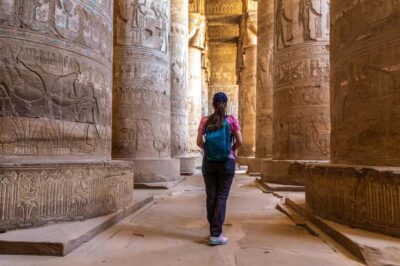
Dendera Temple All-Inclusive Tour & Felucca Ride
Read our review →
Hot Air Balloon Ride Over Temple of Hatshepsut
Read our review →Browse the lists this tour appears in