
REVIEW · KARNAK & VALLEY OF THE KINGS TOURS
From Luxor: Day Trip to Dendera & Abydos Temples with Guide
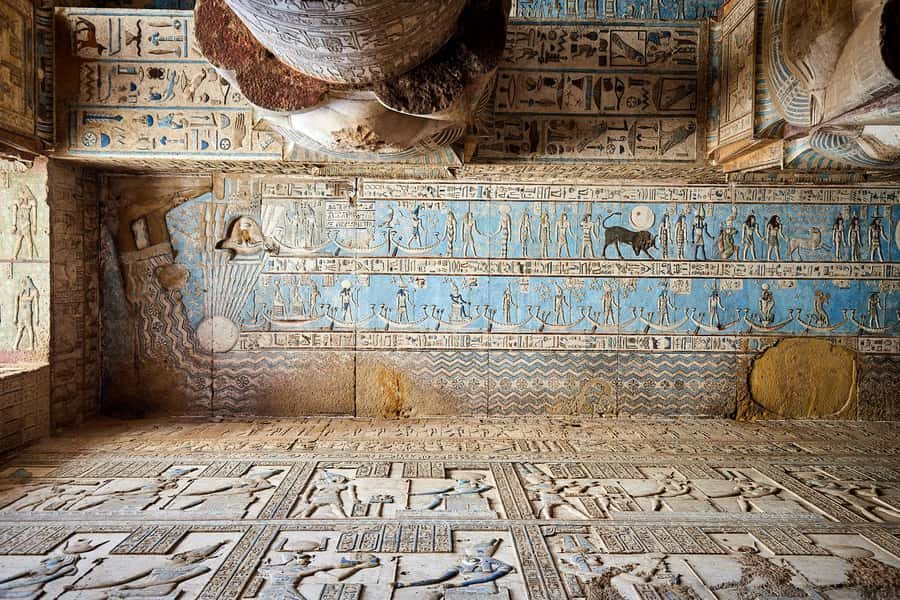
Dendera and Abydos offer two of Egypt’s best temple visits beyond the usual Luxor circuit. At Dendera, you can see color still clinging to ancient reliefs, while Abydos takes you into Egypt’s earliest royal and religious story.
I like the private car and guide setup, since you can ask questions and set your own pace after the explanations. I also like the chance to visit the unusual zodiac ceiling, underground crypts, and the finely carved Temple of Seti I in one long day. The drawback is clear: 11 hours means a lot of road time, and the quality of the driver, guide, and meals can shape the whole experience.
Key points before you book
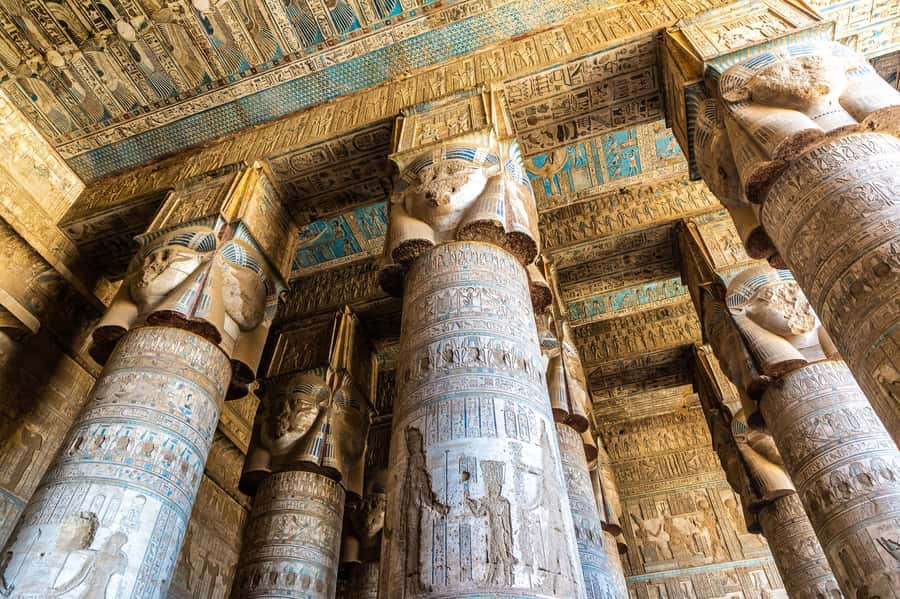
- Dendera’s Temple of Hathor still holds strong traces of color, including its famous zodiac ceiling and detailed reliefs.
- Abydos connects you with Egypt’s earliest dynasties, royal tombs, Osiris worship, and the Temple of Seti I.
- Private transport keeps the day flexible, but some reports describe rushed driving and delays on the road.
- Guides have included Mustafa, Mohammed, and Moo Moo, with praise for their temple knowledge, though English ability and pace may vary.
- Lunch and dinner are listed as included, but meal delivery has not always been consistent, so confirm this before departure.
- The $125 price is easiest to justify for two or more people, especially if entrance fees are included in your selected option.
Why Dendera and Abydos are worth the long road from Luxor
Luxor gives you the Valley of the Kings, Karnak, Luxor Temple, and the Nile. Those sights deserve their fame. But Dendera and Abydos show a different side of ancient Egypt, one that feels farther from the standard sightseeing route.
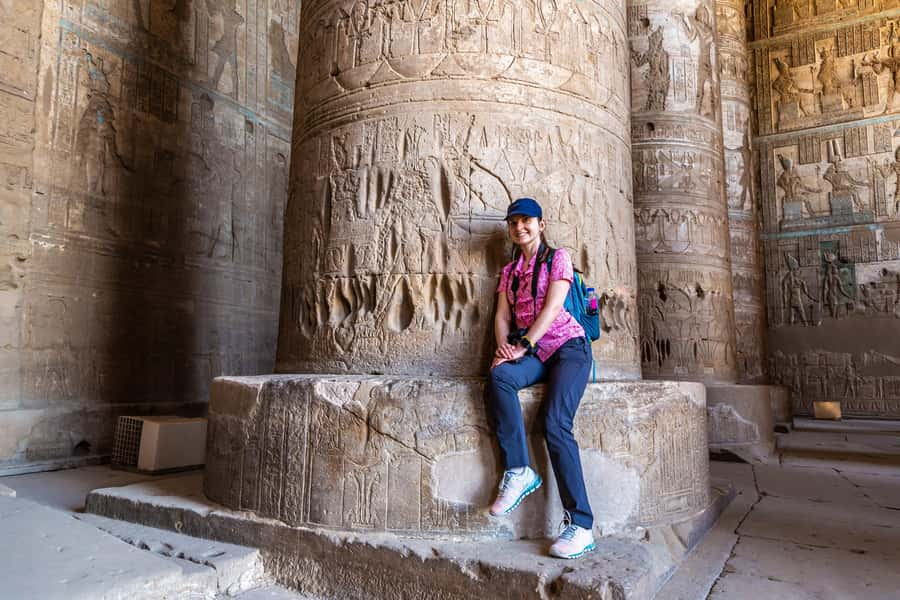
Dendera sits near Qena, north of Luxor. In ancient times it was called Tentyris and served as a major center for Hathor, the goddess linked with love, music, motherhood, and joy. The temple you see today is especially appealing because so much of its carving remains clear, and sections of the original color are still visible after more than 2,000 years.
Abydos reaches even further back. It was one of Egypt’s oldest sacred cities and became strongly linked with Osiris, god of the underworld. The area also contains royal burials and evidence from the earliest dynasties, including pottery, ivory tags, and names of kings from the period before Egypt was fully united.
That pairing gives the day a useful shape. Dendera is the visual highlight, with its polished reliefs and striking ceiling. Abydos provides the older, more solemn story of kingship, death, and the beginnings of Egyptian religion.
More Karnak and Valley of the Kings Tours in Luxor:
- Luxor: Valley of the Kings and Hatshepsut Temple Day Tour
★ 4.4 · 1,404 reviews - Luxor: Valley of Kings, Hatchepsut Temple ,Karnak & Luxor-DayTour
★ 5.0 · 735 reviews - Full Day Tour of Luxor West Bank Temples and Tombs (Private)
★ 5.0 · 722 reviews
Leaving Luxor for an 11-hour Upper Egypt outing
The day begins with hotel pickup in Luxor’s East Bank. You meet the driver and your English-speaking Egyptologist guide, then settle into an air-conditioned car for the trip north.
The schedule lasts about 11 hours, so this is not a quick side trip. You should expect a substantial amount of time in the car, with rural Upper Egypt passing outside the windows. The long drive is part of the cost of reaching sites that are not included in the regular Luxor temple circuit.
I would treat the journey as a full day rather than two short sightseeing stops. Wear light clothing, carry a little patience, and keep bottled water close. Water is included, but additional drinks and food are not.
The private format is useful here. You are not tied to a large coach group, and you can ask the guide to explain a relief again or give you a few minutes for photos after the formal talk. One strong report praised a guide named Mohammed, called Don Corleone, for explaining clearly and managing the timing well. Another guide, Moo Moo, received similar praise for precise explanations.
Still, the operation has not been perfectly steady. One report described a two-hour delay caused by the driver, while another raised concerns about very fast driving. You should confirm the pickup time and make sure the driver understands the planned order of stops before setting off.
Dendera’s Temple of Hathor and its surviving color
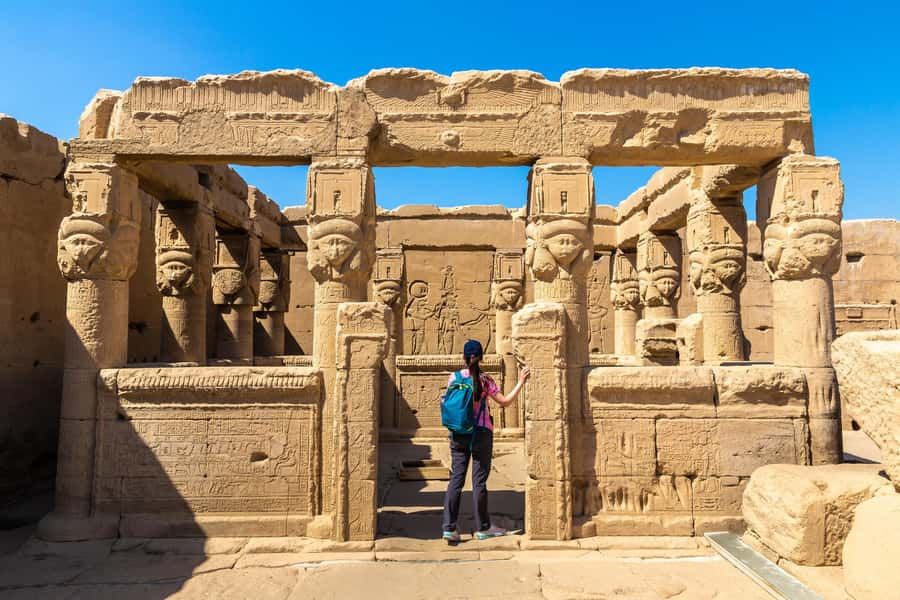
Dendera is the first major stop, and it is likely to be the day’s most immediately impressive temple.
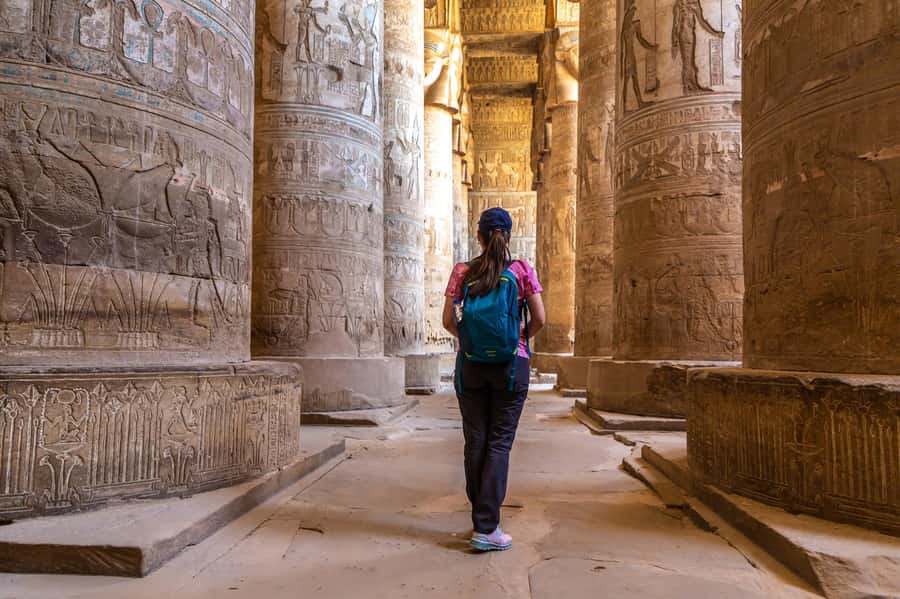
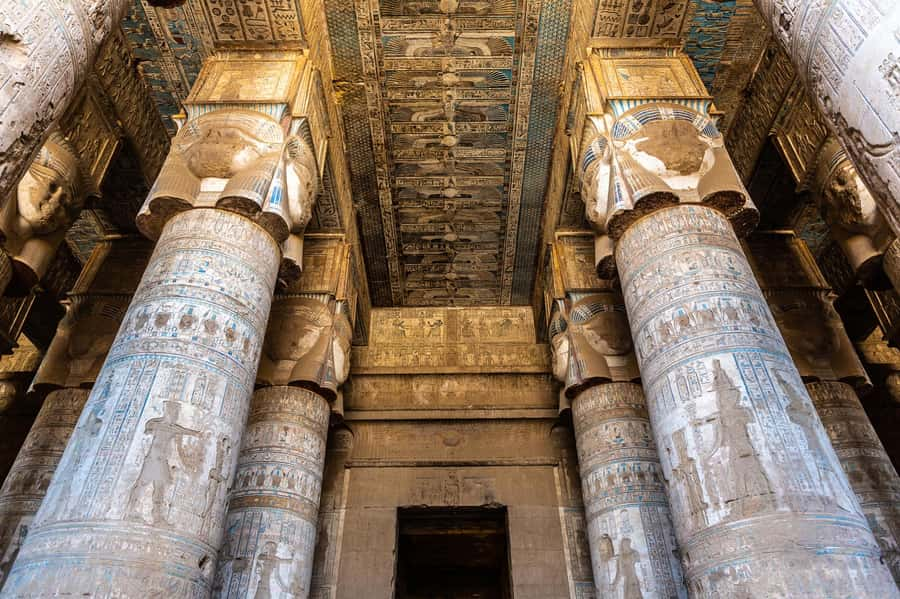
The Temple of Hathor is known for its large columns, broad walls, and fine relief work. Hathor appears throughout the site in her familiar form, often with the cow ears associated with the goddess. Your guide can explain how the temple functioned as a place of worship and how its decoration reflected Hathor’s links to music, family, fertility, and protection.
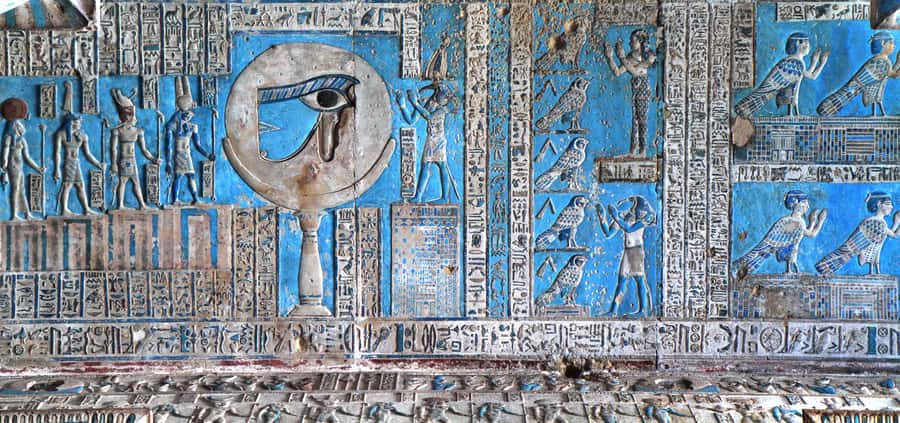
The zodiac ceiling is one of the main reasons to visit. Its design shows the night sky and the signs of the zodiac in a form that has attracted modern attention. You will also see astronomical and religious imagery worked into the temple’s upper areas.
The reliefs are a major strength. Unlike many sites where the stone has been worn plain, Dendera retains patches of color that make the carved figures easier to read. You can see painted details in the hair, clothing, faces, and symbols. The effect is not that the entire temple looks new. Instead, small areas of surviving pigment give you a better sense of how intense these interiors once looked.
Your guide should point out the underground crypts as well. These spaces are part of what makes Dendera more than a quick photo stop. They add a less familiar layer to the visit, although the amount of time and detail you receive will depend on the guide assigned to you.
After the guided explanation, you should have time to walk around and take photographs. One guide was praised for explaining the main points, then allowing time for independent viewing. That is the right balance at a temple like this. You need context, but you also need quiet minutes to look closely at the carving without a running commentary.
Lunch in Qena, with an important meal check
After Dendera, the plan calls for a freshly prepared lunch at a local Egyptian restaurant. Lunch is listed as included, along with bottled water.
This is a practical part of the day. You will have been on the road for hours, and a proper meal is more useful than trying to survive on snacks between temples. The description does not specify a fixed menu, so you should not expect a particular dish or restaurant.
There is one issue to keep in mind. At least one outing did not provide the promised lunch, with the explanation that places near Abydos were closed on a Friday. That suggests you should ask the operator before departure how lunch will be handled on your date, especially if you are going on a weekly day off or a public holiday.
I would also bring a small backup snack. This is not because lunch is necessarily poor, but because an 11-hour day leaves little room for a missed meal. Additional food and drinks are not included in the price.
More Day Trips in Luxor:
- Luxor: Abu Simbel Temple Private Guided Day Trip with Lunch
★ 4.6 · 546 reviews - Luxor: Valley of The Kings and Hatshepsut Temple Day Trip
★ 4.3 · 55 reviews - Athens: Cape Sounion & Poseidon Temple Sunset Half-Day Trip
★ 4.8 · 8,241 reviews - Athens: Meteora Monasteries Day Trip with Caves and Lunch
★ 4.7 · 4,670 reviews
Abydos and the Temple of Seti I
After lunch, the car continues north to Abydos. The second stop feels different from Dendera. Instead of focusing mainly on Hathor and surviving decoration, Abydos brings you closer to the first kings of Egypt and the powerful cult of Osiris.
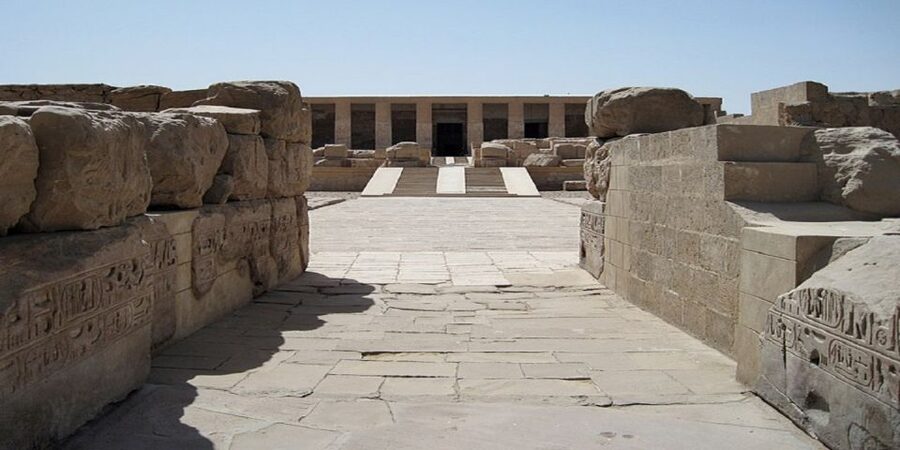
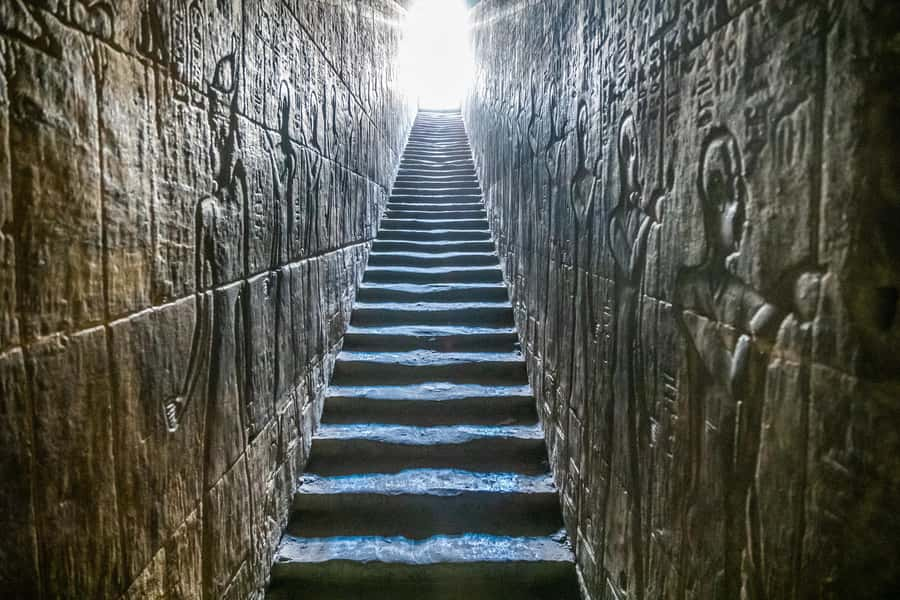
The Temple of Seti I is the main attraction. Its reliefs are among the finest in Egypt, with careful carving and scenes tied to royal ritual and the gods. Your guide can help you understand the link between Seti I, the temple’s religious purpose, and Abydos’s importance as a sacred place connected with Osiris.
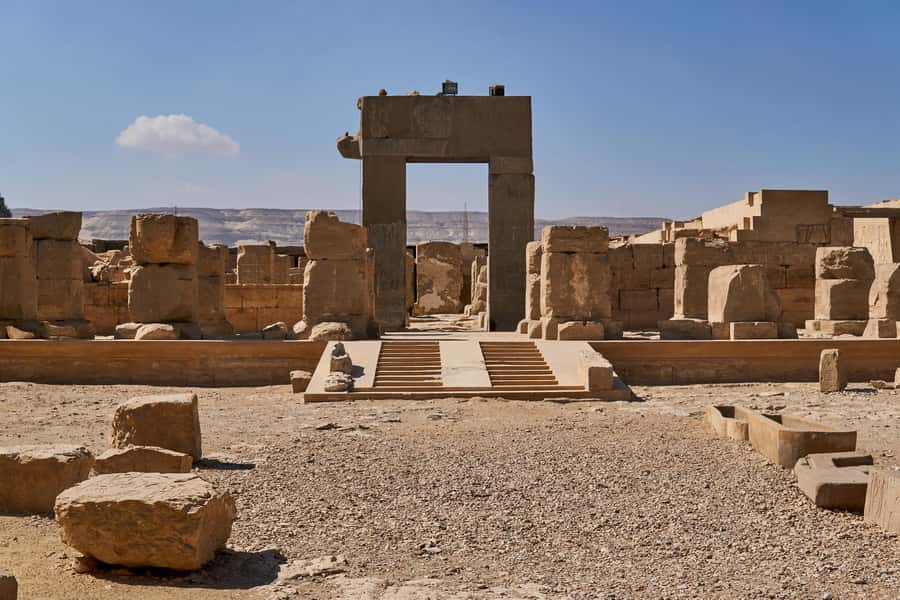
Abydos was not important only because of one impressive building. It was a major religious center with a long life, and its royal associations reach back to the earliest dynasties. Archaeological work has found pottery, ivory tags, and names of kings from the pre-dynastic period. That makes the site valuable for anyone who wants to see how Egyptian kingship and religion developed before the grand monuments most people know.
The temple itself rewards close looking. The reliefs are fine enough that you can spend time studying the figures and inscriptions rather than simply walking from room to room. Ask your guide to separate what is known from what is speculation. Abydos attracts plenty of theories, and a careful explanation is more useful than dramatic claims.
The timing at this stop may vary. One guide was praised for giving time after his explanations, while another was said to rush the visit and give the impression that he wanted to finish early. If you care about photography or quiet observation, say so at the start. A private tour gives you a better chance of shaping the pace, but you still need to speak up.
The return drive and dinner back in Luxor
Once you finish at Abydos, you return to Luxor by car. The return trip is a chance to rest and watch the countryside, but it also explains why the tour fills most of a day.
The tour includes dinner at a local restaurant after you arrive back in Luxor, followed by hotel drop-off. In theory, this is a useful finish. You do not need to search for a restaurant after a long day, and the driver brings you back to your hotel.
The actual value of the meal is less certain. One report described the dinner as minimal and felt it should be removed in favor of a lower price. Another raised concern about expensive soft drinks, including a charge of 8 euros for two sodas compared with much lower prices elsewhere.
You should ask what the included dinner covers and check drink prices before ordering. The problem is not that a basic dinner must be elaborate. It is that unclear inclusions can leave you paying more than expected at the end of an already expensive day.
Guide quality, language, and pace
The guide is central to this experience. Dendera and Abydos are much more rewarding when someone explains the gods, kings, symbols, and changing roles of the temples.
The guides named in the feedback include Mustafa, Mohammed, and Moo Moo. Mohammed was praised for clear explanations and good time management. Moo Moo was praised for precise information. Mustafa was said to know the subject and allow time for photographs, but his English and hurried pace were criticized.
The advertised language choices include Arabic, English, French, German, and Spanish. For languages other than English, select the correct guide option when booking. Choosing a language on the main page may not be enough, and one booking required clarification because the French option had not been selected correctly.
This is worth handling carefully. The language add-on may cost extra, and the standard price does not automatically guarantee a French, German, or Spanish guide. Ask the operator to confirm the language and any added fee before the trip.
What $125 gets you
The listed price is $125 per person. It covers private hotel pickup and drop-off in the East Bank, an English-speaking guide, lunch, dinner, bottled water, and transportation. Entrance fees are included only if you select the option that includes them, so compare the booking choices closely.
For one person, the price can feel high if the meals are basic, the guide rushes, or a long driving delay cuts into the schedule. One assessment judged the cost poor for a solo participant under those conditions. The value improves when the private vehicle and guide cost are shared by two or more people.
I see the price as reasonable only if the main promises are delivered: reliable transport, a strong guide, both temple visits, and the included meals. Dendera and Abydos are not easy to combine independently in one day, so the service saves you from arranging a car, route, entrance tickets, and local explanations on your own.
The West Bank is not included in the standard pickup area. Pickup and drop-off there cost an additional $5 per person. That is a small fee, but it should be added to your total before you compare this trip with other options.
Free cancellation is available up to 24 hours before departure, and you can reserve now and pay later. The activity also offers skip-the-ticket-line access, which can save some waiting time at the sites.
Who should book this day trip
I would recommend this tour to someone who has already seen Luxor’s main temples and wants a stronger sense of Egypt beyond the headline monuments. It suits people who care about temple carvings, ancient religion, early dynastic kings, and the chance to visit less familiar archaeological sites.
It is also a good fit if you prefer a private car over a large coach. You can ask questions, pause for photos, and speak directly with the guide about the subjects that interest you.
I would be more cautious if you dislike long drives, need a relaxed schedule, or expect polished restaurant service. The day is demanding, and reports of delayed transport, rapid driving, rushed guiding, and inconsistent meals are not minor details.
My recommendation
Book this trip if Dendera and Abydos are high on your list and you accept that the road time is part of the bargain. The temples themselves offer details you will not find on the standard Luxor route, especially Dendera’s surviving color and Abydos’s links to Egypt’s first kings.
Before paying, confirm four things: the guide’s language, whether entrance fees are included, how lunch and dinner will be handled, and the pickup point. If you are traveling with another person, the $125 price is easier to defend. If you are alone, compare the total cost with a private car arranged locally and make sure the operator can deliver the full itinerary.
FAQ
How long does the trip from Luxor to Dendera and Abydos last?
The activity lasts about 11 hours, including hotel pickup, the drives between Luxor, Dendera, Abydos, and Luxor, the temple visits, meals, and hotel drop-off.
What temples are included?
You visit the Temple of Hathor at Dendera and the Temple of Seti I at Abydos.
What is special about Dendera?
Dendera is known for the Temple of Hathor, its detailed reliefs, surviving color, zodiac ceiling, and underground crypts.
What is special about Abydos?
Abydos was one of ancient Egypt’s oldest sacred cities. It is linked with Osiris and contains the Temple of Seti I, early royal tombs, pottery, ivory tags, and names of pre-dynastic kings.
Is lunch included?
Lunch is listed as included and is planned at a local Egyptian restaurant. Since meal arrangements have not always been consistent, confirm the lunch plan before departure.
Is dinner included?
Dinner is listed as included at a local restaurant in Luxor after returning from Abydos. Additional drinks are not included.
Is hotel pickup included?
Pickup and drop-off are included for hotels on Luxor’s East Bank. West Bank pickup and drop-off cost an additional $5 per person.
What languages are available for the guide?
The available languages are Arabic, English, French, German, and Spanish. French, German, or Spanish guiding may be available as an add-on, so confirm the language option when booking.
Are entrance fees included?
Entrance fees are included only when you choose the option that includes them. Check the selected option before paying.
Just added around Luxor
- Luxor: Karnak and Luxor Temples Private Half-Day Tour★ 4.7 · 27 reviews
- Marsa Alam: Valley of the Kings & Karnak Temples Luxor Tour★ 4.6 · 177 reviews
- Luxor: Shared Half-Day tour of Dendera Temple with guide★ 4.2 · 35 reviews
- Luxor: Tour to Edfu Temple & Lunch & Felucca & Entrance Fees★ 4.8 · 7 reviews
- Luxor: Private Tour to Valley of Kings & Hatshepsut Temple.★ 4.4 · 16 reviews
- Luxor: Valley of The Kings and Hatshepsut Temple Day Trip★ 4.3 · 55 reviews
- Luxor Day Tour Visit Dendara And Abydos Temples★ 4.6 · 151 reviews
- Luxor Day Tour visit Dendara and Abydos temples★ 4.8 · 6 reviews
Karnak & Valley of the Kings Tours, compared.
Valley of the Kings and Hatshepsut Temple Day Tour
Read our review →
Valley of Kings, Hatchepsut Temple ,Karnak & Luxor-DayTour
Read our review →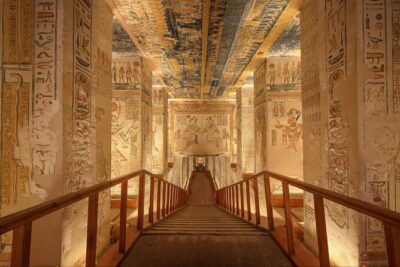
Full Day Tour of Luxor West Bank Temples and Tombs (Private)
Read our review →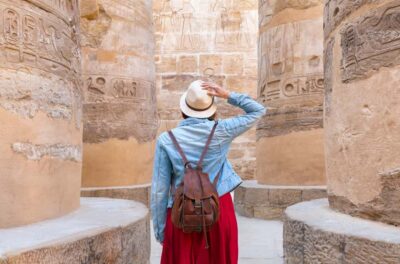
Private Half Day West Bank Tour to Valley of the Kings Queen Hatshepsut Temple and Colossi of Memnon
Read our review →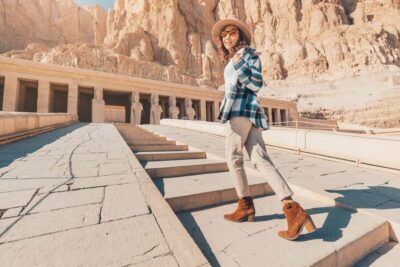
Valley of the Kings and Hatshepsut Temple w/Nile Boat
Read our review →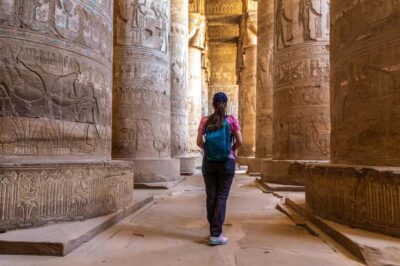
Dendera Temple All-Inclusive Tour & Felucca Ride
Read our review →
Hot Air Balloon Ride Over Temple of Hatshepsut
Read our review →Browse the lists this tour appears in