
REVIEW · ANGKOR WAT TOURS
Siem Reap: Bike the Angkor Temples – Full-Day 30km Tour
Angkor is far too large to understand from one temple entrance, and this 30-kilometre bike ride gives you a better sense of its scale. You pedal from Siem Reap through forest tracks, village roads, and the old gates of Angkor Thom before reaching Angkor Wat, Bayon, and Ta Prohm.
I like two things here: the route gets you off the main road, and the guides do more than point at stones. Guides such as Chen, Moon, Mun, Wich, and Samnang Chan have been praised for connecting temple stories with present-day Cambodia. The fruit, cold water, local lunch, and even a coconut drink at the end are thoughtful touches.
The catch is simple: this is a full day in tropical heat, not a gentle ride between nearby sights. The roads are mostly flat, but sand, bumps, and 25 to 30 kilometres can tire your legs. You should have a reasonable level of fitness and be ready for sweat.
Key points to know before booking
- You ride through real countryside: Forest paths, small roads, villages, farmyards, and rice-growing areas add much more than a standard car route.
- The classic temples are all here: Angkor Wat, Bayon, the Elephant Terrace, the Leper King Terrace, Srah Srang, and Ta Prohm fill the day.
- Groups stay small: The maximum is 10 people, with a private upgrade available if you want more personal attention.
- The ride is mostly flat but not always smooth: Dirt, sand, and bumpy forest tracks may challenge new or casual cyclists.
- Food and drinks keep the day moving: Bottled water, fruit, snacks, and lunch are included when you select the lunch option.
- The Angkor Pass costs extra: A one-day pass is listed at $37, in addition to the $35 tour price.
Why a bicycle makes Angkor feel larger
The temples are spread across an enormous archaeological park. By bike, you notice the distance between them rather than simply being dropped at one entrance and collected at another.
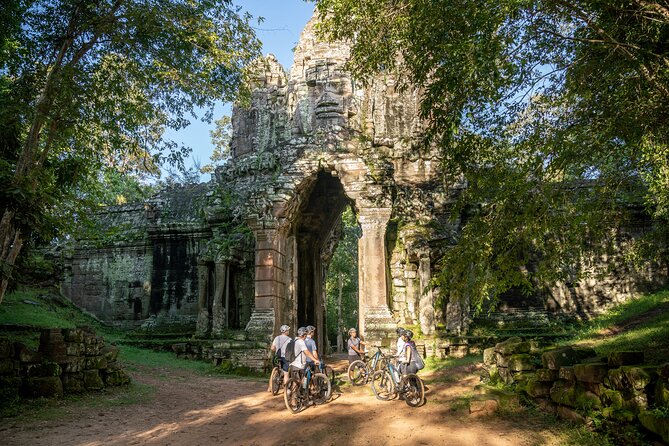
That movement is part of the point. You pass beneath huge trees, follow quieter tracks, and enter the park through broad stone gates. The ride gives you small views of village life, wooded paths, and rural homes that can disappear behind a vehicle window.
I especially like the contrast between the grand monuments and the ordinary roads connecting them. One moment you are looking at carved stone faces from the Khmer empire. The next, you are cycling past local houses or along a sandy track with no grand monument in sight.
The tour uses a relaxed pace, with time to stop for photographs and walk around inside the temples. It is not designed as a race. A guide rides at the front, and an assistant or support rider may stay near the back to help keep the group together and deal with basic bike needs.
That said, relaxed does not mean effortless. The total distance is about 15 to 18 miles, or 25 to 30 kilometres. Most of the route is flat, but sandy or uneven sections can make the ride harder than the mileage suggests. One rider specifically noted that knees may feel the strain on rough stretches.
More Angkor Wat Tours in Siem Reap:
- Angkor Wat Sunrise or Sunset Tour with Guide from Siem Reap
★ 5.0 · 12,109 reviews - Siem Reap: Angkor Wat: Small-Group Sunrise or Sunset Tour
★ 5.0 · 9,444 reviews - Siem Reap: Angkor Wat 2-Day Tour with Sunrise and Sunset
★ 4.9 · 4,429 reviews
Starting at 7:30 am in Siem Reap
You make your own way to the meeting point at ផ្ទះគ្រូ Café, listed at 9VH7+X7G in Siem Reap. The activity begins at 7:30 am, so arrange your own transport to the café before departure.
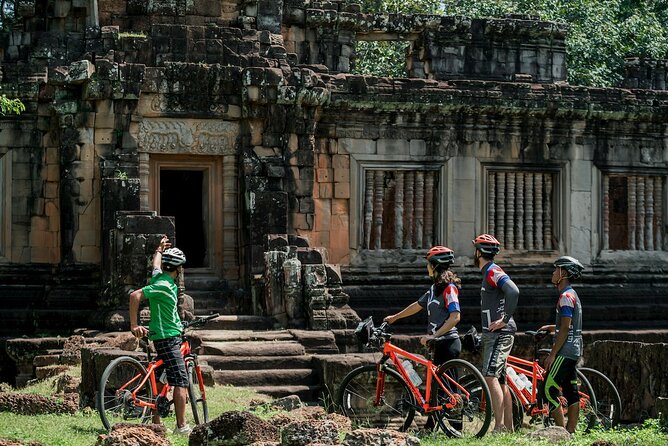
The opening routine is practical. You meet the guide, receive a safety briefing, and get fitted with a mountain bike and helmet. Bikes are adjusted to your height, and some groups have found the equipment well maintained and clearly assigned.
You then ride toward the Angkor entrance. The guide helps you purchase the required Angkor Pass, but the pass is not included in the tour price. A one-day pass costs $37, so the basic day comes to $72 before any other personal spending. That is important when comparing the price with a tuk-tuk or car tour.
At $35 per person, the cycling service itself is fairly priced for a full day with a bike, helmet, guide, water, fruit, and snacks. Add lunch if you choose that option, and check the exact booking choice so you know what is covered. The value comes less from speed and more from the route, exercise, local contact, and guide commentary.
Angkor Wat starts the temple day
Angkor Wat is the first major stop, and that is a sensible choice. The huge 12th-century complex gives you the clearest introduction to Angkor’s scale, design, and religious purpose.
You have about an hour here according to the planned schedule. That is enough for a useful first look at the galleries, towers, courtyards, and carved bas-reliefs, but not enough to examine every corner.
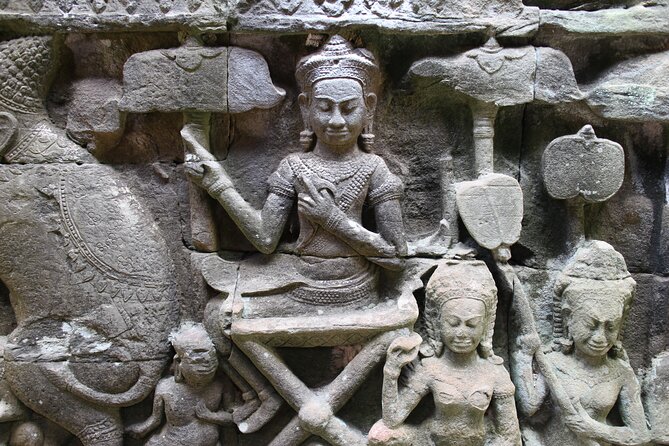
Your guide can explain the Hindu stories shown in the carvings, including scenes connected with the Ramayana. This makes the walls easier to read. Without some explanation, the detailed carvings can become a blur of figures and battles.
The early part of the day is also the best time to tackle the largest site before the heat builds. Still, do not expect a quiet private visit. Angkor Wat is the park’s best-known monument, and it is usually the busiest stop on this route.
Wear clothing that meets temple rules. Sleeveless and see-through shirts are not permitted, and pants or shorts must reach at least the knee. A light, breathable shirt with sleeves and longer shorts or trousers is the practical choice.
Riding through Angkor Thom to Bayon
After Angkor Wat, you follow the main road toward Angkor Thom. Along the way, stone figures of divinities and demons line parts of the route, giving you a dramatic approach to the old city.
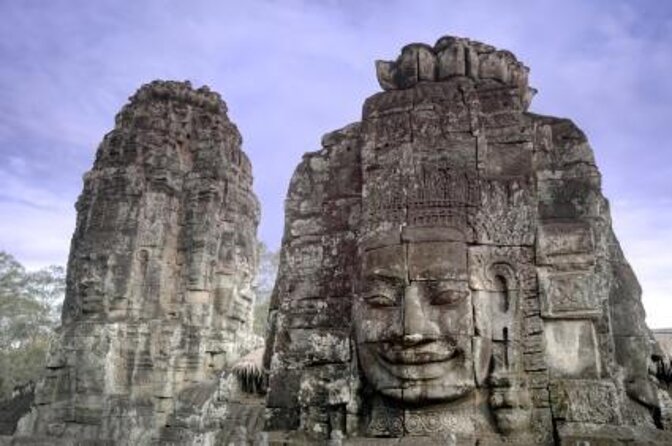
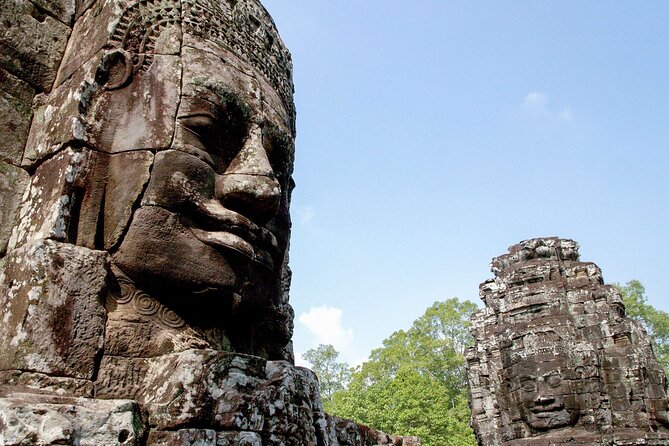
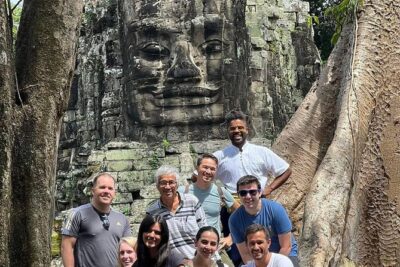
Bayon is the emotional center of the middle part of the tour. Its towers carry the famous serene faces, and the effect changes as you walk around the structure. From one angle, the faces seem hidden among the trees and stone. From another, they appear to watch over the courtyards.
This is a good place to let the guide do the talking. The carvings and towers are impressive on their own, but a clear explanation of the temple’s symbols and later changes gives the visit more shape.
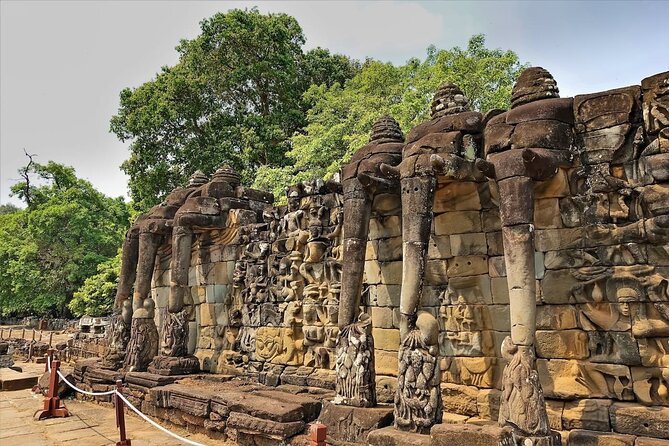
The nearby Elephant Terrace and Terrace of the Leper King add variety. They are not simply extra photo stops. The terraces show how Angkor Thom functioned as a royal city, with ceremonial spaces and carved walls tied to court life.
The Royal Enclosure is also part of this section. You will walk more than you might expect, so use the bike ride as a chance to rest your mind, but not necessarily your body. Comfortable shoes matter as much as cycling clothes.
More Cycling Tours in Siem Reap:
- Angkor Sunrise Bike Tour / E-Bike or Tuk Tuk
★ 5.0 · 615 reviews - Siem Reap: Angkor Wat Sunrise Bike Tour & Jungle Breakfast
★ 5.0 · 415 reviews - Siem Reap: Bike the Angkor Temples – Full-Day 30km Tour
★ 4.9 · 159 reviews - Siem Reap: Angkor Wat Sunrise Bike Tour & Jungle Breakfast
★ 4.9 · 141 reviews
Lunch and a pause near Srah Srang
The midday stop near Srah Srang provides a needed break after the first major temples. The schedule allows about two hours for this portion, including lunch, fruit, snacks, and cultural explanation.
If you select the lunch option, a local Khmer meal is arranged in advance. Several details make this more useful than a rushed roadside bite: you have time to sit, the food is described as generous, and dietary requirements can be advised when booking.
Water is supplied throughout the ride, and fruit arrives at a useful point in the day. In hot weather, eating and drinking before you feel exhausted is wise. One rider described the fruit break as arriving just before they ran out of energy, which is exactly how a good cycling stop should work.
Lunch is not just fuel. It is a chance to ask questions, cool down, and reset before the afternoon temple. You may also have the chance to buy souvenirs along the route, though personal purchases are not included in the tour price.
If you do not choose the lunch option, confirm what food is included. Bottled water, fruit, and snacks are listed as part of the experience, but lunch is specifically tied to the selected option.
Ta Prohm and the forest tracks
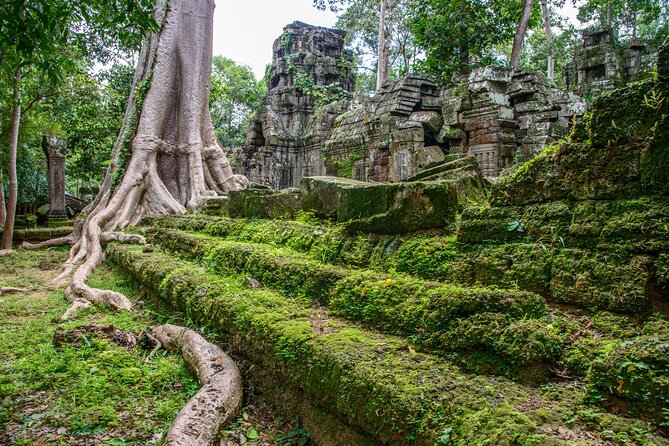
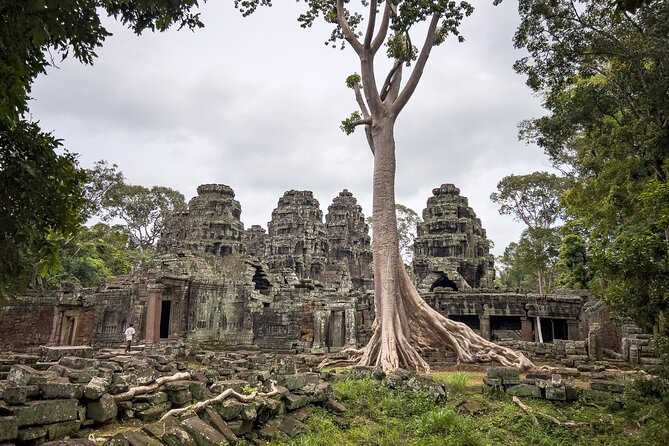
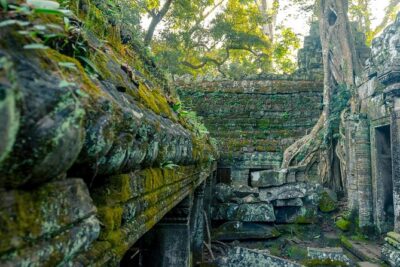
Ta Prohm is the afternoon highlight. This temple is famous for trees and roots growing through the stonework, creating the unusual sight most people associate with a jungle-covered Angkor ruin.
The visit is atmospheric, but it can also be crowded. Your guide’s route and timing may help, though no tour can guarantee an empty temple. Take care on uneven stone and keep your attention on where you place your feet after leaving the bike.
The route to Ta Prohm is part of the appeal. Instead of staying on paved roads, you may pedal through forest corridors and dirt trails. The shade helps, but soft sand and bumps require slower handling. If you are new to cycling, this is the section that may feel least comfortable.
The guide shares stories about the temple’s purpose, design, and symbolism. That context helps you see more than tree roots and photo spots. Look closely at the carved figures and the way the roots have become part of the building’s visual identity.
One small criticism raised about this kind of day is that the cycling between temples can feel long if your main goal is only the monuments. That is fair. If you want maximum temple time with minimum physical effort, a car or tuk-tuk tour is a better fit.
The ride back through villages
The return journey turns away from the grand ruins and toward small villages. This is where the tour earns its claim to show another side of Angkor.
You may pass homes, farm areas, wooded tracks, and local roads. The pace gives you time to notice how daily life continues around a world-famous archaeological site. You are not just moving between monuments. You are seeing the community that surrounds them.
Cycling through these areas also makes the day feel less like a standard sightseeing circuit. You need to ride responsibly, follow the guide’s hand signals, and stay aware of other road users. The guides have been praised for keeping a safe pace rather than pushing for speed.
The tour ends back at the café in Siem Reap. The listed duration is about eight and a half hours, although the detailed schedule describes a return in the mid-afternoon. Allow most of the day, and do not schedule an important appointment immediately afterward.
A cold coconut drink and, in some accounts, a cold towel await at the end. Keeping the water bottle is another pleasant practical touch. After a hot ride, these small details matter.
Heat, clothing, and cycling ability
The main challenge is the weather. Temperatures can reach 35 degrees Celsius, and the combination of heat, cycling, temple walking, and rough tracks adds up.
Bring sunscreen, a hat for temple walks, practical shoes, and clothing that meets the dress code. Cycling shorts or trousers that can handle contact with a saddle and forest paths are sensible. One person reported tearing inexpensive trousers on the trail, so avoid delicate clothing.
You should be comfortable riding for several hours. Most travelers can participate according to the activity information, but the distance makes this a poor choice if you rarely cycle or have knee problems. The route is mostly flat, which helps, and the pace is not built around racing.
Families can take part. Child seats are available on request for a child weighing up to 14 kilograms. The tour has a maximum of 10 people, which keeps the group more manageable than a large coach excursion.
Service animals are allowed, and the meeting point is near public transport. Hotel pickup and drop-off are not included, so you need to reach the café yourself.
Guide quality and group feel
The guide can make or break a temple tour, and this format gives that person a central role. Chen has led groups through the park while linking temple stories with Cambodian culture. Moon has been praised for clear explanations and careful attention to lunch. Wich, Mun, Meun, Pat, Samie, Samnang Chan, and Sam have also been singled out for friendly support, route knowledge, and safety.
The exact guide depends on the departure, so you should not book expecting one named person. What you can reasonably expect is an English-speaking cycling guide, a safety briefing, and a group capped at 10.
A small group allows more questions and makes it easier to keep a shared pace. A private upgrade is available if you want more control over stops or a more personal day.
Should you book this Angkor bike tour?
I would choose this tour if you want the temples plus the roads between them. It suits active first-time visitors, couples, families with older children, and anyone who prefers a local guide and a moving day to sitting in a vehicle.
The strongest reasons to book are the off-road route, the three major temple visits, the well-organized bike setup, and the steady supply of water and food. The guide’s explanations add real value, especially if you want to understand what you are seeing rather than collect photographs.
I would skip it if you dislike heat, uneven trails, or long rides. The $35 price is attractive, but the $37 Angkor Pass is extra, and lunch may depend on the option you select.
Book it when you want Angkor to feel like a place rather than a string of monuments. Bring sunscreen, modest clothing, sturdy shoes, and realistic energy. You will finish tired, but with a much better sense of how the temples fit into the countryside around Siem Reap.
FAQ
How far do you cycle on the tour?
The ride covers approximately 25 to 30 kilometres, or 15 to 18 miles. Most roads are flat, but some dirt trails have sand and bumps.
What temples are included?
The planned route includes Angkor Wat, Bayon, the Terrace of the Leper King, the Elephant Terrace, the Royal Enclosure, Srah Srang, and Ta Prohm.
Is lunch included?
Lunch is included only if you select the lunch option. Fruit, snacks, and bottled water are included, and dietary requirements should be provided when booking.
Is the Angkor Pass included in the price?
No. The one-day Angkor Pass costs $37 and is paid separately from the $35 tour price.
What should I wear to the temples?
Sleeveless and see-through shirts are not allowed. Pants and shorts must reach at least the knee. Practical cycling clothing, sunscreen, and suitable shoes are recommended.
Can children join the tour?
Yes. A child seat is available on request for a child weighing up to 14 kilograms. The group size is limited to 10 people.
More Full-Day Trips in Siem Reap
- Siem Reap: Full-Day Angkor Wat Guided Tour with Sunset
★ 4.9 · 3,803 reviews - Full-Day Angkor Wat Sunrise Private Tour with Guide from Siem Reap
★ 5.0 · 2,920 reviews - Siem Reap: Angkor Wat Sunrise and Full-Day Sightseeing Tour
★ 4.9 · 2,828 reviews - Full-Day Guided Sunset Tour of Angkor Wat
★ 5.0 · 1,507 reviews
Just added around Siem Reap
- Ticket for Angkor Balloon Ride.★ 3.7 · 46 reviews
- Sunrise at Angkor Wat Temple: 3-Hour Private Tour★ 4.7 · 30 reviews
- Small-Group Full Day Angkor wat Guide tour with Sun set★ 5.0 · 136 reviews
- Siem Reap: Private 4-Day Angkor Wat and Phnom Kulen Tour★ 5.0 · 9 reviews
- Angkor Wat: Sunrise 2.5 Days Temples & Tonle Sap-Small Group★ 5.0 · 10 reviews
- Siem Reap : Private Tuk-Tuk Tour of the Magnificent Temples.★ 4.9 · 14 reviews
- Siem Reap: Ultimate Angkor Wat Offbeat Experience by Jeep★ 4.9 · 8 reviews
- Siem Reap: Personalized Angkor Wat Sunrise/Set by TukTuk/Car★ 4.9 · 41 reviews
Angkor Wat Tours, compared.
Angkor Wat Sunrise or Sunset Tour with Guide from Siem Reap
Read our review →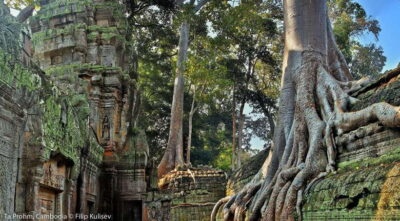
Angkor Wat: Small-Group Sunrise or Sunset Tour
Read our review →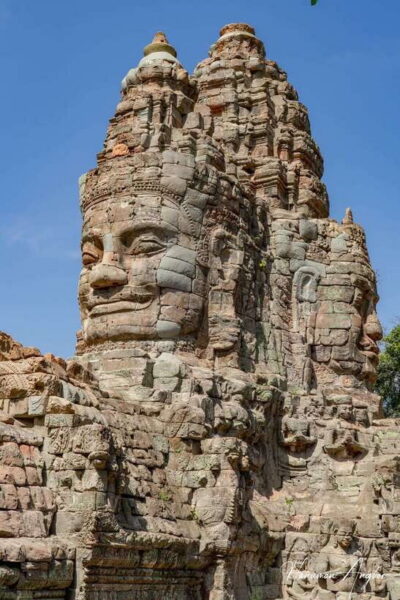
Angkor Wat 2-Day Tour with Sunrise and Sunset
Read our review →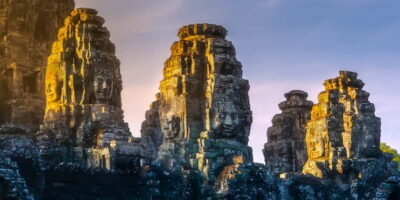
Angkor Wat Sunrise tour with Small – Group and Guide tours
Read our review →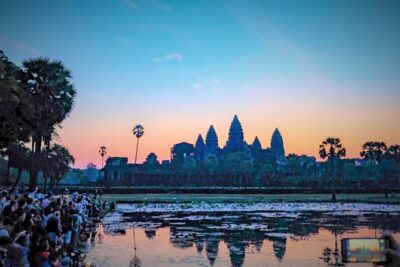
Angkor Wat Highlights and Sunrise Guided Tour from Siem Reap
Read our review →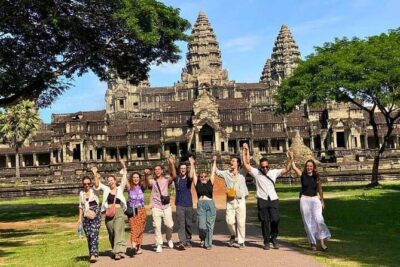
Angkor Wat Sunset Small Group Tour with Lunch Included
Read our review →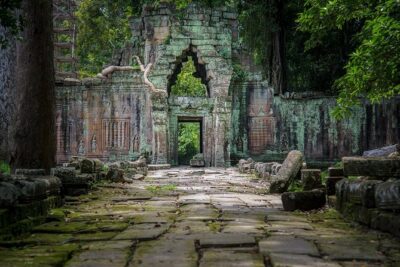
Full-Day Angkor Wat Sunrise Private Tour with Guide from Siem Reap
Read our review →Browse the lists this tour appears in