
REVIEW · PRIVATE TEMPLE TOURS IN SPAIN
Private tour: San Lorenzo de El Escorial Monastery
El Escorial is not just another grand Spanish palace. It is a monastery, basilica, royal burial place, library, art collection, and political statement packed into one severe stone complex. Philip II built it to reflect both religious devotion and Habsburg power, and the result is one of Spain’s most striking historical sites.
I like two things right away: you get a private guide, and the tour moves through the rooms that matter most, from the frescoed library to the Royal Pantheon and Hall of Battles. Isabella Trébede leads in English or Spanish, and her lively storytelling is especially useful here, since the building can otherwise feel like a maze of stone corridors and grand rooms.
The main drawback is physical. This is not an accessible visit, and you will climb many steps. The $112 price also makes most sense for couples, families, or small groups who value personal attention, rather than for solo visitors watching every dollar.
Key points to know before booking
- A private history lesson with Isabella Trébede: The guide focuses on Philip II, the Habsburg dynasty, royal personalities, and the political meaning behind the rooms.
- The Royal Pantheon is a major stop: You see the burial place of Spanish kings and learn about figures such as John of Austria, the son of Emperor Charles V.
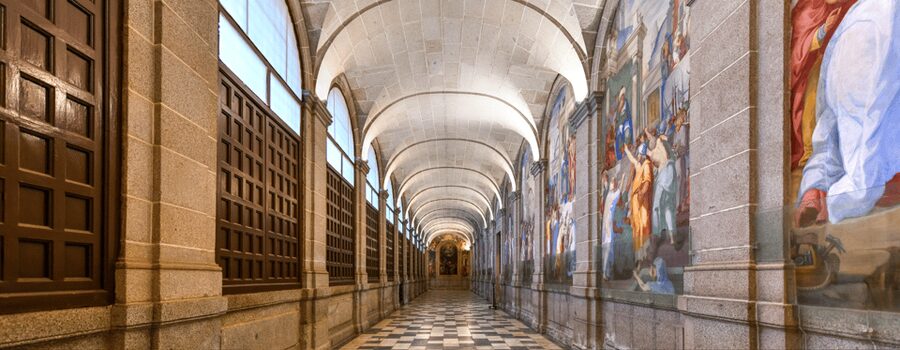
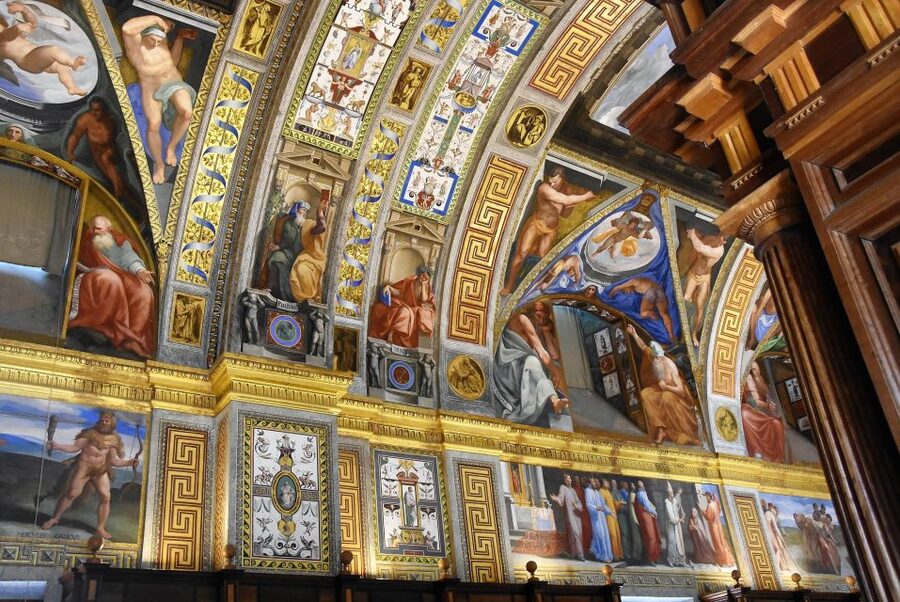
- The library and main staircase carry the visual drama: Frescoes, painted ceilings, and Renaissance design give the visit much of its artistic force.
- Skip-the-line entry saves time: You enter through a separate priority entrance, though everyone still passes airport-style security.
- The Sierra de Guadarrama provides a natural finish: Renaissance gardens offer views toward the surrounding forest and mountains, with peacocks sometimes wandering nearby.
- Plan for stairs and light packing: Large bags, food, luggage, bikes, pets, and baby carriages are not allowed inside.
Why El Escorial feels different from a palace visit
Many royal sites show you how rulers lived. El Escorial shows you how one ruler wanted to be remembered. Philip II commissioned this enormous complex in the 16th century, joining royal residence, monastery, church, school, library, art collection, and tombs under one roof.
That mixture gives the visit unusual weight. You are not moving from bedroom to ballroom. You are moving between the religious world of the basilica, the scholarly world of the library, the military stories in the Hall of Battles, and the dynastic message of the Royal Pantheon.
The building’s setting helps, too. San Lorenzo de El Escorial sits near the Sierra de Guadarrama, surrounded by forest and mountain views. The town makes a pleasant break from Madrid’s busy center, and the visit can work well as part of a day trip or as a stop between Madrid and Salamanca. One useful plan is to tour in the morning, then have lunch in town before continuing your journey.
More Private Temple Tours in Spain
- Montserrat Monastery Small Group or Private Tour Hotel pick-up
★ 5.0 · 5,144 reviews - Semi-Private Montserrat Monastery, Funicular & Scenic Nature Walk
★ 5.0 · 172 reviews - Semi-Private Montserrat Monastery & Hiking Experience
★ 5.0 · 132 reviews
Meeting Isabella at the Spanish flag entrance
The meeting point is easy to identify once you know what to look for. Go to the entrance with a Spanish flag above it, directly opposite the Tourism Office. Your guide will carry an Isabella Trébede tote bag.
That detail matters because El Escorial has a large, formal frontage, and a first-time visitor may not know which doorway is correct. Arrive ready to enter rather than expecting hotel pickup. Transportation to the monastery is not included, so you need to arrange your own way to San Lorenzo de El Escorial.
The tour is private, which means you are not joining a large mixed group. That gives you room to ask questions and allows the guide to adjust the pace, within the fixed opening hours and the site’s security rules. Individual headsets are included, a small but useful touch in echoing rooms or when other groups are nearby.
Isabella’s greatest strength is her delivery. She explains the building through personalities and events, not just dates. That approach works well for teenagers and adults who might otherwise lose interest in a long architectural tour. Her English has been described as clear, and she also guides in Spanish.
The basilica and the religious heart of the complex
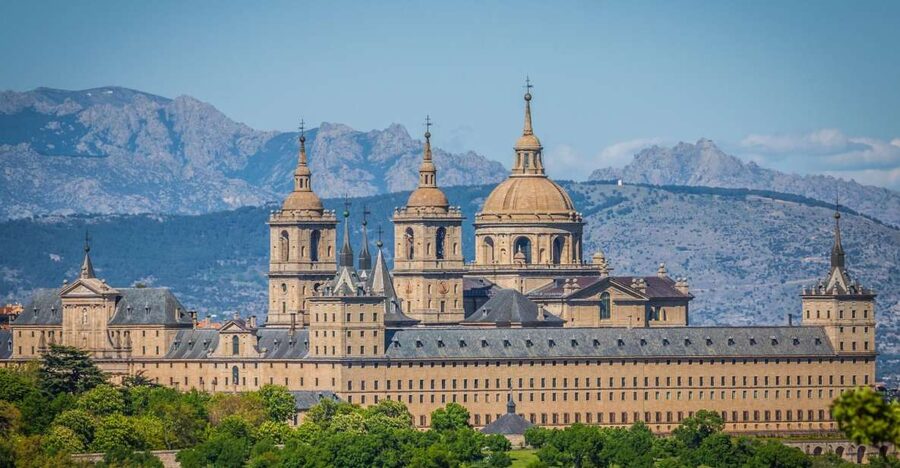
The basilica gives you the clearest sense of the religious purpose behind El Escorial. Its scale and formal design show how closely royal authority and Catholic faith were linked during Philip II’s reign.
Your guide explains the context rather than treating the church as a quick photo stop. Look up at the structure, notice the grand proportions, and give yourself time to absorb the contrast between the restrained exterior and the decoration inside. The basilica helps explain why the monastery was not simply a royal residence with a chapel attached. Worship was central to the whole project.
There is one important scheduling issue. The basilica closes during Mass. On Sundays and religious holidays, it may be closed for the entire morning. If that happens, the guide extends the visit in the library or Chapter Rooms, so the tour still has substance, but you will not see the basilica interior at that time.
This is one reason to check the day and start time before booking. A private guide can explain more, but no guide can open a church during services.
The library, where Philip II’s ideals become visible
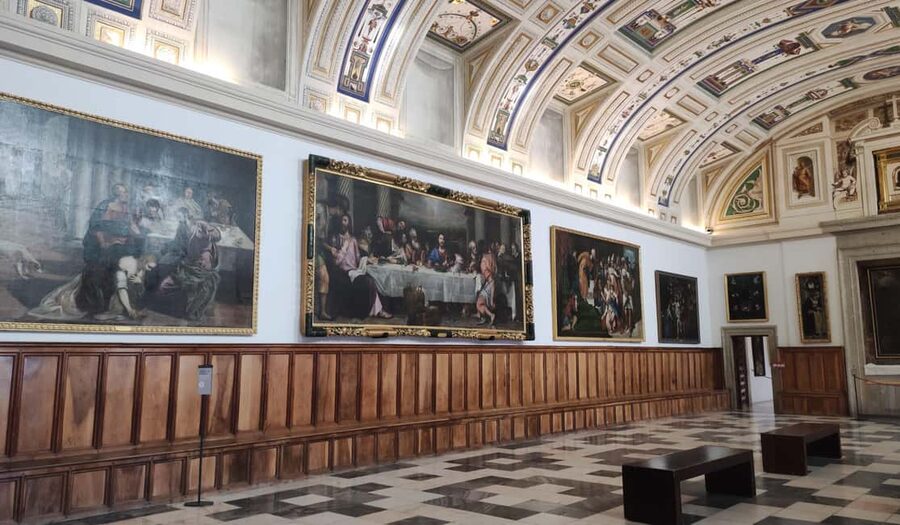
The library is one of the strongest parts of the tour. It reflects Philip II’s interest in learning, science, art, and classical thought, often described as an example of his humanism.
Here, the ceiling frescoes and wall paintings make the room feel like more than a storage place for books. The decoration links the pursuit of knowledge with the virtues and subjects considered important in the Renaissance world. Your guide can help you read the room as a statement about what a powerful Catholic monarch thought education should accomplish.
The main staircase adds another visual highlight. Its frescoes turn a practical passage into a ceremonial space, so keep looking above eye level as you climb. This is also where the physical demands of the visit begin to matter. The building involves many steps, and the tour is not suitable for wheelchair users or people with mobility impairments.
Comfortable shoes are essential. Take the stairs at an easy pace and do not feel pressured to rush. The guide is expected to take it slowly, but the site itself cannot be made step-free.
Same country, a different morning at the gates:
- Montserrat Monastery Half Day Experience from Barcelona
★ 5.0 · 6,014 reviews - Escorial Monastery and the Valley of the Fallen Tour from Madrid
★ 5.0 · 2,494 reviews - Montserrat Museum and Monastery Entry Ticket
★ 4.5 · 1,740 reviews - Montserrat Small Group: Monastery, Black Madonna & Natural Park
★ 5.0 · 1,690 reviews
The Royal Pantheon and the people behind the monument
The Royal Pantheon brings the dynasty into personal focus. This is where you encounter the burial place of Spanish monarchs and see how the Habsburgs and later Bourbons placed themselves within a long royal line.
The room is valuable because it turns broad political history into family history. Figures such as John of Austria become more than names from a textbook. He was the illegitimate son of Emperor Charles V, and his story gives the guide a way to explain the complicated family connections, status, and power struggles that shaped the Spanish monarchy.
This is also where Isabella’s approach is especially useful. A room filled with royal tombs can feel formal and distant if you only receive labels and dates. A good explanation connects the people to the decisions they made, the wars they fought, and the family structures that held the monarchy together.
Do not expect a lighthearted stop. The Pantheon is solemn, and its value comes from the sense of dynastic continuity rather than from decoration alone. If you prefer art-only visits, this section may feel slower. If you want the human story behind Spain’s imperial age, it is one of the most worthwhile parts.
The Hall of Battles and Spain at imperial strength
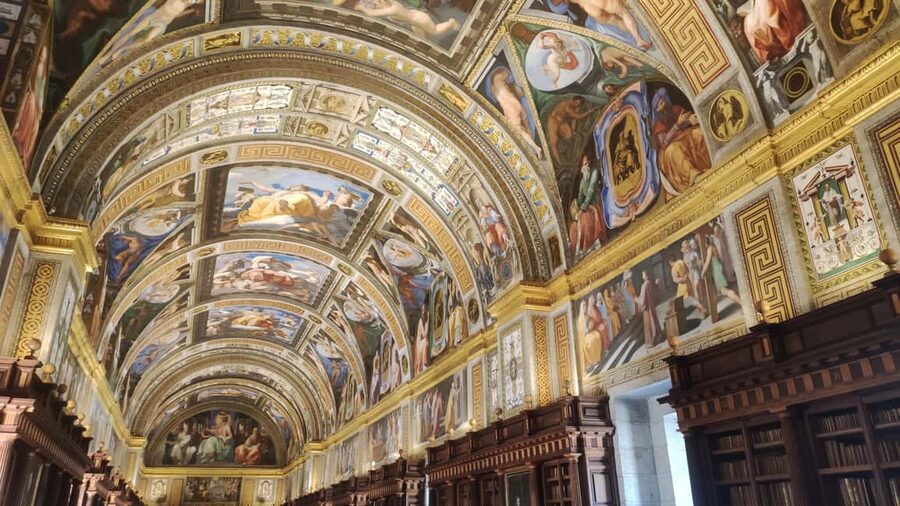
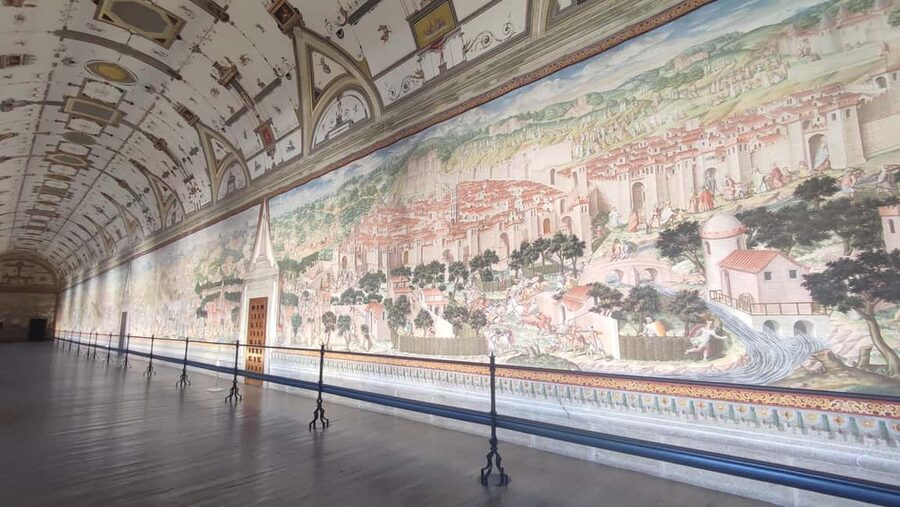
The tour ends inside with the Hall of Battles, a long room covered with mural paintings of military victories. The paintings show how rulers used art to shape public memory. Battles become part of a larger story about power, religion, empire, and the monarchy’s role in defending its interests.
The Hall works best after you have seen the basilica, library, and Pantheon. By this point, you understand that El Escorial is not one single kind of monument. The murals add the military side to the religious and dynastic messages you have already seen.
Give yourself time to look along the walls. The room is long, and the scale of the paintings can be easy to underestimate if you hurry. The guide’s commentary helps identify what you are looking at and explains why these scenes were placed in such a prominent part of the complex.
For me, this is also where the tour’s historical thread comes together. Philip II’s building presents scholarship, worship, royal death, and military authority as parts of one world. That is a much clearer takeaway than simply collecting a list of famous rooms.
Renaissance gardens and views toward the mountains
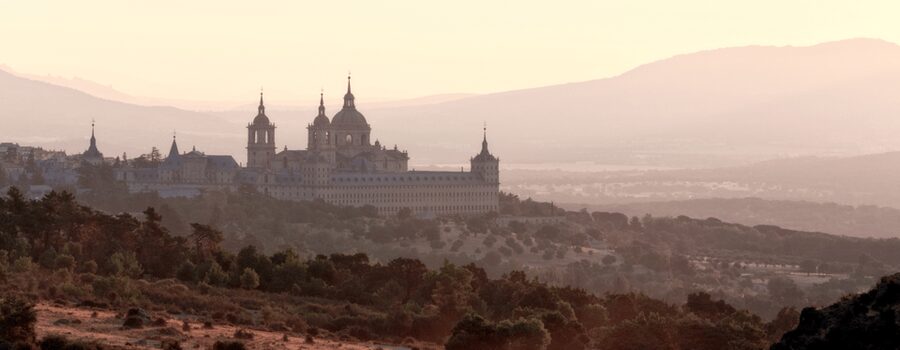
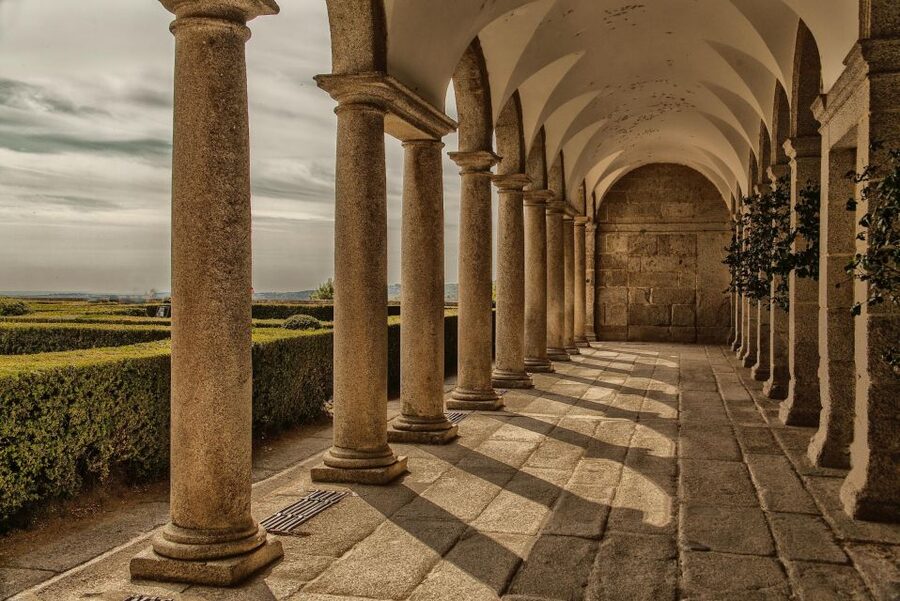
After the interior, you can finish in the Renaissance gardens. The gardens offer a change of pace after the enclosed rooms and stairways, with open views toward the forest and mountains around San Lorenzo de El Escorial.
This outdoor ending is more than a pleasant extra. It lets you see how the monument relates to its setting. The stone complex can feel imposing inside, while the gardens give you room to look outward and understand why the surrounding Sierra de Guadarrama adds so much to the visit.
Peacocks live in the gardens, and you may see them during your time outside. Do not book the tour solely for that possibility, but they can provide a charming final detail, especially for children.
Weather will affect how much you enjoy this part. On a cold February morning, the mountain air can be sharp, while a clear day may offer especially fine views. Bring sensible clothing for the season, even though the main tour takes place indoors.
What $112 buys you
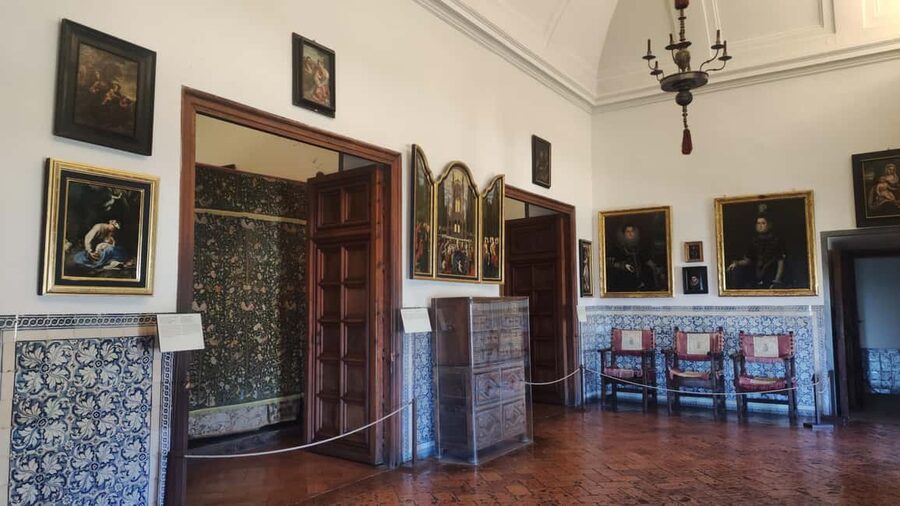
At $112 per person, this is not the cheapest way to see El Escorial. The value comes from the private format, a licensed guide, skip-the-line tickets, and the ability to ask questions throughout the visit.
A self-guided visit may cost less, but the building’s mixture of royal, religious, artistic, and military spaces can be hard to organize on your own. You might recognize Titian, El Greco, Velázquez, or Luca Giordano, yet miss the larger connections between the rooms. A private guide gives those works and spaces a shared storyline.
The price is easier to justify for two or more people who want a focused history visit. Families can also benefit, since the guide can keep younger visitors involved and explain the material in a less formal way. For solo visitors, the cost per person is harder to defend unless personal attention is a top priority.
The 2.5-hour length is well judged for a first visit. It gives you the essential interior rooms and a garden finish without turning the day into an endurance test. Still, you may wish you had more time in the library, Hall of Battles, or gardens, especially if you like to linger over art.
Practical details that can make or break the visit
Pack light. Large bags and backpacks must go into free individual lockers, which require a 1 euro coin. Food, pets, bikes, luggage, and baby carriages are not allowed inside. Bring a passport or ID card, and remember that children aged 12 to 16 must show valid identification, or a copy, at the entrance.
All visitors pass through airport-style security. Build a little patience into your arrival, even with priority entry. Skip-the-line access means you use a separate entrance, not that you bypass every security check.
Every person must appear on the booking, including infants under five, who enter free. Minors must be accompanied by an adult. The tour is offered in English or Spanish, and availability depends on the monument’s opening hours.
The site is not accessible, so this tour is not suitable for wheelchair users or people with mobility impairments. Many steps are part of the route. If you can manage stairs but need a slower pace, tell the guide and take the visit steadily.
Free cancellation is available up to 24 hours before the tour for a full refund, and you can reserve now and pay later. Those policies help if your Madrid plans are still shifting, but the more important decision is choosing a date when the basilica is open.
Who should book this private El Escorial tour
I would choose this tour if you want the history explained as a connected story rather than a string of room labels. It suits couples, families, small private groups, and anyone interested in Philip II, the Habsburgs, Spanish royal history, religious art, or Renaissance architecture.
It is also a strong choice if you are traveling between Madrid and Salamanca and want a meaningful stop with enough time for lunch in town. The 2.5-hour visit gives structure to the outing, while the gardens and mountain setting keep the day from feeling like one long indoor museum visit.
I would think twice if you dislike stairs, need step-free access, or mainly want a quick look at the exterior. I would also compare the cost carefully if you are alone and comfortable exploring at your own pace.
Should you book it?
Book this tour if you want El Escorial to make sense. The basilica, library, Pantheon, Hall of Battles, art, and gardens are impressive on their own, but Isabella Trébede’s private storytelling gives them a clear connection. The strongest praise centers on her energy, clear English, historical detail, and ability to keep teenagers interested.
The decision is less favorable if you need accessibility or want the lowest-cost entry. For everyone else, the combination of priority admission, a private licensed guide, headsets, and a well-planned route makes $112 a reasonable price for one of Spain’s most important monuments.
FAQ
Where does the tour meet?
Meet at the entrance with a Spanish flag above it, directly opposite the Tourism Office. Your guide will carry an Isabella Trébede tote bag.
How long does the tour last?
The tour lasts 2.5 hours. Available starting times depend on the monument’s opening hours.
Is the tour private?
Yes. It is a private-group experience with a licensed guide just for your group.
Which languages are available?
The tour is offered in English and Spanish.
Is transportation from Madrid included?
No. Hotel pickup and transportation to or from the meeting point are not included.
What rooms and sights are included?
The route includes the basilica, library, Royal Pantheon, Hall of Battles, and Renaissance gardens, subject to opening hours and closures.
Can I visit the basilica on a Sunday morning?
The basilica is closed during Mass. On Sundays and religious holidays, it is closed for the entire morning.
Is the tour accessible for wheelchair users?
No. The monument is not accessible, and the route includes many steps.
What should I bring?
Bring a passport or ID card and comfortable shoes.
Can I bring a large backpack or food?
No. Large bags and backpacks must be placed in free individual lockers using a 1 euro coin. Food, luggage, pets, bikes, and baby carriages are not allowed.
Just added around Spain
- Montserrat Monastery Horse Riding & Walk – Small Group (Max 8)★ 5.0 · 45 reviews
- Montserrat Nature Walk, Monastery and Museum from Barcelona★ 5.0 · 58 reviews
- Montserrat & beyond private from Barcelona with different options★ 5.0 · 32 reviews
- Montserrat Tour with Cogwheel Train, Monastery & Black Madonna★ 4.0 · 10 reviews
- Full-Day Trip Barcelona to Montserrat Monastery & Cava Winery★ 5.0 · 158 reviews
- Transfer to Montserrat Monastery from Barcelona★ 4.5 · 94 reviews
- Montserrat Land of Shrines – One Day Small Group Hiking Tour from Barcelona★ 5.0 · 38 reviews
- Montserrat Horseback Riding & Monastery – Small Group (Max 8)★ 5.0 · 45 reviews
Private Temple Tours in Spain, compared.

Montserrat Monastery Small Group or Private Tour Hotel pick-up
Read our review →
Semi-Private Montserrat Monastery, Funicular & Scenic Nature Walk
Read our review →
Semi-Private Montserrat Monastery & Hiking Experience
Read our review →
Montserrat & beyond private from Barcelona with different options
Read our review →Browse the lists this tour appears in