
REVIEW · GRAND PALACE & WAT PHO TOURS
Grand Palace, Wat Pho, and Wat Arun: Guided Tour in Spanish
Bangkok’s great temple trio makes an excellent first lesson in the city. This Spanish-guided walking tour links Wat Pho, the Grand Palace, and Wat Arun, with public transport and a river crossing helping you avoid Bangkok’s famously stubborn traffic. You see royal ceremony, Buddhist art, and the city from the water in one half-day outing.
I like the sensible route and the Spanish commentary. Starting at Wat Pho gives you the Reclining Buddha before the Grand Palace crowds and ceremony, while the boat ride adds a welcome change of pace. I also like that guide Nori has earned especially warm praise for her friendly, attentive approach.
The main drawback is the $109 price, which is high for a five-hour visit if you are comfortable exploring temples on your own. Walking in heat, climbing at Wat Arun, and following strict clothing rules also require some preparation. Royal events can occasionally change palace access, as happened for one booking when the palace closed after the death of a member of the royal family.
Key points to know before you book
- Three major Bangkok sights in one route: Visit Wat Pho, the Grand Palace and Temple of the Emerald Buddha, then Wat Arun.
- Spanish-speaking guidance: The tour is conducted in Spanish, with Nori named as one particularly well-liked guide.
- Traffic-smart transport: Walk between sights where practical, use public transport, and cross the river by boat.
- A serious dress code: Cover your shoulders and knees, and avoid strapless-heel shoes at the national shrine.
- Best for first-time visitors: The tour gives you historical context and a clear plan for Bangkok’s most important temple area.
- Bring cash and identification: Large bags and luggage are not allowed, and you should carry a passport or ID card.
Why this temple route works so well
Bangkok can be confusing on a first visit. The city’s most important temples sit close together, yet heat, traffic, crowds, and river crossings can make a simple map look more complicated on the ground. This tour removes much of that guesswork without keeping you in a vehicle all day.
You meet at the gate of the Bangkok City Pillar Shrine, a central location near the royal district. From there, the route moves on foot and by public transport. That matters because a car can spend more time waiting in traffic than moving, especially around the old city.
The tour lasts from 270 minutes to five hours, depending on the selected option and timing. That is enough time to see the main buildings and hear the basic story behind them, but it is not a slow, scholarly study of every courtyard. You should expect a focused introduction rather than unlimited time for quiet photography.
The fee is $109 per person. All entry fees, public transportation fees, a guide, and insurance are included. Private tours add hotel pickup and drop-off, which can make the price easier to justify if you value personal attention and door-to-door service. For a standard option, the value depends on how much you want Spanish explanations and how comfortable you are handling Bangkok’s temples alone.
More Grand Palace and Wat Pho Tours in Bangkok:
- Bangkok: Grand Palace, Wat Pho, and Wat Arun Guided Tour
★ 4.8 · 3,632 reviews - Bangkok: Grand Palace and Wat Phra Kaew Guided Walking Tour
★ 4.4 · 2,417 reviews - Bangkok: Grand Palace, Wat Pho, Wat Arun Sacred & Local Tour
★ 4.3 · 2,256 reviews
Wat Pho and the enormous Reclining Buddha
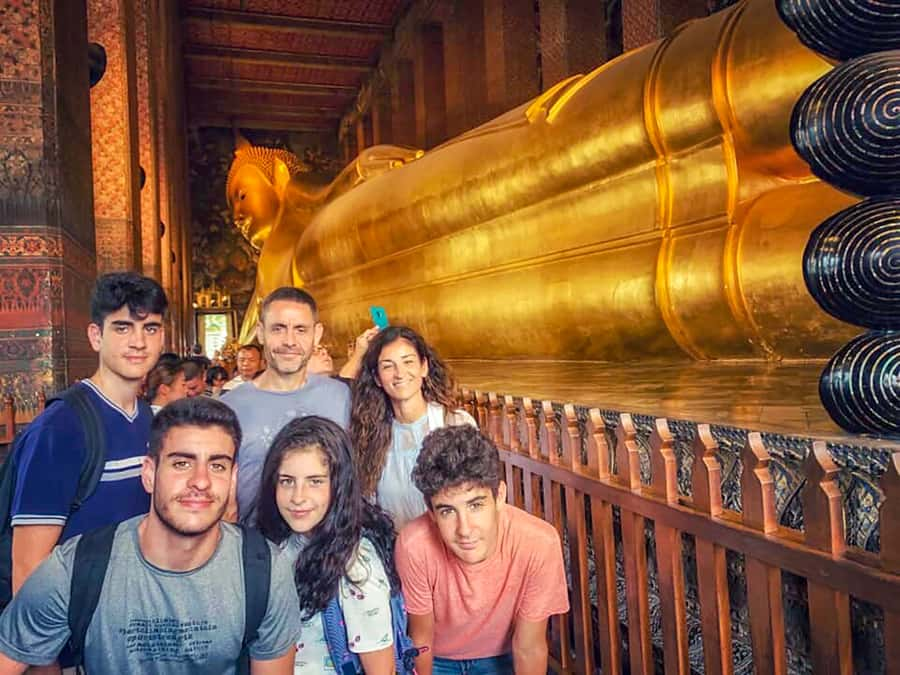
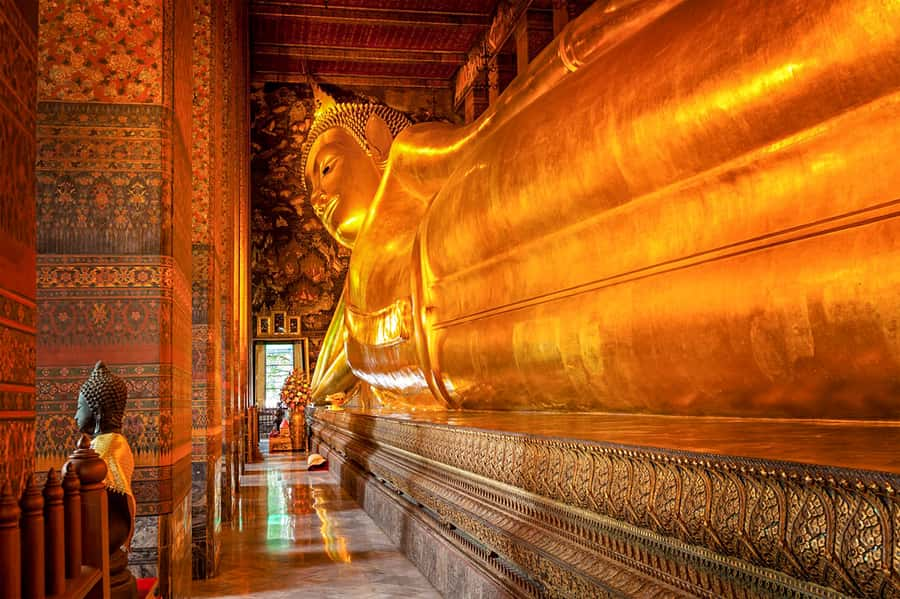
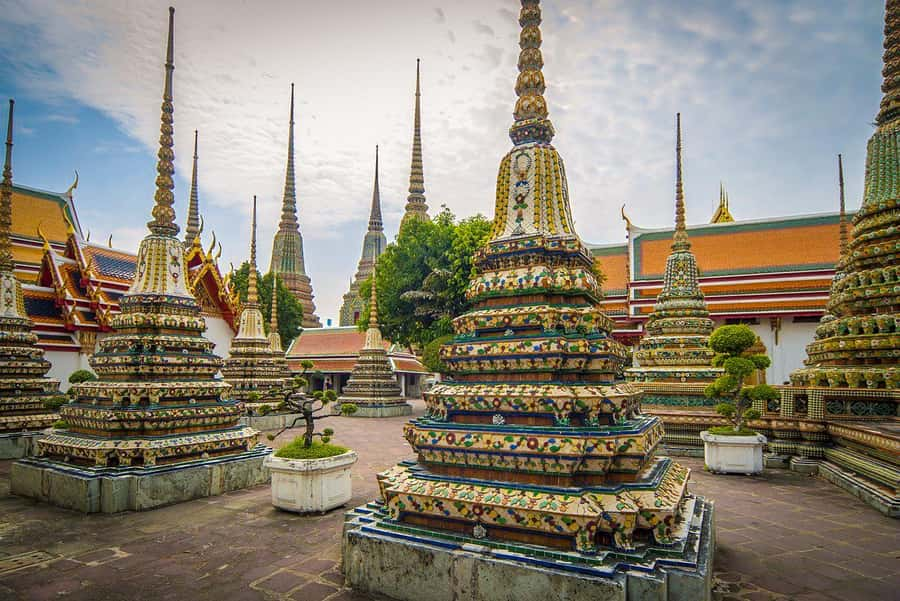
Wat Pho is the first major stop, and it is a smart place to begin. The temple complex is described as Bangkok’s oldest and largest, covering almost 20 acres. That scale becomes clear as you move through its courtyards, prayer halls, stupas, and decorated walls.
The famous Reclining Buddha is the star attraction. Its size makes a quick visit worthwhile, but the statue is not the only reason to come. Wat Pho gives you a sense of how a Thai temple complex functions as a collection of religious buildings rather than one single monument.
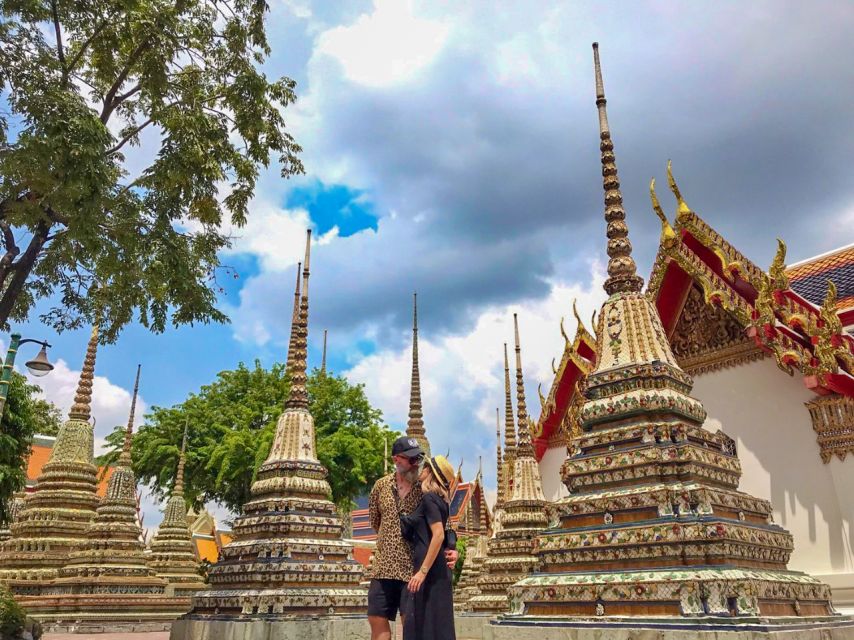
Look closely at the decoration. Bright tiles, gold details, and carefully arranged architectural elements compete for your attention. A Spanish-speaking guide can help you sort out what you are seeing, especially if you are not familiar with Buddhist imagery or Thai religious customs.
I would give yourself enough room to look up and around. Wat Pho is not just a stop for one photograph of the Reclining Buddha. The surrounding enclosures are part of the experience, and the large site helps explain why this temple has such an important place in Bangkok’s story.
The practical issue is heat. This is a walking tour through open courtyards and busy temple areas, so light clothing is useful, but it must still meet the dress code. Carry water and wear shoes suited to walking. You should also expect to remove footwear in places where temple rules require it, although the supplied details do not specify every location where that happens.
The Grand Palace and the Emerald Buddha
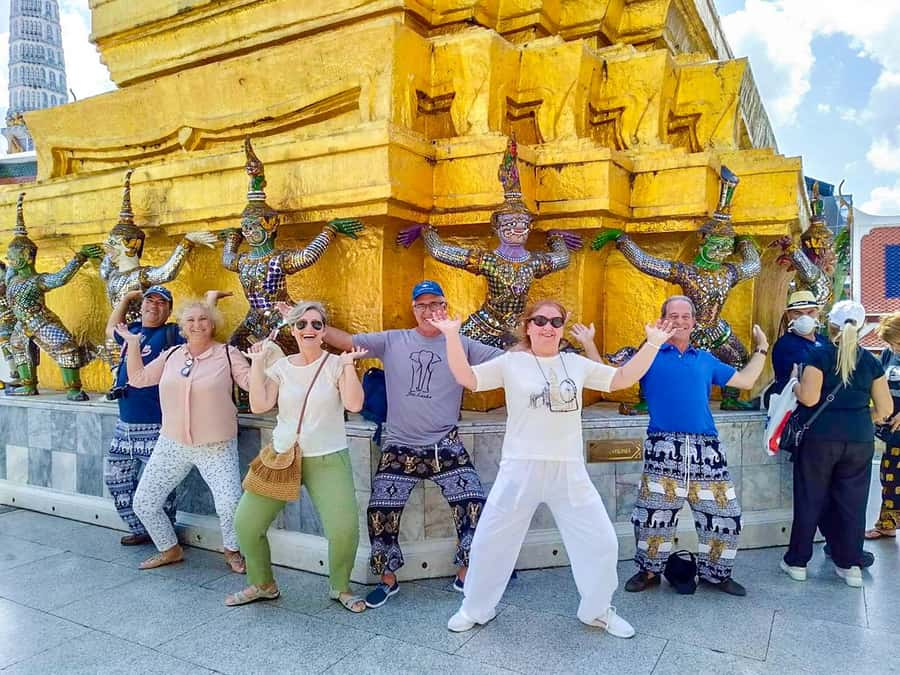
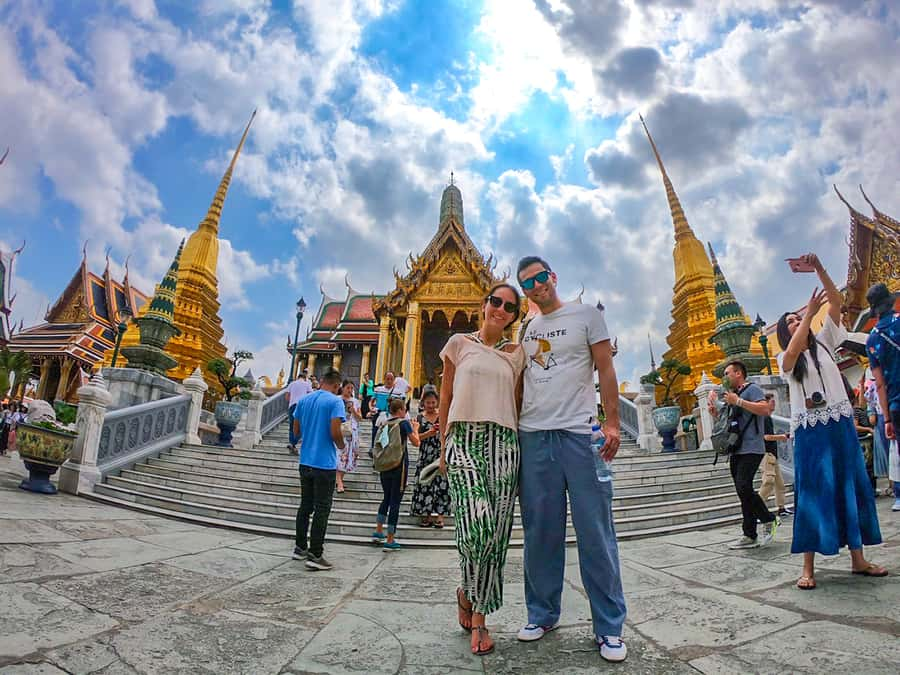
The Grand Palace is the most formal stop on the route. It served as one of the homes of the kings of Siam and remains one of Bangkok’s essential sights. The buildings are lavish, brightly colored, and packed closely together, creating a sharp contrast with the surrounding city.
The Temple of the Emerald Buddha, also called Wat Phra Kaew, is inside the palace complex. The Emerald Buddha is regarded as Thailand’s most important Buddha image, and religious ceremonies still take place there. Even if you have seen grand palaces elsewhere in Asia, this complex has its own visual language: golden spires, glittering mosaics, painted surfaces, and ceremonial buildings arranged for royal and religious use.
This is the part of the tour where a guide adds the most value. Without context, the palace can become a blur of gold roofs and ornate walls. A Spanish-speaking guide can explain the connection between the monarchy, national identity, and Buddhism, helping you understand why this is more than a pretty collection of buildings.
The dress code here is strict. Bare shoulders and knees are not permitted, and strapless-heel shoes are specifically prohibited. Wear clothing that covers you from the start rather than hoping to rent or borrow something at the entrance. The national shrine status also means you should behave quietly and respectfully.
Do not bring luggage or large bags. You need a passport or ID card and some cash. These are small details, but forgetting them can turn an easy temple visit into a frustrating one.
Palace access can also be affected by royal protocol. One booking had the palace portion canceled after the passing of a member of the royal family. That was not the guide’s fault, but it is a useful reminder that this is a working ceremonial site, not simply a museum with fixed opening hours. If the palace is the main reason you are booking, accept that rare changes can happen.
Crossing the Chao Phraya by boat
After the palace area, the route includes a public boat crossing to Wat Arun. This is one of the best parts of the experience because it changes your view of Bangkok completely.
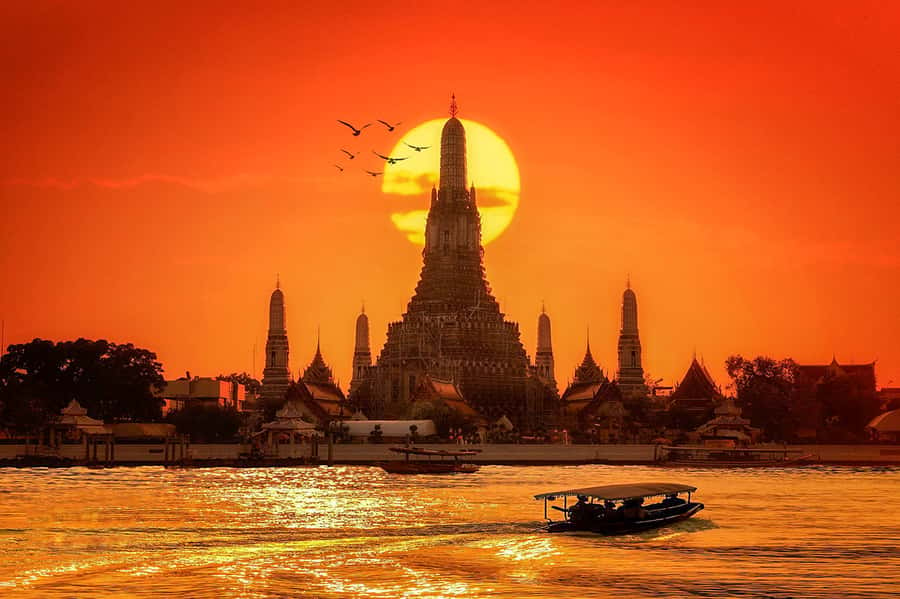
On foot, you see gates, walls, and detailed temple surfaces. From the river, the city opens up. You get broad views of the water, the opposite bank, and Wat Arun’s rising silhouette. The boat ride is practical transport, but it also works as a short sightseeing break between two concentrated temple visits.
The tour description calls it a fun sightseeing boat ride and includes panoramic city views. Do not expect a long cruise or a private boat excursion. Think of it as a useful river crossing with a good view, folded into the route.
Public transport can be less polished than a private transfer, but it is a better fit for understanding how Bangkok works. You are not sealed inside a vehicle while the guide points out the city through glass. You move as the city moves, then continue on foot. That also means you should be ready for stairs, platforms, heat, and the normal unpredictability of urban transport.
More Guided Tours in Bangkok:
- From Bangkok: Ayutthaya Temples Guided Tour with Lunch
★ 4.7 · 10,535 reviews - Bangkok: Wat Pho and Wat Arun Guided Walking Tour
★ 4.6 · 1,720 reviews - Grand Palace & Temples of Bangkok with experienced guide
★ 5.0 · 890 reviews - Bangkok: Grand Palace and Wat Arun Guided Walking Tour
★ 4.5 · 118 reviews
Wat Arun, the Temple of Dawn
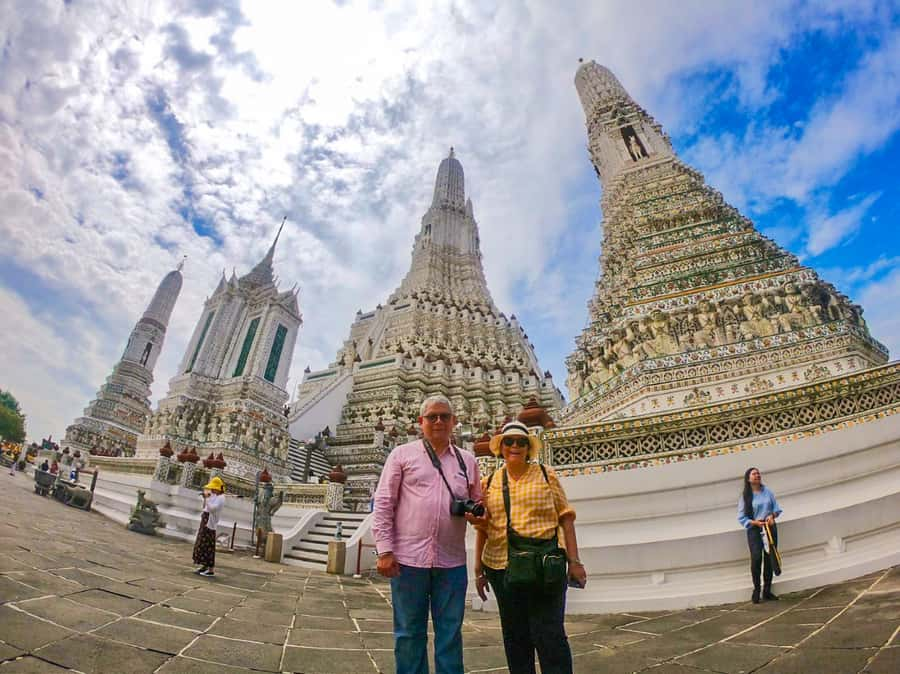
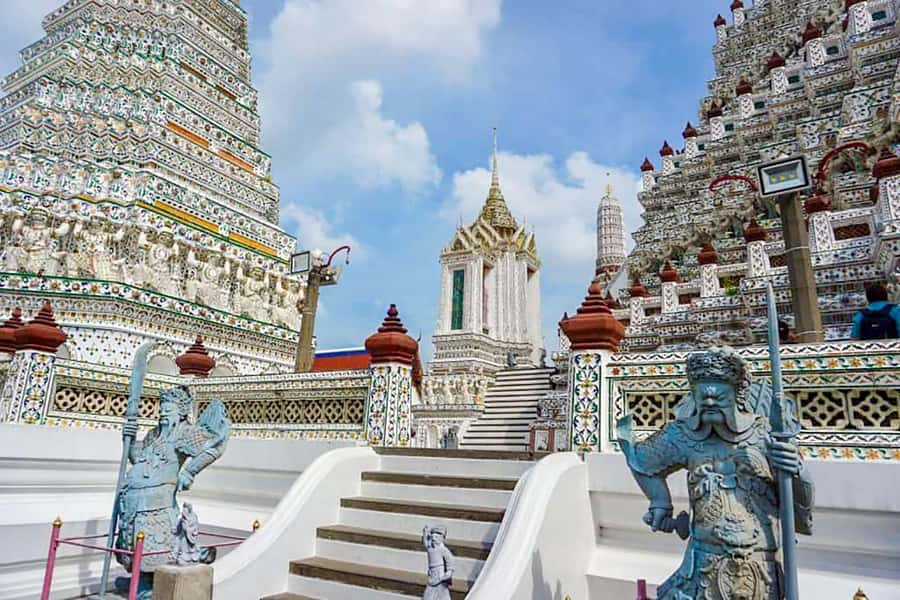
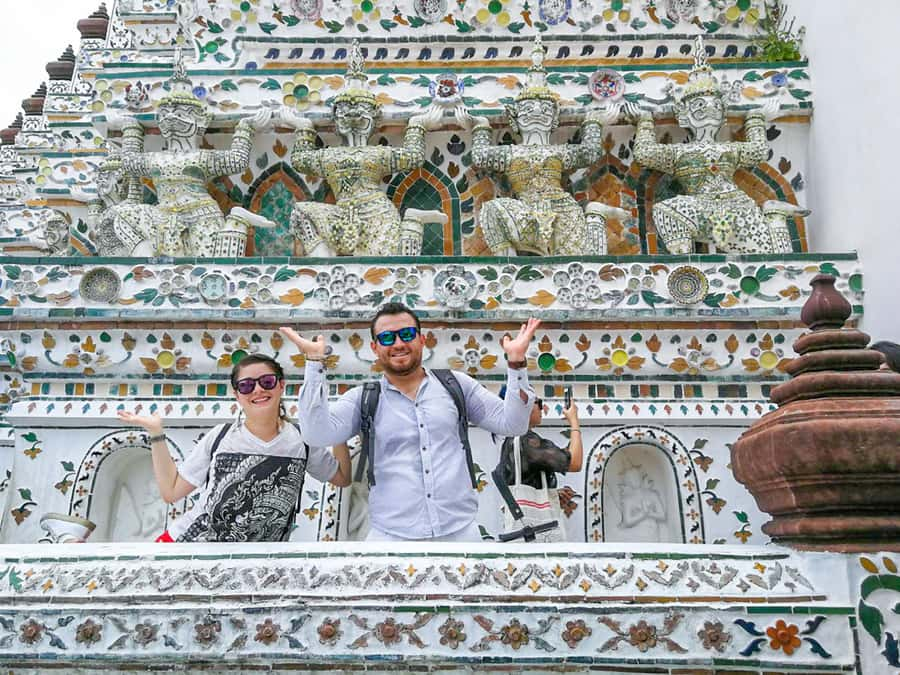
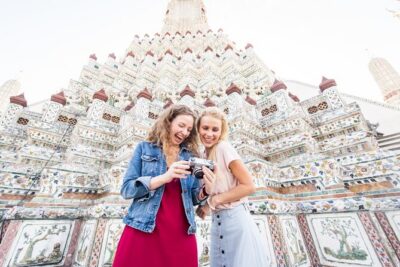
Wat Arun is better known as the Temple of Dawn, and its riverside setting gives it a distinct character. Its central pagoda is covered with colorful Chinese porcelain tiles, which create a patterned surface that catches the light from different angles.
The temple is also known for its bell tower and giant statues. These details reward a slower look, especially after the grand royal buildings at the palace. Wat Arun feels more vertical and sculptural, with the pagoda drawing your eye upward from the riverbank.
The tour includes the chance to climb to the top of the pagoda and hear about its history. The climb is an important practical consideration. You may find the steps steep, and the height can make the descent more demanding than the way up. Take your time and do not treat the climb as a race.
Wat Arun is a strong final stop because it gives you a last, different image of Bangkok. Wat Pho is expansive and grounded, the Grand Palace is formal and ceremonial, and Wat Arun rises above the river in a more dramatic way. Together, the three sites show different sides of the capital’s religious and royal identity.
What the Spanish guide adds
A guide makes the biggest difference when the architecture is unfamiliar. Thai temples use symbols, colors, roof forms, Buddha images, and mythological figures that can be hard to interpret from a sign alone. A Spanish explanation lets you ask questions as you go instead of trying to translate everything later.
This is also useful for etiquette. The guide can remind you when to lower your voice, where to avoid sitting, and how to dress for the national shrine. Those reminders help you enjoy the temples without accidentally treating active religious places like photo studios.
The strongest personal detail available about the guiding service is the repeated praise for Nori. She is described as friendly and attentive, and one Spanish-language booking called her excellent. That does not guarantee she will lead every departure, but it gives you a useful name to note when checking your booking details.
The experience is wheelchair accessible, though the route still includes walking, public transport, a boat crossing, and the option to climb at Wat Arun. If you need a fully step-free experience, confirm how the selected tour handles each transfer before booking. The supplied information confirms accessibility, but it does not describe the exact arrangements at every stop.
Walking, timing, and comfort
This is not a sit-back sightseeing tour. You walk through temple grounds and between transport points, then use public transport to avoid wasting time in traffic. The route is efficient, but it asks more from you than a private air-conditioned vehicle would.
Wear comfortable walking shoes and clothing that covers your shoulders and knees. Keep your bag small, since luggage and large bags are not allowed. Bring cash for personal needs and carry your passport or ID card as requested.
The five-hour maximum is useful for planning the rest of your day. You should not schedule an important appointment immediately afterward, since the actual duration can vary between 270 minutes and five hours. Bangkok traffic is not the only factor. Temple access, transport timing, and the pace of the group can all affect the finish time.
A Spanish-speaking tour is especially helpful if you are not confident reading English-language signs or explaining questions in English. It is less essential if you already know Thai temple customs and have visited the Grand Palace before. In that case, the included admissions and transport may not fully offset the $109 cost.
Who should book this Bangkok temple tour?
I would recommend it most strongly to first-time Bangkok visitors who want the city’s major sights organized into one clear route. It also suits Spanish-speaking couples, families, and small groups who prefer asking questions in their own language.
The tour is a good match if you want:
- A guide to explain Thai monarchy and Buddhism
- Admission fees and public transport included
- A planned route through three major sights
- A river crossing rather than another long road transfer
- The convenience of private hotel pickup and drop-off, if you choose the private option
I would think twice if you dislike walking, heat, public transport, or fixed group timing. You should also consider the price carefully. Wat Pho, the Grand Palace, and Wat Arun are easy to recognize as a high-value sightseeing combination, but $109 is a premium for a half-day visit. The Spanish guide and included services are what make the cost more reasonable.
Free cancellation up to 24 hours before the tour and reserve-now, pay-later booking make planning less risky. Those terms are useful if your Bangkok schedule is still changing, though they do not remove the possibility of royal closures affecting the palace visit.
Should you book it?
Book this tour if you want a well-planned introduction to Bangkok’s royal and Buddhist landmarks, and if Spanish guidance matters to you. The route is sensible, the boat crossing adds real variety, and guides such as Nori can make the ornate sites easier to understand.
Skip it if you are an experienced independent visitor who can manage temple etiquette, transport, and admissions on your own. At $109, the tour earns its price through explanation, organization, and convenience rather than through exclusive access. For a first visit, that structure is likely worth paying for. For a repeat visit, you may prefer to spend the money on a slower, self-guided day.
FAQ
Where does the tour meet?
The meeting point is at the gate of Bangkok City Pillar Shrine.
How long does the tour last?
The duration ranges from 270 minutes to five hours. Check the available starting times and selected tour option when booking.
Which temples are included?
The route includes Wat Pho, the Grand Palace and the Temple of the Emerald Buddha, and Wat Arun, also called the Temple of Dawn.
Is the tour conducted in Spanish?
Yes. The live tour guide language is Spanish.
What should I wear?
Wear clothing that covers your shoulders and knees. Bare shoulders, bare knees, and strapless-heel shoes are not permitted at the national shrine.
Are hotel pickup and drop-off included?
Hotel pickup and drop-off are included with the private tour only. Public transportation fees and entry fees are included, along with a guide and insurance.
Just added around Bangkok
- Visit temples in and around Bangkok with a former monk of 10 years★ 5.0 · 30 reviews
- Visit Wat Pho and Wat Arun with Local Expert★ 4.0 · 14 reviews
- Top 3 Bangkok Temples: Multilingual Private Tour [EN,ES,DE,IT,FR]★ 5.0 · 9 reviews
- 3-Hour Bangkok Walking Tour: Wat Pho and Wat Arun★ 5.0 · 102 reviews
- Thai Dance Class at Wat Arun★ 5.0 · 30 reviews
- Grand Palace & Emerald Buddha Private Tour [Optional Luxury]★ 5.0 · 27 reviews
- Bangkok Heritage Highlights: Grand Palace & Three Temples Tour★ 4.5 · 52 reviews
- Shore Excursion Laem Chabang Port : Grand Palace & Famous Temples★ 4.0 · 6 reviews
Grand Palace & Wat Pho Tours, compared.
Grand Palace, Wat Pho, and Wat Arun Guided Tour
Read our review →
Grand Palace and Wat Phra Kaew Guided Walking Tour
Read our review →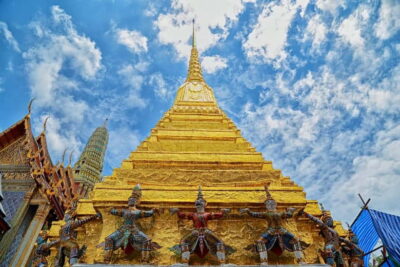
Grand Palace, Wat Pho, Wat Arun Sacred & Local Tour
Read our review →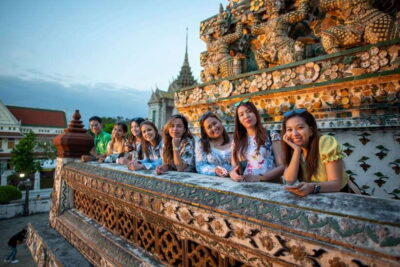
Grand Palace & Temples of Bangkok with experienced guide
Read our review →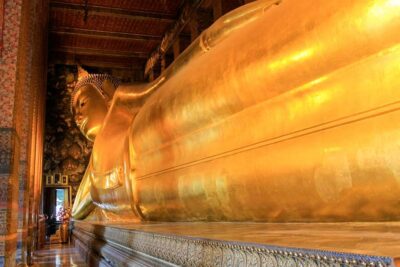
Grand Palace, Wat Pho, and Wat Arun Private Tour
Read our review →
Evening Tour with Wat Arun, Wat Pho & Tuk Tuk Ride
Read our review →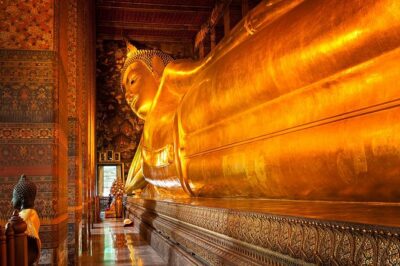
Bangkok City Highlights Tour: Grand Palace & Three Iconic Temples
Read our review →Browse the lists this tour appears in