
REVIEW · GEORGIA TEMPLE TOURS
Gelati Monastery, Motsameta Monastery & Bagrati Cathedral
Motsameta Monastery gives this short tour its most memorable setting: a walled church perched among rocky, forested hills outside Kutaisi. I like that you also get Gelati Monastery, founded in 1106 by King Davit Agmashenebeli, and Bagrati Cathedral, built in 1003. Together, the three stops show different chapters of Georgian church architecture.
I especially like the small group of seven or fewer and the tidy route, which covers a lot without taking a full day. The main drawback is important: Gelati is undergoing restoration and may remain partly closed for several years, so you should confirm what can be seen before booking.
Key points to know before you go
- Motsameta comes first, with a short guided walk through a dramatic mountain setting.
- Gelati was founded in 1106 and contains buildings from mainly the 12th and 13th centuries.
- Bagrati Cathedral dates to 1003, making it one of Kutaisi’s key historic landmarks.
- A small group and comfortable minivan make the three-hour route easy to manage.
- Guide Archil has earned special praise for his clear explanations and friendly manner.
- Gelati’s restoration is the main uncertainty, so check its current access before paying.
Three Georgian monuments in one compact morning
This is a focused introduction to the churches around Kutaisi. You leave from the See Georgia Tour Agency office, ride in a comfortable minivan, and visit Motsameta, Gelati, and Bagrati Cathedral before returning to the same office.
The pace is brisk but sensible. Each monument gets about 30 minutes for a guided visit and walking, with roughly 30-minute van rides between the first three main points. That gives you enough time to see the essential features and hear the key stories, though not enough time for a slow, unplanned exploration.
I would choose this outing if you have only a short stay in Kutaisi or want historical context before visiting more of Georgia. It is also a good fit if you prefer a guide who can connect architecture, religion, and national history instead of simply dropping you at a church entrance.
The three sites work well together. Motsameta offers the setting, Gelati offers the grand medieval story, and Bagrati ties the route back to Kutaisi itself. You get variety rather than three nearly identical stops.
A few more temple visits around the world worth a look
- Lisbon: Jerónimos Monastery Entrance Ticket
★ 4.1 · 14,164 reviews - Angkor Wat Sunrise or Sunset Tour with Guide from Siem Reap
★ 5.0 · 12,109 reviews - Teotihuacan, Guadalupe Shrine & Tlatelolco Day Tour with Lunch
★ 5.0 · 11,603 reviews
Motsameta Monastery and its rocky mountain setting
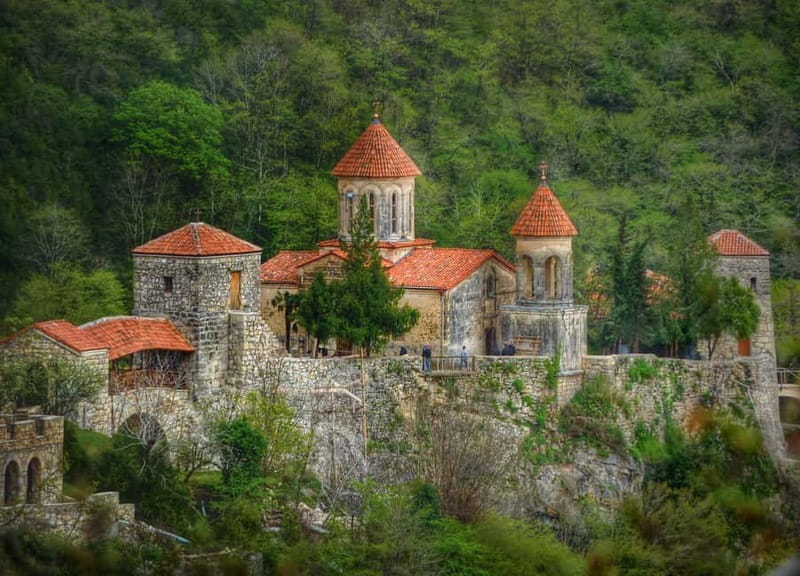
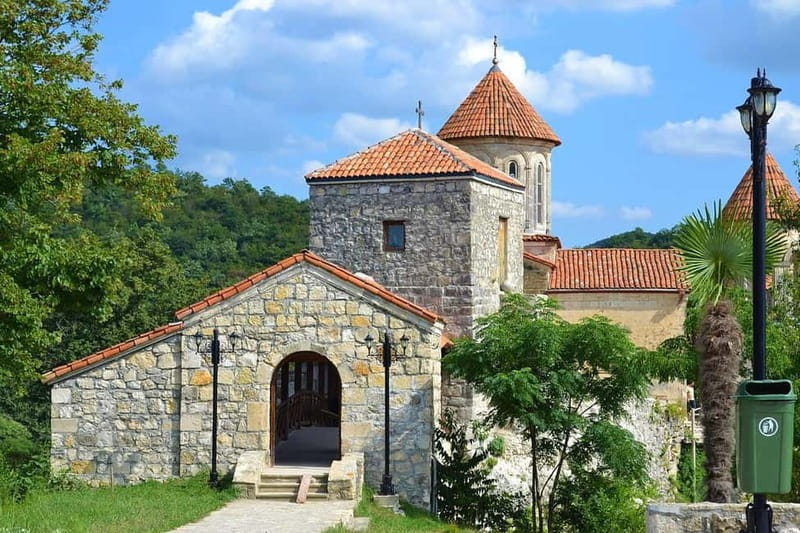
Motsameta is the first major stop, after about 30 minutes in the van. The monastery is built on a rocky, forested mountain and enclosed by walls, so the approach already feels different from a city church.
I like this stop because the location carries as much weight as the building. You are not simply looking at an old monument in a built-up area. The monastery occupies a more secluded site among hills, which helps explain why it became an important place of Georgian religious culture.
Plan on a guided visit and around 30 minutes of walking. Comfortable shoes matter here. The route is not described as strenuous, but the tour specifically warns of a moderate amount of walking, and a monastery on rocky ground is not the place for delicate footwear.
Your guide can help put the site into context. Without that help, you might focus only on the walls and mountain setting. With a guide, the visit becomes a short lesson in why monasteries were built in such places and how they fit into Georgia’s older religious tradition.
The time limit is both useful and limiting. You get a clear first impression without spending half the day at one site, but you should not expect a long independent wander. If Motsameta is the stop that interests you most, stay close to the guide and use the walking time well.
Gelati Monastery, founded in 1106
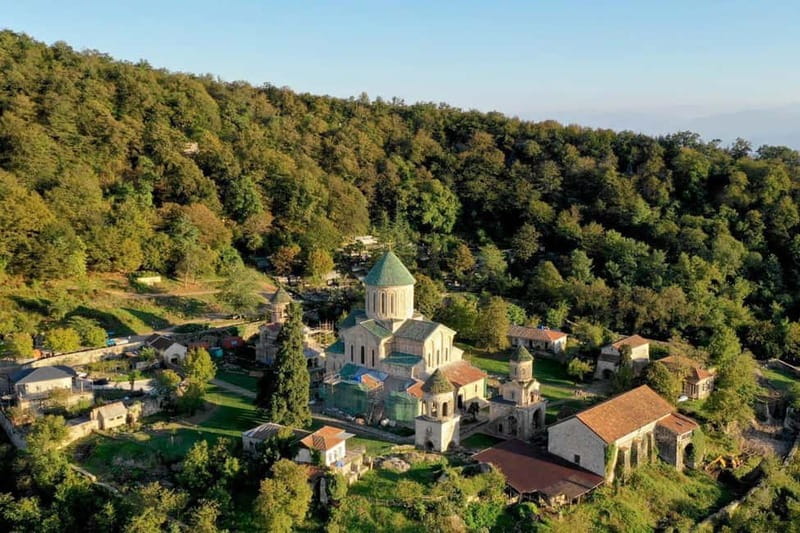
From Motsameta, the van continues for about 30 minutes to Gelati Monastery. King Davit Agmashenebeli founded the monastery in 1106, and its main buildings come from different periods, with much of the visible architecture dating from the 12th and 13th centuries.
Gelati is the historical centerpiece of the outing. It is a UNESCO World Heritage Site and one of the major monuments connected with medieval Georgia. The site helps you understand that Georgian Christianity was not a minor side story in the region. Monasteries such as Gelati served religious, cultural, and educational purposes.
The architectural interest comes from the mixture of buildings and dates. Your guide can point out how the complex developed over time rather than presenting it as one single structure built in one campaign. That detail matters because old religious sites often look unified at first glance, while their parts belong to different eras.
There is a practical concern you should take seriously. Gelati is undergoing restoration, and access may be limited. One recent account described the work as likely to continue for about five years and suggested that parts of the monastery were closed. The exact situation can change, so check current conditions before you book.
This does not make the tour pointless. You still visit one of Georgia’s most important historic religious sites, and the guide can explain the complex even if some areas are unavailable. But your expectations should be realistic. If your main reason for booking is to see every interior detail of Gelati, a restoration update is essential.
Bagrati Cathedral and Kutaisi’s medieval symbol
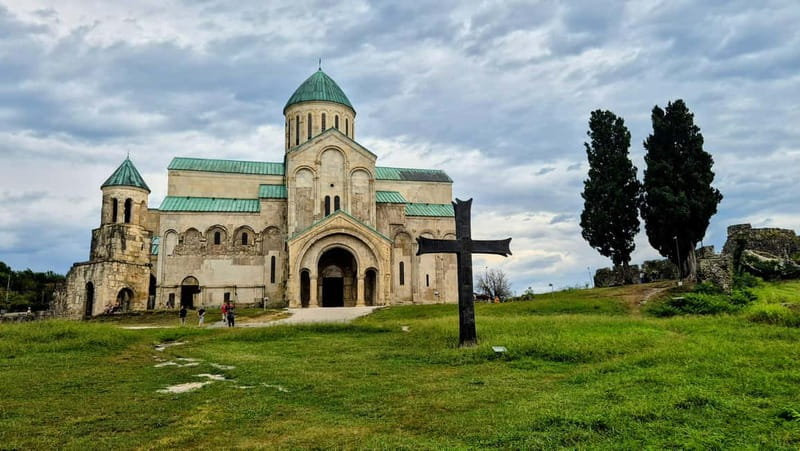
The final monument is Bagrati Cathedral, located on Uchimerion Hill in Kutaisi. The Assumption Cathedral was built in 1003 during the reign of Bagrat III, who ruled from 975 to 1014.
Bagrati is important both as a building and as a symbol. It is a landmark of Georgian medieval church architecture, with significance tied to its design, age, and place in the story of Georgian statehood. The visit gives you a useful contrast with Gelati. Gelati is a monastery complex outside the city, while Bagrati is a major cathedral linked directly to Kutaisi.
The cathedral is also an easy final stop because it brings you back toward the city. After about 30 minutes at Bagrati, you take a roughly 15-minute ride to the See Georgia Tour Agency office. That short final transfer keeps the tour from feeling stretched out.
Bagrati may feel less remote than Motsameta and less expansive than Gelati. That is not a weakness. It gives the route a clean finish and lets you see a major Kutaisi landmark without arranging a separate taxi or walk through the city.
You should allow the guide’s explanation to do some of the work here. The building’s historical and symbolic importance is easier to grasp when you know why the cathedral mattered to Georgian rulers and medieval church design.
Same country, a different morning at the gates:
- From Bangkok: Ayutthaya Temples Guided Tour with Lunch
★ 4.7 · 10,535 reviews - Siem Reap: Angkor Wat: Small-Group Sunrise or Sunset Tour
★ 5.0 · 9,444 reviews - Athens: Cape Sounion & Poseidon Temple Sunset Half-Day Trip
★ 4.8 · 8,241 reviews - Ubud: Monkey Forest, Jungle Swing, Rice Terrace, and Water Temple
★ 5.0 · 7,160 reviews
What the three-stop route does well
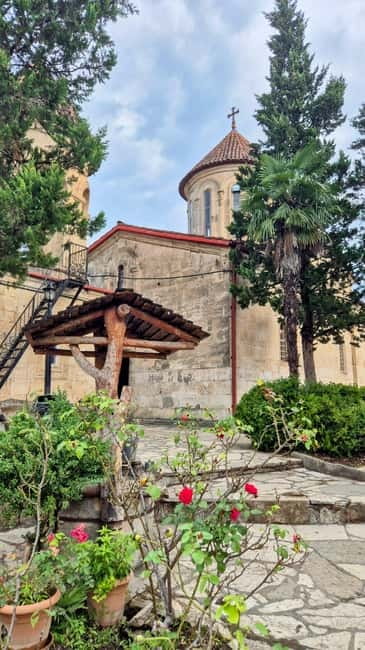
The tour’s best feature is the way the stops complement one another. You are not paying simply for transport between three old churches. You are getting three different settings and roles:
- Motsameta shows a monastery in a rocky, forested mountain location.
- Gelati introduces the major medieval monastery founded by Davit Agmashenebeli.
- Bagrati presents a cathedral within Kutaisi and connects the route to the city’s history.
That variety makes the three-hour format work. A longer tour could offer more time at each site, but this version is efficient for someone who wants a first look rather than a full scholarly examination.
I also like the balance between guided information and simple sightseeing. The guide speaks English, Georgian, or Russian, and the small group makes it easier to hear explanations and ask questions. The group limit is seven, though the actual number can be smaller. One recent group had only three people, which made the outing feel close to a private tour without the usual private-tour price.
The transport matters more than it might seem. The route involves several transfers, so a comfortable minivan is far easier than piecing the same journey together by local transport. Wi-Fi on board and bottled water are included. Meals are not, but the tour lasts only three hours, so that omission is easy to manage.
The vehicle also gives you a place to rest between walks. This is useful in warm weather or after climbing around uneven ground. Smoking is not allowed, which keeps the short rides more comfortable for everyone.
Guide quality and the value of a small group
The guide can make or break a historical tour, and the strongest praise here goes to the guides’ explanations and friendly manner. Archil is singled out by name as an excellent guide, and the overall feedback points to clear information about both the monasteries and Georgia itself.
That wider context is valuable. If every explanation stayed at the level of dates and construction, the trip could feel dry. Instead, you can expect the guide to connect the monuments with Georgian culture and national history. The exact depth will depend on your guide, but the advertised languages are English, Georgian, and Russian.
At $18 per person, the price is very reasonable for the amount covered. You receive a professional guide, transport for the complete route, bottled water, and onboard Wi-Fi. You also avoid arranging separate rides to three sites, which can be more trouble than the low price suggests.
The value is strongest when the group is small. A group of three or four gives you a better chance to ask questions and keep the walking pace comfortable. Even at the maximum of seven, the group remains far more manageable than a large coach excursion.
The price looks less compelling if your only goal is to photograph Bagrati Cathedral, since Bagrati is easier to reach from Kutaisi than the two monasteries. The tour earns its cost by adding Motsameta and Gelati, along with the transport and historical explanation.
Timing, walking, and what to bring
The advertised duration is three hours. The route includes approximately 30 minutes to Motsameta, a 30-minute visit, 30 minutes to Gelati, another 30-minute visit, 30 minutes to Bagrati, a final 30-minute guided walk, and about 15 minutes back to the agency office.
In practice, you should treat this as a compact schedule rather than a leisurely day out. Small delays can reduce time at a stop, and restoration at Gelati may affect the visit. The short format is useful for fitting the tour into a busy Kutaisi stay, but it leaves little room for a long coffee break or independent exploration.
Wear comfortable walking shoes. This is the most important preparation point. You will walk at three historic sites, and Motsameta’s rocky mountain position makes sensible footwear especially helpful.
Check the weather before leaving and dress appropriately. The tour moves between a van, outdoor paths, and monastery grounds, so conditions can affect comfort. There is no meal included, but the short duration means you only need to plan a snack or meal before or after the outing.
You should also dress respectfully for religious monuments. The supplied information does not set out a specific dress code, so I would choose practical clothing suitable for visiting churches rather than assuming casual sightseeing attire is always acceptable.
Who should book this experience
I would recommend this tour to first-time visitors staying in Kutaisi, especially those with only a few hours free. It gives you a fast, useful introduction to three important Georgian monuments without requiring you to arrange transport yourself.
It suits you particularly well if you:
- Want a guided overview rather than a self-guided church hunt.
- Prefer a small group to a large coach.
- Need a short activity that fits into a half-day schedule.
- Want to see Motsameta and Gelati as well as Bagrati.
- Enjoy history, architecture, and cultural context.
- Are comfortable with moderate walking and a fairly quick pace.
You may want a different arrangement if Gelati’s interiors are your main priority and restoration is still restricting access. You may also prefer a private, slower visit if you want long photography stops or extended time at each monument.
The tour is less suitable for anyone looking for meals, extensive free time, or a full-day regional excursion. It is a focused three-hour circuit, not an all-purpose Kutaisi day trip.
Should you book the Gelati, Motsameta, and Bagrati tour?
At $18, I think this is a strong-value way to see three major Georgian religious monuments in one outing. Motsameta provides the most distinctive setting, Bagrati offers an important Kutaisi landmark, and Gelati supplies the greatest historical weight.
Book it if you want an efficient route, a small group, and a guide who can explain more than dates and building names. The perfect score from 85 percent of participants and the overall 4.6 rating point to a consistently well-liked experience, especially for the guide, transport, and amount covered.
Before booking, check the current restoration status at Gelati. If access is limited, the tour still offers two substantial sites and a scenic monastery visit, but you should not pay expecting an entirely open Gelati complex. With that one qualification in mind, this is an easy recommendation for a short Kutaisi stay.
FAQ
Where does the tour start and finish?
The tour starts and finishes at the See Georgia Tour Agency office.
How long does the experience last?
The tour lasts three hours, including transport between the three monuments and the return to the agency office.
Which sites are included?
You visit Motsameta Monastery, Gelati Monastery, and Bagrati Cathedral.
What languages does the guide speak?
Live guides are available in English, Georgian, and Russian.
How many people are in the group?
The tour is limited to seven participants.
Is transportation included?
Yes. Comfortable minivan transportation is included, along with onboard Wi-Fi and bottled water.
What should I bring?
Bring comfortable walking shoes and dress according to the weather. Meals and personal expenses are not included.
Just added around the world
- Chiang Mai Temples & City★ 5.0 · 10 reviews
- Full Day Chiang Rai 3 Temples White, Blue,Big Bhudha Temples★ 4.5 · 11 reviews
- Chiang Mai Old City & Temples 3 hour Twilight Walking Tour★ 5.0 · 9 reviews
- Chiang Mai Temples & Old City Hidden Gems Small Group Tour 2 Hrs★ 5.0 · 6 reviews
- Chiang Mai City and Temples Half-Day Tour★ 4.5 · 136 reviews
- Chiang Mai Old City & Temples Guided Walking Tour – 3 Hrs★ 4.5 · 34 reviews
- The Best Chiang Mai City Private Tour: Famous Temples & Viewpoint★ 4.5 · 7 reviews
- Half Day Chiang Mai City Temples & Museum Tour – Group or Private★ 5.0 · 11 reviews
Georgia Temple Tours, compared.
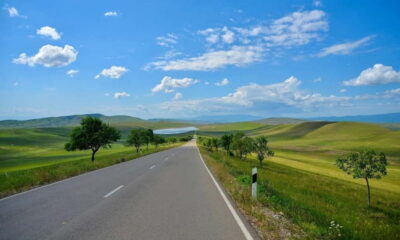
From Tbilisi: Rainbow Mountain & David Gareja Monastery Trip
Read our review →
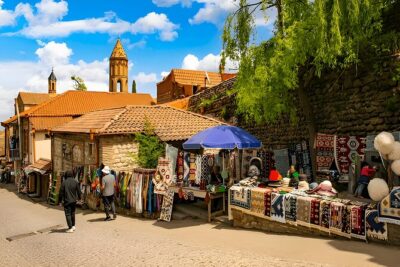
Kakheti Wine Tour and Discover Monasteries Vineyards Telavi
Read our review →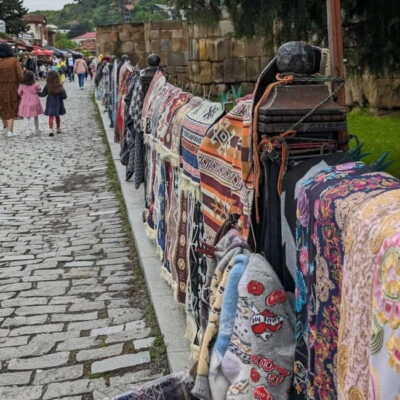
From Tbilisi: Mtskheta and Jvari Monastery Guided Tour
Read our review →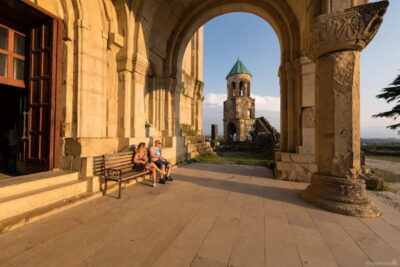
Kutaisi Monasteries: Bagrati, Gelati, Motsameta from Batumi
Read our review →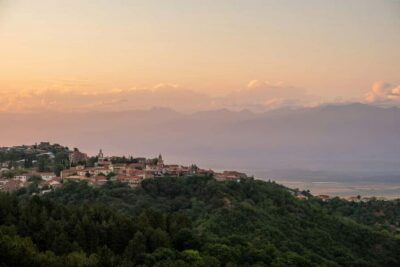
Kakheti, City of Love Sighnaghi Bodbe Monastery Tour
Read our review →Browse the lists this tour appears in