
REVIEW · YOGYAKARTA TEMPLE TOURS
From Yogyakarta: Cetho, Sukuh Erotic Temple and Solo City
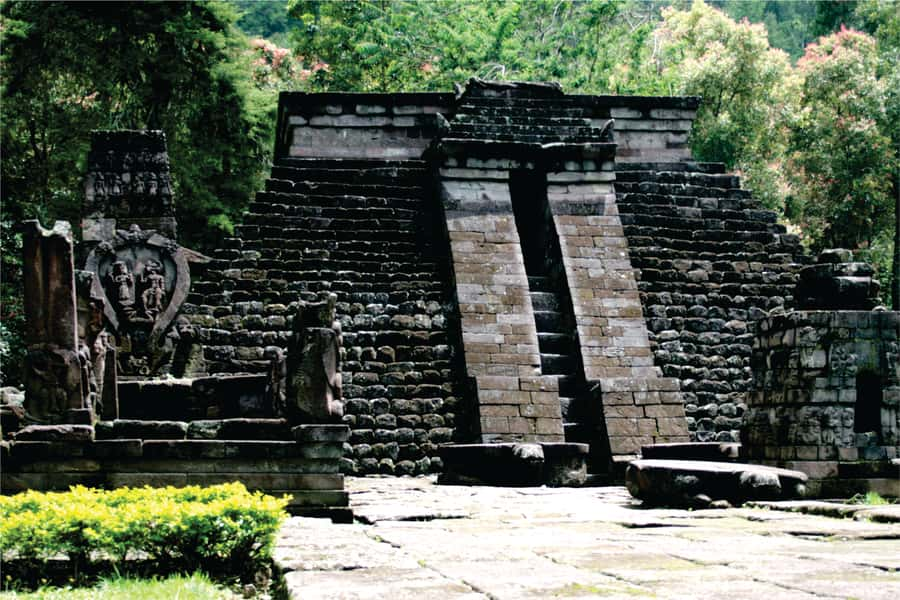
The unusual heart of this day is Sukuh Temple, a fifteenth-century Hindu site known for its frank, erotic stone carvings. Pair it with Cetho Temple, tea plantations, rice fields, and the slopes of Mount Lawu, and you get a very different side of Java from the better-known sights around Yogyakarta.
I like the small four-person limit, which keeps a long road day from feeling like a bus outing. I also like that the $85 price includes hotel transport, admission, parking, tolls, and donation fees. The main drawback is the road time: expect about three hours to reach the temples, and prepare for a long day in the car.
Key points to know before booking
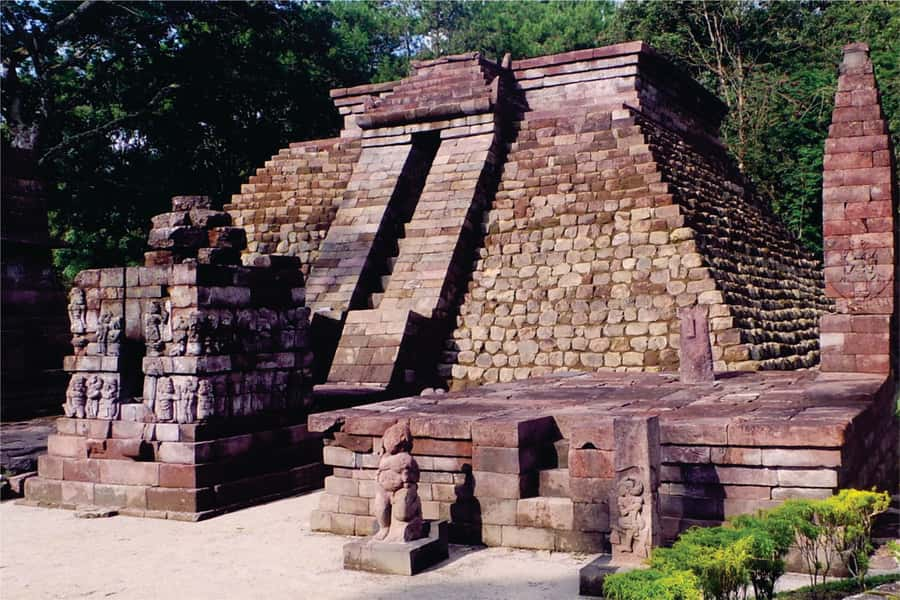
- Sukuh Temple is the unusual stop: Its erotic carvings and pre-colonial Hindu setting make it unlike most temple visits in Java.
- Cetho comes with mountain views: Tea plantations, rice fields, hills, and Mount Lawu provide the setting before you even reach the ruins.
- Solo adds royal and craft history: Mangkunegaran Palace and the Batik Museum give the day a strong cultural balance.
- The ride is a major part of the tour: The route covers roughly 105 kilometers, with about three hours to the temple area.
- You have a small-group setup: The vehicle is limited to four participants, with pickup and drop-off at your Yogyakarta accommodation.
- Plan for extra explanations if you want them: Your English-speaking driver acts as your guide, but does not normally enter the attractions. Local guides can be hired at the sites.
Why this day is different from a standard Yogyakarta tour
Most outings from Yogyakarta focus on the city’s famous temples or the Borobudur area. This trip takes you east toward Solo and the high slopes of Mount Lawu, where the old Hindu temples feel more remote and less polished.
That distance matters. You are not simply ticking off nearby monuments. You spend a good part of the day watching Java change outside the vehicle window: rice fields give way to higher ground, tea plantations appear, and the road begins to climb toward the temples.
I would choose this trip for contrast. Cetho and Sukuh offer old stonework, mountain air, and religious imagery that may surprise you. Solo then shifts the mood to royal Javanese culture and batik. The result is a broad cultural day, though not a relaxed one.
The trip lasts about 10 hours and returns to your Yogyakarta hotel at roughly 6:00 PM. Pickup is included from your accommodation. Since the schedule depends on the starting time and the long drive, check the available departure before you book.
A few more temple visits around Yogyakarta worth a look
- Borobudur Temple Climb To The Top & Prambanan Temple – 1 day tour
★ 5.0 · 638 reviews - Yogyakarta: Borobudur Climb-up & Prambanan Temple Day Tour
★ 4.9 · 442 reviews - Yogyakarta: Borobudur Top Access & Prambanan Temple Private Tour
★ 5.0 · 390 reviews
The three-hour road to Cetho and Sukuh
The first leg takes you toward the Mount Lawu area. The journey to the temples is listed at about three hours, and the full route covers around 105 kilometers. That may sound modest on paper, but Java’s roads and mountain routes make distance less important than driving time.
This is a road trip with sightseeing attached, not a quick transfer between attractions. You should be comfortable spending a substantial stretch in the vehicle. The reward is the view outside: tea plantations and rice fields spread across the slopes, with hills and taller mountains behind them.
The drive also gives you a useful sense of Java beyond the urban center. You pass from Yogyakarta’s familiar setting into a cooler, higher region around Mount Lawu. I would keep the morning flexible and avoid scheduling anything important after your return, since traffic and temple visits can affect the timing.
The vehicle is limited to four participants, a real advantage here. With fewer people, stops are easier to manage, and you are not waiting for a large group to board every time. The driver speaks English and handles the route, parking, tolls, and donation fees.
One detail deserves attention: the driver-guide does not normally enter the attractions with you. At Cetho, Sukuh, the palace, and the museum, you can explore independently or hire a local guide where available. If detailed interpretation is important to you, set aside money for those local guides and ask about the arrangement at the first stop.
Cetho Temple and the slopes of Mount Lawu
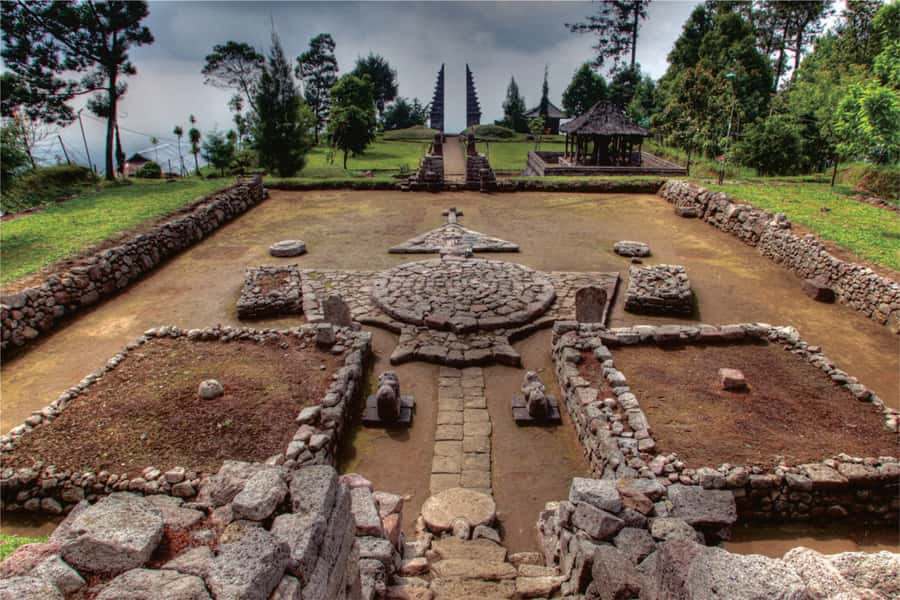
Cetho Temple is one of the day’s strongest stops because of its setting. The site sits on the slope of Mount Lawu, surrounded by highland scenery rather than city streets. You get temple architecture and a broad view of plantations, fields, hills, and mountain ridges in the same visit.
The approach is part of the appeal. Cetho is not presented as an isolated object in a museum-like setting. Its position on the mountain helps you understand why the journey takes time and why this temple feels so different from the major sites closer to Yogyakarta.
I would give yourself time to look beyond the stonework. The views are a central part of the visit, especially if the weather is clear. You might also find that mist or cloud changes the mood, since the temple is in a highland area. The provided information does not promise a particular weather condition, so do not book this solely for a guaranteed panoramic view.
Cetho is also a good place to use a local guide if you want more than photographs and a quick walk around. Your driver can get you there and handle the practical details, but the stated arrangement means he or she may wait outside. That division works well for independent visitors, less so for anyone who wants continuous commentary.
Sukuh Temple and its frank stone carvings
Sukuh is the temple that gives this outing its unusual name and its strongest point of difference. It is known for erotic imagery, including frank stone carvings that can surprise visitors who expect a more conventional religious monument.
The carvings should be read in their cultural and religious setting, not treated as a cheap novelty. Sukuh belongs to Java’s Hindu past and gives you a look at symbolism that can feel quite different from the more familiar temple sites around Yogyakarta. If you are interested in old beliefs, sculpture, and the ways cultures express fertility and human life, this is the stop that may stay with you longest.
If you prefer only polished, easy-to-read attractions, Sukuh may feel more demanding. Its controversial reputation attracts attention, but the value of the visit is not just the erotic detail. You are also seeing an ancient site in the Mount Lawu region, after a long climb through rural scenery.
Wear practical footwear and expect the road journey to be part of the effort. The supplied information does not give a precise walking distance or surface condition, so I would not assume a fully effortless visit. Ask your driver about local guiding if you want the carvings explained rather than simply pointed out.
Same country, a different morning at the gates:
- Yogyakarta: Borobudur sunrise(guarantee climb up)& Prambanan
★ 4.9 · 1,545 reviews - Yogyakarta: Borobudur ClimbUp (sunrise option) & Prambanan
★ 4.9 · 1,260 reviews - Borobudur Sunrise from setumbu Hill , Merapi Volcano & Prambanan Full Day Tour
★ 5.0 · 1,030 reviews - Borobudur Sunrise, Merapi Volcano & Prambanan Full Day Tour
★ 4.8 · 717 reviews
Mangkunegaran Palace and Solo’s royal identity
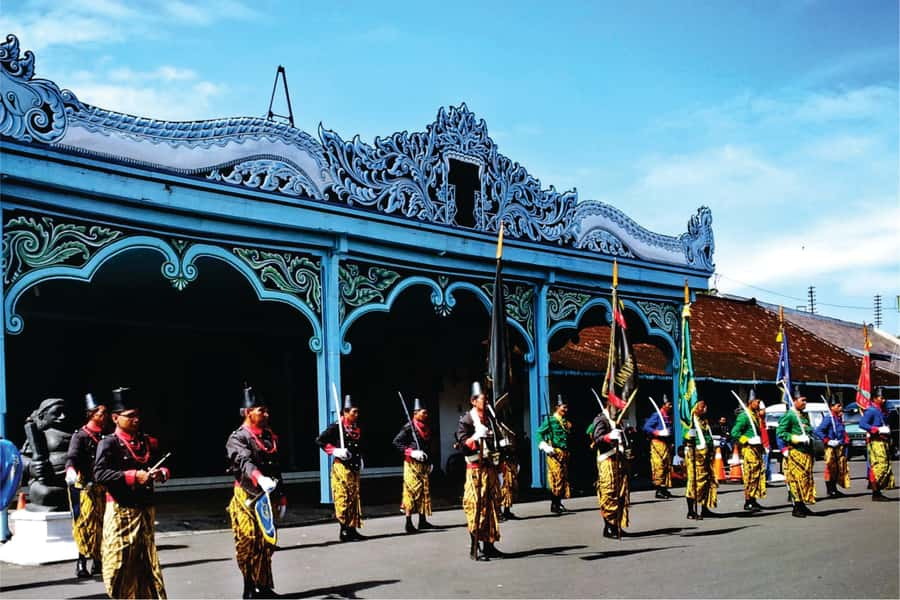
After the temples, the route heads to Solo, also called Surakarta. The city is often described as Yogyakarta’s sister city, but it has its own Javanese identity. The palace visit focuses on the Mangkunegaran princely state, giving you a look at a royal tradition that is distinct from the better-known sultanate setting in Yogyakarta.
Mangkunegaran Palace adds an important change of pace. After mountain temples and open views, you move into the formal world of court culture, royal buildings, and Javanese political history. The stop works best if you take your time with the setting rather than treating it as another quick photo stop.
The itinerary allows you to explore Solo at your own pace or hire a local guide. That flexibility is useful, but it also means the depth of the visit depends partly on how you use your time. Your driver can help with the route and practical arrangements, while a local guide can explain what you are seeing inside the attractions.
One past guide associated with this outing was Ivan, who was praised for excellent English, careful driving, and useful advice about where to shop and where not to buy. Jaufar is another guide name connected with the experience. Guide assignments can change, so do not assume either person will be assigned, but it is worth asking when your pickup is confirmed.
Lunch in Solo and the value of a flexible stop
Lunch is taken at a typical restaurant in Solo, with food and drinks paid separately. This is a simple but important cost to remember because the tour price does not include meals.
The benefit of eating in Solo is that lunch becomes part of the local setting rather than a meal at a roadside stop chosen only for convenience. The exact restaurant is not specified, so I would ask your driver what is planned and check prices before ordering if you are watching your budget.
You can also use lunch as a reset between the palace and museum visits. This is a long day, and a proper pause matters. The tour already includes a lot of road time, so rushing through lunch would make the schedule feel harder than it needs to be.
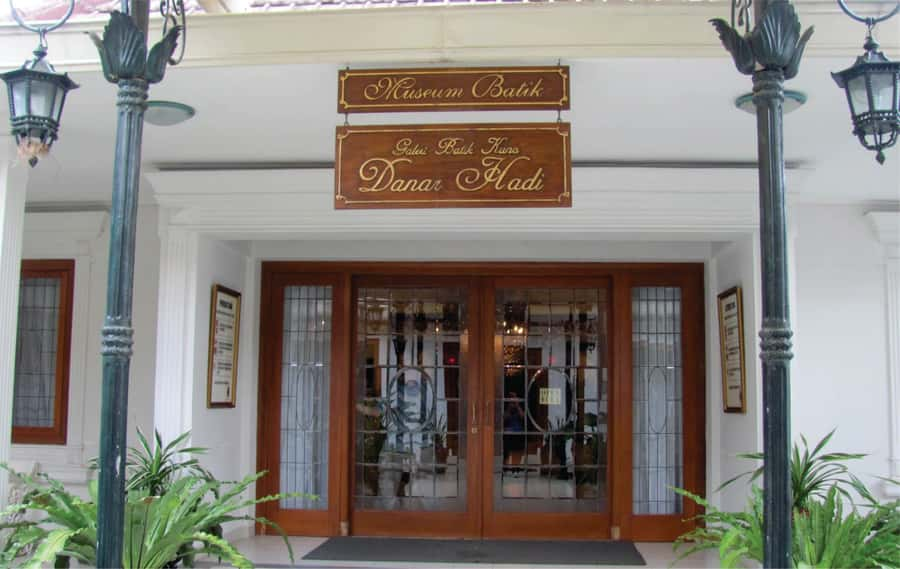
Solo’s Batik Museum and the patience behind one cloth
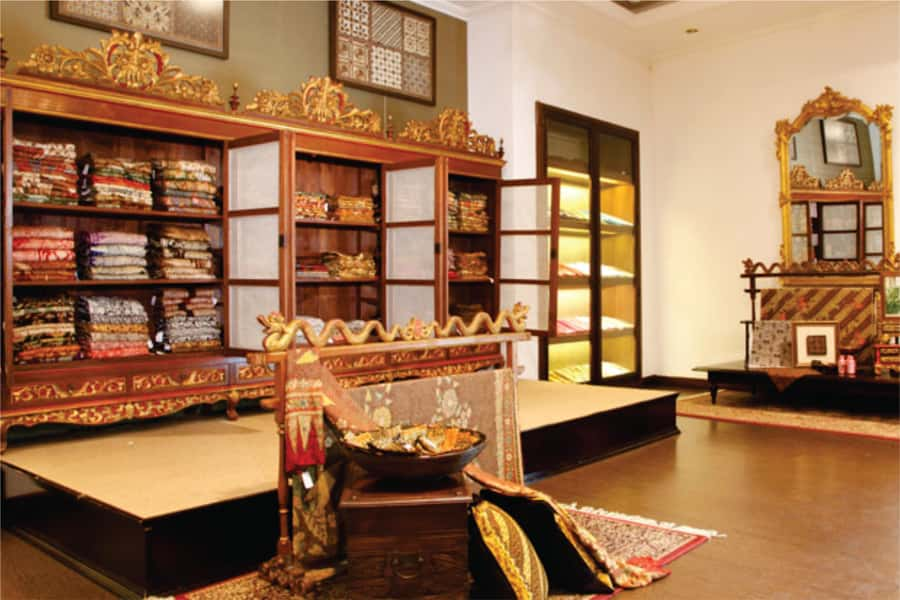
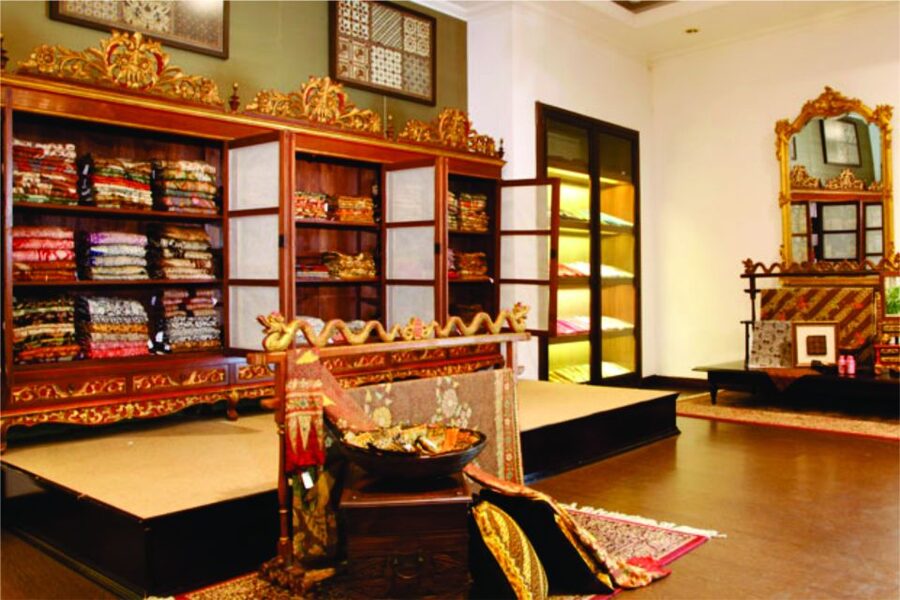
The final major visit is Solo’s ancient Batik Museum. Its collection includes artifacts from before colonization and pieces from around five years after Indonesian independence in 1950. That time range makes the museum more than a shopping stop.
Batik is often encountered as a finished textile in shops, but the museum gives you a chance to consider its age and development. One useful detail from the experience is that handmade batik can take a great deal of time to complete and can cost far more than a casual shopper expects. That is worth remembering before you compare handmade work with factory-produced cloth.
I would approach the museum with patience. The point is not simply to find a souvenir, but to understand why a handmade piece commands its price. If you plan to buy something, ask questions about how it was made and allow time to look carefully rather than making a quick purchase at the end of a tiring day.
The museum also balances the temples well. Cetho and Sukuh take you into older religious traditions, while the palace and batik collection show how Javanese culture continued through royal and artistic institutions. You get a wider picture of Central Java than a temple-only excursion would provide.
What the $85 price really covers
At $85 per person, this tour offers solid value if you want private-style transport without arranging the route yourself. The price includes:
- Hotel pickup and drop-off in Yogyakarta
- Entry fees
- An English-speaking driver
- Parking fees
- Toll fees
- Donation fees
- A small group limited to four participants
Food and drinks are not included, and local guides hired at the attractions are also an extra consideration. The entry costs and transport charges are useful inclusions because this is a long road day with several stops.
The strongest value comes from combining distant sites in one outing. Arranging Cetho, Sukuh, Solo, Mangkunegaran Palace, and the Batik Museum independently would require more transport planning and a good deal of confidence with the route. Here, you pay for a driver who knows the mountain road and gets you back to Yogyakarta.
The price is less compelling if you dislike long drives or want a slow, detailed visit at every stop. Ten hours sounds generous, but three hours of travel in the morning and the return journey use a large part of the day. You are paying for range and convenience, not a gentle walking tour.
Who should book this tour
I would recommend this day to you if you want historical variety and do not mind being on the road. It suits visitors who have already seen some of Yogyakarta and now want temples, mountain scenery, a royal palace, and batik in one package.
It is especially good for a small group of friends or family members who can share the cost and agree on the pace. The four-person maximum keeps the outing personal without requiring the price of a fully private vehicle for just one person.
You should also enjoy unusual sites. Sukuh is not the obvious choice for someone who wants only grand, familiar monuments. Its erotic carvings may be confronting, but they are also the reason this temple visit feels distinctive.
I would be more cautious if you have limited mobility, dislike mountain roads, or want extensive guided explanations at each attraction. The supplied details do not promise accessibility features, and the driver does not normally accompany you inside. Ask in advance about the walking involved and local guide availability.
Practical timing, guides, and cancellation
The tour lasts about 10 hours, with a return to your Yogyakarta hotel at approximately 6:00 PM. Starting times depend on availability, so check the booking calendar before planning the rest of your day.
Your accommodation in Yogyakarta is included for pickup and drop-off. The group is limited to four, and the operating language is English.
You can cancel up to 24 hours in advance for a full refund. The reserve-now, pay-later option also helps if your schedule is still changing. Still, the most important preparation is practical: allow for the 105-kilometer route, bring enough money for lunch and drinks, and decide if you want to hire local guides at the sights.
Should you book the Cetho, Sukuh, and Solo day?
Book it if you want a full day that moves beyond Yogyakarta’s standard circuit. Cetho’s mountain setting, Sukuh’s controversial carvings, Solo’s royal palace, and the Batik Museum create a varied program with real cultural range.
Skip it if three hours on the road sounds exhausting or if you need a fully guided visit inside every attraction. The driver provides transport and general help, but local guides are a separate choice.
For the right visitor, $85 is a sensible price for the route, included fees, and small group. I would choose it for the unusual temple pair and the chance to connect old Hindu sites with Solo’s court and textile traditions. Just treat the road time as part of the day, not an inconvenience to be ignored.
FAQ
How long does the tour last?
The tour lasts 10 hours and is expected to return you to your Yogyakarta accommodation at approximately 6:00 PM.
Where does pickup take place?
Pickup and drop-off are provided at your accommodation in Yogyakarta.
How many people can join the tour?
The group is limited to four participants.
Does the price include meals?
No. Food and drinks are not included, so you should budget separately for lunch in Solo and any other refreshments.
Will the driver enter the attractions with me?
The stated arrangement is that the driver-guide does not enter the attractions. You can explore independently or hire a local guide at the sites.
What is included in the $85 price?
The price includes hotel pickup and drop-off, entry fees, an English-speaking driver, parking, tolls, and donation fees.
Just added around Yogyakarta
- Sunset at Prambanan & Ramayana Ballet (Ticket Guaranteed)★ 4.5 · 10 reviews
- Yogyakarta: Selogriyo Temple, Rice Terraces & Waterfall Tour★ 5.0 · 46 reviews
- Prambanan Sunset (and Ramayana Ballet Option) Tour★ 3.3 · 8 reviews
- Prambanan Temple Afternoon Tour★ 4.9 · 48 reviews
- Guarantee Borobudur Structure, Sunrise Stumbu & Prambanan.★ 4.4 · 19 reviews
- From Yogyakarta: Borobudur Trip with Guided Tour Options★ 4.6 · 9 reviews
- From Yogyakarta: Borobudur Sunrise 8-hour Include Entry Fee★ 4.9 · 112 reviews
- Yogyakarta: Borobudur Sunrise & Prambanan ClimbUp Guarantee★ 4.9 · 35 reviews
Yogyakarta Temple Tours, compared.
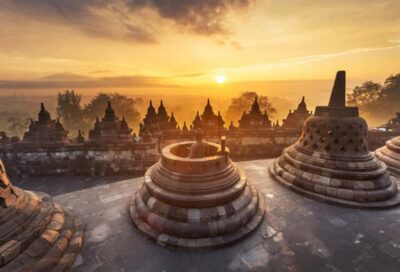
Borobudur sunrise(guarantee climb up)& Prambanan
Read our review →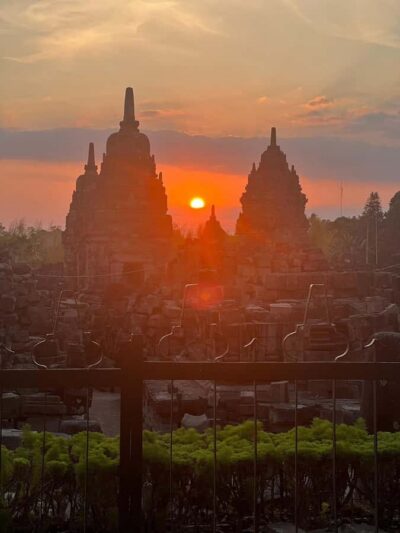
Borobudur ClimbUp (sunrise option) & Prambanan
Read our review →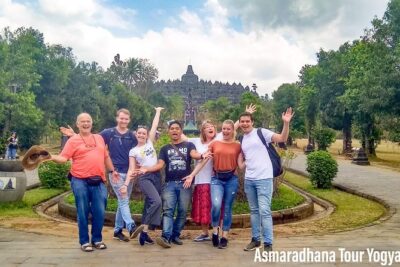
Borobudur Sunrise from setumbu Hill , Merapi Volcano & Prambanan Full Day Tour
Read our review →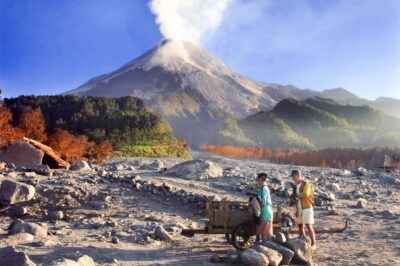
Borobudur Sunrise, Merapi Volcano & Prambanan Full Day Tour
Read our review →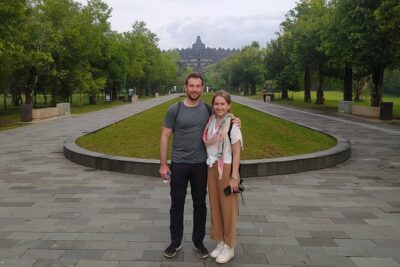
Borobudur Temple Climb To The Top & Prambanan Temple – 1 day tour
Read our review →
Borobudur Sunrise (Climb-up Assured) & Prambanan
Read our review →
Browse the lists this tour appears in