
REVIEW · CHIANG MAI TEMPLE TOURS
From Chiang Mai: Lamphun and Lampang Temples Tour
The best reason to take this day trip is simple: it gets you beyond Chiang Mai’s usual circuit and into two northern towns with fewer tour groups. You’ll see Lamphun’s ancient Mon and Dvaravati monuments, then travel to Lampang for Lanna temples, a local market, and an optional horse-cart ride through town.
I like the small group, limited to nine people, and the guides’ strong focus on history, culture, and daily life. I also like the slower feel of the temple visits, with guides such as Wassana, Art, Sam, Del, and Jackie praised for clear explanations and patient answers. The drawback is the long day, nine hours in all, with heat, road time, and lunch plus the 500 THB horse-cart ride paid separately.
Key points at a glance
- Lamphun comes first: Visit Wat Chammathewi and the large riverside Hariphunchai complex before lunch.
- Lampang’s signature ride: A 15 to 30-minute horse-cart trip costs 500 THB for a two-person cart.
- Four major temple stops: See Chammathewi, Hariphunchai, Lampang Luang, and Wat Chedi Sao.
- Small-group format: The van carries no more than nine participants, making questions and conversation easier.
- Useful guide service: English-speaking guides explain temple art, regional history, philosophy, and local customs.
- Lower-impact travel: Water comes in a glass bottle, and carbon emissions are offset.
Why this trip is worth leaving Chiang Mai
Chiang Mai has plenty of beautiful temples, but its popularity can make the main sights feel programmed. Lamphun and Lampang offer a different rhythm. The towns are tied to older kingdoms and local traditions, and the temples here feel less like quick photo stops.
The tour begins with hotel pickup in central Chiang Mai, followed by about 75 minutes in an air-conditioned vehicle. That drive is not wasted time if your guide uses it well. Wassana, who led several highly praised departures, began explaining the main roads and nearby areas before the first stop. Other guides, including Art and Del, have been praised for connecting architecture with religion, politics, and ordinary life.
The small group matters. With no more than nine people, you can usually hear the guide without standing in a tight crowd. You also have a better chance to ask about details that catch your eye, from a Buddha image to a temple ritual. This is a guided history day, not simply a van ride between photo stops.
A few more temple visits around Chiang Mai worth a look
- Chiang Mai: Chiang Rai Temples, Karen Tribe and Hot Springs
★ 4.7 · 5,401 reviews - Chiang Rai White Temple and Blue Temple Day Tour
★ 4.6 · 3,366 reviews - Chiang Mai: White, Red/Black & Blue Temples Tour with Lunch
★ 4.2 · 2,017 reviews
Wat Chammathewi and the old Mon world
The first temple visit is Wat Chammathewi, where you’ll spend about 30 minutes. The main attraction is its unusual square, stepped-pyramid stupa. It is associated with the Dvaravati period, a broad cultural era that shaped much of Thailand from the sixth to the 11th century.
The stupa is surrounded by arches holding 60 Buddha statues. Queen Chama Devi’s ashes are said to be inside, linking the monument to Lamphun’s royal and religious past. I find this stop especially useful early in the day because it gives you a framework for understanding the rest of the tour. You are not looking at isolated old buildings. You are seeing traces of the Mon Kingdom and later northern traditions layered together.
Thirty minutes is enough to see the key structure and hear its story, but not enough for a slow, detailed architectural study. If you like inscriptions, decorative details, and long quiet visits, this will feel brief. The guide helps make the time count by pointing out the unusual design rather than leaving you to guess what you are seeing.
Wat Phra That Hariphunchai beside the river
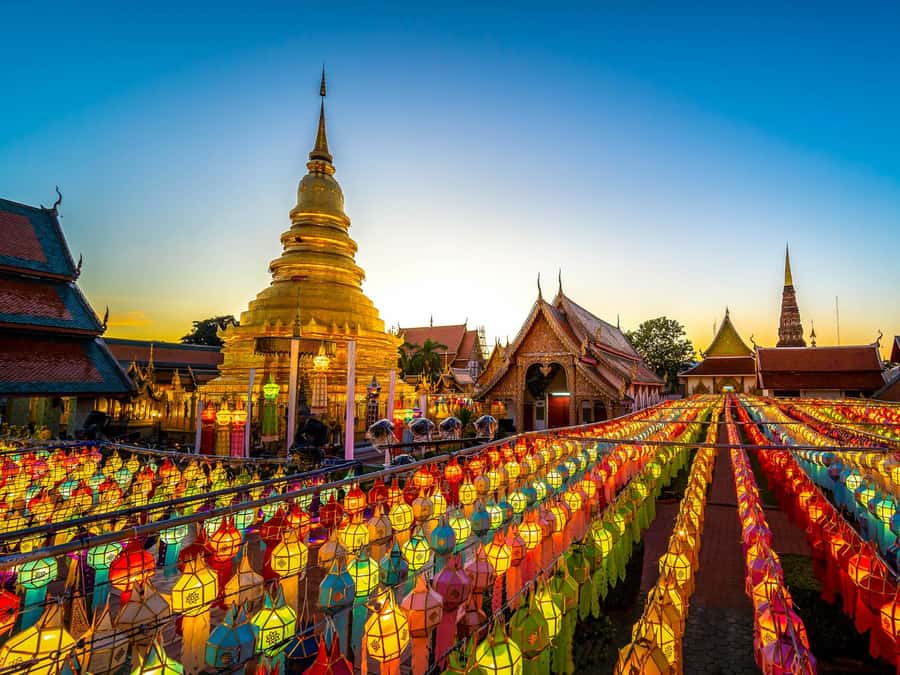
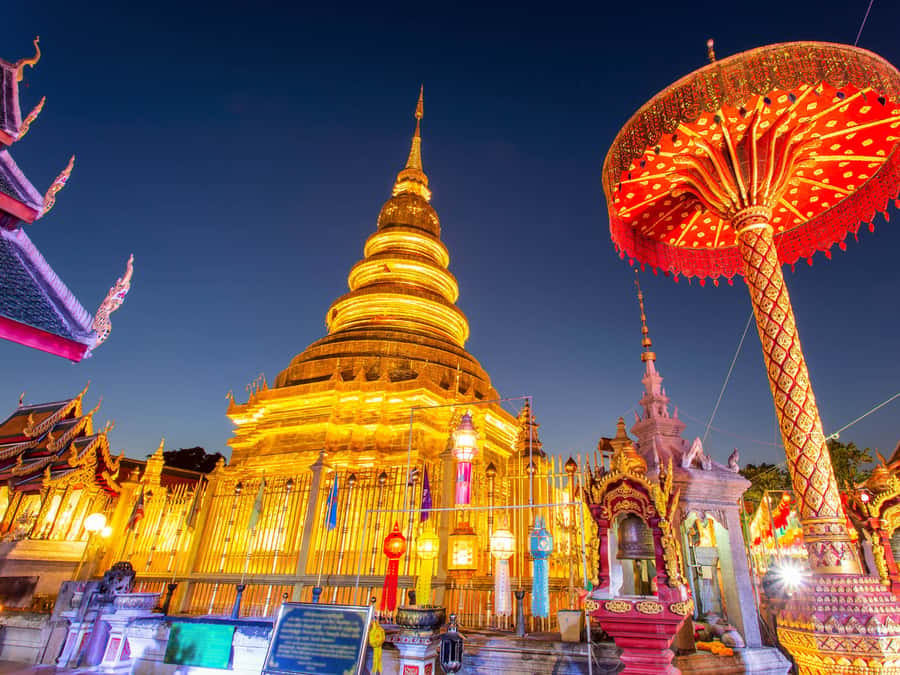
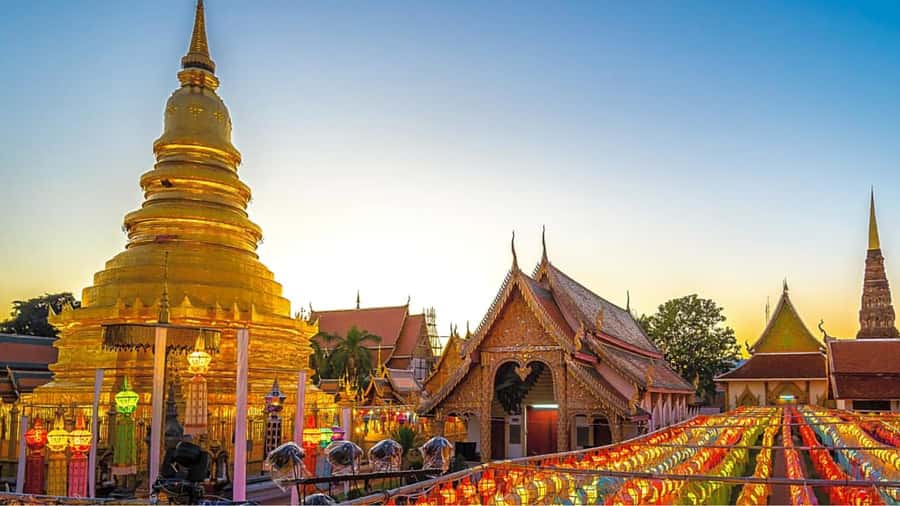
Next comes Wat Phra That Hariphunchai Woramahawihan, with about an hour to explore. This is Lamphun’s largest and oldest major temple compound, and its position near the river gives the visit a calmer setting than many central city temples.
The temple takes its name from Hariphunchai, the Mon Kingdom city that ruled this part of northern Thailand from the ninth to the 13th century. That makes it one of the day’s key stops, not just another ornate Buddhist compound. Your guide can explain how Lamphun’s religious importance grew before Chiang Mai became the region’s main power center.
Allow yourself time to look beyond the main shrine. Courtyards, stupas, rooflines, and painted details reward a slower pace. The exact focus of the visit depends on your guide and the day’s timing, but an hour gives you enough room to walk, listen, and take photographs without being hurried through in a few minutes.
Afterward, you’ll have an hour for lunch in Lamphun. Lunch is not included, so bring cash and expect to choose and pay for your own meal. A useful detail from the tour format is that guides can help with ordering when staff do not speak English. That is practical help, especially if you want to try local food rather than defaulting to a familiar dish.
Crossing to Lampang Luang
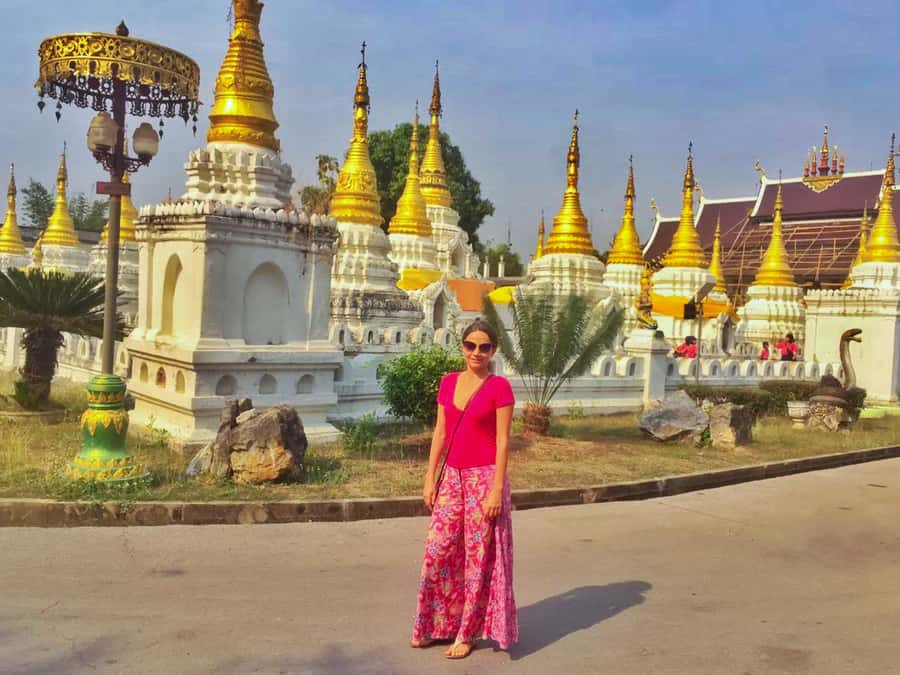
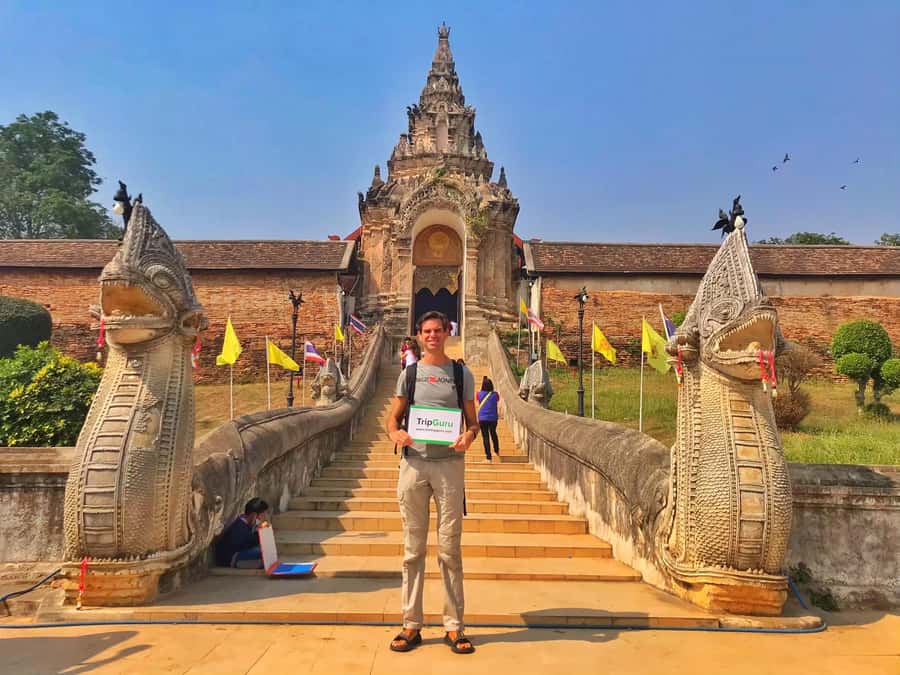
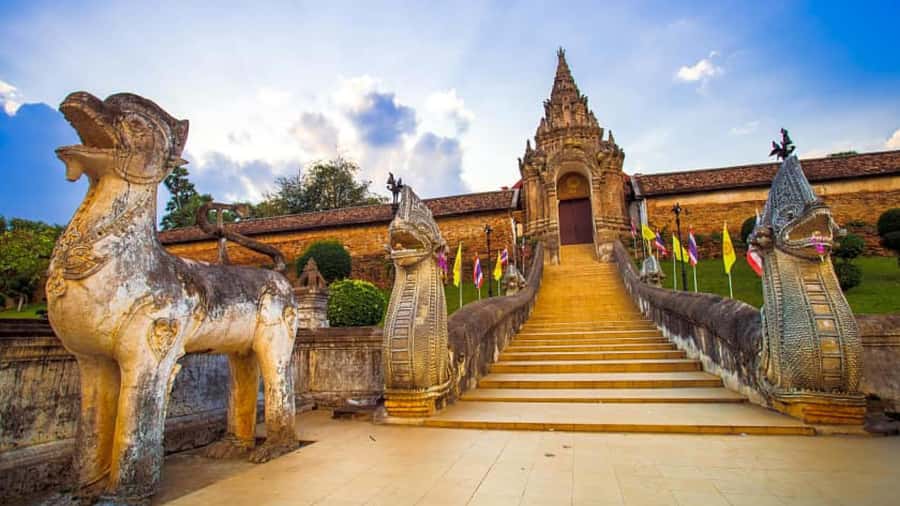
After Lamphun, the van continues toward Lampang. The next major visit is Wat Phra That Lampang Luang, a 13th-century Lanna-style temple often described as one of the finest examples of the style in Thailand.
The complex includes a large brick entrance gate, painted viharas, bronze and copper stupas, a historical museum, and a courtyard covered with sand. Each feature gives you a different way to read the site. The viharas show Lanna design and religious art, while the museum offers historical context. The sand-covered courtyard adds a plain, tactile quality that contrasts with the painted wood and polished metal.
The official visit time is about 30 minutes, which is short for a complex with this much to see. I would pay close attention to the guide’s route and explanations, then use any spare minutes for the parts that interest you most. If you want to study every mural or linger in the courtyard, the schedule may feel tight.
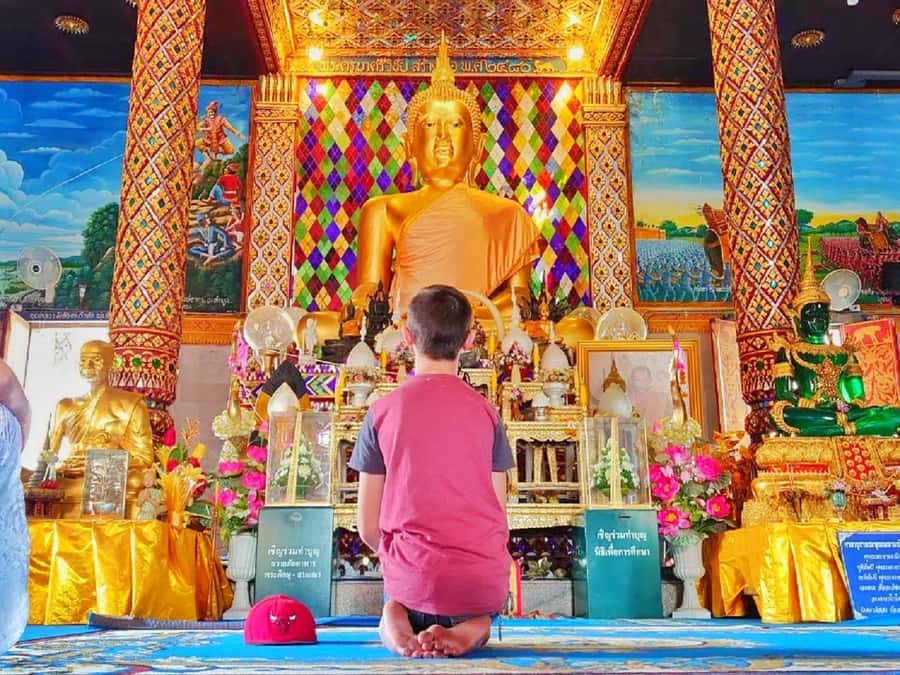
This stop is also a good reason to bring suitable clothing. Temples require respectful dress, and the suggested list includes long pants and a long-sleeved shirt. Sunscreen is useful too, since much of the walking and waiting takes place outdoors.
Same country, a different morning at the gates:
- Chiang Mai: Doi Suthep and Wat Umong Enchanting Evening Tour
★ 4.6 · 1,811 reviews - Chiang Mai: 3 Hour Old City and Temples Guided Walking Tour
★ 4.6 · 1,568 reviews - Chiang Mai: Doi Suthep, Wat Umong, and Pha Lat Sunrise Tour
★ 4.7 · 1,425 reviews - Chiang Rai Temples: Private Tour from Chiang Mai
★ 5.0 · 1,267 reviews
Wat Chedi Sao and Lampang’s local side
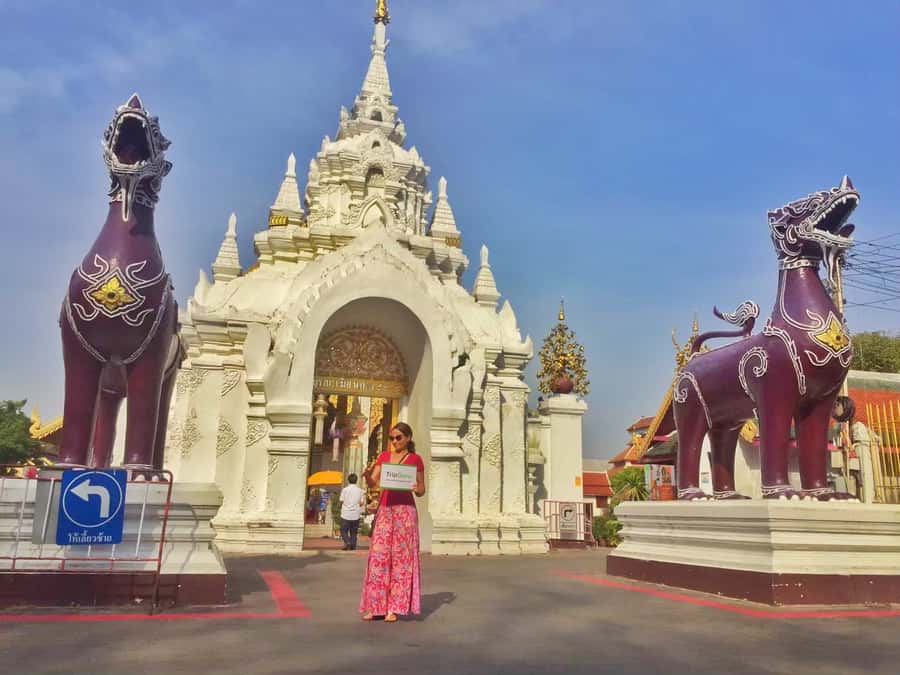
The itinerary continues to Wat Phra Chedi Sao for about 30 minutes. The supplied details do not specify the temple’s individual features, so you should treat this as a short additional temple visit rather than plan around one particular monument.
That can be a benefit. After the larger complexes, a shorter stop keeps the day from becoming one long march through similar courtyards. Your guide can place the temple within the wider story of Lampang and northern Buddhism, while you get another view of the area’s religious architecture.
The day then moves to Lampang Province for a one-hour food-market visit. This is a welcome change of pace. Temples ask you to look upward and backward, at stupas, murals, and old dynasties. A market asks you to pay attention to what people eat and buy now.
You may find the market more useful if you approach it with curiosity rather than a shopping list. Look at the food, watch how local stalls work, and ask your guide about unfamiliar items. The tour does not promise a formal cooking lesson or a set tasting menu, so personal purchases are your responsibility. Still, this stop adds everyday life to a day otherwise centered on monuments.
The horse-cart option in Lampang
Lampang is known in Thailand as Horse Cart City, and the optional carriage ride is one of the tour’s most distinctive extras. A cart carries two people and costs 500 THB, shared between the pair. The ride lasts about 15 to 30 minutes and may follow the Wang River or pass some of the town’s familiar sights.
I see this as a pleasant way to break up the temple visits, not as the main reason to book the tour. The ride is brief, and it is an additional cost. If you are watching your budget, you can skip it and still receive the core temple experience. If you want a traditional way to see a little of Lampang and have a two-person cart partner, the price is fairly easy to justify.
Bring cash for this and for lunch. The tour price covers temple admission at Lampang Luang and Hariphunchai, but not personal expenses. The horse cart is also separate, so budgeting the extra 250 THB per person assumes two people share one cart.
What the nine-hour schedule feels like
This is a full day, not a casual half-day outing. Pickup begins in Chiang Mai, the drive to the first area takes about 75 minutes, and the return transfer follows the final Lampang stop. You will spend time in the van, at temple grounds, over lunch, and at the market.
That length is reasonable because Lamphun and Lampang are not next door to Chiang Mai’s Old City. The transport lets you cover both towns without arranging separate buses or negotiating local transfers. The air-conditioned vehicle is especially helpful during hot weather, though you should still expect heat once you step out.
One review singled out the heat as the only real challenge, and that is a fair warning. Wear breathable clothing that still meets temple standards, use sunscreen, and carry water. The tour provides a glass bottle of drinking water, but bringing extra water is sensible for a nine-hour day.
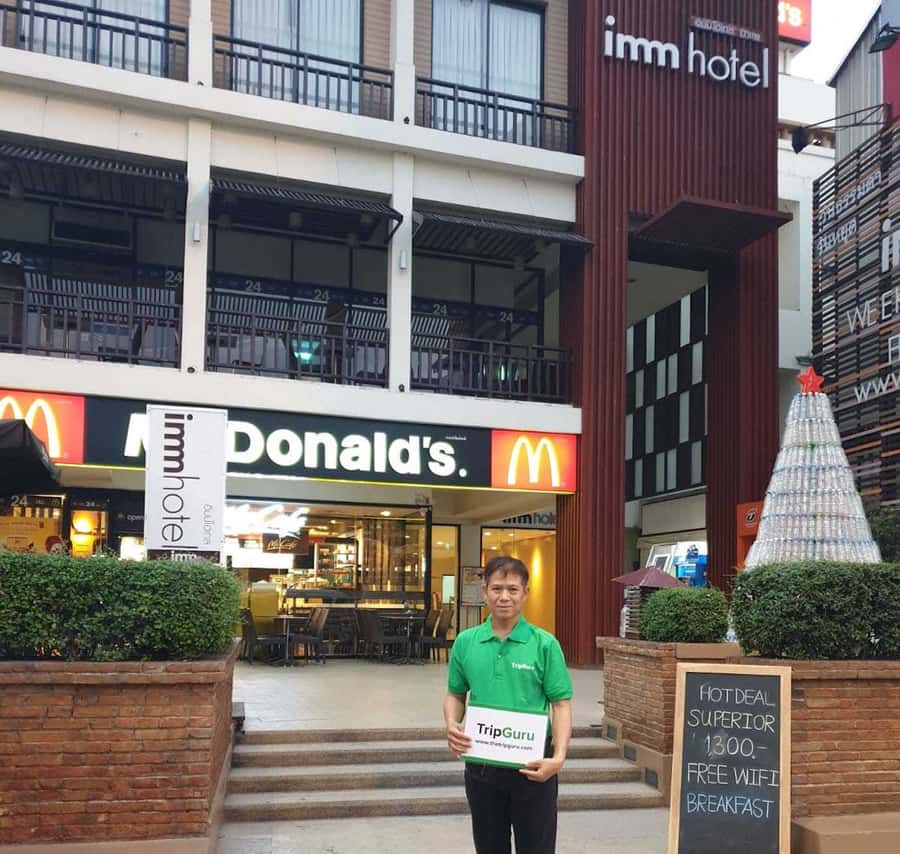
Pickup is available from hotels and registered accommodations in major central areas within about five kilometers of Tha Pae Gate, including parts of the Old City, Chang Klan Road, Thapae Road, Wualai Road, the Night Bazaar, Ton Lam Yai Market, and Warorot Market. The van does not collect people from roadsides or shopping malls. Your exact pickup time is confirmed by email the evening before, and the guide waits in the hotel lobby with a TripGuru sign.
The guide can make or break this history day
The strongest part of this experience is the guide-led interpretation. The named guides praised in the feedback include Wassana, Art, Del, Sam, Jackie, and Sunny. Their styles may differ, but the useful pattern is clear: the tour works best when the guide explains connections rather than reciting dates.
Wassana was described as arriving early, explaining the roads and surrounding area, and helping with food and local context. Art was praised for arranging the stops in a logical historical sequence and helping with restaurant ordering. Del was noted for discussing regional history, Buddhist philosophy, and more. Jackie received praise for patient answers, while Sam was described as friendly and helpful.
Guide assignments can change, so you should not book solely to receive one particular person. Still, the tour’s format gives the guide room to add value. With only nine people, a good guide can answer questions and adjust explanations instead of delivering a fixed speech to a large bus.
English is the tour language. The feedback indicates that some guides speak clearly enough for genuine conversation, not only memorized commentary. That matters when you want to ask why a temple looks different from one in Chiang Mai or how a local custom fits into Buddhist practice.
Price, inclusions, and the real value
At $106 per person, this is not the cheapest way to see temples in northern Thailand. You are paying for hotel transport from Chiang Mai, a full nine-hour schedule, an English-speaking guide, an air-conditioned vehicle, selected temple admissions, travel insurance, and a small group.
The value improves if you want a simple, organized day without arranging two out-of-town visits yourself. Driving to Lamphun and Lampang independently would require transport planning, local rides, entrance payments, lunch arrangements, and timing. Here, the route is set and the guide supplies the historical thread.
The price does not include lunch, personal purchases, or the horse-cart ride. That is not a problem as long as you know it beforehand. I would budget extra cash for lunch, drinks, market purchases, and 500 THB per cart if you choose the carriage ride.
The tour also includes a glass water bottle and carbon-emission offset credits. Those measures do not remove the impact of a full-day vehicle trip, but they show an effort to reduce waste and account for emissions. If lower-impact tourism matters to you, this is a useful point in its favor.
Free cancellation is available up to 24 hours before departure, and you can reserve without paying immediately. Those terms help if your Chiang Mai plans are still shifting, but the more important decision is whether you want a long, temple-focused day outside the city.
Who should book this day trip
I would choose this tour if you want northern Thailand’s older religious centers explained in context. It suits people who like architecture, Buddhism, local history, and small-group conversation more than nightlife or adventure activities.
It is also a good choice if you have already seen Chiang Mai’s central temples and want a different day out. The horse cart, market, and local lunch option add variety, while the four temple visits provide the main structure.
You might prefer another outing if you dislike long van rides, hot courtyards, or a schedule built around historic sites. The 30-minute visits can feel short if you are a serious photographer or architecture student. And if you only want one beautiful temple plus a relaxed afternoon, nine hours may be more than you need.
Should you book it?
Book this tour if you want to connect Lamphun’s Mon and Dvaravati past with Lampang’s Lanna traditions, and you value a guide who can explain what you are seeing. The small group, central Chiang Mai pickup, and built-in transport make the $106 price easier to defend.
Skip it if you want a cheap independent day or dislike structured sightseeing. For everyone else, this is a strong choice for seeing two less-visited northern cities without giving up practical transport or clear English guidance. Bring cash, dress for the temples, expect heat, and treat the horse cart as a pleasant extra rather than a must.
FAQ
How long does the tour last?
The tour lasts nine hours, including pickup and return transportation between Chiang Mai and the Lamphun and Lampang sites.
Where does pickup take place?
Pickup is offered from hotels and registered accommodations in major central Chiang Mai areas within five kilometers of Tha Pae Gate, the Old City, Chang Klan Road, Thapae Road, Wualai Road, the Night Bazaar, Ton Lam Yai Market, and Warorot Market.
Can I be picked up from a roadside or shopping mall?
No. For safety and traffic-law reasons, pickup is available only from hotels or registered accommodations.
What language does the guide speak?
The tour is conducted in English with a live English-speaking guide.
How many people are in the group?
The group is limited to nine participants.
Is lunch included?
No. Lunch is not included, so you should bring cash for your meal and any drinks or personal purchases.
How much does the horse-cart ride cost?
The optional horse-cart ride costs 500 THB for a two-person cart. The ride lasts about 15 to 30 minutes.
What should I bring?
Bring water, cash, sunscreen, long pants, and a long-sleeved shirt. Temple visits require respectful clothing, and the tour provides a glass bottle of drinking water.
Just added around Chiang Mai
- Red, Blue, White Temples & Hot Spring Trip from Chiang Mai★ 4.4 · 143 reviews
- Long Neck Village, Silver Temple & Chiang Mai Top Sites★ 4.7 · 17 reviews
- Private : Sticky Waterfall & Secret Temple & Karen Village.★ 5.0 · 9 reviews
- Chiang Mai: Temples & Culture Tour★ 4.7 · 64 reviews
- From Chiang Mai: White Temple, Blue Temple & Black House★ 4.5 · 15 reviews
- Chiang Mai: Chiang Rai Temples & Black House Discovery Tour★ 4.4 · 12 reviews
- From Chiang Mai: Chiang Rai Famous Temples Guided Tour★ 4.4 · 59 reviews
- Chiangmai : Rainbow Cave , Unseen Canyon and Lanna temple★ 4.6 · 6 reviews
Chiang Mai Temple Tours, compared.
Chiang Rai Temples, Karen Tribe and Hot Springs
Read our review →
Chiang Rai White Temple and Blue Temple Day Tour
Read our review →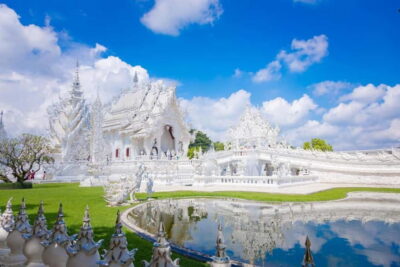
White, Red/Black & Blue Temples Tour with Lunch
Read our review →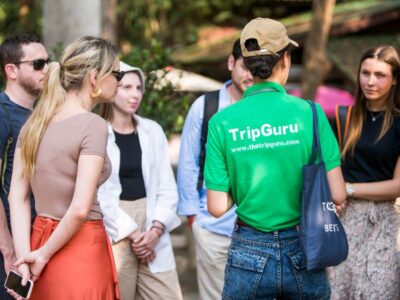
Doi Suthep and Wat Umong Enchanting Evening Tour
Read our review →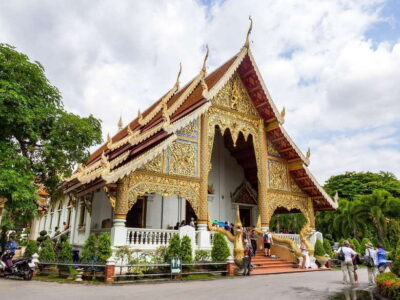
3 Hour Old City and Temples Guided Walking Tour
Read our review →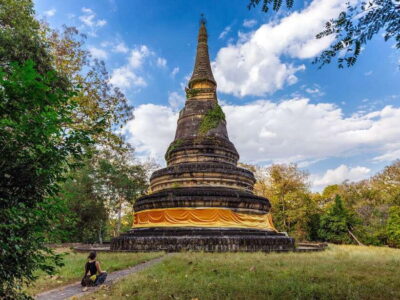
Doi Suthep, Wat Umong, and Pha Lat Sunrise Tour
Read our review →
Chiang Rai Temples: Private Tour from Chiang Mai
Read our review →
Browse the lists this tour appears in