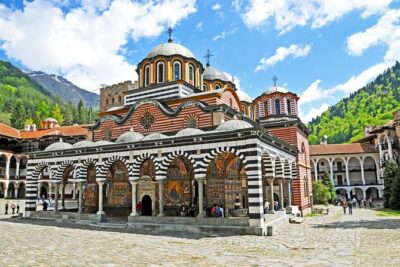
REVIEW · TOURS
Fortified Manasija Monastery and Resava Cave Tour
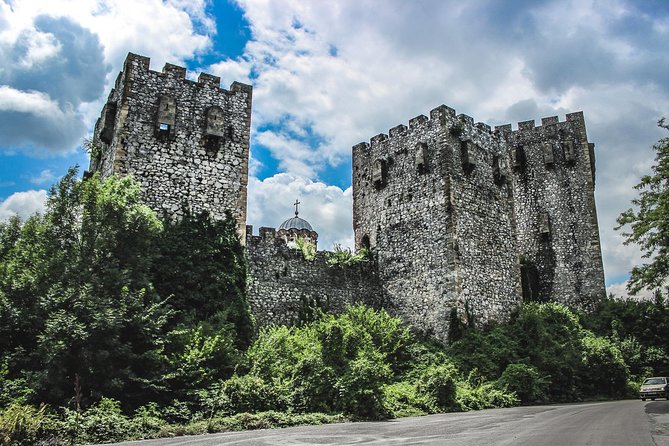
Manasija is the star here: a 15th-century monastery protected by eleven towers, thick walls, and a moat. Add a cool cave, a forest waterfall, and a long ride through Serbia’s countryside, and you get a day that feels far removed from Belgrade’s cafés and city streets. I especially like the mix of medieval art and wild scenery, plus the small vehicle and hotel pickup.
I also like the guides’ strong command of Serbian history. Marko, Nevena, Konstantin, Jovan, and Stefan have all been praised for clear English and lively explanations. The main drawback is the amount of time on the road. The waterfall can also be modest in dry summer weather, and lunch, drinks, and any extra cash expenses are not included.
Key points to know before booking
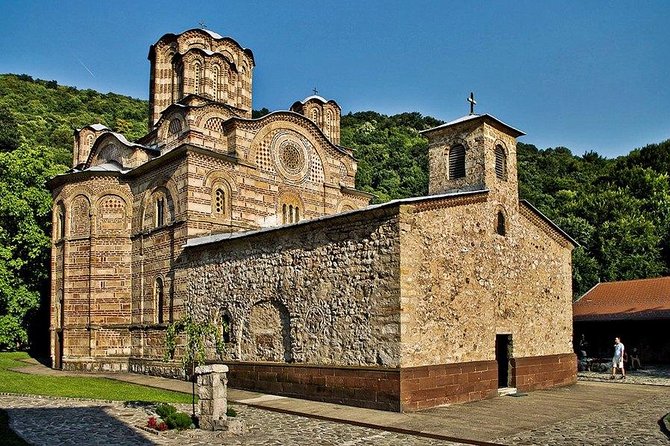
- Manasija’s fortress walls and frescoes give you a close look at Serbia’s medieval religious and political past.
- Resava Cave stays cool year-round, so bring a jacket even if Belgrade is hot.
- Veliki Buk waterfall is paired with a traditional Serbian lunch stop beside the stream.
- Small groups make the day more personal, with shared tours capped at 16 people and another stated limit of 18.
- Hotel pickup and round-trip transport save you the trouble of arranging a long trip into central Serbia.
- The tour suits a moderate fitness level, but much of the day is spent riding between sites.
Why this day trip works beyond Belgrade
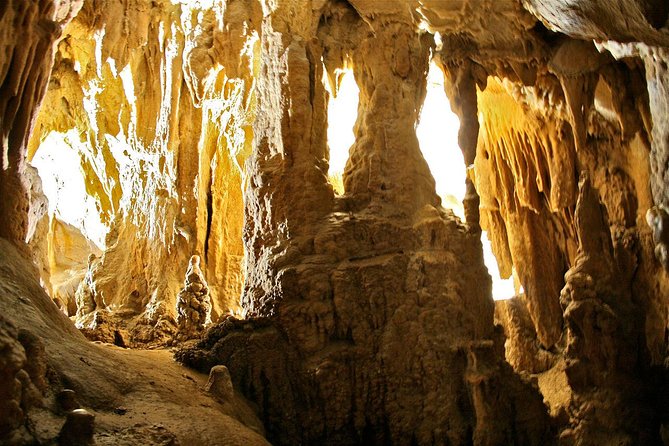
Belgrade gives you Serbia’s urban face. This trip shows you a quieter and older side of the country, in the Pomoravlje District, an area tied to the last Serbian medieval kingdom. The route passes small villages, farmland, and wooded hills, so the drive itself becomes part of the day rather than dead time between attractions.
The package costs $108.84 per person. That is not a bargain-basement outing, but it covers hotel pickup and drop-off, an air-conditioned minivan or minibus, an English-speaking guide, Resava Cave admission, and Veliki Buk waterfall admission. For a full day outside the capital, the price is reasonable if you value convenience and local explanation.
The strongest part of the experience is its variety. You begin with architecture and Orthodox tradition, move underground into a cave system formed over immense spans of time, then finish beside running water and a Serbian meal. None of the stops requires a full day on its own. Together, they make a well-shaped excursion.
The tour earns a 4.9 rating from 106 reviews, with 98 percent of people recommending it. That high score fits the things that matter most on a countryside day trip: punctual pickup, comfortable transport, capable guides, and a route that does not feel rushed.
A few more temple visits around the world worth a look
- Lisbon: Jerónimos Monastery Entrance Ticket
★ 4.1 · 14,164 reviews - Angkor Wat Sunrise or Sunset Tour with Guide from Siem Reap
★ 5.0 · 12,109 reviews - Teotihuacan, Guadalupe Shrine & Tlatelolco Day Tour with Lunch
★ 5.0 · 11,603 reviews
Leaving Belgrade for Pomoravlje
Shared tours begin around 8:30 in the morning, with pickup usually 15 to 30 minutes before departure. Private tours have a default start time of 9:30, though you can request another time. Pickup is available from hotels, Airbnbs, and pensions within 5 kilometers of Republic Square.
The operator may ask you to walk 7 or 8 minutes to a nearby pickup point if several vehicles are collecting people in the same area. That is a small trade-off for a more efficient start, but it is worth knowing if you have luggage or mobility concerns.
The drive into central Serbia gives your guide room to explain the country’s past and present. Several guides, including Jovan Nikolic, Konstantin, Nevena, Marko, and Stefan, have been singled out for their history, geography, and everyday-life commentary. A good guide matters here because the sites are more rewarding when you understand the religious and political forces behind them.
The vehicle is air-conditioned, though one person found a small bus somewhat enclosed. Most reports describe the ride as comfortable. Still, this is a long day in a vehicle, so it is not the right choice if you want a mostly active outing.
Traffic can change the schedule. One trip was delayed by a truck fire on the freeway, with the guide stopping at a petrol station so people could stretch and buy drinks. Plan loosely for your return to Belgrade, especially if you have evening reservations.
Manasija Monastery: a fortress with a scholarly past
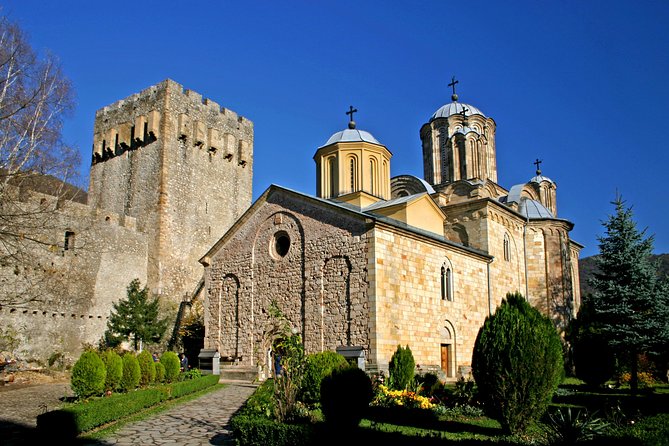
Manasija is more than a pretty church in the hills. Despot Stefan Lazarevic founded it between 1406 and 1418, during a period when Serbia was defending its political and cultural identity. The monastery was built like a stronghold, with massive walls, eleven towers, and a surrounding trench.
The most imposing tower is Despotova Kula, or Despot’s Tower. Its heavy defensive form helps you understand why monasteries in medieval Serbia needed protection. They were religious centers, but they also guarded people, books, art, and political memory.
Inside the walls, the Church of the Holy Trinity follows the Morava style, a Serbian architectural tradition known for its graceful forms and decorative detail. The frescoes are the real reward. Look for the painted warriors in the choir, prophets in the dome, and the image of Despot Stefan presenting a model of the church to the Holy Trinity.
This is a place where a guide can add real value. Without context, you might simply admire the color and age of the paintings. With an explanation of Despot Stefan’s role, the church becomes a record of power, faith, and artistic ambition.
The monastery also preserves parts of its refectory and library. Its scriptorium produced manuscripts, and the writing system developed here, known as Resava orthography, influenced later Serbian scribes. That detail makes Manasija especially worthwhile for anyone interested in books, language, or the preservation of culture.
You receive about an hour here. That is enough for the main church, walls, towers, and an explanation of the site, though it is not a slow archaeological visit. Wear clothing suitable for entering a place of worship. You should also expect uneven ground and some walking around the fortress complex.
Resava Cave: an hour underground
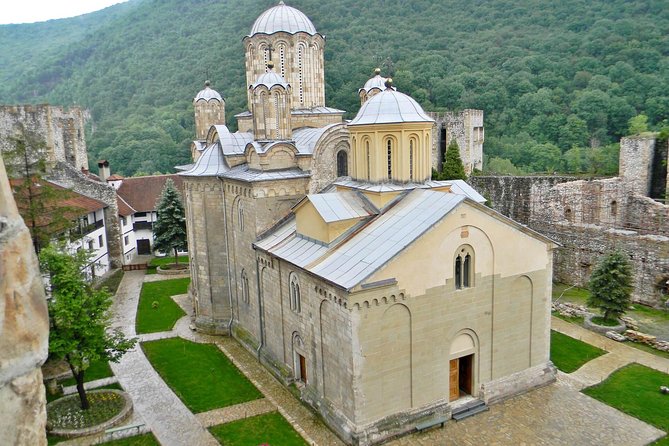
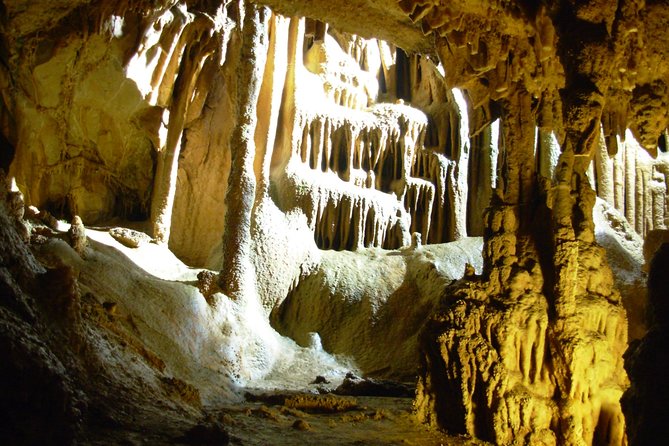
After Manasija, the route changes completely. Resava Cave is said to be about 80 million years old, with some formations dating to roughly 45 million years. The visit takes you through halls, channels, galleries, columns, stalactites, stalagmites, draperies, and flowstone waterfalls.
The cave has three levels connected by artificial tunnels. You will walk through prepared sections rather than scramble through a wild cave, but the setting still feels close and atmospheric. Rock formations take on unusual shapes, and the changing chambers give the visit more variety than a single narrow passage.
The cave is one of the best parts of the day for many people because it offers something Belgrade cannot. It is also a useful break from the summer heat. Inside, temperatures can feel chilly even during the warmest months, so bring a jacket.
The visit lasts about an hour, and admission is included. You should have a moderate level of fitness, as the experience involves walking through the cave system. The tour description does not promise step-free access, so anyone with mobility concerns should ask the operator before booking.
A practical note about money: lunch and drinks are not included. One account also described confusion over cash payments for site access, even though the stated inclusions cover Resava Cave and Veliki Buk. I would carry Serbian dinars anyway. That protects you if a local kiosk, restaurant, or unexpected entrance charge accepts cash only.
Same country, a different morning at the gates:
- From Bangkok: Ayutthaya Temples Guided Tour with Lunch
★ 4.7 · 10,535 reviews - Siem Reap: Angkor Wat: Small-Group Sunrise or Sunset Tour
★ 5.0 · 9,444 reviews - Athens: Cape Sounion & Poseidon Temple Sunset Half-Day Trip
★ 4.8 · 8,241 reviews - Ubud: Monkey Forest, Jungle Swing, Rice Terrace, and Water Temple
★ 5.0 · 7,160 reviews
Veliki Buk waterfall and lunch beside the stream
Veliki Buk, also called Lisine, drops about 20 to 25 meters and is protected as a natural monument. It is one of Serbia’s higher waterfalls, though its strength changes with the season.
Autumn is the best time for a strong flow. Summer can be drier, and the waterfall may look less dramatic. Rain can change the picture quickly. On one wet-weather visit, the water had impressive force, while another person found the waterfall underwhelming. Keep your expectations sensible: this is a pleasant nature stop, not a guaranteed thundering spectacle.
The setting is the main attraction. You have about an hour and a half here, enough time to sit near the stream, look around, and eat at a traditional Serbian restaurant. Several people praised the lunch, including trout and other local dishes, though you pay separately.
The meal stop gives the day a welcome pause. After the drive, monastery, and cave, sitting beside running water feels unhurried. Cats and a dog may appear around the restaurant area, which one person found less appealing, while others simply treated them as part of the rural setting.
Because the waterfall admission is stated as included, you should not expect a major extra ticket cost. Still, bring cash for lunch and drinks. The exact restaurant menu and prices are not specified, so allow room in your budget.
The guides make the difference
The route is attractive, but the guide determines how much you take from it. The best guides on this type of day do more than announce dates. They connect Manasija to Serbian statehood, explain Orthodox customs, point out details in the frescoes, and place the cave and waterfall within the wider geography of the region.
Konstantin has been praised for combining history with humor and for sharing a broad view of Serbian culture. Nevena is described as friendly, clear in English, and attentive to the group, including the heat. Jovan Nikolic has been noted for explaining geography, history, and the economy of modern Serbia. Marko and Stefan have also received strong praise for being both good drivers and engaging guides.
There is one fair caution. Serbian history includes painful and politically sensitive conflicts. One guide’s patriotic comments about the post-Yugoslav period made a person uncomfortable. That does not define the whole operation, but it is worth remembering that historical interpretation can vary. If you prefer a strictly neutral tone on recent politics, ask questions and judge the discussion for yourself.
The shared tour has a minimum of three people. If that number is not reached, you are told at least 16 hours beforehand and offered a different date, another available tour, or a cancellation without fees. Shared groups are limited to 16 people, while the tour is also described as having a maximum of 18. Confirm the exact cap for your booking option if group size matters.
What is included, and what is not
The price includes:
- Hotel pickup and drop-off
- Air-conditioned minivan or minibus transport
- An English-speaking professional guide
- Resava Cave admission
- Veliki Buk waterfall admission
Food, drinks, and gratuities are extra. Airport pickup is available only on private tours for a €15 supplement.
The child rate applies only when a child shares with two paying adults. Service animals are allowed, and the tour is near public transportation, though the main convenience is the door-to-door pickup.
Free cancellation is available if you cancel at least 24 hours before the start time. Changes made inside that window are not accepted, and poor weather or an insufficient number of people can lead to a date change, alternative experience, or full refund.
Who should book this Serbian countryside tour?
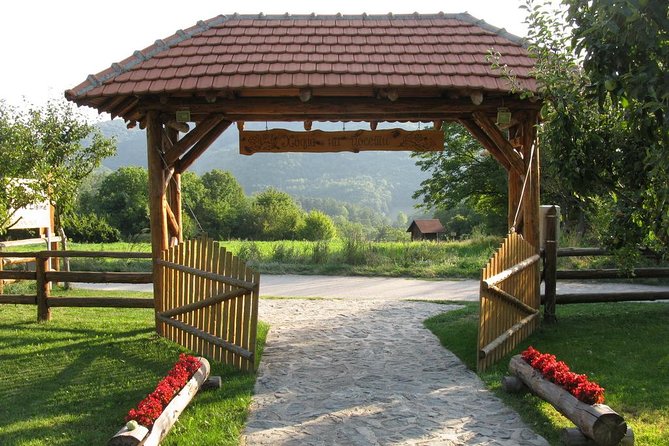
I would choose this trip if you want an easy way to reach places that are awkward to visit independently from Belgrade. It works especially well for first-time visitors who want one strong day of Serbian culture and nature without renting a car.
History and religious art enthusiasts will get the most from Manasija. Cave lovers will likely rank Resava as the highlight. Food-focused visitors should enjoy the rural lunch stop, though they need to pay separately. Small groups, including solo visitors, benefit from the social feel of a shared minivan without the scale of a large coach.
I would hesitate if you dislike long drives, need a highly active day, or expect Veliki Buk to be at full strength in midsummer. I would also avoid scheduling an important evening activity too close to the advertised return, since traffic and rural roads can stretch the day.
Should you book it?
Book this tour if you want a well-balanced escape from Belgrade with serious medieval history, a memorable cave, and a relaxed lunch stop. The strongest value comes from the transport and guide: Manasija and Resava are far easier to enjoy when someone else handles the roads and explains what you are seeing.
Bring a jacket, comfortable shoes, Serbian dinars, and clothing suitable for a monastery. If you can accept a long ride and a waterfall that may vary with the season, this is a smart way to see a quieter, more traditional side of Serbia in one day.
FAQ
How long does the tour last?
The experience lasts approximately 8 to 9 hours, returning to your Belgrade accommodation in the afternoon.
What time does pickup begin?
Shared tours depart at about 8:30 am, with pickup usually 15 to 30 minutes earlier. Private tours default to a 9:30 am departure, but another start time can be requested.
Where can I be picked up?
Pickup is available from hotels, Airbnbs, and pensions within 5 kilometers of Republic Square. If your accommodation is farther away, contact the operator. You may be asked to walk 7 or 8 minutes to a nearby pickup point.
Is lunch included?
No. Lunch and drinks are paid separately at the restaurant near Veliki Buk waterfall.
Is admission included?
Resava Cave and Veliki Buk waterfall admission are included. Manasija Monastery is listed without an admission charge.
What should I wear and bring?
Bring a jacket because Resava Cave is cold even in summer. Wear suitable clothing for entering an Orthodox place of worship and comfortable shoes for walking.
Can I cancel the booking?
You can cancel for a full refund up to 24 hours before the start time. Poor weather or failure to reach the minimum of three people can also result in a new date, another experience, or a full refund.
Just added around the world
- Chiang Mai Temples & City★ 5.0 · 10 reviews
- Full Day Chiang Rai 3 Temples White, Blue,Big Bhudha Temples★ 4.5 · 11 reviews
- Chiang Mai Old City & Temples 3 hour Twilight Walking Tour★ 5.0 · 9 reviews
- Chiang Mai Temples & Old City Hidden Gems Small Group Tour 2 Hrs★ 5.0 · 6 reviews
- Chiang Mai City and Temples Half-Day Tour★ 4.5 · 136 reviews
- Chiang Mai Old City & Temples Guided Walking Tour – 3 Hrs★ 4.5 · 34 reviews
- The Best Chiang Mai City Private Tour: Famous Temples & Viewpoint★ 4.5 · 7 reviews
- Half Day Chiang Mai City Temples & Museum Tour – Group or Private★ 5.0 · 11 reviews
Tours, compared.
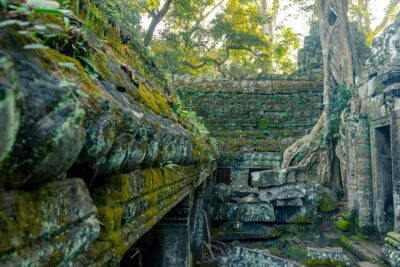
Angkor Wat Sunrise or Sunset Tour with Guide from Siem Reap
Read our review →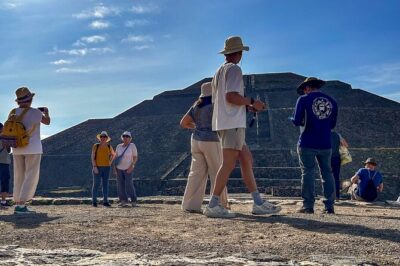
Teotihuacan, Guadalupe Shrine & Tlatelolco Day Tour with Lunch
Read our review →
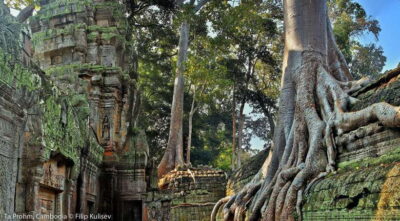
Angkor Wat: Small-Group Sunrise or Sunset Tour
Read our review →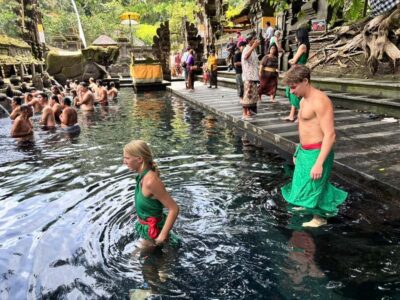
Waterfalls, Water Temple & Rice Terraces Private Tour
Read our review →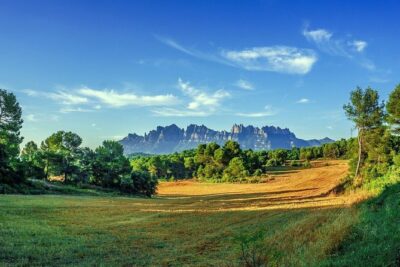
Montserrat Monastery Small Group or Private Tour Hotel pick-up
Read our review →