
REVIEW · CHIANG MAI TEMPLE TOURS
Chiang Mai: Temple & City Tour Part II
Chiang Mai’s most rewarding temples are not always the ones on the standard sightseeing route. This walking tour takes you from Wat Chiang Man, the city’s oldest temple, to three less familiar sites tied to Shan and Burmese culture. Guides such as Katoon, Big, Eddy, and Son add practical lessons about prayer, meditation, monk life, and temple etiquette.
I like the way the route links architecture with living Buddhism instead of treating each temple as a photo stop. I also like the small-group feel, which gives you room to ask questions and, in some cases, spend extra time in quiet temple spaces. The main drawback is simple: you will walk for hours in Chiang Mai’s heat, and tired feet can take the shine off the final stop.
Four temples, four different sides of Chiang Mai
- Wat Chiang Man dates to 1296: King Mengrai built Chiang Mai’s oldest temple, which is associated with a crystal Buddha image.
- Wat Chiang Yuen recalls the Shan community: This 16th-century temple sits in an area once used as a Shan residential district.
- Wat Pa Pao brings Shan Burmese design into view: Its location outside the old city walls makes it an easy site to miss on your own.
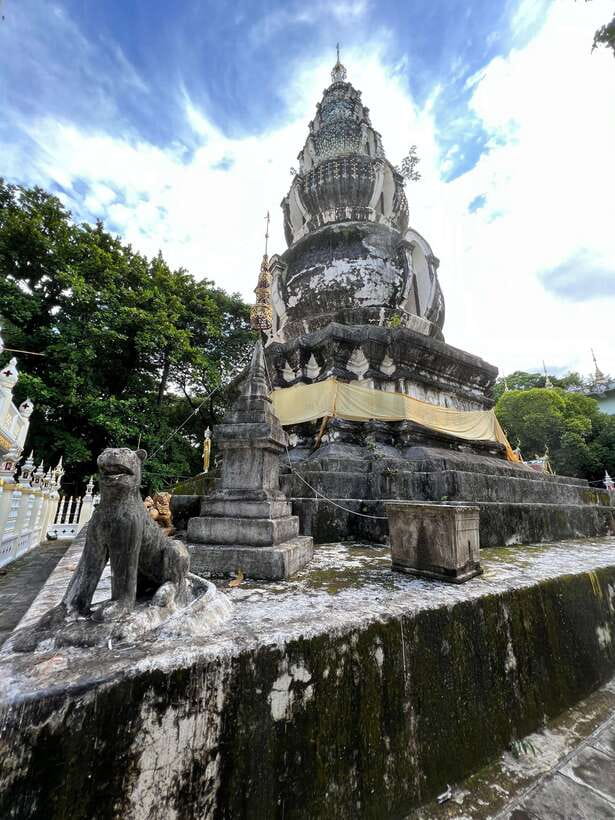
- Wat Ku Tao has an unusual chedi: The structure is thought to date from 1613 and to hold the ashes of Prince Saravadi, Chiang Mai’s first Burmese overlord.
- Former monks add useful context: Several guides, including Katoon and Big, have shared their own experience of monastic life, Buddhism, meditation, and prayer.
- The walk is better for curious adults than very young children: Children under two, babies under one, pregnant women, wheelchair users, and people using electric wheelchairs are not suited to this activity.
Why this temple walk is different from a standard city tour
Many Chiang Mai temple visits focus on the obvious names inside the old city. This route takes a more specific approach. It explores four sites connected not only to northern Thai Buddhism, but also to Shan and Burmese communities that shaped Chiang Mai.
That gives the walk a useful theme. You are not simply counting golden roofs. You are seeing how religion, politics, migration, and daily life meet in the city’s temples.
I would choose this tour if you want explanations that go beyond architectural labels. The strongest guiding comes through when you ask questions. Katoon, Big, Eddy, and Son have been praised for explaining Buddhist beliefs, the lives of monks, local customs, and the stories shown in temple art. Some guides also demonstrate basic meditation or explain how to pray respectfully.
The experience is available as a private or small-group tour, with English, Chinese, or Thai guiding. That matters here. A large group would make it harder to pause, ask about a Buddha image, or discuss a custom that seems unfamiliar. A private booking should give you the most flexibility, though the shared option keeps the price at about $31 per person.
A few more temple visits around Chiang Mai worth a look
- Chiang Mai: Chiang Rai Temples, Karen Tribe and Hot Springs
★ 4.7 · 5,401 reviews - Chiang Rai White Temple and Blue Temple Day Tour
★ 4.6 · 3,366 reviews - Chiang Mai: White, Red/Black & Blue Temples Tour with Lunch
★ 4.2 · 2,017 reviews
Starting at Wat Chiang Man in 1296
The advertised start is around 8:20 am, with availability and exact timing confirmed when you book. Beginning in the morning makes sense. You get cooler walking conditions than later in the day, and the first temple gives you a strong foundation for the rest of the route.
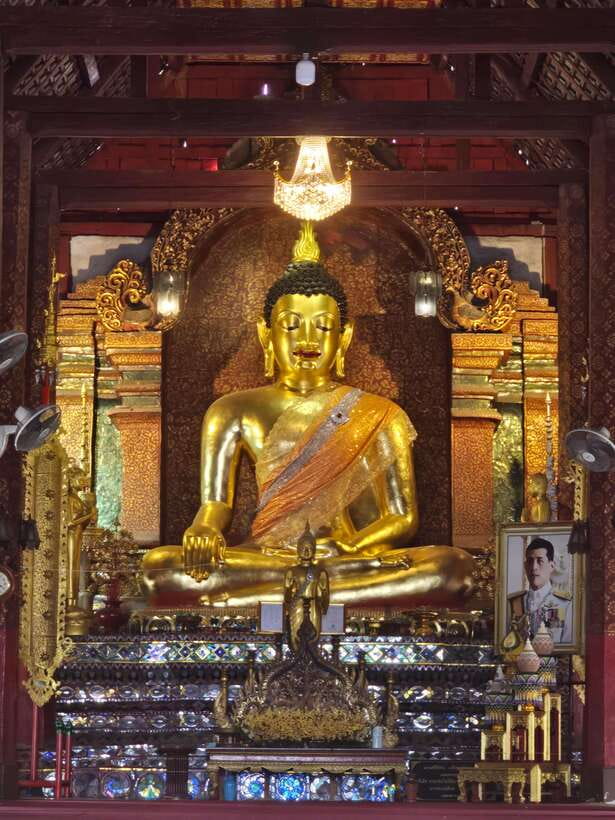
Wat Chiang Man was built in 1296 by King Mengrai, the ruler who founded Chiang Mai. It is regarded as the oldest temple in Chiang Mai town. That date gives the stop real weight: you are looking at one of the earliest religious sites in the city, not just another attractive temple courtyard.
The tour places attention on the crystal Buddha statue enshrined here. Your guide can help explain why Buddha images matter, how worship differs from simply looking at an object, and what behavior is appropriate inside the compound.
I like this opening because it connects Chiang Mai’s beginnings with its religious life. You can ask basic questions early, then use the answers as a reference at the next three temples.
Do not rush this stop. Look at the details your guide points out, listen for the difference between a temple’s religious role and its historical role, and ask about anything that seems unclear. The value is not only in the building. It is in understanding why this particular site still matters.
Wat Chiang Yuen and the story of the Shan community
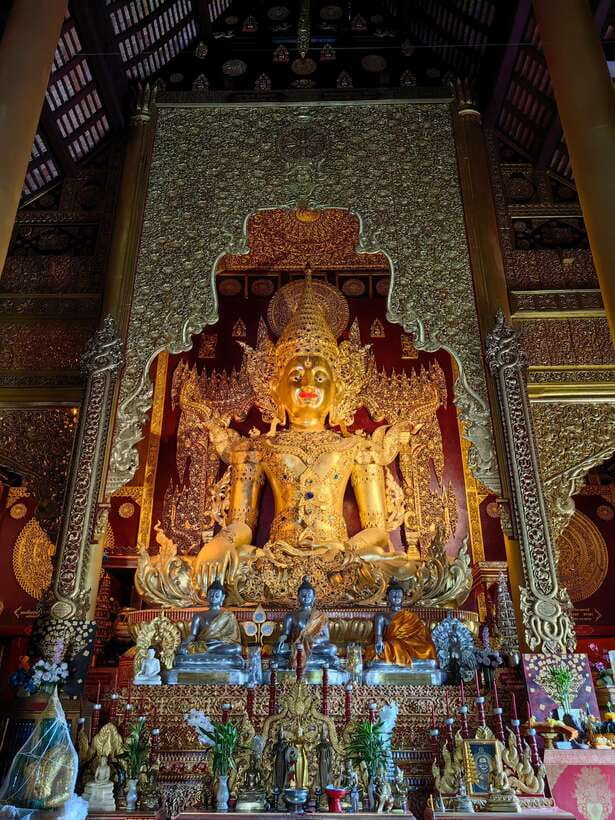
The second stop is Wat Chiang Yuen, a 16th-century temple in an area that once served as a residential district for Shan people. This gives the walking tour a wider frame. Chiang Mai’s story is not limited to one Thai royal dynasty or one style of Buddhist architecture.
The Shan are an ethnic group with a long connection to the region around northern Thailand and Myanmar. The information provided for this tour focuses on the temple’s former residential setting, so your guide can help place the building within that local community story.
This is one of the moments when a guide makes a real difference. On your own, you might see a quiet temple with an appealing old-world feel and move on. With an explanation, you can connect the location to migration, local identity, and the way religious buildings serve their communities.
The pace is intended to be easy, but easy does not mean effortless. You will be outdoors and on your feet between stops. Wear shoes you can walk in for several hours, and remember that temple etiquette may require clothing that covers the shoulders and knees. Short skirts are not allowed, so dress modestly from the start.
Wat Pa Pao and Shan Burmese style
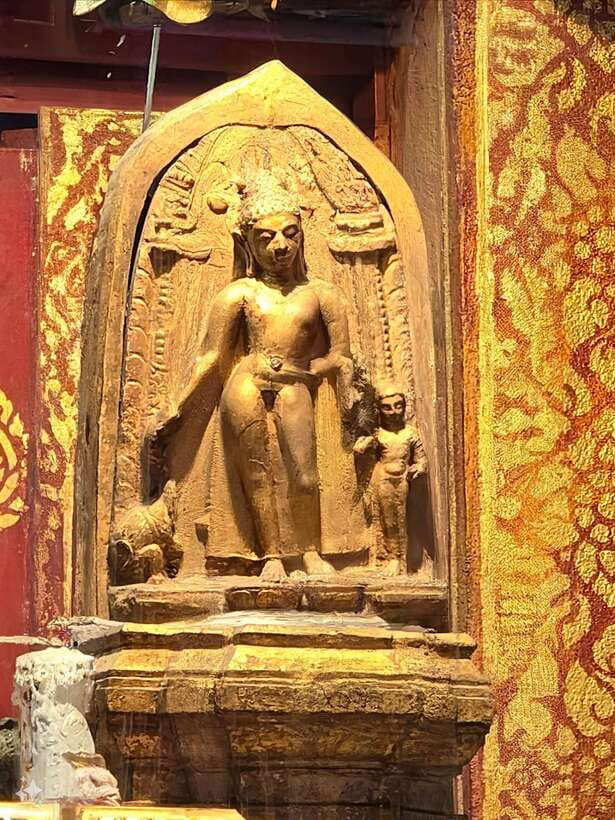
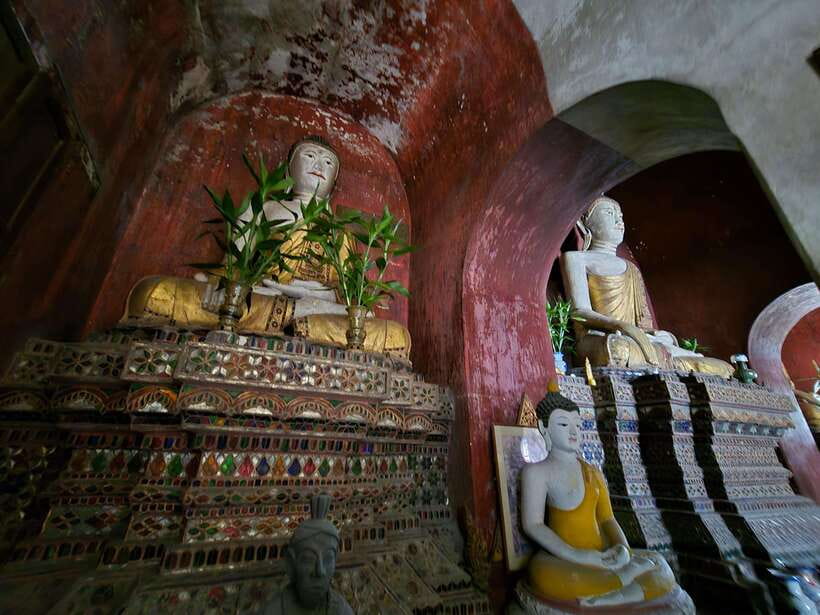
Wat Pa Pao adds another piece to the Shan story. It is a Shan Burmese style temple outside Chiang Mai’s old city walls and moats. That location is important because it helps explain why the site can be missed by people who only follow the main old-city circuit.
Here, the guide can point out features that reflect Shan Burmese influence. The stop is less about checking off a famous name and more about seeing a style and cultural connection that may not be obvious from a quick visit.
I especially like this part of the route for visitors who have already seen several standard Thai temples. It gives you a comparison. You can look at how design, community background, and regional links change from one temple to the next.
The tour’s strongest guides do not bury you in technical terms. They use stories about Buddhism, Thai life, and monks to make the setting understandable. Katoon is often singled out for his explanations of Buddha’s previous lives, meditation, temple art, and his own 18 years as a monk. Big has also drawn praise for showing how to pray and explaining everyday monastic life.
Guide quality can vary, of course, and the listed languages are English, Chinese, and Thai. Still, the repeated focus on patient explanations and questions suggests that this is a good choice for someone who wants conversation rather than a memorized speech.
Same country, a different morning at the gates:
- Chiang Mai: Doi Suthep and Wat Umong Enchanting Evening Tour
★ 4.6 · 1,811 reviews - Chiang Mai: 3 Hour Old City and Temples Guided Walking Tour
★ 4.6 · 1,568 reviews - Chiang Mai: Doi Suthep, Wat Umong, and Pha Lat Sunrise Tour
★ 4.7 · 1,425 reviews - Chiang Rai Temples: Private Tour from Chiang Mai
★ 5.0 · 1,267 reviews
Wat Ku Tao and Chiang Mai’s Burmese past
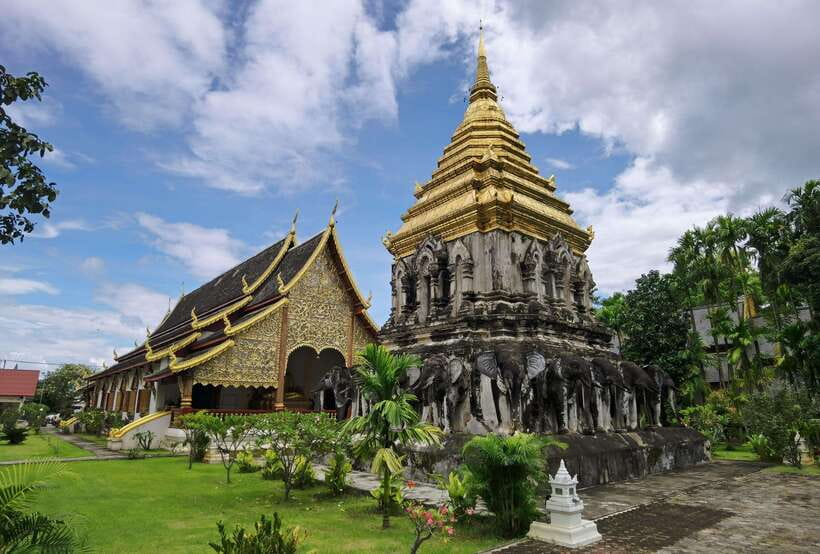
The final temple is Wat Ku Tao, known for an unusual chedi thought to have been built in 1613. It is associated with the ashes of Prince Saravadi, who lived from 1578 to 1607 and is described as the first Burmese overlord of Chiang Mai.
This stop gives the route a political edge. Temples are not only places of worship. They also preserve evidence of changing power, regional connections, and the people who governed Chiang Mai at different times.
The chedi’s unusual form is the visual reason to pay attention, but the story is what makes it worth the walk. Ask your guide how Burmese rule affected the city and how the temple fits into the wider history of northern Thailand. The exact amount of detail will depend on your guide and group, but this is a natural place for a longer conversation.
By the fourth temple, heat and fatigue become real factors. One participant who completed both parts of the temple program in a single day found that their feet were worn out by the end, even though the experience remained worthwhile. I would not treat this as a light stroll. Bring water, use sun protection, and consider scheduling a break before or after the tour.
What the guides add beyond the buildings
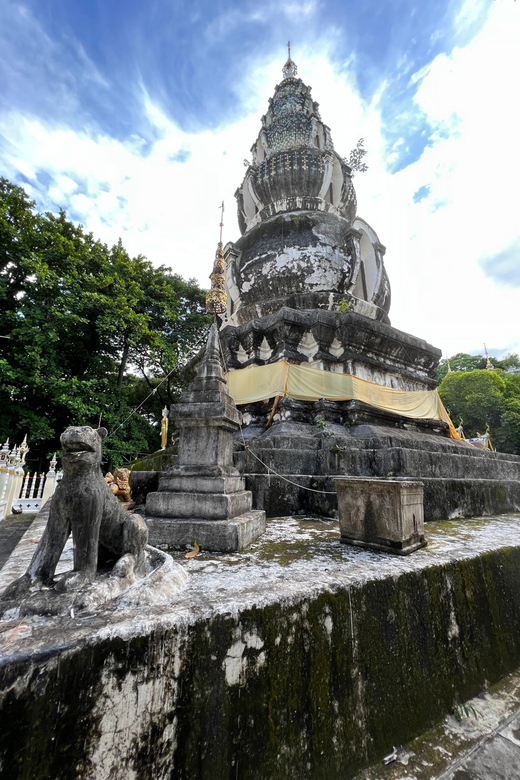
The most praised part of this experience is the guiding. Eddy has been described as friendly, flexible, informative, and good at taking photos. Son has led long discussions about Buddhist belief, practice, Thai culture, and temple history. Big has explained prayer, monk life, and local customs with enthusiasm.
Katoon appears particularly suited to people who want a serious introduction to Buddhism. His background as a former monk allows him to discuss meditation, food, daily routines, Buddha stories, and the difference between various types of temples. He has also taken people to quieter spaces and, when possible, helped them see parts of temples they would not have found alone.
That does not mean every visitor will receive exactly the same experience. The guide, group size, temple access, and questions you bring will shape the day. Still, the format gives you a better chance to learn than a self-guided walk through four religious sites.
The guides also help with small but important matters. You can learn how to enter a temple respectfully, where to sit, how to pray, and why certain images or gestures matter. These lessons are useful for the rest of your time in Thailand, not only for this one morning.
Photography is another practical benefit. Eddy and other guides have helped with pictures during the walk, but remember that a temple is a place of worship first. Ask before photographing people, monks, or restricted areas.
Walking conditions, clothing, and what to carry
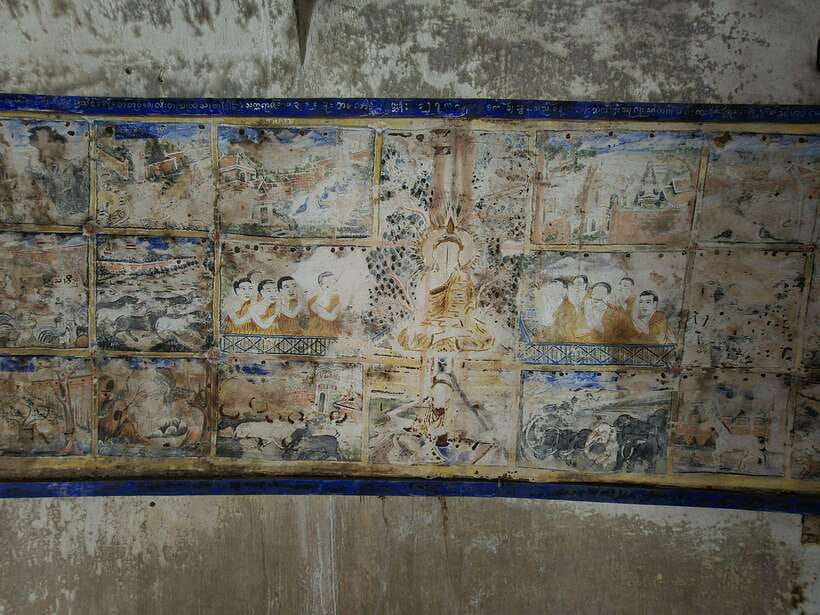
The route is described as relatively easy, but it is still a full walking day. You should be comfortable walking for hours in warm conditions. April can be especially hot, and even in cooler months you will want water and sun protection.
Bring:
- An umbrella for sun or rain
- Drinks or a refillable water bottle
- Cash for personal purchases or food
- Modest clothing covering shoulders and knees
- Comfortable walking shoes
Food and extra drinks are not included. Plan accordingly, since the tour price covers the guide and walking experience rather than meals.
The activity does not suit children under two, babies under one, pregnant women, wheelchair users, or people using electric wheelchairs. Baby strollers are also not allowed. Pets, drones, weapons, sharp objects, alcohol, drugs, and smoking indoors are prohibited. These rules are sensible around active religious sites, though you should check your own mobility needs before booking.
Is $31 a fair price?
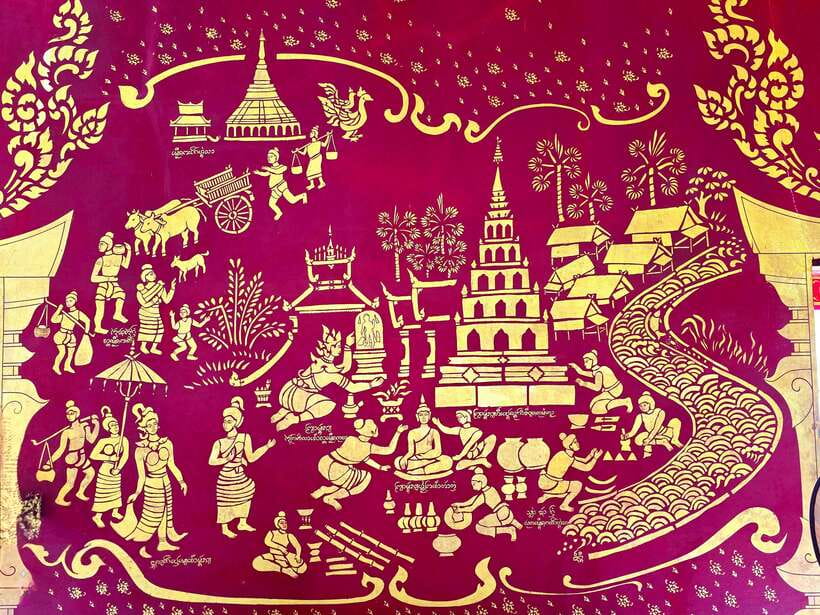
At about $31 per person, the value depends on how much context you want. If you only want to see temple exteriors and take a few pictures, you can walk around Chiang Mai independently for less. If you want a guide who explains Buddhist practice, Shan and Burmese connections, local history, and temple manners, the price is more reasonable.
The small-group or private format strengthens the value. You are paying for access to a person who can answer questions, adjust the pace, and sometimes help you see quieter spaces. Hotel pickup and drop-off are included only with the private option, so check that detail before comparing prices.
The strongest value comes when you treat the tour as a cultural introduction, not just transport between four temples. Ask questions. Tell the guide what interests you. If you want to learn about meditation, the former monk guides, or the lives of local monks, say so early.
Free cancellation is available up to 24 hours before the activity for a full refund, and you can reserve now and pay later. The tour is valid for one day, with start times based on availability.
One practical warning concerns meeting information. A previous booking had trouble with a plus-code style address that was not clear to taxi drivers or people at a hotel. If you are meeting the guide rather than using private hotel pickup, confirm the location in plain language, ideally with a recognizable landmark such as the Three Kings Monument. Do not leave this until the last minute.
Who should book this Chiang Mai temple tour?
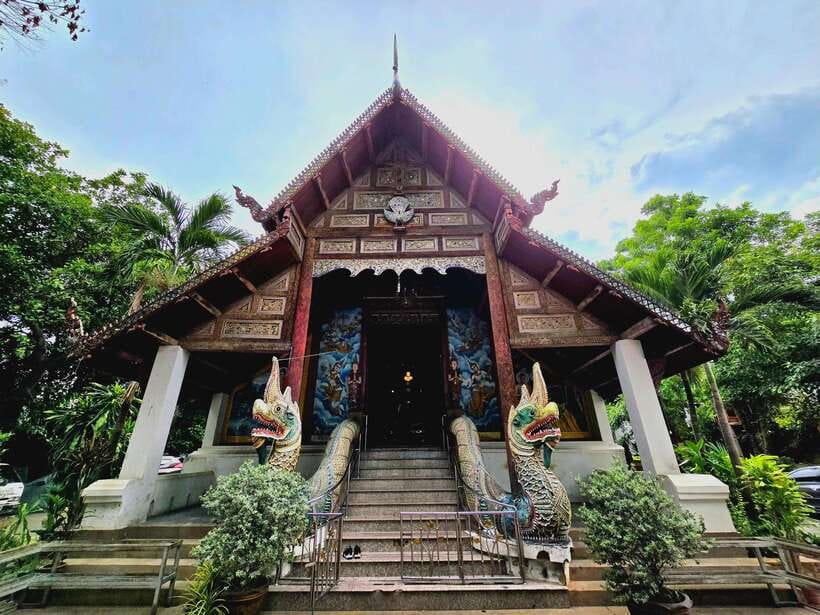
I would recommend it to first-time visitors who want a clear introduction to northern Thai Buddhism without spending the day on a bus. It also suits repeat visitors who have seen the main temples and now want places tied to Shan and Burmese culture.
You will get the most from it if you enjoy asking questions and can handle several hours of walking. It is a good fit for adults, couples, solo visitors, and small groups who prefer a calm pace and local explanation.
I would skip it if you dislike walking in heat, need step-free access, or want a quick temple checklist. This is not a ride-through sightseeing trip. The appeal is the time spent looking, listening, and making connections between buildings.
Should you book it?
Book this tour if your main goal is to understand Chiang Mai’s temples, Buddhist customs, and regional history rather than simply photograph famous roofs. The four-stop route is varied, and the chance to learn from guides with monastic experience gives it more substance than a basic city walk.
Choose the private option if hotel pickup, flexibility, and extra conversation matter most. Choose a small group if you want the same general route at a lower price. In either case, start rested, dress appropriately, bring water, and confirm the meeting point clearly.
The best reason to book is the guiding. With Katoon, Big, Eddy, Son, or another strong guide, these temples become connected stories about faith, community, and power. Without that context, the walk is still attractive, but you will miss much of what makes the route special.
FAQ
What temples are included in the tour?
The route includes Wat Chiang Man, Wat Chiang Yuen, Wat Pa Pao, and Wat Ku Tao.
What time does the tour start?
The advertised start time is 8:20 am. Exact starting times depend on availability, so check when booking.
How long does the activity last?
The activity is valid for one day and involves walking for several hours between four temples.
Is hotel pickup included?
Hotel pickup and drop-off are included when you select the private option. They are not listed as included for the standard walking tour.
Which languages are available?
Live guiding is available in English, Chinese, and Thai.
Is this a private tour or a group tour?
You can book a private option or join a small group.
What is included in the price?
The price includes a tourist guide and the walking tour. Private bookings also include hotel pickup and drop-off.
Are food and drinks included?
No. Food and additional drinks are not included, so bring drinks and cash.
Can I cancel the booking?
Yes. You can cancel up to 24 hours in advance for a full refund. A reserve-now, pay-later option is also available.
Just added around Chiang Mai
- Chiang Mai Temples & City★ 5.0 · 10 reviews
- Full Day Chiang Rai 3 Temples White, Blue,Big Bhudha Temples★ 4.5 · 11 reviews
- Chiang Mai Old City & Temples 3 hour Twilight Walking Tour★ 5.0 · 9 reviews
- Chiang Mai Temples & Old City Hidden Gems Small Group Tour 2 Hrs★ 5.0 · 6 reviews
- Chiang Mai City and Temples Half-Day Tour★ 4.5 · 136 reviews
- Chiang Mai Best City Tour with Doi Suthep, Pha Lat & Chedi Luang★ 5.0 · 63 reviews
- Chiang Mai Old City & Temples Guided Walking Tour – 3 Hrs★ 4.5 · 34 reviews
- Half Day Chiang Mai City Temples & Museum Tour – Group or Private★ 5.0 · 11 reviews
Chiang Mai Temple Tours, compared.
Chiang Rai Temples, Karen Tribe and Hot Springs
Read our review →
Chiang Rai White Temple and Blue Temple Day Tour
Read our review →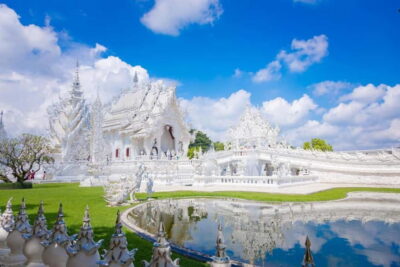
White, Red/Black & Blue Temples Tour with Lunch
Read our review →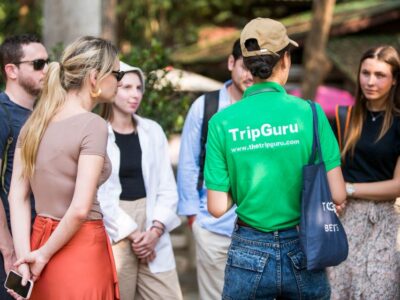
Doi Suthep and Wat Umong Enchanting Evening Tour
Read our review →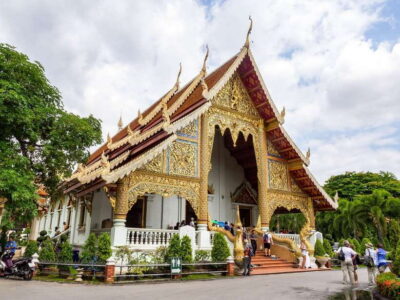
3 Hour Old City and Temples Guided Walking Tour
Read our review →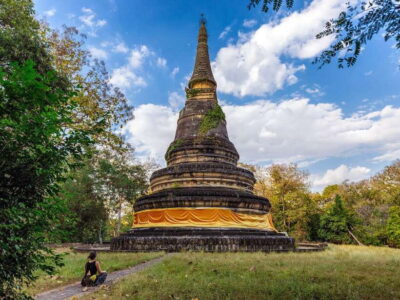
Doi Suthep, Wat Umong, and Pha Lat Sunrise Tour
Read our review →
Chiang Rai Temples: Private Tour from Chiang Mai
Read our review →
Browse the lists this tour appears in