
REVIEW · ACROPOLIS & ANCIENT GREEK TEMPLE TOURS
Blue Lake, Sanctuary of Hera, Mycenae, Ancient Corinth, Canal
The best thing about this day is the mix: Bronze Age Mycenae, Roman Corinth, a mountain fortress, a famous canal, and a swim beside the Sanctuary of Hera. It gives you a wide slice of the Peloponnese without asking you to change hotels or manage Greek roads.
I like the private door-to-door transport, especially for such a full route, and I like the flexible pacing. Drivers such as Yannis and Panos provide useful background on the road, carry water and snacks, and can adjust the day when you want more time at a ruin or a slower lunch.
The trade-off is simple: this is a long day with many stops. You may need to choose between seeing everything briefly and spending more time at fewer sites, and the driver does not normally enter the archaeological sites as a licensed guide.
Key points to know before booking
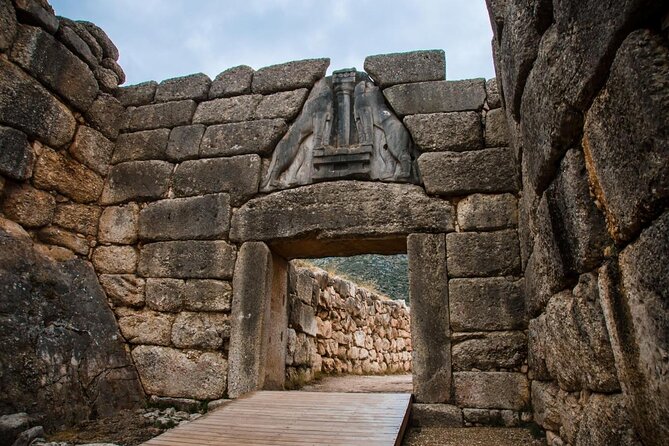
- Mycenae gives you the strongest ancient setting: Enter through the Lion Gate, walk beside massive Cyclopean walls, and visit the Treasury of Atreus.
- The Corinth Canal is a quick but worthwhile stop: You will see a major 19th-century engineering project and the ancient Diolkos boat trackway.
- Ancient Corinth combines archaeology, religion, and village life: See the Temple of Apollo, the Roman forum, Paul’s Bema, and enjoy lunch above the ruins.
- Blue Lake is the relaxing finish: The Heraion sanctuary and clear water offer a welcome change after several hours among stones and museums.
- Private transport is the real convenience: Hotel pickup, bottled water, WiFi, a comfortable vehicle, and flexible timing remove much of the day’s road stress.
- The price reflects privacy, not guided entry: At $337.15 per person, value improves for families or small groups, especially when compared with arranging several transfers yourself.
Why this private Athens day trip works
This is not a simple visit to one famous ruin. It is a long loop west of Athens that links several very different places. You begin with the Corinth Canal, head toward Mycenae, continue through Ancient Corinth and Acrocorinth, then finish near the sea at Heraion and Blue Lake.
The route covers about nine hours. That sounds generous until you count the driving, archaeological sites, museum time, lunch, and photo stops. I would treat this as a broad introduction rather than a slow archaeological study.
Your driver picks you up in the lobby of your Athens hotel and returns you there. Apartment pickup is also arranged at the building entrance, while port and airport pickup can be added for an extra cost. You ride in a private vehicle with WiFi, bottled water, refreshing wipes, and handmade Greek biscuits.
Drivers including Yannis and Panos are described as friendly, flexible, and well informed about Greek history. They can explain the setting while you travel, but the standard arrangement is transport and interpretation on the road, not a licensed guide walking beside you inside each site.
That distinction matters. If you want detailed discussion of inscriptions, architecture, and excavation work, request a licensed guide as an extra. If you prefer to walk independently after receiving background in the car, the usual setup may suit you better.
More Acropolis and Ancient Greek Temple Tours in Athens:
- Athens: Cape Sounion & Poseidon Temple Sunset Half-Day Trip
★ 4.8 · 8,241 reviews - Athens: Cape Sounio & Poseidon Temple Trip with Audio Guide
★ 4.4 · 4,521 reviews - Cape Sounion and Temple of Poseidon Half-Day Small-Group Tour from Athens
★ 4.5 · 3,205 reviews
Corinth Canal and the ancient Diolkos
The Corinth Canal is your first major stop, with about 45 minutes set aside. The channel cuts through the Isthmus of Corinth and links the Gulf of Corinth with the Saronic Gulf. From the viewpoint, you can look down into the narrow waterway and appreciate the scale of the 19th-century engineering work.
This is a good first stop because it is easy to understand at a glance. You do not need a long lecture to see why the canal mattered to shipping and Mediterranean trade.
Nearby, the ancient Diolkos adds an older layer. This paved trackway allowed boats to be moved overland across the isthmus in ancient Greece. It is less visually dramatic than the canal, but it helps you see that this strip of land has long been a problem for ships and a prized shortcut for people who could solve it.
The canal stop is not a full archaeological visit. You will have time for views and a short walk, not a long exploration. Keep your expectations focused on the engineering setting and the contrast between ancient transport and modern construction.
Mycenae, the Lion Gate, and royal tombs
Mycenae is the emotional center of the day. This hilltop citadel was the leading center of the late Bronze Age, and its name is tied to the stories of Agamemnon and the Trojan War. Homeric legend gives the place drama, but the surviving walls and tombs make the site important even without the epic poems.
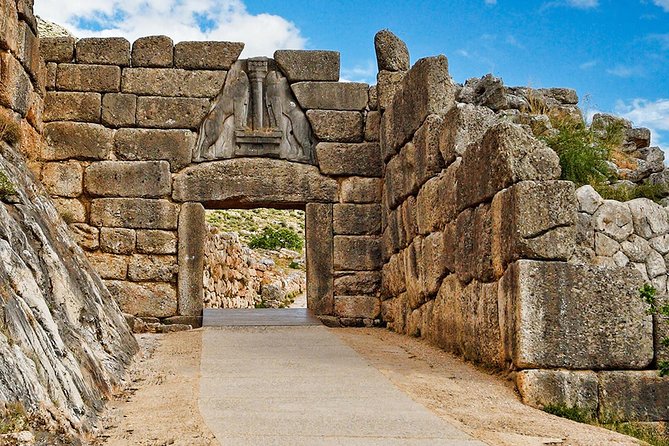
You enter through the Lion Gate, erected in the 13th century BC. The carved lions above the gateway are among the most recognizable images of prehistoric Greece. Take a moment here before moving on. The gate is not just a photo stop. It shows how power, defense, and royal display were joined at the entrance to the citadel.
The Cyclopean walls are another highlight. Huge limestone blocks form the defenses, and later Greeks believed only the mythical Cyclopes could have moved them. From the path, you can see why that story took hold. The stones are massive, and the walls feel more like a natural cliff than ordinary masonry.
The citadel includes the remains of the royal palace, with domestic rooms, a throne room suite, a grand staircase, offices, and a forecourt. Much is now fragmentary, so the value comes from reading the plan and imagining how the hill functioned as a royal center.
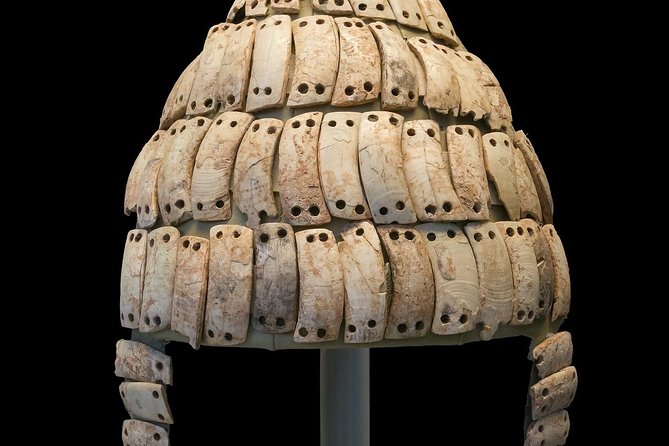
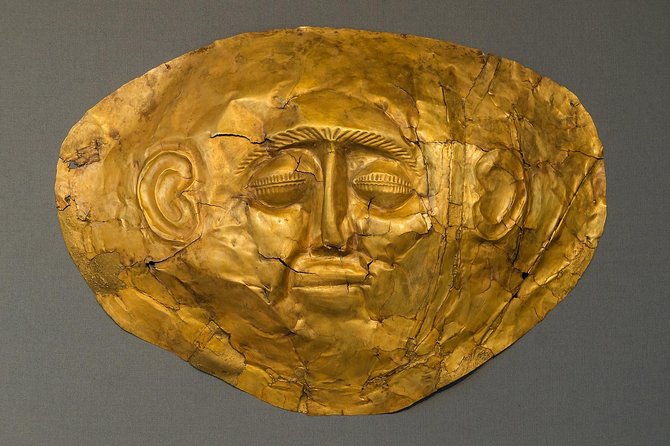
You also visit Grave Circles A and B, royal cemeteries outside the Bronze Age citadel. Their gold objects and burial goods changed our understanding of Mycenaean society. The nearby museum displays gold grave goods, masks, jewelry, weapons, religious figures, and frescoes.
The Treasury of Atreus is outside the main citadel and deserves attention. This large tholos tomb, built around 1250 BC, has a beehive-shaped chamber made from carefully fitted stone. The Tomb of Clytemnestra is another Mycenaean tholos tomb, also dated to about 1250 BC.
The schedule gives roughly an hour and a half for Mycenae, plus separate short visits to the Lion Gate, the tombs, and the museum. That can work if you keep moving. It will feel rushed if you want to read every display or linger at each view.
Admission fees are not included in the tour price. Ask about the current entrance total and skip-the-line ticket service before departure, since the service is available on request. Comfortable shoes matter here because the experience involves uneven archaeological ground and walking between separate points.
Acrocorinth, the Upper Peirene Fountain, and Geraneia views
After Mycenae, the route turns toward Corinth. Acrocorinth is the high point of the visit, both literally and visually. The acropolis sits on a single rocky mass above Ancient Corinth, with walls, towers, gates, and a fortress complex built and reused across different periods.
The entrance system includes three circuit walls reinforced with towers. Inside, you can see the keep, remains linked with the Temple of Aphrodite, and a Frankish tower at the southwest edge. Churches, mosques, homes, fountains, and cisterns show how the fortress continued to serve different communities long after the ancient city changed.
The hour assigned here gives you a useful look, but Acrocorinth is not a casual stroll on level ground. You may spend much of your time walking uphill or over rough surfaces. If you have limited mobility, discuss the route with the operator before booking.
The Upper Peirene Fountain is scheduled for about 15 minutes. It lies within the fortifications and is linked in myth with Asopus and Sisyphus. This is a small stop, but it gives you a close look at the practical side of ancient settlement: water mattered as much as temples and walls.
A short Geraneia stop adds open views over the Corinthian Gulf and the southwest coast of the Peloponnese. This is a useful pause between ruins. Your driver can point out the shape of the gulf and the mountain setting, and you get a chance to reset before the longer visit to Ancient Corinth.
A few more temple visits around Athens worth a look
- Athens: Meteora Monasteries Day Trip with Caves and Lunch
★ 4.7 · 4,670 reviews - Athens to Meteora: Monasteries, Caves & Seaside Stopovers
★ 4.7 · 2,958 reviews - Cape Sounion & Temple of Poseidon: Small Group Tour
★ 4.7 · 1,945 reviews - Athens: Meteora Monasteries, Caves & Coastal Stopovers with Lunch
★ 4.5 · 1,432 reviews
Ancient Corinth and lunch above the ruins
Ancient Corinth receives about three hours, making it one of the most substantial parts of the route. The site combines a museum, open-air ruins, village shops, and a planned lunch stop, so it feels less like a single monument and more like a whole archaeological district.
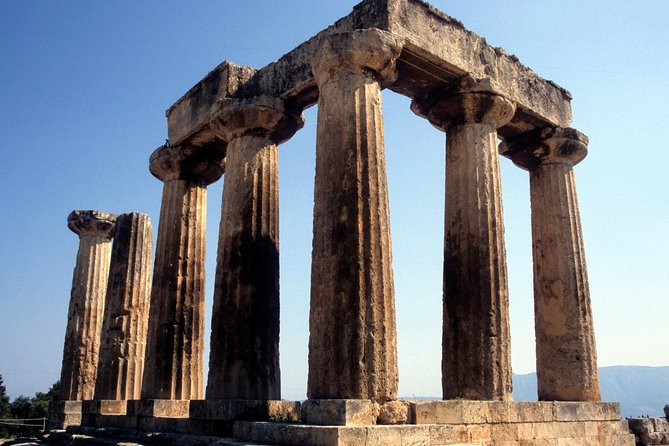
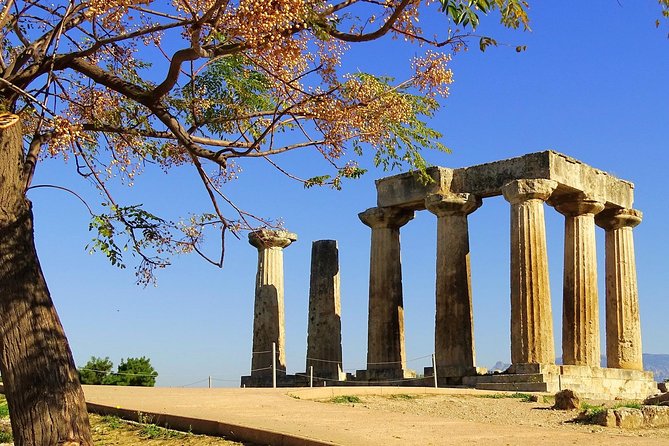
The Temple of Apollo is the main visual anchor. Built around 560 BC, it is one of the earliest Doric temples in the Peloponnese and on the Greek mainland. Its surviving monolithic columns are especially striking because each column was made from one large piece of stone.
The Agora measures about 160 meters by 70 meters and once held shops, small temples, an altar, and the Bema. From this raised platform, the Apostle Paul addressed the Corinthians in AD 52. The Bema gives the site a strong connection to early Christian history, even if you are mainly visiting for the Greek and Roman remains.
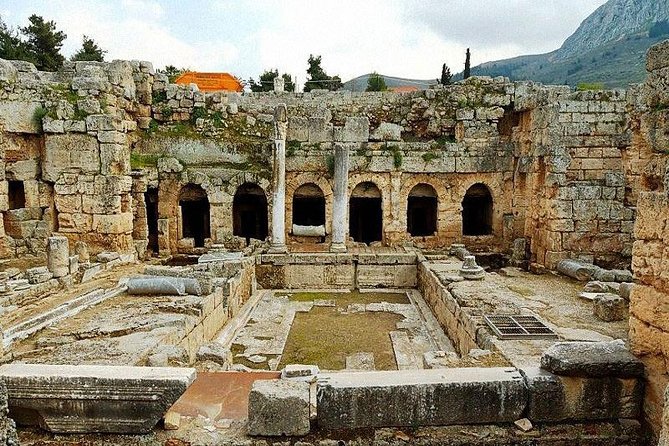
You can also see Roman buildings, the theater and Odeon, the Asklepieion, and the Lechaion Road leading toward the port. The Hadgimoustafa spring, built during the Ottoman period, adds a later chapter to the site.
The Ancient Corinth museum holds objects from the city and smaller nearby sites. Pairing the museum with the ruins helps you make sense of what you are seeing outside. The museum displays are especially useful after the larger and more open setting of Mycenae.
One thoughtful part of the day is the suggested village-style lunch on a terrace overlooking the archaeological site and Temple of Apollo. Food is not included, and the restaurant cost is yours, but the setting makes this more than a quick roadside meal. You can eat, look back over the ruins, and enjoy a slower hour before the final coastal section.
Village shops offer handmade souvenirs. I would save purchases for this stop if you want something connected to the local setting, rather than buying at the first roadside stand.
Heraion and Blue Lake as the final reward
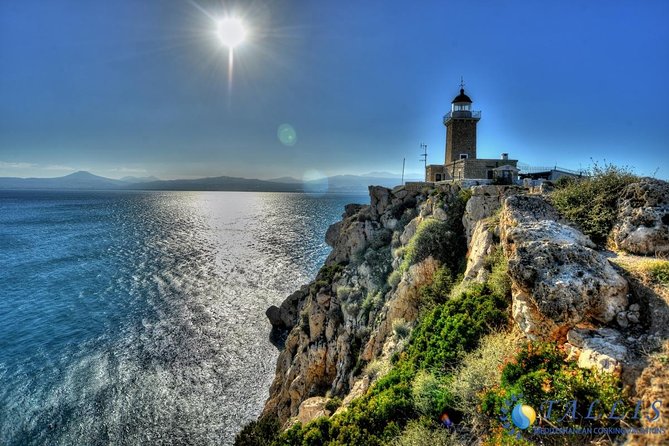
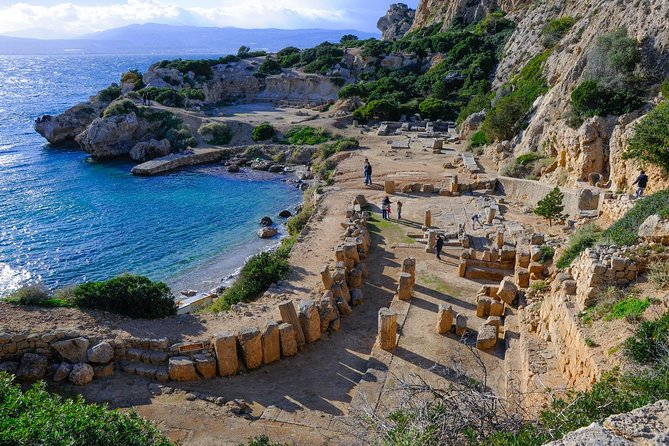
The final major stop is the Sanctuary of Hera at Perachora, also called Heraion. The visit includes the Malagavi Lighthouse area and Blue Lake, with about an hour assigned to the stop.
This is where the day changes mood. After citadels, tombs, temples, and museums, you reach a coastal setting suited to sitting by the water and swimming. The clear water and sunny shore make the stop especially appealing when the conditions are right.
Do not assume the swim will suit every departure. The itinerary includes time for bathing, but weather and season affect how enjoyable it is. On a winter visit, the Blue Lake stop may be replaced with another sight, such as an 18th-century castle, after discussion with the driver.
The timing also matters. Some departures reach Heraion late in the day, when the light is softer and the stop feels calm. One route included a sunset visit to the Temple of Hera after the group had spent longer at earlier sites. Since the tour is private, you have a better chance of shaping the ending around your energy and interests.
Bring swimwear and a towel if you want to use the water, though the supplied information does not specify changing facilities. You should also keep a dry layer in the car for the return trip.
What the $337.15 price really buys
At $337.15 per person, this is not a budget sightseeing trip. The cost covers a fully private tour, hotel or port pickup and drop-off, private luxury transport, driver service, WiFi, bottled water, refreshing wipes, and Greek biscuits. Entrance fees, meals, tips, and any licensed guide are extra.
The value is strongest for a family or small group that wants one vehicle and one flexible schedule. You are paying to avoid arranging separate buses, taxis, rental-car routes, parking, and navigation across several distant sites.
For a solo visitor, the price is harder to justify unless privacy and convenience are your top priorities. A larger private group can spread the per-person cost while keeping the same vehicle and schedule.
The biggest financial detail is the entrance fees. Mycenae, Corinth, Acrocorinth, museums, and the Heraion may involve separate charges, and the tour price does not include them. Ask for the expected total before departure so the advertised price does not surprise you at the ticket offices.
Who should book this day trip?
I would recommend it to you if you want to see several major sites outside Athens without renting a car. Families benefit from private transport, flexible stops, water in the vehicle, and the ability to adjust the order or duration of visits.
It also suits couples who want a full day with a strong mix of archaeology and scenery. The Blue Lake stop keeps the day from becoming a parade of ruins, while the village lunch adds a more ordinary local setting.
You should think twice if you want a slow, academic visit to Mycenae or Corinth. The route covers too much ground for long reading time at every monument. A licensed guide is also worth adding if detailed interpretation is central to your plans.
The tour is available in English and can use multilingual drivers. Confirmation is provided at booking, service animals and pets are allowed, and most people can participate. Free cancellation is available up to 24 hours before the scheduled start time.
My verdict on the Mycenae, Corinth, and Blue Lake route
Book this tour if you value comfort, privacy, and range more than a relaxed pace. Its best moments are the Lion Gate and tombs at Mycenae, the Temple of Apollo and Bema at Ancient Corinth, and the cool water at Blue Lake after a full day on the road.
Before booking, ask three things: the total entrance fees, whether a licensed guide is available, and whether Blue Lake will be included for your travel date. If the answers fit your plans, this is an efficient way to leave Athens behind and see a varied stretch of Greece in one demanding but rewarding day.
FAQ
How long does the private tour last?
The tour lasts approximately nine hours, including driving between Athens and the sites.
Is hotel pickup and drop-off included?
Yes. The driver collects you from your Athens hotel lobby and returns you there. Apartment, port, and airport pickup arrangements are also available, though airport pickup and drop-off cost extra.
Are entrance fees included in the price?
No. Entrance fees to the archaeological sites and museums are not included. Skip-the-line ticket service is available on request.
Is a licensed tour guide included?
No. The standard tour includes professional drivers who provide historical background during the journey. A licensed guide to accompany you inside sites and museums can be requested at an additional cost.
Is lunch included?
No. Food and drinks are not included. The route includes time for an authentic village-style lunch on a terrace overlooking Ancient Corinth and the Temple of Apollo.
Can I swim at Blue Lake?
The itinerary includes time at Blue Lake for swimming and bathing at the Heraion area in Perachora. Conditions and seasonal arrangements can affect the stop, and a winter visit may use a different sight instead.
Is this a group tour?
No. This is a private activity, so only your own group participates. The tour includes private vehicle transport and flexible timing.
Just added around Athens
- Meteora Monasteries & Caves Unesco Wonder in Greece Day Trip★ 5.0 · 15 reviews
- Mercedes Private Tour to Classical Athens and Temple of Poseidon★ 5.0 · 13 reviews
- Sunset Private Tour to Poseidon Temple & Vouliagmeni Thermal Lake★ 4.5 · 20 reviews
- Visit Delphi & Meteora Monasteries Luxury Private Tour FromAthens★ 5.0 · 9 reviews
- Temple of Poseidon sunset @ Cape Sounio (And dinner time)★ 4.5 · 6 reviews
- Meteora, monasteries & 130.000bc cave of theopetra prive★ 5.0 · 10 reviews
- The adventure of Athens best and Poseidon’s temple in cape Sounion★ 4.5 · 9 reviews
- Temple of Olympian Zeus: Self-Guided Audio Tour on your Phone (without ticket)★ 4.0 · 8 reviews
Acropolis & Ancient Greek Temple Tours, compared.

Cape Sounion & Poseidon Temple Sunset Half-Day Trip
Read our review →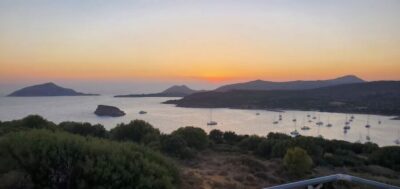
Cape Sounio & Poseidon Temple Trip with Audio Guide
Read our review →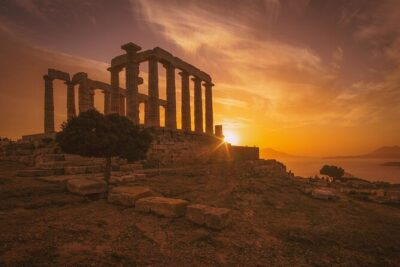
Cape Sounion and Temple of Poseidon Half-Day Small-Group Tour from Athens
Read our review →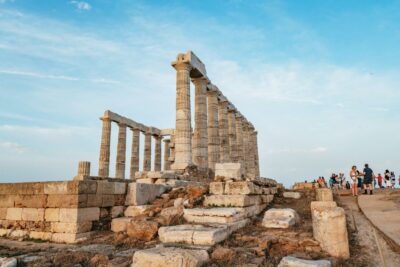
Cape Sounion & Temple of Poseidon: Small Group Tour
Read our review →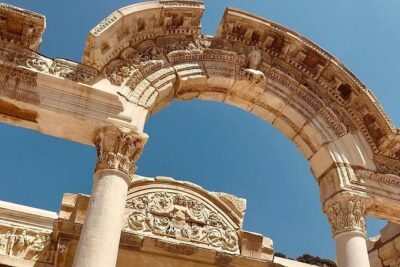
Ephesus Temple of Artemis and House of Mary Private Half Day Tour
Read our review →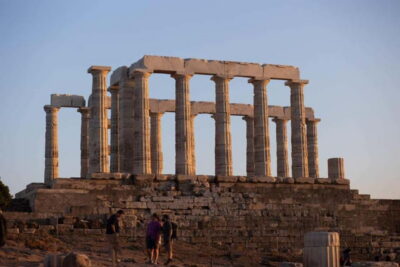
Cape Sounion & Temple of Poseidon Sunset Experience
Read our review →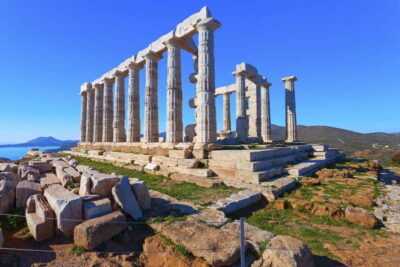
Temple of Poseidon & Cape Sounion Half-Day Tour
Read our review →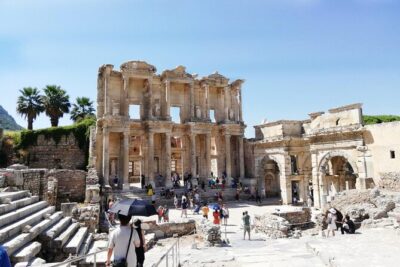
Ephesus and Temple of Artemis Private Tour from Kusadasi Port
Read our review →Browse the lists this tour appears in