
REVIEW · TEMPLE OF HEAVEN TOURS
Beijing: Lama Temple, Confucius Temple and Guozijian Museum
The most striking moment here is the 54-foot Maitreya Buddha, carved from one white sandalwood log brought from Nepal. This is not a quick photo stop. Your guide explains the temple halls, Buddhist figures, and the way people pray, giving you a useful window into religious life in China.
I like the mix of grand monuments and ordinary neighborhood streets. You get the Lama Temple’s incense and carved statues, then the quieter Confucius Temple and Guozijian before walking through hutong lanes. I also like the private format, since guides such as Anne, Cassie, Mike, Ranee, and Aurora have been praised for clear English and strong storytelling.
The main consideration is pace. Four hours is enough for an informed visit, but not enough for a slow, lingering look at every courtyard or a long hutong wander. Transport also matters: private car service is an option, while the basic version does not include your return transfer.
Key Points at a Glance
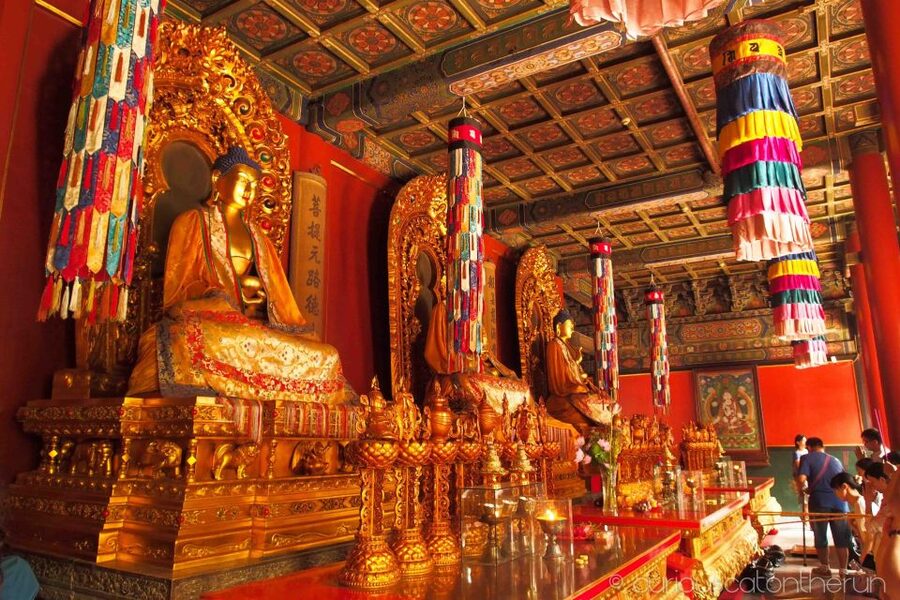
- The giant sandalwood Buddha: See a 54-foot Maitreya figure carved from one precious white sandalwood log.
- A close look at worship: Watch how people offer prayers and incense while your guide explains Chinese religious practice.
- Two very different institutions: Visit the Temple of Confucius and the former Imperial College, founded in 1306.
- A private four-hour format: Meet at your hotel and explore with an English-speaking guide rather than a large group.
- Hutong life after the temples: Walk quiet lanes and finish near Wudaoying Hutong, with time to continue on your own.
- Optional easier transport: Choose taxi or subway travel, or add private car service for a simpler door-to-door start.
Why This Four-Hour Route Works
Beijing can feel enormous, and its major sights are scattered across a wide urban area. This tour keeps three closely related cultural stops in one northern district, then adds the hutongs that give the area a human scale.
I like the way the route moves from active worship to education and then to neighborhood life. The Lama Temple shows living Buddhism. The Temple of Confucius and Guozijian connect you to China’s long tradition of study and government service. The lanes afterward show how Beijing’s older residential fabric fits around these grand institutions.
The private group format is important. Your guide can adjust explanations and answer questions without waiting for a busload of people. If your guide is Anne, Cassie, Mike, Ranee, or Aurora, you can expect the kind of clear, conversational English that has been especially praised. The exact guide depends on the date and assignment, but the experience is designed around a live English-speaking guide.
At $80 per person, the value depends on how much help you want. The fee includes the English guide, hotel pickup, and entrance fees. For a first visit to Beijing, that can be worthwhile because the sites are not just buildings to photograph. Their meaning is easier to grasp with someone explaining the rituals, historical roles, and connections between them.
The price is less attractive if you already know the district well or prefer to explore independently. You are paying for interpretation, organization, and a private visit, not for a full-day sightseeing program. At four hours, this is a focused introduction rather than a complete cultural tour of northern Beijing.
More Temple of Heaven Tours in Beijing:
- Beijing: The Temple of Heaven or Summer Palace Entry Ticket
★ 4.6 · 1,286 reviews - Beijing Classic Full-Day Tour including the Forbidden City, Tiananmen Square, Summer Palace and Temple of Heaven
★ 4.0 · 610 reviews - Temple of Heaven Ticket
★ 5.0 · 482 reviews
Starting in Your Hotel Lobby
Your guide meets you in the lobby of your hotel, holding a sign with your name. That arrangement removes one common Beijing headache: figuring out the first meeting point in an unfamiliar part of the city.
From there, you head to the Lama Temple by taxi or subway, unless you select the private car option. The transport choice affects the feel of the morning. Subway or taxi keeps the basic tour practical, while private transfer makes the start easier if you have luggage, limited mobility, or little appetite for navigating a new city.
The private car option is also worth considering if you want your energy reserved for the temples. If you choose the option without private transport, the included service is hotel pickup, not a return ride to your hotel. Your guide can suggest how to reach your next destination when the tour ends, but you should plan that final leg yourself.
The Lama Temple and Its Working Religious Life
The Lama Temple is the emotional center of the route. You follow your guide through several courtyards and halls, looking at Buddhist statues while learning what they represent and how the spaces are used.
The special feature is the Maitreya Buddha. Carved from a single white sandalwood log from Nepal, the wooden figure rises 54 feet and is described as the largest wooden Buddha in the world. Its size alone is impressive, but the construction detail gives the sight more weight. You are looking at one enormous piece of wood shaped into a sacred image, not a statue assembled from many sections.
Take a moment to look up and let the scale register. This is one place where a hurried group can miss the point. Your guide can explain the figure and the hall, while you pay attention to the craftsmanship and the way the room frames the Buddha.
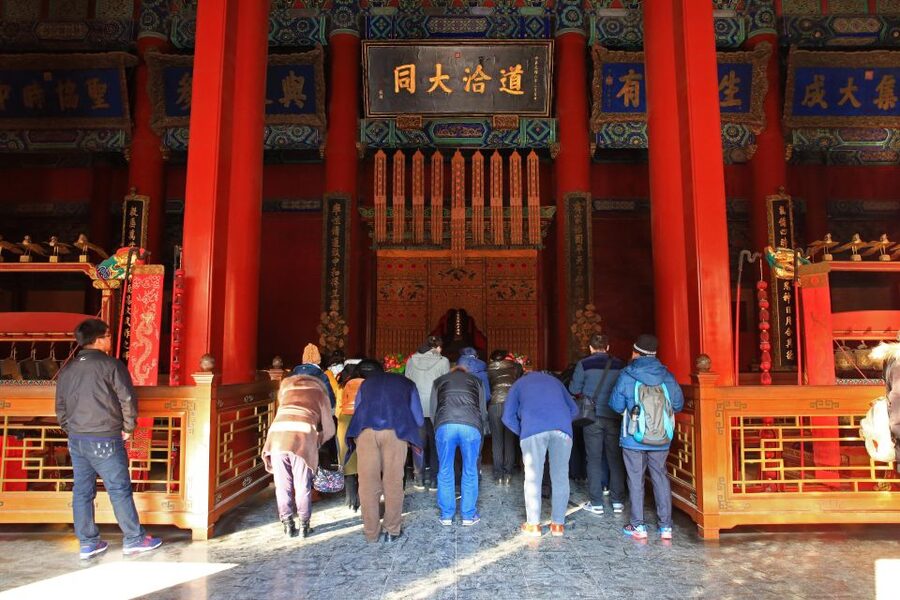
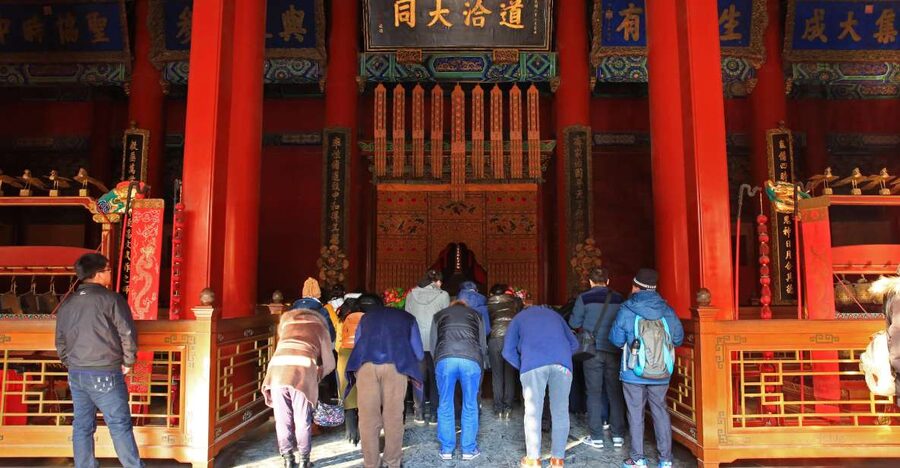
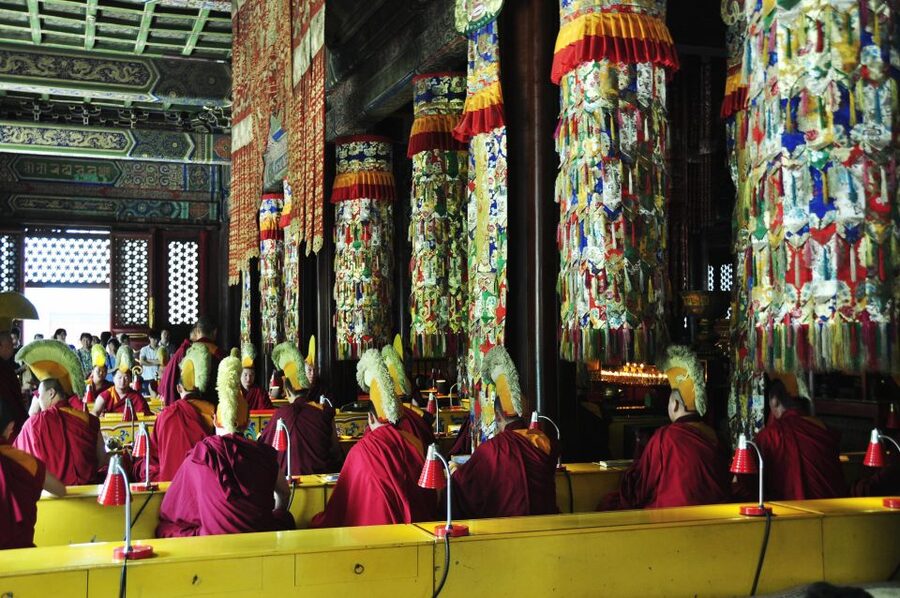
The temple also gives you a chance to watch local worship. People come to pray and make offerings, so this is not simply a historic site preserved for sightseeing. You may see incense and religious gestures that are unfamiliar to you. The guide’s role is useful here, since a brief explanation can help you observe respectfully rather than treat the ceremony as a performance.
I especially value this part of the tour because it connects architecture with daily belief. The courtyards and halls matter, but so does the fact that people still use them. You are not only hearing about Buddhism in China. You are seeing how worship appears in a public temple setting.
The drawback is that the Lama Temple can be the busiest stop on the route, particularly on a crowded day. Anne was praised for keeping the visit organized even when the site was packed, and that kind of guidance matters here. Still, you should expect movement, other worshippers, and a more active atmosphere than at the next stop.
Walking Through a Hutong to Confucius
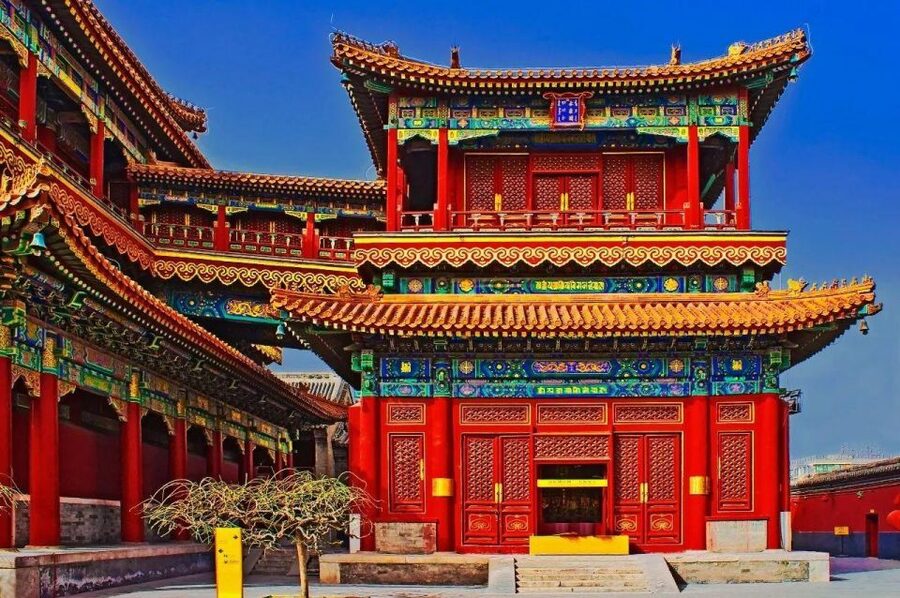
After the Lama Temple, the route continues through a quiet hutong alley toward the Temple of Confucius and Guozijian Museum. This short walk changes the mood. Instead of moving directly between major gates by car, you see a small piece of the older street pattern that makes Beijing feel less like a collection of isolated attractions.
A hutong alley is not just a shortcut. It gives you a look at the spaces between the monuments, where the city’s older residential life developed. The information provided for this tour does not promise specific homes, shops, or family visits, so you should think of this section as a guided walk through the lanes rather than a staged neighborhood encounter.
That distinction is useful. The appeal is the setting and the conversation with your guide, not a list of guaranteed encounters. Your guide can point out the history of the streets and explain how hutong life fits into the city’s past.
More Museum Visits in Beijing:
- 4-Hour Private Tour: Lama Temple, Confucius Temple, Guozijian Museum with Dim Sum
★ 5.0 · 21 reviews - Montserrat Museum and Monastery Entry Ticket
★ 4.5 · 1,740 reviews - Lisbon: Belem, Jeronimos Monastery, and Coach Museum Tour
★ 4.8 · 478 reviews - From Sofia: Rila Monastery and Optional Museum, Cave or Spa
★ 4.6 · 270 reviews
The Temple of Confucius and Guozijian Museum
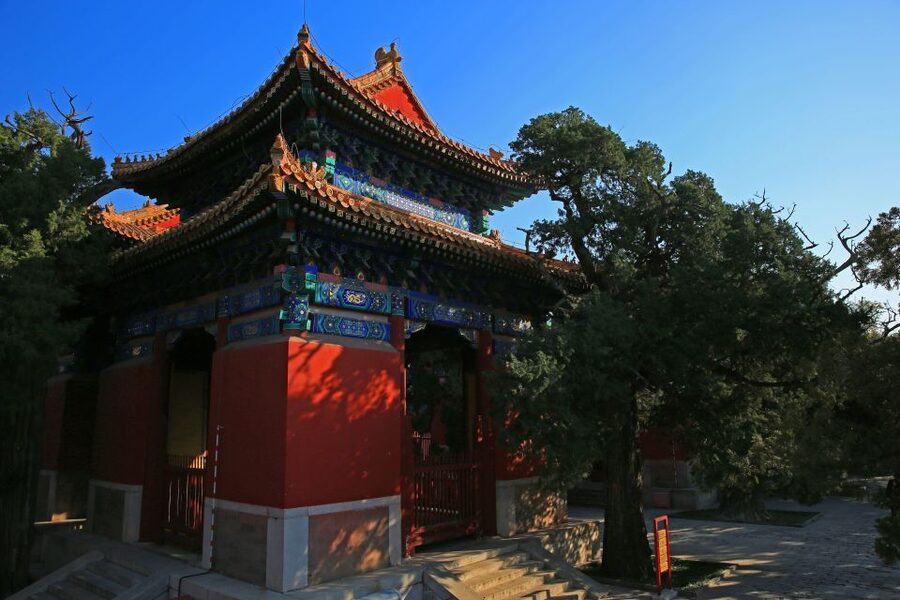
The Temple of Confucius and Guozijian Museum supply the intellectual counterpoint to the Lama Temple. The complex was built in 1306 by the grandson of Kublai Khan, and the former college served as the supreme academy during the Yuan, Ming, and Qing dynasties.
Those dates matter because they show the site’s long institutional role. This was not simply a school for a small neighborhood. It was the highest academy of its era, tied to the education and official systems of imperial China.
Your guide explains the stories behind the temple and college as you walk through the complex. That context helps you see why the site belongs on the same route as the Lama Temple. One place centers on Buddhist worship. The other reflects Confucian thought, scholarship, and the education of officials.
I like the contrast between the two stops. At the Lama Temple, your attention goes upward to a huge sacred statue and outward toward active prayer. At Guozijian, the focus shifts toward learning, order, and the role of education in public life.
You should not expect a giant blockbuster sight at every turn. The Guozijian portion rewards patience and explanation more than quick visual impact. If you want only famous objects and rapid photographs, this may feel quieter. If you want to understand how religion and education shaped imperial China, it adds real value.
The Temple of Confucius and Imperial College are visited together, which keeps the history from feeling fragmented. Your guide can explain how the temple and academy relate to one another rather than treating each as a separate stop with disconnected facts.
Hutong Lanes and the End Near Wudaoying
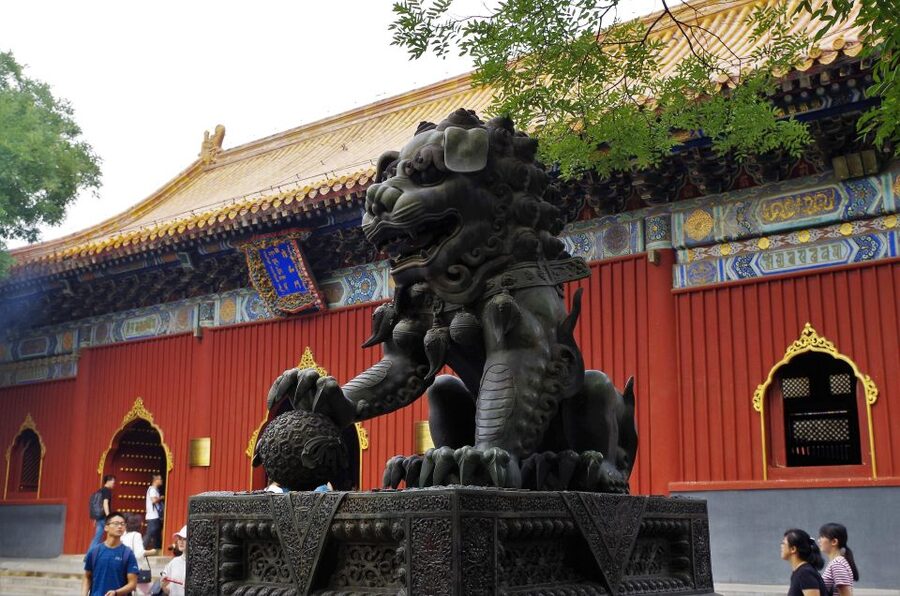
The final part of the tour returns to the hutongs. You stroll through the area, learn about the history of Beijing’s alleyways, and get a sense of local life in these older neighborhoods.
The supplied details do not promise a meal, shopping stop, or private home visit in the standard tour. That is actually helpful to know. You are getting a walk and an explanation, with room to observe at your own pace, rather than a heavily scripted neighborhood show.
The tour ends here, and you can spend more time around Wudaoying Hutong. Your guide can suggest how to reach your next destination. You also have the option to combine the experience with a dim sum meal, which may suit you if you want to turn the cultural walk into a longer outing.
Because the tour ends in the hutong area, it works well for a flexible day plan. You can continue exploring instead of being driven straight back to the hotel. On the other hand, if you need a definite hotel drop-off, select the private car option or make your own transport plan before booking.
What the Guides Add
The guide is the main reason to choose this experience over visiting the same sites alone. The strongest praise has centered on clear explanations, excellent English, patience, and the ability to keep the day moving on crowded dates.
Anne was singled out for managing a very busy day while explaining the history and culture in an engaging way. Cassie was praised for giving useful context and making the day joyful. Mike was described as presenting Chinese culture and ideas in an entertaining way, while Aurora was noted for explaining details in an easy-to-understand style. Ranee was also praised for making the visit pleasant through strong subject knowledge.
I would treat these names as examples, not a promise of a particular guide. Guide assignments can vary. The consistent point is that the tour depends heavily on interpretation, so a good guide makes the difference between recognizing a few buildings and understanding why the temples and academy belong together.
The private format also gives you more control. You can ask about a statue, pause for clarification, or spend more time on a section that interests you. Four hours still imposes limits, but it is more adaptable than a large fixed group.
Timing, Comfort, and Practical Choices
The tour lasts four hours. That is a sensible length for three cultural sites and a hutong walk, but you should wear comfortable shoes and expect regular walking through courtyards and alleys.
The schedule is focused. You will not have endless time at each hall, and the route is not designed as a relaxed full-day neighborhood ramble. If you want to photograph every detail or sit quietly in each courtyard, you may need to continue independently after the tour.
Entrance fees are included, and the experience offers skip-the-ticket-line access. That saves time at the start of the visit, especially when the Lama Temple is busy. Hotel pickup is included, and the group is private, but the return transfer is not included if you choose the option without private car service.
You can cancel up to 24 hours in advance for a full refund, and the reserve-now, pay-later option keeps payment flexible. These policies are useful if your Beijing schedule is still shifting.
Who Should Book This Experience?
I would recommend it to a first-time Beijing visitor who wants cultural context without spending an entire day on a single large attraction. It suits couples, families, and small private groups that prefer asking questions as they go.
It is also a good choice if you are curious about how different traditions fit into Chinese history. The Lama Temple covers living Buddhist practice, while Confucius Temple and Guozijian open a window onto education and imperial administration. The hutongs then bring the discussion back to streets and ordinary urban life.
You may want something else if your main goal is a slow food tour, a long neighborhood walk, or a broad survey of Beijing’s landmarks. The dim sum addition can help if food is important, but the core experience remains a temple, academy, and hutong visit.
Should You Book It?
Book this tour if you want a private, guide-led introduction to Beijing’s religious, educational, and neighborhood traditions in one compact route. The 54-foot sandalwood Buddha is the visual highlight, but the real strength is the connection between active worship, the imperial academy, and the hutong lanes.
Skip it if you already know these sites well or want complete independence. For everyone else, $80 per person is a fair price for four hours of entrance fees, hotel pickup, private guiding, and clear historical explanation. Choose the private car option if easy transport matters, and leave extra time afterward for Wudaoying Hutong.
FAQ
How long does the tour last?
The tour lasts four hours.
Where does the tour begin?
Your English-speaking guide meets you in the lobby of your hotel, holding a sign with your name.
Which sites are included?
The route includes the Lama Temple, the Temple of Confucius, the Imperial College, also called Guozijian Museum, and nearby hutong lanes.
What can I see at the Lama Temple?
You can visit different courtyards and halls, see Buddhist statues, watch local worship, and view a 54-foot Maitreya Buddha carved from one white sandalwood log from Nepal.
How do I get to the Lama Temple?
You can travel by taxi or subway, or choose the option with a private car.
Is the group private?
Yes. The activity is offered as a private group experience with a live English-speaking guide.
Is transportation back to my hotel included?
Hotel pickup is included. If you choose the option without private car service, transfer and hotel drop-off are not included.
Can I add a meal?
You can choose an option that combines the tour with a dim sum meal.
Just added around Beijing
- Temple of Heaven Morning Walking Tour with Ticket★ 5.0 · 7 reviews
- Full-Day Beijing Forbidden City, Temple of Heaven and Summer Palace Tour★ 4.5 · 40 reviews
- Summer Palace and Temple Of Heaven Private Tour★ 5.0 · 9 reviews
- Private Day Tour:Tiananmen Square,Forbidden City Temple of Heaven★ 5.0 · 16 reviews
- 4-Hour Private Tour: Lama Temple, Confucius Temple, Guozijian Museum with Dim Sum★ 5.0 · 21 reviews
- Private Day to T-Square, Forbidden city, Temple of heaven, Summer palace Tour★ 5.0 · 54 reviews
- Local’s Beijing: Forbidden City Insider Tour +Temple +Duck Feast★ 4.5 · 66 reviews
- Temple of Heaven Ticket with Optional Guide Service★ 5.0 · 120 reviews
Temple of Heaven Tours, compared.
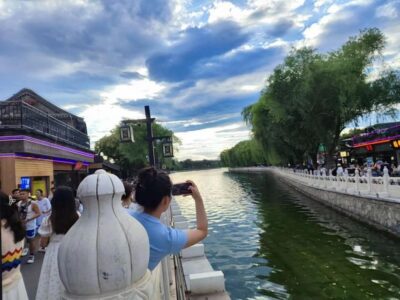
The Temple of Heaven or Summer Palace Entry Ticket
Read our review →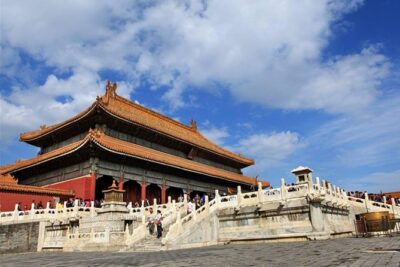
Beijing Classic Full-Day Tour including the Forbidden City, Tiananmen Square, Summer Palace and Temple of Heaven
Read our review →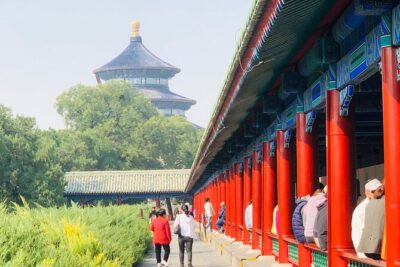
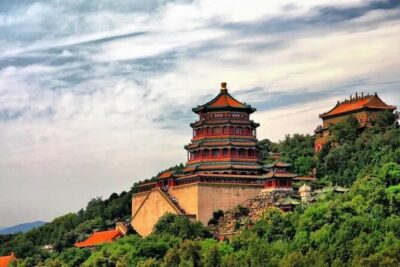
Temple Heaven, Lama Temple, Summer Palace & Peking Duck Bus Tour
Read our review →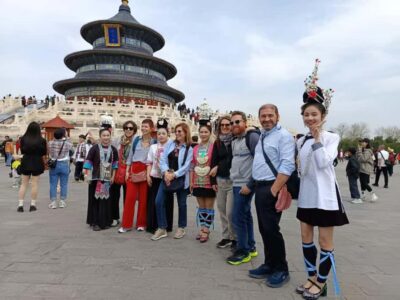
Temple Heaven, Summer Palace, Lama Temple, Hutong Bus Tour
Read our review →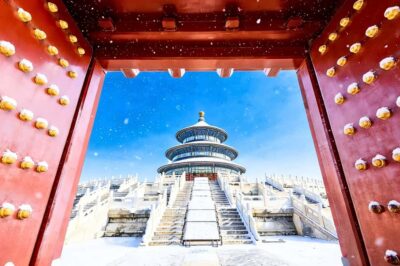
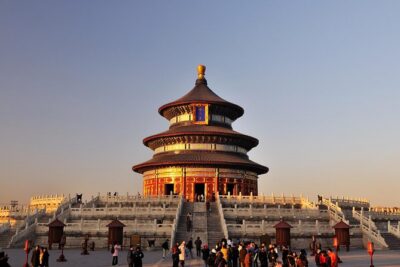
Temple of Heaven, Summer Palace, Lama Temple, Hutong Tours
Read our review →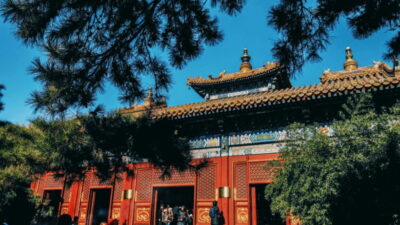
Browse the lists this tour appears in