
REVIEW · ANGKOR WAT TOURS
Angkor Wat Small-Group Exploration with Expert Guide
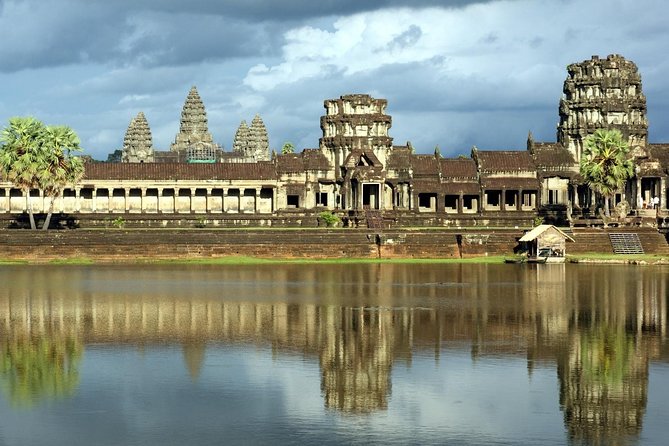
Angkor Wat is only the beginning. This six- to seven-hour outing takes you through the temple complex’s essential quartet: Angkor Wat, Bayon, Angkor Thom, and Ta Prohm. A guide puts the carvings, faces, towers, and Khmer rulers into plain English, so you see more than a grand pile of old stone.
I like two things right away: hotel pickup and drop-off remove the day’s transport puzzle, and the small-group format gives you room to ask questions. Cold bottled water comes with the ride, and several guides, including Phy, Nak, Wat, San, and Voath, are praised for thoughtful pacing and help with photos.
The main catch is the heat and the extra park fee. The tour costs only $18, but the one-day Angkor National Park pass is another $37 per person. You will also walk on uneven ground and climb stairs, so this is not a gentle sightseeing ride.
Key points before you book
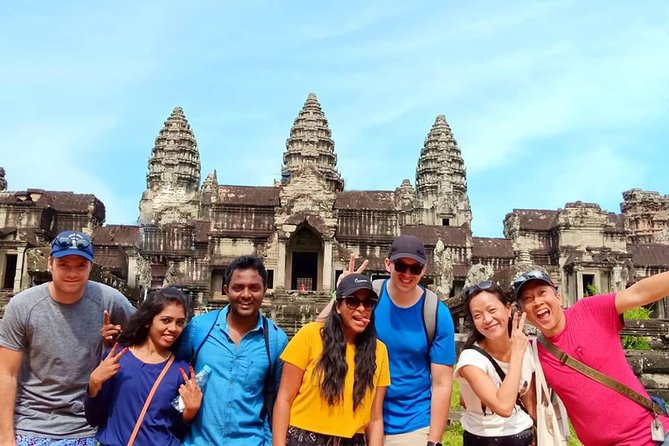
- Four major Angkor sites in one day: The route covers Angkor Wat, Angkor Thom, Bayon, and Ta Prohm, with about an hour at the latter three and two hours at Angkor Wat.
- Small groups up to 12 people: A modest group gives you more chances to ask questions than a large coach tour.
- Tuk-tuk for one or two people: Groups of three or more usually travel by minivan, with chilled water included in either setup.
- The $18 price excludes the $37 temple pass: Add the admission fee when you work out the real cost.
- Guides add the human story: Phy, Nak, Wat, San, Voath, and other guides are praised for clear explanations, patience, and help with photographs.
- Expect heat, stairs, and uneven surfaces: Moderate fitness is advised, and long pants or clothing covering the knees is required.
Why this route works for a first Angkor visit
Angkor is not one temple. It is a huge ancient complex spread around Siem Reap, with buildings from different periods and rulers. On your first visit, the problem is not finding something to see. It is deciding what deserves your limited time.
This route makes that decision for you. Angkor Wat gives you the grand ceremonial center. Angkor Thom shows the scale of a royal capital. Bayon supplies the famous stone faces. Ta Prohm brings the atmospheric ruins entwined with trees. Together, these sites give you four distinct ways to understand Angkor.
I like this mix because it avoids spending the whole day at one monument. You get architecture, sculpture, city planning, religious history, and a ruin that feels almost theatrical. A good guide also helps you notice details you might walk past, from carved stories to symbolic figures and the way each temple was used.
The small-group setup matters here. With a maximum of 12 people, you are not simply following a flag through a crowd. You can ask why a carving appears in a certain place, which king ordered a building, or how Hindu and Buddhist ideas appear side by side. On quieter departures, the group may be smaller, and one booking even became a private outing.
More Angkor Wat Tours in Siem Reap:
- Angkor Wat Sunrise or Sunset Tour with Guide from Siem Reap
★ 5.0 · 12,109 reviews - Siem Reap: Angkor Wat: Small-Group Sunrise or Sunset Tour
★ 5.0 · 9,444 reviews - Siem Reap: Angkor Wat 2-Day Tour with Sunrise and Sunset
★ 4.9 · 4,429 reviews
Angkor Wat: allow the full two hours
Angkor Wat was built in the early 12th century for King Suryavarman II as his state temple and capital. It remains the best-preserved major temple at the complex, and its scale can be hard to grasp when you first arrive.
The planned two-hour visit is useful. You have time to take in the approach, courtyards, galleries, towers, and carved walls without racing through the place. A guide can direct your attention to architectural details and explain the stories shown in the reliefs.
This is also where the physical side of the day begins to matter. There is extensive walking, and access to higher areas involves stairs. One person specifically appreciated having help with difficult steps, while another noted that the tour is not suited to someone who cannot manage stairs. If your knees or balance are limited, tell the guide early so the pace can be adjusted.
Angkor Wat is usually the most demanding stop in terms of size. It is also the one where a guide earns the fee most clearly. Without context, you may see a grand sequence of towers and corridors. With an explanation of the temple’s purpose and decoration, the building becomes easier to read.
Wear practical clothing. Long pants or a knee-length skirt or dress are required at the temples. Choose shoes that can handle uneven paths rather than relying on fashion footwear. The day is hot and humid, so use the water provided and take the offered rest stops.
Angkor Thom: a royal city, not just another temple
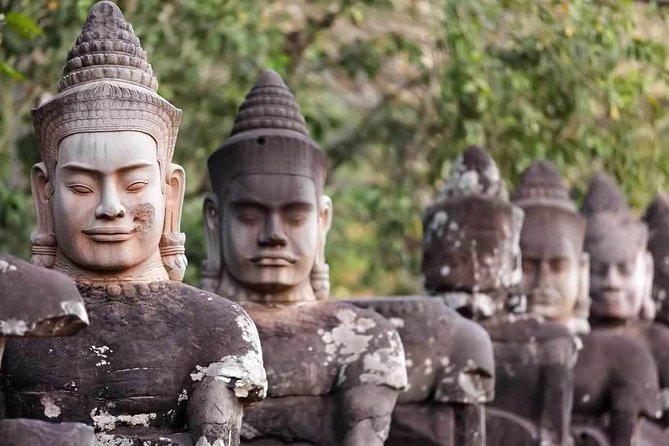
Angkor Thom was the Khmer Empire’s capital city, built in the late 12th century under King Jayavarman VII. The visit lasts about an hour and provides a change of scale after Angkor Wat.
Here, you are looking at a planned city area rather than a single isolated sanctuary. That distinction is important. The site helps you picture Angkor as a seat of power, with monumental entrances and sacred buildings connected to a much larger urban center.
Your guide’s explanation can make this stop more than a quick photo break. Ask about the city’s purpose, Jayavarman VII, and how Angkor Thom relates to Bayon at its center. Several guides are praised for answering questions without burying the group in too much information, which suits a long, hot day.
The drawback is that one hour can feel short if you want to examine every structure in detail. This is a highlights tour, not an archaeological study. You will see the key areas, then move on.
Bayon: stone faces and close-up detail
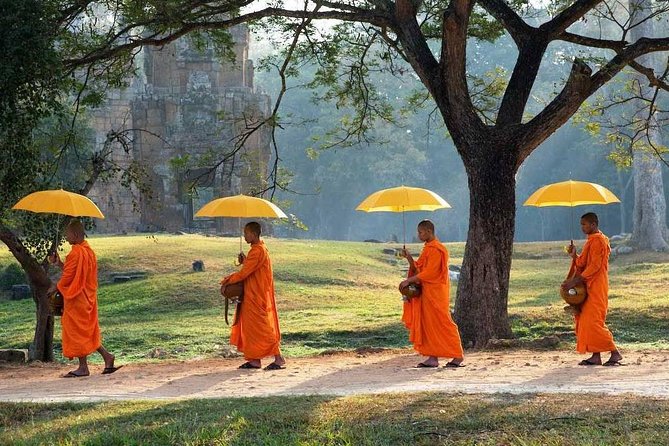
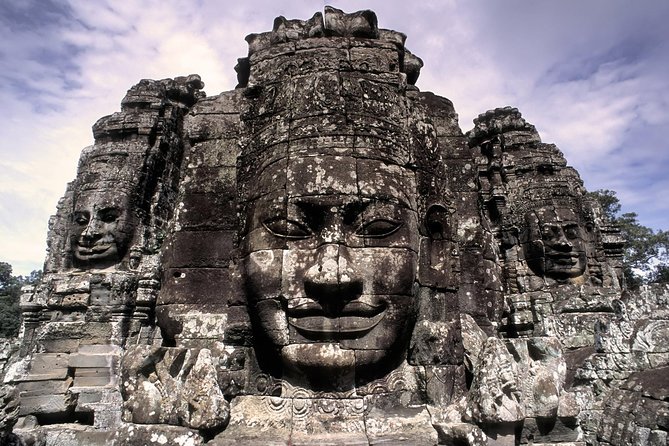
Bayon is the state temple built in the late 12th or early 13th century for the Mahayana Buddhist king Jayavarman VII. It is best known for its large carved faces, which appear from different angles as you move through the temple.
Bayon rewards a slower look than its first impression suggests. The towers can seem confusing at first, but a guide helps you understand how the faces, galleries, and reliefs fit together. You may also hear about the symbolism in the carvings and the religious purpose behind the structure.
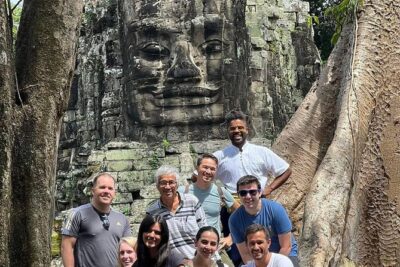
This is one of the places where the guide’s personal skill affects the visit. Phy is praised for explaining history and taking useful photographs. Voath is noted for discussing the symbolism of the carvings. Other guides, including Wat and Nak, are described as patient and considerate when the heat or stairs become tiring.
Plan for another hour here. That is enough to see the principal features, but not enough to inspect every carved surface. If photography matters to you, ask your guide for help. Several guides are happy to suggest photo positions and take pictures, a small service that can save you from returning home with only distant snapshots.
More Guided Tours in Siem Reap:
- Siem Reap: Full-Day Angkor Wat Guided Tour with Sunset
★ 4.9 · 3,803 reviews - Angkor Wat Sunrise tour with Small – Group and Guide tours
★ 5.0 · 3,655 reviews - Angkor Wat Highlights and Sunrise Guided Tour from Siem Reap
★ 5.0 · 3,213 reviews - Full-Day Angkor Wat Sunrise Private Tour with Guide from Siem Reap
★ 5.0 · 2,920 reviews
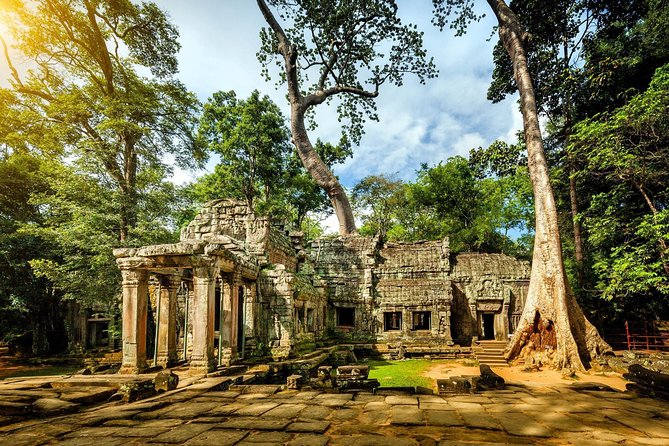
Ta Prohm: the atmospheric final temple
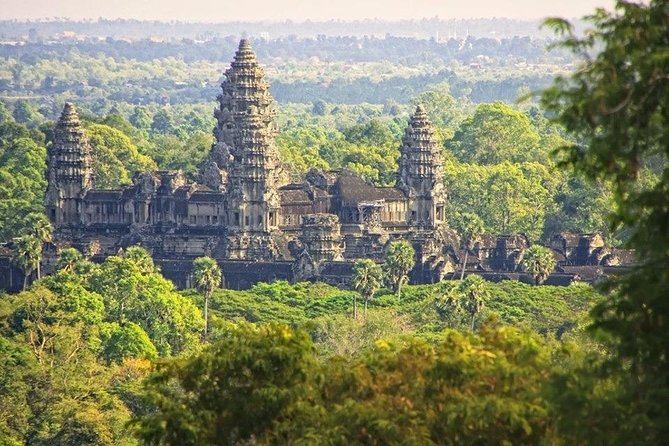
Ta Prohm is the stop many people anticipate most. Its partly ruined corridors, trees, and weathered stone create a more intimate mood than the formal layout of Angkor Wat.
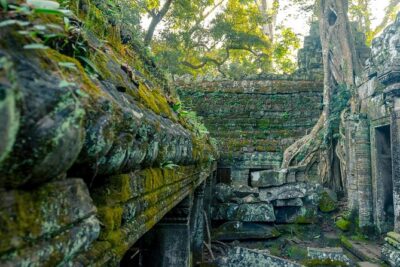
The site is near Angkor Thom and takes about an hour. You will see collapsed sections, carved doorways, and tree roots pressing against old masonry. The attraction is not perfect preservation. It is the tension between the surviving temple and the forces that have worked on it over time.
That appeal comes with limits. Ta Prohm can be crowded at popular photo points, and the uneven ground calls for care. The site is not a quick flat walk, so keep your water close and watch your footing.
I like having Ta Prohm later in the route because it changes the tone of the day. After the formal grandeur of Angkor Wat and the royal scale of Angkor Thom, this final major stop feels quieter and more irregular. It leaves you with a strong visual memory rather than another orderly series of towers.
Tuk-tuk or minivan, and why the transport matters
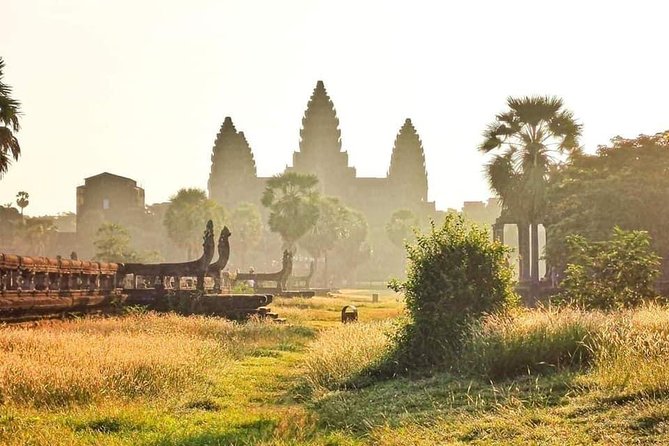
For one or two people, transport is normally by tuk-tuk. Groups of three or more use a minivan. Both arrangements include hotel pickup, hotel drop-off, and cold bottled water.
The tuk-tuk is the more open-air option. That can make the short transfers feel pleasant, but it does not remove the heat. A minivan gives you air conditioning and may feel better if the day is especially hot or if you are carrying more gear.
The transport team also provides practical comfort between stops. Several accounts describe cold drinks, cold towels, or refreshing towels waiting after temple visits. This is not a luxury coach service, but those small touches matter when the temperature reaches punishing levels.
Pickup is designed to make the day simple. You do not need to arrange a separate ride to the park, and the return transfer finishes at your hotel or another requested point in Siem Reap city center. One guide contacted the group the day before to confirm the pickup time, though you should still check your own booking details.
A guide can change the whole day
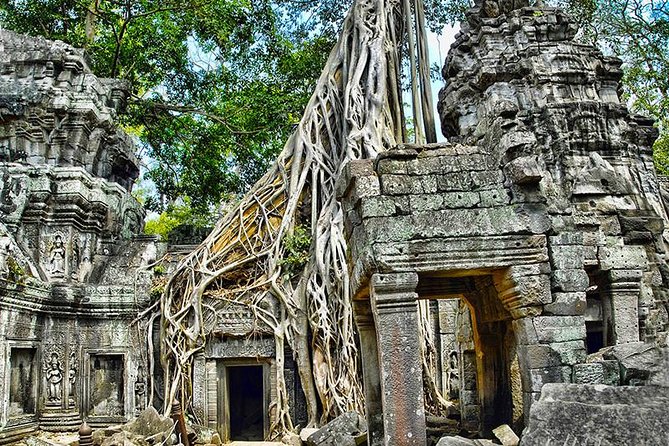
The buildings are impressive on their own, but the guide determines how much you take away. The strongest part of this outing is the attention given to history, symbolism, and daily pacing.
Guides named Phy, Nak, Wat, San, Voath, Vantha, Sophy, and others receive particularly warm praise for clear English, kindness, and care. San is described as having studied Angkor history with a local university history professor. Phy and Sophy are praised for explaining the temples and helping with photographs. Wat is noted for adapting his pace for an older visitor, while Kak is praised for offering an arm on steep or uneven sections.
That range is useful because visitors do not all need the same kind of help. You may care most about historical detail, photo assistance, a relaxed pace, or support on stairs. The company assigns the guide, so a particular person cannot be guaranteed unless arranged directly, but the repeated strength of the guide team is a good sign.
English ability is described as clear across the named guides. The explanations tend to balance information with movement, which is important. Angkor can become tiring if every carving turns into a long lecture.
The lunch stop and the cost of the day
Lunch is not included. The guide normally stops at a local restaurant inside the national park around lunchtime. This is convenient, but the food can cost more than meals in Siem Reap.
That trade-off is worth understanding before you leave. Eating near the temples saves you from losing time on a return trip to town, but you have fewer price choices. Bring enough money and treat the stop as a practical pause rather than a food-focused part of the tour.
The tour price is $18 per person, which is low for hotel transport, an English-speaking guide, several major temples, and a full half-day or longer outing. The real admission cost is higher once you add the one-day Angkor National Park pass at $37 per person.
So your basic combined cost is $55 per person before lunch, tips, insurance, or other drinks. I still see good value here, especially for a first visit. You are paying for transport and guidance around a huge site, not just a ride to one entrance. If you already know Angkor well and prefer to explore alone, the guide may feel less necessary. For most first-time visitors, it saves time and adds useful context.
Tipping the guide and driver is not included. Travel insurance is also your responsibility.
Heat, clothing, and physical effort
Treat this as an active sightseeing day. The schedule includes several hours of walking, uneven surfaces, and stairs. You do not need athletic training, but a moderate fitness level is recommended.
The heat is a real factor. A day with temperatures around 105 degrees Fahrenheit and high humidity was described as difficult even with air-conditioned transport and cold water. Start hydrated, use the rest periods, and do not feel pressured to match the fastest person in the group.
Clothing must cover the knees, with long pants or knee-length skirts and dresses accepted. Bring sun protection, water storage, and clothing that works in humid conditions. The supplied bottled water helps, but it should not be your only plan for hydration during a long day.
Children must be accompanied by an adult. The tour can suit families if everyone can manage the walking and heat, but young children may find the temple steps and long transfers tiring.
Who should book this Angkor tour?
I would choose this for a first visit to Siem Reap, especially if you want the four most famous sites without planning your own route. It also suits solo visitors and couples who want a guide but do not want to pay for a fully private vehicle.
It is a good match if you value:
- Clear historical explanations
- Hotel pickup and return
- A small group rather than a large coach
- Cold water and practical help in the heat
- Photo assistance at major sights
- A route that covers the essential temples in one day
I would think twice if you want a slow, specialist visit to every corner of the Angkor complex. The schedule is efficient, not leisurely. You may also prefer a shorter outing if long walking days are hard for you, especially since one person found the lunch break made the day longer than necessary.
Free cancellation is available up to 24 hours before the start time. Changes or cancellations inside that period are not accepted for a refund.
Should you book it?
Book this tour if you want a clear introduction to Angkor with the major temples arranged in a sensible order and a guide to explain what you are seeing. The $18 tour fee offers strong value once you understand that the $37 park pass is separate.
The best reason to book is the combination of access and human help. You get Angkor Wat’s scale, Bayon’s faces, Angkor Thom’s royal setting, and Ta Prohm’s tree-covered ruins, with cold water and a ride waiting between stops. If you can handle the heat, stairs, and long day, this is a practical first look at Cambodia’s great temple complex.
FAQ
How long does the Angkor temple tour last?
The tour lasts approximately six to seven hours, including the temple visits, transport, and return transfer to Siem Reap.
Which temples are included?
The route includes Angkor Wat, Angkor Thom, Bayon Temple, and Ta Prohm. Angkor Thom and Bayon are listed as separate stops.
Is the Angkor National Park admission fee included?
No. The one-day Angkor National Park pass costs $37 per person and must be paid separately.
What transport is provided?
One or two people normally travel by tuk-tuk. Groups of three or more normally use a minivan. Hotel pickup and drop-off are included.
Is bottled water provided?
Yes. Cold bottled water is provided during the tour. Some guides and drivers also provide cold towels or refreshing towels between temple visits.
Is lunch included?
No. Food and drinks are not included. The guide normally stops at a local restaurant in the national park around lunchtime, and prices there may be higher than in Siem Reap.
What should I wear?
Long pants or a knee-length skirt or dress are required for temple visits. Choose clothing and shoes suitable for walking, stairs, and uneven ground.
Is this tour suitable for someone with limited mobility?
A moderate fitness level is recommended because the route includes walking, stairs, and uneven surfaces. Children must be accompanied by an adult. Some guides can adjust the pace and offer help on difficult sections, but the tour is not presented as fully accessible.
What happens if I need to cancel?
You can cancel up to 24 hours before the experience start time for a full refund. Cancellations or changes made less than 24 hours before the start time are not accepted for a refund.
Just added around Siem Reap
- Ticket for Angkor Balloon Ride.★ 3.7 · 46 reviews
- Sunrise at Angkor Wat Temple: 3-Hour Private Tour★ 4.7 · 30 reviews
- Small-Group Full Day Angkor wat Guide tour with Sun set★ 5.0 · 136 reviews
- Siem Reap: Private 4-Day Angkor Wat and Phnom Kulen Tour★ 5.0 · 9 reviews
- Angkor Wat: Sunrise 2.5 Days Temples & Tonle Sap-Small Group★ 5.0 · 10 reviews
- Siem Reap : Private Tuk-Tuk Tour of the Magnificent Temples.★ 4.9 · 14 reviews
- Siem Reap: Ultimate Angkor Wat Offbeat Experience by Jeep★ 4.9 · 8 reviews
- Siem Reap: Personalized Angkor Wat Sunrise/Set by TukTuk/Car★ 4.9 · 41 reviews
Angkor Wat Tours, compared.
Angkor Wat Sunrise or Sunset Tour with Guide from Siem Reap
Read our review →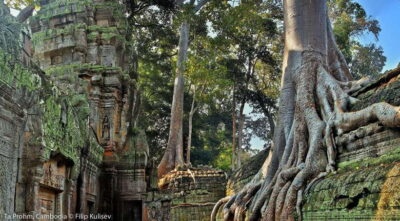
Angkor Wat: Small-Group Sunrise or Sunset Tour
Read our review →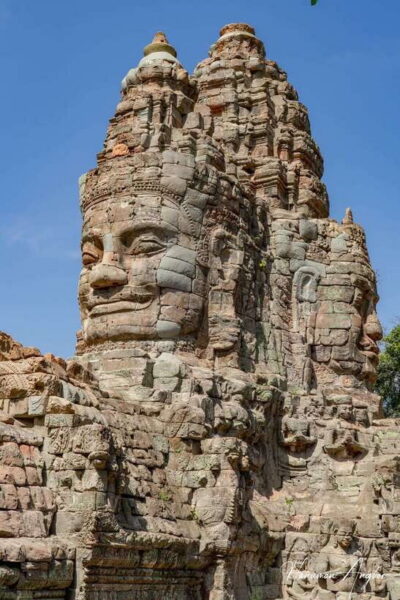
Angkor Wat 2-Day Tour with Sunrise and Sunset
Read our review →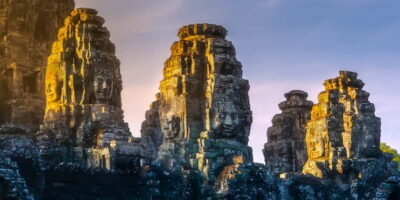
Angkor Wat Sunrise tour with Small – Group and Guide tours
Read our review →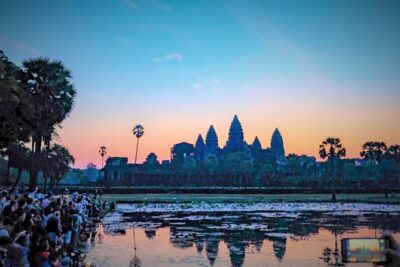
Angkor Wat Highlights and Sunrise Guided Tour from Siem Reap
Read our review →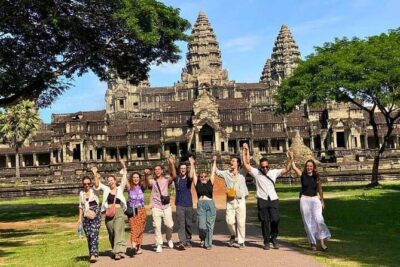
Angkor Wat Sunset Small Group Tour with Lunch Included
Read our review →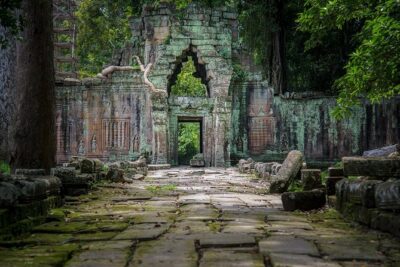
Full-Day Angkor Wat Sunrise Private Tour with Guide from Siem Reap
Read our review →Browse the lists this tour appears in