
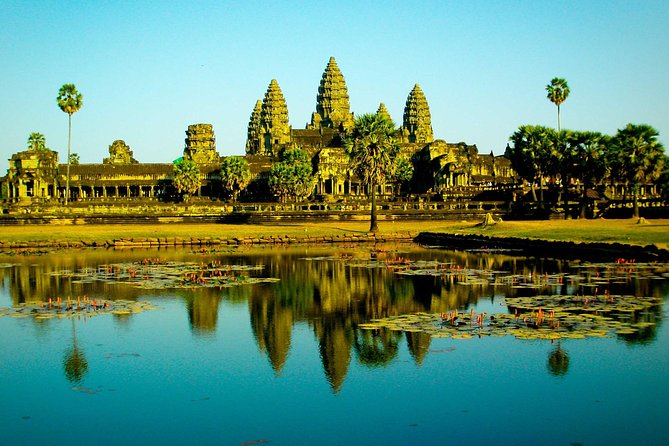
REVIEW · ANGKOR WAT TOURS
Angkor Wat Admission Ticket
Angkor Wat is best seen before the heat and crowds take over, and this service lets you head straight for the temple gates. Your printed pass is delivered to your hotel, usually around 6 pm the evening before your visit, so a pre-dawn departure does not begin with a ticket-office queue.
I like the hotel delivery and the choice of 1-, 3-, or 7-day passes. The lanyard supplied with many passes is a small but useful touch, since guards may check your ticket repeatedly. The catch is price: you pay more than at the official office, and you must send a passport photo before the ticket can be issued.
Key points
- Hotel delivery before your temple day: Your pass is left at the front desk under your name.
- Useful for sunrise: Go directly to Angkor Wat instead of arranging a ticket in the early morning.
- Several validity choices: Select a 1-, 3-, or 7-day pass to match your stay.
- You arrange the sightseeing: Transport, guide, food, and drinks are not included.
- A photo is required: The pass carries your photo and cannot be transferred.
- The service has a clear premium: The official 1-day price is $37, while the delivered service costs more.
What this Angkor ticket service actually provides
At first glance, the long list of temples can make this look like a guided sightseeing tour. It is not. The main product is an Angkor Archaeological Park admission pass, delivered to your hotel so you can visit the temples on your own arrangement.
The advertised price is $59 per person, though the final amount depends on the pass you select. The supplied pricing information lists the official ticket prices as $37 for one day, $62 for three days, and $72 for seven days, before service fees and the cost of arranging delivery. The 1-day, 3-day, and 7-day choices are the clearest options, although another section refers to a 2-day ticket. Confirm the exact pass and validity dates before paying.
The pass is valid from the printed start date through the printed end date. It is not transferable, and your photo appears on it. Keep it with you because temple staff may ask to see it at more than one entrance.
More Angkor Wat Tours in Siem Reap:
- Angkor Wat Sunrise or Sunset Tour with Guide from Siem Reap
★ 5.0 · 12,109 reviews - Siem Reap: Angkor Wat: Small-Group Sunrise or Sunset Tour
★ 5.0 · 9,444 reviews - Siem Reap: Angkor Wat 2-Day Tour with Sunrise and Sunset
★ 4.9 · 4,429 reviews
Why delivery matters for an Angkor sunrise
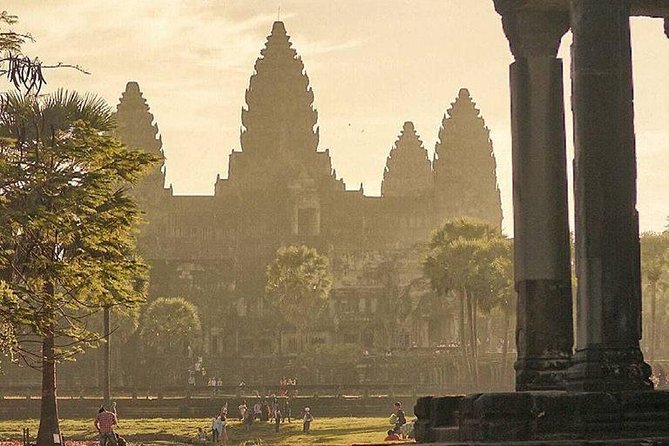
The biggest practical advantage comes before you see a single carving. Angkor Wat sunrise departures can begin very early, and the thought of stopping at a ticket office first is not pleasant. With the pass already waiting at your hotel, you can leave with your driver or tuk-tuk and go directly to the temple area.
That matters most if your first visit is planned for sunrise, or if you have only one full day in Siem Reap. A few minutes saved at the start can give you more time at Angkor Wat, Ta Prohm, or Bayon later in the morning.
The delivery timing is usually the evening before your visit, around 6 pm. Some bookings have been delivered earlier, and the pass may be waiting when you check in. Still, I would not treat early delivery as a promise. Send your passport photo promptly, check with the hotel front desk, and contact the operator if the envelope has not arrived.
The lanyard is handy. You may need to show the pass at different temple entrances, and keeping it around your neck is easier than pulling a paper ticket from a wallet every time.
Angkor Wat: begin with the great central temple
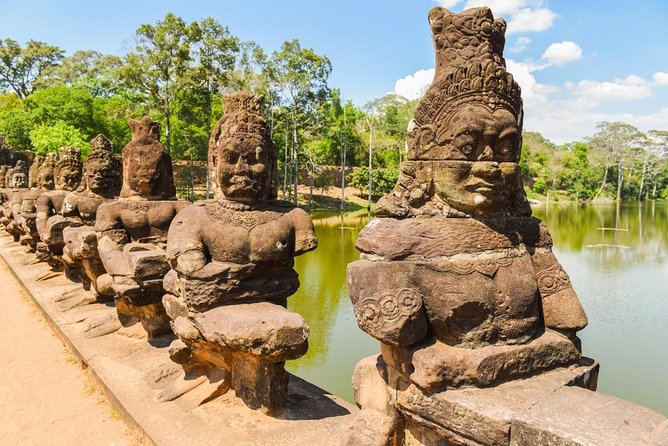
Angkor Wat receives about two hours in the suggested program, though you can spend much longer there if your schedule allows. Built as a Hindu temple dedicated to Vishnu, it is the site most closely associated with the Angkor visit.
At sunrise, you will likely be focused on the view across the water toward the temple towers. After that, make time for the galleries, bas-reliefs, courtyards, and upper levels where access is permitted. The scale is the point: Angkor Wat is not a quick photo stop.
The admission pass gets you in, but it does not explain what you are seeing. A guide can add a great deal here. Guides named in the supplied information include Mr Ho, Vantha, Bob, and Sok, though guide arrangements are separate from this ticket service and are not guaranteed with the booking.
Angkor Thom and Bayon: faces, gates, and a larger royal center
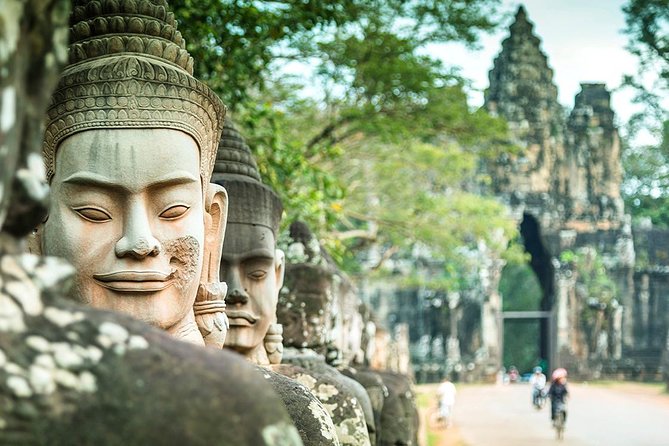
Angkor Thom was the last major capital of the Khmer Empire and was established under King Jayavarman VII in the late 12th century. Allow about 1 hour and 20 minutes in the suggested schedule, although that time may include more than the central Bayon temple.
Bayon is the visual highlight. Its towers carry large stone faces, and the narrow passages and galleries reward slow walking. Give yourself time to look at the carved scenes rather than rushing from one tower to the next.
The practical drawback is heat and fatigue. A single morning can include Angkor Wat, Angkor Thom, and Ta Prohm, all with uneven ground and stairs. Wear sturdy, comfortable shoes. One full day can easily become eight hours if you try to cover too much.
More Entry Tickets in Siem Reap:
- Siem Reap: Angkor Wat Admission Ticket
★ 4.7 · 106 reviews - Ticket for Angkor Balloon Ride.
★ 3.7 · 46 reviews - Siem Reap: Angkor Wat Admission Ticket
★ 5.0 · 20 reviews - Siem Reap: Angkor Eye Standard Ride Ticket
★ 4.7 · 13 reviews
Ta Prohm: famous, atmospheric, and often busy
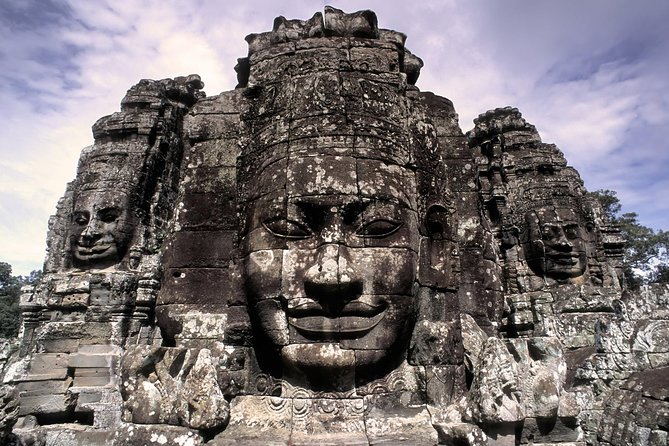
Ta Prohm is the temple associated with the Tomb Raider film, but its appeal is not limited to cinema. Trees grow around and over parts of the stonework, giving the site a striking appearance that differs from Angkor Wat and Bayon.
The suggested visit lasts about an hour. That is enough for a focused walk through the main sections, but not enough if you stop at every carved doorway. You may find this one of the busiest stops on the standard route, so patience helps.
Ta Prohm is also a good reason to avoid planning every temple in one exhausting day. If you have a 3-day pass, place the major central temples on separate mornings and leave time to sit, look, and cool down.
Banteay Srei and Banteay Samre: smaller temples with strong detail
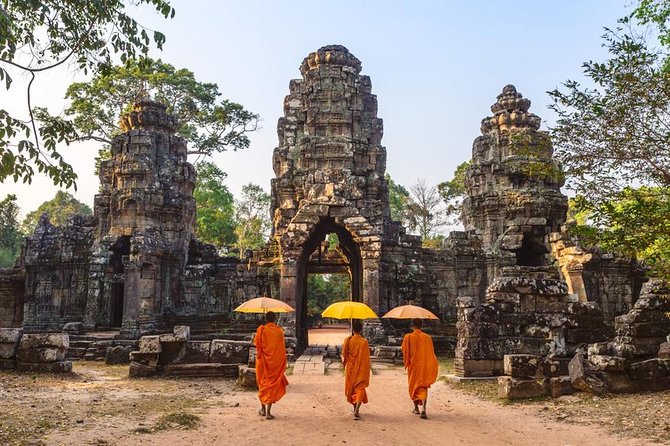
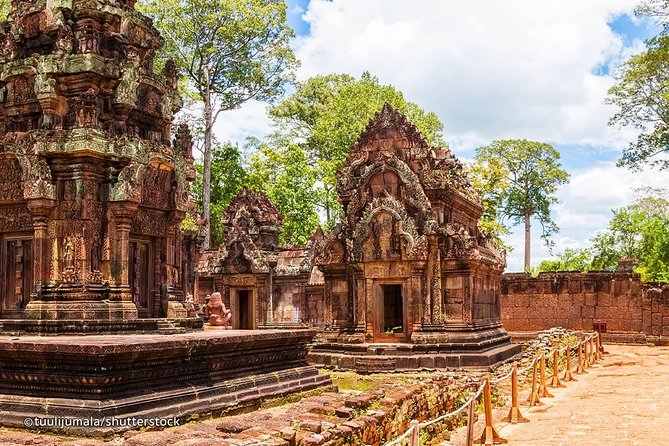
Banteay Srei is about 25 kilometers northeast of the main Angkor group. It is a 10th-century temple dedicated to Shiva, known for its detailed stone carving and reddish color. The suggested stop is one hour, but the drive takes time, so it works best as part of a planned outer-temple day.
Banteay Samre is closer to the main area, about 400 meters east of the East Baray. Built during the reigns of Suryavarman II and Yasovarman II, it is a Hindu temple from the early 12th century. Allow about 40 minutes.
These sites help break up the standard Angkor Wat, Bayon, and Ta Prohm circuit. They also show why a multi-day pass can be worth considering if you care about more than the three famous names. You will need to arrange transport yourself, since a tuk-tuk, car, minivan, bus, and driver are not included.
Preah Khan, Neak Pean, and Ta Som on the northern route

Preah Khan was built in the 12th century by Jayavarman VII in honor of his father. The suggested stop lasts 1 hour and 20 minutes. It is a large temple complex with corridors and courtyards, so it can feel less hurried than the short stops on the small circuit.
Neak Pean is reached across an artificial island in the Jayatataka Baray. The temple is linked with Preah Khan and was built under Jayavarman VII. The suggested time is one hour, though part of the visit involves walking out toward the island.
Ta Som is a smaller late 12th-century temple northeast of Angkor Thom and east of Neak Pean. Plan on about 40 minutes. It can be a pleasant shorter stop after larger complexes have begun to blur together.
This northern route is better suited to a second day than to a first-day rush. A 3-day pass gives you room to group these temples sensibly and return to a favorite site at a cooler time.
Pre Rup, Ta Keo, Prasat Kravan, and Srah Srang
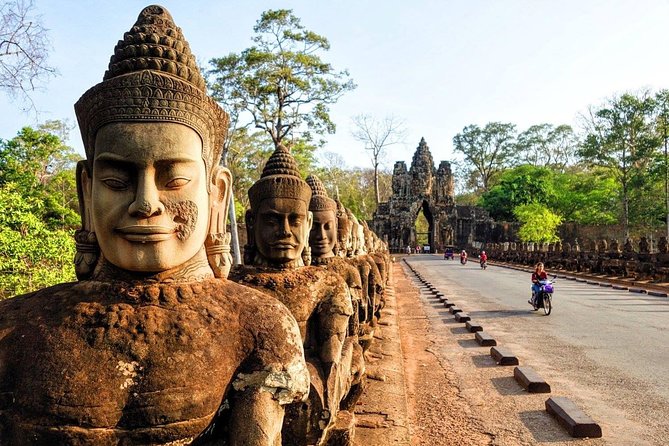
Pre Rup is a 10th-century Hindu temple mountain built under King Rajendravarman. The suggested visit is only 30 minutes, but the upper levels and broad views make it a useful stop if your legs still have energy.
Ta Keo is another temple mountain, possibly the first in Angkor built entirely of sandstone. Allow about 40 minutes. Stairs are part of the experience, so this is not the place to wear flimsy sandals.
Prasat Kravan is smaller, with five brick towers on one terrace. The suggested visit is 30 minutes. Its scale makes it a useful contrast to Angkor Wat, where the architecture can feel almost too large to take in at once.
Srah Srang is a reservoir known as the Royal Bath. The suggested stop is 20 minutes, and it is often treated as a short pause rather than a major temple visit. If you have a driver, it can be an easy place to slow down between larger sites.
Bakong, Lolei, and Preah Ko at Roluos
Bakong is about 15 kilometers from central Siem Reap and is described as the first sandstone temple mountain built by Khmer rulers. The suggested visit is one hour.
Preah Ko is located at Roluos between Bakong and Lolei, with a suggested visit of 30 minutes. Lolei, the northernmost of the three Roluos temples, is about 15 kilometers east of Siem Reap and receives roughly 25 minutes in the proposed schedule.
The Roluos group is useful if you want to see earlier Khmer temple design away from the central Angkor circuit. It does require additional driving, so do not assume you can add it casually after a full sunrise day. Your pass covers the Angkor National Park sites listed for its validity period, but you still need to arrange the vehicle and route.
Kbal Spean, Phnom Krom, and Phnom Bok
Kbal Spean is an archaeological site in the Kulen Hills, with carvings along a 150-meter stretch of riverbed. The suggested itinerary allows three hours in one place and four hours in another version, which tells you something important: this is not a quick roadside temple stop.
The site requires a longer outing and more walking than the central temples. A moderate level of fitness is requested, and comfortable shoes matter here more than ever.
Phnom Krom is about 12 kilometers southwest of Siem Reap, on a hill with a 9th-century temple. The suggested visit lasts about 2 hours and 20 minutes. Phnom Bok is another hill temple northeast of the Eastern Baray, with about two hours allowed.
These sites suit you if you have several days and want more than the standard circuit. They are poor choices for a packed first day, especially if sunrise at Angkor Wat is already on the schedule.
Beng Mealea and ticket limits beyond Angkor
Beng Mealea is about 40 kilometers east of the main Angkor group and dates to the Angkor Wat period. The suggested visit is two hours. It is listed separately with admission marked free in the supplied itinerary, but do not confuse that note with coverage for every nearby attraction.
Phnom Kulen and Koh Ker require separate tickets and are specifically excluded. This matters if you are planning a wide-ranging temple trip from Siem Reap. The Angkor pass is valuable, but it is not a universal Cambodia archaeological pass.
What the $59 price means in practical terms
At $59 per person, this service can be good value for a short stay when time matters more than the lowest possible price. You are paying for advance handling, passport-photo processing, printed ticket delivery, and the convenience of avoiding the ticket office.
The value is strongest when you have a sunrise departure, arrive late, have a late-afternoon flight, or want to use the pass immediately after arrival. It is weaker when you have plenty of time, the ticket office is quiet, or you are comfortable arranging the pass yourself.
The supplied prices make the premium clear. A 1-day ticket is listed at $37 before service fees. A 3-day ticket is listed at $62, and a 7-day ticket at $72, also before the service charge. One person considered the surcharge worthwhile because the official online system was not working. Another found the extra cost hard to justify when there was no queue.
That is the honest choice: you are buying time and certainty, not a cheaper ticket.
What is not included
There is no transport to the temples. You must arrange a tuk-tuk, car, minivan, bus, or other vehicle.
There is no guide. You can hire a guide separately in several languages, and names associated with guide services include Bunthang Lim, Vantha, Bob, Sok, and Mr Ho. Do not assume any of them comes with the ticket.
Food, drinks, travel insurance, and separate admission for Phnom Kulen and Koh Ker are also excluded. The itinerary descriptions show possible places to visit, but they do not create a fixed timetable or provide a vehicle.
The activity is described as private, meaning only your group participates. In practice, the ticket delivery itself does not require you to join a group. Your temple day remains your own arrangement.
Requirements, dress, and sensible temple behavior
You must email a passport-style photo for every person in the booking. Without the required photos, the ticket will not be issued. Include your booking reference when sending the images so the operator can match them correctly.
Children under 12 do not need a national park ticket, but they must show a passport to prove their age. Keep your own pass safe and do not lend it to anyone. Fake, altered, or misused tickets are a criminal matter.
Dress respectfully, with shoulders and knees covered. Do not touch carvings, litter, smoke, or give money or candy to children. Treat monks with respect and follow posted signs.
Commercial filming, professional photography, and drone use require permission from the APSARA National Authority. Ordinary holiday photos are not described as requiring that permit, but professional or commercial work is a different matter.
Should you book the Angkor admission service?
Book it if sunrise is important, your schedule is tight, you arrive late, or you want the pass waiting at your hotel. The delivery service has earned strong praise for quick communication, early drop-offs, helpful WhatsApp contact, and lanyards that make repeated ticket checks easier.
Skip it if your main goal is the lowest price and you have enough time to buy directly. Also think twice about a multi-day pass if illness, weather, or a changed itinerary could cancel your temple days. The passes are non-refundable, cannot be changed, and are not transferable.
For most first-time visitors with one precious temple day, I can see the value in paying the premium. Just remember what you are booking: a convenient admission pass, not a complete tour. Pair it with reliable transport, comfortable shoes, and a good guide if you want the carvings and royal stories to come alive.
FAQ
What is included with the Angkor admission ticket service?
It includes an Angkor National Park pass, hotel-front-desk delivery under your name, and access from sunrise to sunset during the pass validity dates.
How long can I use the pass?
The available choices are listed as 1-day, 3-day, and 7-day passes. The pass has printed start and end dates and is not valid after those dates.
When is the ticket delivered?
The ticket is delivered to your hotel the evening before your visit, usually around 6 pm. Some tickets may arrive earlier.
Do I need to send a photo?
Yes. You must email a passport photo for every person in the booking. The ticket will not be issued if the required photo is not received.
Is transportation included?
No. You must arrange your own tuk-tuk, car, minivan, bus, or other transport to the temples.
Is a guide included?
No. A guide is not included, though guides can be hired separately in several languages.
Are food and drinks included?
No. Food and drinks are not included.
Do children need an Angkor ticket?
Children below 12 do not need a national park ticket, but they must show a passport to prove their age.
Can I transfer my ticket to another person?
No. The pass is not transferable and contains your photo.
Does the pass cover Phnom Kulen and Koh Ker?
No. Phnom Kulen and Koh Ker require separate tickets.
Just added around Siem Reap
- Ticket for Angkor Balloon Ride.★ 3.7 · 46 reviews
- Sunrise at Angkor Wat Temple: 3-Hour Private Tour★ 4.7 · 30 reviews
- Small-Group Full Day Angkor wat Guide tour with Sun set★ 5.0 · 136 reviews
- Siem Reap: Private 4-Day Angkor Wat and Phnom Kulen Tour★ 5.0 · 9 reviews
- Angkor Wat: Sunrise 2.5 Days Temples & Tonle Sap-Small Group★ 5.0 · 10 reviews
- Siem Reap : Private Tuk-Tuk Tour of the Magnificent Temples.★ 4.9 · 14 reviews
- Siem Reap: Ultimate Angkor Wat Offbeat Experience by Jeep★ 4.9 · 8 reviews
- Siem Reap: Personalized Angkor Wat Sunrise/Set by TukTuk/Car★ 4.9 · 41 reviews
Angkor Wat Tours, compared.

Angkor Wat Sunrise or Sunset Tour with Guide from Siem Reap
Read our review →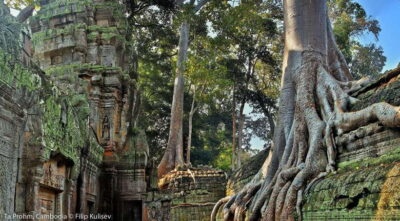
Angkor Wat: Small-Group Sunrise or Sunset Tour
Read our review →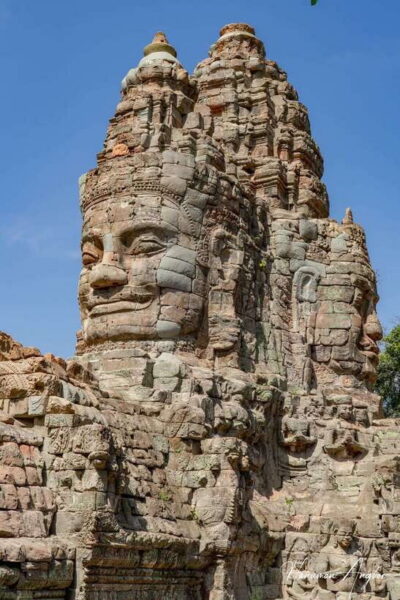
Angkor Wat 2-Day Tour with Sunrise and Sunset
Read our review →
Angkor Wat Sunrise tour with Small – Group and Guide tours
Read our review →
Angkor Wat Highlights and Sunrise Guided Tour from Siem Reap
Read our review →
Angkor Wat Sunset Small Group Tour with Lunch Included
Read our review →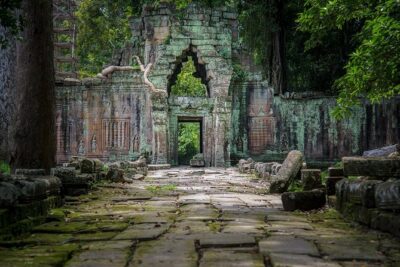
Full-Day Angkor Wat Sunrise Private Tour with Guide from Siem Reap
Read our review →Browse the lists this tour appears in