
REVIEW · CHIANG RAI TEMPLE TOURS
Chiang Mai to Chiang Rai: 3 Temples & Hot Springs & Pickup
Chiang Rai’s temple trio is unlike almost anything in Chiang Mai. The White Temple is a modern work of art, the Blue Temple turns Buddhist imagery into a sea of color, and the Black House is an unsettling museum rather than a temple. That mix makes this a cultural outing with plenty to discuss on the long road north.
I like the chance to see three very different artistic visions in one day, and I like that hotel pickup, transport, lunch, water, entrance fees, and an English-speaking guide are included. Guide Siruin has earned especially warm praise for making the day enjoyable. The main drawback is the long, tightly packed schedule, plus an itinerary that can vary: the Karen village may replace or delay another stop, and one report says the Black House was missed.
Key points at a glance
- Three sharply different Chiang Rai sights: Wat Rong Khun, Wat Rong Sue Ten, and the Black House each offer a separate view of Thai art and belief.
- A long road day from Chiang Mai: Shared hotel pickup and return make the trip simple, but expect a full day with several pickup stops.
- Mae Khachan hot springs are modest: Think roadside pools, shops, and egg-cooking wells rather than a quiet spa.
- The Karen village costs extra: Admission is 300 THB per person, and the stop is optional or dependent on the selected plan.
- Lunch is included but limited: A Thai buffet is provided, though spicy food and a narrow selection may not suit everyone.
- The itinerary needs checking: Confirm that your chosen plan includes the Black House, hot springs, and Karen village before departure.
Three Chiang Rai art worlds in one day
This outing is built around contrast. Chiang Rai is often described as Chiang Mai’s sister city, but its modern temple scene has its own character. The day moves from white and reflective to blue and theatrical, then to black, strange, and deliberately unsettling.
You are not simply visiting old religious buildings. Two of the main stops are modern art projects connected to individual Thai artists. That matters because the experience is less about ancient ruins and more about how contemporary artists use Buddhist ideas, popular images, animals, color, and architecture.
The trip begins in Chiang Mai with pickup within six kilometers of the city center. Because this is a joint tour, the minibus collects people in sequence. I would not plan an early independent activity on the same day. Hotel pickups can take time, and the ride to Chiang Rai is long enough that patience matters.
Transport is by air-conditioned minibus with a driver. A private English-speaking guide is included for your group, although the shared pickup system means the overall operation is not a fully private tour. That is a useful distinction when comparing it with a private car and driver.
More Spas and Hot Springs in Chiang Rai:
- Chiang Mai: Chiang Rai Temples, Karen Tribe and Hot Springs
★ 4.7 · 5,401 reviews - Krabi: Tiger Cave Temple, Emerald Pool and Hot Springs Tour
★ 4.8 · 3,616 reviews - Chiangmai to Chiangrai: 3 Temples, Hot Springs& Lalitta Cafe
★ 4.5 · 659 reviews
Mae Khachan hot springs: useful stop, modest setting
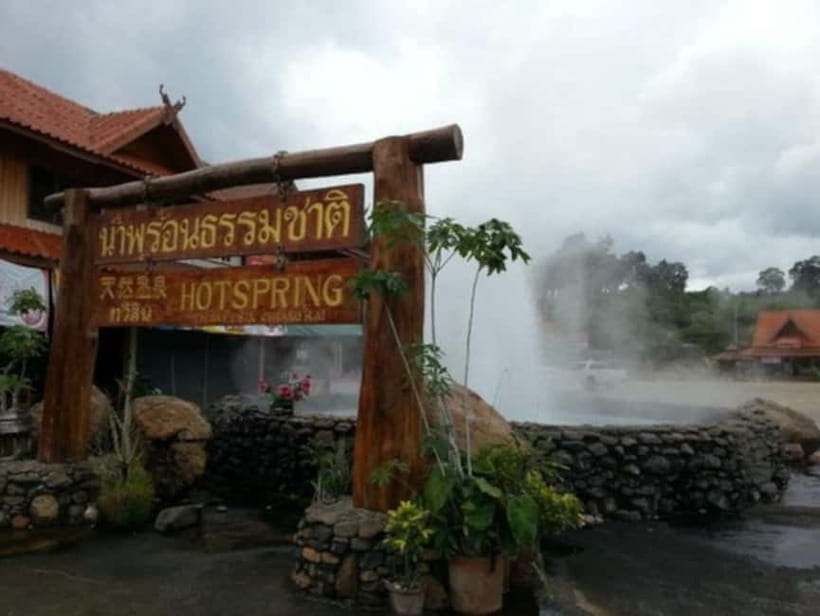
The Mae Khachan hot springs provide a break during the road journey. You can soak your feet or enjoy a pedicure in the warm pools, depending on how the stop is handled. The setting is not a secluded natural retreat.
The hot springs are in a roadside commercial area with shops and two wells where local vendors cook eggs. That can be fun if you like ordinary local life and quick food stops. If you picture steaming pools surrounded by forest, though, adjust your expectations. The setting has been compared to a motorway service area, and that is a fair warning.
I would treat this as a short rest stop rather than a major reason to book the tour. It gives you a chance to stretch your legs, use facilities, browse, and see the egg-cooking tradition. It is less convincing as a relaxing spa experience.
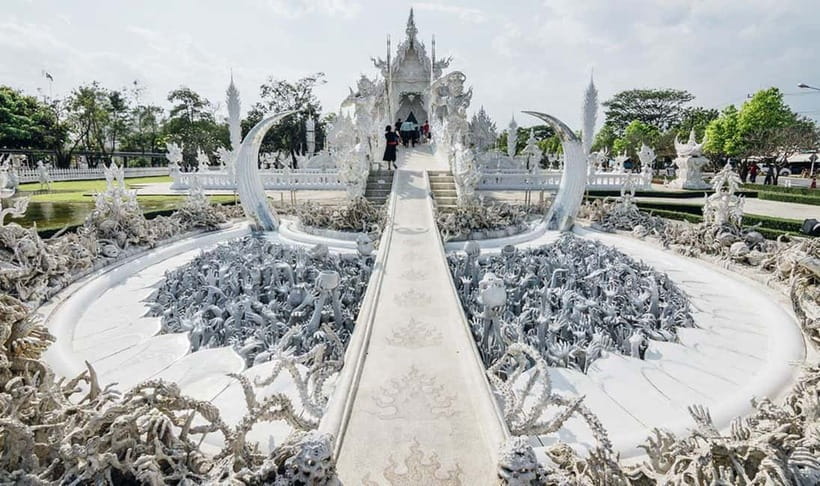
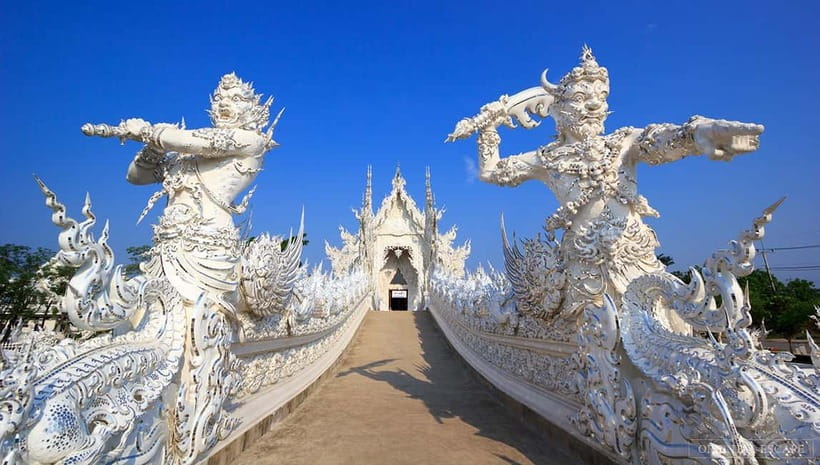
Wat Rong Khun, the White Temple
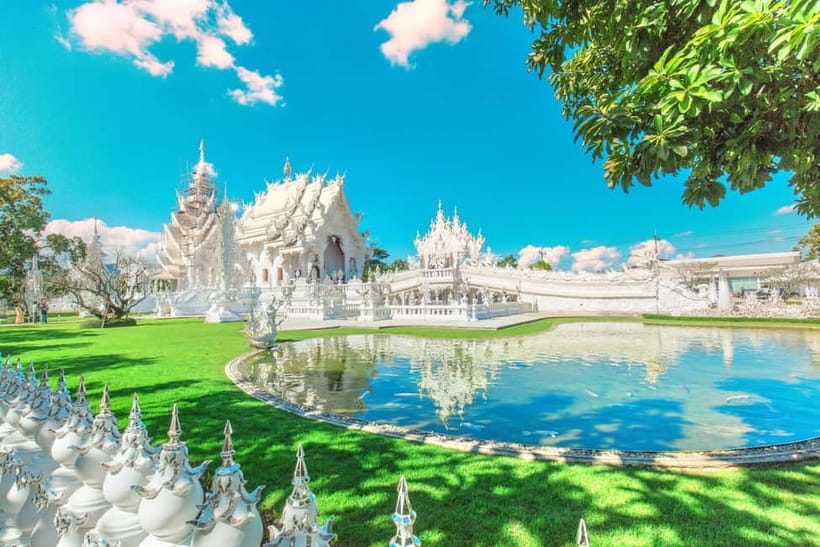
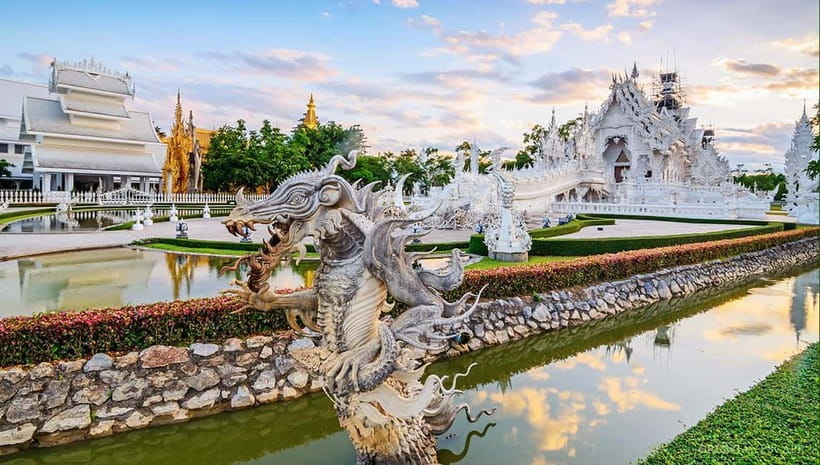
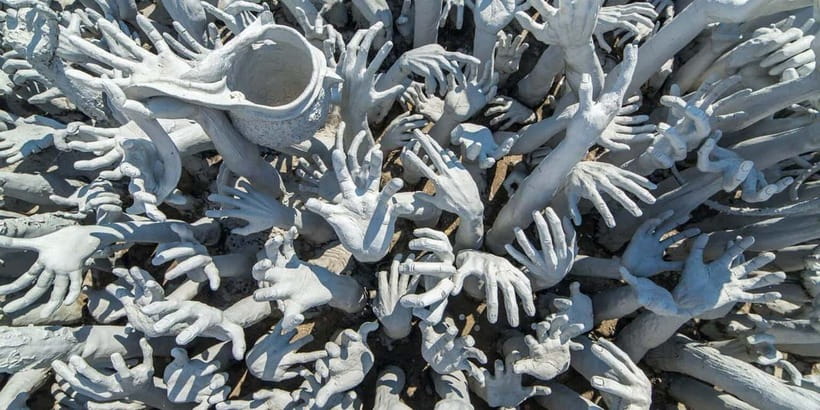
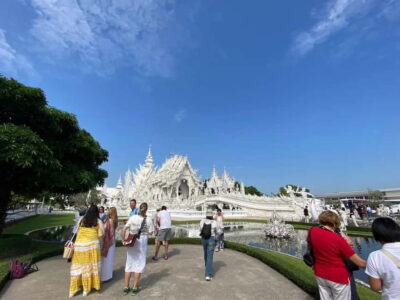
Wat Rong Khun is the headline stop. Its bright white surfaces, mirrored details, and elaborate forms make it immediately different from a traditional Thai temple. The building is modern, created by a celebrated Thai artist who wanted Chiang Rai to have a monument on the scale of the Taj Mahal.
The temple uses beauty and discomfort together. Its imagery includes ideas of good and evil, temptation, and moral struggle. You may find the symbolism thought-provoking, or you may find some of the scenes strange and severe. It is not just a pretty building for photographs.
The important point is that the White Temple is not an ancient sacred complex. It is a modern artistic statement presented in temple form. That distinction helps you understand what you are seeing and prevents the usual disappointment from expecting centuries-old architecture.
Allow yourself time to look beyond the white exterior. The small details, reflective surfaces, and symbolic figures reward slower attention. At the same time, this is one of the best-known sights in the region, so the visit may feel more like a major attraction than a quiet religious encounter.
Dress respectfully. T-shirts are acceptable, but tank tops are not. Wear sneakers, sports shoes, or other secure footwear rather than flip-flops. The advice is practical for walking around the grounds and also applies to the other temples.
Wat Rong Sue Ten, the Blue Temple
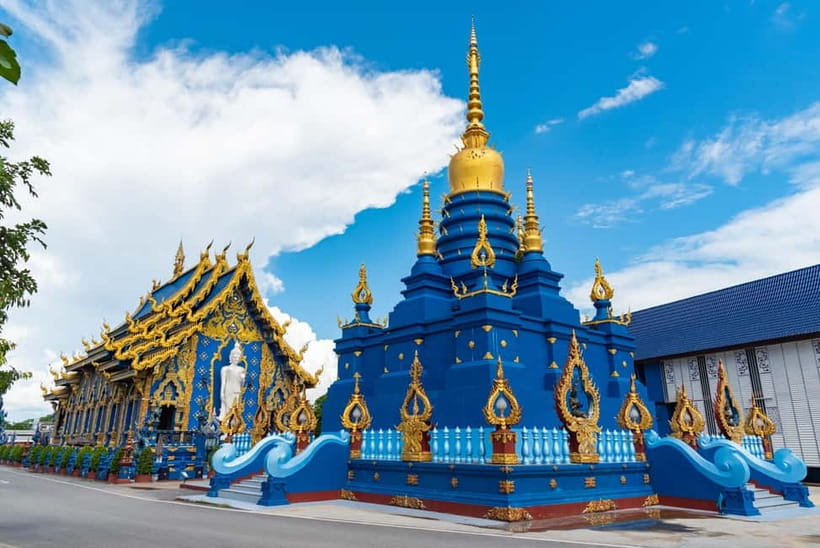
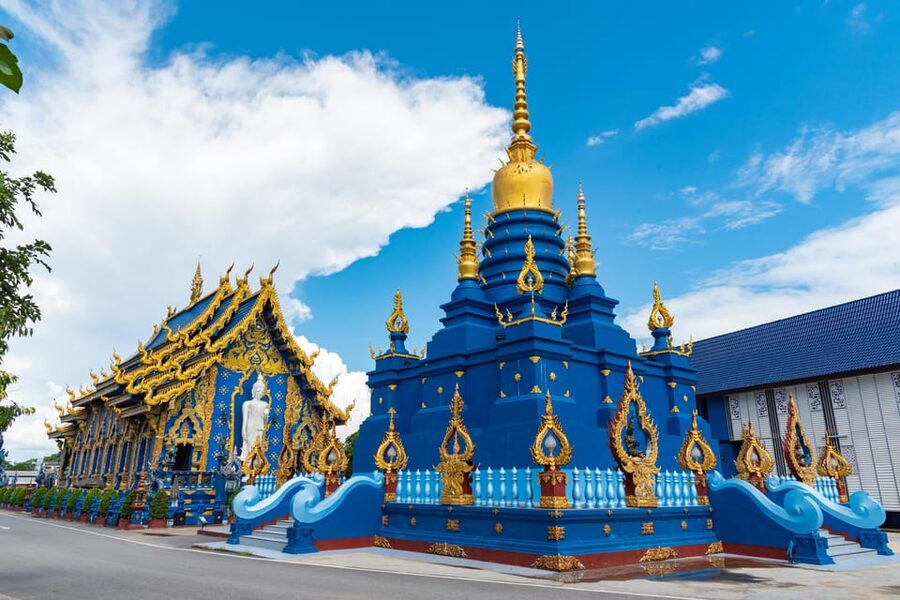
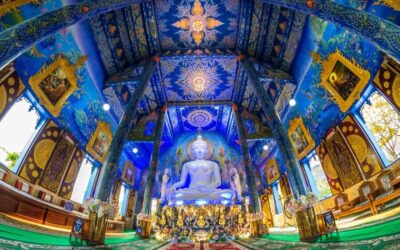
Wat Rong Sue Ten, usually called the Blue Temple, offers a completely different mood. Deep blue tones cover much of the building, with bright decorative details and large Buddhist images inside. The result is theatrical, but it remains connected to Buddhist visual traditions.
I like this stop because it shows how current Thai artists can work within an established religious setting without simply copying older temple designs. The White Temple asks you to think about purity, danger, and imagination. The Blue Temple is more direct and dramatic, using color to shape your response.
You should not expect the same historical age as a classic northern Thai temple. The interest here comes from the way contemporary design and Buddhist imagery meet. It is a good place to compare with Wat Rong Khun rather than treating both as interchangeable photo stops.
Keep track of your guide and minibus at this point. One account describes difficulty locating the vehicle near a later red temple and a large Buddha image. That may have been an unusual problem, but a busy day with several stops is a good reason to remember the meeting point and keep your phone charged.
A few more temple visits around Chiang Rai worth a look
- From Chiang Mai: Chiang Rai Temples and Golden Triangle Tour
★ 4.5 · 1,770 reviews - Chiang Rai: Iconic Temples & 7 Major Sites—River View Buffet
★ 4.9 · 692 reviews - Chiang Rai: White, Blue, Red Temples, Long Neck Tour
★ 4.8 · 652 reviews - From Chiang Rai: Famous Temples and Golden Triangle Day Tour
★ 4.7 · 115 reviews
The Black House, a museum with a darker edge
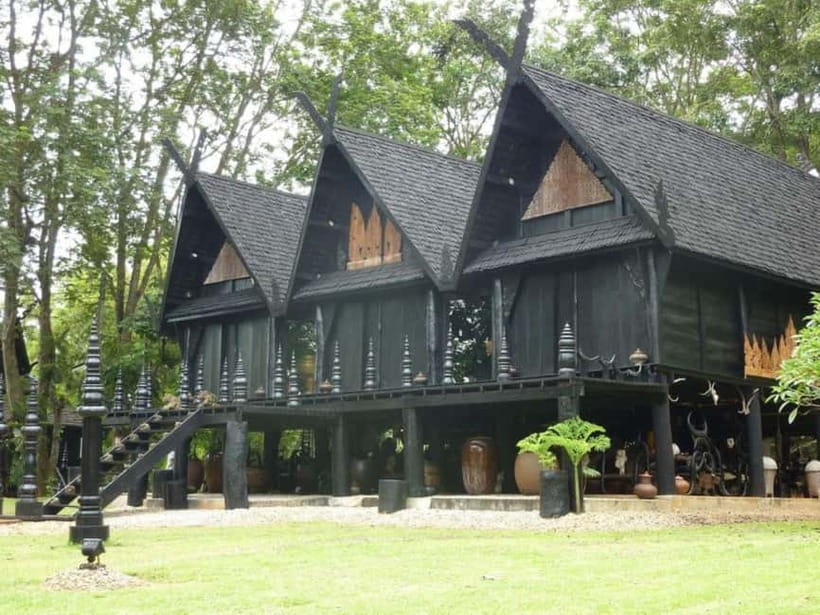
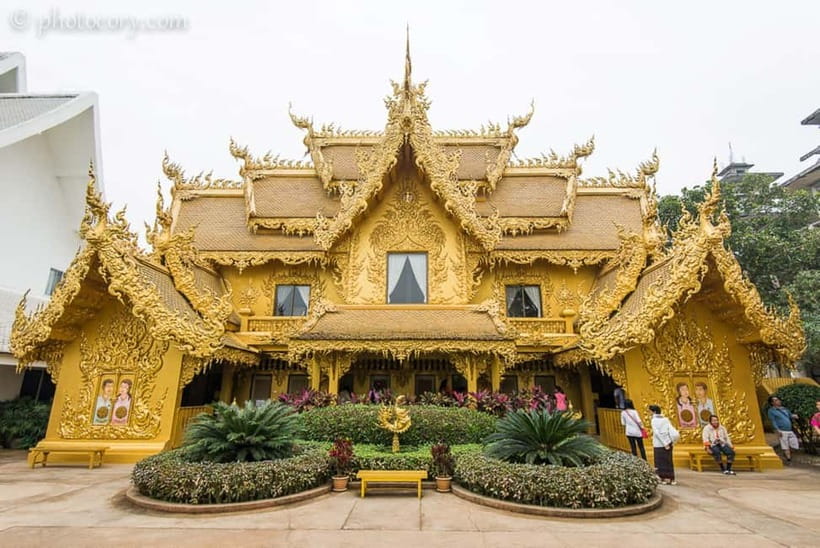
The Black House, or Baan Dam, is often called the Black Temple, but it is not really a temple. It is a museum and art compound associated with the late Thai artist Thawan Duchanee. Dark wooden buildings, animal forms, and unusual objects create a mood far removed from the polished White Temple.
This is likely to be the most divisive stop. If you enjoy art, symbolism, and places that leave you asking what you just saw, it may be the most memorable part of the day. If you prefer conventional temples and serene religious spaces, some of the displays may feel uncomfortable.
The contrast is the point. The White Temple uses pale surfaces and moral symbolism. The Blue Temple relies on color and devotion. The Black House deals in darkness, death, animals, and power. Taken together, these stops offer a better understanding of Chiang Rai’s modern art scene than any single temple can provide.
There is one practical concern: confirm that the Black House is included in your selected plan. The advertised title includes it, but one reported itinerary did not visit it and instead included a different red temple with a large Buddha. Ask your guide early in the day if the schedule has changed. That small check can prevent a major disappointment.
The Karen village option and its ethical question
The itinerary may include a visit to a Long Neck Karen village in Chiang Rai. Admission is not included and costs 300 THB per person. You should also confirm whether this is part of your selected option, since the wording presents it as an additional activity.
This stop requires more thought than the temples. The village is arranged for tourism, and you may feel uncomfortable with the way the women’s neck rings are presented as a spectacle. One account specifically rejected the visit as artificial and did not want to take part.
You can choose the tour without treating this stop as the moral center of the day. If it is included for your group, you may need to wait while other people visit. Ask the operator before departure whether you can skip it and where you will wait. The stop can affect your schedule even if you do not enter.
Lunch, comfort, and the cost of a long day
Thai buffet lunch is included, along with drinking water. That helps the value of the package, especially since the tour covers a large distance and includes several admission fees.
The meal may not suit every palate. One account described a narrow selection centered on rice dishes, with strong spice and little food aimed at people who prefer milder flavors. I would not book this tour for its lunch. If you have dietary restrictions, tell the operator in advance, as requested in the tour details.
At $36 per group up to one person, the advertised price looks low for transportation, a guide, entrance fees, lunch, water, and accident insurance. Check the booking screen carefully, since the phrase per group up to one is unusual and the final cost may depend on the number of people and selected options.
The value is strongest if you want the logistics handled for you. Hiring transport from Chiang Mai, arranging the long drive, and fitting three major sites into one day would normally take planning. The value is weaker if you dislike early starts, shared pickups, roadside stops, or fixed sightseeing schedules.
Who will enjoy this Chiang Rai day trip
I would recommend this outing to you if you have limited time in northern Thailand and want to see Chiang Rai’s major modern art sights without arranging a private car. It suits first-time visitors who like architecture, visual art, and unusual cultural sites.
It also works well for people who prefer a guide and organized transport. The English-speaking guide can put the temple designs into context, and Siruin is a name worth noting if you are offered a guide choice, though guide assignments are not guaranteed.
I would hesitate if you want a quiet spiritual day. The trip is long, the hot springs are commercial, and the popular temples can feel more like attractions than places for contemplation. It is also not suitable for wheelchair users, babies under one year, people over 70, or people with pre-existing medical conditions according to the stated restrictions.
Families should check the child policy carefully. Children aged three to six have a child ticket price, but the tour warns that any mismatch involving age, height, or group size can lead to an extra charge at the start.
Practical advice before you leave Chiang Mai
Give the operator your exact hotel name, Google location, or full address. A general Chiang Mai map pin may not be enough for pickup. Stay at the hotel during the pickup window and be ready for a shared sequence of collections.
Wear respectful clothing from the start. A T-shirt is fine, but avoid tank tops. Secure walking shoes are better than flip-flops, and they are more useful at the temple grounds and roadside stops.
Keep some Thai baht with you for the 300 THB Karen village fee, snacks, and souvenirs. The tour covers standard entrance fees, but extra attractions, shopping, and tips are not included.
Ask three questions when the day begins:
- Is the Black House definitely on today’s route?
- Is the Karen village included, and can I skip it?
- Where should I meet the minibus after each stop?
Those questions are especially useful because different tour plans appear to overlap, while the actual stops may vary.
Should you book this Chiang Rai tour?
Book it if you want an affordable, organized way to see the White Temple, Blue Temple, and Black House in one demanding day. The strongest features are the unusual art, included transport, hotel pickup, guide, lunch, and entrance fees. A rating of 4 out of 5 from 22 ratings suggests a generally positive experience, but not a flawless one.
Skip it if the hot springs must feel peaceful, if you need excellent food, or if missing one promised temple would ruin the day. Confirm the exact route before paying, and be clear about the Karen village option.
My view is that the temples make this worthwhile, while the road logistics and variable schedule require realistic expectations. If you can accept a long day and a basic lunch, this is a practical introduction to Chiang Rai’s most distinctive sights.
FAQ
How much does the tour cost?
The stated price is $36 per group up to one person. Check the final booking price carefully because the wording is unusual and costs may change with group size or selected options.
What temples are visited?
The planned temple visits are Wat Rong Khun, known as the White Temple, Wat Rong Sue Ten, known as the Blue Temple, and the Black House, also called the Black Museum or Baan Dam.
Is hotel pickup included?
Yes. Free pickup and drop-off are included within six kilometers of Chiang Mai city center. You must provide the hotel name and a precise address or Google location.
Is lunch included?
Yes. A Thai buffet lunch and drinking water are included. You should tell the operator about food restrictions in advance.
Does the tour include the Karen Long Neck village?
The village is an optional or selected-plan activity, and admission is not included. The fee is 300 THB per person.
Are temple entrance fees included?
Standard activity entrance fees are included. The Karen village admission fee and other optional expenses are not included.
What should I wear to the temples?
Wear casual, respectful clothing. T-shirts are acceptable, but tank tops are not. Sneakers, sports shoes, or other secure footwear are recommended instead of flip-flops.
Is the tour suitable for wheelchair users or babies?
No. The tour is listed as unsuitable for wheelchair users, babies under one year, people over 70, and people with pre-existing medical conditions.
Just added around Chiang Rai
- Private trip Chiang Rai Day trip, White Temple, Blue temple★ 4.8 · 13 reviews
- From Chiang Rai 3 Temples & Golden Triangle &Tea Plantation★ 4.8 · 20 reviews
- From Chiang Mai : 3 Temples & Golden Triangle with Lunch★ 4.5 · 17 reviews
- ChiangRai:Full Package!Temples,Long Neck,The Golden Triangle★ 4.7 · 9 reviews
- Chiang Rai: Temple Treasures & Popular Sightseeings (Buffet)★ 4.7 · 10 reviews
- Chiang Rai:Photos of traditional Thai costumes,White Temple★ 4.9 · 26 reviews
- Chiang Rai White & Blue & Huay Pla Kang Temple& Lalitta Cafe★ 5.0 · 8 reviews
- Chiang Rai: Half Day Tour – 3 Famous Temples & Lalita Cafe’★ 5.0 · 79 reviews
Chiang Rai Temple Tours, compared.
Iconic Temples & 7 Major Sites—River View Buffet
Read our review →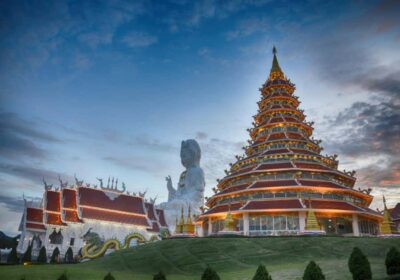
Photos of traditional Thai costumes,White Temple
Read our review →Browse the lists this tour appears in