
REVIEW · CHIANG MAI TEMPLE TOURS
Chiang Mai: Chiang Rai Temples, Karen Tribe and Hot Springs
Chiang Rai’s White Temple is the star of this long northern Thailand day trip, but the best part is the mix. In one day, you get modern Buddhist art, a blue-painted temple, a giant Guan Yin statue, hot springs, and a visit to a Karen long-neck village. It is a lot of Chiang Rai for $35.
I like the practical design: round-trip transport from Chiang Mai saves you from arranging buses or a private driver, and the guides often add useful touches, from photo help to local snacks and Thai phrases. I also like the variety of the stops. The hot springs ease you into the morning, while the three temples give the day a strong finish.
The trade-off is simple: this is an 11-hour road trip, with roughly seven hours connected to driving and transfers. Roads can be bumpy, traffic can delay the return, and the last temple may feel rushed. If you want a slow temple visit, book an overnight stay in Chiang Rai instead.
Key points at a glance
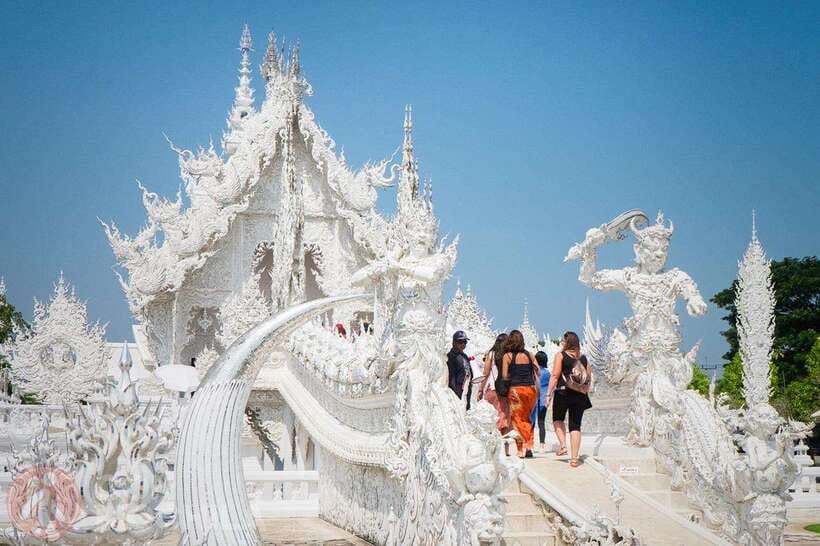
- Wat Rong Khun: See Chalermchai Kositpipat’s white, glass-detailed temple, where classic Buddhist images meet surprising modern art.
- Mae Kachan Hot Springs: Take a short break, soak your feet if you wish, and browse small shops, coffee stalls, and Thai snacks.
- Karen long-neck village: Learn about a community known for brass neck rings, while keeping in mind the complicated questions around this form of tourism.
- Three very different temples: Compare white Wat Rong Khun, blue Wat Rong Suea Ten, and Huay Pla Kang Temple, often called the Red Temple by visitors.
- Helpful guiding: Guides including Benz, Ruby, Kwan, Ann, Dee, and others are praised for clear timing, stories, photos, and personal care.
- Good low-cost coverage: At $35, the tour covers transport, a guide, temple admission, and insurance, but not lunch or the 300-baht village fee.
Why this Chiang Rai day trip works
This tour is built for you if Chiang Mai is your base and you want to see Chiang Rai without changing hotels. The route covers the province’s best-known modern temples, then adds cultural stops that break up the long drive.
The price is the main reason to consider it. At $35 per person, you receive air-conditioned transport, round-trip travel, an official guide, admission to the White Temple, Blue Temple, and Huay Pla Kang Temple, plus mandatory insurance. You still pay for lunch, the 300-baht long-neck village entrance, and personal purchases.
That is strong value, but the low price does not turn the trip into a private sightseeing day. You follow a set route and shared transport schedule. Your guide has to keep the whole group moving, especially on the return drive.
The human side of the guiding is a real strength. Benz is known for humor, clear explanations, photo tips, and simple Thai phrases. Ruby is praised for keeping the long ride lively. Kwan is especially good at explaining stop times and helping people who need extra care. Ann and Dee are also noted for warm, attentive guiding. The exact guide depends on the departure, but the service seems to be an important part of the experience.
More Spas and Hot Springs in Chiang Mai:
- Chiangmai to Chiangrai: 3 Temples, Hot Springs& Lalitta Cafe
★ 4.5 · 659 reviews - Red, Blue, White Temples & Hot Spring Trip from Chiang Mai
★ 4.4 · 143 reviews - Chiang Mai: Chiang Rai Famous Temples & Hot Springs Day Trip
★ 4.0 · 129 reviews
Mae Kachan Hot Springs: a gentle first stop
After about 90 minutes on the road, you reach Mae Kachan Hot Springs. This is a short rest stop rather than a full bathing experience. Swimming is not allowed, but you can enjoy the warm mineral water around the spring area and, according to the stop’s setup, soak your feet.
The stop gives you room to stretch your legs, use facilities, and buy coffee, Thai tea, roti, or small snacks. There are also jewelry shops and other small stalls. I would treat it as a pleasant pause, not a major natural attraction requiring a long visit.
The hot springs are useful because the day begins early and the main drive is still ahead. Put on comfortable shoes and keep water with you. The sun can be strong, and the combination of heat and a long coach ride can wear you down quickly.
The Karen long-neck village and the question of responsible tourism
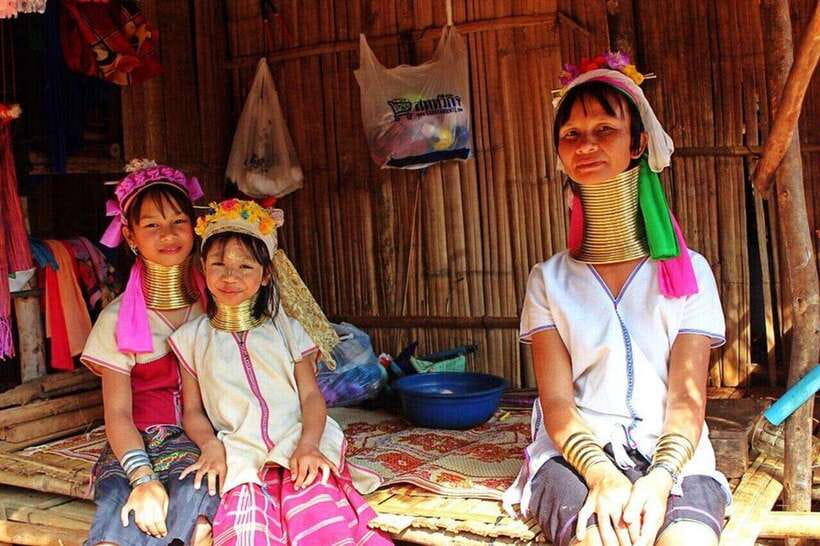
A short drive later, you reach the Mae Kachan hill tribe and long-neck village. The community is associated with women wearing brass rings around the neck, a practice passed through generations and linked to ideas of beauty and identity.
You can see handmade goods, woven scarves, and other crafts. Buying directly from the village can support local makers, and the stop gives you a chance to ask questions about the community’s way of life. Bring small Thai banknotes if you plan to shop. Several small vendors may not be able to change 500 or 1,000-baht notes.
You should also think about how you feel about this visit before booking. The brass rings are part of a living cultural practice, but the setup can feel uncomfortable if it presents people mainly as a spectacle. One useful approach is to listen respectfully, avoid treating the women as photo props, and buy only items you genuinely want. The tour presents this as a cultural stop, but you decide how thoughtfully to take part.
The visit lasts only part of the day, so do not expect a full anthropological account. The guide can provide background, while the village itself gives you a brief view of craft work and daily customs.
Wat Rong Khun, the White Temple
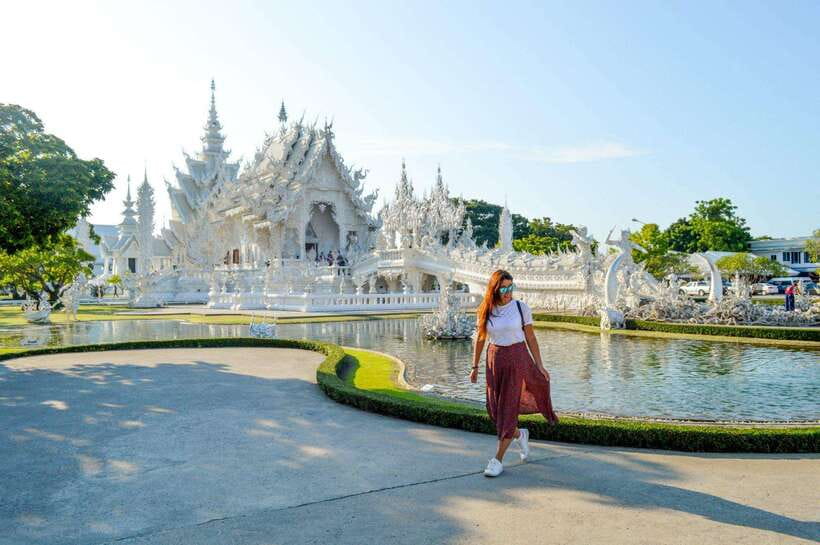
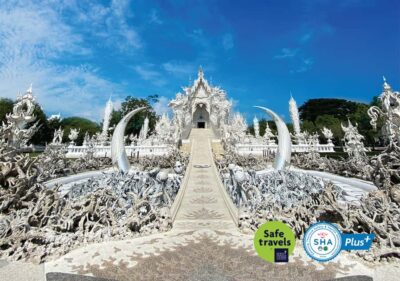
After around two hours and 15 minutes of driving, the tour reaches Wat Rong Khun, usually called the White Temple. This is the day’s most famous stop and the place where your camera will work hardest.
Artist Chalermchai Kositpipat designed the temple in a highly personal modern style. The white surface represents purity, while mirrored glass catches the light and suggests Buddhist wisdom. The effect is bright, theatrical, and unlike the older brick and plaster temples found elsewhere in Thailand.
Look closely at the details. The grounds combine familiar Buddhist ideas with unusual contemporary images. That contrast is the point. You are not simply seeing an old religious building preserved over time. You are seeing a modern artist’s interpretation of Buddhist ideas, made to provoke thought as well as admiration.
The temple entrance fee is included. You have time to take photographs and hear the guide explain the design, but this is still a timed group visit. Modest clothing is required at religious sites, and a hat, sunglasses, and sunscreen are sensible in the open grounds.
Lunch follows in Chiang Rai Province. It is not included, so budget separately. Guides may suggest a local restaurant, and you can expect options for Thai food, including vegetarian dishes. Bring small bills and do not assume every food stall accepts large notes.
A few more temple visits around Chiang Mai worth a look
- Chiang Rai White Temple and Blue Temple Day Tour
★ 4.6 · 3,366 reviews - Chiang Mai: White, Red/Black & Blue Temples Tour with Lunch
★ 4.2 · 2,017 reviews - Chiang Mai: Doi Suthep and Wat Umong Enchanting Evening Tour
★ 4.6 · 1,811 reviews - Chiang Mai: 3 Hour Old City and Temples Guided Walking Tour
★ 4.6 · 1,568 reviews
Wat Rong Suea Ten, the Blue Temple
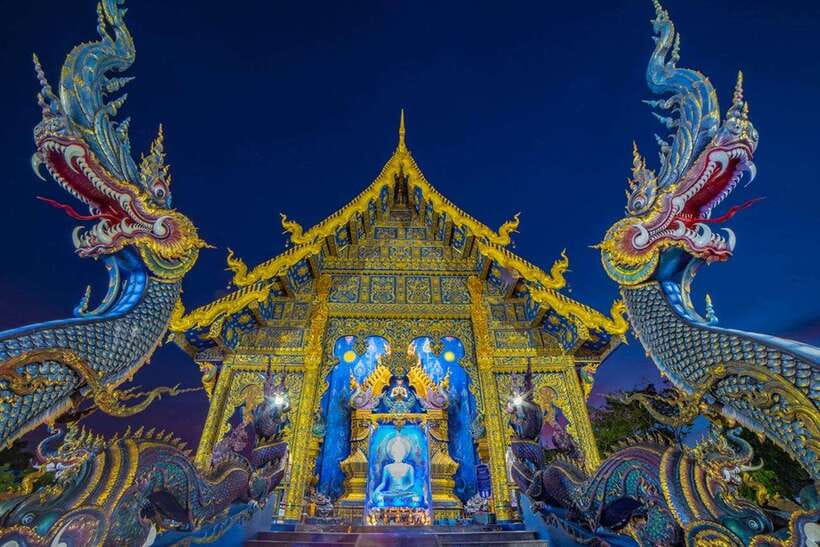
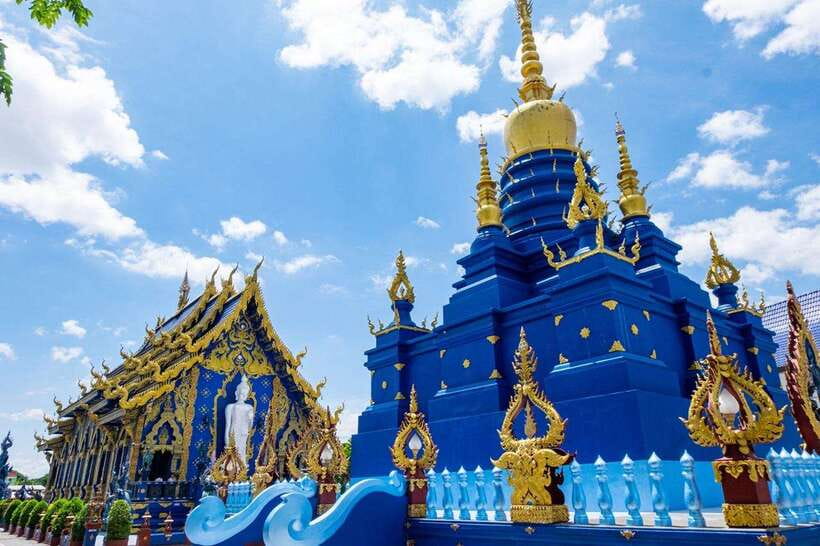
The Blue Temple, Wat Rong Suea Ten, is about 30 minutes from lunch. It offers a sharp visual change from the White Temple. Instead of white walls and glittering glass, you get deep blue interiors, gold decoration, and large dragon figures guarding the entrance.
Inside, a bright Buddha image provides the focus. The strong color can make the temple feel dramatic from outside, yet calm once you stand before the statue. I like this stop because it is easier to understand when seen after Wat Rong Khun. The two temples use modern design, but their mood and color are very different.
You may have time for a cold dessert here. Blue coconut ice cream is a popular suggestion from the guides, and it makes sense on a hot afternoon. Treat it as an optional snack, not part of the tour price.
The Blue Temple is also a good place to pause. After the morning’s road time and the large White Temple grounds, you can sit quietly for a moment before moving on. Keep track of the departure time, though. A beautiful temple can make you lose sight of the clock.
Huay Pla Kang Temple and the nine-tiered pagoda
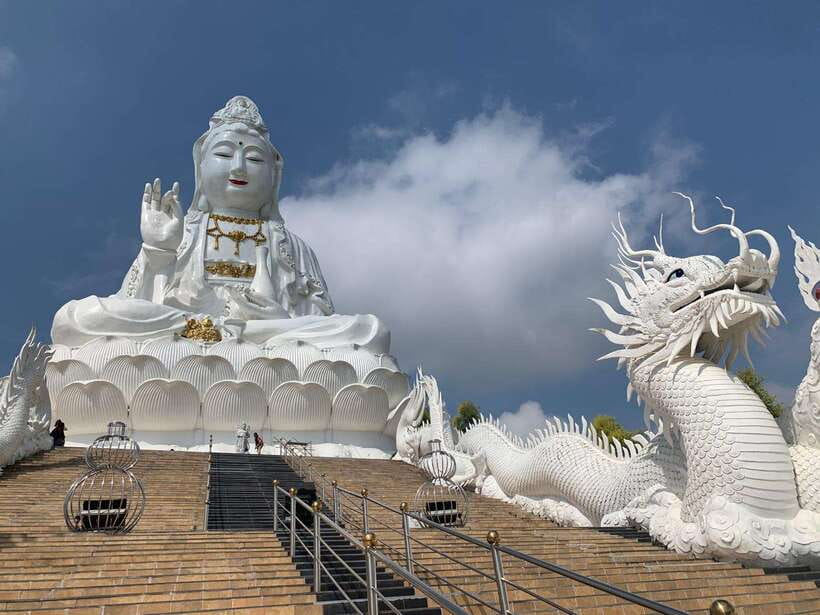
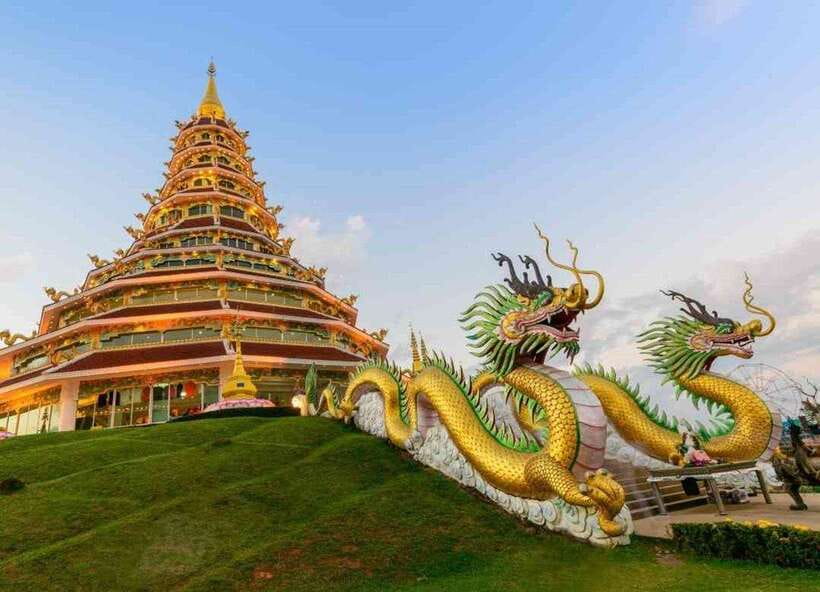
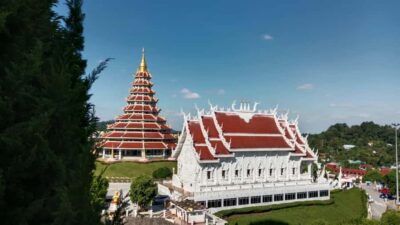
The final major stop is Huay Pla Kang Temple, reached after about 15 minutes on the road. This complex is known for a large statue of Guan Yin, the Goddess of Mercy, and a striking nine-level pagoda.
The site brings Thai, Lanna, and Burmese influences together in its decoration. Inside the pagoda, carved figures and detailed ornament reward a slower look. If you climb to the upper levels, you can see across the surrounding area from above.
This stop is sometimes described as the Red Temple because of its strong red elements, though the main focus is the huge Guan Yin statue and the nine-tiered structure. You may have enough time to explore the grounds, but this is the stop most likely to feel short near the end of the day. Stairs, crowds, photographs, and food stops can use up the available time.
An electric vehicle may be available to help people who have difficulty walking around the complex, as one guide arranged for a participant. Still, the experience is not recommended for people with mobility impairments. If stairs and extended walking are a concern, contact the operator before booking rather than relying on assistance at the last moment.
The long ride back to Chiang Mai
The return journey takes about three hours, with a rest break for coffee, snacks, or the restroom possible along the way. The coach may have USB ports, so bring your own charging cable. You can usually keep belongings on the vehicle, but large bags and luggage are not allowed, so pack lightly.
The drive can be tiring. Road work and uneven sections have made the ride bumpy at times, and traffic around Chiang Mai can stretch the schedule. The day may run close to 12 hours in practice, even though it is advertised as 11 hours.
Guides often use the ride for stories about northern Thailand, Buddhism, local customs, and the lantern festival. Some sing songs or teach simple Thai phrases. That can make the trip feel more social, but you may prefer quiet time after a full day. Bring headphones if you want to rest.
Drop-off is offered at Hotel M Chiang Mai, Chiang Mai, or Burger King at Thapae. The meeting point is Burger King Thapae at Hotel M Chiang Mai, and you should arrive 15 minutes before departure. Traffic can be heavy, so give yourself extra time. The vehicle will not wait for late arrivals, and missing the departure does not qualify for a refund or a rescheduled trip.
Guide language, audio help, and what to pack
The official guide speaks English only, despite the wider language options shown for the activity. A QR-based audio guide is available in 41 languages, including Spanish, French, German, Italian, Japanese, Korean, Chinese, Thai, Vietnamese, Hindi, and Arabic.
You must bring your own earphones. They are not included. This matters if you are booking because of the multilingual audio option. Without earphones, you can still follow the English guide, but the QR audio will not be convenient.
Wear light, comfortable clothes and shoes that work for temple grounds and stairs. Pack sunglasses, a sun hat, sunscreen, insect repellent, your passport or ID, and some small cash. Do not bring large luggage, alcohol, or drugs.
Dress modestly at all temples. Cover shoulders and knees where needed, and be ready to remove shoes in areas where the temple requires it.
Who should book this tour?

I would book this if you have one spare day in Chiang Mai and want maximum sightseeing for a modest price. It suits first-time visitors who prefer a guide, families who want transport arranged, and anyone interested in modern Thai temple art rather than only old ruins.
It is also useful if you want a broad introduction to Chiang Rai before deciding whether to return for a longer stay. You see the province’s famous visual landmarks, a hill tribe village, and several examples of northern religious art in one organized day.
I would not choose it if you dislike long road journeys, need a relaxed pace, or have a flight on the same day. Do not connect this excursion with an important departure. Traffic, road work, and the sheer distance leave too much risk.
The tour can sometimes accommodate flexible arrangements, such as ending in Chiang Rai instead of returning to Chiang Mai, but you should confirm that directly before booking. A private group option is also available if you want more control over timing and company.
Should you book it?
Book it for range and value, not for leisure. The White Temple, Blue Temple, and Huay Pla Kang Temple are memorable sights, and the hot springs and village make the route feel broader than a simple temple shuttle.
At $35, the included transport, guide, and three temple admissions make the cost hard to criticize. Just add lunch, the 300-baht village entrance, snacks, and plenty of patience for the road. If you accept the early start and long return, this is one of the most efficient ways to see Chiang Rai from Chiang Mai.
FAQ
How long does the Chiang Rai tour take?
The advertised duration is 11 hours, or 810 minutes. The day can feel closer to 12 hours because of traffic, road work, and the long return to Chiang Mai.
What is included in the price?
The price includes round-trip transport from Chiang Mai, an air-conditioned vehicle, an official guide, admission to the White Temple, Blue Temple, and Huay Pla Kang Temple, mandatory insurance, and access to an audio guide by QR code.
Is lunch included?
No. Lunch is not included, so you should bring money for a meal in Chiang Rai Province. Guides may suggest a restaurant.
How much does the long-neck village cost?
The entrance fee is 300 Thai baht per person. This is not included in the tour price.
Can I swim at Mae Kachan Hot Springs?
No. Swimming is not allowed at the hot springs. The stop is intended for a short break, sightseeing, and possibly soaking your feet.
What language does the guide speak?
The official guide speaks English only. A QR audio guide is available in 41 languages, but you must bring your own earphones.
Where does the tour meet?
Meet the guide at Burger King Thapae in Hotel M Chiang Mai, 15 minutes before departure. Optional hotel pickup may be available, depending on the selected option.
Is the tour suitable for people with mobility impairments?
The activity is not recommended for people with mobility impairments. Several stops involve walking, temple grounds, and stairs, especially at Huay Pla Kang Temple.
Just added around Chiang Mai
- Chiang Mai Temples & City★ 5.0 · 10 reviews
- Full Day Chiang Rai 3 Temples White, Blue,Big Bhudha Temples★ 4.5 · 11 reviews
- Chiang Mai Old City & Temples 3 hour Twilight Walking Tour★ 5.0 · 9 reviews
- Chiang Mai Temples & Old City Hidden Gems Small Group Tour 2 Hrs★ 5.0 · 6 reviews
- Chiang Mai City and Temples Half-Day Tour★ 4.5 · 136 reviews
- Chiang Mai Best City Tour with Doi Suthep, Pha Lat & Chedi Luang★ 5.0 · 63 reviews
- Chiang Mai Old City & Temples Guided Walking Tour – 3 Hrs★ 4.5 · 34 reviews
- The Best Chiang Mai City Private Tour: Famous Temples & Viewpoint★ 4.5 · 7 reviews
Chiang Mai Temple Tours, compared.
Chiang Rai White Temple and Blue Temple Day Tour
Read our review →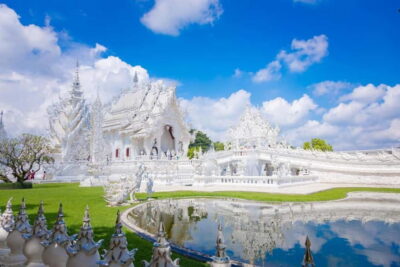
White, Red/Black & Blue Temples Tour with Lunch
Read our review →
Doi Suthep and Wat Umong Enchanting Evening Tour
Read our review →
3 Hour Old City and Temples Guided Walking Tour
Read our review →
Doi Suthep, Wat Umong, and Pha Lat Sunrise Tour
Read our review →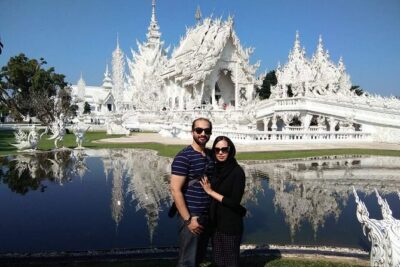
Chiang Rai Temples: Private Tour from Chiang Mai
Read our review →
Browse the lists this tour appears in