
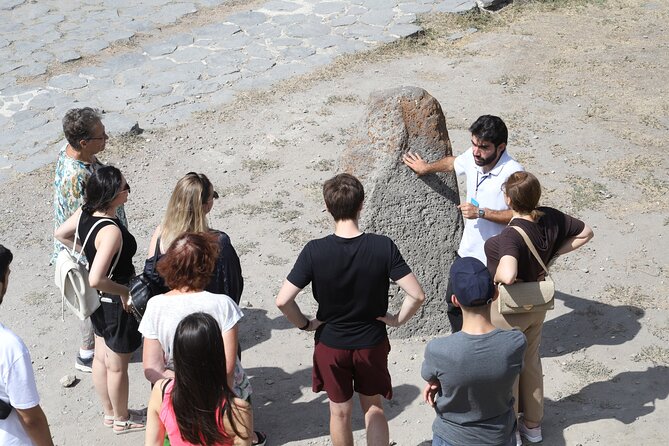
REVIEW · ARMENIAN MONASTERY TOURS
Yerevan: Garni, Geghard, Symphony of Stones & Lavash Baking
The best thing about this Yerevan day trip is its variety. In about six hours, you move from a Mount Ararat viewpoint to a medieval monastery, a basalt canyon, a pagan temple, and a bread-making demonstration. It gives you a useful first look at Armenia without sending you far from the capital.
I like the strong mix of culture and scenery, especially Geghard Monastery and the Symphony of Stones. I also like the price: at $23 per person, transport, a guide, and the lavash demonstration make this a very inexpensive way to reach places that are awkward to connect by public transport.
The main consideration is organization. Most departures appear to run well, with guides such as Yegor, Igor, Hasmik, and Mery earning praise for clear storytelling, but some groups have dealt with bilingual commentary, long restaurant stops, poor air conditioning, or unclear meeting arrangements.
Key points to know before booking
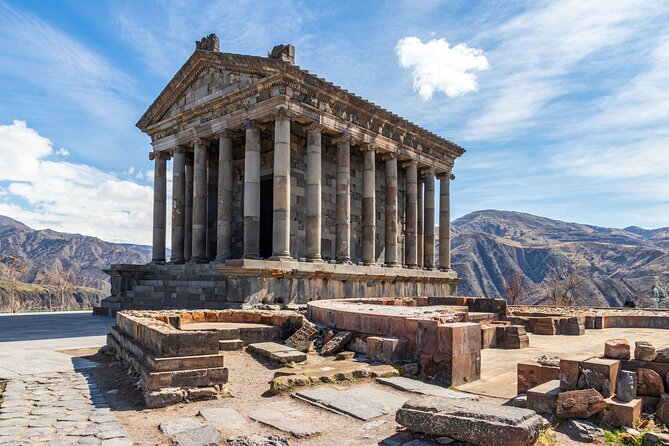
- Four major sights in one half-day: Charents Arch, Geghard, the Symphony of Stones, and Garni Temple give you a broad sample of Armenian culture and scenery.
- Mount Ararat is weather-dependent: The opening viewpoint can be spectacular, but clouds or haze may hide the mountain.
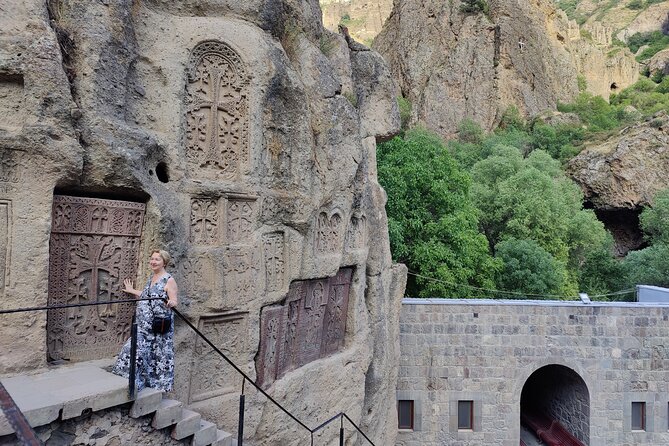
- Geghard is the emotional high point: The cliff setting, carved chambers, and medieval religious atmosphere make it more than a quick photo stop.
- Garni is Armenia’s unusual survivor: Its first-century temple is the country’s only preserved pagan temple.
- Lavash is part of the experience: The baking demonstration adds a practical taste of Armenian food culture, though it may be brief and mostly observational.
- Extra entrance fees are small but separate: Garni costs 1,500 AMD and the Symphony of Stones costs 300 AMD.
Why this six-hour route works from Yerevan
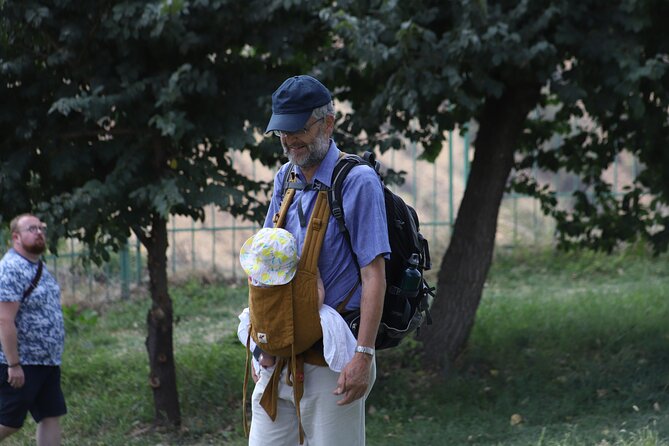
This tour is built for you if you want the main sights around Yerevan without arranging a private car. The route stays focused on the Kotayk region, so you spend a good part of the day seeing places rather than crossing huge distances.
The group can reach up to 20 people. Transport is by minibus, and the departure begins at 9:00 am outside the Komitas Yerevan State Conservatory at 1a Sayat-Nova Avenue. The tour returns to the same meeting point.
At $23, the value is hard to ignore. You are paying for transport and a guide, while the two required admission charges remain modest. The price does not include lunch, and a restaurant stop may be added or recommended during the day. That can be pleasant, but you should ask how long it will last and what it will cost before ordering.
Most people can take part, and the meeting point is near public transportation. Confirmation is provided at booking, though it is wise to double-check the operator’s final meeting instructions, particularly if you are booking through a third-party platform.
More Armenian Monastery Tours in Yerevan:
- Group Tour: Garni, Symphony of Stones, Geghard, Lavash Baking
★ 5.0 · 1,042 reviews - Group Tour: Khor Virap, Noravank, Tatev monasteries (wayback on Ropeway)
★ 5.0 · 506 reviews - Group Tour: Garni pagan temple, Geghard monastery, Lake Sevan, Sevanavank
★ 5.0 · 430 reviews
Charents Arch and the first Mount Ararat view
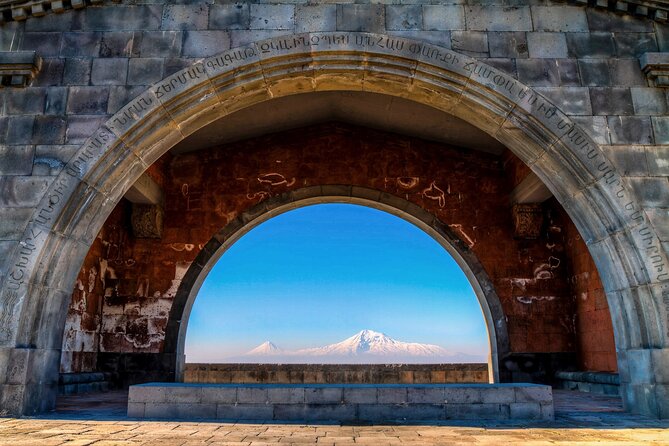
The first stop is Charents Arch, also called the Arch of Charents, near the village of Voghjaberd. The structure was completed in 1957 by architect Rafael Israelyan, who admired the view of Mount Ararat from the nearby hill.
The arch carries a line from Armenian poet Yeghishe Charents. Its message centers on love for Mount Ararat, known in Armenian tradition as Masis. That detail helps explain why this is not just a roadside viewpoint. The mountain is a national symbol, and beginning the day here gives the rest of the journey a clear cultural frame.
Allow about an hour at this stop. The view depends heavily on the sky. On a clear day, Ararat can dominate the horizon. On a hazy or cloudy morning, you may see little or nothing of the mountain. The stop still has value for its setting and the short introduction to Armenian identity, but do not book this trip solely for the photograph.
Geghard Monastery, carved into the cliffs
Geghard is the most atmospheric stop on the route. This medieval monastery sits among steep cliffs, with parts of the complex cut directly into the rock. The setting feels enclosed and quiet, even when the group is busy moving through the site.
The name Geghardavank means Monastery of the Spear. It refers to the spear believed to have wounded Jesus at the Crucifixion. Armenian tradition holds that the relic was brought to Armenia by the Apostle Jude, known locally as Thaddeus. The spear is now kept in the treasury at Echmiadzin.
You get about an hour here, enough to see the main spaces and listen to the guide before exploring. The site is protected as a UNESCO World Heritage Site, and that status reflects both its architecture and its religious importance.
Some guides add a musical or spiritual touch inside the monastery. A quiet choral moment can make the carved chambers feel especially powerful. Guides such as Yegor, Igor, Hasmik, and Mery have been praised for explaining the symbols, history, and cultural setting rather than simply pointing out the walls.
Geghard does require some walking, and the stone surroundings may be uneven. Wear shoes that you can comfortably use for an hour of exploring. The tour description does not promise special assistance, so anyone with mobility concerns should check before booking.
The Symphony of Stones in Azat Canyon
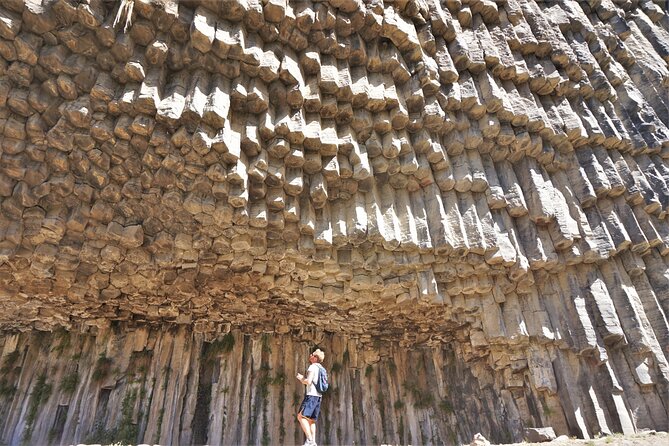
The Symphony of Stones is a natural formation of tall basalt columns in Azat Canyon. The stones have a regular, hexagonal shape and sit beside one another like the pipes of a giant organ. That visual similarity explains the name.
This is the most distinctive nature stop on the route. You are not looking at a conventional monument. The appeal comes from the geometry of the rock, the canyon setting, and the contrast between something formed by nature and the carefully built structures seen elsewhere in the day.
The stop is planned for about an hour. Admission costs 300 AMD and is not included in the tour price. Bring that small fee with you, and allow for walking near the canyon. Weather matters here too. Rain, ice, or snow can affect access and the comfort of the visit. One departure had to change its plan because of snow, and another could not include the stop because of weather.
The amount of explanation may depend on the guide and the group. Some guides provide useful context, while others may give only a short introduction before allowing free time. If this is the site you are most excited about, ask the guide for more information about the basalt columns and the canyon before wandering off.
Same country, a different morning at the gates:
- Group Tour: Echmiadzin Cathedral & churches, Zvartnots Temple
★ 5.0 · 352 reviews - Private 7-8-hour Khor Virap, Garni temple & Geghard monastery trip from Yerevan
★ 5.0 · 272 reviews - Tatev & Shaki Waterfall Guided Group Tour with Wine Tasting
★ 5.0 · 266 reviews - Guided tour: Khor Virap, Noravank Monastery, Areni, Jermuk
★ 5.0 · 259 reviews
Garni Temple and pre-Christian Armenia
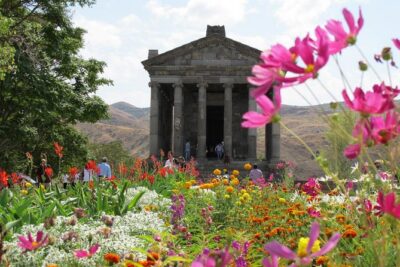
Garni Temple gives the tour a different tone. Built in the first century, it is dedicated to Mithra, the sun god. It is the only preserved pagan temple in Armenia and the former Soviet Union, making it a rare reminder that Armenia’s story did not begin with Christianity.
The temple was destroyed by an earthquake in 1679 and restored between 1968 and 1975. What you see today is therefore both ancient and reconstructed. That does not make it unimportant, but it is worth understanding the distinction. The site introduces pre-Christian Armenia, while Geghard shows the country’s medieval Christian tradition.
You get around an hour at Garni, including time to hear the guide’s explanation and explore the grounds. The location also provides broad views over the surrounding countryside and canyon area. Music may be played at the temple during some visits, adding another layer to the stop.
Garni admission is 1,500 AMD and is paid separately. The fee is still modest, but remember that the advertised $23 price is not the full amount for the day once entrance costs, food, and personal purchases are added.
Lavash baking in a family setting
The final scheduled stop is a lavash baking demonstration in Garni, lasting about 40 minutes. Lavash is Armenia’s famous thin flatbread, and watching it being prepared gives you a direct connection to daily food traditions rather than only to monuments.
The experience can include a family-run restaurant setting, fresh bread, and sometimes fruit from the surrounding trees. The food stop has been a highlight for some people, particularly when the bread is served warm and the setting is relaxed.
You should set your expectations carefully. This is described as a master class, but the format may be more demonstration than hands-on lesson. In some departures, the actual baking has lasted only a few minutes, with guests watching the process and tasting the bread afterward. If you want to participate actively, ask the guide or baker what is included.
Lunch is not part of the stated tour inclusions. A restaurant stop may be offered, and the quality and timing can affect the day. Some meals have been described as tasty and well placed, while other diners found the food expensive for what they received. One stop reportedly lasted close to two hours, so confirm the expected lunch length before you sit down.
The guides make the difference
The strongest part of the experience is often the guide. Yegor receives particular praise for his humor, patience, Armenian music selections, and ability to explain difficult parts of the country’s past in an approachable way. Igor is also frequently praised for clear historical commentary and enthusiasm.
Hasmik is described as warm, organized, and good at storytelling. Mery, Anna, Ani, Gyorg, Taku, and other guides may lead different departures, so the exact style can vary. The common strength is local context, especially when the guide explains why Garni matters to Armenians or why Mount Ararat carries such emotional weight.
There is one important catch. Some departures combine English and Russian or English and Armenian groups. That can slow the commentary and make it harder to keep everyone together, especially when the minibus is full. The activity is advertised in English, but ask in advance if the departure will be bilingual.
Transport, timing, and comfort
A six-hour schedule is efficient, but it leaves little room for delays. You have five scheduled stops, with about 40 minutes for lavash and roughly an hour at each major monument or viewpoint. Add driving time, and the day moves at a brisk pace.
Most transport feedback is positive, with clean, comfortable minibuses and careful drivers. Still, comfort has not been consistent for every departure. Air conditioning has been an issue in hot weather, while winter conditions have affected the route. One account praised a driver’s handling of icy roads, while another raised concerns about aggressive driving.
You cannot control the road, weather, or exact vehicle, but you can make the day easier by bringing water, a light layer, and sturdy shoes. Do not count on a long independent lunch break or plenty of spare time at each site.
What the $23 price really covers
The price is excellent for the core service. You receive transport, an English-speaking guide, and the lavash demonstration for less than the cost of many private transfers. It is especially useful if you are traveling alone and want company without paying for a private vehicle.
Your extra costs are clear:
- Garni Temple admission: 1,500 AMD
- Symphony of Stones admission: 300 AMD
- Lunch or snacks, if you choose to buy them
The value is highest when your priority is seeing the major sites, not receiving a long, highly specialized lecture at every stop. The tour gives you access and basic interpretation. A private guide would likely offer more flexibility, but at a much higher cost.
Who should book this Yerevan excursion
I would recommend this tour to first-time visitors who want a compact introduction to Armenia’s monuments, religion, nature, and food. It also suits solo visitors, since the minibus format makes it easy to meet other people without arranging anything yourself.
It is a good choice if you want Geghard and Garni but do not want to rent a car. It works well for anyone who values a guide’s historical context and does not need every minute to be perfectly flexible.
I would think twice if you dislike group schedules, long restaurant stops, bilingual commentary, or short demonstrations. It may also disappoint you if the Symphony of Stones is your main reason for booking and the weather forecast is poor.
Should you book it?
Yes, if you want a low-cost, well-packed introduction to the sights around Yerevan. Geghard Monastery and Garni Temple are the strongest reasons to go, while Charents Arch and the Symphony of Stones add scenery and contrast. The lavash stop is a pleasant cultural extra, though you should treat it as a demonstration rather than a guaranteed hands-on class.
Before booking, confirm the departure language, ask about the expected lunch stop, and check the forecast. With those points clear, this is a strong-value half-day tour for seeing several of Armenia’s most important nearby sites.
FAQ
How long does the tour last?
The tour lasts approximately six hours and begins at 9:00 am.
Where does the tour start?
It starts at the Komitas Yerevan State Conservatory, 1a Sayat-Nova Avenue, Yerevan 0001, Armenia.
Where does the tour end?
The activity ends back at the same meeting point.
Is the tour offered in English?
Yes. The tour is offered in English, although some departures may combine English with another language.
What is included in the price?
The price includes guide service, transport, and the lavash baking master class.
Are entrance fees included?
No. Garni Temple costs 1,500 AMD, and the Symphony of Stones costs 300 AMD.
Is lunch included?
No. Lunch is not listed among the included services. A restaurant stop may be offered, and you pay for food separately.
How many people can join the group?
The tour can have a maximum of 20 participants.
Is the tour suitable for most people?
Yes. Most people can participate, and the meeting point is near public transportation. The route does include walking around historical and natural sites.
What happens if bad weather cancels the tour?
If poor weather causes cancellation, you will be offered another date or a full refund. Free cancellation is also available when you cancel at least 24 hours before the start time.
Just added around Yerevan
- Sevan Lake and Dilijan Private Tour: Monasteries & Nature★ 4.4 · 9 reviews
- Garni,Geghard, Lake Sevan & Dilijan Monasteries Private Tour★ 4.9 · 30 reviews
- From Yerevan: Full-Day Tatev Monastery Complex Tour★ 4.9 · 9 reviews
- From Yerevan: Echmiadzin cathedral and Zvartnots temple★ 4.9 · 15 reviews
- Day trip to Khor Virap, Areni Winery and Noravank Monastery★ 5.0 · 21 reviews
- Private Tour to Tsaghkadzor, Kecharis Monastery, Lake Sevan, Sevanavank★ 5.0 · 86 reviews
- Private Half-day Echmiadzin Cathedral, Hripsime & Zvartnots Temple from Yerevan★ 5.0 · 95 reviews
- Group Tour: Shaki waterfall, Tatev monastery & ropeway, Hin Areni winery★ 5.0 · 185 reviews
Armenian Monastery Tours, compared.
Group Tour: Garni, Symphony of Stones, Geghard, Lavash Baking
Read our review →
Group Tour: Khor Virap, Noravank, Tatev monasteries (wayback on Ropeway)
Read our review →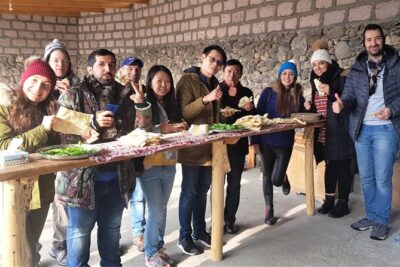
Group Tour: Garni pagan temple, Geghard monastery, Lake Sevan, Sevanavank
Read our review →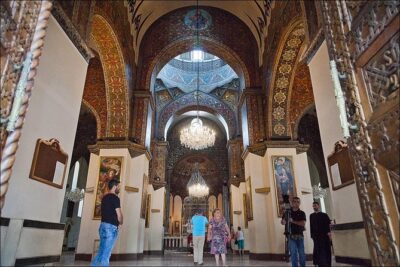
Group Tour: Echmiadzin Cathedral & churches, Zvartnots Temple
Read our review →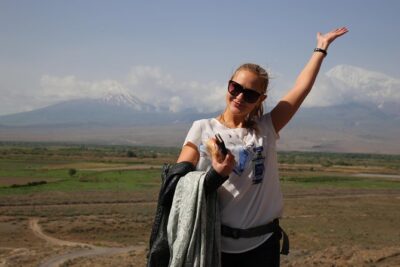
Private 7-8-hour Khor Virap, Garni temple & Geghard monastery trip from Yerevan
Read our review →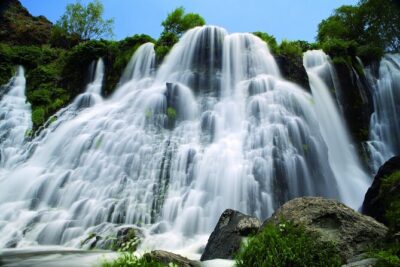
Tatev & Shaki Waterfall Guided Group Tour with Wine Tasting
Read our review →
Guided tour: Khor Virap, Noravank Monastery, Areni, Jermuk
Read our review →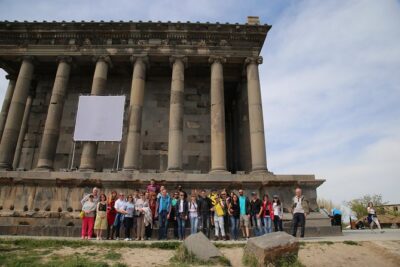
Private Half-Day Garni Temple and Geghard Monastery Tour from Yerevan
Read our review →Browse the lists this tour appears in