REVIEW · ANGKOR WAT TOURS
Full-Day Angkor Wat Sunrise Private Tour with Guide from Siem Reap
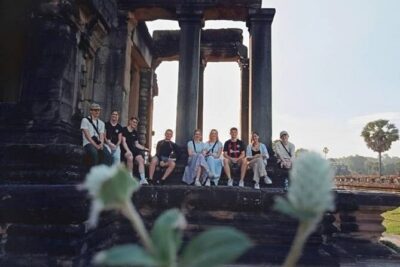
Angkor Wat at sunrise is the main event here. You leave Siem Reap before dawn, walk toward the temple in the dark, and watch its towers appear as the sky brightens. A private guide helps you reach a good viewing place, then leads you through Angkor Wat, Bayon, Ta Prohm, and Banteay Kdei.
I like the private format, which lets you set the pace and ask questions without keeping up with a large group. I also like the small comforts: hotel pickup, an air-conditioned vehicle, bottled water, and cold towels after visiting the temples. The drawback is the very early start, and the sunrise itself is never guaranteed. Clouds can cover the sun, though Angkor Wat remains impressive in any weather.
Key points at a glance
- Sunrise before the crowds: Pickup begins around 4:30 a.m., giving you a chance to reach Angkor Wat early and find a good viewing place.
- Four major temple stops: The day includes Angkor Wat, Bayon, Ta Prohm, and Banteay Kdei, with roughly eight hours on the road and at the sites.
- A genuinely private experience: Only your party takes part, so the guide can adjust the walking speed, photo stops, and amount of explanation.
- Guides who add real value: Guides including Se, Sopha, Sa, Curly, Samuth, and others are praised for clear English, temple knowledge, family care, and photography help.
- Tickets cost extra: Temple admission is not included, and meals are also on your own.
- Best for first-time visitors: You see the main Angkor highlights in one long day without arranging transport between widely separated sites yourself.
Why the 4:30 a.m. start is worth it
The early alarm is not a minor detail. It shapes the entire experience. Pickup is scheduled for about 4:30 a.m., though some experiences have begun closer to 5 a.m. Your guide or driver confirms the details in advance, then takes you from your Siem Reap hotel toward Angkor Wat.
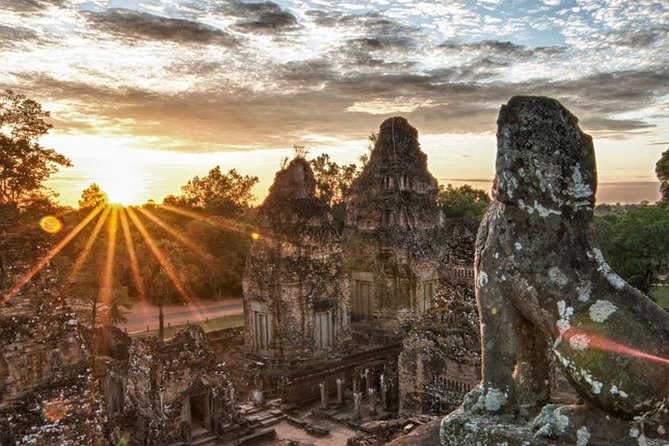
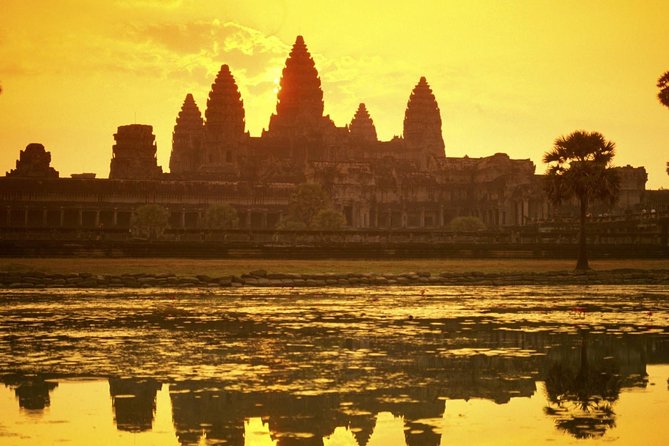
The approach in darkness has its own mood. You walk toward the temple before its outline is fully clear, usually carrying only what you need for the morning. As light builds behind the towers and their reflection, the familiar Angkor Wat view changes minute by minute.
A private guide is especially useful at this hour. You do not need to work out where to go in the dark, and the guide can help position you for photographs. Several guides, including Se, Samuth, and Huot, are praised for knowing good photo spots. One solo visitor found that personal help made it possible to get near the front rather than being stuck behind a crowd.
The sunrise is weather-dependent. Cloud can block the sun, so do not treat a dramatic red sky as a promise. Even under gray skies, the temple remains a powerful sight, and the quiet walk and first light still make the early start worthwhile.
Bring a small snack for the wait. Breakfast is not included, and one account describes stopping for breakfast around 8:30 or 9:30 a.m. Bug spray is also sensible, especially near the water before sunrise. These are small preparations, but they make the first hour much more comfortable.
More Private Temple Tours in Cambodia
- Siem Reap: Angkor Wat Private Tuk-Tuk Tour
★ 4.9 · 2,222 reviews - Angkor Wat Private Day Tour from Siem Reap
★ 5.0 · 834 reviews - Angkor Wat Private Tuk-Tuk Tour (sunrise Option) & more
★ 5.0 · 439 reviews
Angkor Wat takes the first three hours
After the sunrise, you spend about three hours at Angkor Wat. That time is not only for the famous exterior view. The guide leads you through the main entrance and explains the temple layout, carvings, religious purpose, and place in Cambodian history.
The scale can be hard to grasp from photographs. You move from the broad approach toward galleries, towers, courtyards, and detailed stonework. A good guide gives you a way to read what you are seeing rather than simply pointing out old walls.
Guides such as Sa, Se, Mare, Paul, and Sopha are repeatedly praised for clear explanations and strong English. Their value is most obvious in the bas-reliefs and architectural details. Without help, you may notice the workmanship but miss the stories and symbols that give the carvings meaning.
Three hours can feel long if you are mainly interested in taking a few pictures. If you enjoy history, photography, or architecture, it gives you time to look carefully. If you have limited stamina, tell the guide early. The private arrangement allows a slower pace, and one guide, Se, was especially praised for helping people on stairs and adapting to a slower walking speed.
Wear clothing that works for an active temple morning. You will walk, stand, and handle uneven surfaces. The supplied information does not specify a dress code, so check current Angkor entry rules before you go.
Bayon and Angkor Thom bring a different mood
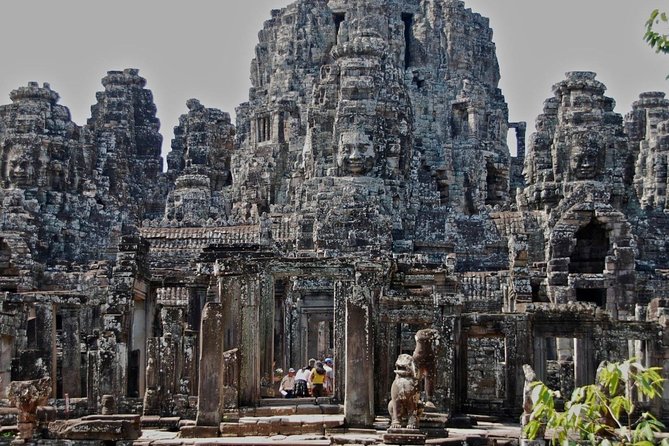
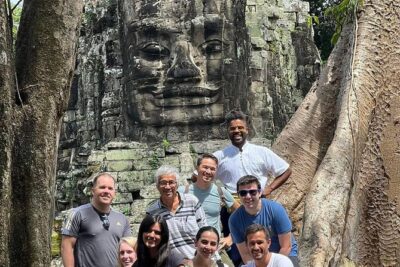
The next major stop is Bayon, in central Angkor Thom, with about two hours set aside. Bayon is known for its many towers and large carved faces associated with Avalokitesvara. The faces are the feature most people remember, but the surrounding galleries and reliefs deserve time as well.
This is where a guide can turn a quick photo stop into a clearer visit. The stone faces are easy to recognize, but the meaning of the temple and the stories in its reliefs are less obvious. Guides have also pointed out nearby features such as Baphuon, helping visitors understand that Angkor Thom is more than one monument.
The two-hour allocation is generous compared with a rushed circuit. You can stop for pictures, listen to explanations, and move at a reasonable pace. It also gives the guide room to answer questions about King Jayavarman VII and the period when Bayon was built.
The heat matters by this point. You have already been awake for hours and walked through Angkor Wat. Use the air-conditioned vehicle between sites, drink the supplied water, and take the cold towel when you return to the car or minibus. Those touches are simple, but they matter during a full temple day.
Ta Prohm delivers the jungle setting
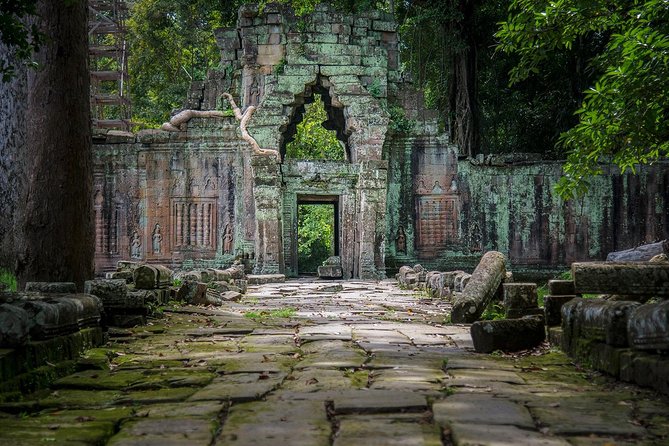
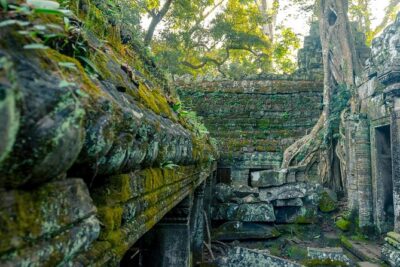
Ta Prohm receives about two hours and provides the biggest visual change from Angkor Wat and Bayon. Large fig trees grip the ruins, with roots spreading over walls and doorways. The temple has been left largely in the condition in which it was found, which gives the site its famous collision of stone and forest.
This is the temple associated with the Tomb Raider films, though its appeal does not depend on the movie connection. The roots, collapsed sections, narrow passages, and framed doorways make Ta Prohm a strong stop for photography.
You should expect uneven ground and more confined passages here. The private format helps because you can pause when a tree root or carved doorway catches your eye. Guides also know where to stand for photographs, and several named guides, including Se and Sopha, are praised for taking pictures for couples and families.
Ta Prohm can feel crowded at popular points. A guide cannot remove the crowds, but an early start and local route knowledge can help. The site is also less formal than Angkor Wat, so give yourself time to look up and around instead of focusing only on the most famous root-covered doorway.
More Private Temple Tours in Siem Reap
- Private Angkor Wat Day Tour – Best of Angkor
★ 5.0 · 269 reviews - Angkor Sunrise Half-Day Tour with Private Vehicles & Tour Guide
★ 5.0 · 247 reviews - Angkor Wat one Day Private Tour for All Highlight Angkor Temples
★ 5.0 · 199 reviews - Private sunrise ‘small tour’ of Angkor Wat with car or van & Guide
★ 5.0 · 179 reviews
Banteay Kdei is the quieter final temple
The final stop is Banteay Kdei, with about one hour planned. Built during the reign of Jayavarman VII in the late twelfth or early thirteenth century, it is a largely unrestored monastic complex with a style related to other temples from the period.
Banteay Kdei is a good closing stop because it feels less polished and less monumental than Angkor Wat. You see crumbling galleries, worn stone, and a site that gives a clearer sense of age. It is not as instantly recognizable as Ta Prohm, but that is part of its value.
One hour is enough for a guided look without adding another major block of walking at the end of a long day. If you are tiring, tell your guide. The private setup means you can focus on the parts that interest you rather than following a fixed group pace.
The supplied schedule labels Banteay Kdei as an afternoon visit, though the exact timing may shift with sunrise, breakfast, walking speed, and the guide’s route. Plan for a full day rather than assuming you will be back in Siem Reap at a precise hour.
What the private guide changes
The guide is the main reason to choose this over arranging a driver alone. Angkor’s temples are visually powerful, but the meaning of the carvings, kings, religious changes, and building phases is not always clear on your own.
The strongest guide feedback centers on four traits:
- Clear English and useful explanations: Sa, Sopha, Curly, Se, Samuth, Mare, Paul, Chen, Huot, and Keo Sieng are among the guides singled out for explaining both temple history and Cambodian culture.
- Good timing: Guides adjust the pickup or walking plan to help you reach a favorable sunrise position without leaving you waiting unnecessarily.
- Photography help: Several guides take photos, suggest angles, and help couples, families, and solo visitors get better pictures.
- Personal care: Guides have helped with stairs, slowed the pace for older visitors, and paid attention to children and family needs.
The guide assigned to you may not be one of these particular people. Still, the repeated praise for the team gives you a useful idea of the service style to expect. Send any priorities in advance, such as a slower pace, extra photo time, or more attention to carvings.
The driver matters too. The vehicle is air-conditioned, private, and used to move you between the sites. Drivers such as Nak, Nal, Teuo, and Ciae are praised for punctual pickups, polite service, and having water ready when people return to the vehicle.
Price, tickets, and what is included
At $60 per person, the tour offers solid value if you are traveling with one or two companions and want transport, a guide, and a carefully timed route. You are paying for a private vehicle and guide rather than simply a seat in a large group.
The price does not include temple admission. It also excludes breakfast, lunch, and dinner. That is important because an eight-hour temple day creates real food and drink needs. Water and cold towels are included, but you should budget separately for entrance tickets and meals.
The value improves for families or small groups because group discounts are available. You also avoid arranging separate transport between four sites. For a first visit, that convenience can be worth more than the small saving from handling everything yourself.
Mobile ticketing and hotel pickup make the practical side easier. Confirmation is provided at booking, and the tour is private, meaning only your group participates. Children must be accompanied by an adult, and most people can take part, though the temples involve walking and stairs.
Free cancellation is available if you cancel at least 24 hours before the start time. Changes or cancellations inside that period are not accepted for a refund.
Who should book this sunrise tour?
I would choose this tour for a first visit to Angkor when I wanted to see the major temples in one day and still have someone explain what I was looking at. It suits couples, families, solo visitors, and small groups who value flexible pacing and help with photographs.
It is also a strong choice if you do not want to negotiate tuk-tuk routes, manage dawn transport, or arrive at Angkor Wat without knowing where to stand. The private setup is useful for a seven-year-old child, older family members, or anyone who needs regular pauses.
I would think twice if you dislike early mornings or prefer to spend an entire day at one temple. Four sites and roughly eight hours make this an active program. It is also not ideal if your main goal is a guaranteed sunrise photograph, since clouds can easily change the scene.
Should you book it?
Book it if you want the classic Angkor introduction: sunrise at Angkor Wat, the carved faces of Bayon, the tree roots of Ta Prohm, and the quieter stones of Banteay Kdei. The private guide, air-conditioned transport, water, and flexible pace make the $60 price reasonable, though you must add tickets and meals.
Before departure, confirm the pickup time, ask for the ticket details, bring a snack and bug spray, and tell the guide how much walking and photography you want. If you can manage the alarm, this is a practical and well-rounded first day at Angkor.
FAQ
What time does the tour start?
The listed start time is 4:30 a.m. Some arrangements may begin around 5 a.m., so confirm your exact pickup time after booking.
How long does the tour last?
The tour lasts approximately eight hours. One account describes a day beginning around 4 a.m. and ending around noon, but the timing can vary.
Which temples are included?
The tour includes Angkor Wat, Bayon Temple, Ta Prohm, and Banteay Kdei.
Are entrance tickets included?
No. Admission tickets for the temples are not included in the tour price.
Are meals included?
No. Breakfast, lunch, and dinner are not included. Cold water and cold towels are included.
Is transportation provided?
Yes. Hotel pickup and drop-off in Siem Reap, private transportation, and an air-conditioned vehicle are included.
Is this a private tour?
Yes. Only your group participates in the activity.
What happens if I need to cancel?
You can receive a full refund if you cancel at least 24 hours before the experience starts. Cancellations or changes made less than 24 hours before the start time are not accepted for a refund.
More Temple Sunrise Tours in Siem Reap
- Angkor Wat Highlights and Sunrise Guided Tour from Siem Reap
★ 5.0 · 3,213 reviews - Angkor Wat Sunrise & 3 Main Temples with Breakfast – Small Group
★ 5.0 · 2,857 reviews - Siem Reap: Angkor Wat Sunrise and Full-Day Sightseeing Tour
★ 4.9 · 2,828 reviews - Angkor 2-Day Sunset & Sunrise Small-Group Tour
★ 5.0 · 2,567 reviews
More Temple Sunrise Tours in Cambodia
- Angkor Wat Sunrise or Sunset Tour with Guide from Siem Reap
★ 5.0 · 12,109 reviews - Siem Reap: Angkor Wat: Small-Group Sunrise or Sunset Tour
★ 5.0 · 9,444 reviews - Siem Reap: Angkor Wat 2-Day Tour with Sunrise and Sunset
★ 4.9 · 4,429 reviews - Angkor Wat Sunrise tour with Small – Group and Guide tours
★ 5.0 · 3,655 reviews
Just added around Siem Reap
- Ticket for Angkor Balloon Ride.★ 3.7 · 46 reviews
- Sunrise at Angkor Wat Temple: 3-Hour Private Tour★ 4.7 · 30 reviews
- Small-Group Full Day Angkor wat Guide tour with Sun set★ 5.0 · 136 reviews
- Siem Reap: Private 4-Day Angkor Wat and Phnom Kulen Tour★ 5.0 · 9 reviews
- Angkor Wat: Sunrise 2.5 Days Temples & Tonle Sap-Small Group★ 5.0 · 10 reviews
- Siem Reap : Private Tuk-Tuk Tour of the Magnificent Temples.★ 4.9 · 14 reviews
- Siem Reap: Ultimate Angkor Wat Offbeat Experience by Jeep★ 4.9 · 8 reviews
- Siem Reap: Personalized Angkor Wat Sunrise/Set by TukTuk/Car★ 4.9 · 41 reviews
Angkor Wat Tours, compared.
Angkor Wat Sunrise or Sunset Tour with Guide from Siem Reap
Read our review →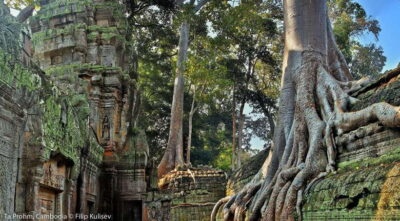
Angkor Wat: Small-Group Sunrise or Sunset Tour
Read our review →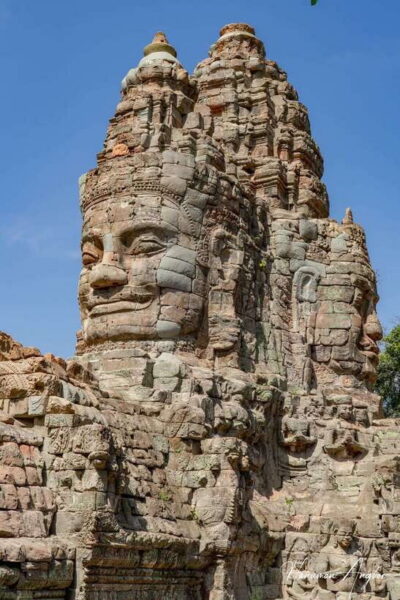
Angkor Wat 2-Day Tour with Sunrise and Sunset
Read our review →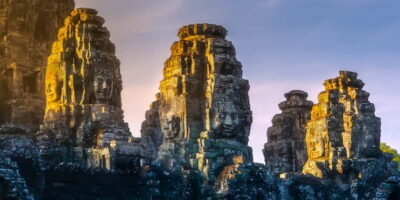
Angkor Wat Sunrise tour with Small – Group and Guide tours
Read our review →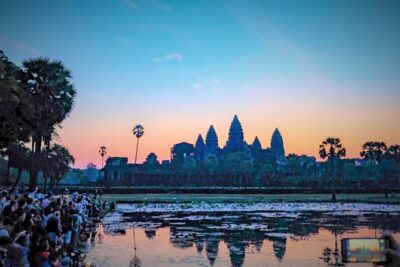
Angkor Wat Highlights and Sunrise Guided Tour from Siem Reap
Read our review →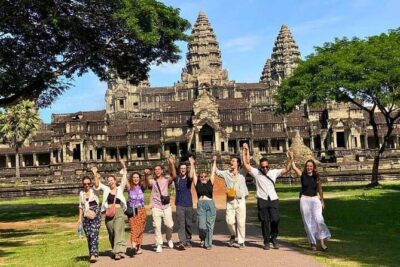
Angkor Wat Sunset Small Group Tour with Lunch Included
Read our review →