
REVIEW · BEIJING TEMPLE TOURS
Beijing: Confucius Temple and the Impercial College E-ticket
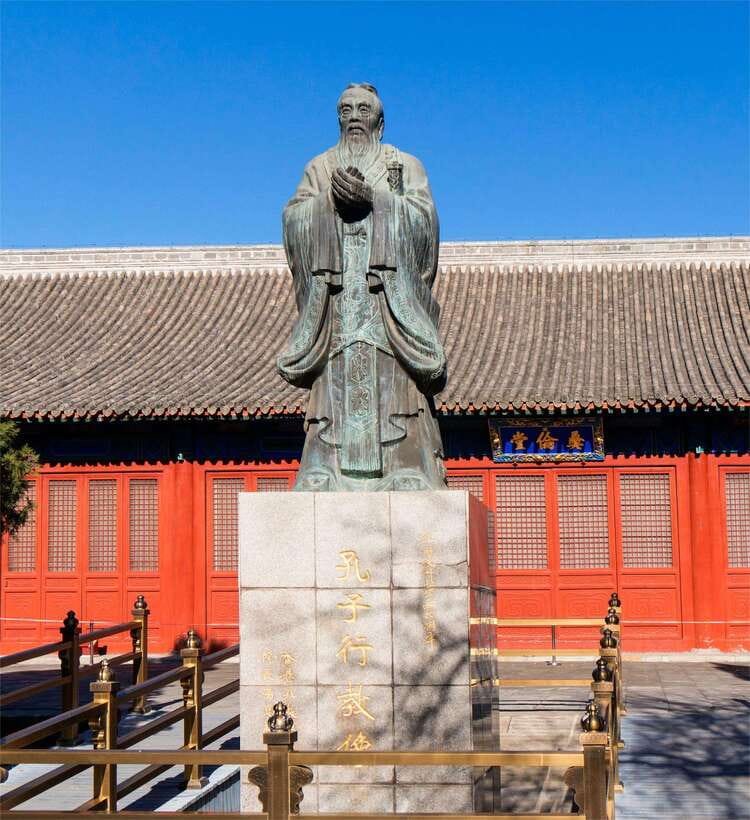
Beijing’s Confucius Temple and Imperial College offer a rare look at how education, government, and Confucian values shaped imperial China. For about $7, you can walk through two historic compounds, inspect thousands of examination tablets, and see grand halls built around courtyards rather than modern city streets.
I like the clear QR-code entry, which keeps this simple for international visitors, and the chance to see 51,624 names connected with China’s imperial examinations. The main consideration is that this is an attraction ticket, not a guided tour, so you need to make your own sense of the buildings unless you arrange an audio guide at the entrance.
Key points to know before you go
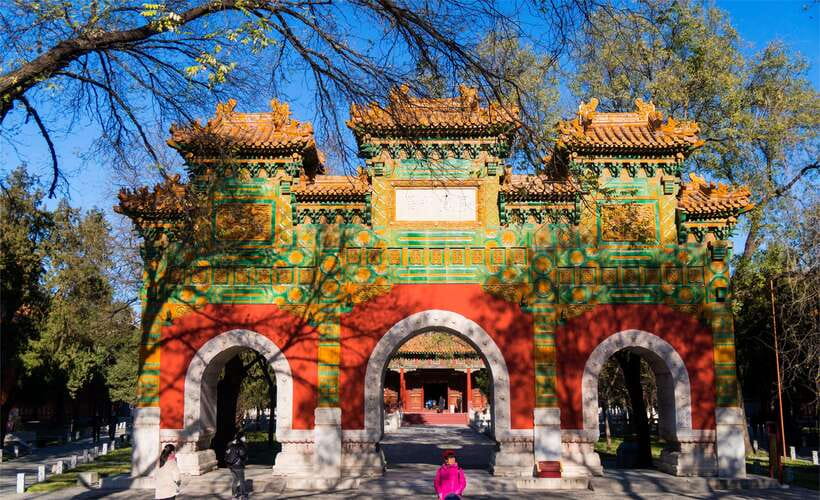
- Two historic sites in one visit: The Confucius Temple and Imperial College sit together in the traditional arrangement of temple on the left and college on the right.
- Yuan Dynasty foundations: Both compounds date from the early 14th century and preserve more than 700 years of institutional history.
- Imperial examination evidence: One hundred ninety-eight stone tablets record the names, birthplaces, and ranks of successful candidates.
- Three courtyards at each site: The layout leads you from formal gates toward halls used for worship, teaching, and ceremony.
- Simple admission: Bring your original passport and show the electronic ticket QR code at the attraction.
- A low-cost cultural stop: At $7 per person, this offers substantial historical content without the cost of a private guide.
Why this Beijing visit matters
The Confucius Temple and Imperial College are more than pretty old buildings. Together, they explain how imperial China trained officials and honored the thinker whose ideas shaped education and public life for centuries.
The temple was built in 1306 during the Yuan Dynasty. The college followed in 1308. Through the Yuan, Ming, and Qing Dynasties, the temple hosted ceremonies honoring Confucius, while the Imperial College served as the highest state educational institution and the government body responsible for education.
That pairing gives your visit a useful structure. At the temple, you see formal ritual and public honor. At the college, you see the setting for learning and administration. The two sites help explain why education was not simply a private matter in imperial China. It was tied directly to government service.
I would allow a substantial part of a day for the visit, even though the ticket itself is valid for one day. The buildings are not presented as a fast-moving attraction. You move through gates, courtyards, halls, tablets, and exhibitions. If you hurry, you can see the main elements, but you will miss the point of the layout.
More Entry Tickets in Beijing:
- Beijing: The Temple of Heaven or Summer Palace Entry Ticket
★ 4.6 · 1,286 reviews - Temple of Heaven Ticket
★ 5.0 · 482 reviews - Beijing: Lama Temple (Yonghe Temple) Admission Ticket
★ 4.8 · 297 reviews
Entering with your QR code and passport
Admission is refreshingly direct. You need your electronic ticket and your original passport. The instructions specifically require you to enter with the original document, so a photograph or copy should not be treated as a safe substitute.
At the entrance, use the QR code connected with your booking and present your passport for identification. The ticket includes admission to the attraction. It does not include a guide, transportation, meals, or other services.
This is a good choice if you want to set your own pace. You are not tied to a meeting time for a walking group, and the private-group label does not change the basic nature of the product: you are purchasing an attraction ticket rather than joining a detailed, guide-led history tour.
The site is listed as wheelchair accessible. That is useful, though historic compounds can still include uneven surfaces or different thresholds. If you have specific mobility needs, it is sensible to confirm the practical route at the entrance.
The Confucius Temple’s formal central axis
Begin with the Confucius Temple. Its plan follows a central north-south axis, with the principal buildings arranged one after another. You pass through the Teacher Gate, then the Dacheng Gate, before reaching Dacheng Hall and Chong Sheng Temple.
This arrangement is not accidental decoration. The progression makes the visit feel increasingly formal as you move inward. Gates mark changes in status and purpose, while the central route directs attention toward the main halls.
The temple covers more than 22,000 square meters, with about 7,400 square meters of constructed space. It has three courtyards, giving you room to pause between buildings instead of moving through one cramped interior.
Dacheng Hall is the main focus. It was connected with ceremonies honoring Confucius, and the site now includes an exhibition about the restored hall. You can also see an exhibition about Confucius and another covering the history of the Beijing Confucius Temple.
These exhibitions matter because the buildings alone do not explain every detail. The displays provide context for the ceremonial role of the temple and help you understand why Confucius became central to official education and government culture.
An audio guide may be available for purchase at the temple entrance. This is worth considering if you want more explanation than the ticket alone provides. Since no guide is included, the audio option can fill the gap without requiring a private tour.
The 198 stone tablets and the imperial examination
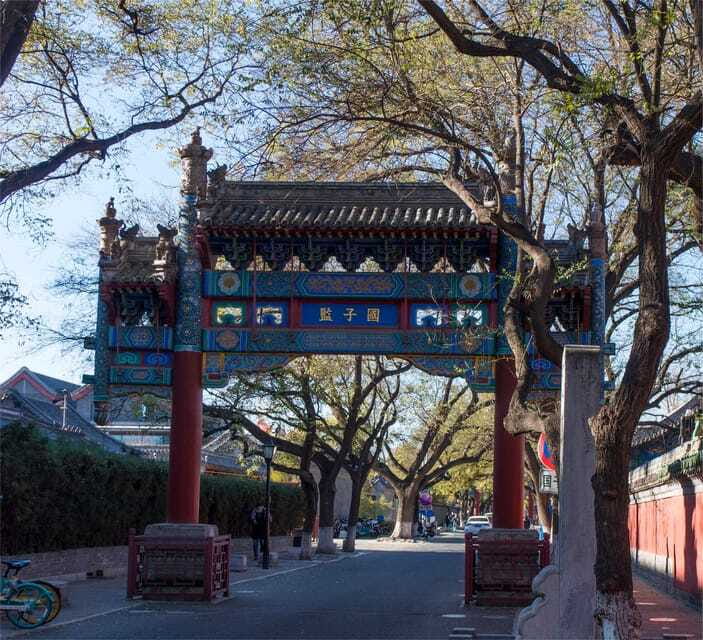
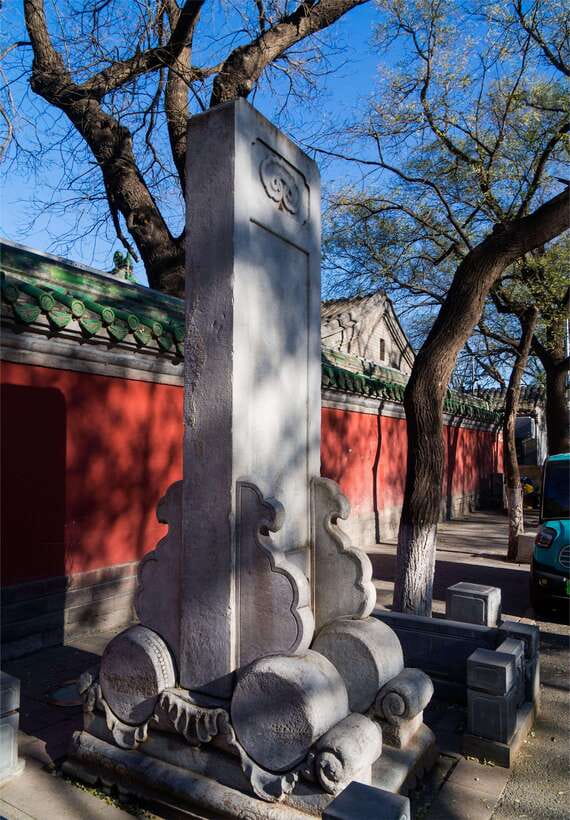
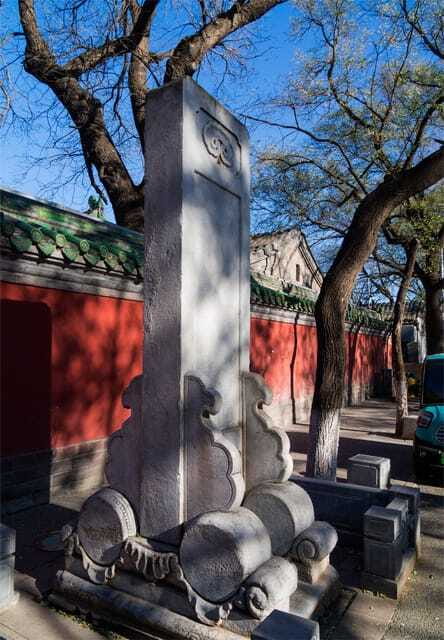
The most distinctive part of the temple is its collection of examination tablets. There are 198 stone tables, arranged in four groups on either side of the front courtyard.
Across them, 51,624 names, birthplaces, and ranks of successful examination candidates were carved into stone. This is not just a list of names. It is a record of the system that selected officials for imperial government.
The imperial examination gave education a direct path into public service. Candidates competed through a demanding series of tests, and success could change the standing of an entire family. Seeing the names recorded in a formal temple setting makes the scale of that system easier to grasp.
Take your time here. The tablets can look repetitive at first, especially if you cannot read the Chinese characters. Their value is cumulative. You are looking at thousands of individual achievements preserved as part of a state system that lasted across several dynasties.
This area may be less immediately dramatic than a colorful hall or ornate gate, but it is arguably the most important stop for understanding the site. The tablets connect the temple to real people, real examinations, and the long machinery of government.
A few more temple visits around Beijing worth a look
- Beijing Classic Full-Day Tour including the Forbidden City, Tiananmen Square, Summer Palace and Temple of Heaven
★ 4.0 · 610 reviews - Temple Heaven, Lama Temple, Summer Palace & Peking Duck Bus Tour
★ 5.0 · 377 reviews - Temple Heaven, Summer Palace, Lama Temple, Hutong Bus Tour
★ 4.7 · 319 reviews - Beijing: Entry to Temple of Heaven Park
★ 4.6 · 314 reviews
From temple to Imperial College
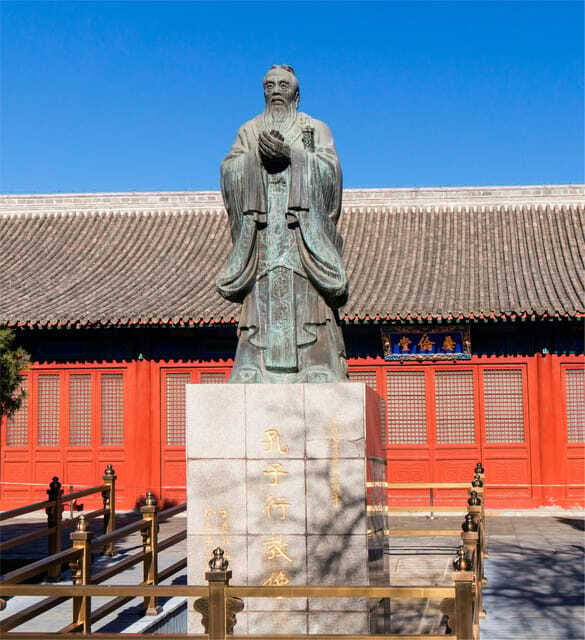
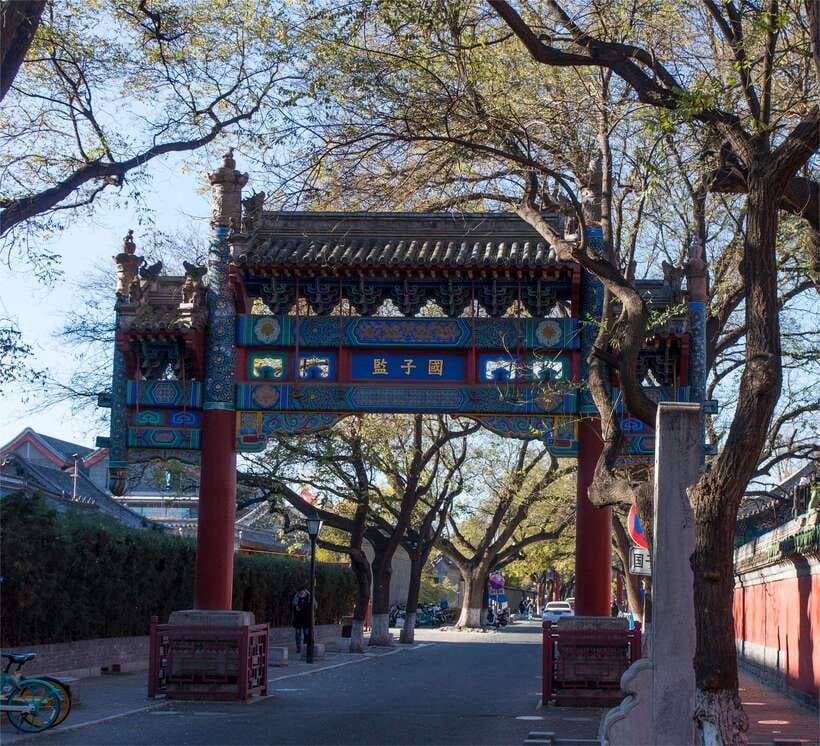
The Imperial College, known in Chinese as Guozijian, occupies the other half of the visit. It was built in 1308, during the Yuan Dynasty, and covers about 28,000 square meters.
The traditional arrangement is often described as temple on the left and college on the right. That physical relationship reflects the close connection between Confucian teaching and state education.
The college served as the highest educational institution and education administration office under the Yuan, Ming, and Qing Dynasties. In practical terms, this was not simply a school. It was part of the state structure that organized official learning.
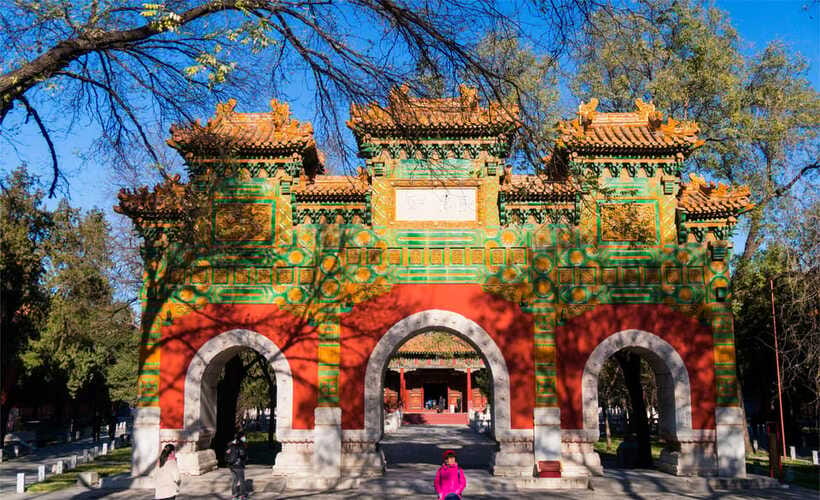
Its own central axis leads through Jixian Gate, the Taixue, or Imperial College, Gate, a glazed memorial arch, Biyong Hall, Yilun Hall, and Jingyi Hall. As at the temple, the sequence of gates and halls gives the complex its rhythm.
You will also find two halls, six main rooms, an Imperial Tablet Pavilion, and Bell and Drum Pavilions arranged symmetrically along the central route. The symmetry is one of the easiest features to appreciate even if you have limited background in Chinese architectural history.
Look for the contrast between open courtyards and enclosed halls. The courtyards give the compounds a calm, measured pace, while the main buildings focus attention on teaching, ceremony, or official recognition.
Biyong Hall and the college’s educational role
Biyong Hall is one of the central landmarks of the Imperial College. Its position on the main axis reflects the importance of formal instruction within the compound.
The site’s arrangement helps you picture education as a public and political activity. This was not an informal academy tucked away from government. The college was tied to the state, and its buildings were designed to express order, authority, and learning.
The Imperial College also helps balance the visit. The Confucius Temple focuses on honoring a great teacher and recording examination success. The college shows the institutional setting in which advanced education was administered.
I find that the college rewards a slower walk than a quick checklist approach. Pause in each courtyard and look back toward the gate you just passed. The layered views are part of the architectural experience, and they make the symmetry easier to understand.
The supplied information does not identify a specific guide or lecturer for this experience. Plan on exploring independently unless you purchase the audio guide option at the temple entrance.
What the exhibitions add
Three exhibitions are listed within the Confucius Temple: the Exhibition of the Restored Dacheng Hall, the Exhibition of the Great Confucius, and an exhibition on the history of the Beijing Confucius Temple.
These displays give the visit more substance than a simple walk around historic buildings. They help connect the architecture to the people, ceremonies, and institutions that used it.
The restored hall exhibition should be especially useful if you want to understand how the main ceremonial space has been preserved. The Confucius exhibition provides a closer look at the figure at the center of the temple’s purpose. The history exhibition places the Beijing site within its long institutional story.
You will get the most from these displays if you read slowly and link them to what you have just seen outside. The tablets make more sense after you understand the examination system, and the ceremonial halls make more sense after you learn about Confucius’s role in education.
How much time should you allow?
The ticket is valid for one day, and availability is checked for starting times. The information does not set a fixed visit length, so you can plan according to your interests.
For a quick visit, focus on the central axes of both compounds, the stone tablets, Dacheng Hall, Biyong Hall, and the exhibitions. For a fuller visit, allow time to pause in the courtyards and read the displays.
I would not treat this as a five-minute photo stop. The two sites cover large areas, and their meaning comes from the relationship between buildings, courtyards, tablets, and exhibitions.
The absence of a fixed guided schedule is useful if your Beijing plans are crowded. You can fit the visit into a day of sightseeing and move at your own speed. On the other hand, visitors who want a flowing historical explanation may find the ticket too bare without the audio guide.
Is the $7 ticket good value?
At $7 per person, this is strong value for anyone interested in Chinese history, architecture, education, or government. You receive access to two connected historic compounds, several exhibitions, Yuan Dynasty architecture, and one of the most substantial surviving records of the imperial examination system.
The price is especially reasonable because the visit offers more than a single hall or isolated monument. You get a complete progression from ritual space to educational institution.
The limitation is that the low price covers entry only. You should not expect a personal historian, transportation, meals, or a planned walking route. If you prefer a fully explained experience, the extra cost of an audio guide or separate guide service may be worthwhile.
For independent sightseeing, though, the ticket keeps the visit affordable and flexible. The high overall rating of 4.4 from 92 ratings fits the basic appeal: the site is easy to enter, inexpensive, and packed with historical material.
Who will enjoy this experience most?
I would recommend it to you if you like historic buildings with a clear institutional purpose. It suits people who want to understand how imperial China connected education with government, rather than simply collecting photographs of famous monuments.
It is also a good stop for architecture fans. The Yuan Dynasty origins, axial planning, glazed memorial arch, symmetrical pavilions, and layered courtyards give you plenty to examine.
Families and students may find the examination tablets useful because they turn a large historical idea into something visible. The names, birthplaces, and ranks make the imperial examination system more concrete.
You may want to choose another activity if you need constant narration, a tightly organized itinerary, or a modern entertainment-style attraction. This visit asks you to pay attention to layout and context. Its rewards are quiet and cumulative.
Practical advice for a smoother visit
Save the electronic ticket where you can open the QR code easily. Bring your original passport, not only a copy or phone image, because the entry instructions specifically require it.
Wear shoes suitable for walking through courtyards and between buildings. The site covers a sizeable area, and a slow visit is more satisfying than rushing from hall to hall.
Start with the central route at the Confucius Temple, then study the stone tablets before moving through the exhibitions. Continue to the Imperial College and follow its central axis toward Biyong Hall and the other main buildings.
If you want more explanation, ask about the audio guide at the entrance. It is not included in the ticket, but it may make the displays and architecture easier to understand.
The activity is listed as valid for one day, with free cancellation up to 24 hours in advance and a reserve-now, pay-later option. Those terms are helpful if your Beijing schedule is still changing.
Should you book the Confucius Temple and Imperial College ticket?
Book it if you want an affordable, self-guided cultural visit with genuine historical weight. The combination of Yuan Dynasty buildings, Confucian ceremonial spaces, Imperial College courtyards, and 51,624 examination names gives you plenty to think about for a modest price.
I would be especially keen to include it in a Beijing plan if you have already seen the city’s largest imperial attractions and want a quieter look at education and official life. Just remember that the ticket opens the door but does not explain everything. Bring your passport, use the QR code, consider the audio guide, and give the courtyards and stone tablets enough time to speak for themselves.
FAQ
What does the ticket include?
The ticket includes admission to Beijing’s Confucius Temple and Imperial College.
How much does admission cost?
The listed price is $7 per person.
How do I enter the attraction?
Show the electronic ticket QR code and your original passport at the attraction.
Is the ticket valid for one day?
Yes. The ticket is valid for one day, with starting-time availability checked when you book.
Is a guide included?
No guide is specified as included. An audio guide may be available to purchase at the entrance to the temple.
Is the attraction wheelchair accessible?
Yes. The attraction is listed as wheelchair accessible.
Just added around Beijing
- Temple of Heaven Admission Ticket★ 4.0 · 36 reviews
- Temple of Heaven Morning Walking Tour with Ticket★ 5.0 · 7 reviews
- Full-Day Beijing Forbidden City, Temple of Heaven and Summer Palace Tour★ 4.5 · 40 reviews
- Summer Palace and Temple Of Heaven Private Tour★ 5.0 · 9 reviews
- Private Day Tour:Tiananmen Square,Forbidden City Temple of Heaven★ 5.0 · 16 reviews
- 4-Hour Private Tour: Lama Temple, Confucius Temple, Guozijian Museum with Dim Sum★ 5.0 · 21 reviews
- Private Day to T-Square, Forbidden city, Temple of heaven, Summer palace Tour★ 5.0 · 54 reviews
- Local’s Beijing: Forbidden City Insider Tour +Temple +Duck Feast★ 4.5 · 66 reviews
Beijing Temple Tours, compared.
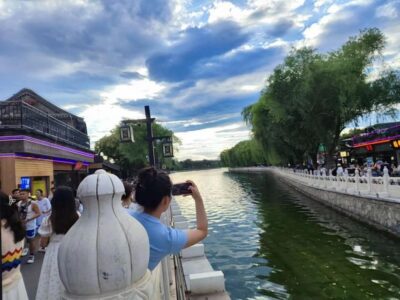
The Temple of Heaven or Summer Palace Entry Ticket
Read our review →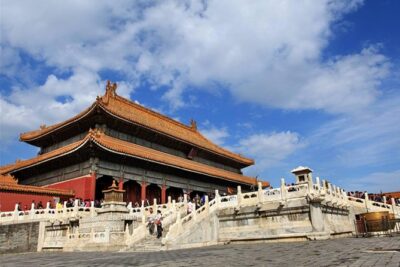
Beijing Classic Full-Day Tour including the Forbidden City, Tiananmen Square, Summer Palace and Temple of Heaven
Read our review →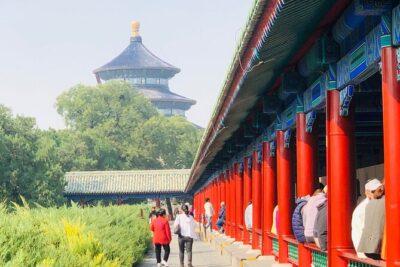
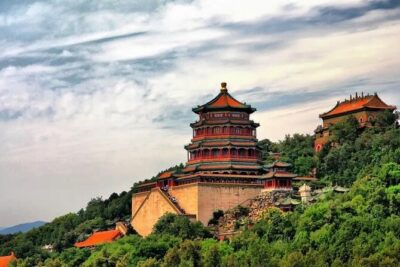
Temple Heaven, Lama Temple, Summer Palace & Peking Duck Bus Tour
Read our review →
Temple Heaven, Summer Palace, Lama Temple, Hutong Bus Tour
Read our review →
Temple of Heaven, Summer Palace, Lama Temple, Hutong Tours
Read our review →
Browse the lists this tour appears in