
REVIEW · ANGKOR WAT TOURS
From Siem Reap: Banteay Srei Temple & Grand 5 Temple Tour
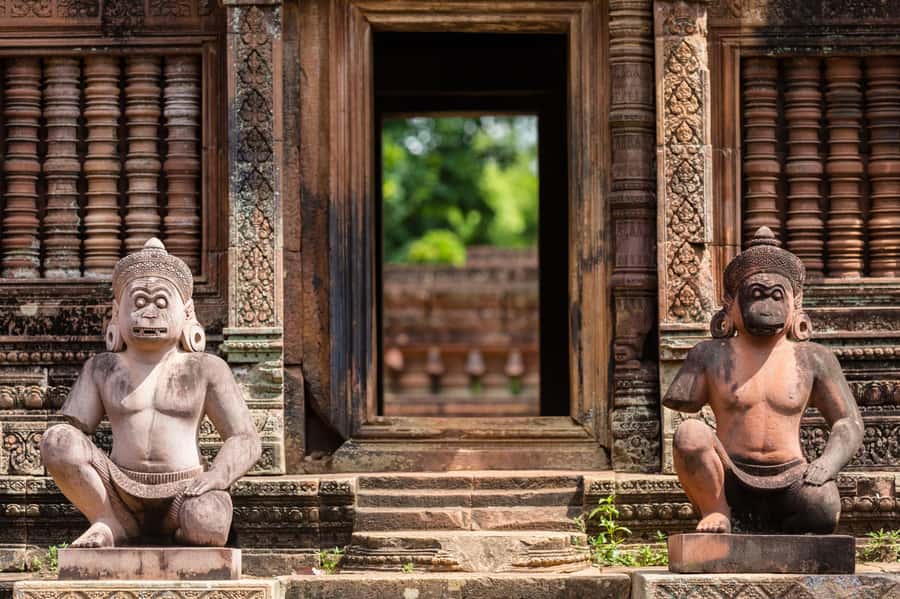
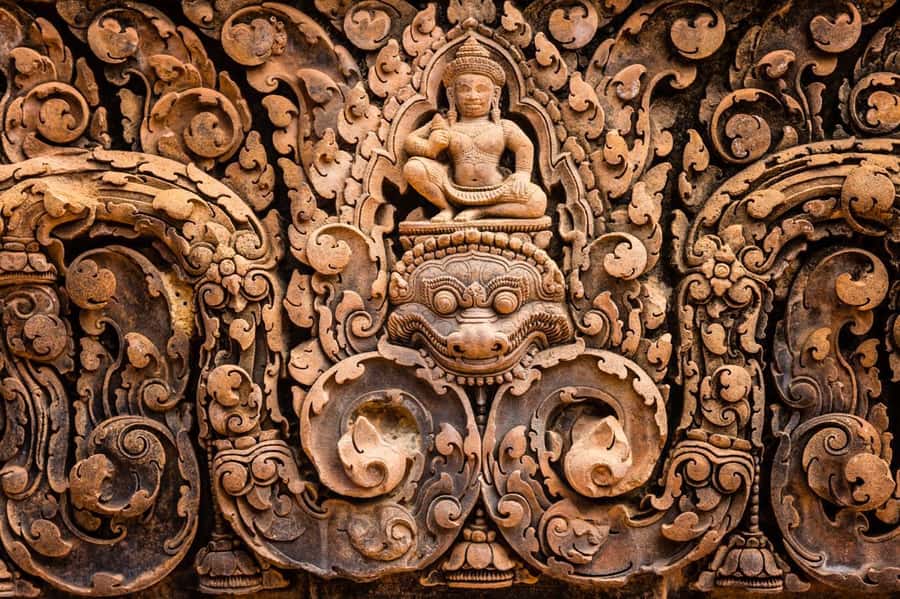
Banteay Srei is the star here: a small temple covered in remarkably fine pink sandstone carvings. This tour also takes you beyond the usual Angkor Wat circuit to five Grand Circuit temples, giving you a fuller picture of Khmer building, religion, and royal planning.
I like the mix of famous details and quieter ruins, especially the chance to see Preah Dak Village and hear about everyday Cambodian life. I also like the practical touches: air-conditioned transport, bottled water, and cold towels after each hot temple walk.
The main drawback is the pace and heat. This is a long day with plenty of walking, uneven ground, and stairs, and the shared option is not suitable for children under 12 or people with mobility impairments.
Key points to know before booking
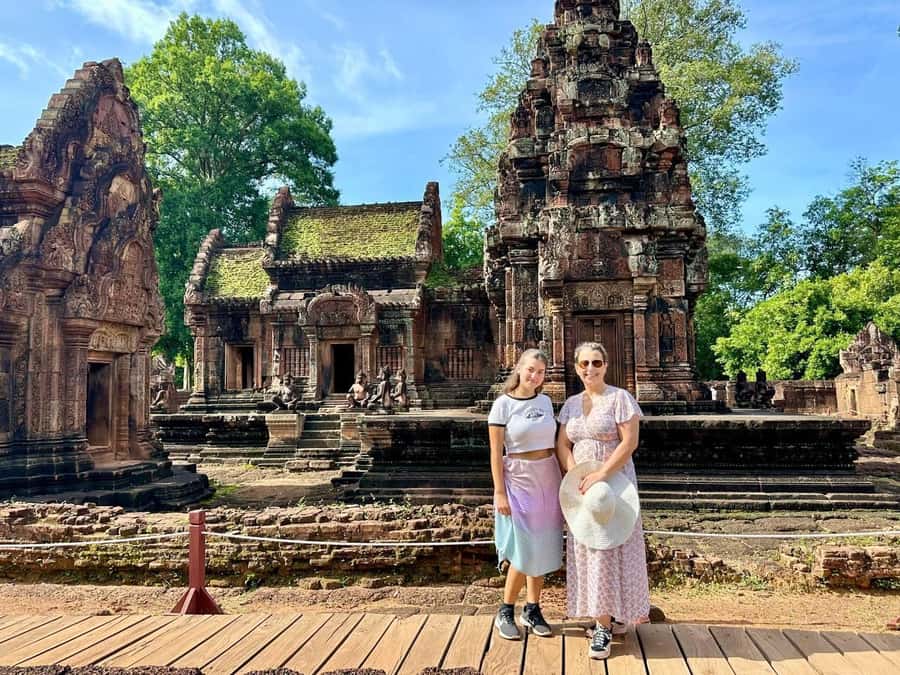
- Banteay Srei is the visual prize: Fine pink sandstone and small, precise carvings make it unlike the larger stone temples.
- Six temples appear on the route: Pre Rup plus East Mebon, Neak Poan, Ta Som, and Preah Khan, often grouped as the five Grand Circuit temples.
- The guide shapes the day: Guides such as Ry, Phyrom, Nara, Tola, Lok, and Narath are praised for clear explanations, temple details, and Cambodian cultural context.
- Local life is part of the plan: The stop at Preah Dak Village gives you a break from monuments and a glimpse of rural Siem Reap Province.
- Small comforts matter: Hotel pickup, air-conditioned transport, cold towels, and bottled water help you manage Cambodia’s heat.
- Budget for the temple pass and lunch: The $20 tour price does not include the Angkor Temple Pass or your midday meal.
Why Banteay Srei deserves the early start
The day begins with hotel pickup at about 7:50 AM. From Siem Reap, you travel by high-quality vehicle toward the Angkor temple area, with an English-speaking guide explaining the setting, Khmer beliefs, and the plan for the day.
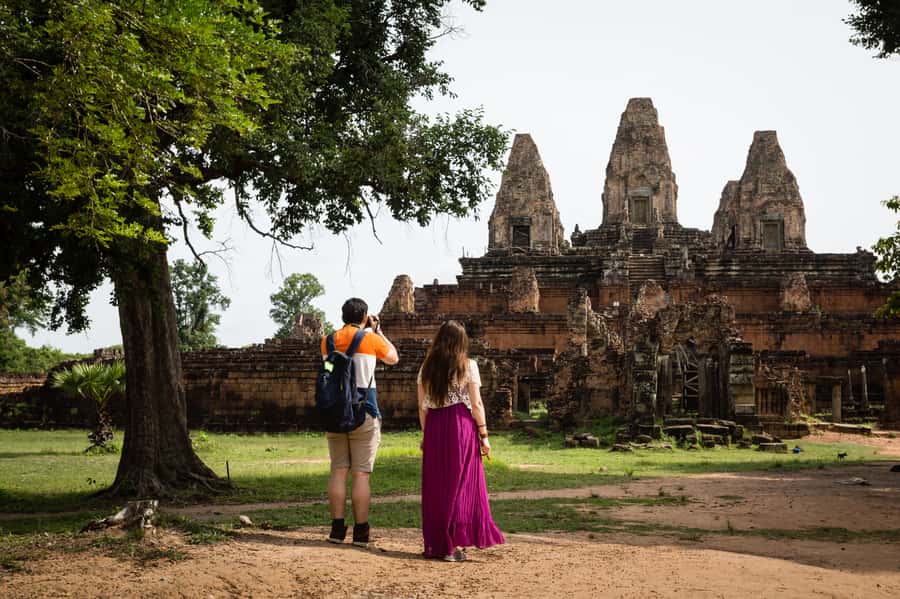
The first temple is Pre Rup, a compact brick and laterite monument with a strong, formal shape. It is one of the more complete structures in the complex, so it gives you a useful introduction to Khmer temple design before the more delicate work at Banteay Srei.
Pre Rup is not as intricate as Banteay Srei, and you may find its broad steps and exposed stone especially hot. Still, it helps you see how the Khmer built temples as symbolic mountains, with higher levels leading toward a sacred center.
Banteay Srei follows, and this is where the day’s most detailed carving appears. The name means Citadel of Women, though the tour presents the common idea that the temple’s refined workmanship reflects the skill of women craftsmen. The most useful thing to understand is that Banteay Srei is smaller than Angkor Wat, but its decoration is unusually close to the viewer.
The pink sandstone gives the temple a warm color that changes in strong sunlight. Look closely at the lintels, doorways, and guardian figures. Instead of relying only on a guidebook description, ask your guide to point out the stories and figures in the carvings. Guides such as Ry, Phyrom, Lok, and Nara have been praised for doing exactly this, explaining Hindu mythology and architectural details in plain English.
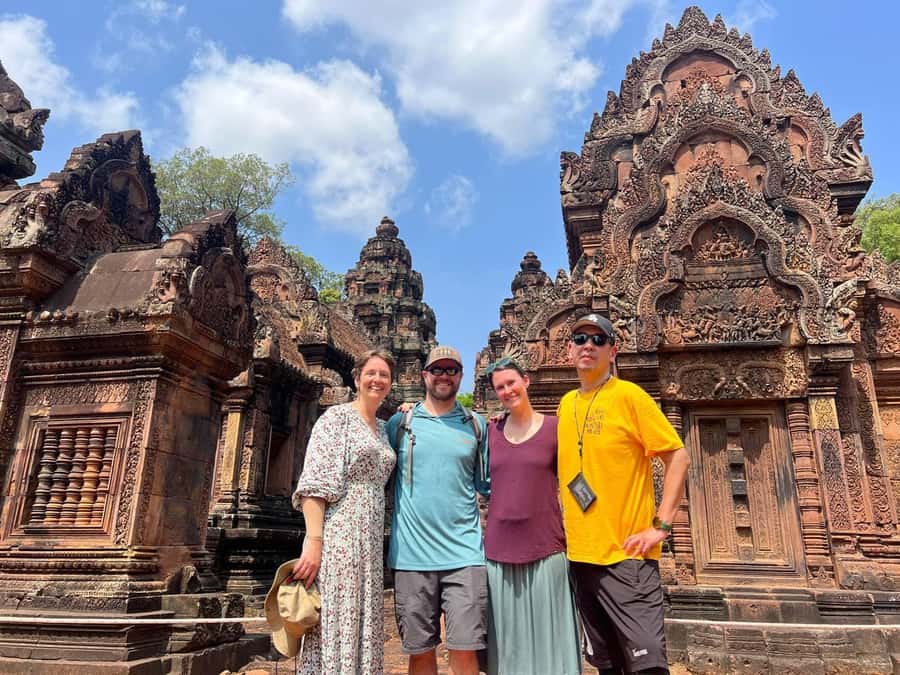
Banteay Srei is also one of the better places on this route for photographs. Several guides, including Chenda and Dara Try, are noted for helping visitors find good angles and framing. That can be useful in a large group, where it is easy to rush from one doorway to the next without noticing the smaller carvings.
There is a practical tradeoff. Banteay Srei is a major attraction, so it may not feel as quiet as the less visited temples later in the day. The walk is manageable for most active visitors, but the sun, stone surfaces, and lack of shade can make it tiring.
More Angkor Wat Tours in Siem Reap:
- Angkor Wat Sunrise or Sunset Tour with Guide from Siem Reap
★ 5.0 · 12,109 reviews - Siem Reap: Angkor Wat: Small-Group Sunrise or Sunset Tour
★ 5.0 · 9,444 reviews - Siem Reap: Angkor Wat 2-Day Tour with Sunrise and Sunset
★ 4.9 · 4,429 reviews
Preah Dak Village and a taste of local life
The tour includes a stop outside the monuments at Preah Dak Village. This matters because a day spent only among royal temples can leave you with a very polished picture of Cambodia. A village stop adds ordinary life to the story.
You might see local activity, homes, food preparation, or farming scenes, depending on the day and the exact stop. The supplied plan says you can observe local life, while individual tours have also included small food-related moments, such as stopping at a farm to pick and eat mangoes.
Do not expect a formal museum or a long cultural program here. The value is in the contrast. After hearing about kings, priests, reservoirs, and sacred buildings, you get a short look at the communities living in the same wider province today.
A good guide can make this stop more meaningful by explaining local habits and the connection between rural life and the temple economy. Ho Heang, Narath, and other guides have been praised for discussing the area and nature along the road, not only reciting dates at each monument.
East Mebon and the engineering behind Angkor
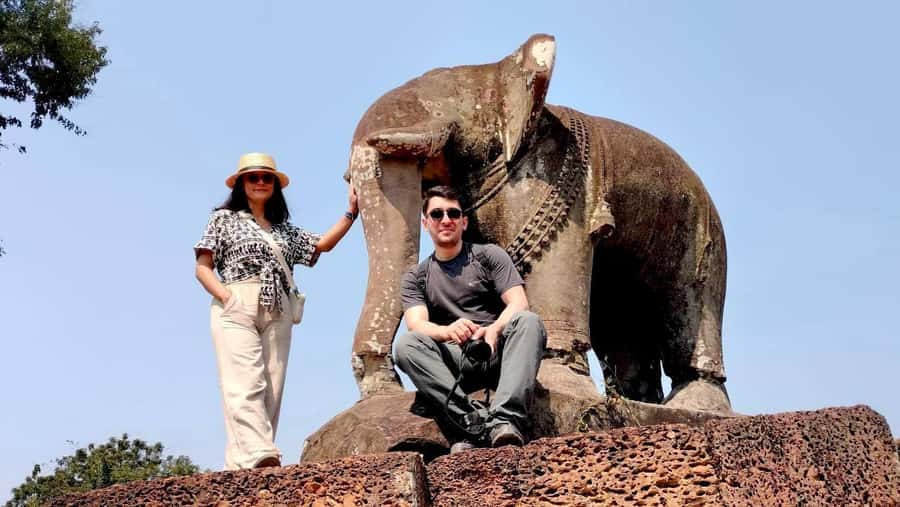
After lunch, the route continues to East Mebon, a temple that once stood on an island in a huge reservoir. The water is no longer the defining feature it was when the temple was built, so your guide’s explanation is important. Without that context, you may see only another stone structure in a dry setting.
East Mebon shows how temples and water management worked together in the Khmer capital. The reservoir was not simply decorative. It formed part of a much larger system tied to royal power, agriculture, movement, and religious symbolism.
This is one reason I prefer the Grand Circuit after seeing the main Angkor temples. The route keeps shifting scale. Banteay Srei focuses your eye on delicate carving, while East Mebon asks you to imagine the enormous waterworks that once shaped the area.
The stop also gives you another chance to study recurring Hindu imagery and temple guardians. Your guide can connect the carvings here with the ideas introduced earlier, making the day feel like one story rather than six unrelated photo stops.
Neak Poan, the island temple with a sacred water idea
Neak Poan is smaller and has a different mood. It sits on an island in Jayatataka Baray, a reservoir associated with a mythical Himalayan lake whose waters were believed to have healing qualities.
The approach across the water is part of the experience. You are not simply walking up to a large pyramid. The setting places the shrine within a carefully planned sacred environment, and the water gives it a calmer character than the larger temple compounds.
Neak Poan may not satisfy you if you want vast ruins or long galleries of carvings. Its importance is more symbolic than monumental. Listen for the explanation of healing water, sacred geography, and the way Buddhist ideas appear alongside older Hindu traditions.
One of the strengths of this tour is that the guides do not limit the day to one religion. Phyrom, for example, has been praised for explaining both Hindu and Buddhist beliefs and showing how the sites connect. That context helps you read the temples as places of changing faith, not as frozen examples of a single era.
A few more temple visits around Siem Reap worth a look
- Siem Reap: Full-Day Angkor Wat Guided Tour with Sunset
★ 4.9 · 3,803 reviews - Angkor Wat Sunrise tour with Small – Group and Guide tours
★ 5.0 · 3,655 reviews - Angkor Wat Highlights and Sunrise Guided Tour from Siem Reap
★ 5.0 · 3,213 reviews - Angkor Wat Sunset Small Group Tour with Lunch Included
★ 5.0 · 3,059 reviews
Ta Som and the famous tree-covered gate
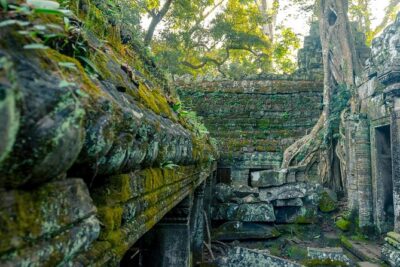
Ta Som is one of the smaller temples on the route, but its tree-covered stone gate gives it a memorable look. Roots have grown around parts of the structure, creating the kind of image many people associate with Angkor.
This is a good stop for seeing how nature and ruins now share the same space. Still, keep your expectations sensible. The tree growth is attractive, but it is not a separate adventure or a long forest walk. You visit a compact temple, examine its carvings, and move on.
Ta Som also rewards a slower guide. It is easy to photograph the gate and leave without looking at the rest of the monument. Ask about the layout, the carvings, and how the temple fits into the wider circuit. Guides such as Ra and James have been praised for keeping the pace comfortable while giving enough detail to make each stop worthwhile.
Preah Khan brings the day to a large finish
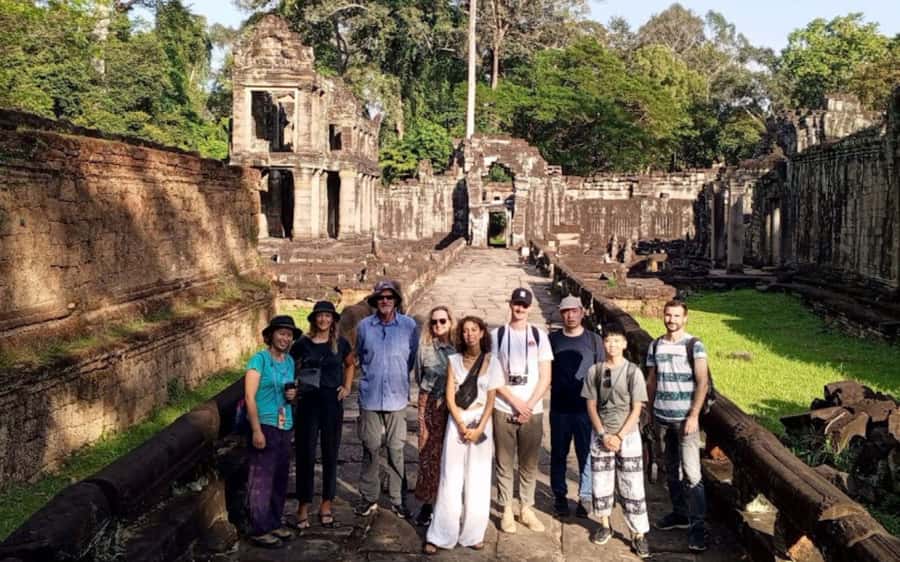
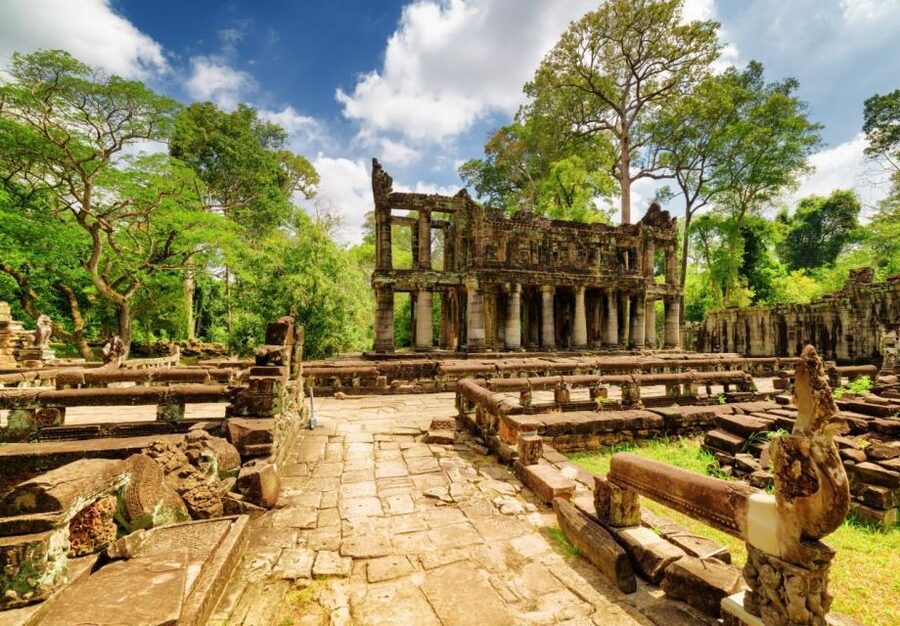
The final major stop is Preah Khan, a broad monastic complex filled with corridors, carved stone, and layers of religious meaning. After the smaller scale of Banteay Srei, Neak Poan, and Ta Som, Preah Khan gives you room to understand how expansive an Angkor religious center could be.
You will see a mixture of passageways, courtyards, doorways, and carved surfaces. It can feel confusing without a plan, so stay near your guide at the start. A good explanation of the layout will help you understand where people gathered, how movement worked through the complex, and why the building served more than one purpose.
Preah Khan is also a strong place to discuss the blending of Buddhist and Hindu traditions. The temples were altered and reused over time, and the result is not always tidy. That untidiness is part of the appeal. You are seeing a living religious center across different periods, not a single finished design.
This last temple can be tiring because the day has already included several walks. The upside is that you have built enough background to appreciate details you might have missed in the morning. The downside is simple: if the heat is intense, you may enjoy the temple less than you would with a shorter itinerary.
What the guide adds to the temple day
The guide is the key variable. The tour is affordable, but the value depends heavily on how clearly the history and symbolism are explained.
Several guides connected with this experience have received especially strong praise. Ry is described as calm, respectful, and willing to give people time at each site. Phyrom is praised for using maps and photographs to explain how the temples fit together. Nara is noted for temple knowledge, Cambodian history, and friendly touches such as sharing freshly picked mangoes.
Tola, Lok, Narath, Ra, Kim, Dara Try, Chenda, and Pip are also praised for clear English, humor, patience, photography help, or careful attention to individual needs. You may not receive one particular guide, so book this tour for the overall guiding service rather than a guaranteed personality.
The best guides do three jobs:
- They explain what you are looking at before the stone becomes overwhelming.
- They connect Hindu stories, Buddhist practice, royal power, and daily life.
- They watch the group’s pace, answer questions, and help you handle the heat.
That last point is not minor. A temple day can become a march if nobody checks whether the group is keeping up. The strongest accounts describe guides who pause, answer questions, and make sure people are comfortable.
Transport, lunch, and the real cost
The listed price is $20 per person, which is strong value for a full day of transport, hotel pickup and drop-off, an English-speaking guide, local taxes, bottled water, and cold towels. Air-conditioned transport matters in Siem Reap, especially after walking across exposed stone.
Cold towels may sound like a small extra, but they are one of the most practical features of the day. Guides and drivers may offer water and towels after temple visits, giving you a quick reset before the next stop.
Lunch is not included. You stop at a nearby restaurant, where you can choose Cambodian dishes such as curries, soups, or stir-fries. Bring cash, since the meal is an extra expense and cash is also recommended for the day.
The Angkor Temple Pass is not included either. You stop at the Apsara Authority ticket office to buy your pass. Add that cost to the $20 when comparing this experience with private alternatives.
The private option may also require an extra payment for a guide. Check the exact option you select, since the information provided says a guide for the private version is available as an add-on.
Clothing, walking, and how to prepare
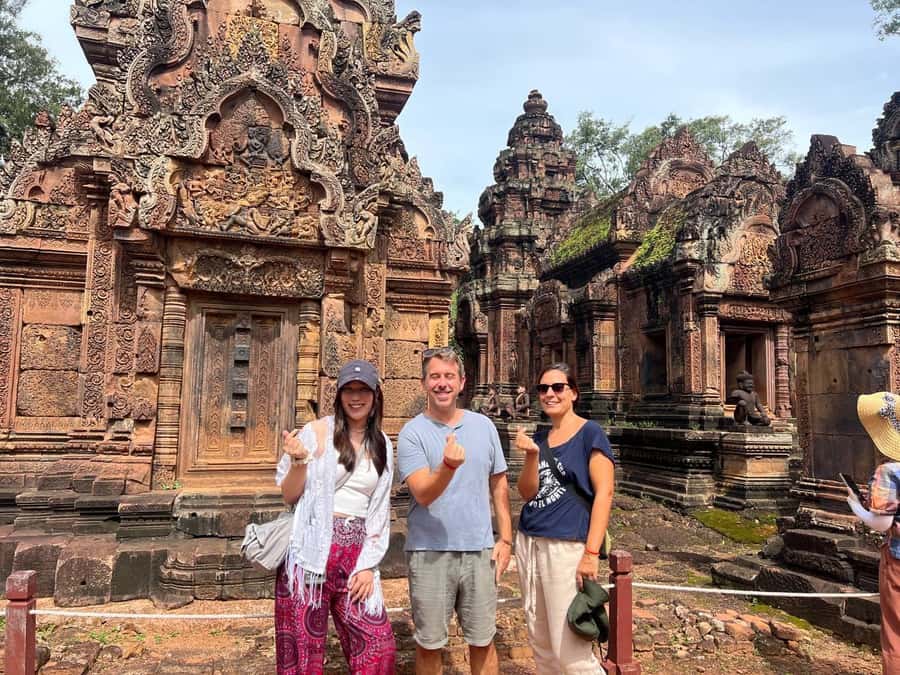
Temple rules are strict. You need to cover your knees and shoulders, and this applies to both men and women. Shorts and sleeveless tops can lead to refused entry, so wear light clothing that still meets the dress code.
Bring hiking shoes or sturdy walking shoes, sunscreen, insect repellent, and cash. Large bags and luggage are not allowed, and pets and smoking are not permitted.
The tour runs in all weather. Dress for heat, but also be ready for rain. A light cover-up can solve both the temple dress rule and sudden changes in weather.
This is not a suitable choice for people who use wheelchairs or have walking disabilities. The shared tour is also not suitable for infants or children under 12. For older children and active adults, the decision depends on tolerance for a full day of heat, walking, and repeated temple visits.
Who should book this Grand Circuit tour?
I would choose this tour if you have already seen, or plan to see separately, the most famous central Angkor sites and want more than the standard Angkor Wat photograph. It gives you a useful range: delicate carving at Banteay Srei, water symbolism at Neak Poan, tree-covered ruins at Ta Som, and a large monastic complex at Preah Khan.
It also suits solo visitors and people who want historical explanation without paying private-tour prices. The shared format creates a chance to meet people from different countries, while the guide provides structure and cultural context.
I would hesitate if you dislike long days, group schedules, hot weather, or walking over uneven temple grounds. I would also choose a private format if you need a flexible pace or want to add places such as the Landmine Museum, which one guide was able to include for a small group.
With a 4.8 rating from 262 reviews, the experience has a strong record, but the real reason to book is practical: six varied temples, transport, guiding, water, and cold towels for $20, with only the pass and lunch added separately. Book it if you want a well-organized introduction to the quieter side of Angkor and can handle the physical demands of a full temple day.
FAQ
What temples are included in the tour?
The route includes Pre Rup, Banteay Srei, East Mebon, Neak Poan, Ta Som, and Preah Khan. The final five are commonly described as the Grand Circuit temples, while Pre Rup is also included in the day.
Is Banteay Srei included?
Yes. Banteay Srei is a main stop and is known for its pink sandstone and detailed carvings.
What time is hotel pickup?
You should be ready in your hotel lobby at 7:50 AM for pickup.
Is transportation included?
Yes. Hotel pickup and drop-off and transport in a high-quality vehicle are included.
Is an English-speaking guide included?
Yes, the shared tour includes an English-speaking guide. A guide for the private option is available as an add-on.
Is the Angkor Temple Pass included in the price?
No. The entrance fee is separate, and the tour stops at the Apsara Authority Ticket Office so you can buy your pass.
Is lunch included?
No. Lunch is at your own expense. The itinerary includes a stop at a nearby restaurant serving dishes such as curries, soups, and stir-fries.
What should I wear to the temples?
Your knees and shoulders must be covered. Shorts and sleeveless tops are not allowed for men or women.
Is the tour suitable for children?
The shared tour is not suitable for infants or children under 12 years old.
What happens if it rains?
The tour operates in all weather conditions, so dress appropriately and prepare for changing weather.
Just added around Siem Reap
- Ticket for Angkor Balloon Ride.★ 3.7 · 46 reviews
- Sunrise at Angkor Wat Temple: 3-Hour Private Tour★ 4.7 · 30 reviews
- Small-Group Full Day Angkor wat Guide tour with Sun set★ 5.0 · 136 reviews
- Siem Reap: Private 4-Day Angkor Wat and Phnom Kulen Tour★ 5.0 · 9 reviews
- Angkor Wat: Sunrise 2.5 Days Temples & Tonle Sap-Small Group★ 5.0 · 10 reviews
- Siem Reap: Ultimate Angkor Wat Offbeat Experience by Jeep★ 4.9 · 8 reviews
- Siem Reap: Personalized Angkor Wat Sunrise/Set by TukTuk/Car★ 4.9 · 41 reviews
- Siem Reap : Private Tuk-Tuk Tour of the Magnificent Temples.★ 4.9 · 14 reviews
Angkor Wat Tours, compared.
Angkor Wat Sunrise or Sunset Tour with Guide from Siem Reap
Read our review →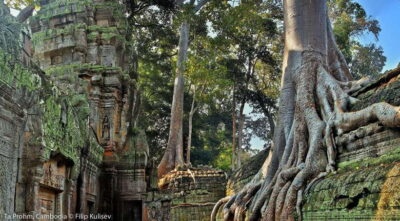
Angkor Wat: Small-Group Sunrise or Sunset Tour
Read our review →
Angkor Wat 2-Day Tour with Sunrise and Sunset
Read our review →
Angkor Wat Sunrise tour with Small – Group and Guide tours
Read our review →
Angkor Wat Highlights and Sunrise Guided Tour from Siem Reap
Read our review →
Angkor Wat Sunset Small Group Tour with Lunch Included
Read our review →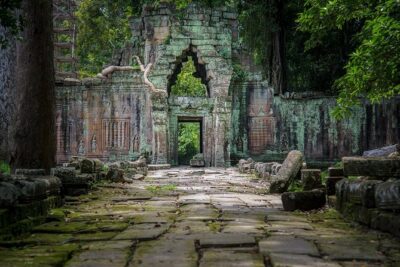
Full-Day Angkor Wat Sunrise Private Tour with Guide from Siem Reap
Read our review →Browse the lists this tour appears in