
REVIEW · ACROPOLIS & ANCIENT GREEK TEMPLE TOURS
Ancient Agora & Temple of Hephaestus Entrance Ticket
The Ancient Agora was where Athens talked, traded, argued, worshipped, and made decisions. This ticket takes you into that former civic center and the remarkably preserved Temple of Hephaestus, with an audio tour to give the stones some meaning. Flexible timing and a self-guided format are the main advantages.
I like the chance to move at my own pace, and I like that the ticket covers both the Agora and the Temple of Hephaestus. The main catch is practical: the package does not include a physical audio device or headphones, and the published rating is a modest 3.3 out of 5 from 22 ratings. Bring your own listening gear and choose this for independence, not personal guiding.
Key points to know before you book
- The Agora was Athens’ public meeting ground: Politics, commerce, religion, gossip, and criticism all shared this space.
- The Temple of Hephaestus is included: Your admission covers this important monument as well as the wider archaeological site.
- You choose the pace: Plan on roughly one to three hours, depending on how closely you follow the audio material.
- A timed mobile ticket reduces entry uncertainty: Your ticket is for a particular date and time slot.
- The audio tour needs your own equipment: No physical device or headphones are supplied.
- The price suits convenience more than a bare admission: At $33.74, you are paying for timed access and commentary, not just a gate ticket.
Why the Ancient Agora matters
I find the Agora more rewarding when I stop thinking of it as a field of ruins and picture it as Athens’ everyday public room. The Greek word agora means a gathering place or marketplace, and that plain translation tells you a great deal about the site.
People came here to buy and sell goods, but commerce was only one part of the scene. The Agora also served political, religious, social, and legal purposes. News traveled through this space. Arguments began here. People discussed public affairs, exchanged gossip, and criticized the government.
That last point helps explain why the site matters beyond its surviving stones. Ancient Athens is often linked with democracy, but democracy was not an abstract idea floating above the city. It depended on people meeting in public, hearing arguments, forming opinions, and taking part in civic life.
The audio tour is useful because the ruins alone cannot show all of that activity. A broken wall does not announce that merchants once worked nearby, or that public debate shaped the city around you. Commentary gives the site a human scale and helps you connect individual remains with the larger story.
More Acropolis and Ancient Greek Temple Tours in Athens:
- Athens: Cape Sounion & Poseidon Temple Sunset Half-Day Trip
★ 4.8 · 8,241 reviews - Athens: Cape Sounio & Poseidon Temple Trip with Audio Guide
★ 4.4 · 4,521 reviews - Cape Sounion and Temple of Poseidon Half-Day Small-Group Tour from Athens
★ 4.5 · 3,205 reviews
Entering the Agora with a timed mobile ticket
The ticket is designed for a specific date and time slot. That is useful if your Athens schedule is tight or if you want to avoid arriving without confirmed admission. The mobile format also means you can keep the booking on your phone rather than collecting a paper ticket.
You should check the selected time carefully before paying. This experience is non-refundable and cannot be changed for any reason, so an incorrect date or a late change can become an expensive mistake. The ticket is intended for people over 25, and reduced-price tickets are not available online.
The price is $33.74 per person. That is not the cheapest way to approach an archaeological site if you only want to walk in and look around. The value comes from combining entry to the Agora, entry to the Temple of Hephaestus, a reserved time, and an audio tour.
I would compare this cost with your priorities. If you want the simplest possible admission and already know the site well, the price may feel high. If you want context without joining a group, the package makes more sense. You are paying for structure and explanation while keeping control of your schedule.
The site is near public transportation, which makes it practical to fit into a day of sightseeing. Hotel pickup and drop-off are not included, so you arrange your own way there and back. Food, drinks, personal expenses, and gratuities are also outside the ticket.
The Agora as a marketplace and civic center
Give yourself time at the beginning to understand the Agora as a working part of Athens rather than a single monument. This was not simply a ceremonial square. It was a place where ordinary transactions and major public questions shared the same setting.
Merchants and sellers brought goods for people who gathered there. At the same time, news and political arguments moved through the crowd. The mixture is important. The Agora linked daily life with public life, so the person buying something, discussing a rumor, or criticizing the government was also part of the city’s political culture.
The audio commentary should help you follow that wider role. I would listen in a logical order at first, then pause the program whenever you want to inspect a feature more closely. A self-guided tour works best when you treat it as a tool rather than a marching order.
You do not have to match anyone else’s pace. You can spend extra time on a part that interests you, skip material that feels less relevant, or stop for a break. That freedom is especially useful if your group includes people with different levels of interest in ancient history.
The tradeoff is that no guide is physically present to answer questions. If you want a conversation, spontaneous stories, or help interpreting every area, a live tour may suit you better. Here, the quality of your visit depends on how much attention you give the audio and how well your own device works.
Following the audio tour without supplied headphones
The audio tour is included, but a physical audio device and headphones are not. This detail is easy to overlook and can affect the whole visit. Bring headphones that work with your phone, and check that you can access the audio material before you arrive.
I would also make sure your phone is charged. The supplied information does not promise charging facilities, Wi-Fi, or a backup device, so it is sensible to prepare before leaving your accommodation. Those are practical precautions rather than special requirements, but they matter when your main guide is digital.
Pay attention when selecting the audio option during booking. The ticket information specifically warns you to review the different options. If several audio formats appear, choose carefully instead of assuming they are identical.
An audio tour can be a good middle ground. You receive more explanation than you would from a bare admission ticket, but you avoid the fixed pace of a group. You can pause the narration while taking photographs or stop listening while you study the ruins.
I like that balance for the Agora. The site benefits from interpretation, yet the open setting invites quiet observation. You can listen to a section about public life, look across the remains, and imagine how conversation and trade filled the area.
More Entry Tickets in Athens:
- Afternoon English Tour: Sounion with Temple of Poseidon Ticket
★ 4.0 · 591 reviews - Athens: Agora and Hephaistos Temple Entrance Ticket
★ 4.0 · 449 reviews - Sounion tour with Official Guide &ticket for Poseidon Temple
★ 4.1 · 202 reviews - Athens: Temple of Olympian Zeus Entrance Ticket
★ 3.5 · 43 reviews
Meeting Socrates, Aristotle, and Plato in context
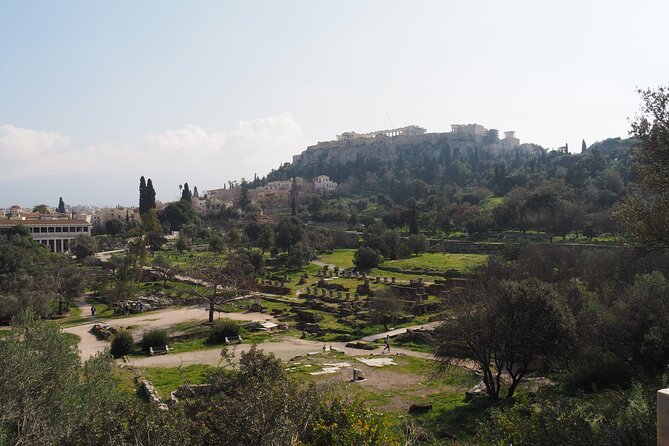
The Agora is associated with major Greek thinkers, including Socrates, Aristotle, and Plato. Their presence in the story gives the site extra appeal, but it is better to approach this connection with some care.
The important point is not simply that famous philosophers were linked to Athens. It is that the Agora was a place where ideas were exchanged in public. Discussion, criticism, and argument were part of the city’s social fabric. The site helps you picture philosophy as something connected to people and places, not only texts studied centuries later.
The audio material is particularly useful here because it can connect the physical setting with the intellectual life of the city. Without that context, you may see scattered foundations and columns without understanding why this location had such influence.
I would avoid rushing through this part. The Agora is easy to treat as a quick stop between larger Athens sights, but its importance comes from the way several parts of civic life met here. Politics, trade, religion, and discussion were not separated into neat departments.
That is also why the site suits repeat visitors to Athens. You may already know the Acropolis story, yet the Agora offers a different view of the city. It focuses less on monumental display and more on the places where public life operated.
Visiting the Temple of Hephaestus
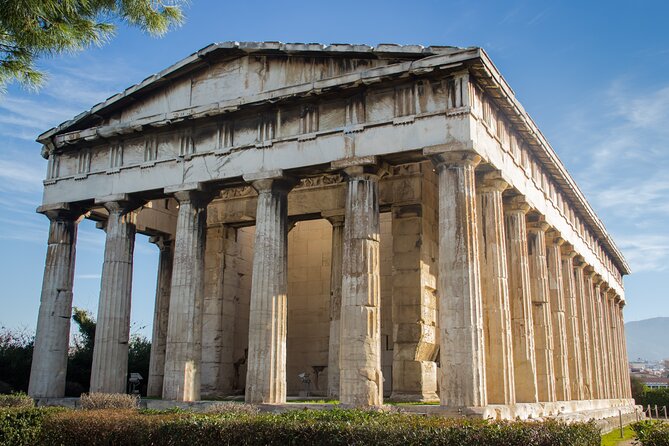
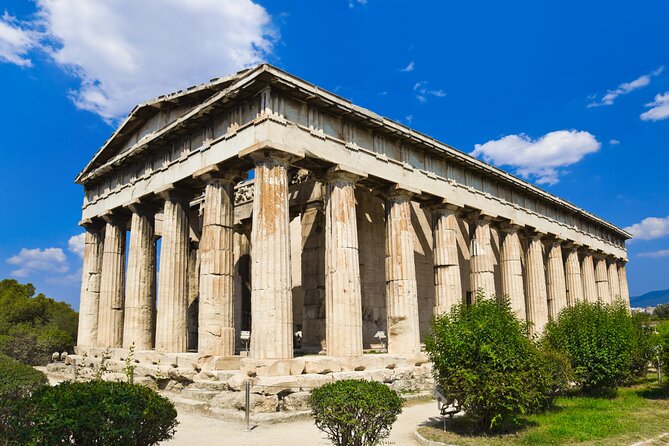
The Temple of Hephaestus is included in the admission, so you do not need a separate ticket for this stop. Its presence gives the visit a clear architectural focus within the wider Agora grounds.
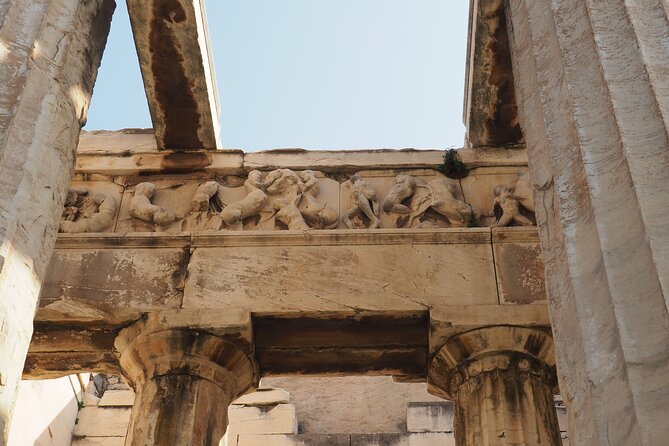
The temple is connected with Hephaestus, the Greek god associated with metalworking and craftsmanship. Even without adding unsupported details about its construction or decoration, the building helps you understand that the Agora was also a religious center.
I would plan enough time to appreciate the temple rather than treating it as a quick photo stop. The audio tour can help explain why it belongs in the story of the Agora and how religious activity formed part of the wider civic setting.
This is where the ticket’s combined coverage has real value. You are not paying for access to only an open archaeological area. You can explore the broader public center and then spend time with a major surviving monument within it.
The exact experience will depend on how closely you follow the audio and how much time you have. A quick visit may take around one hour. If you stop often and listen to the commentary in full, allow closer to three hours.
How long to allow, and who will enjoy it
The stated duration is approximately one to three hours. That range is sensible because this is not a tightly scheduled tour with a group meeting and a fixed finish. You decide how much of the audio to hear and how long to examine the remains.
I would allow at least enough time to visit both the Agora and the Temple of Hephaestus without hurrying. If you have a packed Athens itinerary, the shorter end of the range may work. If ancient history is a major reason for your trip, leave closer to the longer end.
This experience suits you if you:
- Prefer independent sightseeing to a group tour
- Want historical explanation without hiring a private guide
- Need a timed entry for a planned Athens day
- Enjoy stopping, replaying, or skipping audio sections
- Are comfortable using your own phone and headphones
- Are over 25 and do not need a reduced-price ticket
It may not suit you if you want hotel transfers, included food, a physical audio player, or a flexible refund option. It is also not the best match for someone who prefers a guide to lead the way and answer questions in person.
Most people can participate, and the site is near public transportation. The available information does not provide detailed mobility notes about surfaces, distances, or facilities, so you should seek extra site-specific guidance if you have particular access needs.
Is $33.74 good value?
At $33.74, this is a convenience-focused ticket. The cost covers the Ancient Agora, the Temple of Hephaestus, a selected entry slot, and audio commentary. That combination is more useful than admission alone if you want the history explained as you go.
The price becomes less attractive if you already have a broader Athens pass or another ticket that includes the same site. The supplied information does not indicate that this package includes other attractions, transfers, meals, or a live guide, so do not assume those extras are part of the deal.
The rating of 3.3 out of 5 from 22 ratings suggests a mixed experience rather than a sure bet for everyone. I would read that as a reason to set realistic expectations. You are buying a self-guided visit with digital commentary, not a personal tour with guaranteed technical support.
The biggest value question is simple: do you want independence? If yes, the ticket can save you from arranging admission separately and gives the Agora a useful narrative. If no, you may prefer a different format, especially if you want personal attention.
Should you book the Ancient Agora ticket?
Book it if you want to explore one of Athens’ most important public spaces on your own terms, with entry arranged in advance and an audio guide to explain the ruins. The included Temple of Hephaestus makes the visit more complete, and the one to three hour range fits well into a flexible sightseeing day.
Before booking, confirm the date and time, check the audio option, and prepare your phone and headphones. Remember that the ticket is for people over 25, reduced-price admission is not available online, and the purchase cannot be refunded or amended.
I would skip it if you need a live guide, hotel transport, supplied listening equipment, or flexible cancellation. For an independent visitor who values context and wants to connect Athens’ democracy with its actual meeting place, this is a practical way to spend part of the day.
FAQ
What does the Ancient Agora ticket include?
It includes entry to the Ancient Agora of Athens, entry to the Temple of Hephaestus, and an audio tour. The admission is tied to a specific date and time slot.
How long does the visit take?
The expected duration is approximately one to three hours. Your timing depends on how much of the audio tour you follow and how long you spend at each part of the site.
Is the ticket mobile?
Yes. The experience provides a mobile ticket, so you can use the booking on your phone.
Are headphones provided?
No. The ticket does not include a physical audio device or headphones. You should bring your own headphones for the audio tour.
Is hotel pickup included?
No. Hotel pickup and drop-off are not included. The Ancient Agora is near public transportation.
Who can use this ticket?
The ticket is for people over 25. Reduced-price tickets are not available online.
Can I cancel or change the booking?
No. This experience is non-refundable and cannot be changed for any reason.
Just added around Athens
- Meteora Monasteries & Caves Unesco Wonder in Greece Day Trip★ 5.0 · 15 reviews
- Mercedes Private Tour to Classical Athens and Temple of Poseidon★ 5.0 · 13 reviews
- Sunset Private Tour to Poseidon Temple & Vouliagmeni Thermal Lake★ 4.5 · 20 reviews
- Visit Delphi & Meteora Monasteries Luxury Private Tour FromAthens★ 5.0 · 9 reviews
- Temple of Poseidon sunset @ Cape Sounio (And dinner time)★ 4.5 · 6 reviews
- Meteora, monasteries & 130.000bc cave of theopetra prive★ 5.0 · 10 reviews
- Temple of Olympian Zeus: Self-Guided Audio Tour on your Phone (without ticket)★ 4.0 · 8 reviews
- Temple of Poseidon and Cape Sounion Half-Day Tour from Athens★ 5.0 · 62 reviews
Acropolis & Ancient Greek Temple Tours, compared.

Cape Sounion & Poseidon Temple Sunset Half-Day Trip
Read our review →
Cape Sounio & Poseidon Temple Trip with Audio Guide
Read our review →
Cape Sounion and Temple of Poseidon Half-Day Small-Group Tour from Athens
Read our review →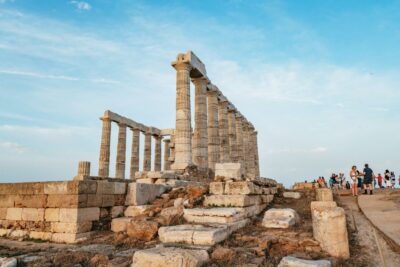
Cape Sounion & Temple of Poseidon: Small Group Tour
Read our review →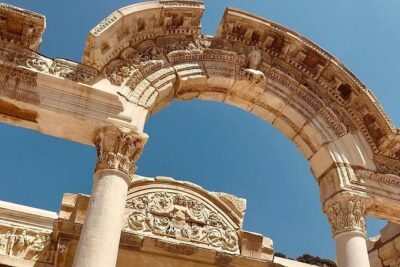
Ephesus Temple of Artemis and House of Mary Private Half Day Tour
Read our review →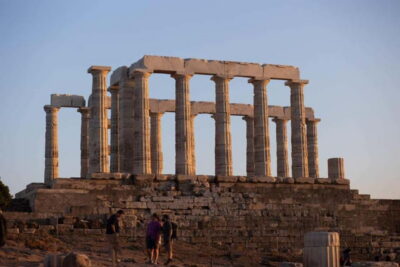
Cape Sounion & Temple of Poseidon Sunset Experience
Read our review →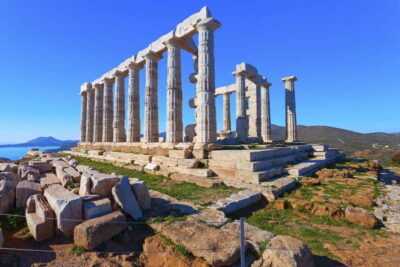
Temple of Poseidon & Cape Sounion Half-Day Tour
Read our review →
Ephesus and Temple of Artemis Private Tour from Kusadasi Port
Read our review →Browse the lists this tour appears in