
REVIEW · ABU SIMBEL & PHILAE TEMPLE TOURS
Full Day tour to Abu simbel temples from aswan
Abu Simbel is one of Egypt’s great payoffs: two enormous temples cut into sandstone beside Lake Nasser, reached after a long desert drive from Aswan. This early-morning trip gets you there before the worst heat and returns you to Aswan the same day.
I like the simple door-to-door transport and the low price. I also like having the choice between exploring on your own and adding a guide, with Ahmed among the guides assigned on some departures. Round-trip pickup from a hotel or Nile cruise makes this far easier than arranging the journey alone.
The main caution is the schedule. You may leave 15 to 30 minutes late, spend close to three hours each way on the road, and encounter a fuller minibus than the advertised 15-person limit. Entrance tickets are extra, so the final cost is higher than the headline price.
Key points to know before booking
- Abu Simbel is a long day trip: Expect roughly 10 hours overall, with about six hours spent on the road.
- Pickup usually begins around 4:00 to 4:30 a.m.: Some departures have collected passengers at about 4:15 a.m.
- You generally get about two hours at the temples: That is enough for a focused visit, but not a leisurely one.
- The $24 price is for transport and tour services: Temple admission is not included.
- A guide is optional: Some guides, including Ahmed on certain departures, provide useful background, but guides cannot accompany you through every interior area.
- Vehicle capacity can vary: The advertised maximum is 15, yet some departures have carried 20 people or more.
Why Abu Simbel is worth the punishing early start
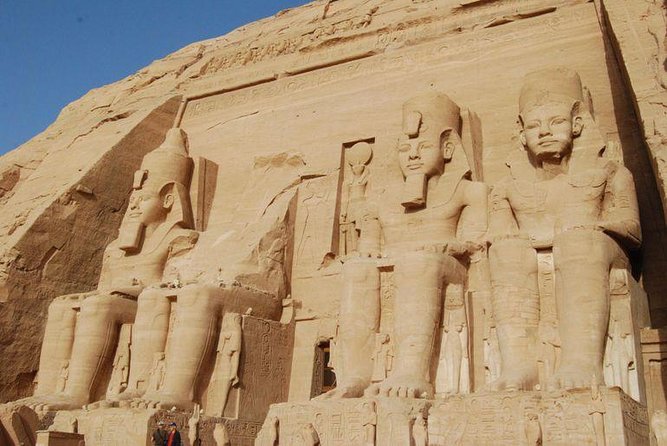
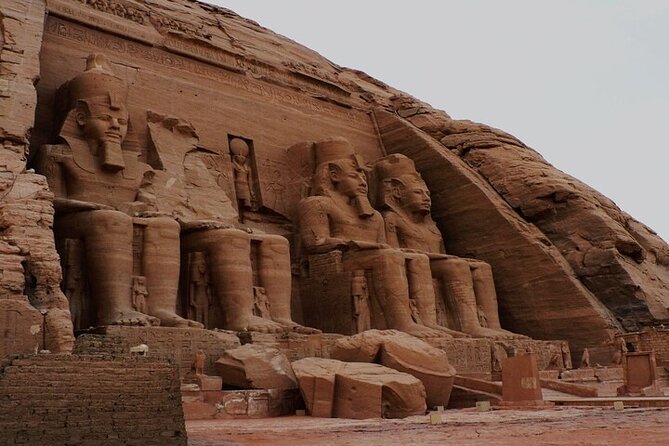
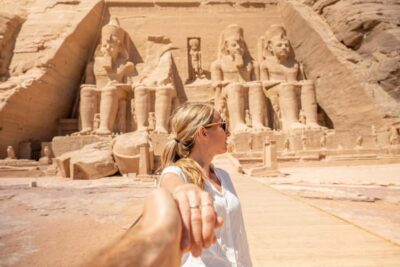
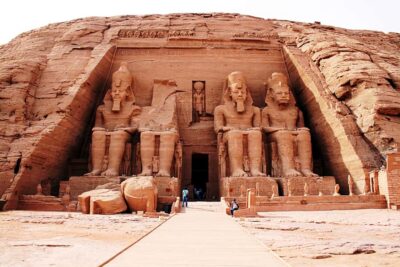
You go to Abu Simbel for scale. The Great Temple of Ramses II has four colossal seated statues carved into the cliff face. Beside it, the smaller temple honors Queen Nefertari and the goddess Hathor, giving the complex a human touch that balances Ramses’ enormous royal display.
The temples now face Lake Nasser, but they were moved in the 1960s when the Aswan High Dam threatened to flood the original site. That rescue is part of the story you should understand before entering. The temples were cut apart, moved, and rebuilt inside an artificial mountain, preserving one of Egypt’s most important monuments.
The trip from Aswan is not scenic in the usual sense. Much of the route is a long run through dry desert, and you may stop briefly for coffee or a toilet break. Still, the empty road and the anticipation of reaching Abu Simbel give the ride a clear purpose.
I would not call this a relaxed outing. It is a determined pilgrimage to one exceptional site. If Abu Simbel is high on your Egypt list, the drive is the price of admission in a practical sense.
More Abu Simbel and Philae Tours in Aswan:
- From Aswan: Abu Simbel Temple Day Trip with Hotel Pickup
★ 4.4 · 2,807 reviews - Private Day Tour to Abu Simbel Temples from Aswan
★ 4.5 · 507 reviews - From Aswan: Private Guided Tour of Philae Temple with Entry
★ 4.6 · 239 reviews
The 4:00 a.m. pickup from Aswan
Pickup is offered from Aswan hotels and Nile cruise ships. The stated start time is usually between 4:00 and 4:30 a.m., with some passengers collected around 4:15. A short delay is possible as the driver gathers people from different addresses.
That small delay matters on this trip because the morning schedule is tight. Some departures have reached Abu Simbel around 8:00 or 8:30 a.m., while a later arrival can reduce your time at the site. If you are traveling on a cruise schedule, tell the operator clearly where you need to be dropped off and by what time.
The transport is normally an air-conditioned minibus with a professional driver. Several departures have used clean, newer vehicles, and drivers have been praised for safe, sensible driving. That is important on a long road journey, where comfort and steady driving count for more than fancy extras.
Bring water, a small breakfast, and something warm for the first part of the morning. The tour supplies a bottle of water, but that may not cover a full day. You should also keep your ticket money and phone accessible, since the admission process can take about 20 minutes if the whole group is buying tickets at the entrance.
The long road south to Abu Simbel
The road portion takes about three hours each way in the usual plan, making transport the largest part of the experience. Some recorded journeys have taken longer, including one that exceeded four hours on the way there. Delays can come from late pickup, loading passengers, or the pace of a shared group.
A brief comfort stop is sometimes made during the drive. One reported schedule included a 10-minute coffee and toilet break. Do not expect a full meal stop or a series of sightseeing pauses. This is a direct transfer, not a road tour.
The group is advertised as limited to 15 people, which would make the minibus manageable. In practice, capacity has not always matched that promise. One departure carried 20 people, and another complaint described a packed vehicle with passengers sitting in middle seats for much of the seven-hour round trip.
That issue may depend on booking time and demand. The operator has explained that a late booking made it difficult to arrange a separate vehicle. If you care strongly about space, ask for the confirmed group size before departure, especially during busy periods.
Arriving at the Abu Simbel Temple Complex
The first sight of the Great Temple is the reason to tolerate the road. Ramses II’s four seated figures dominate the facade, each one many times larger than a person. You will also see smaller figures of family members and officials around the king, a useful reminder that the facade is political art as much as religious architecture.
Inside, the temple continues the message. Ramses appears in scenes linked to war, kingship, and worship. The scale changes from open cliffside monument to dark, decorated chambers, so your visit moves between spectacle and detail.
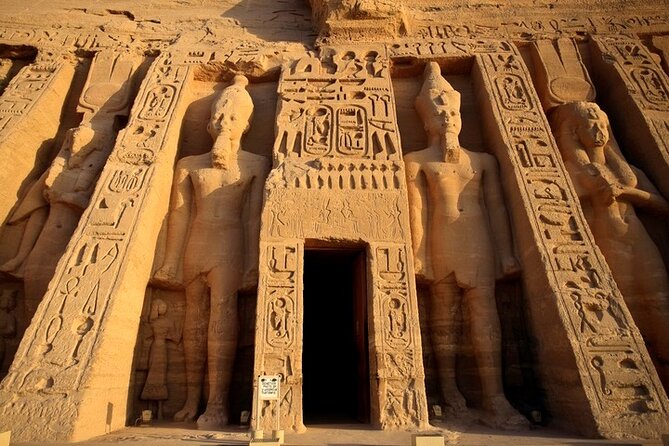
The smaller temple nearby is dedicated to Nefertari and Hathor. It is especially valuable because Nefertari receives an unusually prominent role beside Ramses. The two temples together show how royal power and religious devotion were presented as one public statement.
The lakefront setting adds to the experience, but the complex is not a gentle stroll with unlimited time. The standard visit allows around two hours, often from about 8:00 to 10:00 or 10:40 depending on the day. Two hours is enough to see both temples carefully if you enter promptly.
Buy your admission ticket as soon as you arrive. Delaying at the ticket window can eat into the time you need for the temples, and every person in the group may need to complete the purchase before the tour begins. You can also arrange tickets independently if that suits your plans, but admission is not part of the $24 charge.
More Full-Day Trips in Aswan:
- Full Day Tour to Abu Simbel Temples from Aswan
★ 4.5 · 218 reviews - Full Day Sharing Trip To Abou simple Temple form Aswan
★ 5.0 · 24 reviews - Full Day Guided Tour to Unfinished Obelisk, High Dam and Philae Temple by Boat
★ 5.0 · 19 reviews - Full-Day Tour of Philae Temple, High Dam and Unfinished Obelisk
★ 5.0 · 16 reviews
Choosing the guide option
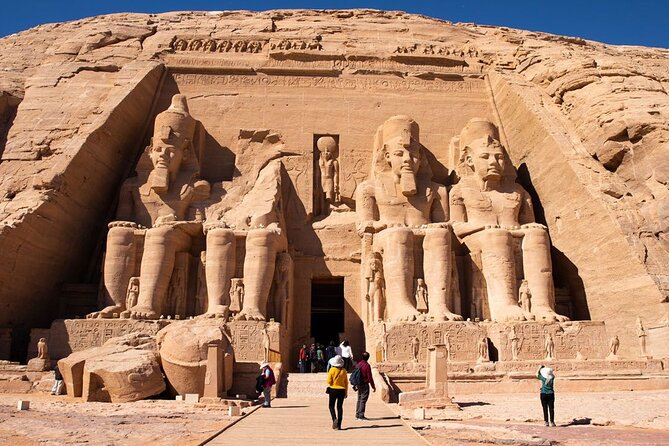
The tour can work in two different ways. You can use the vehicle only, buy your own entrance ticket, and explore the complex independently. Or you can add a guide for historical context before or around the visit.
The independent option is attractive if you have already studied Ramses II, Nefertari, Hathor, and the relocation of the temples. It also avoids the risk of a rushed or uneven explanation. The drivers on several departures have been praised for being punctual, safe, and helpful, which is the main service you need if you choose transport only.
The guided option can help you understand what you are seeing. A good introduction should explain the relationship between the two temples, the role of Hathor, the power message behind Ramses’ statues, and the engineering work that saved the monuments from Lake Nasser.
Keep your expectations clear. Guides are not allowed to follow you through every part of the temples, so the experience is not a continuous guided walk. On some departures, the guide gives an introduction and then you visit the interiors on your own.
Ahmed has been named positively by several customers for clear explanations and a friendly manner. On another departure, Ahmed reportedly said he was not an Egyptologist, despite the advertised guide description. That does not mean he cannot provide useful information, but you should not assume every guide will have the same academic depth.
I would choose the guide if Abu Simbel is your first major Egyptian monument and you want help reading the scenes. I would choose transport only if you value freedom, have your own research, or want to keep the cost as low as possible.
Heat, crowds, and the best use of two hours
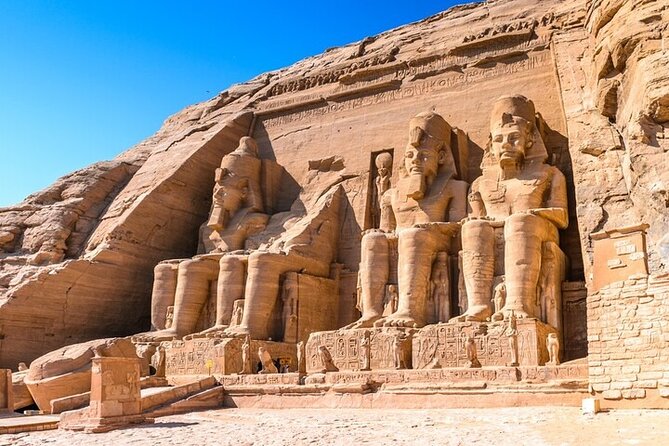
The early start is designed to reach Abu Simbel before the strongest heat. That is a real advantage because the site has exposed outdoor areas and limited shade. You will still want a hat, sun protection, and comfortable shoes.
The early departure also means you may arrive during a busy period. One schedule found the complex quieter later in the morning, around the time the group was preparing to leave. You cannot simply assume that the earliest arrival will be the calmest, but an early start remains useful for heat and for cruise passengers who need to return to Aswan.
Plan your visit before you step off the minibus. Start with the Great Temple, then visit Nefertari’s temple, and save a few minutes for the facade and lake views. If you spend too long at the ticket office or listening to a lengthy introduction, the interiors will feel rushed.
Inside, look up and slow down for a moment. The large statues attract attention first, but the painted reliefs and the contrast between the two temples reward close attention. You do not need to inspect every wall to have a good visit, but you should avoid treating the complex as a quick photo stop.
There are vendors near major Egyptian monuments, and Abu Simbel is no exception. If you browse items, ask the price before showing serious interest. The safest approach is to keep your temple time focused and treat shopping as optional.
Returning to Aswan after the temples
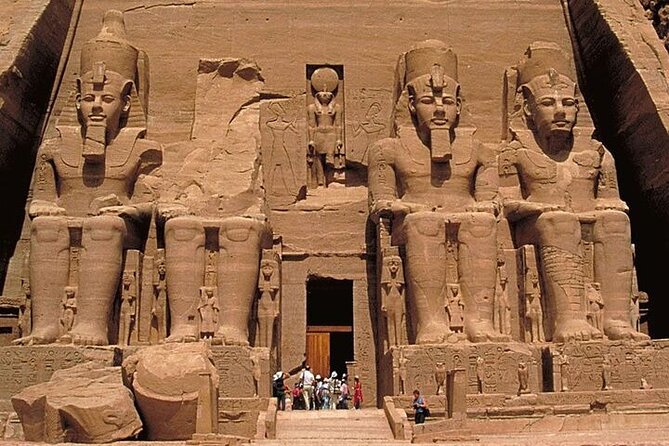
The return begins after roughly two hours at Abu Simbel. The minibus follows the same road back, with arrival in Aswan often around 2:00 to 3:00 p.m. Some groups have returned by about 1:55 p.m., while delays can push the journey later.
This timing works well for many visitors. You may still have part of the afternoon or evening for dinner, a walk along the Nile, or another Aswan activity. It works less well if you have a strict cruise departure or a train to catch.
Confirm your return drop-off before leaving Aswan in the morning. Most people are meant to return to their hotel or cruise ship, but one departure ended with some passengers being left about a seven-minute walk from the hotel because the group had different drop-off arrangements. That is a small distance, but it is irritating after a long day.
Clear communication is the fix. Give the driver the exact hotel or ship name, keep your phone available, and repeat the drop-off point if the minibus combines several bookings.
Is $24 good value?
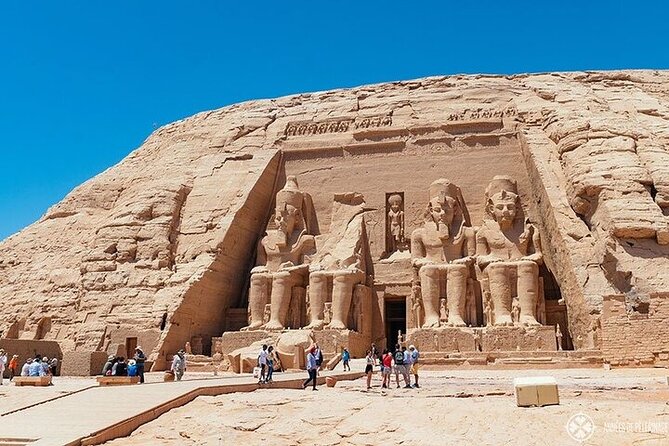
At $24 per person, the price is hard to beat for a round trip from Aswan to Abu Simbel. You receive pickup, return transport, a professional driver, a bottle of water, and the option to add a guide. For an independent visit, this is close to a budget transfer rather than a full luxury tour.
The price needs context. Admission is extra, and food is not listed as included. If you add a guide, your total rises. The low price also reflects shared transport, an early start, and a fixed visit window.
The strongest value comes when you want a simple way to reach the temples without paying for a private car. Solo visitors and couples can avoid the cost of hiring a vehicle alone, while small groups can benefit from the shared rate.
The weakest value comes if you expect a polished, tightly managed private tour. Delayed pickups, crowded vehicles, unclear drop-off arrangements, or a basic guide can erase the savings. This is a practical budget choice, not a pampering experience.
Free cancellation is available up to 24 hours before the start time. Changes or cancellations inside that window are not accepted for a refund, so check your cruise and hotel plans before booking.
Who should book this Abu Simbel trip?
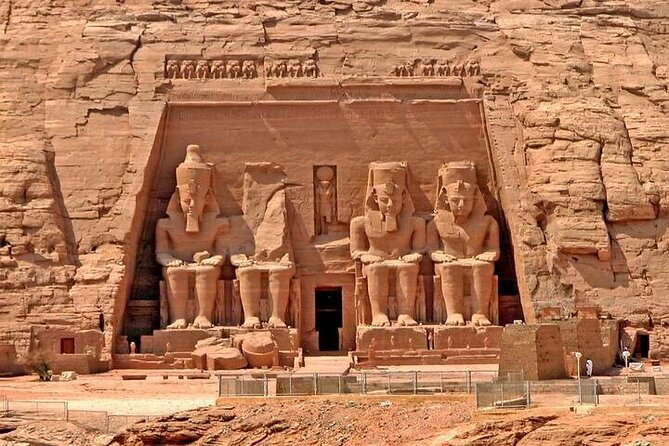
I would recommend it to you if you:
- Are staying in Aswan and want to see Abu Simbel in one day.
- Prefer a low-cost shared transfer to a private car.
- Can handle an early start and a long return drive.
- Are happy with about two hours at the monument.
- Want the option of independent sightseeing.
- Have a flexible enough schedule to absorb a short delay.
I would hesitate if you:
- Need guaranteed seating for no more than 15 people.
- Have a tight afternoon cruise or train connection.
- Want a full guided tour inside both temples.
- Dislike long minibus rides.
- Expect every pickup and drop-off to run to the minute.
Should you book it?
Yes, if your main goal is to get from Aswan to Abu Simbel at the lowest sensible price. The temples are extraordinary, and the basic transport service usually handles the essential job: pickup, the long drive, time at the complex, and return to Aswan.
Book with realistic expectations. Confirm the pickup time, ask about the expected group size, clarify the guide arrangement, and budget separately for admission. If you do that, this tour offers a strong way to reach one of Egypt’s most memorable sites without spending heavily on private transport.
FAQ
How long does the Abu Simbel tour from Aswan take?
The advertised duration is about 10 hours. The drive is roughly three hours each way, with about three hours listed at each itinerary stop, although actual arrival and return times can vary.
What time does pickup usually begin?
Pickup is generally scheduled between 4:00 and 4:30 a.m. Some departures have collected passengers at about 4:15 a.m., and short delays are possible while the driver gathers the group.
Are Abu Simbel entrance tickets included?
No. Entrance fees are not included in the $24 price. You need to purchase admission separately, and the ticket process can take about 20 minutes.
Can I visit Abu Simbel without a guide?
Yes. You can choose the transport-only option and explore the temples independently. A guide upgrade is available if you want historical and architectural explanations.
How many people are in the group?
The tour is advertised for a maximum of 15 people. Actual vehicle sizes have varied, and some departures have carried 20 people or more, so confirm the expected group size if space is important to you.
Can I cancel for a full refund?
You can cancel up to 24 hours before the experience start time for a full refund. Cancellations or changes made less than 24 hours before the start time are not accepted for a refund.
Just added around Aswan
- Aswan Philae Temple, Obelisk, and High Dam Private Tour★ 4.5 · 17 reviews
- Philae Temple and Aswan High-Dam Half-day tour★ 5.0 · 49 reviews
- Sound And Light Show At Philae Temple In Aswan★ 3.5 · 10 reviews
- Abu Simbel Temples from Aswan★ 4.5 · 10 reviews
- Temple of Edfu★ 4.0 · 11 reviews
- Private day tour to Philae temple-unfinished obelisk and high dam in Aswan★ 4.0 · 6 reviews
- Tour to Abu Simbel Temples from Aswan★ 4.5 · 7 reviews
- Private Tour to Abu Simbel Temple From Aswan★ 5.0 · 10 reviews
Abu Simbel & Philae Temple Tours, compared.
Abu Simbel Temple Private Guided Day Trip with Lunch
Read our review →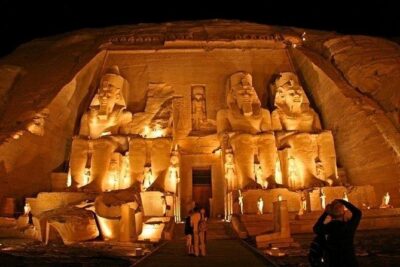
Private Day Tour to Abu Simbel Temples from Aswan
Read our review →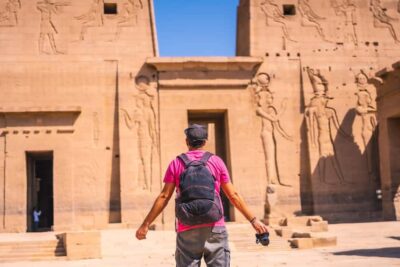
Private Guided Tour of Philae Temple with Entry
Read our review →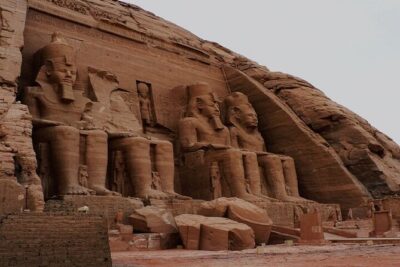
Philae Temple Sound & Light Show with Entrance Fees
Read our review →
Aswan Day Tour Visiting Philae Temple, Unfinished Obelisk and High Dam in Aswan
Read our review →Browse the lists this tour appears in